Visualizzazione post con etichetta Victorian era. Mostra tutti i post

venerdì 20 gennaio 2023

HISTORY OF FASHION ~ Early Victorian Winter Mantelet or Mantlet


Two young Victorian ladies wearing mantlets according to 1850s fashion


WHAT IS A MANTLE CLOTHING

Coats can have many names, but similar terms like mantles and mantelets are confusing. A mantle was originally a long flowing cloak without sleeves that developed into a capacious coat. A mantle would be at least three-quarter length to floor length. 


A Victorian Lady wearing a mantle


A mantelet is a shorter coat with cloak or wrap like qualities often emanating from interestingly devised sleeves or illusion of sleeves.  Mantelet can be spelt mantlet.
The early mantelet or mantelet, mantles clothing of 1730 began life as a simple silk or taffeta cape with a scarf-like formation. It had longer front points that passed and crossed to the waist, often being able to be passed to the back. It came back into favor in various similar forms in the late 1820s, but then the scarf ends reached the knees and sometimes it was called a pelerine.
It remained popular as a scarf like form until the 1840s when it was somewhat supplanted by a fashion for fine wool shawls.
Then, in the 1850s, it revived as a dominant style trend, becoming a fashion garment in its own right, a true style staple that changed the value of the clothes worn underneath and gave the finishing touch to the silhouette.


VICTORIAN MANTLETS

In the early and mid-Victorian era, the mantlet appeared as a harmonious garment, perfectly balanced in length between front and back.
Later it will lose this harmony and will, in fact, become longer to fan out on the hips in order to embrace the dome of the skirts with crinoline which had become wider. Over time the mantlet evolved to become almost a half-jacket with full sleeves, as the arrival of the bustle induced it to become much shorter at the back, often breaking off at the waist, and developing drapes or tails that parted radially or spread out separately above the skirt. The back was invariably different than the front view: sometimes it had longer back tails and a short front and other times it had longer front tails and a shorter back.
In the late Victorian era there will be two main styles of mantlet and what set them apart was how the sleeve area was handled. In both models the sleeves existed, but sometimes they appeared as if they were an illusion: in the first case the sleeve was very evident and was defined as a DOLMAN, it was cut wide and generous especially very wide towards the wrist; 


in the second case it blended in with the drapes of the mantlet.


In late Victorian times, when worn with tonally suitable dress and thus part of a visiting dressing gown, the mantlet will be referred to as a VISITING MANTLET.


As for the fabrics most used for this lovely garment, the tailors made use of smooth velvet, plush cloth, broadcloth and corduroy.
All mantlets were richly trimmed with decorations and borders that changed with the fluctuating styles, personal tastes and, as mentioned above, according to the fullness of the skirts; they were often adorned with contrasting moiré, fur, bands of velvet. They could also be finished with macrame fringe and lace appliqués, used to add a touch of elegance and lightness.


IMAGES
All the sketches published in this post were taken from Le Moniteur De La Mode of April 1850 and an advertisement for Sewell and Comp Soho, London of 1852.


In the hope You've enjoyed the time we spent together today, 
with sincere thankfulness I'm sending my dearest hug to You,  
Dearest Readers and Friends of mine!
See you soon 


STORIA DELLA MODA ~ Mantlets invernali del primo periodo vittoriano


IMMAGINE DI COPERTINA - Due giovani ladies vittoriane che indossano mantles seguendo i dettami della moda degli anni '50 del 1800


IL MANTELLO

I cappotti possono avere molti nomi, ma termini simili come mantelli e mantelline creano, ancora oggi, confusione. Il mantello era originariamente una lunga cappa fluttuante senza maniche che si trasformava in un generoso cappotto e, generalmente, doveva essere lungo almeno tre quarti rispetto alla statura di chi lo vestiva. 


IMMAGINE 2 - Giovane donna vittoriana con mantello


Un mantelet o mantlet  era un capo più corto, svolazzante o avvolgente, qualità che spesso si coniugavano con la creazione di maniche ideate in modo interessante e personalizzato. 
I primi mantlets furono creati nel 1730 come semplici mantelli di seta o taffetà ed avevano il taglio simile ad una sciarpa. Avevano punte anteriori più lunghe che raggiungevano la vita e si incrociavano e potevano spesso essere passate dietro la schiena. Il mantlet tornò in auge in varie forme simili alla fine del 1820, quando le estremità della sciarpa arrivarono fino alle ginocchia e talvolta, in quel caso, veniva chiamata pellerine. Rimase popolare come sciarpa fino al 1840, quando fu in qualche modo soppiantata dalla moda per gli scialli di lana fine.
Quindi, nel 1850, riprese vita come tendenza di stile dominante, diventando un indumento di moda a sé stante, un vero punto di forza dello stile che mutava il valore degli abiti indossati sotto e che conferiva il tocco finale alla silhouette.


IL MANTLET  VITTORIANO

All'inizio e a metà dell'era vittoriana il mantlet  appariva come un capo armonioso, perfettamente bilanciato, quanto a lunghezza, tra davanti e dietro. 
In seguito perderà questa armonia e diventerà, infatti, più lungo per aprirsi a ventaglio sui fianchi onde abbracciare la cupola delle gonne con crinolina che si era fatta più ampia. Col tempo il mantlet si è evoluto fino a diventare quasi una mezza giacca con maniche ampie, perché l'arrivo del bustle lo ha indotto a farsi molto più corto posteriormente, troncandosi spesso all'altezza della vita, e sviluppando drappeggi o code che si aprivano a raggiera o si allargavano separatamente sopra la gonna. La parte posteriore era invariabilmente diversa rispetto alla vista frontale: a volte aveva code posteriori più lunghe e una parte anteriore corta e altre volte aveva, invece, code anteriori più lunghe e una parte posteriore più corta.
Nell'era tardo vittoriana esisteranno due stili principali di mantlet e ciò che li distingueva era come veniva gestita la zona della manica. In entrambi i modelli le maniche esistevano, ma a volte apparivano come se non ci fossero: nel primo caso  la manica era molto evidente ed era definita DOLMAN, era tagliata ampia e generosa soprattutto molto larga verso il polso; 


IMMAGINE 3 - Mantlet con maniche a DOLMAN


nel secondo caso si confondeva con i drappeggi del mantlet e creava un EFFETTO ILLUSIONE.


IMMAGINE 4 - Mantlet con maniche ad EFFETTO ILLUSIONE


In epoca tardo vittoriana, quando veniva indossato con un abito tonalmente adatto e quindi parte di una toilette da visita, il mantlet verrà chiamato MANTLET DA VISITA.


IMMAGINE 5 - MANTLET DA VISITA


Quanto ai tessuti più utilizzati per questo grazioso capo di vestiario, le sartorie si valevano di velluto liscio, di panno felpato, di panno pettinato e di velluto a coste.
Tutti i mantlets erano riccamente rifiniti con decorazioni e con bordi che mutavano con il fluttuare degli stili, dei gusti personali e, come detto sopra, in accordo con l'ampiezza delle gonne; spesso erano ornati con moiré a contrasto, pelliccia, bande di velluto. Potevano anche essere rifiniti con frange in macramè e con applicazioni in pizzo, utilizzati per aggiungere un tocco di eleganza e di leggerezza. 


IMMAGINE 6 ED IMMAGINE 7 - Raccolta di figurini per mantlets in vari stili


IMMAGINI
Tutti i figurini selezionati e pubblicati in questo post sono stati tratti da Le Moniteur De La Mode dell'aprile 1850 e da una pubblicità per Sewell e Comp Soho, London del 1852.


Nella speranza che abbiaTe gradito il tempo trascorso insieme oggi,
con sentita gratitudine Vi invio il mio più sincero abbraccio,
miei Cari Amici e Lettori!
A presto 


LINKING WITH:


This post was featured by Bev at Eclectic Red Barn
Thank you, sweet lady of mine, I'm so excited by this gift of yours, it arrived so unexpected, it truly filled my heart with joy ⊰♥⊱


venerdì 2 aprile 2021

The Art of Reading in the Victorian Age.


Giuseppe Bezzuoli (Firenze, 1784-1855) 

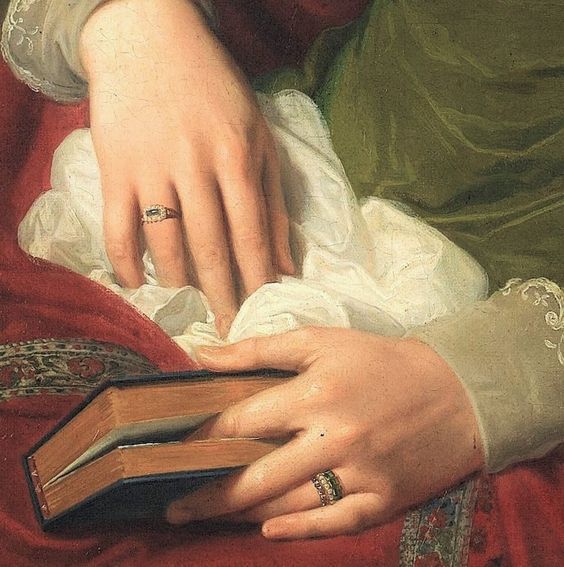
RITRATTO DI UFFICIALE DI CAVALLERIA BRITANNICA E DI SUA MOGLIE (dettaglio)


Victorian women were real passionate readers. The increased literacy rate from

schooling, the cheaper production, and the wider availability of books in the

libraries promoted reading, as well as, around the half of the Victorian age, gas 

and electric lighting also meant that reading after the sunset or before sleeping

at night didn’t have to be by candlelight or by the messy and weak light of oil

lamps.


Edward John Pointer (Paris, 1836-London, 1919)

AN EVENING AT HOME


Novels were often serialized in monthly parts, making them cheaper, more 

easily accessible and shared. Weekly or monthly segments often ended on a

“cliff-hanger” to keep readers hooked and anticipating the next installment.


Maria R.Dixon (American, 1823-1896)

WOMAN IN BONNET READING A BOOK


Thomas Benjamin Kennington (British, 1856-1916)

TITLE UNKNOWN


 William Kay Blacklock (British, 1872-1924)

QUIET READ


Peter Philipp Rumpf (German, 1821-1896) 

YOUNG WOMAN READING IN THE PARK


For women belonging to the wealthier classes, who could afford first editions,

reading from their own collection was an everyday occurrence.

Six months after the original publication, books became cheaper, being issued as

single volumes. 


Alfred Emile Léopold Joseph Victor Stevens (Brussels, 1823-Paris, 1906)

THE READER


Charles Baugniet (Belgian, 1814-1886)

THE READER


Auguste Toulmouche (French, 1829-1890)

SWEET DOING NOTHING


Auguste Toulmouche (French, 1829-1890)

IN THE LIBRARY


And the growth of the rail network helped make novels cheaper also at

railway stations. There was always something new to read during a long journey.


Augustus Leopold Egg (London, 1816-Algeirs, 1863)

THE TRAVELLING COMPANIONS


Fiction was thought to hold influential power over readers.

The 18th-century view that reading contemporary novels was a time-wasting 

leisure activity gave way to 19th-century idea on their ability to educate.

Victorians believed that although novels lacked the cultural seriousness of 

classical texts, they did bring awareness of historical periods and were able to

develop Christian moral values.


George Goodwin Kilburne (London, 1839-1924)

A YOUNG LADY READING IN AN INTERIOR 


That’s why the during the XIXth century the most widely read novel in England

was The Uncle Tom's Cabin (1852) by the American writer Harriet Beecher 

Stowe, which spread anti-slavery ideals.

But if novels could influence for the good, they were thought to be also able to

influence for the bad, expecially amongst young girls or people without culture

belonging to working classes, who could be encouraged to emulate fictional

criminals' life whose adventures were told.


Alexander Mark Rossi (British, 1840-1916)

FORBIDDEN BOOKS


Maybe it was the reason that leaded Charles Dickens to write educational 

novels: his stories portrayed the lower classes and had always a moral which, 

implicitly, became an example to follow for each reader.

Queen Victoria was the most enthusiastic reader of his, given She always

wanted to be the the first to read the last novel he wrote before it was published,

not with a puritan purpose or to control it, but because, with their values, his 

books were the true expression of the Age she was the Emblem of.


Dickens had the intelligence and the capability to become an integral part of that

world that was still making itself, both from an intellectual and from a moral 

point of view, and probably, to find 'translated' in words what became to Her

the meaning of an Age, animated Her enjoyment, Her fervor and Her delight.

We should say that Charles Dickens was the real Victorian writer. 


I sincerely hope you've enjoyed this travel bck in the Age we all love and, 

with utmost thankfulness, 

I'm sending much love to each of you

See you soon and Happy Easter 💕


L'Arte di leggere nell'Era Vittoriana.


1 - Giuseppe Bezzuoli (Firenze, 1784-1855) 

RITRATTO DI UFFICIALE DI CAVALLERIA BRITANNICA E DI SUA MOGLIE (dettaglio)


Le ladies vittoriane erano lettrici davvero appassionate. L'aumento del tasso di

alfabetizzazione promosso dall’obbligo scolastico, la produzione più economica e

la più ampia disponibilità di libri nelle biblioteche promossero la lettura, così 

come, intorno alla metà del XIX° secolo, l'illuminazione a gas ed elettrica

resero agibile anche leggere dopo il tramonto o prima di dormire la notte, cosa 

che prima era possibile solo al lume di una candela o di una lampada ad olio 

dalla luce debole e confusa.


2 - Edward John Pointer (Parigi, 1836-Londra, 1919), AN EVENING AT HOME


I romanzi erano spesso pubblicati in fascicoli mensili, il che li rendeva più

economici, più facilmente accessibili e condivisibili. La parte che veniva 

pubblicata spesso finiva con un "cliff-hanger", una sorta di richiamo che serviva

per mantenere viva la memoria del lettore e anticipare la prossima puntata.


3 - Maria R.Dixon (Americana, 1823-1896) WOMAN IN BONNET READING A BOOK


4 - Thomas Benjamin Kennington (Britannico, 1856-1916) TITLE UNKNOWN


5 - William Kay Blacklock (Britannico, 1872-1924 QUIET READ


6 - Peter Philipp Rumpf (Tedesco, 1821-1896) YOUNG WOMAN READING IN THE PARK


Per le ladies appartenenti alle classi più abbienti che potevano permettersi le

edizioni appena pubblicate, leggere dalla propria collezione era una quasi

un’esigenza quotidiana. Sei mesi dopo la pubblicazione originale, i libri 

vedevano il loro prezzo scendere, dato che anche quelli che erano stati 

pubblicati in fascicoli venivano venduti in volumi singoli.


7- Alfred Emile Léopold Joseph Victor Stevens (Bruxelles, 1823-Paris, 1906) THE READER


8 - Charles Baugniet (Belga, 1814-1886) THE READER


9 - Auguste Toulmouche (Francese, 1829-1890) SWEET DOING NOTHING


10 - Auguste Toulmouche (Francese, 1829-1890) IN THE LIBRARY


E l'incremento delle reti ferroviarie contribuì a rendere i libri più economici 

anche nelle stazioni. C'era sempre qualcosa di nuovo da leggere durante un 

lungo viaggio. 


11 - Augustus Leopold Egg (Londra, 1816-Algeri, 1863) THE TRAVELLING COMPANIONS


Era opinione diffusa che la narrativa potesse influenzare la mentalità dei lettori.

Mentre nel XVIII° secolo si credeva che la lettura di romanzi contemporanei 

fosse un'attività di svago che riempiva il tempo e distraeva dall'ozio, durante

il periodo vittoriano si fece largo l'idea che essi avessero un valore educativo.

I vittoriani credevano che, sebbene i romanzi mancassero della serietà

culturale dei testi classici, inducessero comunque consapevolezza dei periodi 

storici e fossero in grado di sviluppare valori morali cristiani.


12 - George Goodwin Kilburne (Londra, 1839-1924) A YOUNG LADY READING IN AN

 INTERIOR 


Ecco perché durante il XIX° secolo il romanzo più letto in Inghilterra fu The 

Uncle Tom's Cabin - La capanna dello zio Tom (1852) della scrittrice americana

Harriet Beecher Stowe, che diffondeva ideali contro la schiavitù.

Ma se i romanzi potevano esercitare un’influenza positiva sul lettore, si pensava 

che fossero anche in grado di influenzarlo negativamente, specialmente se si

trattava di ragazze o di persone prive di cultura appartenenti alle classi 

lavoratrici, che potevano essere incoraggiate a emulare la vita dei criminali

immaginari le cui vicende venivano in essi raccontate.


13 - Alexander Mark Rossi (British, 1840-1916) FORBIDDEN BOOKS


Forse fu proprio questo il motivo che spinse Charles Dickens a scrivere romanzi

didattici: le sue storie ritraevano le classi socialmente più basse e avevano

sempre una morale che, implicitamente, diventava un esempio da seguire per

ogni lettore. La regina Vittoria era la sua lettrice più entusiasta, dato che ha 

sempre voluto essere la prima a leggere l'ultimo romanzo che questi scriveva 

prima che fosse pubblicato, non con uno scopo puritano o per controllarlo, ma

perché, con i loro valori, i suoi libri erano la vera espressione dell'era di cui Ella 

era l'emblema.


FOTOGRAFIA: la PRINCIPESSA BEATRICE legge con la madre, la REGINA VICTORIA


Dickens ebbe l'intelligenza e la capacità di diventare parte integrante di quel 

mondo che ancora si stava facendo, sia da un punto di vista intellettuale che 

da un punto di vista morale, e probabilmente, il fatto di trovare 'tradotto' in 

parole quello che divenne per Lei il significato di un'epoca, animava il Suo

divertimento, il Suo fervore ed il Suo diletto.

Dovremmo dire che Charles Dickens fu il vero scrittore vittoriano.


Spero di tutto cuore che abbiate apprezzato anche questo piccolo 'viaggio' 

nell'era che tutti noi amiamo e, 

con la più sincera gratitudine, 

invio tutto il mio affetto a ciascuno di voi


A presto e Felice Pasqua💕


Linking with:

PINK SATURDAY

BLUE MONDAY

INSPIRE ME MONDAY

TUESDAY WITH A TWIST

Thank you Angie at God's Growing Garden for featuring this post 

WONDERFUL WEDNESDAY BLOG HOP

LITTLE THINGS THURSDAY