Visualizzazione post con etichetta Romanov. Mostra tutti i post

domenica 31 agosto 2025

Empress Elisabeth of Austria in the words of those who knew Her


Today I want to present you something unusual: it's like a mosaic, not of pictures, but of quotes. I thought that it might be nice to know a little more about this Empress which became a myth for everything She was, both physically and emotionally, but not by reading Her biographers' works. No, they're are not Her biographers who are talking to us today, who, we suppose, had to depict an image of a fairy-tale Empress: they're nobles or aristocrats who got in touch with her by chance; everyone wrote something about Her, their impressions and feelings, in their private writings, such as letters or memoirs. After so much time they have been published and now we can read them. Ordering to order them chronologically, we obtain a picture which completes the one we already have about Her.
So let's let talk those who had the fortunate chance to know Her Majesty...


… I want to tell you about this charming young Empress, whom I have at last seen, and with whom I am delighted. I think she is worthy of the Emperor. They are the most charming couple, and the bestmatched one can imagine. She is a thousand times better than her portraits ; none of them give an idea of her freshness, her air of candour and gentleness and intelligence, and of the perfect grace of all her movements. If her features are not perfect, they are delicate ; her complexion white and clear, her lips like coral, he;r brown eyes not large, rather deep-set, but bright, pretty hair (about the colour of Rose's), dressed a I'imperatrice - that is, drawn off the forehead and temples - which I think frightful for everybody ; but she can stand it, because she has a pretty forehead. Her figure is charming, medium size, slender and lissom, pretty shoulders and round arms, a most distinguished air, and a young, soft voice. I have heard no one speak of her otherwise than charming.
I saw her first arrive on the boat at Nussdorf The Emperor was at the landing-point with his father and mother alone, without Ladies-in- Waiting or any suite (because all the Court were assembled at Schonbrunn to receive her). Hardly had the boat touched land than the Emperor ran on to the bridge and embraced her openly. I can't tell you the effect of this natural and simple act. Not only the thousands of spectators on the banks burst into prolonged cheers, but many eyes besides mine were wet (which possess no more tears . for sorrow, and yet which had so many tears for this affection, that I cannot look at these two happy beings without my eyes filling).
They looked so happy, so radiant, coming up the stairway together on to the platform, where I was fortunate enough to be quite close to them ; and that good mother who embraced her daughter-in-law with so much affection, you can guess whether she also shared in my looks and tears !
She looked happy, but pale. I confess I never thought to look at the parents of the bride. The next day I had a very good place to see the entrance into Vienna, which was very magnificent, as you know by the papers.
On Sunday I was at the marriage in a tribune (stand), from which I saw this fine couple beautifully during the whole ceremony, and afterwards I was presented, with the other Ministers' wives (we were only six in all), before the reception , where I stayed to see the ceremony of kissing hands by all the Court. It was then that I was able to notice well this young Empress, who bore herself during this trying ex;perience with so much grace, modesty, and simplicity. The Emperor was at her side all the time, suggesting to her a word to help her speak to the people presented. When it was my turn, he told me she spoke English well ; then she spoke to me in English, and when I replied in surprise at hearing her speak and pronounce so well, she told me she had had an English governess, and that she always spoke that language with her sister. 

The Correspondence of Priscilla, Countess of Westmorland, by Priscilla Anne Wellesley Pole Fane, Countess of Westmorland, E.P. Dutton & co., New York, 1909.

Priscilla Anne Fane, née Wellesley-Pole (1793 – 1879), styled Lady Burghersh between 1811 and 1841, was the fourth child of the Honourable William Wellesley-Pole - later first Baron Maryborough and third Earl of Mornington - by Katharine Elizabeth, eldest daughter of Admiral the Honourable John Forbes. Arthur Wellesley, 1st Duke of Wellington, was her uncle. Priscilla was a great favourite with him, who had a high opinion of her political judgement, as did Lord Melbourne. In 1811, she married John Fane, Lord Burghersh, son of John Fane, 10th Earl of Westmorland, and became known as the Countess of Westmorland when her husband succeeded as 11th Earl of Westmorland in 1841. She was an accomplished linguist, a diplomatic service wife and a distinguished artist.


~~


During our stay my parents called on the Empress Elizabeth at the Hofburg. She was dressed in black satin, and looked very beautiful and tall and slender. Her dress was quite plain, and showed off her marvelous figure. Her hair, which was so long that she could cover herself entirely with it, she wore plaited all around her small head, which gave the impression of a wreath or crown, and enhanced the beauty of her pure features. Being extremely shy, she always held a small pocket handkerchief in her hand, which she constantly lifted to her mouth.

A Romanov Diary. The Autobiography of the Grand Duchess Marie Georgievna of Russia, Atlantic Intl. Pubns., USA, 1988.

Princess Marie of Greece and Denmark (1876–1940) was a daughter of King George I of Greece and his wife Grand Duchess Olga Constantinovna of Russia. She was a sister of King Constantine I of Greece and a first cousin of Tsar Nicholas II of Russia and King George V of the United Kingdom. Her father, George I of Greece, born Prince Vilhelm of Denmark, was linked to the English royal family through his marriage – Marie's mother  was the Grandmother of Prince Philip, the Duke of Edinburgh, who will marry Queen Elisabeth II of Great Britain – and because of his sister, Princess Alexandra, who married the British Prince of Wales, the future King Edward VII. This connection strengthened ties between Greece and Great Britain, with the British monarchy often supporting George I's reign. Princess Marie, nicknamed "Greek Minnie" to tell her apart from the elder "Minnie", her paternal aunt (Empress Maria Feodorovna of Russia), grew up as part of a large family of eight children. They were raised by British nannies and educated by governesses and private tutors who taught them English as first language. They spoke Greek between themselves and English with their parents. She became lifelong friends with two cousins of hers: Grand Duchess Xenia of Russia and Princess Victoria of the United Kingdom. Her father instilled in her a great love for Greece and throughout her life, she remained a fervent patriot. She married Grand Duke George Mikhailovich of Russia, her first cousin once removed, who courted her for five years. The couple settled in St. Petersburg and they had two daughters: Princesses Nina and Xenia of Russia. She left a book of memoirs, published posthumously by her grandchildren.


~~


Elizabeth, Empress of Austria, never came to Paris, but nevertheless ordered three or four dresses every year from us. Clothes meant little to her. She affected the greatest simplicity, and wore mostly white, pearl gray, or very, very pale violet. The Viennese dress makers always saw to it that they had at least one beautiful dress made to her measurements always in readiness.

Jean-Philippe WorthA Century of fashionLittle, Brown, & Co., Boston, 1928.

The son of Charles F. Worth, considered the founder of the haute couture, and Marie Vernet, was born in Paris in 1856 and joined his father in the tailoring business in 1874. In 1895, he took over the entire creative process, striving to maintain the quality and exclusivity of his designs. Its particularly intense and refined activity confirms the specialization of the House of Worth in evening and ball gowns or in any case in particularly luxurious and refined toilettes.


~~

In a letter to his cousin Grand Duke Sergei Alexandrovich, the Tsarevich Nicholas Alexandrovich (1868-1918, the son of Tsar Alexander III and Dagmar of Denmark) described Empress Elisabeth of Austria as someone with a captivating and almost saintly aura. 
He noted 
her exquisite beauty, height, and way she evoked a sense of tenderness in those around her, despite her relatively reserved demeanor. He described a certain quality about her that "rented your heart," suggesting a profound and almost ethereal presence and observed that the Empress was universally adored in Russia. He noted that while she was reserved, there was a depth of character that made her memorable and impactful. This description paints a picture of a woman who was not just physically beautiful, but also carried a captivating and almost spiritual presence, a stark contrast to the more controversial figure of her husband.

The Empress was so kind to seat next to me and to talk to me all the time. I liked her very much, just as Papa and Mama did; they also found her remarkably kind and beautiful.

Tsarevich Nicholas Alexandrovich, the later Tsar Nicholas II (1885).
He'll be the last Tsar after the murder of his whole family occured on July 17th, 1918.

~~


An ancient legend goes that there was a White Lady who, moving with silent steps, appeared to the people of royal Houses foretelling tragic events. Prince Christopher of Greece and Denmark recalls that his Grandmother saw this ghost a few days before her youngest son was taken ill and, in less than a week, he was dead. Empress Elisabeth too knew this ghost, he wrote in his Memoirs.

The Empress Elizabeth of Austria, on one of her visits to Greece, told my mother that she too had seen the White Lady just before the tragic death of the Archduke Rudolph. The ghost appeared to her in the Palace of Schoenbrunn one evening in much the same circumstances as those in which my grandmother had seen it. “ And I know that she will come to me again, before my own death . . .” the Empress added.
I have never heard whether this prophecy was fulfilled or not.
I was a child when the Empress came to Athens and saw her only once or twice, but I remember her more vividly than many people I knew far better. I imagine it was the same with everyone who came in contact with her. Her brilliant, beautiful and restless personality left an indelible impression. She was so enchanted with Greece that she decided to build a villa in Corfu. The site she chose could not have been more beautiful, about twelve miles outside the town, set on a high hill overlooking the sea on one side and a chain of mountains on the other. But she was too impatient even to look at the plans and gave the architect "carte blanche". So instead of the simple cottage she had intended he erected an orate and hideous palace lavishly adorned with frescoes, statues and bronzes of every description. This atrocity cost the Austrian Govemment twelve million crowns, I believe. The Empress’s life was dominated by the fear of losing her beauty. As she grew older it became an obsession. Hours were spent every moring brushing the glorious brown hair that she wore gathered into two great plaits coiled around her head. This hair-brushing was a matter of solemn ritual. Any hairs that fell out during the process were carefully collected and presented to the Empress on a silver salver. If their number proved to be too many the entire day was blackened to her. Once a captain of a Russian gunboat reported that he had seen a yacht coming into the Piraus harbour with a woman seated on the deck whose mass of hair reached down to the ground while two attendants stood behind her brushing it. 
“ That could only be the Empress of Austria.” said my father, when he heard the story. Later in the day a carriage drove up to the Palace and a mysterious visitor was announced, a lady who refused to give her name. It was, as we expected, the Empress Elizabeth. She insisted on preserving a strict incognito while she was in Greece, although it seemed rather unnecessary, since everyone knew who she was. She detested nothing so much as being photographed, or even looked at for that matter, and always carried a large fan with her on her walks, so that she could unfurl it and hide her face from the passers-by. The Empress was a fine woman in many respects, far finer, I think, than most of her biogtaphers have represented her. Intelligent, intuitive, sensitive, she had all the qualities to make a great empress. But she was tragically lacking in a sense of proportion. Even in the small issues of everyday life she had no idea of modera-tion. She could not take anything up without making it a mania. While she was in Corfu she set herself to learn Greek, although she had gone there to rest. Now Greek is a complicated language and its study is hardly to be recommended as a restful pursuit. The Empress certainly did not regard it as such either for herself or any one else, for she wore out her two teachers, Count Mercati and Mr. Christomanos. Every day she walked ten or twelve miles with one or the other, talking Greek all the way and, even during the hair-brushing ceremony, one of them was always present reading to her. Her figure became another obsession with her. Although she was exaggeratedly slender when she came to Greece (she weighed, I believe, only seven stones) no Hollywood film star could have followed out a more Spartan regime. Her constant dieting made her irritable and depressed. Even when she lunched with my mother and father she would often eat nothing but a salad and some fruit, and she would start off immediately afterwards on one of her exhausting walks, skimming over the ground like a restless, beautiful wraith. 

Memoirs of H R H Prince Christopher of Greece by Prince Christopher of Greece and Denmark, Hurst & Blackett Ltd, London, 1938.

Christopher, Prince of Greece and Denmark, (1888- 1940) was born at Pavlovsk, Imperial Russia, the son of King George I of Greece and Queen Olga, a Russian grand duchess by birth. He was the youngest of their eight children, being twenty years younger than their oldest one, Constantine, and the fifth son of theirs. He was called "Christo" in the family. His older brothers were future King Constantine I, George, Nicholas and Andrew. Like his siblings he was a polyglot, speaking Greek, English, Danish, Russian, French, and Italian. The siblings spoke Greek to one another, and used English with their parents. The parents, however, spoke German to each other. The Greek royal family maintained close relations with the Danish royal family, to which they also officially belonged. The Hellenic royal line was a cadet branch of the Schleswig-Holstein-Sonderburg-Glücksburg dynasty which had mounted the throne of Greece in 1863. Belonging to a House which mounted and lost the throne several times during Prince Christopher's lifetime, he spent much of it living abroad.

In the hope to have satisfied your curiosity 
quoting unofficial sources - 
as a researcher I can assure you that they are more precious and believable than official ones -
I'm wishing you a Joy-filled day,
Dear readers and Friends of ~ My little old world ~ 
See you soon 


Dany


L'Imperatrice Elisabetta d'Austria nelle parole di coloro che la conobbero


Oggi mi piace presentarvi qualcosa di insolito: si tratta di qualcosa di simile ad un mosaico, ma non di immagini, di citazioni. Ho pensato che sarebbe stato bello saperne di più su questa imperatrice, diventata un mito per tutto ciò che era, sia fisicamente che emotivamente, ma non leggendo le opere dei suoi biografi. No, non sono i suoi biografi a parlarci oggi, che, possiamo supporre, potrebbero anche essere stati spronati a dipingere l'immagine di un'imperatrice da favola: sono nobili o aristocratici che sono entrati in contatto con lei per caso; ognuno di loro ha scritto qualcosa su di lei, le proprie impressioni e i propri sentimenti, nei suoi scritti privati, quali lettere o diari. Dopo tanto tempo essi hanno trovato pubblicazione e ora possiamo leggerli. Ordinandoli cronologicamente, otteniamo un quadro che completa quello che già abbiamo su di lei.
Lasciamo quindi parlare chi ha avuto la fortuna di conoscere Sua Maestà...


... Voglio parlarvi di questa affascinante giovane imperatrice, che finalmente ho visto cosa di cui sono felicissima. Penso che sia degna dell'imperatore. Sono la coppia più affascinante e più affiatata che si possa immaginare. Lei è mille volte migliore di come appare nei suoi ritratti; nessuno di essi rende un'idea della sua freschezza, della sua aria di candore, della sua gentilezza ed intelligenza, e della perfetta grazia di tutti i suoi movimenti. Se i suoi lineamenti non sono perfetti, sono delicati; la sua carnagione è bianca e chiara, le sue labbra sono come il corallo, i suoi occhi sono castani non grandi, piuttosto infossati, ma luminosi, ha bei capelli (più o meno del colore di quelli di Rose), acconciati all'imperatrice - cioè tirati fuori dalla fronte e dalle tempie - cosa che ritengo spaventosa per tutti; ma lei può sopportarlo, perché ha una bella fronte. La sua figura è affascinante, di media statura, snella e flessuosa, ha belle spalle e braccia rotonde, un'aria distinta e una voce giovane e dolce. Nessuno l'ha definita in modo diverso che "affascinante". La vidi arrivare per la prima volta in battello a Nussdorf. L'Imperatore era all'approdo con suo padre e sua madre da soli, senza dame di compagnia né alcun seguito (perché tutta la Corte era riunita a Schönbrunn per riceverla). Appena l'imbarcazione toccò terra, l'Imperatore corse sul ponte e la abbracciò festosamente. Non posso descrivervi l'effetto di questo gesto naturale e semplice. Non solo le migliaia di spettatori sulla riva scoppiarono in prolungati applausi, ma molti occhi oltre ai miei erano umidi (sono occhi che non hanno più lacrime per il dolore, eppure ne avevano così tante per questo affetto, tanto che che non posso ripensare a queste due creature felici senza che mi si riempiano di nuovo di lacrime). Sembravano così beati, così radiosi, mentre salivano insieme le scale verso la piattaforma, dove ebbi la fortuna di essere abbastanza vicino a loro; e quella buona madre che abbracciò sua nuora con tanto affetto, potete immaginare se condivideva con me i miei sguardi e le mie lacrime! Sembrava felice, ma pallida. Confesso che non ho mai pensato di guardare i genitori della sposa. Il giorno dopo avevo un ottimo posto per assistere all'ingresso a Vienna, che fu magnifico, come sapete dai giornali. Domenica ero presente al matrimonio in tribuna, da cui ho visto magnificamente questa splendida coppia durante tutta la cerimonia, e poi sono stata presentata, insieme alle altre mogli dei ministri (eravamo solo sei in tutto), prima del ricevimento, dove sono rimasta per assistere alla cerimonia del bacio della mano da parte di tutta la Corte. Fu allora che potei osservare attentamente questa giovane imperatrice, che si comportò durante questa difficile esperienza con tanta grazia, modestia e semplicità. L'Imperatore le fu sempre accanto, suggerendole una parola per aiutarla a parlare alle persone presenti. Quando fu il mio turno, mi disse che parlava bene l'inglese; poi mi parlò in inglese, e quando risposi sorpresa nel sentirla quanto lo parlasse bene e quale bella pronuncia possedesse, mi disse che aveva avuto una governante inglese e che parlava sempre quella lingua con sua sorella.

The Correspondence of Priscilla, Countess of Westmorland, di Priscilla Anne Wellesley Pole Fane, Contessa di Westmorland, E.P. Dutton & co., New York, 1909.

IMMAGINE A SX: Priscilla Wellesley Pole Countess of Westmorland by John Rogers Herbert (1810-1890).

Priscilla Anne Fane, nata Wellesley-Pole (1793 – 1879), soprannominata Lady Burghersh tra il 1811 e il 1841, era la quarta figlia dell'Onorevole William Wellesley-Pole - in seguito Primo Barone di Maryborough e Terzo Conte di Mornington - e di Katharine Elizabeth, figlia maggiore dell'Ammiraglio Onorevole John Forbes. Suo zio era Arthur Wellesley, Primo Duca di Wellington. Priscilla era una delle sue preferite, e ad aveva un'alta opinione del suo giudizio politico, così come l'aveva il più noto Lord Melbourne. Nel 1811 sposò John Fane, Lord Burghersh, figlio di John Fane, X Conte di Westmorland, e divenne nota come Contessa di Westmorland quando suo marito succedette al padre come XI Conte di Westmorland nel 1841. Era nota come un'abile linguista, come perspicace moglie di un diplomatico nonché come artista di spicco.


~~


Durante il nostro soggiorno, i miei genitori fecero visita all'imperatrice Elisabetta alla Hofburg. Vestiva di raso nero ed era molto bella, alta e snella. Il suo abito era piuttosto semplice e metteva in risalto la sua figura meravigliosa. I suoi capelli, così lunghi da poterla coprire completamente, erano intrecciati tutt'intorno alla piccola testa, il che dava l'impressione di una ghirlanda o di una corona, e metteva in risalto la bellezza dei suoi lineamenti puri. Essendo estremamente timida, teneva sempre in mano un piccolo fazzoletto che portava costantemente alla bocca.

A Romanov Diary. The Autobiography of the Grand Duchess Marie Georgievna of Russia, Atlantic Intl. Pubns., USA, 1988.

IMMAGINE A DX. Principessa Maria di Grecia e Danimarca (Granduchessa Maria Georgievna)

La principessa Maria di Grecia e Danimarca (1876–1940) era figlia di re Giorgio I di Grecia e di sua moglie, la granduchessa Olga Constantinovna di Russia. Era, inoltre, sorella di re Costantino I di Grecia e cugina di primo grado dello zar Nicola II di Russia e di re Giorgio V del Regno Unito. Suo padre, Giorgio I di Grecia, nato principe Vilhelm di Danimarca, era legato alla famiglia reale inglese per via del matrimonio – la madre di Maria era la nonna del principe Filippo, duca di Edimburgo, che sposerà la regina Elisabetta II di Gran Bretagna – e per via della sorella, la principessa Alexandra, che sposò il principe di Galles britannico, il futuro re Edoardo VII. Questo legame rafforzò i legami tra Grecia e Gran Bretagna, tanto che la monarchia britannica spesso si trovò a sostenere il regno di Giorgio I. La principessa Maria, soprannominata "Minnie greca" per distinguerla dalla "Minnie" più grande, sua zia paterna (l'imperatrice Maria Feodorovna di Russia), crebbe in una numerosa famiglia di otto figli. Furono cresciuti da tate britanniche e istruiti da governanti e tutori privati che insegnarono loro l'inglese come prima lingua. Parlavano greco tra loro e inglese con i genitori. Fu amica per tutta la sua vita di due sue cugine: la Granduchessa Xenia di Russia e la Principessa Vittoria del Regno Unito. Suo padre le instillò un grande amore per la Grecia e sarà sempre una fervente patriota. Sposò il Granduca Giorgio Michajlovič di Russia, suo cugino di primo grado, che la corteggiò per ben cinque anni. La coppia si stabilì a San Pietroburgo ed ebbero due figlie: le Principesse Nina e Xenia di Russia. Lasciò un libro di memorie, pubblicato postumo dai suoi nipoti, da cui è ho tratto, per l'appunto, la citazione.


~~


Elisabetta, imperatrice d'Austria, non venne mai a Parigi, ma, nonostante ciò, ci ordinava tre o quattro abiti l'anno. In realtà gli abiti contavano poco per lei. Ostentava la massima semplicità e indossava principalmente bianco, grigio perla o viola molto, molto chiaro. Le sarte viennesi si assicuravano sempre di avere almeno un bell'abito confezionato su misura per lei, sempre pronto.

Jean-Philippe WorthA Century of fashionLittle, Brown, & Co., Boston, 1928.

IMMAGINE A SX: Jean-Philippe Worth.

Figlio di Charles F. Worth, considerato il fondatore dell'alta moda, e di Marie Vernet, nacque a Parigi nel 1856 e affiancò il padre nell'attività sartoriale nel 1874. Nel 1895, assunse la direzione dell'intero processo creativo, impegnandosi a mantenere la qualità e l'esclusività delle sue creazioni. La sua attività particolarmente intensa e raffinata diede conferma alla specializzazione della Maison Worth in abiti da sera e da ballo o comunque in articoli da toilette particolarmente lussuosi e raffinati.


~~


In una lettera al cugino, il granduca Sergej Aleksandrovič, lo Zarevic Nikolaj Aleksandrovič (1868-1918, figlio dello zar Alessandro III e di Dagmar di Danimarca) descrisse l'imperatrice Elisabetta d'Austria come una persona dotata di un'aura affascinante e quasi santa.

IMMAGINE A DX: Lo Zarevic Nikolaj Aleksandrovič.

Notò la sua squisita bellezza, la sua altezza e il modo in cui evocava un senso di tenerezza in chi la circondava, nonostante il suo atteggiamento relativamente riservato. Descrisse una certa qualità in lei che "ti conquistava il cuore", suggerendo una presenza profonda e quasi eterea, e osservò che l'Imperatrice era universalmente adorata in Russia. Notò che, pur essendo riservata, aveva una profondità di carattere che la rendeva memorabile e di grande impatto. Questa descrizione dipinge il ritratto di una donna non solo fisicamente bella, ma anche dotata di una presenza accattivante e quasi spirituale, in netto contrasto con la figura più controversa del marito.

L'Imperatrice fu così gentile da sedersi accanto a me e parlare con me per tutto il tempo. Mi piacque molto, proprio come piacque a mamma e papà; anche loro la trovavano straordinariamente gentile e bella.

Zarevic Nikolaj Aleksandrovič, futuro Zar Nicola II (1885).
Sarà l'ultimo zar dopo l'assassinio suo e di tutta la sua famiglia, avvenuto il 17 luglio 1918.


~~


Un'antica leggenda narra che una Dama Bianca, muovendosi a passi silenziosi, apparisse alle genti delle Case Reali predicendo eventi tragici. Il principe Cristpher di Grecia e Danimarca ricorda che sua nonna vide questo fantasma pochi giorni prima che il suo figlio più giovane si ammalasse e, in meno di una settimana, morisse. Anche l'imperatrice Elisabetta conosceva questo fantasma, scrisse il principe nei suoi Memoirs.

L'imperatrice Elisabetta d'Austria, durante una delle sue visite in Grecia, raccontò a mia madre di aver visto anche lei la Dama Bianca poco prima della tragica morte dell'arciduca Rodolfo. Il fantasma le apparve una sera nel Palazzo di Schönbrunn, più o meno nelle stesse circostanze in cui l'aveva visto mia nonna. "E so che tornerà da me, prima della mia morte..." aggiunse l'imperatrice.
Non ho mai saputo se questa profezia si sia avverata o meno.
Ero bambino quando l'imperatrice venne ad Atene e la vidi solo una o due volte, ma la ricordo più vividamente di molte persone che conoscevo molto meglio. Immagino che fosse lo stesso per tutti coloro che entrarono in contatto con lei. La sua personalità brillante, bella e irrequieta lasciò in me un'impressione indelebile. Era così affascinata dalla Grecia che decise di costruire una villa a Corfù. Il luogo che scelse non avrebbe potuto essere più bello, a circa dodici miglia dalla città, su un'alta collina con vista sul mare da un lato e su una catena montuosa dall'altro. Ma lei era troppo impaziente persino per guardare i progetti e diede carta bianca all'architetto. Così, invece del semplice cottage che aveva progettato, questi eresse un palazzo orribile  riccamente decorato con affreschi, statue e bronzi di ogni tipo. Questa atrocità costò al governo austriaco dodici milioni di corone, credo. La vita dell'imperatrice era dominata dalla paura di perdere la sua bellezza. Con l'avanzare dell'età, questa divenne un'ossessione. Ogni mattina trascorreva ore a far spazzolare i suoi splendidi capelli castani, raccolti in due grandi trecce che le avvolgevano la testa. Quello della spazzolatura era un rituale solenne. I capelli che cadevano durante la procedura venivano raccolti con cura e offerti all'imperatrice su un vassoio d'argento. Se il loro numero si rivelava eccessivo, l'intera giornata le veniva rabbuiata. Una volta, il capitano di una cannoniera russa riferì di aver visto uno yacht entrare nel porto del Pireo con una donna seduta sul ponte, la cui massa di capelli arrivava fino a terra, mentre due inservienti, in piedi dietro di lei, la spazzolavano.
"Non poteva che essere l'Imperatrice d'Austria", disse mio padre, quando sentì la storia. Più tardi, quel giorno, una carrozza si fermò a Palazzo e fu annunciata una misteriosa visitatrice, una signora che si rifiutò di rivelare il suo nome. Era, come ci aspettavamo, l'Imperatrice Elisabetta. Insisteva per mantenere un rigoroso incognito durante la sua permanenza in Grecia, anche se sembrava piuttosto superfluo, dato che tutti sapevano chi fosse. La cosa che più detestava era essere fotografata, o anche solo guardata, e portava sempre con sé un grande ventaglio durante le sue passeggiate, in modo da poterlo aprire e nascondere il viso ai passanti. L'Imperatrice era una donna raffinata sotto molti aspetti, molto più raffinata, credo, di quanto la maggior parte dei suoi biografi l'abbiano rappresentata. Intelligente, intuitiva, sensibile, aveva tutte le qualità per essere una grande Imperatrice. Ma le mancava tragicamente il senso delle proporzioni. Persino nelle piccole questioni della vita quotidiana non aveva idea di cosa fosse la moderazione. Non riusciva a prendere nulla senza farne una mania. Mentre era a Corfù, si mise a studiare il greco, sebbene vi fosse andata per riposarsi. Ora, il greco è una lingua complicata e il suo studio non è certo raccomandabile come attività rilassante. L'imperatrice non lo considerava certo tale né per sé né per nessun altro, poiché logorava i suoi due insegnanti, il conte Mercati e il signor Christomanos. Ogni giorno camminava per quindici o dodici miglia con l'uno o l'altro, parlando greco per tutto il tragitto e, persino durante la cerimonia della spazzolatura dei capelli, uno dei due era sempre presente e le leggeva qualcosa. La sua immagine divenne un'altra ossessione per lei. Sebbene fosse esageratamente snella quando arrivò in Grecia (pesava, credo, solo 30 chili), nessuna star del cinema di Hollywood avrebbe potuto seguire un regime più spartano. La sua dieta costante la rendeva irritabile e depressa. Anche quando pranzava con mia madre e mio padre, spesso non mangiava altro che un'insalata e un po' di frutta, e subito dopo iniziava una delle sue estenuanti passeggiate, sfiorando il terreno come uno spettro irrequieto e bellissimo.

Memoirs of H R H Prince Christopher of Greece del Principe Christopher di Grecia e Danimarca, Hurst & Blackett Ltd, London, 1938.

IMMAGINE A SX: Il Principe Christopher.

Cristopher, Principe di Grecia e Danimarca (1888-1940), nacque a Pavlovsk, nella Russia imperiale, figlio di Re Giorgio I di Grecia e della Regina Olga, granduchessa russa di nascita. Era il più giovane dei loro otto figli, essendo di vent'anni più giovane del maggiore, Costantino, e il quinto figlio maschio. In famiglia veniva chiamato "Cristo". I suoi fratelli maggiori erano il futuro Re Costantino I, Giorgio, Nicola e Andrea. Come i suoi fratelli, era poliglotta: parlava greco, inglese, danese, russo, francese e italiano. I fratelli parlavano greco tra loro e usavano l'inglese con i genitori. I genitori, tuttavia, parlavano tedesco tra di loro. La famiglia reale greca manteneva stretti rapporti con la famiglia reale danese, alla quale apparteneva ufficialmente. La linea reale ellenica era un ramo cadetto della dinastia Schleswig-Holstein-Sonderburg-Glücksburg, che salì al trono di Grecia nel 1863. Appartenente a una Casata che salì e perse il trono più volte durante la vita del principe Cristopher, egli trascorse gran parte del suo tempo all'estero. 


Nella speranza di aver soddisfatto la vostra curiosità
citando fonti non ufficiali -
in quanto ricercatrice posso assicurarvi che sono ben più preziose e attendibili di quelle ufficiali -
vi auguro una giornata piena di gioia, 
cari amici e lettori di ~ My little old world ~ 
A presto 


Dany


LINKING WITH:


domenica 4 dicembre 2022

Marija Alexandrovna Romanova, Queen Victoria's daughter-in-law who loathed Her


Loved and esteemed by Her people, or maybe we should say by the entire Old Continent, revered by Her whole family, by sons-in-law, daughters-in-law and grandchildren, Queen Victoria had close to her an acquired relative who didn’t love her very much, but who, indeed, loathed her: she was the wife of Alfred, her second son lovingly called 'Affie'.
The daughter-in-law who was hostile to Her was Marija Romanova, daughter of Tsar Alexander II and her consort, Maria of Hesse Darmstadt, who became Tsarina with the name of Maria Alexandrovna.
Princess Marija was born in Tsarskoe Selo on October 17, 1853; she had seven siblings, one girl and six boys, but her sister died in 1849 and she lost a brother too in 1865; thus she, the only girl remained, grew up with a strong character: she was the Tsar's favorite child. By all accounts she was very intelligent and well-educated, and besides Russian she spoke English, German and French perfectly. Being the Tzarina in poor health, she suffered from the Russian climate and therefore often went to visit her relatives in Germany with her three youngest children, Marija, Sergej and Pavel. It was 1868 when Marija met Alfred, Duke of Edinburgh, visiting her sister Alix, wife of the Grand Duke of Hesse:


The two young princes in 1868


he was an officer in the Royal Navy, always traveling around the world, and they won’t meet again until the summer of 1871, when the Tsar and the Tsarina, again in Darmstadt with their three younger children, met Alfred with his brother Albert, Prince of Wales, and his wife, Princess Alexandra.
Alfred was handsome, but very shy, and spent a lot of time together with Marija: although it was clear that a feeling was born between them, there were no agreements for an engagement. The families were against it: Queen Victoria thought the Russians to be barbarians while the Tsarina considered the English cold and unfriendly. The Tsar was doubtful: in Russia, after the Crimean war, a clear hostility towards the British was widespread, but the thing that worried him most was to lose his daughter, so he asked her to wait for a year. Thin news was received with enthusiasm by Queen Victoria who judged the matter concluded. The resumption of negotiations in January 1873 irritated Her not a little: the two youths had been presented with other candidates, but all were rejected, and so on July 11, Marija and Alfred got engaged.


Marija and Alfred in their engagment ufficial photograph


The Queen of the United Kingdom was left with nothing but to swallow her bitter morsel. To her daughter Vittoria, the Royal Princess, she will write "The murder is out"! 
As the beginning of a relationship between mother-in-law and daughter-in-law, not always easy in itself, it was not a harbinger of good prospects. When the time came to meet the future daughter-in-law, Vittoria, resigned, arranged for the young woman to be accompanied to Balmoral in Scotland. The Tsar proposed a meeting in Cologne which was rejected by Victoria: even if She was a queen and he an Emperor, Her will was worth more because She had been on the throne for longer, so he was the one who had to move. Victoria also refused the appointment of Her son as Colonel of a Russian Regiment promoted by Alexander II, considered an affront. Since he saw her daughter so in love, Alexander II ended up resigning himself to her marriage, but Vittoria showed no sympathy for this 'expansion' of her family.
The Tsar prepared for his daughter a trousseau of a magnificence never seen before, provided her with dowry and income, gave her priceless family jewels, including a parure that belonged to Catherine the Great, and, for the honeymoon of the couple, made prepare a luxurious apartment in the Alexander Palace Tsarkoe Selo, hoping they would settle in Russia.


Marija on her wedding day


Marija and Alfred got married in St. Petersburg on January 23, 1874, with two ceremonies, one Orthodox and one Anglican and, to the great sorrow of the Tsar, the couple decided to take up residence in England, in London, at Clarence House, where they arrived in March. Marija, the only Romanov to marry into the British royal family, had arrived in England with a lot of enthusiasm but, for several reasons, she was very disappointed. Vittoria welcomed the young Princess with apparent affection, although she believed her to be "not beautiful or graceful and she did not know how to behave herself " but her problems immediately began with the matter of rank. Marija, Imperial Highness by birth, was demoted to Royal Highness by marriage, which did not meet the Tsar's favor. After long discussions Marija was moved to second place, before the Royal Highnesses by birth but after Alexandra, Princess of Wales, born Alexandra of Denmark. Even the jewels of the Russian Princess were a cause of discontent as they created envy being many more and much more worthy of admiration than those of the Queen and Her daughters.
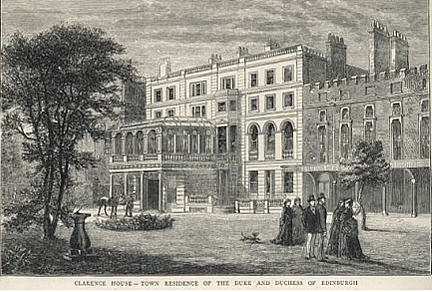

Clarence House


As for London and its royal residences, they appeared bare and gloomy to her eyes accustomed to the splendor of the Russian imperial palaces and they were also decidedly cold: this is because Victoria skimped on the heating and sent the servants to turn off the fireplaces Marija had lit up, as soon as she came out of the rooms. She also found the food terrible, and the Queen's frequent visits to Osborne, Windsor and Balmoral very boring and endless. Furthermore, the English did not like to see a Princess smoking in public, which was customary for Marija, but which was then only characteristic of men, and furthermore they judged her to be narrow-minded and unfriendly. At court she managed to establish a good emotional relationship only with Beatrice and Leopold: she did not like the Princess of Wales, she considered her ignorant, just as she judged her mother-in-law to be "a crazy and stupid old woman".


Queen Victoria with her daughter-in-law Marija and her last-born daughter Beatrice


Since the main purpose of royal marriages was to give birth to a lineage, Marija did her duty by giving Alfred five children (Alfred, Marie, Victoria Melita, Alexandra, Beatrice), but, despite the mutual love that, initially, animated the two young princes, theirs cannot be defined a happy union. In 1887 the family moved to Coburg: Alfred was the heir of his paternal uncle Ernest II - now elderly and childless - to the throne of the Duchy of Saxe-Coburg and Gotha, given the resignation of his brother Albert, Prince of Wales, destined to the throne of Great Britain. In 1893 Ernest II died and Alfred had to leave the Royal Navy, for which he had continued to serve, in order to take on the new role of Duke of Saxe-Coburg and Gotha. But without the possibility of traveling and forced into his family, he withdrew into himself, smoked and drank more and more, had extramarital affairs and the relations with his wife became very bad. Marija still kept the marriage going, at least in her appearances, happy with her role as Duchess, but the two were together only on official occasions and travels. On February 3, 1899, their first-born son Alfred, called ‘young Affie’,


'Young Affie' aged 20


shot himself and died 3 days later. It is correct to say that Queen Victoria and Her offspring were relatives with all the most important European courts: when he died he was the cousin of Tzar Nicholas II, of King George V of Great Britain, of Kaiser Wilhelm II. Some believe that this gesture was due to having contracted syphilis, others to some marriage negotiations going on when the boy was already secretly married and didn’t know how to get out of the situation. He was only 24 years old. Needless to say, Alfred blamed his wife for his son's suicide: he attributed this gesture to the bad education she had given him. In July of the following year Alfred left Marija a widow, who, forgetting old grudges, decided to return to England and assisted her mother-in-law until the last day of Hers, that was January 22, 1901. She still lived several years: those of the Great War, of the Russian Revolution, which brought about the decline of all her assets and reduced her to poverty, and of the dissolution of the old Duchy of Saxe-Coburg and Gotha. Forced to retire to Switzerland, Marija was a destroyed woman who had never recovered from the death of her son and described herself as disgusted by humanity. She'll die on October 25, 1920, of a heart attack, at the age of 67.


Hoping to have entertained you with interest and delight, 
Dearest Friends and Readers of mine,
I wish myself to have You here again 
to have another walk through History.
See you soon ❤  



Marija Alexandrovna Romanova, la nuora della regina Vittoria che la detestava


IMMAGINE 1 - Ritratto di Marija giovane donna


Amata e stimata dal suo popolo, o forse dovremmo dire dall’intero Vecchio Continente, venerata da tutta la sua famiglia, da generi, nuore e nipoti, la regina Vittoria aveva vicino a sé una parente acquistata che non provava alcun affetto per lei, ma che, anzi, la detestava: era la moglie di Alfred, il figlio maschio secondogenito, chiamato in famiglia ‘Affie’.
La nuora che le era ostile era Marija Romanova, figlia dello zar Alessandro II e della sua consorte, Maria d’Assia Darmstadt, divenuta zarina con il nome di Marija Alexandrovna.
Marija era nata a Tsarskoe Selo il 17 ottobre 1853; aveva sette fratelli, una femmina e sei maschi, ma la sorella era morta nel 1849 e un fratello lo perse nel 1865, per cui, unica femmina rimasta, crebbe con un carattere forte e volitivo da figlia prediletta dello zar. A detta di tutti era molto intelligente e colta, e oltre al russo parlava perfettamente inglese, tedesco e francese. Essendo la zarina di salute cagionevole, soffriva il clima russo e si recava spesso a trovare i parenti in Germania con i tre figli più piccoli, Marija, Sergej e Pavel. Era il 1868 quando Marija conobbe Alfred, duca di Edimburgo, proprio in Germania, dove era in visita a sua sorella Alix, moglie del granduca d’Assia: 


IMMAGINE 2 - I due giovani principi nel 1868


egli era ufficiale nella Royal Navy, sempre in giro per il mondo, e non si rividero fino all’estate del 1871, quando lo zar e la zarina, nuovamente a Darmstadt con i tre figli minori, vi incontrarono Alfred con il fratello Albert, principe di Galles, e sua moglie, la principessa Alexandra. 
Alfred era di bell’aspetto, ma molto timido, e trascorse molto tempo insieme con Marija; pur essendo chiaro che fra i due era nato un sentimento non vi furono accordi per un fidanzamento. Entrambe le famiglie erano contrarie: la regina Vittoria considerava i russi dei barbari mentre la zarina reputava gli inglesi freddi e poco simpatici. Lo zar era dubbioso: in Russia, a seguito della guerra di Crimea, era diffusa una palese ostilità verso gli inglesi, ma la cosa che maggiormente lo preoccupava era perdere la figlia, per cui le chiese di attendere un anno, cosa che riscosse l’entusiasmo della regina Vittoria che giudicava l’argomento accantonato. La ripresa delle trattative nel gennaio del 1873 la irritò non poco: ai due ragazzi erano stati presentati altri candidati, ma tutti furono rifiutati, e così l’11 luglio Marija ed Alfred si fidanzarono. 


IMMAGINE 3 - Marija e Afred nella foto ufficiale del loro fidanzamento


Alla regina del Regno Unito non rimase altro che 'bere dall'amaro calice'. Alla figlia Vittoria, principessa reale, scriverà: "The murder is out" (l’omicidio è compiuto)! Come inizio di una relazione tra suocera e nuora, già di per sé non sempre facile, non era un concetto foriero di buone prospettive. Giunto il momento d’incontrare Marija, Vittoria, rassegnata, stabilì che la giovane venisse accompagnata a Balmoral in Scozia. Lo zar propose piuttosto un incontro a Colonia che però venne rigettato da Vittoria: anche se lei era una regina e lui un imperatore, forse valeva di più la sua volontà poiché sul trono da più tempo, per cui era lui a doversi muovere. Rifiutò anche la nomina del figlio a Colonnello di un Reggimento russo promossa da Alessandro II, considerato un affronto. Poiché vedeva la figlia così innamorata, Alessandro II finì con il rassegnarsi al suo matrimonio, ma Vittoria non dimostrava alcuna simpatia verso questo ‘ampliamento’ della sua famiglia.
Lo zar fece preparare per la figlia un corredo di una magnificenza mai vista prima, la fornì di dote e rendita, le donò gioielli di famiglia inestimabili, compresa una parure appartenuta a Caterina la Grande, e, per la luna di miele degli sposi, fece preparare un lussuoso appartamento nel Palazzo Alessandro a Tsarkoe Selo, sperando che si stabilissero in Russia. 


IMMAGINE 4 - Marija fotografata il giorno del suo matrimonio


Marija e Alfredo si sposarono a San Pietroburgo il 23 gennaio 1874 con due cerimonie, una ortodossa e una anglicana e, con grande dolore dello zar gli sposi decisero di prendere residenza in Inghilterra, a Londra, presso Clarence House, dove arrivarono in marzo. Marija, la sola Romanov che entrò a far parte della famiglia reale inglese, era arrivata in Inghilterra con tanto entusiasmo ma, per più motivi, rimase molto delusa. Vittoria accolse la giovane principessa con apparente affetto, anche se riteneva che "non fosse bella o aggraziata e non sapesse comportarsi bene", ma i problemi cominciarono subito con le precedenze di rango. Marija, Altezza Imperiale per nascita, venne retrocessa ad Altezza Reale per matrimonio, cosa che non incontrò il favore dello zar. Dopo lunghe discussioni Marija venne spostata al secondo posto, prima delle Altezze Reali per nascita ma dopo Alexandra, principessa del Galles. Anche i gioielli della principessa russa furono motivo di malumori poiché crearono invidie essendo molti di più e ben più degni di ammirazione di quelli della regina e delle sue figlie. 


IMMAGINE 5 - Clarence House


Quanto a Londra e alle sue residenze reali, esse apparivano spoglie e tetre ai suoi occhi abituati allo sfarzo dei palazzi imperiali russi ed inoltre erano decisamente fredde: questo perché Vittoria lesinava sul riscaldamento e inviava la servitù a spegnere i caminetti fatti accendere da Marija non appena questa usciva dalle stanze. Trovava terribile anche il cibo e noiosissimi e interminabili i frequenti soggiorni della regina a Osborne, a Windsor e a Balmoral. Inoltre gli inglesi non amavano vedere una principessa fumare in pubblico, cosa che per Marija era consueta, ma che allora, in Inghilterra, era caratteristica solo degli uomini, ed inoltre la giudicavano, gretta e scostante. A Corte riuscì a stabilire un buon rapporto affettivo solamente con Beatrice e Leopoldo: la principessa del Galles non le piaceva, la reputava ignorante, così come giudicava sua suocera "una vecchia pazza e stramba". 


IMMAGINE 6 - La regina Vittoria con la nuora Marija e la figlia ultimogenita Beatrice


Visto che lo scopo principale dei matrimoni reali era quello di dar vita ad una discendenza, Marija fece il suo dovere dando ad Alfred cinque figli (Alfred, Marie, Victoria Melita, Alexandra, Beatrice), ma, nonostante l’amore reciproco che aveva animato in origine i due giovani principi, la loro non si poté definire un’unione felice. Nel 1887 la famiglia si stabilì a Coburgo: Alfred era erede dello zio paterno Ernesto II - ormai anziano e senza figli - al trono del Ducato di Sassonia-Coburgo e Gotha, data la rinuncia del fratello Albert, principe di Galles, destinato al trono di Gran Bretagna. Nel 1893 Ernest II morì ed Alfred dovette lasciare la Royal Navy, per cui aveva continuato a prestare servizio, al fine di assumere il nuovo ruolo di duca di Sassonia-Coburgo e Gotha. Ma senza avere più la possibilità di viaggiare e costretto in famiglia si chiuse in se stesso, fumava e beveva sempre di più, aveva relazioni extraconiugali e i rapporti con la moglie divennero pessimi. Marija teneva comunque in piedi il matrimonio almeno nelle apparenze, contenta del suo ruolo di duchessa, ma i due erano insieme solo nelle occasioni e nei viaggi ufficiali. Il 3 febbraio 1899 il figlio Alfred, chiamato in famiglia 'young Affie' (piccolo Affie)

IMMAGINE 7 - Il piccolo Affie fotografato a 20 anni


si sparò un colpo di pistola e morì 3 giorni dopo. Non è improprio dire he la regina Victoria e la Sua discendenza erano imparentati con le più importanti Corti europee: quando morì egli era cugino dello zar Nicola II, del re del Regno Unito Giorgio V e del Kaiser Guglielmo II. Qualcuno ritiene che il suo gesto disperato fosse dovuto all’aver contratto la sifilide, altri alle trattative matrimoniali del ragazzo che era invece già segretamente sposato e non sapeva come uscire dalla situazione. Aveva solamente 24 anni. Inutile dire che Alfred incolpò la moglie del suicidio del figlio: lo attribuiva alla cattiva educazione che ella gli aveva impartita. Nel luglio dell’anno seguente Alfred lasciò Marija vedova, la quale, dimenticando vecchi rancori, decise di tornare in Inghilterra ed assistette la suocera fino all’ultimo dei suoi giorni, il 22 gennaio 1901. Ella visse ancora diversi anni: quelli della Grande Guerra, della Rivoluzione russa, che procurò il declino di tutti i suoi beni e la ridusse in povertà, e della dissoluzione del vecchio Ducato di Sassonia-Coburgo e Gotha. Costretta a ritirarsi in Svizzera, Marija, che non si era più ripresa dalla morte del figlio, era una donna distrutta che si definiva disgustata dall’umanità. Morirà il 25 ottobre del 1920 a causa di un infarto all’età di 67 anni.


Nella speranza di avervi intrattenuti dilettevolmente e con interesse, 
Carissimi Amici e Lettori,
mi auguro di riaverVi ancora qui
per un'altra passeggiata nella Storia.
A presto ❤  


LINKING WITH:


giovedì 18 gennaio 2018

A tale of two sisters, Queen Victoria's granddaughters.


... This is the story of two sisters,
  so similar as to seem almost twins,
as well as so similar their tragic fate was ...


I want to tell you today the story of two enchanting girls, two fairytale princesses, whose lives ended up turning out to be anything but a fairytale, but which at their beginning they had all the prerequisites for being considered such.


Elisabeth and Alix von Hessen und bei Rhein were two wonderful princesses born into a noble and wealthy German family, daughters of the third born - but second as female - of the British royal couple, Queen Alexandrina Victoria and her husband, Prince Consort Albert von Saxen-Coburg Gotha, I'm talking about Her Royal Highness Alice Maude Mary of the United Kingdom.


Princess Alice of the United Kingdom (Alice Maud Mary, daughter of Queen Victoria).
Camille Silvy (1835–1910) - Royal Collection RCIN 2900531


When her father, Prince Albert, was diagnosed with typhoid fever in December 1861, Alice took care of him until the time of his death, which occurred on December 14 of that same year. After his death, Queen Victoria entered a period of intense mourning that it wouldn't abandon her for the rest of her life, and Alice spent the next six months at her side as an unofficial secretary and above all as a figure of moral support that wanted to help her in overcoming the tragedy of such an early, sudden and serious loss. On July 1st, 1862, while the court was still at the height of this mourning, Alice married Louis IV, heir to the Grand Duchy of Hesse becoming thus Princess Louis von Hessen-Darmstadt and Grand Duchess von Hessen und bei Rhein. The ceremony, conducted privately and with obscure sadness at Osborne House, was described by the Queen as having its own atmosphere "more than a funeral than a marriage". And, alas, the princess's life, began sadly, sadly went on in Darmstadt because of the gradual impoverishment, of family tragedies and the worsening of the relationships both with her husband and her mother.

But let's come to her children who were her only joy,


and to these girls who are the protagonists of this story of ours: Princess Elisabeth, second-born, born after Irene (November 1st, 1864), and Princess Alix, fifth-born and penultimate daughter of the Grand Dukes von Hessen und bei Rhein, born just before Princess Mary (June 6th, 1872).

Their fate led both of them to Russia for love, in that Russia still so backward, not yet reached by the industrial revolution and thus still without a middle class, socially and economically governed by agriculture.
At that time Russia was still divided in two social classes, the wealthy, which were far wealthy and the poor, which were amongst the poorest in the whole Europe. 
Needless to say that it was deeply strident the hiatus between the destitute and the aristocracy, who lived in a world of its own, made of opulence and pomp: theater, ballets, operas, concerts, sporting events, and afternoon teas were the only concerns of the most affluent people and marked a calendar so intense and arduous to follow that no time left them to think about the poor ...


Performance at the Bolshoi Theater by Mihály Zichy (?)


Ball in Honour of Alexander II by Mihály Zichy, 1864


In fact, well-to-do people lived in a state of total ignorance of the miserable conditions in which the lower class, the peasants, lived: they lived at the end of their strength to obtain a plate of soup, exploited by the aristocrats and landowners and owners of nothing ...

Ninety-five per cent of the peasants owned nothing, had no land and no money given the high fees that they had to pay to their landowners for the lands that they worked for them and lived in mud-roofed huts, for which they also paid a rent ...


Peasant Children by Vladimir Yegorovich Makovsky, 1880


Busy Time for the Mowers by Grigoriy Myasoyedov, 1887


 PRINCESS ELISABETH VON HESSEN-DARMSTADT UND BEI RHEIN 


Named lovingly Ella in the bosom of her family, she was named after St.Elisabeth, the patron of Hungary, and as a young girl lived a modest life compared to the real standards of the time, even though her father came from one of the oldest and noblest houses in Germany and her mother was the daughter of Queen Victoria.

She swept the floors, cleaned her room and even accompanied her mother to take care of the soldiers at a nearby hospital when the war between Austria and Prussia broke out.

And once she became a woman she grew charming and kind and considered one of the most beautiful princesses all around the Europe. 


Courted by her cousin, the future Kaiser Wilhelm II, a marriage which her grandmother would have seen favorably, she gave her heart to the Grand Duke Sergej Alexandrovich of Russia who married in June 1884 thus assumimg the name of Grand Duchess Elizabeth Feodorovna Romanova.

Everyone fell in love with her when she reached Russia after leaving her beloved Darmstadt and it was at the aforementioned wedding that Alix, her younger sister, met her future husband, the sixteen-year-old Nicholas, the future Tsar Nicholas II, a union that she supported, but that once again clashed with the farsightedness of Grandma Victoria, perhaps because she presaged the tragedies that it would have brought to her family ...

The happiness of Ella, who lived with her beloved in one of the Kremlin palaces, was finally broken when, on a cold February morning of the year 1905, Sergej was assassinated inside his palace by a socialist-revolutionary who, in doing so, avenged 20,000 Jews whom he had gathered to drive them out of their homes without any reason and without warning them, a few days before.

Although she changed her belief from Lutheranism to Orthodoxy, she remained devoutly religious, and feared that God's wrath would be unleashed on her family; consumed by sadness and guilt, she gave herself to monasticism, sold her possessions in 1909 and worked tirelessly to help the poor and sick in Moscow, often finding herself in the worst neighborhoods.


Grand Duchess Elizabeth Feodorovna Romanova as a nun after her husband’s death, 1918


In July of 1918 Lenin ordered the arrest of Ella: she spent a few days with other prisoners belonging to Russian noble families before being transported with them to a small village with an abandoned coal mine 66 feet deep.

She was taken as first, beaten and thrown into one of the mine pits - but remained unharmed after the fall - and was followed by all the others; then a mine was thrown into the well but only one man died; then the assassins threw a second grenade which was completely lethal and the poor Ella perished singing a sacred hymn, according to the testimonies.

It was July 18th.


PRINCESS ALIX VON HESSEN-DARMSTADT UND BEI RHEIN 


Nicknamed "Sunny" by her mother and "Alicky" by her British relatives because she could be distinguished from her aunt, Princess Alexandra of Denmark who would become Queen of England as a consort of King Edward VII, Alix became a charming girl with her bright blue-eyed, gold-red hair, and among all she was Queen Victoria's favorite nephew, who had in mind for her a marriage that would, in the future, view her on the English throne as the bride of the eldest son of the Prince of Wales, Prince Albert Victor, Duke of Clarence and Avondale.


A beautiful portrait of Alix in her youth


But as we've already seen, Alix fell in love with Nicholas in 1889 and Nicholas couldn't wait for the girl to accept his hand - at first the young woman was reluctant to convert to Orthodoxy, but, reassured by her sister, finally agreed to get engaged with the Russian Prince who had already won her heart.


Official portrait of the engagement between Nicholas and Alix


When in 1894 Tsar Alexander III died Nicholas became Emperor of all the Russias under the name of Nicholas II and Alix got married and was crowned Tsarina on the same day,  May 26th, 1896 (since then she assumed the name of Aleksandra Feodorovna Romanova)!


Zarina Aleksandra Feodorovna Romanova nee Alix von Hessen-Darmstadt, 1908


Although she gave birth to five beautiful daughters, the Tsarina never managed to establish a communicative relationship with the Russian people, partly because of her shy and reserved character, partly because the population reproached her for not loving the Russian culture and not having given birth to an heir to the imperial throne, this until in August 12th, 1904 when her little 'ray of sunshine', Prince Alexei, was born.


From that day she lived definitively isolated with her child in the palaces seat of the power, retiring completely to private life, which further reduced the scarce sympathy that the people already had for her; all this, added to the dangerous financial weakening that Russia had to endure after the Great War, which caused hunger to millions of people who couldn't bear the heavy taxation enforced by the government, finally ignited the fuse that triggered the revolt against the central power: in March 1917 the revolution broke out and the Romanovs were taken prisoner in their palace, with no intention of eliminating them, but with the hope that their foreign relatives intervened to help them to expatriate, but neither France nor Britain moved, and the next move came to the Bolsheviks who seized power and abducted the entire imperial family on August 17th, 1917, to lead them to Tobolsk in Siberia.

The taking of power by the Bolshevists in November 1917 was the first step taken by fate towards their death; in the Spring of the following year they were moved and taken to Ipatiev House in Yekaterinburg, where they finally came, suddenly, executed.

It was the morning of July 17th, Alix died exactly one day before the same fate touched the poor Ella ... the wind of progress had taken the lives of both of them ... almost at the same time ...


History often leads us to reflect, to think that not much has changed over time, and perhaps not much will change as long as there will be feelings of hostility to separate us from one another ...


Thanks as always for your attention and support,

I hug you heartily


See you soon 💕


... E' questa la storia di due sorelle,
 tanto simili da sembrare quasi gemelle, 
così come tanto simile fu il loro tragico destino ...


- immagine 1 - Elisabeth e Alix von Hessen-Darmstadt und bei Rhein


Voglio raccontarvi quest'oggi la storia di due fanciulle incantevoli, due principesse da favola, le cui vite finirono con il rivelarsi tutt'altro che una favola, ma che dapprincipio avevano tutti i presupposti per poterlo essere.


Erano Elisabeth ed Alix von Hessen und bei Rhein due meravigliose principesse nate in seno ad una nobile e facoltosa famiglia tedesca, figlie della terza nata, ma seconda come femmina, della coppia reale inglese, data dalla regina Alexandrina Victoria e dal suo consorte Principe Albert von Saxen-Coburg Gotha, ovvero Sua Altezza Reale Alice Maude Mary of the United Kingdom.


- immagine 2 - Princess Alice of the United Kingdom (Alice Maud Mary, daughter of Queen Victoria). Camille Silvy (1835–1910) - Royal Collection RCIN 2900531


Quando a suo padre, il Principe Albert, fu diagnosticata la febbre tifoide nel dicembre  del 1861, Alice se ne prese cura fino al momento del suo decesso, occorso il 14 dicembre di quello stesso anno. Dopo la sua morte, la regina Victoria entrò in un periodo di intenso lutto che non avrebbe abbandonato per il resto della sua vita, Alice trascorse i successivi sei mesi al suo fianco in qualità di segretaria non ufficiale e soprattutto come figura di sostegno morale che avrebbe dovuto aiutarla nel superare la tragedia di una così precoce improvvisa e grave perdita. Il 1° luglio del 1862, mentre la corte era ancora al culmine del lutto, Alice sposò Louis IV, erede del Granducato di Hesse, divenendo così Principessa Louis e Granduchessa von Hessen-Darmstadt und bei Rhein. La cerimonia, condotta privatamente e con oscura tristezza a Osborne House, fu descritta dalla Regina come avente l'atmosfera propria "più di un funerale che di un matrimonio". E purtroppo, cominciata tristemente, la vita della principessa a Darmstadt fu infelice a causa del graduale impoverimento, di tragedie familiari e del peggioramento delle relazioni sia con il marito che con la madre.


Ma veniamo ai suoi figli, che furono la sua unica gioia, 


- immagine 3 - Alice circondata dai suoi sei figli


e a queste fanciulle che di questa nostra storia sono le vere protagoniste: la Principessa Elisabeth, secondogenita, nata dopo Irene (1 novembre 1864), e la Principessa Alix, quintogenita e penultima figlia della coppia dei Granduchi von Hessen und bei Rhein, nata subito prima della Principessa Mary (6 giugno 1872).

Il loro destino le condusse entrambe in Russia per amore, in quella Russia al tempo non ancora raggiunta dalla rivoluzione industriale e perciò priva di una classe media, la cui economia ancora si reggeva sull'agricoltura.
A quel tempo la Russia era ancora divisa in due classi sociali, quella dei benestanti, che erano davvero molto ricchi, e quella dei non abbienti, che erano tra i più poveri dell'intera Europa.
Inutile dire che profondamente stridente era lo iato tra gli indigenti e l'aristocrazia, che viveva in un mondo tutto suo, fatto di opulenza e di sfarzo: il teatro, i balletti, l'opera, i concerti, gli eventi sportivi, ed i tè pomeridiani erano le uniche preoccupazioni dei più abbienti e scandivano un calendario talmente intenso ed arduo da seguire che nessun tempo lasciava loro per pensare alla gente più misera ...


- immagine 4 - Performance at the Bolshoi Theater by Mihály Zichy (?)


- immagine 5 - Ball in Honour of Alexander II by Mihály Zichy, 1864


Vivevano infatti i ricchi in uno stato di totale ignoranza delle miserrime condizioni in cui invece versava il ceto più basso, quello dei contadini, che vivevano allo stremo delle forze per procurarsi un piatto di minestra, sfruttati dagli aristocratici e padroni di nulla ...
Il novantacinque per cento dei contadini erano nullatenenti, non avevano terra e tanto meno possedevano denaro date le elevate rette che dovevano pagare ai proprietari terrieri per le terre che per loro lavoravano e vivevano in capanne dal tetto fatto in fango, per cui anche pagavano l'affitto ...


- immagine 6 - Peasant Children by Vladimir Yegorovich Makovsky, 1880


- immagine 7 - Busy Time for the Mowers by Grigoriy Myasoyedov, 1887


 ELISABETH VON HESSEN-DARMSTADT UND BEI RHEIN 


Nominata amorevolmente Ella in seno alla famiglia, ella mutuò il proprio nome da St.Elisabetta patrona d'Ungheria e già da fanciulla visse una vita modesta paragonata agli standards reali del tempo, anche se suo padre proveniva da una delle case più antiche e nobili della Germania e sua madre era la figlia della Regina Victoria.

Ella Spazzava i pavimenti, puliva la sua stanza e persino accompagnava la madre a prendersi cura dei soldati in un vicino ospedale quando scoppiò la guerra tra Austria e Prussia.
Ed una volta fattasi donna divenne affascinante e gentile e considerata una delle più belle principesse dell'intera Europa.


- immagine 8 e immagine 9 - 2 ritratti della giovane Elisabeth


Corteggiata dal cugino futuro Kaiser Wilhelm II, matrimonio che la nonna avrebbe visto di buon occhio, Ella si lasciò conquistare dal Granduca Sergej Alexandrovich di Russia che sposò nel giugno del 1884 assumendo così il nome di Granduchessa Elizabeth Feodorovna.
Tutti si innamorarono di lei quando raggiunse la Russia dopo aver lasciato l'amata Darmstadt e fu proprio alle suddette nozze che Alix, la sorella minore, incontrò il suo futuro sposo, il sedicenne Nicholas, il futuro Zar Nicola II, unione che Ella appoggiò, ma che ancora una volta si scontrava con la lungimiranza della nonna Victoria, forse perché presaga delle tragedie che avrebbe portato con sé ...

La felicità di Ella, che viveva con il suo amato in uno dei palazzi del Cremlino, fu definitivamente spezzata quando, in un freddo mattino di febbraio del 1905, Sergej fu assassinato all'interno del palazzo da un socialista-rivoluzionario il quale, così facendo, intendeva vendicare i 20.000 ebrei che questi aveva radunati per cacciarli dalle loro case senza motivo e senza preavviso alcuni giorni prima.

Nonostante avesse mutato il proprio credo passando dal luteranesimo all'ortodossia, Ella era rimasta devotamente religiosa, e temeva che l'ira di Dio si sarebbe scatenata sulla sua famiglia; consumata dalla tristezza e dal senso di colpa, si diede al monachesimo, vendette i suoi possedimenti nel 1909 e lavorò senza tregua per aiutare i poveri e gli ammalati a Mosca, trovandosi spesso a percorrere le strade dei peggiori quartieri.


- immagine 10 - Ella in abito da monaca fotografata dopo la morte del marito


Nel luglio dell'anno 1918 Lenin ordinò l'arresto di Ella: costei trascorse alcuni giorni con altri prigionieri appartenenti ad altre famiglie nobili russe prima di essere trasportata con loro in un piccolo villaggio con una miniera abbandonata a 66 piedi di profondità.

Ella fu presa per prima, fu percossa e gettata in uno dei pozzi della miniera - ma rimase illesa dopo la caduta - e fu seguita da tutti gli altri; nel pozzo venne quindi gettata una mina ma solo un uomo morì; quindi gli assassini gettarono una seconda granata la quale fu del tutto letale e la povera Ella perì cantando un inno sacro, stando alle testimonianze.


Era il 18 luglio.


 ALIX VON HESSEN-DARMSTADT UND BEI RHEIN 


Soprannominata "Sunny" da sua madre e "Alicky" dai suoi parenti britannici poiché potesse essere distinta dalla zia, la Principessa Alexandra di Danimarca che sarebbe diventata Regina d'Inghilterra in qualità di consorte del Re Edward VII, Alix divenne una bellissima fanciulla dai vivaci occhi blu e dai capelli rossi dorati e tra tutte era la nipote preferita della Regina Victoria la quale aveva in mente per lei un matrimonio che l'avrebbe, in futuro, vista a sua volta sul trono inglese quale sposa del figlio maggiore del Principe di Galles, il Principe Albert Victor, Duca di Clarence and Avondale.


- immagine 11 - Una bellissima Alix fotografata nel fiore degli anni


Ma come abbiamo già visto Alix si innamorò di Nicholas nel 1889 e Nicholas non vedeva l'ora che la fanciulla accettasse la sua mano - dapprincipio la giovane era riluttante circa la conversione all'ortodossia, ma, rassicurata dalla sorella, accettò infine di fidanzarsi con il principe russo che aveva già conquistato il suo cuore.


- immagine 12 - Foto ufficiale del fidanzamento di Nicholas ed Alix


Quando nel 1894, lo zar Alessandro III morì Nicholas divenne Imperatore di tutte le Russie con il nome di Nicholas II ed Alix si sposò e venne incoronata zarina il medesimo giorno, ovvero il 26 maggio del 1896 (da allora assunse il nome di Aleksandra Feodorovna Romanova) !


- immagine 13 - La Zarina Aleksandra Feodorovna Romanova nata Alix von Hessen-Darmstadt,  fotografata nel 1908


Nonostante mise al mondo cinque bellissime figlie, la zarina non riuscì mai a stabilire un rapporto di comunicatività con il popolo russo, un po' per il proprio carattere timido e riservato, un po' perché la popolazione le rinfacciava il fatto di non amare la cultura russa e di non aver dato alla luce un erede al trono imperiale, fino a che il 12 agosto del 1904 nacque il suo piccolo 'raggio di sole', il Principe Alexei.


- immagine 14 - Il Principe Alexei fotografato nel 1904


Da allora ella si isolò definitivamente con il suo piccolo nei palazzi sede del potere, ritirandosi completamente a vita privata, cosa che ridusse ulteriormente le già scarse simpatie che già il popolo nutriva per lei; tutto ciò, sommato al pericoloso indebolimento finanziario che la Russia dovette sopportare dopo la Grande Guerra, che indusse alla fame milioni di popolani che non riuscirono a sostenere i pesanti oneri che si videro affibbiare dal governo, accese definitivamente la miccia che scatenò la rivolta contro il potere centrale: nel marzo del 1917 scoppiò la rivoluzione ed i Romanov vennero fatti prigionieri nei loro palazzo, senza alcuna intenzione di eliminarli, ma con la speranza che i loro parenti stranieri intervenissero per farli espatriare, ma né la Francia né la Gran Bretagna si mossero, per cui la mossa successiva toccò ai Bolscevichi che rapirono l'intera famiglia imperiale il 17 agosto del 1917 per condurli a Tobolsk in Siberia.
La definitiva presa del potere da parte dei Bolschevichi nel novembre del 1917 fu il primo passo compiuto dal destino verso la loro morte; nella primavera dell'anno successivo furono spostati e condotti presso Ipatiev House ad Yekaterinburg dove vennero alfine, improvvisamente giustiziati. 

Era la mattina del 17 luglio, Alix morì esattamente un giorno prima che la medesima sorte toccasse anche alla povera Ella ... il vento del progresso aveva tolto la vita ad entrambe ... quasi al contempo ...


Spesso la Storia ci porta a riflettere, a pensare che non molto è cambiato nel corso del tempo, e forse non molto potrà mutare finché esisteranno sentimenti di ostilità a separarci gli uni dagli altri ...


Grazie come sempre per la vostra attenzione, 
vi abbraccio con il cuore


a presto 💕