How delightful it would be to be a governess!
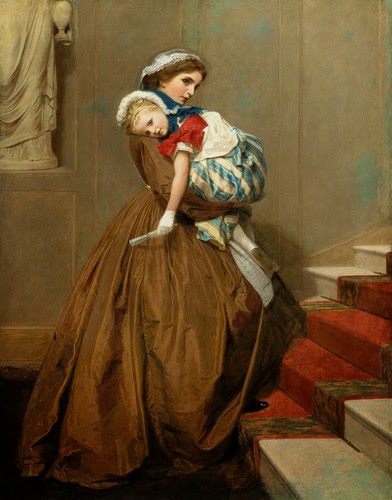
James Hayllar, Miss Lily's Return from the Ball
To go into the world; to enter a new life; to act for myself: to exercise my unusual faculties; to earn my own maintenance.
Agnes Grey, Anne Brontë, 1847


- picture 1 - James Hayllar, Miss Lily's Return from the Ball
Jane Eyre di Charlotte Brontë, Agnes Grey di Anne Brontë, Becky Sharp in Vanity Fair di William Makepeace Thackeray ( romanzi tutti questi pubblicati nell'anno 1847 ), Emily Morton in Amy Herbert di Elizabeth Sewell, Emma di Jane Austen, se volte, anche se leggermente anteriore ed altre ancora, la letteratura vittoriana ci viene spesso incontro, con la finzione del romanzo, aiutandoci a dar vita, nel nostro immaginario, alla figura dell'istitutrice, una figura caratteristica dei quel periodo storico, anche se sorta nel secolo precedente quale membro della servitù che componeva il seguito delle famiglie più facoltose; osservata nella realtà dei fatti quella della Victorian governess è un'immagine difficilmente connotata da un'esistenza che si svolge serenamente e che trova al fine una felice realizzazione, l'unico elemento apportatore di gioia è quello di vivere con i fanciulli seguendone passo passo lo sviluppo, dettato da una quantomeno allegra routine:
Ho visto i miei cari alle otto, felicemente seduti davanti alle loro tazze di pane e latte, poi li lasciai alla loro cameriera e feci un giro nel boschetto. Colazione alle nove, i miei amori al mio fianco a giocare con le loro bambole. Dissi loro che se avessero giocato giocato molto graziosamente certamente avrei consentito loro la lettura e la scrittura come ricompensa. accolsero subito di buon grado la mia promessa ... N.B. farli studiare non deve essere visto come una punizione dovuta alla cattiva condotta. Sono tornati al loro gioco e ho suonato l'arpa fino a mezzogiorno, poi siamo usciti nel boschetto. Il tempo molto brutto e freddo - ha consentito ai miei amori di esercitarsi. Rimasimo fuori fino alle due. Li invitai a di vestirsi e a leggere per un'ora Pietro il Grande ... Abbiamo pranzato alle tre, parlammo francese per tutto il tempo in cui fummo tavola. Dopo cena lessi loro un racconto, poi i nostri piccoli studi, poi hanno giocato mentre ero al lavoro un'ora. Il tempo pessimo ci costrinse a giocare a 'puss in a corner ' e ritrovai il mio buon umore cercando di divertire i miei cari. Li inviai con la loro domestica alle sette a cena ... Alle otto li ho sentiti recitare le loro preghiere e poi li vidi a letto. Dissi quindi le mie preghiere, e andai a letto alle undici. 1

E come se non bastasse, essendo una figura cui poco si attribuiva importanza, molto di ciò che ne sappiamo lo dobbiamo a scritti e a corrispondenze private ( esemplare a tal proposito risulta la trascrizione delle memorie di Anna Henriette Leonowens, scrittrice, viaggiatrice ed educatrice britannica che nel 1862 accettò l'incarico d'insegnare ai figli e alle mogli del re del Siam da cui venne tratto nel 1944 il romanzo di Margaret Landon Anna and the King of Siam e quindi il musical nel 1951 The king and I ) che fortunatamente sono giunti fino ai giorni nostri.
Ho visto i miei cari alle otto, felicemente seduti davanti alle loro tazze di pane e latte, poi li lasciai alla loro cameriera e feci un giro nel boschetto. Colazione alle nove, i miei amori al mio fianco a giocare con le loro bambole. Dissi loro che se avessero giocato giocato molto graziosamente certamente avrei consentito loro la lettura e la scrittura come ricompensa. accolsero subito di buon grado la mia promessa ... N.B. farli studiare non deve essere visto come una punizione dovuta alla cattiva condotta. Sono tornati al loro gioco e ho suonato l'arpa fino a mezzogiorno, poi siamo usciti nel boschetto. Il tempo molto brutto e freddo - ha consentito ai miei amori di esercitarsi. Rimasimo fuori fino alle due. Li invitai a di vestirsi e a leggere per un'ora Pietro il Grande ... Abbiamo pranzato alle tre, parlammo francese per tutto il tempo in cui fummo tavola. Dopo cena lessi loro un racconto, poi i nostri piccoli studi, poi hanno giocato mentre ero al lavoro un'ora. Il tempo pessimo ci costrinse a giocare a 'puss in a corner ' e ritrovai il mio buon umore cercando di divertire i miei cari. Li inviai con la loro domestica alle sette a cena ... Alle otto li ho sentiti recitare le loro preghiere e poi li vidi a letto. Dissi quindi le mie preghiere, e andai a letto alle undici. 1

Abraham Solomon, Portrait of Two Girls with their Governess
English School, The Governess, c.1860
Vi dicevo poc'anzi che quella dell'educatrice è un'istituzione che risale al secolo XVIII laddove nobili ed aristocratici necessitavano di una donna di modesti natali e di buone maniere in grado di educare le figlie femmine alla loro femmininità, ma dovete sapere che durante il secolo successivo i "noveau riches" vittoriani, ovvero i medio ed alto borghesi che rappresentano la nuova classe sociale andata costituendosi velocemente e che altrettanto velocemente andava arricchendosi grazie al progresso e all'industrializzazione, una classe sociale nuova senza passato e senza tradizioni, che guarda a quella superiore cercando di farne propri i modi, i gusti e gli ideali con fare emulativo, non può davvero fare a meno di una educatrice per la propria prole, cosìcchè questa figura diviene durante tutto il 1800 molto ricercata e conosce durante questo periodo l'apice del proprio successo.


Vasily Perov, Arrival of the governess to the merchant house, 1866
Generalmente quella dell'educatrice era una professione quasi obbligatoria per una giovane di famiglia modesta e non maritata, non in grado perciò di sostentarsi autonomamente .... le fanciulle più ricercate erano le figlie dei vicari, le quali, in nome delle biblioteche ben fornite dei genitori, crescevano in un clima di maggior cultura ed anche, perché no, di rigidità morale ( pensiamo proprio alle sorelle Brontë, quale esempio ) e quindi univano alle capacità in fatto di ricamo e di cucito, di musica e canto anche quel po' di cultura generale che poteva arricchire le conoscenze di una donna, senza però aprirle troppo la mente; bastava che fosse abile nella pittura ad olio, ad acquerello e a carboncino, che fosse in grado di trasmettere gli insegnamenti ed i precetti religiosi e morali, soprattutto con l'esempio - come teneva a sottolineare il Cassell's household guide to every department of practical life: being a complete encyclopaedia of domestic and social economy pubblicato nel 1869 - che conoscesse i principi generali della matematica, la storia e la geografia, un po' di francese, tedesco ed italiano ed avesse un'ottima padronanza, questo sì, della lingua inglese, il tutto insegnato con sensibilità ed amorevolezza: non dimentichiamo che l'ideale di femminilità durante il periodo vittoriano era quello dell'Angel at Heart, l'angelo del focolare, docile e remissiva, alla quale la cultura non solo non era necessaria, ma poteva essere, se 'troppa' addirittura ...'nociva' comportando il rischio di distoglierla dai propri doveri coniugali e domestici.

Ma torniamo alla nostra governess per continuare dicendo che nonostante la rilevanza del suo compito all'interno della famiglia e le responsabilità di cui le veniva fatta consegna - l'educatrice vittoriana si occupava dei figli maschi e femmine fino all'età della scolarizzazione, poi veniva affiancata da un 'tutor', generalmente rappresentato da un sacerdote, ovvero dall'uomo di maggior cultura che potesse allora esistere in quanto depositario delle lingue 'dotte' ovvero il greco ed il latino, il quale si assumeva il compito di acculturare i figli maschi mentre a lei toccava l'incombenza di occuparsi delle figlie femmine fino alla maggiore età -

essa conduceva una vita appartata dal resto del personale della famiglia e tra tutti era colei che godeva della paga più bassa dopo la sguattera, la quale, nonostante ciò, poteva ancora ambire a fare carriera ... l'educatrice vittoriana varcava la soglia della dimora della sua nuova famiglia quale governess e tale rimaneva fino a che il trascorrere del tempo non la costringeva a trovarsi una nuova famiglia, come un'orfana 'adulta' in cerca di tutela... l'unica cosa che mutava con il trascorrere degli anni era il suo appellativo, che passava da Miss a Mrs., dopo aver raggiunto i quarant'anni d'età, quasi rappresentasse un merito del tutto onorifico, ma comunque non adeguatamente corrisposto economicamente: pensate che intorno alla metà del secolo XIX una governess era retribuita annualmente con un compenso che variava dalle 30 alle 100 guineas per le più fortunate, quando:
Richard Redgrave, The Governess, 1844, © Victoria and Albert Museum
essa conduceva una vita appartata dal resto del personale della famiglia e tra tutti era colei che godeva della paga più bassa dopo la sguattera, la quale, nonostante ciò, poteva ancora ambire a fare carriera ... l'educatrice vittoriana varcava la soglia della dimora della sua nuova famiglia quale governess e tale rimaneva fino a che il trascorrere del tempo non la costringeva a trovarsi una nuova famiglia, come un'orfana 'adulta' in cerca di tutela... l'unica cosa che mutava con il trascorrere degli anni era il suo appellativo, che passava da Miss a Mrs., dopo aver raggiunto i quarant'anni d'età, quasi rappresentasse un merito del tutto onorifico, ma comunque non adeguatamente corrisposto economicamente: pensate che intorno alla metà del secolo XIX una governess era retribuita annualmente con un compenso che variava dalle 30 alle 100 guineas per le più fortunate, quando:

... nel 1845 un ordinario maestro di musica veniva pagato 7s a lezione. Anche se dava quattro lezioni al giorno, che significava (ipotizzando una settimana di sei giorni) un reddito di oltre £ 400 l'anno ed era in grado di organizzare la sua vita con cognizione (per esempio, dedicando due o tre giorni alla settimana dando le sue lezioni in una scuola e così riducendo il tempo perso viaggiando da un cliente ad un altro), avrebbe potuto guadagnare persino molto di più. 2
George Goodwin Kilburne, The Governess, 1873
Vi confesso che dell'istitutrice vittoriana ho sempre avuto un'immagine talmente gioiosa: dovete sapere che il primo film che vidi al cinema fu Mary Poppins, tratto dal romanzo scritto da Pamela Lyndon Travers quando era adolescente e pubblicato anni dopo nel 1934, probabilmente con l'intento di render lustro e merito ad una figura troppo poco valutata, film che come sicuramente ben sapete è ambientato alla fine del secolo precedente e vede quale protagonista una meravigliosa, magica governess, così come con ogni probabilità era vista ciascuna dagli occhi dei piccoli che educava e cresceva ... ecco, questa per me è e continua ad essere la vera educatrice vittoriana, una magica signora capace di dare realizzazione ai sogni !
A presto ♥


Fonti bibliografiche:
Anonymous, Cassell's household guide to every department of practical life: being a
complete encyclopaedia of domestic and social economy, 2012
https://books.google.it/books?id=90oCAAAAQAAJ&hl=it&source=gbs_book_other_versions
A presto ♥
Fonti bibliografiche:
Anonymous, Cassell's household guide to every department of practical life: being a
complete encyclopaedia of domestic and social economy, 2012
https://books.google.it/books?id=90oCAAAAQAAJ&hl=it&source=gbs_book_other_versions
Ruth Brandon, Other People's Daughters. THE LIFE AND TIME OF THE GOVERNESS,
London, Wiedenfeld & Nicholson, 2008;
Anne Brontë, Agnes Grey, New York. Random House, 2003;
Charlotte Brontë, Jane Eyre, New York, W. W. Norton & Company, 2001;
Gerry Holloway, Women and Work in Britain Since 1840, New York,Routledge, 2005;
Katherine Hughes, The Victorian Governess, London, Hambledon, 1993;
Coventry Patmore, The Angel in the House, Project Gutenberg, Web. 29 March 2013 -
<http://www.gutenberg.org/cache/epub/4099/pg4099.html>;
Joan Perkin, Victorian Women, London, John Murray Publishers, 1993;
Elizabeth Sewell, Amy Herbert, CreateSpace Independent Publishing Platform, 2015;
William Thackeray, Vanity Fair, Penguin Classics - Reissue edition 2003.
London, Wiedenfeld & Nicholson, 2008;
Anne Brontë, Agnes Grey, New York. Random House, 2003;
Charlotte Brontë, Jane Eyre, New York, W. W. Norton & Company, 2001;
Gerry Holloway, Women and Work in Britain Since 1840, New York,Routledge, 2005;
Katherine Hughes, The Victorian Governess, London, Hambledon, 1993;
Coventry Patmore, The Angel in the House, Project Gutenberg, Web. 29 March 2013 -
<http://www.gutenberg.org/cache/epub/4099/pg4099.html>;
Joan Perkin, Victorian Women, London, John Murray Publishers, 1993;
Elizabeth Sewell, Amy Herbert, CreateSpace Independent Publishing Platform, 2015;
William Thackeray, Vanity Fair, Penguin Classics - Reissue edition 2003.
Citazioni:
1 - Ruth Brandon, Other People's Daughters. THE LIFE AND TIME OF THE GOVERNESS,
London, Wiedenfeld & Nicholson, 2008, pag. 26 ( Joanna Martins ed. A Governess in the
Age of jane Austen: The Journals and Letters of Agnes Porter, 1998 - Journal entry, July 1791 );
2 - op. cit., pag 47.
London, Wiedenfeld & Nicholson, 2008, pag. 26 ( Joanna Martins ed. A Governess in the
Age of jane Austen: The Journals and Letters of Agnes Porter, 1998 - Journal entry, July 1791 );
2 - op. cit., pag 47.

How delightful it would be to be a governess!
- picture 1 - James Hayllar, Miss Lily's Return from the Ball
To go into the world; to enter a new life; to act for myself: to exercise my unusual faculties; to earn my own maintenance.
Agnes Grey, Anne Brontë, 1847
Jane Eyre by Charlotte Brontë, Agnes Grey by Anne Brontë, Becky Sharp in Vanity Fair by William Makepeace Thackeray (all these novels published in 1847), Emily Morton in Amy Herbert di Elizabeth Sewell, Emma by Jane Austen, if you want, although slightly earlier and others, the Victorian literature often, with the fiction of the novel, helps us to create, in our imagination, the figure of the governess, a characteristic figure of that period, although born in the previous century as a member of the servants who composed the 'entourage' of the wealthiest families; observed in reality that of the Victorian governess is hardly an image characterized by a serene existence and that has a successful implementation, the only element bringing joy to her is to live with the children of which she follows step by step the development, dictated by a least cheerful routine:
Saw my darlings at eight o'clock, happily seated over their milk and bread, then left [ them] with their maid and took a turn round the shrubbery. Breakfast at nine, my loves by my side at play with their dolls. Told them if they played very prettily I would certainly allow of their reading and writing a litttle afterwards as reward. they soon claimed my promise ... N.B. the grand punishment for misconduct is not to allow them to to their studies. They returned to their play and I practicised the harpiscorde till twelve, then we walked out in the shrubbery. The weather very rough and cold - made my love take exercise. We were out till two. Sent theam to dress and read an hour in Peter the Great ... Dined at three, spoke freanch all time at table. After dinner told them a tale, then our little studies, then played while i was at work an hour. The weather very bad so I made a party with them at 'puss in the corner' found my own spirits rise as I endeavoured to amuse my darlings. Sent them with their maid at seven to supper... At eight I heard them say their prayers and saw them in bed. Said my prayers, and to bed at eleven.1
- picture 2 - Abraham Solomon, Portrait of Two Girls with their Governess
And to make matters worse, being a figure that was rarely attributed importance, the most of the things we know are drawn from writings and private correspondence (exemplary in this regard is the transcript of the memoirs of Anna Leonowens Henriette, writer, traveler and British educatore who in 1862 accepted to teach the children and wives of the king of Siam which was adapted in 1944 the novel by Margaret Landon Anna and the King of Siam and then in 1951 the musical the King and I) which fortunately arrived until today.
- picture 3 - English School, The Governess, c.1860
I said earlier that the governess is an institution dating back to the eighteenth century where nobles and aristocrats needed a woman of modest background and good manners able to educate their daughters to their femmininity, but you should know that during the next century the Victorian "nouveau riches", belonging to the middle and upper middle class representing the new social class gradually established and quickly enriched thanks to the progress and the growing industrialization, a new social class with no past and no traditions, which look at the top trying to learn its ways, tastes and ideals with emulation, cannot do anything else but assume a governess for their offspring, so that this figure becomes highly sought throughout 1800 and during this period she knows the pinnacle of her success.
- picture 4 - Vasily Perov, Arrival of the governess to the merchant house, 1866
Generally that of governess was a profession almost obligatory for a young girl coming from a modest family and not yet married, who wasn't therefore able to support herself independently .... The favourites girls were the daughters of the vicars, who, in the name of well-stocked libraries of their fathers, growing up in a climate of culture and, why not, of moral rigidity (let's think about just the Brontë sisters, as an example) joined to the capacity in terms of embroidery and sewing, music and singing a little of general knowledge that could enrich the knowledge of a woman, but did not open their mind too much; it was enough that she was skilled in oil painting, watercolor and charcoal, able to transmit the teachings and precepts of religion and morals, especially by example - as wished to point out the Cassell's household guide to every department of practical life: being a complete encyclopaedia of domestic and social economy published in 1869 - that she knew the general principles of mathematics, history and geography, a bit of French, German and Italian and had an excellent knowledge, yes, of the English language, all taught with sensitivity and kindness: we have not to forget that the ideal of femininity during the Victorian period was the Angel at Heart, docile and submissive, to which culture was not only not necessary, but could be, if 'too much' ... 'harmful' entailing a risk of diverting her from her domestic and marital duties.
- picture 5
But let's come back to our governess to going on with saying that despite the importance of her role within the family and the responsibility she had - the Victorian educator took care of the boys and girls up to the age of schooling, then they put beside her a 'tutor', generally represented by a clergyman, a man of great culture that would depositary of the erudite languages such as Greek and Latin, who assumed the task of acculturate the males while she was considered to be up to the task to take care of the female children until they come of age -
- picture 6 - Richard Redgrave, The Governess, 1844, © Victoria and Albert Museum
she led a life secluded from the rest of the staff of the family and amongst all she was the one who enjoyed the lower pay after the scullery maid, who, nevertheless, could still aspire to make a career ... the Victorian governess crossed the threshold of her new family's dwelling as governess and that remained until the flowng of the time thing that forced her to find a new family, as an 'adult' orphan in search of protection ... the only thing that changed with the years was her nickname, passing from Miss to Mrs., after the threshold of the forty years of age, represented it almost entirely a merit of honor, but wasn't adequately paid economically, just think that in the mid-nineteenth century a governess was paid annually with a fee that ranged from 30 to 100 guineas for the most fortunate, when:
- picture 7
Yet in 1845 a run-of-the-mill music master charged 7s per lesson. Even if he gave four lessons a day, that meant ( assuming a six-day week) an income of over £400 a year and, if he organized his life sensibly (for instance, by spending two or three days a week giving his lessons in a school and so cutting down on time wasted travelling between clients ), he might earn much more.2
- picture 8 - George Goodwin Kilburne, The Governess, 1873
I confess that I have always had such a joyful image of the Victorian governess: you should know that the first film I saw at the cinema was Mary Poppins, based on the novel written by Pamela Lyndon Travers as a teenager and published years later in 1934, probably with the intent to render luster and justice to a figure so little considered; as you surely know the film is set at the end of the previous century and see as main character a wonderful, magical governess, as well as probability each one was seen from the eyes of each little child which she educated and grew ... well, this is for me and continues to be the true Victorian governess, a magical lady able to make dreams come true!
See you soon ♥
- picture 3 - English School, The Governess, c.1860
I said earlier that the governess is an institution dating back to the eighteenth century where nobles and aristocrats needed a woman of modest background and good manners able to educate their daughters to their femmininity, but you should know that during the next century the Victorian "nouveau riches", belonging to the middle and upper middle class representing the new social class gradually established and quickly enriched thanks to the progress and the growing industrialization, a new social class with no past and no traditions, which look at the top trying to learn its ways, tastes and ideals with emulation, cannot do anything else but assume a governess for their offspring, so that this figure becomes highly sought throughout 1800 and during this period she knows the pinnacle of her success.
- picture 4 - Vasily Perov, Arrival of the governess to the merchant house, 1866
Generally that of governess was a profession almost obligatory for a young girl coming from a modest family and not yet married, who wasn't therefore able to support herself independently .... The favourites girls were the daughters of the vicars, who, in the name of well-stocked libraries of their fathers, growing up in a climate of culture and, why not, of moral rigidity (let's think about just the Brontë sisters, as an example) joined to the capacity in terms of embroidery and sewing, music and singing a little of general knowledge that could enrich the knowledge of a woman, but did not open their mind too much; it was enough that she was skilled in oil painting, watercolor and charcoal, able to transmit the teachings and precepts of religion and morals, especially by example - as wished to point out the Cassell's household guide to every department of practical life: being a complete encyclopaedia of domestic and social economy published in 1869 - that she knew the general principles of mathematics, history and geography, a bit of French, German and Italian and had an excellent knowledge, yes, of the English language, all taught with sensitivity and kindness: we have not to forget that the ideal of femininity during the Victorian period was the Angel at Heart, docile and submissive, to which culture was not only not necessary, but could be, if 'too much' ... 'harmful' entailing a risk of diverting her from her domestic and marital duties.
- picture 5
But let's come back to our governess to going on with saying that despite the importance of her role within the family and the responsibility she had - the Victorian educator took care of the boys and girls up to the age of schooling, then they put beside her a 'tutor', generally represented by a clergyman, a man of great culture that would depositary of the erudite languages such as Greek and Latin, who assumed the task of acculturate the males while she was considered to be up to the task to take care of the female children until they come of age -
- picture 6 - Richard Redgrave, The Governess, 1844, © Victoria and Albert Museum
she led a life secluded from the rest of the staff of the family and amongst all she was the one who enjoyed the lower pay after the scullery maid, who, nevertheless, could still aspire to make a career ... the Victorian governess crossed the threshold of her new family's dwelling as governess and that remained until the flowng of the time thing that forced her to find a new family, as an 'adult' orphan in search of protection ... the only thing that changed with the years was her nickname, passing from Miss to Mrs., after the threshold of the forty years of age, represented it almost entirely a merit of honor, but wasn't adequately paid economically, just think that in the mid-nineteenth century a governess was paid annually with a fee that ranged from 30 to 100 guineas for the most fortunate, when:
- picture 7
Yet in 1845 a run-of-the-mill music master charged 7s per lesson. Even if he gave four lessons a day, that meant ( assuming a six-day week) an income of over £400 a year and, if he organized his life sensibly (for instance, by spending two or three days a week giving his lessons in a school and so cutting down on time wasted travelling between clients ), he might earn much more.2
- picture 8 - George Goodwin Kilburne, The Governess, 1873
I confess that I have always had such a joyful image of the Victorian governess: you should know that the first film I saw at the cinema was Mary Poppins, based on the novel written by Pamela Lyndon Travers as a teenager and published years later in 1934, probably with the intent to render luster and justice to a figure so little considered; as you surely know the film is set at the end of the previous century and see as main character a wonderful, magical governess, as well as probability each one was seen from the eyes of each little child which she educated and grew ... well, this is for me and continues to be the true Victorian governess, a magical lady able to make dreams come true!
See you soon ♥
Bibliographic sources:
Anonymous, Cassell's household guide to every department of practical life: being a
complete encyclopaedia of domestic and social economy, 2012
https://books.google.it/books?id=90oCAAAAQAAJ&hl=it&source=gbs_book_other_versions
complete encyclopaedia of domestic and social economy, 2012
https://books.google.it/books?id=90oCAAAAQAAJ&hl=it&source=gbs_book_other_versions
Ruth Brandon, Other People's Daughters. THE LIFE AND TIME OF THE GOVERNESS,
London, Wiedenfeld & Nicholson, 2008;
Anne Brontë, Agnes Grey, New York. Random House, 2003;
Charlotte Brontë, Jane Eyre, New York, W. W. Norton & Company, 2001;
Gerry Holloway, Women and Work in Britain Since 1840, New York,Routledge, 2005;
Katherine Hughes, The Victorian Governess, London, Hambledon, 1993;
Coventry Patmore, The Angel in the House, Project Gutenberg, Web. 29 March 2013 -
<http://www.gutenberg.org/cache/epub/4099/pg4099.html>;
Joan Perkin, Victorian Women, London, John Murray Publishers, 1993;
Elizabeth Sewell, Amy Herbert, CreateSpace Independent Publishing Platform, 2015;
William Thackeray, Vanity Fair, Penguin Classics - Reissue edition 2003.
London, Wiedenfeld & Nicholson, 2008;
Anne Brontë, Agnes Grey, New York. Random House, 2003;
Charlotte Brontë, Jane Eyre, New York, W. W. Norton & Company, 2001;
Gerry Holloway, Women and Work in Britain Since 1840, New York,Routledge, 2005;
Katherine Hughes, The Victorian Governess, London, Hambledon, 1993;
Coventry Patmore, The Angel in the House, Project Gutenberg, Web. 29 March 2013 -
<http://www.gutenberg.org/cache/epub/4099/pg4099.html>;
Joan Perkin, Victorian Women, London, John Murray Publishers, 1993;
Elizabeth Sewell, Amy Herbert, CreateSpace Independent Publishing Platform, 2015;
William Thackeray, Vanity Fair, Penguin Classics - Reissue edition 2003.
Quotations:
1 - Ruth Brandon, Other People's Daughters. THE LIFE AND TIME OF THE GOVERNESS,
London, Wiedenfeld & Nicholson, 2008, pag. 26 ( Joanna Martins ed. A Governess in the
Age of jane Austen: The Journals and Letters of Agnes Porter, 1998 - Journal entry, July 1791 );
2 - op. cit., pag 47.
London, Wiedenfeld & Nicholson, 2008, pag. 26 ( Joanna Martins ed. A Governess in the
Age of jane Austen: The Journals and Letters of Agnes Porter, 1998 - Journal entry, July 1791 );
2 - op. cit., pag 47.
This post is linked up to the lovely blogs

and


