Visualizzazione post con etichetta Regency London. Mostra tutti i post

domenica 21 gennaio 2024

♚ NOBLE MANSIONS AND CROWNS ♚ Brocket Hall, Lady Caroline Ponsonby and her husband, Lord Melbourne


Brocket Hall in Hertfordshire in 1829


I'm far sure you do remember Lady Georgiana Cavendish, Duchess of Devonshire, neé Spencer, whom we've already met during our walks through history. As well as Lady Elizabeth Vassall who became Baroness Holland by marriage and the far famous meetings which were held at her Holland House. Well, today we're going to talk about them along with some others famous people from Regency London, not last Lord George Gordon Byron. But don't be hurry, follow me, take my hand and let's begin this amazing story linked to the estate of Brocken Hall too.
Lady Georgiana, who was born in
1857 to John, 1st Count Spencer and his wife Lady Margaret Poyntz, had two younger siblings, George, who came into the world in 1758, and Henrietta Frances, born three years later. Today we must focus our attention on Georgiana's younger sister who, in fact, wasn't as beautiful as her, but had many suitors. Yes, we're interested in Henrietta's life.

In this painting she's the second sitting beside her sister looking at her brother George already named Lord Althorp. On 27 November, 1780 she got married with Frederick Ponsonby,
3rd Count of Bessborough. Theirs was a very sad marriage since they both were avid gamblers and very often found themselves in debt. Furthermore Frederick was well known for how he humiliated his wife during public meetings asking her to find the money to pay the debts they had incurred. They had four children, three males and a girl, Caroline, indeed, Lady Caroline Ponsonby, which grew up with a quite bizzare temper, amongst Spencer House and Devonshire House, a stately mansion in Piccadilly, London. Since her birth she was very frail, that's why she travelled a lot with her mother, trying to find the suited climate for her health. When they came back to England, Caroline and Henrietta went to live to Devonshire House where the young girl formed a strong bound with her aunt Georgiana, her children and those born to Elizabeth Foster, called Lady Bess, who was Georgiana's best friend and who became Lord Cavendish' lover, also living there with her children, and the other members of the Spencer family. Honestly that was rather a strange family, given Georgiana  lived under the same roof with her husband's lover and their little bastards, and she had a lover of her own whom she didn't hide, Charles Grey. 
Anyway, Caroline was educated together with these children at the Dame School in Knightsbridge.

It was said that she was "lovely and lively", a tiny girl with something elfishlike. 
Deeming her character very difficult, she was treated with sedatives such as laudanum. She was in her teen when she knew, at a party held at Brocket Hall, Lord William Lamb, son of Sir Peniston Lamb, known as 1st Viscount Melbourne, six years her senior, and both fell deeply in love one another.  William felt enchanted by her given she had an extrahordinary charm, a puckish appeareance and a puckish behaviour. (1)
(In this painting on the right we can admire a precious miniature by Anne Mee portraying a very young Caroline with her mother). Caroline was aged 19 when she got married to her William on 3 June 1805 and went to live in Melbourne House together with her new family. This marriage, which was seen as a good match by both the Melbournes and the Ponsonbies, was happy just for a few years. In 1810 Caroline begun having lovers, and her stories were of public domain: that was far bad for her husband who already begun his political career which would have held him to become Queen Victoria's mentor as her Home Secretary (1830-34) and Prime Minister (1834 and 1835-41). Caroline loved to make people talk of her, chatting about her vicious life, that's why she started to practice Holland House and became one of the most famous Lord Byron's lovers. She became Byron's most passionate lover and never accepted having been left by him: he was an adventurer, a traveler, a man always in search of new emotions who could not get lost in long relationships. Only the Italian Countess Teresa Guiccioli was able to completely steal his heart: she was Byron's greatest love and was also the last of his very short life. (If you are interested HERE you can read the post that~ My Little Old World ~ published some times ago about this intense love story)


Lord William Lamb, who'll become 2nd Viscount of Melbourne, and his wife, Lady Caroline Ponsonby Lamb

Brocket Hall, the stately mansion of the property of the Lambs in Hertfordshire, is well-known not only because it was there that she first met he who will become her loved husband, but also because it was the setting of her first meeting with Lord Byron and also because there took place a rather memorable State dinner party: as a present for her husband's birthday she had herself served up naked in a soup tureen to him. The more the time passed, the more Caroline led a scandalous life. William defended his wife against his mother, who insisted that the couple separate, but he would not listen to her and he tried to remain by his wife's side despite the scandal and disapproval of family and society. Lady Caroline, although her husband was against it, insisted on formally separating from him, which she achieved in 1825. And Brocket Hall will become the former residence of the scandalous Lady Caroline Lamb, who will live the last years of her life suffering from mental instability, complicated by alcohol and laudanum abuse.


~ BROCKET  HALL  ~


Brocket Hall is a neoclassical red brick house in a beautifully landscaped setting with a Palladian bridge over the River Lea. The interior of the house is not very valuable, but there are some exceptions, namely the main staircase and the Grand Hall which was decorated specifically to entertain royalty. The walls are covered with silk, the original furniture was made by Chippendale, the ceiling was painted by Francis Wheatley, and the banquet table seats eighty people. 


The cost of this room was recorded as £1,500, which was equivalent to more than the cost of a notable palace at the time!
In 1746 Sir Matthew Lamb, William's great-grandfather, a successful lawyer and banker, purchased the mansion. At that time there were already two buildings in the park, the oldest of which, built in 1239, was known as  the Brocket Lea: it is on the south side of the upper reaches of the river, visible from almost the whole of the estate; the second was  built almost two centuries later. It is known that by 1477 Thomas Brockett held both manors. The family went on occupying them both - being in 1553 the home of Sir John Brocket, a wealthy spice importer and the captain of Queen Elizabeth's personal guard. 
Sir Matthew Lamb's son, Peniston Lamb, 1st Viscount Melbourne, was often visited at Brocket Hall by the Prince Regent, who had a connection with Lady Melbourne. Upon the death of his father, William inherited the Estate.
In 1832 Lord Melbourne became Prime Minister. Princess Victoria was a frequent visitor to Brocket Hall and it is said that Melbourne thought of her as a daughter. It was Lord Melbourne who broke, in 1837, the news to a young Victoria that she was to become Queen. He taught her almost everything that could to prepare her for the mammoth task in front of her. She often visited Brocket Hall and until her marriage to Prince Albert, weekly bunches of flowers were sent from the Estate to the Palace.
Here there are some shots from the interiors which are so beautiful to me, so bright and welcoming:


In the hope to have entertained You with gladness, 
I'm sending You my dearest embrace!
See you soon 


Dany


NOTES:

(1) - Antonia Fraser, Lady Caroline Lamb. A Free Spirit, Weidenfeld & Nicolson, London 2023, p.24.


LET ME FINALLY ADD JUST A CURIOSITY: 

In 1848 Lord Melbourne died peacefully at Brocket Hall. The estate was inherited by his sister and her husband, the man who will take his place as Prime Minister too, Lord Palmerstone. It is said that he died in 1865 at Brocket Hall by a liaison with a maid on the billiard table...
This so beautiful mansion has truly many tales to tell...


Brocket Hall, Lady Caroline Ponsonby ed il suo consorte, Lord Melbourne


IMMAGINE DI COPERTINA - Bocket Hall, situata nell'Hertfordshire, nel 1829


Sono più che certa che vi ricordate di Lady Georgiana Spencer, diventata duchessa del Devonshire, dopo aver sposato Lord Cavendish, che abbiamo già incontrato durante le nostre passeggiate nella storia. Così come di Lady Elizabeth Vassall, che divenne baronessa Holland per matrimonio, nonché degli incontri molto famosi che si tenevano alla sua famosa Holland House. Bene, oggi parleremo di loro insieme ad altri personaggi famosi della Londra Regency, non ultimo Lord George Gordon Byron. Ma non abbiate fretta, seguitemi, prendete la mia mano e iniziamo questa fantastica storia legata, inoltre, alla tenuta di Brocket Hall.
Lady Georgiana, nata nel 1857 da John, I conte Spencer e da sua moglie Lady Margaret Poyntz, ebbe due fratelli più giovani, George, che venne alla luce nel 1758 e Henrietta Frances, nata tre anni dopo. Oggi dobbiamo focalizzare la nostra attenzione sulla sorella minore di Georgiana che, in effetti, non era bella come lei, ma aveva molti pretendenti. Sì, siamo interessati alla vita di Henrietta.

IMMAGINE SULLA SX: ANGELICA KAUFFMANN - Portrait of Lady Georgiana, Lady Henrietta and George Spencer

In questo dipinto ella è la seconda da sinistra e siede accanto a sua sorella mentre guarda suo fratello George già nominato Lord Althorp. Il 27 novembre 1780 ella si sposò con Frederick Ponsonby, III conte di Bessborough. Il loro fu un matrimonio molto triste poiché entrambi erano avidi giocatori d'azzardo e molto spesso si trovarono sommersi dai debiti. Inoltre, Frederick era ben noto per il modo in cui era solito umiliare sua moglie durante le riunioni pubbliche chiedendole di trovare i soldi per pagare i debiti che avevano sostenuto. Avevano quattro figli, tre maschi e una femmina, Caroline, ovvero Lady Caroline Ponsonby, che crebbe con un carattere abbastanza bizzarro, tra Spencer House e Devonshire Haouse, una maestosa dimora situata a Piccadilly, Londra. Fin dalla sua nascita fu subito evidente la sua fragilità ecco perché viaggiò molto con la madre, cercando di trovare il clima più adatto alla sua salute. Quando tornarono in Inghilterra Caroline e Henrietta andarono a vivere alla Devonshire House dove la ragazza stabilì un forte legame con sua zia Georgiana, i suoi figli e quelli nati da Elizabeth Foster, chiamata Lady Bess, che era la migliore amica di Georgiana e che era diventata l'amante di Lord  Cavendish. Onestamente quella degli Spencer era diventata una famiglia alquanto strana, dato che Georgiana viveva sotto lo stesso tetto con l'amante di suo marito e i loro piccoli bastardi, e aveva, a sua volta, un amante di cui non faceva mistero, Charles Gray. Comunque, Caroline fu educata insieme a questi bambini alla Dame School di Knightsbridge.

IMMAGINE SULLA DESTRA - ANNE MEE, miniatura di Caroline con la madre Henrietta

Si diceva che fosse "adorabile e vivace", una piccola ragazza con qualcosa di elfico. Ritenuta di temperamento molto difficile, veniva trattata con sedativi tipo il laudano. Era una giovane adolescente quando, ad una festa che si tenne a Brocket Hall, conobbe Lord William Lamb, figlio di Sir Peniston Lamb-noto come I visconte Melbourne- di sei anni più grande di lei, ed entrambi si innamorarono profondamente l'uno dell'altro. William si sentiva incantato da lei, aveva un fascino non comune, un aspetto ed un atteggiamento maliziosi. (1)
(In questo dipinto a destra possiamo ammirare una preziosa miniatura di Anne Mee che ritrae una Caroline molto giovane con la madre). Caroline aveva 19 anni quando si sposò con il suo William il 3 giugno 1805 e andò a vivere a Melbourne House insieme alla sua nuova famiglia. Questo matrimonio, che è stato visto come una bella accoppiata sia dai Melbourn che dai Ponsonby, fu felice solo per alcuni anni. Nel 1810 Caroline iniziò ad avere amanti e le sue storie erano di dominio pubblico: il che era un vero danno per suo marito che aveva già iniziato la propria carriera politica che lo avrebbe condotto a diventare mentore della regina Victoria in qualità di suo segretario personale (1830-34) e primo ministro (1834 e 1835-41).
Caroline adorava che la gente parlasse di lei, che chiacchierasse della sua vita viziosa, ecco perché cominciò a praticare Holland House e diventò una delle più famose amanti di Lord Byron. Di Byron ella diventò l'amante più passionale e mai accetterà di essere stata lasciata da lui: egli era un avventuriero, un viaggiatore, un uomo sempre in cerca di nuove emozioni che non poteva perdersi in lunghe relazioni. Solo la contessa italiana Teresa Guiccioli fu in grado di rapire completamente il suo cuore: fu il più grande amore di Byron e fu anche l'ultimo della sua brevissima vita. (Se vi fa piacere QUI potete leggere il post che ~ My Little Old World ~ ha pubblicato tempo fa su questa intensa storia d'amore)

IMMAGINE AL CENTRO: Lord William Lamb, che verrà nominato II visconte di Melbourne, e sua moglie, Lady Caroline Ponsonby Lamb

Bocket Hall, la maestosa dimora della proprietà dei Lamb nell'Hertfordshire, è ben nota non solo perché Caroline vi conobbe colui che sarebbe diventato il suo amato marito, e vi invitò Lord Byron per il loro primo incontro, ma anche perché fu l'ambientazione di una cena di Stato piuttosto memorabile durante la quale si presentò nuda su di un vassoio in argento come regalo di compleanno per il suo William. Più passava il tempo, più Caroline conduceva una vita viziosa. William difendeva sua moglie contro sua madre, che voleva insistentemente che la coppia si separasse, ma egli non l'ascoltò e continuò a rimanere al fianco di sua moglie nonostante lo scandalo e la disapprovazione della famiglia e della società. Lady Caroline, sebbene suo marito fosse contrario, insistette per ottenere il divorzio, e lo ottenne nel 1825. Bocket Hall diventerà la residenza della scandalosa Lady Caroline Lamb, che vi trascorrerà gli ultimi anni della sua vita soffrendo di instabilità mentale, complicata dall'abuso di alcool e laudano.

~ BROCKET  HALL  ~


DIPINTO DI CALEB ROBERT STANLEY (1795 - 1868)


Bocket Hall è un edifico in stile neoclassico costruito con mattoni rossi in uno scenario naturale splendidamente paesaggistico con un ponte palladiano sul fiume Lea. L'interno della casa non è molto prezioso, ma ci sono alcune eccezioni, vale a dire la scala principale e la Grand Hall che è stata decorata appositamente per intrattenere i reali. Le pareti sono coperte di seta, i mobili originali sono stati realizzati da Chippendale, il soffitto è stato dipinto da Francis Wheatley e il tavolo del banchetto può ospitare fino a ottanta persone.


IMMAGINE DELLA SALA DA BANCHETTO


Il costo di questa stanza fu di £ 1.500, che era equivalente a più del costo di un notevole palazzo all'epoca!
Nel 1746 Sir Matthew Lamb, il bisnonno di William, avvocato e banchiere di successo, aveva acquistato la dimora. A quel tempo c'erano già due edifici nel parco, il più vecchio dei quali, costruito nel 1239, era noto come Brocket Lea: si trova sul lato sud rispetto alle sponde superiori del fiume ed è visibile da quasi tutta la tenuta; il secondo fu costruito quasi due secoli dopo. È noto che nel 1477 Thomas Brocket deteneva entrambi i manieri. La famiglia continuò a occuparli entrambi - essendo nel 1553 la dimora ufficilae di Sir John Brocket, un ricco importatore di spezie e il capitano della guardia personale della regina Elisabetta.
Il figlio di Sir Matthew Lamb, Peniston Lamb, I visconte Melbourne, riceveva spesso in visita il principe Reggente a Brocket Hall, in quanto egli aveva un legame con Lady Melbourne. Alla morte di suo padre, William ereditò la tenuta.
Nel 1832 Lord Melbourne divenne primo ministro. La principessa Victoria era un'assidua visitatrice di Brocket Hall e si dice che Melbourne la considerasse come una figlia. Fu Lord Melbourne a dare, nel 1837, la notizia ad una giovane Victoria che stava diventando regina. Le insegnò quasi tutto ciò che poteva per prepararla in vista del compito gigantesco che aveva di fronte e fino a quando non si sposò con il principe Albert, le vennero inviati a palazzo ogni settimana mazzi di fiori provenienti da Brocket HallQui di seguito ho raccolto alcune immagini degli interni che sono così belli per il mio gusto, così luminosi e accoglienti:


CINQUE IMMAGINI DEGLI INTERNI DI BROCKET HALL


Con la speranza di averVi intrattenuto con diletto, 
Vi invio il mio più caro abbraccio!
A presto 

Dany


NOTE:

(1) - Antonia Fraser, Lady Caroline Lamb. A Free Spirit, Weidenfeld & Nicolson, London 2023, p.24.


LASCIATE INFINE CHE AGGIUNGA UNA CURIOSITA':

Nel 1848 Lord Melbourne morì pacificamente a Bocket Hall. La tenuta venne ereditata da sua sorella e dal marito, l'uomo che prenderà il suo posto come Primo Ministro, Lord Palmerstone. Si dice che questi sia deceduto nel 1865 a Bocket Hall mentre giaceva con una cameriera sul tavolo da biliardo...
Questa splendida dimora ha davvero in serbo molte storie da raccontare...


LINKING WITH:


mercoledì 22 marzo 2023

Boxing with Byron


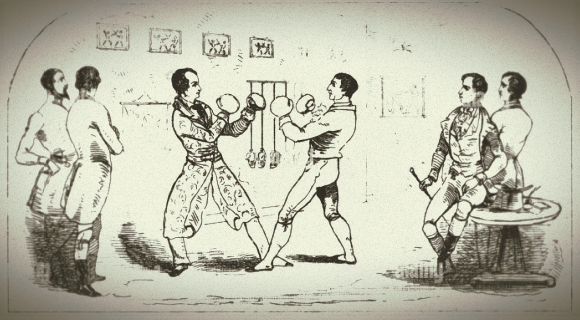
LORD BYRON SPARRING WITH JOE "GENTLEMAN" JACKSON


How many things did Lord George Byron do in his, albeit short, life?

We have met him several times during our walks through History and we can say, without any doubt, that he really did many things, apparently different and almost conflicting with each other. Byron was a poet, playwright, adventurer, wanderer, Dandy, Bohemian, revolutionary... But few people know that Byron also embarked on the path of boxing. His was the great era of the boxer when they still fought down the streets and the prize was in money. The fights took place with bare fists and often lasted for hours. They consisted of a single round that ended only when one of the two boxers was rejected or thrown to the ground! In those years the boxer John Jackson – commonly known as “Gentleman” Jackson – was almost as famous as the Duke of Wellington. He was Champion of England from 1795 to 1803, then, after his retirement, he began to train students athletically, including, precisely, the young Byron. Indeed, many noble young men took lessons from Jackson at his school on London's Bond Street. 


"To day I have been very sulky – but an hour’s exercise with Mr. Jackson of pugilistic memory – has given me spirits & fatigued me into that state of languid laziness which I prefer to all other." (Lord Byron, letter 8th April 1814)

The "exercise" referred to is boxing training, called "sparring". The fascination that boxing exercised on Byron was not short-lived, it lasted lots of years.
It sounds almost incredible that a man, first of all devoted to the intellectual life, considered such a rough sport prestigious: actually he saw the fatigue, the effort in a positive way, he ascribed to it the ability to "purge" physical and mental impurities. So it was worth leading a debauched life as a few hours of hard exercise at John Jackson's gym would put his body and spirit anew!
He was thus the Byron "man of the world" who loved the noble art of boxing.
Sports reporter Pierce Egan, editor of Boxiana magazine, among other things, who followed London sports and Byron's ardent admirer wrote:

"His Lordship of him always entered into the spirit of the thing, as into his poetry; – regarded boxing as a national proclivity – a stimulus to true courage… In putting a… he received coolly from his opponent, and returned to his opponent with all the vigor and assurance of a master of the art." (Book of Sports)

Throwing oneself "into the spirit of the thing" is the cardinal element here, the hard training affording Byron a physical and psychological outlet: Byron's absorption in vigorous exercise may simply have been an attempt to reconcile his conscience for the behavior not entirely blameless past and present. Meanwhile he continued to record in his diary:

"The more violent the fatigue, the better my mood will be for the rest of the day; and then my evenings have that calm nothing of languor, which delights me most."


BARE-KNUCKLE BOXING DOWN THE STREETS AS IT WAS USUAL DURING BYRONS' LIFE
 
It was really a matter of discipline versus dissipation. Basically, it was useful to fend off boredom. 
Boxing effort induced fatigue and, for Byron, this constituted a high state of physical health and psychological consciousness.


And after revealing this little curiosity about Byron's life, 
I'm sending my dearest hug to you all.
See you soon 


Fare a pugni con Byron


IMMAGINE DI COPERTINA - LORD BYRON MENTRE SI ALLENA A PUGILATO CON JOE "GENTLEMAN" JACKSON


Quante cose ha fatto nella sua, seppur breve, vita George Byron?

Più volte lo abbiamo incontrato durante le nostre passeggiate nella Storia e possiamo dire, senza dubbio, che ne fece davvero molte, apparentemente differenti e quasi contrastanti tra loro. Byron fu poeta, drammaturgo, avventuriero, girovago, Dandy, Bohémien, rivoluzionario… Ma pochi sanno che da ragazzo Byron intraprese anche la strada del pugilato. La sua era la grande era del pugile quando ancora si combatteva per le strade ed il premio era in denaro. I combattimenti si svolgevano a pugni nudi e spesso duravano per ore. Erano composti da un unico round che terminava solo quando uno dei due pugili veniva respinto o scagliato a terra! In quegli anni il pugile John Jackson – conosciuto comunemente come “Gentleman” Jackson– era famoso quasi quanto il duca di Wellington. Fu Campione d'Inghilterra dal 1795 al 1803, poi, dopo il suo ritiro, iniziò a preparare atleticamente allievi, tra cui, appunto, il giovane Byron. In effetti, molti giovani nobili presero lezioni da Jackson nella sua scuola di Bond Street a Londra. 


IMMAGINE 2 - IL PUGILE JOHN JACKSON


"Oggi sono stato molto imbronciato - ma un'ora di esercizio con il signor Jackson di memoria pugilistica - mi ha dato allegria e mi ha affaticato al punto da gettarmi in quello stato di languida pigrizia che preferisco a tutti gli altri." (Lord Byron, lettera dell'8 aprile 1814)

L' esercizio a cui si fa riferimento è l’allenamento pugilistico. Il fascino che il pugilato esercitò su Byron non fu di breve durata, si protrasse per numerosi anni.
Sembra quasi incredibile che un uomo, dedito innanzitutto alla vita intellettuale, considerasse prestigioso uno sport così rude: egli in realtà vedeva la fatica in modo positivo, le ascriveva la facoltà di “purgare” le impurità fisiche e mentali. Quindi valeva la pena condurre una vita dissoluta, tanto qualche ora di duro esercizio fisico presso la palestra di John Jackson avrebbe rimesso il suo fisico ed il suo spirito a nuovo!
Era quindi il Byron "uomo di mondo" che amava la nobile arte del pugilato.
Il cronista sportivo Pierce Egan, curatore tra l'altro della rivista Boxiana, che seguiva gli sport londinesi, e acceso ammiratore di Byron, scriverà:

"Sua Signoria entrava sempre nello spirito della cosa, come nella sua poesia; – considerava la boxe una propensione nazionale – uno stimolo al vero coraggio… Nel mettere a… riceveva con freddezza dal suo avversario, e tornava sul suo avversario con tutto il vigore e la sicurezza di un maestro dell'arte."(Book of Sports)

Gettarsi "nello spirito della cosa" è l'elemento cardine qui, il duro allenamento offre a Byron uno sfogo fisico e psicologico: l'assorbimento di Byron in un esercizio vigoroso potrebbe essere stato semplicemente un tentativo di riconciliare la sua coscienza per il comportamento non del tutto irreprensibile passato e in corso. Intanto continuava a registrare nel suo diario:

"Più violenta è la fatica, migliore sarà il mio umore per il resto della giornata; e poi le mie sere hanno quel calmo nulla di languore, che più mi diletta.


IMMAGINE 3 - ALL'EPOCA IN CUI VISSE BYRON ERA CONSUETUDINE PRATICARE IL PUGILATO PER LE STRADE E A PUGNI NUDI


Era davvero una questione di disciplina contro la dissipazione. Fondamentalmente, era utile per respingere la noia. Lo sforzo pugilistico induceva affaticamento e, per Byron, ciò costituiva un elevato stato di salute fisica e di coscienza psicologica.


E dopo avervi rivelato questa piccola curiosità sulla vita di Byron,  
Invio il mio più caloroso abbraccio a tutti Voi!
A presto 


LINKING TO:


giovedì 7 maggio 2015

Lord George Bryan Brummell, just .... dandy !


"Il dandismo non è neppure, come sembrano credere molti sconsiderati, un gusto sfrenato del vestire e dell'eleganza materiale.


Lord Brummell ritratto ad un ricevimento da un artista sconosciuto


 Per il dandy perfetto tali cose sono unicamente un simbolo della superiorità aristocratica del suo spirito."

(Charles Baudelaire, Il pittore della vita moderna, 1863)


Interpretato innanzitutto come un fenomeno legato alla moda, fiorito in Inghilterra durante il periodo Regency, quello del dandismo andava ben oltre la mera apparenza dell'abbigliarsi e dell'atteggiarsi con estrema eleganza, intendendo esso manifestare apertamente il proprio diniego nei confronti della borghesia che stava nascendo e dei suoi valori, primo fra tutti quello dell'egualitarismo, il rifiuto della massificazione cui opponeva l'elitarismo e facendo proprio un nostalgico rimpianto per l'aristocrazia che andava scomparendo, il tutto coniugato con una spiccata attitudine verso l'arte e la cultura in generale.


Vero è che il dandy non passava inosservato, abbigliato di tutto punto, 'Fatto della stessa stoffa della sua sciarpa e delle sue parole' si diceva al tempo, con i calzoni chiari che arrivavano fino al ginocchio, gli alti stivali denominati 'hessians', lo spenser dai cui polsi spesso fuoriuscivano i pizzi della camicia, con un velo di seta al collo e la cravatta, spesso fiero di aver gli occhi dei passanti tutti puntati su di sé ... Il primo della storia a far proprio questo modo così marcatamente raffinato fu proprio il londinese George Bryan Brummell, detto Beau, il bello, la cui compagnia era ricercata non solo perché particolarmente elegante e di bell'aspetto, ma anche perché capace di battute sagaci, dall'eloquio forbito, erudito, intelligente, dotato di spirito, sempre presente ai ricevimenti ed ai balli della Londra del tempo, come un vero e proprio membro dell'aristocrazia anche se i suoi natali erano piuttosto umili. Dopo aver frequentato Eton ed Oxford si arruolò nell'esercito tra gli Ussari nel tentativo di fare conoscenza con il principe di Galles, il futuro Giorgio IV, del quale divenne immediatamente affiatato amico e persino consigliere.
Si trasferì a Londra, al numero 4 di Chesterfield Street ( chissà se la nostra Jane Austen, durante le sue numerose visite e soggiorni a Londra, lo avrà mai incontrato ? ) dove teneva pranzi esclusivi e cominciò a mutare stile di vita.


La porta d'ingresso dell'abitazione di Lord Brummell al n°4 di Chesterfield Street


Il suo modo di abbigliarsi, talmente raffinato ed elegante, era senza alcun dubbio considerato estremamente eccentrico, anche se era ben più rispettoso della pulizia personale e dell'igiene di quanto fosse usuale a quel tempo: in un'epoca in cui ancora l'uomo si vestiva con colori sgargianti e poco curava l'igiene intima perché considerato non virile ed era perciò costretto a profumarsi abbondantemente per coprire gli afrori emanati dal corpo, Lord Brummel si abbigliava di bianco, beige, nero e soprattutto blu ed introdusse l'uso generoso di acqua e sapone per detergersi evitando d'incipriarsi i capelli  evitando così di doversi 'sovraccaricare' di pesanti profumi... pensate che giunse persino a cambiare una camicia la giorno poiché, bianca, presto perdeva in nettezza !


George Brummell in un'illustrazione del 1886 che lo ritrae giovane


Un bow window al White's Club fondato nel 1811 cui spesso si sedeva il 'Beau' ad osservare la gente di Londra mentre percorreva le strade della città


In qualità di 'aspirante' dandy il principe reggente pendeva letteralmente dalle labbra di Brummell, cosa di cui egli spesso approfittava, forse anche con un briciolo d'impertinenza dettata dalla troppa sicurezza di sé, trattando l'amico non con il rispetto dovuto ad una persona del suo rango e ponendolo talvolta in ridicolo in pubblico.


Il Principe Reggente ritratto nel 1816 da Thomas Lawrence


Ma furono i debiti a rovinarlo definitivamente, contratti di conseguenza al tenore di vita che si era imposto e soprattutto alla sfrenata passione per il gioco, i quali lo costrinsero ad un esilio volontario in Francia.

Il 18 maggio 1816 lasciò definitivamente l'Inghilterra per trasferirsi a Calais, dopo aver fatto mettere i propri beni, lasciati a Londra, all'incanto, e quanto da ciò fu in grado di ricavare gli consentì di vivere nell'agio ancora per qualche tempo, ma quando ormai si stava approssimando lo spettro della povertà e della prigionia per debiti, egli venne provvidenzialmente salvato da Guglielmo IV, fratello di Giorgio IV, che lo nominò console a Caen.
Qui trascorse il resto della sua vita, anche se lontano dal lusso cui ormai era abituato. Malato di sifilide, nel 1837 venne internato nell'ospedale delle Figlie del Buon Salvatore di Caen, dove morì nel 1840.


Lasciava così questa nostra terra il primo dandy della storia, ma non morivano con lui i suoi ideali, il nuovo modo di concepire l'eleganza maschile e soprattutto la filosofia di vita che dietro vi soggiaceva.


"Il modo di vestirsi è la rappresentazione esteriore della nostra filosofia della vita."

scriveva Charles Baudelaire che fece proprio a Parigi questo 'nobile' stile che immediatamente sposò quello dei Bohèmien e che anche in Inghilterra ebbe fortuna e successo fino all'epoca vittoriana ( pensiamo ad Oscar Wilde che ne incarnò il perfetto ideale).
Ebbene, anche oggi il nostro tempo insieme sta per concludersi dopo essere, come sempre, scorso così tanto velocemente ... prendo congedo da voi, miei cari amici e lettori, con un caloroso abbraccio ed augurandovi tanto bene.

A presto   


Fonti bibliografiche:

Barbey d'Aurevilly, Del dandysmo e di George Brummel (a cura di Mario Ubaldini), Firenze, Passigli, 1993;

Louise Allen, Walking Jane Austen's London, Shire Books U.K., 2013


Note dell'autrice: 

le fotografie autografate sono state tratte dal libro Louise Allen, Walking Jane Austen's London, Shire Books U.K., 2013


"The dandyism is not even, as lots of reckless people seem to believe, unbridled taste of dressing and material elegance.


- picture 1 - Lord Brummell portrayed at a party by an unknown artist


For the perfect dandy, these things are only a symbol of the aristocratic superiority of his mind. "

(Charles Baudelaire, The Painter of Modern Life, 1863)


Known primarily as a phenomenon linked to fashion - it flourished in England during the Regency period - that of dandyism went far beyond the mere appearance of dressing up and pose very elegantly, meaning it openly express its refusal of the bourgeoisie, which was just going to born, and its values, first of all the egalitarianism, the rejection of standardization which it opposed the elitism with a nostalgic regret for the aristocracy that was disappearing, all combined with a strong attitude towards art and culture in general.


- picture 2 on the left - It is true that the dandy wasn't unnoticed, fully dressed, 'Made from the same cloth of his scarf and his words' as it was said at the time, with light trousers that reached the knee, high boots called 'hessians', spenser by the wrists of which often protruding the laces of the shirt, with a silk veil in the neck and a tie, often proud to have the eyes of the passengers all focused on himselves ... The first in history to do his this kind of life so markedly refined was the Londoner George Bryan Brummell, said 'Beau', the beautiful, whose company was sought after not only because he particularly elegant and good-looking, but also because he was able to quips, he had a furbish speech, was erudite, intelligent, with spirit, always present at parties and dances in the London of the time, like a true member of the aristocracy even though his roots were rather humble. 
After attending Eton and Oxford he joined the army of the Hussars in an effort to get acquainted with the Prince of Wales, the future George IV, of which he immediately became close-knit friend and even counselor.
He moved to London, at the number 4 of Chesterfield Street (I wonder if our Jane Austen, during her several visits and stays in London, will have ever met him !) where he held exclusive lunches and began to change lifestyle.


- picture 3 -  Beau Brummell's front door in Chesterfield Street


His way of dressing, so refined and elegant, was undoubtedly considered extremely eccentric, even though it was far more respectful of personal cleanliness and hygiene than it was usual at that time: in an age when even men wore bright colors and little cared of the hygiene because was considered unmanly and were therefore forced to perfume plenty to cover the stench emanating from the body, Beau Brummel dressed in white, beige, black and blue, above all, and introduced a generous use of soap and water to clean him up avoiding of powder his hair thus avoiding having to 'overloading' himself of heavy perfumes ... you think he even changed a shirt a day, because white, it soon lost in cleaning !


- picture 4 - George Brummell in an image dated 1886 depicting him as a young boy


- picture 5 - 
A bow window at the White's Club; it was founded in 1811 and probably just here often sat the 'Beau' to watch people in London walking in the streets of the city


As a 'hood' dandy the Prince Regent literally hung from the lips of Brummell, who sometimes, taking advantage of it, perhaps even with a bit of impertinence dictated by overconfident, treated his friend without the respect which is due to a person of his rank and putting him sometimes publicly in ridicule.


- picture 6 - The Prince Regent portrayed in 1816 by Thomas Lawrence


But they were the many debts which will have definitely ruin him, the debts he contracted accordingly to the style of living that he imposed himself and especially the unbridled passion for the game, which forced him to a self-imposed exile in France.

On May 18th, 1816 he left England to move permanently to Calais, after putting all belongings of his, left in London, to enchantment, and what he was able to obtain allowed him to live in comfort for some time but when it was approaching the specter of the poverty and of the imprisonment for debts, he was providentially saved by William IV, George IV's brother, who appointed him consul in Caen.
There he spent the rest of his life, though far from the wealth which he had become accustomed. Sick of syphilis, in 1837 he was interned in the hospital of the Daughters of the Good Savior of Caen, where he died in 1840.

So the first dandy of history let our Land, but with him didn't die his ideals, the new concept of male elegance and especially the philosophy of life that was 'hided' behind it.


"The way we dress is the external representation of our philosophy of life."


wrote Charles Baudelaire who in Paris made his this 'noble' style that immediately married the one of the Bohèmiens and that even in England had luck and success until the Victorian era (let's think of Oscar Wilde who embodied the perfect ideal of the Victorian dandy).

Well, also today our time together is going to run out after, as usual, having flown so much fast ... I take leave of you, my dear friends and readers, with a warm hug and wishing you all much love.


See you soon   


Bibliographic sources:

Barbey d'Aurevilly, Del dandysmo e di George Brummel (a cura di Mario Ubaldini), Firenze, Passigli, 1993;

Louise Allen, Walking Jane Austen's London, Shire Books U.K., 2013


Notes by the author: 

the autographed photographs are drawn from Louise Allen, Walking Jane Austen's London, Shire Books U.K., 2013