.jpg)
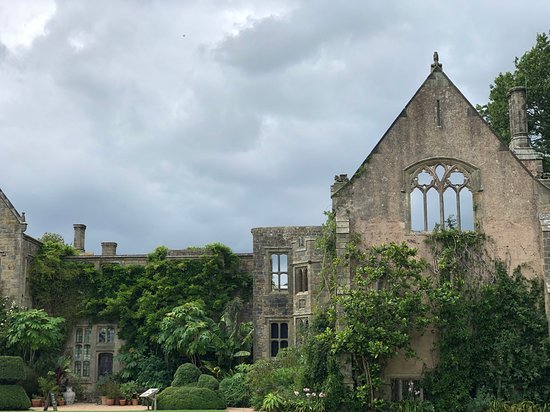
Nymans House and Gardens, situated in Mid-Sussex, belong to the National Trust which preserves ancient mansions, castles and estates that have belonged to rich and powerful people of hundreds of years ago. Nymans appears to be a medieval manor house with an extensive Gothic part so old to has fallen into decay.
In fact, having a look back in time, Nymans seems to have been truly a medieval estate named after an otherwise forgotten family called NYNWEMAN in the early XIVth century. The property went through various hands, the Gatland family building a house on the site of the present one sometime in the XVIth or XVIIth century, before that it all ended up in the XIXth century with one George Harrington, who rebuilt the house and enlarged the estate. But our story begins in 1890 when the entire 600-acre plot was purchased by a wealthy German stockbroker, Ludwig Ernest Wilhelm Leonard Messel, originally from Darmstadt.
Ludwig was the son of Simon Messel and Emilie Lindheim and he was born on 9 January 1847. In 1816, his grandfather, Aron, had founded a banking house in Darmstadt, which was then part of the Grand Duchy of Hesse. Young Ludwig came to Britain in 1868 with his brother Rudolf, allegedly with gold coins sewn into their shirts with which to ease their early days in the Country. Some say the Messels left their Country to avoid persecution, for they were a Jewish family. Although people who professed the Jewish religion weren't seen with great favour in German-speaking Countries since the age of the first Crusade (1096), this seems to make little sense then – Hesse was no more or less anti-Semitic than anywhere else in north-west Europe at the time, including the UK. Perhaps, like the Rothschilds, the Messels hoped to establish an international family business. Perhaps they were simply seeking their fortunes, and looking for opportunities, as people have done before and since. And, anyway, according to one account, Rudolf went back to Hesse to serve as a stretcher-bearer in the Franco-Prussian War of 1870-71. Ludwig didn’t come back, but maybe didn't even intended to stay. The thing is that in 1871 he married Annie Cussans

in the London disctrict of Lambeth and in 1873 founded the stockbroking firm of L. Messel & Company.
And bought Nymans in 1890. According to the National Trust he did it “to integrate himself into English society”. It’s a curious expression, given he’d lived here for 20 years, married an Englishwoman, established a successful business and had a family, all before he acquired his grand domain. Maybe he purchased Nymans simply because he wanted a big estate, loved gardening, and had amassed enough of a fortune to indulge himself. Maybe, like his wealthy Victorian contemporaries, he felt he needed a suitable country mansion in which to entertain, as it was usual then. Maybe, despite apparently being a British subject by this time, his German-Jewish background was unacceptable to some and having a nice property helped overcome some social prejudice.
Ludwig had a great interest in trees and plants and began the development of Nymans’ tree planting and collection of shrubs and flowers. He developed the walled garden, the heather garden and the pergola walk. An original Regency mansion was part of Nymans then and he wanted to turn it into a place for family life and for his guests.
Anne and Ludwig had six children and it was the eldest son of theirs, Leonard, who inherited the property in 1916. He was an even more enthusiastic plantsman than his father, and added greatly to the Nymans collections. And it was he who built a new house in the Tudor and Gothic style.


So the house which appears to be medieval and which we see today is little over 100 years old. In October 1947 a disastrous fire swept through most of the property creating the burnt out shell we see today at the southern end.
The house was only partially re-built after the fire and became probably, even more fascinating with its appearance of ruin, and earned so much as for charm and antiquity.
What we can see today of the most part the historic mansion is simply a Gothic fairy tale, acting as a romantic background for the gardens and surrounding woodland.
Nymans' became one of the homes of Anne Messel, Leonard’s daughter, who married Ronald Armstrong Jones. Their son, Anthony, married Queen Elisabeth II’s sister, Princess Margaret, in 1960, who became Lord Snowdon in 1961. For many years they lived in the Nymans' estate. Leonard gave Nymans to The National Trust in 1954 but the house continued to be lived in by the family.
Anne’s second husband was the Earl of Rosse and Anne lived with her husband mainly in Ireland in Birr Castle, but she often came to live at Nymans. Anne was one of the founders of The Victorian Society which aimed to preserve the (then unfashionable) art and architecture of the Victorian period.
Anne was also a keen gardener and took a hand in Nymans’ continuing development.


.jpg)
With her husband she added rhododendrons, camellias, hydrangeas, hypericums, agapanthus, hardy fuschias and more roses. In 1979, following the death of her husband she returned permanently to Nymans to spend her final years here. She was Director of the Garden until 1987. She died at Nymans in July 1992 aged 90.
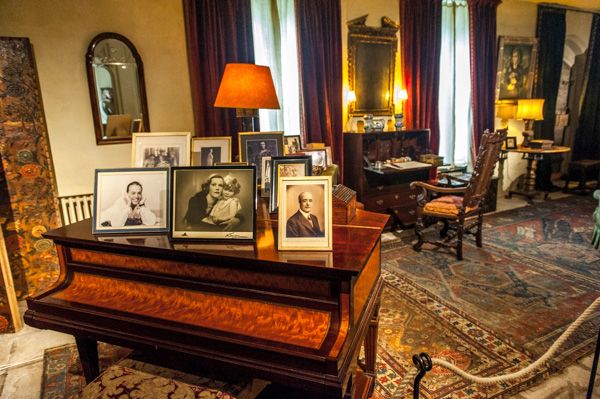
In addition to the extensive gardens, which are listed in Historic England's Register of Parks and Gardens, when the house re-opens it is the one Anne lived in that visitors can see.
Here you are some shots of the interiors taken from the web:




I sincerely hope you've enjoyed this so wonderful stroll trhough History, Beauty and Elegance!
With heartfelt gratitude,
I'm sending You all my best.
See you soon ❤


Ludwig Messel e la Tenuta di Nymans
IMMAGINE DI COPERTINA, IMMAGINE 2 - 3 - 4 - Rovine della dimora di Nymans
Il complesso di Nymans, situato nel Mid-Sussex, appartiene al National Trust che conserva antiche dimore, castelli e tenute appartenute a persone facoltose e potenti centinaia di anni fa. A giudicare dal suo aspetto Nymans appare come un maniero medievale con un'ampia parte gotica talmente antica da essere caduta in rovina.
In realtà, guardando indietro nel tempo, Nymans sembra essere stata davvero una tenuta medievale che prese il nome da una famiglia altrimenti dimenticata chiamata Nynweman all'inizio del XIV secolo. La proprietà passò attraverso varie mani, la famiglia Gatland costruì una casa sul sito dell'attuale nel XVI o XVII secolo, prima che tutto finisse nel XIX secolo con un certo George Harrington, che ricostruì la casa e ampliò la proprietà. Ma la nostra storia inizia nel 1890 quando l'intero appezzamento di 600 acri fu acquistato da un ricco agente di cambio tedesco, Ludwig Ernest Wilhelm Leonard Messel, originario di Darmstadt.
Ludwig era figlio di Simon Messel ed Emilie Lindheim ed era nato il 9 gennaio 1847. Nel 1816 suo nonno Aron aveva fondato una banca a Darmstadt, che allora faceva parte del Granducato d'Assia. Il giovane Ludwig arrivò in Gran Bretagna nel 1868 con suo fratello Rudolf, presumibilmente con monete d'oro cucite all'interno delle loro camicie con cui 'alleviare' i loro primi giorni nel Paese. Alcuni dicono che i Messel lasciarono il loro Paese per evitare la persecuzione, perché appartenevano ad una famiglia ebrea. Sebbene le persone che professavano la religione ebraica non fossero viste di buon occhio nei paesi di lingua tedesca già dall'epoca della prima crociata (1096), tutto ciò sembra avere poco senso, vista l'epoca di cui stiamo parlando: l'Assia non era né più né meno antisemita di quanto fosse qualsiasi altra parte dell'Europa nordoccidentale all'epoca, Regno Unito compreso. Forse, come i Rothschild, i Messel speravano di fondare un'azienda familiare internazionale. Forse stavano semplicemente cercando fortuna e opportunità, come tanta gente fece prima e dopo. E, comunque, secondo un resoconto, Rudolf tornò in Assia per servire come barelliere nella guerra franco-prussiana del 1870-71. Ludwig non fece ritorno, ma forse non aveva neppure intenzione di restare. Il fatto è che nel 1871 sposò Annie Cussans
IMMAGINE 5 - Anne Cussans e Ludwig Messels
nel quartiere londinese di Lambeth e nel 1873 fondò la società di intermediazione in borsa di L. Messel & Company.
Ed acquistò Nymans nel 1890. Secondo il National Trust lo fece “per integrarsi nella società inglese”. È un'espressione curiosa, dato che aveva vissuto in Inghilterra per 20 anni, sposato una donna inglese, avviato un'attività di successo e aveva una famiglia, tutto prima di acquisire il suo grande dominio. Forse lo fece semplicemente perché desiderava una grande tenuta, amava il giardinaggio e aveva accumulato abbastanza fortuna da sbizzarrirsi. Forse, come i suoi ricchi contemporanei vittoriani, avvertiva il bisogno di una residenza di campagna adatto in cui intrattenere amici secondo la moda del tempo. Forse, nonostante fosse apparentemente un suddito britannico a quel tempo, il suo background ebraico-tedesco era inaccettabile per alcuni e avere una bella proprietà poteva essergli di aiuto a superare alcuni pregiudizi sociali.
Ludwig aveva un grande interesse per alberi e piante e iniziò lo sviluppo della piantagione di alberi a Nymans e la raccolta di arbusti e fiori. Sviluppo il walled-garden, l'heather garden ed il pergola walk. A quel tempo di Nymans faceva parte una villa Regency originale ed egli voleva trasformarla in un luogo per la vita familiare ed i ricevimenti.
Anne e Ludwig ebbero sei figli e fu il primogenito, Leonard, ad ereditare la proprietà nel 1916. Egli era un giardiniere ancora più entusiasta del padre e aggiunse molto alle collezioni di Nymans. Ed è stato lui a costruire una nuova casa in stile Tudor e gotico.
IMMAGINE 6 - 7 - 8 - Vedute dall'esterno della parte restaurata dell'edificio che continuò ad essere abitata
Quindi l'edificio che sembra medievale e che vediamo oggi vanta poco più di 100 anni. Nell'ottobre del 1947 un disastroso incendio divampò nella maggior parte della proprietà creando quel 'guscio bruciato' che vediamo oggi all'estremità meridionale della residenza. Essa è stata ricostruita solo in parte ed è diventata, probabilmente, ancor più affascinante con il suo aspetto da rudere che tanto le ha conferito in quanto a fascino ed antichità. Quello che possiamo vedere oggi della maggior parte della dimora storica è semplicemente una fiaba gotica, che fa da sfondo romantico ai giardini e ai boschi circostanti.
Nymans divenne una delle case di Anne Messel, la figlia di Leonard, che sposò Ronald Armstrong Jones. Il loro figlio, Anthony, sposò la sorella della regina Elisabetta II, la principessa Margaret, nel 1960, e divenne Lord Snowdon nel 1961. Per molti anni vissero nella tenuta di Nymans.
Leonard cedette Nymans al National Trust nel 1954, ma la casa continuò ad essere abitata dalla famiglia.
Il secondo marito di Anne fu il conte di Rosse. Anne visse con suo marito principalmente in Irlanda a Birr Castle, ma spesso si trasferiva a Nymans. Ella fu una delle fondatrici di The Victorian Society che mirava a preservare l'arte e l'architettura (allora fuori moda) del periodo vittoriano.
Anne era anche un'appassionata giardiniera e ha contribuito al continuo sviluppo di Nymans.
IMMAGINE 9 - 10 - 11 - La loggia, la piccionaia e le rovine viste dai giardini
Con il marito aggiunse alla collezione del parco rododendri, camelie, ortensie, iperici, agapanthus, fucsie resistenti e rose. Nel 1979, dopo la morte del marito, tornò definitivamente a Nymans per trascorrevi i suoi ultimi anni. Fu Direttrice del Giardino fino al 1987. Si spense a Nymans nel luglio 1992 all'età di 90 anni.
Oltre agli ampi giardini, che sono annoverati tra quelli dell'Historic England's Register of Parks and Gardens (Registro Storico dei Parchi e dei Giardini Inglesi), quando la casa riapre è quella in cui Anne visse che i visitatori possono vedere.
Eccovi alcune immagini degli interni prese dal web:
IMMAGINE 12 - 13 - 14 - 15 - 16 - 17 - 18 - 19
Spero sinceramente che abbiate gradito questa meravigliosa 'passeggiata' compiuta attraverso la Storia, la Bellezza e l'Eleganza!
Con sentita gratitudine,
Vi invio ogni bene.
A presto ❤

Dany

LINKING WITH:
Angie from God's Growing Garden has featured this pot of mine today, May 23, 2023!
I thank you from the bottom of my heart, Dearie •♥•