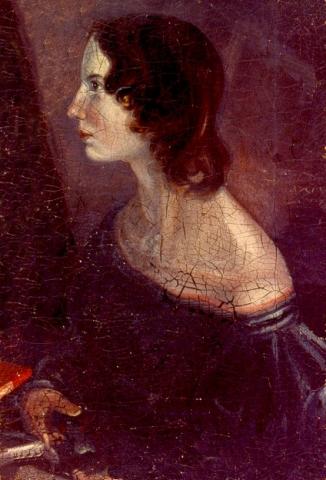
Visualizzazione post con etichetta A.Brontë. Mostra tutti i post

mercoledì 19 luglio 2017

The Brontës' children teeny tiny books available on-line.


That of ingeniousness is a characteristic that cannot be acquired, it is a gift of nature which you have to be born with, and, with the passing of time, it can only be cultivated and refined.
And the Brontë siblings, in greater or lesser measure, possessed it all and gave demonstartion of it since their earliest age.


In 1829-30 Charlotte Brontë was 13 and hers brother Branwell 12 years old; they both had fun creating fantastic worlds that called Angria and Glass Town Confederacy and adventurous stories set in these fantastic worlds which they gave life to for Branwell's soldiers, who were both protagonists and listeners, stories which are contained in lovely tiny books that lies in the palm of one's hand: they measure less than 1 inch for 2 (2.5 x 5 cm), are made with recycled paper, found in the house and carefully cropped and collected (for example, they may have used the margins of the pages of a newspaper) and drawn up in athe most accurate, far too little handwriting.

Both the dimensions and the characters with which they are written make of them works of a truly inestimable value, and if we think of their authors and the time we are talking about, their value grows further beyond measure.

Page after page you enter this fantastic world through reading poems, stories, songs, illustrations, maps, building plans, and dialogues written with old nibs on such small leaves that an adult's hand has difficulty to handle, especially with the care that requires their over 200 years age.

Twenty in all have been preserved, nine of them have been recently digitized from the Houghton Library at Harvard University and are available online free and in full version:

by Charlotte Brontë:

Blackwoods young mens magazine, August 1829;

The silver cup: a tale, October 1829;

Scenes on the great bridge, November 1829;

The adventures of Mon. Edouard de Crack, February 1830;

An interesting passage in the lives of some eminent personages of the present age, June 1830;

The poetaster: a drama in two volumes, July 1830;


by Patrick Branwell Brontë:

Magazine, January 1829;

Branwells Blackwoods magazine, June 1829;

Branwells Blackwoods magazine, July 1829.


Also Emily and Anne wrote miniature books similar to these, but their copies did not survive, alas! they didn't pass the test of the passing of time.
Imagine Charlotte Brontee, who, at the age which girls still play, while she carefully pierced her sheets of paper and tied them together, without causing any damage to them, with an embroidery thread reproducing a binding that an embroidery really resembles; Branwell used a firmer yarn and his binding, which allowed him to stack a sheet at a time after writing it, did not reveal the grace used by his sister, but this does not take off prestige to the little, great treasures of this artist who would have become a poet and a painter, though, destroyed by alcohol and opium addiction, he will go off at just 31 years (you can read the post that ~ My little old world ~ long ago devoted to this fascinating and contradictory character in history of Literature and Art of the XIXth century, for me still little known and appreciated at least as much as he would deserve, by clicking HERE).


I'm sure you're wondering, at this point, how these twenti 'juvenilia' could have been preserved ...

Well, Charlotte's husband, after her death, sold the small volumes to a collector who gave them in turn to the poet Amy Lowell, who presented them at the Houghton Library in 1925 just a year before her death.

The deterioration that  the time has physiologically impressed on the paper has made necessary a work of meticulous restoration and therefore this technological intervention so that they won't be lost and now, thanks to digitization, the time for them is as if it were stopped ... even if browsing them on a screen is never how to handle them, the emotion they give, believe me, is really great!


Thanks once again for following me up to here,
my dear friends, affectionate and occasional readers,
I heartily thank you and looking forward to meet you again, 
I'm greeting you warmly,


see you soon 💕


SOURCE:


Quello della genialità è un tratto caratteriale che non può essere acquisito, è un dono con cui si nasce e che con il tempo può solamente essere coltivato ed affinato 
ed i fratelli Brontë , in maggiore od in minore misura, lo possedevano tutti e ne diedero dimostrazione fin dalla più tenera età.


immagine 1 


Nel 1829-30 Charlotte Brontë aveva 13 anni e suo fratello Branwell ne aveva 12; costoro si divertivano a creare mondi fantastici che chiamarono Angria e Glass Town Confederacy e proprio i racconti avventurosi ambientati in questi mondi fantastici creati per i soldatini di Branwell, i quali delle suddette storie erano sia protagonisti che uditori, sono contenuti in incantevoli libricini che stanno nel palmo di una mano: misurano meno di 1 pollice per 2 ( cm.2,5 X 5 ), sono fatti con carta riciclata, trovata in casa ed accuratamente ritagliata ( si poteva trattare, per esempio, dei margini delle pagine di un quotidiano ) e vergati in una più che accurata, piccolissima grafia.


Sia le dimensioni che i caratteri con cui sono scritti ne fanno opere di un valore davvero inestimabile, se poi si pensa a coloro ne furono gli autori e all'epoca di cui stiamo parlando, il loro valore cresce ulteriormente a dismisura.

Pagina dopo pagina si entra in questo mondo fantastico attraverso la lettura di poesie, storie, canzoni, illustrazioni, mappe, piani di costruzione e dialoghi vergati con antichi pennini su fogli talmente piccoli che le mani di un adulto fanno fatica a maneggiare, soprattutto con la cura che richiede la loro età che data più di 200 anni. 


Venti in tutto se ne sono conservati, nove ne sono starti recentemente digitalizzati dalla Houghton Library alla Harvard University e sono disponibili on-line gratuitamente in versione integrale:


di Charlotte Brontë:

Blackwoods young mens magazine, August 1829;

The silver cup: a tale, October 1829;

Scenes on the great bridge, November 1829;

The adventures of Mon. Edouard de Crack, February 1830;

An interesting passage in the lives of some eminent personages of the present age, June 1830;


The poetaster: a drama in two volumes, July 1830;


- immagine 2


- immagine 3


di Patrick Branwell Brontë:

Magazine, January 1829;

Branwells Blackwoods magazine, June 1829;

Branwells Blackwoods magazine, July 1829.


- immagine 4


Anche Emily ed Anne scrissero libri in miniatura simili a questi, ma le loro copie, ahimè, non ci sono pervenute, non hanno superato la prova del trascorrere del tempo.

Immaginate Charlotte Brontee che, all'età in cui ancora le fanciulle giocano, si preoccupava di forare con cura foglio per foglio i suoi libricini e di legarli infine insieme, senza arrecare loro danno alcuno, con un filo da ricamo riproducendo una rilegatura in brossura che ad un ricamo, davvero, somiglia; Branwell utilizzò un filo in lino più robusto e la sua rilegatura, che gli permetteva di accatastare un foglio alla volta dopo averlo scritto, non rivela la grazia che usò sua sorella, ma ciò non toglie prestigio ai piccoli, grandi tesori di questo artista in nuce che sarebbe diventato poeta e pittore, anche se, distrutto dalla dipendenza dall'alcool e dall'oppio, si spegnerà a soli 31 anni ( potete leggere il post che ~My little old world~ tempo fa dedicò a questo affascinante e contradditorio personaggio della storia della letteratura e dell'arte del XIX secolo per me ancora poco conosciuto ed apprezzato come meriterebbe cliccando QUI ).


immagine 5


Vi chiederete a questo punto come questi venti 'juvenilia' abbiano potuto conservarsi ...

Ebbene, il marito di Charlotte, dopo la sua morte, vendette i piccoli volumi ad un collezionista che li diede a sua volta alla poetessa Amy Lowell, la quale ne fece dono alla Biblioteca Houghton nel 1925. proprio un anno prima della sua morte.

Il deterioramento che il tempo fisiologicamente ha impresso sul materiale cartaceo ha reso necessaria un'opera di minuzioso restauro e quindi questo intervento tecnologico affinché anch'essi non andassero perduti ed ora, grazie alla digitalizzazione, il tempo, per loro, è come se si fosse fermato ... anche se sfogliarli su di uno schermo non è mai come maneggiarli, l'emozione che donano, credetemi, è davvero grande !


Grazie anche questa volta per avermi seguita fino a qui, 
miei adorati amici, lettori affezionati ed occasionali, 
vi ringrazio di cuore e vi aspetto ... ancora ...


a presto 💕


FONTE DELL'INFORMAZIONE:


LINKING WITH:


sabato 3 giugno 2017

Do you know Elizabeth Brontë?


We know so little about Maria Brontë, the firstborn and tragic genius of the family, but the least known of all the Brontë sisters is the second, Elizabeth.
Don't you think it's time to get to know her more closely?


Elizabeth was born on February 8th, 1815 in the village of Hartshead, a small, pretty village on the hills above Mirfield in West Yorkshire, where her Father Patrick was Curator of the Church of England.

She was aged two months when she moved together with her family to the new parish that had been assigned to her father, that of Thorntorn, York, where she was baptized on August 26th, more than six months after her birth, which makes us suppose she had been affected by some illness that made it impossible to baptize her before, according to the rules of the Holy Mother Church. They will stay there five years during which Patrick Brontë and his wife Maria will give birth to their full family.

In 1820, the Brontës moved to Haworth and only the following year, in 1821, when Elizabeth was six years old, her mother, weakened after giving birth to her sixth son and never completely recovered, surrender herself to an incurable  desease and died, leaving to her older daughter Maria the care of her siblings, which made her mature very early and made her responsible more than it was usual at her age (she was only seven !) and that of the house to her sister Elizabeth who soon joined them to become part of the family.


Emily, Charlotte, Elizabeth, Branwell, Maria and Anne Brontë as children, 
drawn by Joan Hassall for Margaret Lane's The Brontë Story


If we really know a little about her, it is due above all to the fact that if all the Brontë brothers died early, Elizabeth was the one who died very young, that is when she was only ten years old.
Of her, for example, we know she had a preference for the order and the cleanliness of the house, for the most practical things in life, which distinguished her from her siblings who loved playing, reading and inventing stories.

This is also confirmed by her recording ast the Clergy Daughter's School at Cowan Bridge which Elizabeth attended with her older sister Maria from July 21st, 1824 - Elizabeth and Maria were among the first twenty students attending this school - they would aggregate to them Charlotte - three weeks later  - and Emily in the fall. (Anne Brontë was too young to join them, and it was truly a fortune, we could say, according to what we now know about this school).

As soon as they joined the school they were all evaluated on the basis of the academic abilities they demonstrated and so it was desumed what was the occupation they had to choose as adults: Maria, Charlotte and Emily Brontë approached a career as future governesses, but Elizabeth is registered at the school of preparation for housekeepers. We know she did not take French lessons, music or drawing lessons, as her sisters did.

These are the notes about her:

‘Reads little. Writes pretty well. Ciphers none. Works very badly. Knows nothing of grammar, history, geography or accomplishments.’


Sampler embroidered by Elzabeth at age of 7.


It should be noticed, however, that almost all pupils received negative and particularly hard judgments on their arrival at Cowan Bridge and the note 'writes pretty well' tells us that her calligraphy was perhaps better than that of many of her school companions.

Another report on Elizabeth Brontë, always from the Cowan Bridge, is signed by Miss Evans, superintendent at the school, who noted:

‘The second, Elizabeth, is the only one of the [Brontë] family of whom I have a vivid recollection, from her meeting with a rather alarming accident, in consequence of which I had her for some days and nights in my bed-room, not only for the sake of her greater quiet, but that I might watch over her myself. Her head was severely cut, but she bore all the consequent suffering with exemplary patience, and by it won much upon my esteem.’

Certainly the worst had still to happen: in that terrible, unhealthy structure, with her sister Maria and many others, Elizabeth contracted tuberculosis.

Mary was sent home as soon as her illness was diagnosed in February 1825, while for Elizabeth the evolution of her desease was at first confused with the overlapping of a typhus epidemic that infected the girls to the structure, who were decimated for a third; Elizabeth was sent home sick on May 31st while Charlotte and Emily followed her a few days later in good health.

Maria died at home on May 6th, 1825, Elizabeth went off on June 15th.

So what do we know about Elizabeth Brontë?
That she was a patient girl, had a disgrace, liked to take care of the house and that her handwriting was better than that of many girls of her age.
But there is more about her.

Patrick Brontë


argued that her second daughter had a sound common sense, and perhaps the best tribute comes from Charlotte Brontë, who would take her closest sister (as for age) as an example. 
Elizabeth Gaskell, Charlotte's friend and biographer, remembered that she often talked of Maria and Elizabeth, and according to Charlotte's statements, she ‘used to believe them to have been wonders of talent and kindness.’

Nancy Garrs, their servant, remembers how the young Elizabeth guided her younger sisters by holding them by hand during their walks through the moors and that she was very "caring" in treating them.

And I wonder if Emily, 


choosing her pen-nickname - Ellis - wanted to make a tribute to her sister Elizabeth who had lost so very soon ...


And in the hope tho have pleased you depicting the portrait 
of such a lovely, sweet little girl,
 I'm sending my warmest hug to you, 
filled with love and gratitude !


See you soon 💕


BIBLIOGRAPHIC SOURCES:

Margaret Lane, THE BRONTE STORY, FONTANA Publisher, 1979;

WIKIPEDIA


Poco sappiamo di Maria Brontë, primogenita e genio tragico della famiglia, ma la meno nota di tutte le sorelle Brontë in assoluto è la seconda, Elizabeth. 
Non vi sembra sia giunto il momento di conoscerla più da vicino ?


- immagine 1 - 


Elizabeth era nata l'8 di febbraio del 1815 nel villaggio di Hartsheadun piccolo villaggio sulle colline sopra Mirfield nel West Yorkshire, dove il padre Patrick era Curato della Chiesa d'Inghilterra. 

Aveva due mesi la piccola quando si trasferì con la famiglia nella nuova parrocchia che era stata assegnata al padre, quella di Thorntorn, York, dove venne battezzata solamente il 26 agosto, più di sei mesi dopo la sua nascita, il che ci fa supporre che fosse stata affetta da una qualche malattia che rendesse impossibile il battezzarla prima, secondo quanto dettano le regole della Santa Madre Chiesa. Qui rimasero cinque anni durante i quali Patrick Brontë e sua moglie Maria diedero vita alla loro famiglia al completo.

Nel 1820 i Brontës si spostarono ad Haworth e solamente l'anno dopo, nel 1821, quando Elizabeth aveva sei anni, la madre, fiaccata ed indebolita dopo aver dato alla luce il suo sesto figlio e mai del tutto ripresasi, cedette ad un male incurabile e morì, lasciando alla figlia maggiore Maria la cura dei fratelli, cosa che la fece maturare molto precocemente e la rese responsabile ben più di quanto si addicesse alla sua età ( aveva solamente un anno in più di Elizabeth !) e quella della casa alla sorella Elizabeth che presto li raggiunse per far parte della famiglia.


- immagine 2 - Emily, Charlotte, Elizabeth, Branwell, Maria ed Anne Brontë in un disegno di Joan Hassall per The Brontë Story di Margaret Lane


Se sappiamo davvero poco di lei lo dobbiamo soprattutto al fatto che se è vero che tutti i fratelli Brontë morirono precocemente, Elizabeth fu colei che morì giovanissima, ossia a soli dieci anni di vita. 
Di lei per esempio sappiamo che aveva predilezione per l'ordine e la pulizia della casa, per le cose più pratiche della vita, caratteristiche che la distinguevano nettamente dai suoi fratelli che amavano giocare, leggere ed inventare storie.

Ciò è confermato anche dalla sua iscrizione nel registro della Clergy Daughter’s School at Cowan Bridge che Elizabeth frequentò con la sorella maggiore Maria a partire dal 21 luglio 1824 - Elizabeth e Maria furono tra le prime venti alunne che frequentarono il collegio - e a loro si sarebbero aggregate Charlotte tre settimane dopo ed Emily nell'autunno. (Anne Brontë era troppo piccola per unirsi a loro, per sua fortuna, potremmo dire, alla luce di quanto sappiamo ora della suddetta scuola).

Al loro ingresso nella scuola tutte venivano valutate in base alle abilità accademiche che dimostravano e ciò per cui erano portate, ovvero quale era l'occupazione che a loro si addiceva di più una volta divenute adulte: a Maria, Charlotte ed Emily Brontë si addiceva una carriera come future istitutrici, ma Elizabeth risulta registrata alla scuola di preparazione alle governanti. Sappiamo che non prese lezioni di francese, di musica o di disegno, come invece fecero le sue sorelle.

Queste sono le annotazioni che la riguardano:

Legge poco. Scrive abbastanza bene. Non ha abilità nel far di conto. Lavora molto male. Non sa nulla della grammatica, della storia, della geografia e non ha talenti’.


- immagine 3 - Sampler ricamato da Elzabeth all'età di 7 anni.


Va però notato che quasi tutti gli alunni ricevevano giudizi negativi e particolarmente duri al loro arrivo a Cowan Bridge e la nota 'scrive abbastanza bene' ci dice che forse era migliore di molte sue compagne di scuola.

Un altro rapporto su Elizabeth Brontë, sempre del Cowan Bridge, reca la firma di Miss Evans, sovrintendente alla scuola, la quale annotava:

La seconda, Elizabeth, è l'unica della famiglia [Brontë] di cui ho un vivo ricordo, dovuto ad un incidente abbastanza allarmante, ed in conseguenza al quale l'ho tenuta per alcuni giorni e notti nella mia camera da letto , non solo perché fosse così più tranquilla, ma per poterla sorvegliare. Aveva un brutto taglio alla testa, ma ha sopportato la conseguente sofferenza con pazienza esemplare, e si è conquistata la mia stima’.

Per certo il peggio doveva ancora accadere al Cowan Bridge: in quella terribile, malsana struttura, con sua sorella Maria e molti altri, Elizabeth contrasse la tubercolosi. 

Maria fu mandata a casa non appena le fu diagnosticata la malattia nel febbraio del 1825 mentre per Elizabeth l'evoluzione della malattia fu dapprincipio mascherata dal sovrapporsi di un'epidemia di tifo che colse le fanciulle alla struttura, le quali vennero decimate per un terzo; Elizabeth fu inviata a casa malata il 31 maggio mentre Charlotte ed Emily la seguirono alcuni giorni dopo in buona salute. 

Maria morì a casa il 6 di maggio del 1825, Elizabeth si spense il 15 di giugno.

Quindi cosa sappiamo di Elizabeth Brontë?
Che era una fanciulla paziente, che ebbe una disgrazia, che le piaceva prendersi cura della casa e che la sua grafia era migliore di molte ragazze della sua età.
Ma c'è più.

Patrick Brontë 


- immagine 4 - 


sosteneva che la sua seconda figlia aveva un marcato buon senso, e forse il miglior omaggio ci proviene da Charlotte Brontë, che avrebbe preso d'esempio la sorella più vicina a lei in età.
Elizabeth Gaskell, amica e biografa di Charlotte, ricordava che ella parlava spesso di Maria e di Elizabeth, e dalle dichiarazioni di Charlotte «era certa che queste fossero state meraviglie di talento e di gentilezza». 

Nancy Garrs, la domestica di casa Brontë, ricorda come la giovane Elizabeth guidasse le sue sorelle più piccole tenendole per mano durante le loro passeggiate attraverso le brughiere e che era molto "premurosa" nel trattarle. 


E chissà se Emily, 


- immagine 5 - 


nello scegliere il suo pseudonimo di penna - Ellis - non abbia voluto rendere omaggio alla sorella Elizabeth che troppo precocemente aveva perso ...


E nella speranza di avervi fatto cosa gradita nel ritrarre questa dolce fanciulla,
lasciate che vi invii il mio più caloroso abbraccio, 
colmo di affetto e riconoscenza

a presto 💕


FONTI BIBLIOGRAFICHE:

Margaret Lane, THE BRONTE STORY, FONTANA Publisher, 1979;

WIKIPEDIA


LINKING WITH:
AWWW MONDAYS

BLUE MONDAY


mercoledì 24 giugno 2015

Patrick Branwell, the 'lost' Brontë.


"Non piango perchè colta dal lutto ... ma per il relitto del talento, la rovina della promessa, l'estinzione triste e prematura di quella che avrebbe potuto essere una luce splendente ed ardente. Mio fratello era di  un anno più giovane di me. Tempo fa nutrii  ambizioni ed aspirazioni per lui, che sono tristemente perite ... C'è una tale amarezza ed un senso di pietà in me sia per la sua vita che per la sua dipartita, come uno sgomento per il vuoto che ha connotato tutta la sua esistenza che non sono capace di descrivere. "


(Lettera di Charlotte Brontë all'amico William S. Williams, il giorno dopo il funerale del fratello Branwell avvenuto il 2 ottobre 1848).


Anne, Emily e Charlotte Brontë, ritratte dal loro fratello Branwell (1 gennaio 1834).
Egli si dipinse fra le sorelle, ma successivamente rimosse la sua immagine in modo da non ingombrare il dipinto.


Il cognome Brontë ci suggerisce volti femminili della tanto fertile, artisticamente parlando, epoca vittoriana, e romanzi divenuti famosi in quanto dettati da un insolito talento, ma della famiglia facevano parte anche Maria, Elizabeth e Branwell, non meno talentuoso delle tre più note sorelle Charlotte, Emily Jane ed Anne che gli sopravvissero. 

Patrick Branwell nacque il 26 giugno 1817 ed in qualità di unico figlio maschio il padre, il pastore anglicano di Hawthorn, Patrick Brontë, volle educarlo a casa per farne un erudito e mentre le sue cinque sorelle furono inviate in collegio perché fossero seguite in modo più adeguato al loro sesso, egli rimase a casa per studiare greco e latino; la morte prematura di Maria ed Elizabeth rispettivamente a 9 e a 10 anni di tubercolosi date le malsane condizioni del pensionato femminile colpirono emotivamente Branwell nel profondo rendendolo ancor più vulnerabile di quanto già non fosse di sua natura.
Dotato di spirito artistico palesò presto inclinazione per le arti figurative e già da fanciullo cominciò con lo scrivere con le tre sorelle che divennero famose poemetti e storie, ma sicuramente era la pittura che più rispondeva alla sua espressività.
Eppure proprio Branwell, snello, di bassa statura, con un volto dai bei lineamenti e dall'espressione che palesava un temperamento bizzarro ma un ingegno vivissimo, dai capelli fulvi e la carnagione rosea, colori tipici degli irlandesi  il cui sangue nelle vene gli proveniva dal padre, cordiale ed espansivo, com’è tipico di quel popolo, dai modi galanti - questo il suo ritratto tracciato dalla scrittrice Elizabeth Gaskell che scrisse la biografia della sfortunata amica Charlotte Brontë - dotato di ottima memoria e di fervida immaginazione era indubbiamente il più geniale di tutta la famiglia e le sue tre sorelle lo amavano, lo ammiravano e lo viziavano. ( sotto un ritratto attribuito a Sir Edwin Landseer datato 1838 delle tre sorelle Brontë )


Nel 1835 scrisse una lettera alla Royal Academy of Arts nella speranza di esservi ammesso. I primi biografi annotarono un trasferimento a Londra per studiare pittura, che si concluse rapidamente in seguito seguito all'aver speso in modo dissoluto nel bere il denaro che gli era stato dato; altri biografi hanno ipotizzato che fosse troppo timido per presentarsi presso l'Accademia, più recentemente vi è chi addirittura suggerisce che Brontë non inviò neppure la lettera o tanto meno compì il viaggio a Londra. Secondo Francis Leyland, amico di Branwell e futuro biografo di famiglia, il suo primo lavoro fu quello di usciere in una scuola di Halifax ed è certo che egli lavorò come ritrattista a Bradford nel 1838 e 1839 - celebre quello della sua padrona di casa la signora Kirby e un ritratto di Emily che dimostrano un vero talento sia per lo stile satirico che per la ritrattistica.
Sta di fatto che purtroppo nel 1839 egli tornò ad Haworth sommerso dai debiti: stava facendosi strada in lui la malìa per il vizio che lo condurrà velocemente alla dipendenza dall'alcool e dall'oppio al punto di manifestare vere e proprie manie ( viene da pensare che le sorelle Brontë, per la drammaticità dei loro personaggi maschili quali Heathcliff in Wuntering Heights di Emily, e Mr.Rochester in Jane Eyre di Charlotte, si siano ispirate proprio agli eccessi del fratello, eroe romantico che spesso si trasfigurava al punto da incutere in loro timore ).

Branwell compose inoltre poesie, che inviò ai maggiori poeti del tempo, come Wordsworth  e Coleridge, ricevendone giudizi lusinghieri; reca la data del 19 gennaio 1837 la lettera che egli scrisse al poeta Wordsworth, nella quale lo invitava ad esprimere un giudizio sulla sua poesia, accludendo  anche sei strofe di un suo componimento:


'Signore,
ardentemente vi supplico di leggere e sottoporre al vostro giudizio quanto vi ho inviato, perché dal giorno della mia nascita, fino a questo diciannovesimo anno della mia vita, ho vissuto tra colline isolate, dove non potevo né so quello che è stato, o che cosa avrei potuto fare. Ho letto per la stessa ragione per cui ho mangiato o bevuto, perché è stato un vero e proprio desiderio di natura. Ho scritto sullo stesso principio per cui ho esternato  ciò che prova la mente; né ho potuto farne a meno, poiché è venuto, è venuto fuori da sé, e si è concluso. Infatti, così come la presunzione, che non può alimentarsi che con lusinghe, fino ad oggi non una mezza dozzina di persone in tutto il mondo sanno che io abbia mai scritto una riga.

'Ma un cambiamento è avvenuto, signore; e sto raggiungendo un'età in cui devo fare qualcosa per me stesso: le possibilità che possiedo devono essere mettere a frutto per un fine preciso, e siccome io ancora non le conosco devo chiedere ad altri se sono valenti. Ma non c'è uno qui una persona capace di dirmelo; e ancora, se sono senza valore, il tempo sarà d'ora in poi troppo prezioso per essere sprecato su di loro.

'Perdonatemi, signore, se ho osato consultarvi per primo, voi le cui opere sono quelle che ho più amato nella nostra letteratura, e che siete per me una divinità della mente, perché posiate per primo il vostro sguardo su di uno dei miei scritti, e possa chiedervi sentenza del suo contenuto. Devo consultare per primo colui la cui sentenza sia inoppugnabile e tale è colui che ha sviluppato la teoria della poesia e del suo esercizio in modo da richiedere un posto nella memoria di mille anni a venire.

'Il mio obiettivo, signore, è quello di sbucare nel mondo, e per questo mi fido solo della poesia, che potrebbe lanciare la nave, ma non può sostenerne la scia; sforzi sensibili e prosa scientifica, audaci e vigorosi nel mio cammino nella vita, darebbero un ulteriore titolo a conoscenza del mondo; e poi, ancora, la poesia deve fare luce ed incoronare quel nome con la gloria; ma niente di tutto questo può essere mai iniziato senza mezzi, e siccome io non possiedo che questi, devo in ogni forma sforzarmi per guadagnarli. Sicuramente, in questo giorno, quando non c'è un poeta la cui scrittura merita una moneta da sei pence, il campo deve essere aperto, se un uomo migliore può fare un passo in avanti.


'Quello che vi mando è la Prefatory Scene di un soggetto molto più lungo, in cui ho cercato di sviluppare forti passioni e principi deboli alle prese con una immaginazione elevata e sentimenti acuti, finché, come i giovani induriscono verso la vecchiaia, le azioni malvagie ed i  brevi godimenti finiscono in miseria mentale e corporea rovina. Ora, inviarvi tutto questo sarebbe come farmi beffa della vostra pazienza; ciò che vedete, non pretende di essere nulla più che la descrizione di un bambino fantasioso. Ma leggetelo, signore; e, come se fosse una luce in una totale oscurità, quanto tenete alla vostra bontà di cuore, fornitemi una risposta, anche una sola parola, dicendomi se devo scrivere, o scrivere non di più. Perdonate l'indebita ardore, perché i miei sentimenti in questa materia non possono essere freddi; e credetemi, signore, con profondo rispetto,

'Il vostro davvero umile servitore,


Là dov’Egli  in gloria splendente regna,
oltre i  notturni cieli stellati,
nel  Suo paradiso di luce,
ah! Perché io non posso esservi?

Spesso sveglio all’alba del Natale,
nell’insonne crepuscolo disteso e solo,
pensieri strani m’affollano la mente
di com’Egli per me sia morto.

E spesso giacendo nella mia camera
mi sono destato piangendo
risvegliato dai sogni in cui lo contemplavo morente
sul palo maledetto.

E spesso mia madre ha detto,
mentre il capo le abbandonavo sul grembo,
che temeva ch’io non per il tempo fossi fatto
ma per l’Eternità. 

Perciò posso ben chiaro leggere il mio diritto
a dimorare nei cieli,
e  lasciate ch’io dalle paure mi congeda
ed i miei occhi piangenti asciughi!

Su questa lastra di marmo giacerò,
ed ignorerò  il mondo
per contemplare, sul suo trono di ebano,
la luna che avanza nella gloria. 1


Scoraggiato dalla lunga attesa senza risposta alcuna dall'amico, in seguito, portato analogamente agli altri Brontë per l’arte grafica, si dedicò alla pittura, 


Ritratto di Emily, 1834


raggiungendo risultati eccellenti che suscitarono le lodi di tutti, ma Branwell, pur con innate attitudini per ogni attività in cui si cimentasse era incostante e non portava mai a termine le sue opere, per cui di questo talentuoso ed eclettico talento, quasi nulla ci è pervenuto, ed anche il suo nome è scivolato nell’oblio, soverchiato dalla fama di quello delle, seppur meno dotate, ben valenti sorelle.

Nel 1839 vi fu un altro allontanamento di Branwell da casa, poichè andò a studiare pittura a Bradford, ma dopo poco ritornò deludendo ancora una volta tutta la sua famiglia; nel 1842, dopo aver tentato la carriera di pittore ritrattista, aver smesso di dipingere ed essersi impiegato come precettore nel Cumberland, trovò un lavoro nella ferrovia Manchester- Leeds, ma ben presto perse anche quest’impiego perché licenziato per incuria.
Nel gennaio del 1845 approdò, infine, a Thorp Green, in qualità di precettore del figlio maschio dei Robinson, la stessa famiglia in cui insegnava Anne; gradevole d’aspetto, galante, abile conversatore, scrittore, pittore, con tutte queste attitudini non mancò di affascinare Mrs. Lydia Robinson, maggiore di lui quasi vent’anni; i due s’innamorarono ed intrecciarono  una relazione, ma quando il marito venne a conoscenza di questa relazione cacciò Branwell per 'indegnità' e fu questa la più grande, ultima amarezza riservatagli dalla sua breve esistenza.


Negli ultimi anni della sua vita egli cominciò ad usare l’oppio per alienarsi gradatamente, stordendosi, da una vita che lo aveva solamente deluso, finché, distrutto dall’alcool, dalla droga, dai fallimenti della sua esistenza e dal male di famiglia, la tisi, si spense tra le braccia della povera Emily che per il dolore gli sopravvisse non più di tre mesi: era il 24 settembre del 1848.


Scriverà Thomas Merton (1915 - 1968) circa un secolo più tardi:


L’arte ci consente di trovare noi stessi e di perdere noi stessi nel medesimo momento.


Con sempre più grande affetto e devozione vi giunge il mio caloroso abbraccio, miei carissimi amici e lettori,

a presto 


Bibliografia:

Juliet Barker, The Brontës, Weidenfeld and Nicolson, London, 1994;

Daphne du Maurier, The Infernal World of Branwell Brontë, (Victor Gollancz 1960 ), Penguin Books, 1972;

THE BRONTË FAMILY WITH SPECIAL REFERENCE TO PATRICK BRANWELL BRONTË, BY FRANCIS A. LEYLAND IN TWO VOLUMES, VOL. I, HURST AND BLACKETT, PUBLISHERS, LONDON, 13, GREAT MARLBOROUGH STREET, 1886.


Citazioni:

1 - THE BRONTË FAMILY WITH SPECIAL REFERENCE TO PATRICK BRANWELL BRONTË, BY FRANCIS A. LEYLAND IN TWO VOLUMES, VOL. I, HURST AND BLACKETT, PUBLISHERS, LONDON, 13, GREAT MARLBOROUGH STREET, 1886, CHAPTER XIII, Branwell's Letter to Wordsworth, with Stanzas‌, pag.193.


“I do not weep from a sense of bereavement…but for the wreck of talent, the ruin of promise, the untimely dreary extinction of what might have been a burning and shining light. My brother was a year my junior. I had aspirations and ambitions for him one-long ago-they have perished mournfully…There is such a bitterness of pity for his life and death-such a yearning for the emptiness of his whole existence as I cannot describe.” 


(Letter from Charlotte Brontë to her friend William S. Williams, the day after Branwell’s funeral on October 2, 1848) 


- picture 1 - Anne, Emily and Charlotte Brontë, portrayed by their brother Branwell (1 January 1834).
He painted himself among his sisters, but later removed his image so as not to clutter up the painting.


The name Brontë suggests female faces belonging to the so fertile, artistically speaking, Victorian era, and novels became famous as dictated by an unusual talent, but there were also other family members such as Maria, Elizabeth an Branwell, no less talented than the three most famous sisters Charlotte, Emily Jane and Anne who survived him.


- picture 2 on the left - Patrick Branwell was born on June 26th, 1817 and as the an only son his father, the Anglican pastor of Hawthorn, Patrick Brontë, wanted to educate him at home to make him a scholar and so, while his five sisters were sent to a boarding school because they were followed in a way more appropriate to their sex, he staied at home learning greek and latin ; the premature death of Maria and Elizabeth at 9 and 10 years of tuberculosis given the unhealthy conditions of the boarding school struck emotionally Branwell in his deep making him even more vulnerable than he was in his nature ( Maria and Elizabeth were his older sisters ).
Endowed by artistic spirit he showed early inclination for the arts, and already as a child began by writing together with his three sisters who became famous, poems and stories, but surely it was the painting that most responded to his expressiveness.
And yet Branwell, slender, short of stature, with a face with fine features and an expression that revealed itself a bizarre temperament but a lively wit, red-haired and with a rosy complexion, typical colors of the Irish whose blood came from his father, friendly and outgoing, as it is typical of those  people, by the gallant ways - this is the portrait drawn by the writer Elizabeth Gaskell, who wrote the biography of her unfortunate friend Charlotte Brontë - with an excellent memory and imagination was undoubtedly the most brilliant of the whole family and his three sisters loved him, admired him and spoil him. (Beneath a portrait attributed to Sir Edwin Landseer dated 1838 of the three Bronte sisters)


- picture 3 on the right - In 1835 he wrote a letter to the Royal Academy of Arts in the hope of being admitted. The early biographers wrote down that he moved  to London to study painting, but he spent the money he was given in profligate way, that is in drinking; other biographers have speculated that he was too shy to go to the Academy, more recently there are those who even suggests that Brontë neither sent a letter, or did the journey to London. According to Francis Leyland, Branwell's friend and future biographer of the family, his first job was to usher in a school in Halifax and it's certain that he worked as a portrait painter in Bradford in 1838 and 1839 - the most famous ones are those of his landlady Mrs. Kirby and a portrait of Emily showing a real talent for both satirical style and for portraiture.
The fact is, unfortunately, that in 1839 he returned to Haworth heavily in debt: he was making his way in the spell for the vice that will lead him quickly to dependence on alcohol and opium to the point of manifesting real delusions (we could think that the Brontë sisters, for the drama of their male characters such as Heathcliff in Emily's Wuntering Heights, or Mr.Rochester in Charlotte's Jane Eyre, are inspired by the excesses of their brother, romantic hero often transfigured enough to instill in their even fear).

Branwell also composed poems, which he sent to the major poets of the time, such as Wordsworth and Coleridge, receiving flattering judgments; it is dated January 19th, 1837 a letter he wrote to the poet Wordsworth, in requesting him to make a judgment on his poetry, also enclosing six stanzas of a poem of his:


- picture 4


                                                                                                                   'Haworth, near Bradford,

                                                                                                          'Yorkshire, January 19th, 1837.
'Sir,
'I most earnestly entreat you to read and pass your judgment upon what I have sent you, because from the day of my birth, to this the nineteenth year of my life, I have lived among secluded hills, where I could neither know what I was, or what I could do. I read for the same reason that I ate or drank—because it was a real craving of nature. I wrote on the same principle as I spoke—out of the impulse and feelings of the mind; nor could I help it, for what came, came out, and there was the end of it. For as to self-conceit, that could not receive food from flattery, since to this hour not half-a-dozen people in the world know that I have ever penned a line.

'But a change has taken place now, sir; and I am arrived at an age wherein I must do something for myself: the powers I possess must be exercised to a definite end, and as I don't know them myself I must ask of others what they are worth. Yet there is not one here to tell me; and still, if they are worthless, time will henceforth be too precious to be wasted on them.

'Do pardon me, sir, that I have ventured to come before one whose works I have most loved in our literature, and who most has been with me a divinity of the mind, laying before him one of my writings, and asking of him a judgment of its contents. I must come before some one from whose sentence there is no appeal; and such a one is he who has developed the theory of poetry as well as its practice, and both in such a way as to claim a place in the memory of a thousand years to come.

'My aim, sir, is to push out into the open world, and for this I trust not poetry alone—that might launch the vessel, but could not bear her on; sensible and scientific prose, bold and vigorous efforts in my walk in life, would give a further title to the notice of the world; and then, again, poetry ought to brighten and crown that name with glory; but nothing of all this can be ever begun without means, and as I don't possess these, I must in every shape strive to gain them. Surely, in this day, when there is not a writing poet worth a sixpence, the field must be open, if a better man can step forward.

'What I send you is the Prefatory Scene of a much longer subject, in which I have striven to develop strong passions and weak principles struggling with a high imagination and acute feelings, till, as youth hardens towards old age, evil deeds and short enjoyments end in mental misery and bodily ruin. Now, to send you the whole of this would be a mock upon your patience; what you see, does not even pretend to be more than the description of an imaginative child. But read it, sir; and, as you would hold a light to one in utter darkness—as you value your own kind-heartedness—return me an answer, if but one word, telling me whether I should write on, or write no more. Forgive undue warmth, because my feelings in this matter cannot be cool; and believe me, sir, with deep respect,

'Your really humble servant,

'P. B. Brontë.'


Mrs. Gaskell gives the following six stanzas, which are about a third of the whole, and declares them not to be the worst part of the composition:—


'So where He reigns in glory bright,
Above those starry skies of night,
Amid His Paradise of light,
Oh, why may I not be?
'Oft when awake on Christmas morn,
In sleepless twilight laid forlorn,
Strange thoughts have o'er my mind been borne
How He has died for me.
'And oft, within my chamber lying,
Have I awaked myself with crying,
From dreams, where I beheld Him dying
Upon the accursed tree.
'And often has my mother said,
While on her lap I laid my head,
She feared for time I was not made,
But for Eternity.
'So "I can read my title clear
To mansions in the skies,
And let me bid farewell to fear,
And wipe my weeping eyes."
'I'll lay me down on this marble stone,
And set the world aside,
To see upon her ebon throne
The Moon in glory ride.' 1


Downhearted for having not received any answer from his friend, he, later, like all the others Brontë brought to graphic art, decided to devote himself to painting,


- picture 5 - Emily's portrait, 1834


achieving excellent results that aroused the praise of everyone, but Branwell, even with innate aptitudes for each activity in which he confronted himself was uneven and never enden his works, so of this talented and  eclectic genius, almost nothing has survived , and also his name has slipped into oblivion, overwhelmed by the fame of that of, though less equipped, his well-talented sisters.

In 1839 there was another departure of Branwell from home, as he went to study painting in Bradford, but soon returned disappointing once again all his family; in 1842, after attempting a career as a portrait painter, he stopped painting and was assumed as a tutor in Cumberland, than found a job in the railroad Manchester- Leeds, but soon lost even this because fired for negligence.
In January of 1845 he arrived, finally, at Thorp Green, as tutor to the son of Robinsons, the same family where taught Anne; nice-looking, gallant, clever conversationalist, writer, painter, with all these attitudes Branwell didn't fail to fascinate Mrs. Lydia Robinson, almost twenty years older than he; the two fell in love and intertwined a relationship, but when her husband came and know this, dismissed Branwell for 'unworthiness'.

During the last years of his life he began to use opium to gradually alienate himself from a life that had only disappointed him, until getting destroyed by alcohol, drugs, from the failures of his life and from the evil of the family, tuberculosis, till he died in the arms of the poor Emily that for the pain survived him no more than three months: it was September 24th, 1848.


Thomas Merton (1915 - 1968) will write about a century later:


Art enables us to find ourselves and lose ourselves at the same time.


With more and more great affection and devotion it comes to you my warm embrace, my dear friends and readers,

see you soon 


Bibliography:

Juliet Barker, The Brontës, Weidenfeld and Nicolson, London, 1994;

Daphne du Maurier, The Infernal World of Branwell Brontë, (Victor Gollancz 1960 ), Penguin Books, 1972;

THE BRONTË FAMILY WITH SPECIAL REFERENCE TO PATRICK BRANWELL BRONTË, BY FRANCIS A. LEYLAND IN TWO VOLUMES, VOL. I, HURST AND BLACKETT, PUBLISHERS, LONDON, 13, GREAT MARLBOROUGH STREET, 1886.


Quotations:

1 - THE BRONTË FAMILY WITH SPECIAL REFERENCE TO PATRICK BRANWELL BRONTË, BY FRANCIS A. LEYLAND IN TWO VOLUMES, VOL. I, HURST AND BLACKETT, PUBLISHERS, LONDON, 13, GREAT MARLBOROUGH STREET, 1886, CHAPTER XIII, Branwell's Letter to Wordsworth, with Stanzas‌, page 193.