Visualizzazione post con etichetta gusto vittoriano. Mostra tutti i post

domenica 1 marzo 2015

Curiosità Vittoriane III.


Dato il successo e la simpatia che le due precedenti 
pubblicazioni sull'argomento hanno riscosso presso di voi, 
vado certa nel pubblicare per la terza volta una raccolta di 
curiosità che risalgono all'epoca vittoriana ... buona lettura !


☞ Nel 1839 l'eminente naturalista Charles Darwin sposò la cugina di primo grado Emma Wedgewood, che, oltre ad essere la sorella del suo caro amico Hensleigh conosciuto alla Cambridge University, era anche già sua cognata in quanto suo fratello Joe aveva sposato Caroline, la sorella di Charles nel 1837. Charles ed Emma si maritarono il 29 gennaio 1839 e, pensate che la funzione venne celebrata dal vicario di Maer John Allen Wedgewood, che era primo cugino di entrambi ... quanto erano stretti i legami di famiglia un tempo !


Oyster stall


☞ A metà del XIX°secolo la maggior parte delle persone appartenenti alla classe lavoratrice acquistava cibo dai venditori ambulanti. 
Tra i venditori più popolari vi erano l' Oyster stall, il venditore di ostriche, che erano economiche, nutrienti e perciò molto ricercate dai popolani e l'Hot eel and pea soup man, il venditore di zuppa d'anguilla e piselli; pensate che a Londra nel 1850 esistevano più di 500 bancarelle che vendevano tazze di anguille e mezze pinte di zuppa di piselli al 1/2d (metà pence) ciascuna. In una occasione il servo di un gentiluomo si dice avesse mangiato 16 tazze di anguille in una sola volta !


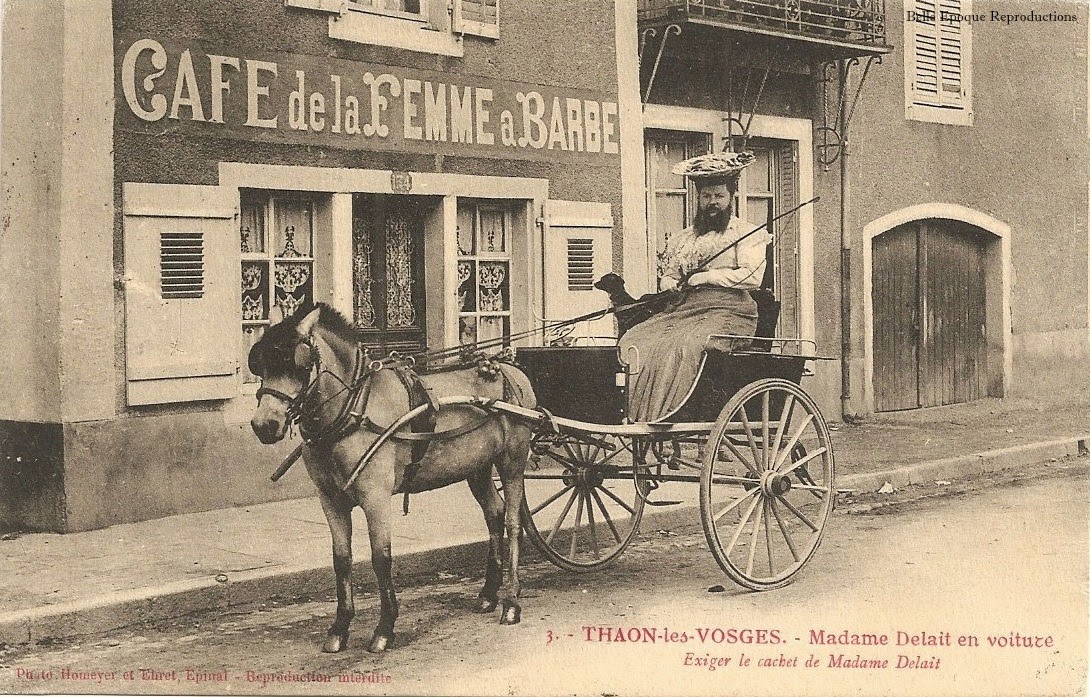
☞ Clémentine Delait (1865 - 1939) era una signora barbuta francese che gestiva insieme con il marito un caffè presso Thaon-les-Vosges, in Lorena, Francia. Secondo quanto venne in seguito raccontato, Clémentine, nel visitare un tempo un circo, vide una donna con una barba incolta che si spacciava per donna barbuta ed ella, che dall'età di 18 anni teneva a malapena a bada baffi ed un abbondante peluria sul viso, era certa che avrebbe potuto crescere una barba ben migliore. Suo marito puntò 500 franchi su tale sfida e la scommessa attirò persino molti più clienti al caffè dei Delait; il successo 'visibilmente conseguito' fece sì che il loro caffè divenisse Le Café de La Femme a Barbe, "Il caffè della donna barbuta" e che Clémentine da allora ella divenne celebre come donna barbuta guadagnando anche denaro conseguentemente alla vendita di cartoline e fotografie.


☞ Nel 1878 il governo britannico respinse una domanda di brevetto presentata da
Mr.Herbert Lintott e Mr.Charles Evelyn Smith per la loro invenzione 'The Hat Duplex', un ingegnoso dispositivo che utilizzando una serie di molle nascoste era in grado di trasformare un cappello a cilindro in una bombetta nel giro di pochissimi attimi... un'idea talmente simpatica .... ed utilissima !


☞ Il 27 Settembre del 1888 venne celebrato presso la Rhode Island State Fair a Narrangansett Park di Providence il matrimonio tra Margaret Buckley ed Edward T.Davis. secondo un cerimoniale che evadeva quello usuale previsto del protocollo.
Un articolo nel Frank Leslie’s Illustrated Newspaper stimava che fossero circa in 40.000 ad osservare la coppia mentre entrava nella mongolfiera gigante chiamata Commonwealth, debitamente addobbata per l'occasione, trattenuto da corde trattenute da ben 24 uomini. Terminata la cerimonia, il loro viaggio di nozze ebbe inizio quando gli aeronauti James Allen ed il figlio James K.Allen presero la guida del pallone aerostatico e lo fecero volare verso la meta prescelta dagli sposi.


☞ Opium - Tears of the poppy. I Romantici erano persuasi che l'oppio, che molto laconicamente chiamavano 'Tears of the poppy – Lacrime di papavero', soprattutto per i sogni allucinatori che della sua assunzione erano la ovvia conseguenza, fosse un elemento fondamentale per il loro processo creativo in grado di contribuire notevolmente all'espressione della loro arte.


☞ Mary Fields nata schiava nel 1832 divenne una imprenditrice e conduttrice di diligenze; era un'abile pistolera del selvaggio West americano, alto un metro e ottanta, possente, e portava sempre con sé un paio di pistole a sei colpi ed un fucile da caccia calibro otto o dieci. Mary divenne un'abile cocchiere di diligenze postali degli Stati Uniti, precisamente nella regione di Cascade, una contea situata nel centro dello stato del Montana, nel 1895. Ella, insieme con il suo mulo Mosè, mai persero un giorno del loro lavoro e fu questo il motivo per cui divenne una leggenda del suo tempo, Stage Coach Mary!


☞ Le celeberrime stelle di perle e diamanti immortalate da Franz Xaver Winterhalter nell'acconciatura del ritratto dell'Imperatrice Elisabetta d'Austria datato 1865 erano ben 27 e furono commissionate ai gioiellieri viennesi Köchert e Piote. Ultimata la posa alcune delle stelle vennero da lei date in dono alle sue dame di compagnia mentre le altre furono riservate ai membri della sua famiglia. Erzsi, ad esempio, ovvero l'arciduchessa Elisabetta, la sfortunata figlia del principe ereditario Rodolfo e della principessa Stefania del Belgio le indossò in occasione del suo matrimonio celebrato nel 1902 ( dalla fotografia sembra di vedergliene una appuntata sul petto ).


Con il termine 'Bagni di vapore' s'intendeva una serie di trattamenti di idroterapia popolari nella seconda metà del XIX° secolo. Erano A loro modo precorrevano la moderna sauna e venivano generalmente installati in locali specializzati, ma potevano anche essere fatti in casa. Un bagno di vapore in casa implicava il mettere una conca di acqua bollente sul pavimento porvi sopra una sedia. Il 'bagnante' si sarebbe dovuto svestire, sedere sulla sedia e poi coprirsi con una coperta grande al punto da raggiungere il pavimento ed avvolgerlo per intero ed il vapore che rimaneva nello lo spazio tra di lui e la coperta, avrebbe dovuto essere; talvolta all'acqua bollente venivano aggiunte erbe, zolfo ed alcool per rendere il bagno più purificante.


☞ Nel XIX° secolo anche i membri più poveri della società cercavano di avere una serie di abiti eleganti, che tenevano per il dì di festa, la domenica, generalmente per recarsi in chiesa. Molte persone appartenenti alle classi inferiori vivevano in locali angusti, soggetti a condizioni di sovraffollamento e non potevano giovarsi di luogo sicuro in cui conservare tali oggetti speciali. Era pratica comune per le persone che trascorrevano la loro esistenza in codeste condizioni condurre il proprio abito della domenica al Banco dei Pegni il lunedì mattina per poi recuperarli, riscattando il pegno, il sabato. Questo procedimento veniva ripetuto ogni settimana ed era talmente frequente che a Londra molti Banchi di Pegno avevano uno spazio di archiviazione riservato esclusivamente a tale scopo.


☞ Nel 1888, il New York World di Joseph Pulizer ricevette l'incarico d'inviare un reporter in un viaggio attorno al mondo, sulle orme fantasiose del libro di Jules Verne Il giro del mondo in 80 giorni. Si decise che Nellie Bly sarebbe stata quel reporter, e il 14 novembre 1889 ella partì da New York per il suo viaggio di 40.000 chilometri.
Dopo "Settantadue giorni, sei ore, undici minuti e quattordici secondi dalla la sua partenza da Hoboken" (25 gennaio 1890) Nellie tornò a New York. All'epoca si trattò di un record per la circumnavigazione della terra, anche se venne migliorato pochi mesi dopo da George Francis Train, che completò il viaggio in sessantadue giorni. Nel suo viaggio attorno al mondo ella non solo visitò il Regno Unito, il Giappone, la Cina, Hong Kong, e altri paesi, ma anche Amiens, il domicilio di Verne, Brindisi, Colombo, e San Francisco. Fu inoltre la prima donna a viaggiare attorno al mondo senza essere accompagnata ovunque da uomini e divenne un modello per le donne di ogni dove.


E per concludere in allegria voglio lasciarvi con il sorriso radioso di questa piccola in una fotografia alquanto insolita per il periodo vittoriano, considerato che difficilmente venivano scattate foto senza che lo sguardo di chi veniva immortalato fosse serio o addirittura languido, indipendentemente dall'età.


E per chi avesse perso le due parti precedenti:


Curiosità vittoriane


Curiosità vittoriane II


Spero anche questa volta di avervi sollazzato facendovi trascorrere qualche minuto in simpatica allegria, vi saluto con immenso affetto e vi abbraccio, come sempre, con tanta, tanta gratitudine. 

A presto 


Victorian age curiosities III.


- picture 1


Given the success and the sympathy that the two previous

publications on the subject have found among you,

I go sure publishing for the third time a collection of 

curiosities from the Victorian age ... have a good reading !


☞ In 1839 the eminent naturalist Charles Darwin married his first cousin Emma Wedgewood. As well as being the sister of his close Cambridge University friend Hensleigh, Emma was also Charles’ sister-in-law as her brother Joe had married Charles’ sister Caroline in 1837. Charles and Emma were married on 29th January 1839 in a ceremony which was officiated by the vicar of Maer John Allen Wedgewood who was first cousin to them both ... how tight were once family bonds !


- picture 2 - Oyster stall


☞ In the mid-nineteenth century the most of people belonging to the working class bought food from street vendors.


- picture 3 - Amongst the most popular there were the Oyster seller - oyster were cheap, nutritious and therefore so researched by the population and the Hot eel and pea soup man; you have to know that in London in 1850 there were more than 500 stalls selling cups of eels and half pints of pea soup at 1 / 2d (half pence) each. On one occasion the servant of a gentleman is said to have eaten 16 cups of eels at once!


- picture 4


☞  Clémentine Delait (1865 - 1939) was a French bearded lady who ran together with her husband a coffee house in Thaon-les-Vosges, Lorraine, France. According to what was later told, Clémentine, visiting once a circus, saw a woman with a beard who meant to be considered as a bearded lady and she, who from the age of 18 years barely kept at bay a pait of generous mustaches and hairs on her face, was certain that she could grow a beard far too much better. Her husband pointed 500 francs on that challenge and such bet drew even more customers to the cafe of the Delaits; the fastly 'visibly achieved' success meant that their coffee became Le Café de La Femme a Barbe, "The coffee of the bearded lady" and Clémentine since then became famous as a bearded woman earning money also because of the sale of postcards and photographs.


- picture 5


☞ In 1878 the British government rejected a patent application filed by Mr.Herbert Lintott and Mr.Charles Evelyn Smith for their invention 'The Hat Duplex', an ingenious device that using a series of hidden springs was able to turn a cylinder hat in a bowler hat in a matter of moments ... it was such a nice idea, and so useful, I suppose !


- picture 6


☞ On September 27th, 1888 at the Rhode Island State Fair Park in Narrangansett Providence was celebrated the marriage between Margaret Buckley and Edward T. Davis. in a ceremony that 'got away' the lore expected by the protocol.
An article appeared on the Frank Leslie's Illustrated Newspaper estimated that about 40,000 people were watching the couple as it entered the giant balloon called Commonwealth, duly decked out for the occasion, held in place by ropes held by 24 men. After the ceremony, their honeymoon began when the aeronauts James Allen and his son James K.Allen took the leadership of the balloon and let it fly to the destination chosen by the couple.


- picture 7


 ☞ Opium - Tears of the poppy. The Romantics were convinced that opium, that very laconically called 'Tears of the poppy', especially for the hallucinatory dreams that of its recruitment was the obvious consequence, was a key element in their creative process and could greatly contribute to the expression of their art.


- picture 8 


☞ Mary Fields, born as a slave in 1832, became a businesswoman and presenter of stagecoach; she was gun-totin' female in the American Wild West who was six feet tall, powerful, and she carried a pair of six-shooters and an eight or ten-gauge shotgun. Mary became a skilled driver of mail-coach of the United States, specifically in the area of Cascade, a county located in the center of the state of Montana, in 1895. She, along with her mule Moses, never lost a day of work and this was the reason why she became a legend of her time, Stage Coach Mary!


- picture 9


☞ The world-famous star of pearls and diamonds immortalized by Franz Xaver Winterhalter in the hairstyle of the portrait of Empress Elisabeth of Austria dated 1865 were as many as 27 and were commissioned to the Viennese jewelers Köchert and Piote. Once the laying was ended, some of them were given as a gift from her to her ladies in waiting while the others were reserved for the members of her family. Erzsi, for example, the Archduchess Elizabeth, the unfortunate daughter of the Crown Prince Rudolf and of Princess Stephanie of Belgium, wore them in the occasion of her marriage celebrated in 1902 ( In the photo it seems to see one of them pinned on her chest ).


- picture 10


☞ Vapour baths were one of a number of popular hydrotherapy treatments in the latter half of the XIXth century. They were a precursor to the modern sauna and were usually installed in specialist premises but could also be set up at home. A home vapour bath involved putting a bowl of boiling water on the floor and placing a chair over it. The bather would undress, sit in the chair and then have a large blanket put over him. The blanket reached the floor and the space inside filled with steam which the bather was encouraged to breathe and bathe in. Variations on this included sulphur, spirit, and herbal baths which were made by adding the necessary ingredient to the boiling water.


- picture 11


  In the XIXth century even the poorest members of the society were trying to have at least an elegant cloth, who kept for Sunday, usually to go to the Church. Many people belonging to the lower classes lived in cramped, subject to conditions of overcrowding and couldn't benefit from safe place where to store these precious and special items. It became so common practice for people who spent their lives in such conditions to bring their Sunday clothes to the Pawnbroker's every Monday morning to redeeming the pledge, on Saturday. This process was repeated every week and was so frequent that in London many benches Pawn had a storage space just reserved for that purpose.


- picture 12


  In 1888, the New York World of Joseph Pulitzer was commissioned to send a reporter on a trip around the world, in the footsteps of the fantastic book "Around the World in 80 Days" by Jules Verne. It was decided that Nellie Bly was the reporter, and on November 14th, 1889 she sailed from New York on her journey of 40,000 kilometers.


- picture 13 on the right - After "Seventy-two days, six hours, eleven minutes and fourteen seconds since her departure from Hoboken" (25 January 1890) Nellie returned to New York. At the time it was a record for the circumnavigation of the earth, even if she was overcome a few months later by George Francis Train, who completed the journey sixtytwo days. In her journey around the world, she didn't only visited the United Kingdom, Japan, China, Hong Kong, and other countries, but also Amiens, Jules Verne's mansion, Brindisi, Colombo, and San Francisco. She was also the first woman to travel around the world without being accompanied by any men and so she became a role model for women everywhere.


And finally I want to leave you in full joy with this little radiant smile in a photograph rather unusual for the Victorian period, given that they were unlikely to take photos without the protagonist was immortalized serious or even with a languid gaze, despite of the age.


- picture 14


And for those among you who have lost the previous parts


Victorian age curiosities.


Victorian age curiosities II.


I hope this time too to have enjoyed you making you spend a few minutes in sympathetic joy, I greet you with great affection and I hug you, as always, with lots and lots of gratitude.


See you soon 


This post is linked up to the lovely blog-post


giovedì 31 luglio 2014

Curiosità vittoriane II.


Data la simpatia che ha riscosso presso di voi il post pubblicato nel mese di giugno in cui trattai delle curiosità che appartenevano all'epoca vittoriana, come promesso allora ho pensato di proporne altre, nella speranza che le troviate altrettanto interessanti e ... curiose !


Era l'anno 1849 quando in Inghilterra venne emessa una moneta cui venne dato il soprannome di 'fiorino senza Grazia' ‘Graceless Florin’ ovvero ‘Godless Florin’ fiorino senza Dio', questo perché, a differenza di tutte le monete precedenti, non recava le iscrizioni tradizionali DG (Dei Gratia - per Grazia di Dio) e FD (Defensor Fidei - Difensore della Fede). Proprio quell'anno una violenta epidemia di colera virulenta colpì gli abitanti del regno di Victoria e subito la causa venne individuata nel 'Godless Florin', motivo per cui la moneta venne sollecitamente ritirata dalla circolazione.


☞ Nel XIX° secolo il colore verde era estremamente in voga. I coloranti con cui si otteneva questo colore, applicati a mobili e tessuti per abiti, soprattutto per signora, contenevano quasi sempre una grande quantità di arsenico, ecco perchè molte persone sono al tempo decedute inalando inconsapevolmente il veleno dai loro arredi per la casa o assorbendolo per tramite dell'epidermide dai loro indumenti.


☞ Quando i dentisti, nel 1850, iniziarono ad utilizzare gli anestetici, molte persone decisero di farsi togliere tutti i denti in una volta, per evitare d'incorrere nella necessità di recarsi ancora dal dentista, e di sostituirli con protesi note con il nome di 'Waterloo Teeth', i "Denti di Waterloo": dopo la battaglia di Waterloo nel 1815, infatti, alcuni approfittatori passarono tra i corpi dei soldati deceduti per estrarre loro i denti che venivano poi fissati in mascelle di osso intagliato e venduti in Inghilterra come protesi.
Durante la prima metà del XIX secolo, perciò il modo più popolare e redditizio per avere una protesi dentaria era quello di procurarsene una con denti veri, ma di seconda mano. I così detti "Waterloo Teeth" - un soprannome che è diventato rapidamente applicabile a qualsiasi insieme di denti rubacchiati dalla bocca di un soldato morto, secondo un'usanza che proseguì per la durata delle guerre civili di Crimea e americana - sono stati di gran lunga preferibili a quelli più comunemente utilizzati nel Settecento, quando erano spesso acquistati da criminali giustiziati, da corpi riesumati, dai pazienti dei dentisti e persino dagli animali ed erano di conseguenza spesso non sani, usurati o intaccati dalla sifilide. La prospettiva di una sovrabbondanza di giovani che prendevano parte ai conflitti, con denti sani, rappresentava, probabilmente, il sogno di ogni dentista del tempo ! 


Tavolo apparecchiato per buffet in sala da ballo o per un party serale, Mrs Beeton's Book


☞ Durante il 1800 l'ananas era considerato un frutto decisamente alla moda. Solo le persone più facoltose potevano permettersi di farle crescere nelle loro 'greenhouses' seguite con estreme attenzioni da giardinieri specializzati; presentare un'ananas come parte della decorazione su di un tavolo da pranzo era esibizione sorprendente di ricchezza e di status sociale al punto che molte famiglie prendevano in prestito gli ananas provenienti da altre case rurali al fine di impressionare i loro ospiti in occasioni speciali.


☞ Pensate che quando Arthur Conan Doyle pubblicò nel 1893 il racconto 'The Final Problem' in cui il suo eroe Sherlock Holmes perse al fine la vita le persone vestirono fasce a lutto ed abiti scuri in segno di cordoglio tanto erano convinti che questo suo personaggio fosse reale.


☞ Molti produttori approfittarono dell'erronea convinzione diffusa appena si conobbe l'elettricità secondo cui essa avesse magici poteri curativi. Il Corsetto Elettrico, inventato dal dr.Scott, perciò, avrebbe dovuto curare le donne con problemi alla schiena ed aiutare il petto nel suo sano sviluppo; venduto da Cornelius Bennett Harness, titolare dell' Ammoniaphone il cui principale prodotto era la cintura 'electropathic' che conteneva lastre di zinco e rame che si supponeva generassero una corrente salutare, forse più che elettrico andava definito magnetico poichè era dotato di due piastre di acciaio magnetizzato (le stecche sul davanti che si agganciano insieme per chiuderlo). Harness fu inizialmente un distributore per la famosa invenzione americana del dottor Scott, mentre dal 1891 cominciò con il vendere la propria versione negli opulenti locali della lussuosa Oxford Street.


☞ I primi fiammiferi ad essere inventati avevano la testa fatta di una sostanza chiamata fosforo bianco, il cui processo di produzione procurava agli operai che vi erano addetti una malattia nota come 'phossy jaw' ovvero 'Mascella fosforosa': il contatto prolungato con il fosforo bianco causava ascessi gravi tra denti e gengiva prima di condurre a complicazioni fatali. Questo fu uno dei principali fattori che mossero lo sciopero del 1888 delle 'ragazze dei fiammiferi' a Londra che fortunatamente portò a migliori condizioni per i lavoratori della fabbrica ed, infine, il divieto dell'utilizzo del fosforo bianco nella produzione dei fiammiferi.


☞ Durante il novembre del 1888 la disperazione della polizia metropolitana di Londra incapace di catturare il killer noto come Jack lo Squartatore condusse gli agenti a chiedere l'aiuto delle prostitute dell'East End. In cambio dell'immunità all'arresto queste donne avrebbero dovuto esercitare il loro mestiere, pur essendo sorvegliate da agenti di polizia mascherati, normalmente accettando di prestarsi anche ad accondiscendere gli uomini più sospettosi, agendo quindi come esca per intrappolare l'assassino. Tuttavia al tempo gli omicidi erano già cessati e l'identità dello Squartatore rimane tutt'oggi un mistero.


☞ Il nome femminile più popolare in Gran Bretagna tra il 1887 e il 1891 era Annie, ispirato dalla abile pistolera Annie Oakley che fece al tempo il giro del paese quale partecipe del Wild West Show di Buffalo Bill.


Boy Drinking by Annibale Carracci, 1582–83

☞ Essendo nel XIX°secolo la maggior parte delle fonti di acqua contaminate la gente preferì bere alcolici; il gin era particolarmente popolare e già nel tardo '700 una casa su quattro a Londra possedeva una propria distilleria. Per tutto il 19 ° secolo, le famiglie povere avrebbero continuato a produrre il proprio gin, estremamente pericoloso, utilizzato per tutta la famiglia, soprattutto per i bambini piccoli, al fine di tenerli tranquilli, con conseguenze che spesso si rivelavano fatali.


☞ Collezionare e studiare insetti era uno dei passatempi più popolari per gli uomini nel periodo vittoriano, le farfalle ed i coleotteri erano particolarmente apprezzati e molti strumenti vennero ideati per catturarli, conservarli e visualizzarli al meglio. La società che conquistò il mercato nella fornitura di queste apparecchiature fu la Watkins e Doncaster, fondata nel 1874; Arthur Doncaster, uno dei suoi fondatori che aveva il suo negozio nel The Strand a Londra, era sordomuto e dialogava leggendo e scrivendo messaggi su di una lavagnetta che, quando non veniva passata tra lui ed i suoi clienti, teneva appesa al collo. Dopo aver condotto studi appassionati divenne un'autorità conosciuta a livello mondiale in quanto a competenza sulle farfalle tropicali e spesso lavorò come consulente per il British Museum.


Non sempre la storia offre spunti idillici, ma vi avevo promesso un post curioso, che andava letto con interesse storico, poichè anche se non lontanissima da noi l'epoca vittoriana ancora ignorava molto di quanto conosciamo noi oggi sia in campo scientifico che in quello tecnologico, ecco perchè molto spesso ciò che non è poetico appartiene comunque al nostro passato e diventa quasi doveroso prenderne coscienza visto che è stata la condizione necessaria per raggiungere gli odierni traguardi in quanto a progresso.

Detto questo vi lascio augurandovi con tutto il mio affetto il meglio per questi giorni che ci separano dal nostro prossimo incontro. 

Che la gioia sia con voi, carissimi amici miei,


a presto 


Per chi di voi ancora non avesse letto le curiosità vittoriane già pubblicate da 'My little old world':
http://sweetlydreamingofthepast.blogspot.it/2014/06/curiosita-vittoriane.html  


Testi liberamente attinti da:

http://victorianfanguide.tumblr.com/


Victorian Age curiosities II


- picture 1


Given the sympathy which the post I published in June in which I treated curiosities that belonged to the Victorian era has found in you, as promised then I thought of proposing some others , in the hope that you find them as interesting and  .... curious as them ! 


☞  It was the year 1849 when in England was issued a coin to which was given the nickname of  'Graceless Florin' or 'Godless Florin' because unlike all the previous ones, it didn't have the traditional inscription DG (Dei Gratia - by the grace of God) and FD (Fidei Defensor - Defender of the Faith). That year a violent virulent cholera epidemic struck the inhabitants of Victoria's reign, and immediately the cause was identified in the 'Godless Florin', that's why the money was promptly withdrawn from circulation.


- picture 2


☞  In the nineteenth century the color green was extremely popular. The dyes with which this color was obtained, applied to furniture and fabrics for clothing, especially for lady, almost always contained a large amount of arsenic, that's the reason why many people have died, at the time, inhaling unknowingly  the poison from their home furnishings or absorbing it through their epidermids from their fashionable clothing. 


☞ When in 1850 dentists began to use anesthetics, many people decided to remove all their teeth at once, to avoid the need to go to the dentist again, and replace them with implants known by the name of 'Waterloo Teeth': after the Battle of Waterloo in 1815, in fact, some profiteers passed in the fields of battle among the bodies of deceased soldiers to extract their teeth, which were then fixed in jaw of carved bone and sold in England as prosthesis.
During the first half of the XIXth, so, the most popular and profitable way to have a dental prosthesis was to get one with real teeth, but of second hand. The so-called "Waterloo Teeth" - a nickname that has quickly become applicable to any set of teeth pilfered from the mouth of a dead soldier, according to a custom that continued for the duration of the civil wars in Crimea and in  America - were far preferable to the more commonly used in the XVIIIth, when they were often purchased from executed criminals, from the bodies exhumed of patients of dentists and even by animals and were therefore often unhealthy, worn or nicked by syphilis. The prospect of a glut of young people who took part in the conflict, with healthy teeth, was probably the dream of every dentist of that time!


- picture 3 - A SUPPER BUFFET FOR BALL ROOM OR EVENING PARTY, Mrs Beeton's Book


☞ During the 1800s, the ananas fruit was considered extremely fashionable. Only the most wealthy people could afford to grow them in their 'greenhouses' followed with extreme care by skilled gardeners; an anans presented as part of the decoration of a dining table was an amazing exhibition of wealth and social status to the point that many families borrowed pineapples from other rural homes, in order to impress their guests on special occasions.


☞ You have to know that when Arthur Conan Doyle published in 1893 the story 'The Final Problem' in which his hero Sherlock Holmes lost his life, lots of people dressed mourning bands and dresses so much they were convinced that his character was real.


- picture 4


☞  Many manufacturers took advantage of the erroneous belief that was widespread when electricity was known as first according to which it had magical healing powers. The Electric Corset, invented by Dr. Scott, therefore, would have to treat women with back problems and help the healthy development of their 'chest'; sold by Cornelius Bennett Harness, owner of 'Ammoniaphone whose main product was the 'electropathic' belt which contained plates of zinc and copper to generate a current that was supposed to be healty, maybe that was better to define it magnetic instead of electric as it was equipped with two megnetized steel plates  (the slats on the front that snap together to close it ). Harness was initially a distributor for the famous American invention of Dr. Scott, while in 1891 he began with selling his own version in the opulent rooms of the luxurious Oxford Street.


 ☞ The first matches to be invented had their heads made of a substance called white phosphorus, whose manufacturing process procured the workers who were assigned a disease known as 'phossy jaw': the prolonged contact with the white phosphorus caused serious abscesses between the teeth and gums before leading to fatal complications. This was one of the main factors that moved the strike of 1888, promoted by the 'girls of the matches' in London, which fortunately led to better conditions for factory workers and, finally, the prohibition of the use of white phosphorus in the manufacture of matches.


- picture 5


☞ During November of 1888, the desperation of the London Metropolitan Police unable to capture the killer known as Jack the Ripper led agents to ask for the help of the East End prostitutes: in exchange for immunity these women  had ply their trade as usual, while being guarded by masked police officers, by agreeing to even the most suspicious men, thus acting as bait to trap the murderess. However, at the time, the murders had already ceased and the identity of the Ripper is still a mystery.


 ☞ The most popular female name in Great Britain between 1887 and 1891 was Annie, inspired by the skilled gunslinger Annie Oakley who made, at the time,  the tour around the whole country as protagonist in the Buffalo Bill's Wild West Show.


- picture 6 - Boy Drinking by Annibale Carracci, 1582–83


☞ Being in the XIXth century most of the water sources contaminated people preferred to drink alcohol; gin was popular especially in the late '700 when already a house on four in London had its own distillery. Throughout the 19th century, poor families would continue to produce their own gin, extremely dangerous, which was used for the whole family, especially for young children, in order to keep them quiet, with consequences that often revealed fatal.


☞ Collecting and studying insects was one of the most popular pastimes for men in the Victorian period, butterflies and beetles were particularly popular, and many instruments were designed to capture, store and display them at their best. The company that conquered the market in the supply of these devices was the Watkins and Doncaster, founded in 1874; Arthur Doncaster, one of its founders who had his shop in The Strand in London, was deaf and dumb and dialogued reading and writing messages on a slate which, when wasn't passed between him and his customers, he kept hanging at his neck. After conducting passionate studies he became an authority known in the world in terms of expertise on tropical butterflies and often worked as a consultant to the British Museum.


Not always history offers idyllic insights, but I promised you a curious written, that had to be read with historical interest, as even if not very far from us, in the Victorian era we they didnn't know much of what we know today both in science and in technology , that's why very often what is not poetic, however, belongs to our past and becomes almost a duty for us to know it, for that was the necessary condition for achieving the goals of today in terms of progress.

And after saying this I leave you wishing with all my affection all the best for these days that separate us from our next meeting.

May the joy be with you, my dearest friends,


see you soon 


For those of you who still haven't read the Victorian Age curiosities already published by 'My little old world':
http://sweetlydreamingofthepast.blogspot.it/2014/06/curiosita-vittoriane.html  


Source:

http://victorianfanguide.tumblr.com/