Visualizzazione post con etichetta Victorian Christmas. Mostra tutti i post

domenica 21 dicembre 2025

The Tradition of Writing Christmas Cards


Do you know a better way to wish someone a Merry Christmas than sending them a handwritten illustrated greeting card? Today it's not as usual as it was some years ago, but I still do try to keep this tradition alive, given I'm used to do it since I was a little girl.
But, tell me, have you ever wondered how and when this tradition started? And where?
My dear Readers, this tradition started in Victorian London, of course! Let's see exactly when and how...


I'm going to introduce you to Mr. Henry Cole.
Henry Cole (1808 – 1882) was a prominent civil-servant, educator, inventor and the first director of the Victoria & Albert Museum. In the 1840s, he was instrumental in reforming the British postal system, helping to set up the Uniform Penny Post which encouraged the sending of seasonal greetings on decorated letterheads and visiting cards. Christmas was a busy time in the Cole household and with unanswered mail piling up, a timesaving solution was needed. Henry turned to his friend, artist John Callcott Horsley to illustrate his idea.
In Cole’s diary, on the page dated 17 December 1843, we read:

“In the Evening Horsley came & brought his design for Christmas Cards”. 

Horsley's design depicts three generations of the Cole family raising a toast in a central, hand-coloured panel surrounded by a decorative trellis and black and white scenes depicting acts of giving; the  message was both of celebration and charity. Cole then commissioned a printer to transfer the design onto cards, printing a thousand copies that could be personalised with a hand-written greeting. Horsley himself personalised his card to Cole by drawing a tiny self-portrait in the bottom right corner instead of his signature, along with the date "Xmasse, 1843".
Cole’s Christmas card was also published and offered for sale at a shilling a piece, which was expensive at the time, and the venture was judged a commercial flop. But the 1840s was a period of change, with Prince Albert introducing various German Christmas traditions to the British public we already do know. Cole may have been ahead of his time but the commercialisation of Christmas was on its way, prompted by developments in the publishing industry. For example Charles Dickens wrote Christmas themed stories for Household Words and All the Year Round and published A Christmas Carol just in 1843. By the 1870s the Christmas trend was firmly established.
A few years later Horsley's card came the second Christmas card: it was December 1848 when the artist William Maw Egley (1826 – 1916) designed it drawing ispiration to the first.


Both of them show scenes of middle-class festive merriment offset with acts of seasonal charity, and both were printed on single sheets about the size of a ladies' visiting card. Early Christmas cards were influenced by already popular Valentines and featured ‘paper lace’ (embossed and pierced paper) and layers that opened to reveal flowers and religious symbols including angels watching over sleeping children. The Victorian heyday for Christmas cards 
was prompted by the new printing processes and techniques which, by the 1860s, meant that it became easier to create more elaborate designs - although these were still too expensive for the lower classes.
Over the coming years, Christmas slowly became more accessible for the ordinary people due to the decreasing prices of gifts, along with the lower cost of cards, which were now being imported from places like Germany. Another card milestone was reached in around 1879 when companies like Hildesheimer & Co introduced The ‘Penny Basket’, which was sold in a variety of shops and contained a dozen cards.
On 23rd December 1881, Queen Victoria marked down in her journal:

" I am very busy & overwhelmed with the number of Christmas cards, I have to send.”

 Two days later, she wrote: 

“I had received many Christmas cards, from my children, relations & friends”, 

showing thus how much the tradition had taken off.
Although we owe to her and Albert virtually all the traditions that still fill our Christmases with joy today, neither she nor the Prince Consort we are indebted for the first greeting card, as we saw above. However, we must be grateful to Victoria, who loved the idea and used greeting cards for Christmas, making them popular. In the 1890s, her personalized cards, often watercolors of flowers or Highland scenes, were sent to family members, with messages such as "A Merry Christmas and a Happy New Year" and signed "VRI" (Victoria Regina Imperatrix), demonstrating the mix of festive, domestic, and charitable sentiments typical of the time, which already created the Christmas atmosphere. As evidenced by the quote from her diary, Victoria and Albert also received greeting cards from their children  they made by themselves thanks to their watercolor and drawing skills. 
Here are the most lovely examples preserved and copyright protected (©) by the Royal Collection Trust:


A Christmas card made by the Princess Royal - Vicky for her mother Queen Victoria 
for Xmas 1855 (she was aged 15).


A Cherub carrying a torch for the New Year 1863 by Princess Louise (she was ged 14). 


'A building in ruin' by Princess Beatrice dated Xmas 1867 (she was aged 10).


New Year card by Princess Helena, dated 1861 (she was aged 20).


'Three figures outside a church' by Princess Helena, dated Xmas 1861.


New Year card dated 1857-1858 by Princess Victoria (she was aged 27).


Mary Magdalen and an angel outside Christ's open tomb by Princess Louise 
dated 14 December 1862 (she was aged 14).


'A reaper' by Princess Helena, dated Xmas 1857 (she was aged 11).


'David and Goliath' by Princess Louise, dated Xmas 1861 (she was aged 13).


Card for New Year's Day 1860 dated 1 January 1860, by Princess Alice (she was aged 16).


'Mary Queen of Scots going to her execution' by Princess Victoria dated Xmas 1854 (she was aged 14).


'On the road to Jerusalem' by Prince Arthur, dated Xmas 1865 (he was aged 15).


In 1894 the new Half Penny Post was introduced, making it a lot cheaper to not only buy cards but also to send them. From then on, people began collecting and displaying the newest designs; many of which represented robins, holly, Christmas trees, snowy landscapes and even Father Christmas; much like the designs we still see in shops today.


May the true Spirit of Christmas shine in Your heart 
and light Your path,
and may Your holidays sparkle with Joy and laughter
Sending much Love to all Dear Readers and Friends of 
~ My little old world ~ both Affectionate and New 


Dany


La tradizione di scrivere ed inviare biglietti augurali per Natale


Conoscete un modo migliore per augurare a qualcuno Buon Natale che quello d'inviargli una cartolina illustrata scritta a mano? Oggi non è più così comune come lo era anni fa, ma personalmente cerco di mantenere viva questa tradizione a cui sono legata fin da quando ero bambina.
Ma ditemi, vi siete mai chiesti come e quando questa usanza ebbe origine? E dove?
Miei cari Lettori, questa usanza ebbe origine nella Londra vittoriana, ovviamente!  
Vediamo per l'esattezza quando e come... 


IMMAGINE DI COPERTINA - LA PRIMA CARTOLINA  AUGURALE 
ILLUSTRATA DA JOHN CALLCOTT HORSLEY NEL 1843.


Lasciate che vi presenti Mr. Henry Cole.
Henry Cole (1808-1882) fu un importante funzionario pubblico, educatore, inventore e primo direttore del Victoria & Albert Museum. Negli anni '40 dell'Ottocento, contribuì a riformare il sistema postale britannico essendo tra coloro che istituirono l'Uniform Penny Post, che incoraggiava l'invio di auguri natalizi su carta intestata decorata e biglietti da visita. Il Natale era un periodo frenetico in casa Cole e, con la posta senza risposta che si accumulava, era necessaria una soluzione che facesse risparmiare tempo. Henry si rivolse al suo amico, l'artista John Callcott Horsley, per esporgli la sua idea.
Nel diario di Cole, alla pagina datata 17 dicembre 1843, si legge:

"La sera Horsley arrivò e portò il suo disegno per i biglietti di auguri di Natale".

Il disegno di Horsley raffigurava tre generazioni della famiglia Cole che brindano all'interno di un pannello centrale colorato a mano, decorato ai lati da tralci e scene in bianco e nero raffiguranti atti di donazione; il messaggio era sia di celebrazione che di beneficenza. Cole commissionò quindi a uno stampatore di trasferire il disegno su biglietti, stampandone un migliaio di copie che potevano essere personalizzate con un saluto scritto a mano. Lo stesso Horsley personalizzò quello fatto per Cole disegnando un piccolo autoritratto nell'angolo in basso a destra al posto della sua firma, insieme alla data "Natale, 1843".
Il biglietto di Natale di Cole fu anche pubblicato e messo in vendita a uno scellino, un prezzo elevato per l'epoca, e, nonostante l'intento caritatevole, l'iniziativa fu giudicata un fiasco commerciale. Ma gli anni Quaranta dell'Ottocento furono un periodo di cambiamenti, con il Principe Albert che fece conoscere al pubblico britannico diverse tradizioni natalizie tedesche che già ci sono ben note. Cole poteva essere un precursore dei suoi tempi, ma la commercializzazione del Natale era in dirittura d'arrivo, stimolata dagli sviluppi nel settore editoriale. Fu proprio nel 1843, per esempio, che Charles Dickens scrisse racconti a tema natalizio per Household Words e All the Year Round e pubblicò Il Canto di Natale. Entro gli anni Settanta dell'Ottocento la tendenza natalizia era ormai consolidata.
Qualche anno dopo il biglietto di Horsley arrivò con il secondo biglietto di Natale: era il dicembre del 1848 quando l'artista William Maw Egley (1826-1916) lo disegnò ispirandosi al primo. 


IMMAGINE 2 - LA CARTOLINA ILLUSTRATA DA WILLIAM MAW EGLEY NEL 1848.


Entrambi raffigurano scene di allegria festiva borghese, intervallate da atti di beneficenza stagionali, ed entrambi furono stampati su fogli singoli delle dimensioni di un biglietto da visita per signora. I primi biglietti augurali natalizi furono influenzati dai già popolari biglietti di San Valentino e presentavano "pizzo di carta" (carta goffrata e traforata) e lembi che si aprivano per rivelare fiori e simboli religiosi, tra cui angeli che vegliano sui bambini addormentati. L'apogeo vittoriano dei biglietti di auguri per il Natale fu favorito dai nuovi processi e tecniche di stampa che negli anni '60 dell'Ottocento facilitarono la creazione di disegni più elaborati, sebbene questi fossero ancora troppo costosi per le classi inferiori.
Negli anni successivi, il Natale divenne gradualmente più accessibile alla gente comune grazie alla diminuzione dei prezzi dei regali e alla riduzione del costo dei biglietti, che vennero importati da paesi come la Germania. Un'altra pietra miliare nel settore dei biglietti fu raggiunta intorno al 1879, quando aziende come Hildesheimer & Co introdussero il "Penny Basket", un pacchetto venduto in diversi negozi e contenente una dozzina di biglietti.
Il 23 dicembre 1881, la regina Victoria scriveva nel suo diario:

"Sono molto impegnata e sopraffatta dal numero di biglietti di auguri di Natale che devo spedire".

Due giorni dopo, annotava:

"Ho ricevuto molti biglietti di auguri di Natale, dai miei figli, parenti e amici",

a dimostrazione di quanto la tradizione avesse ormai preso piede.
Sebbene a lei e ad Albert si debbano praticamente tutte le tradizioni che ancora oggi riempiono di gioia il nostro Natale, né a lei né al principe consorte siamo debitori per la prima cartolina d'auguri, come abbiamo visto sopra. Ma va detto che a Victoria dobbiamo comunque esser grati visto che a lei l'idea piacque molto e che usò biglietti augurali per Natale e li rese popolari. Negli anni Novanta dell'Ottocento, i suoi biglietti personalizzati, spesso acquerelli di fiori o scene delle Highlands, venivano inviati ai familiari, con messaggi come 
"Buon Natale e Felice Anno Nuovo" e firmati "VRI" (Victoria Regina Imperatrix), a dimostrazione dell'insieme di sentimenti festivi, domestici e temi caritatevoli tipici dell'epoca, che già creavano l'atmosfera natalizia. Come testimoniato dalla la citazione tratta dal suo diario, anche Victoria e Albert ricevevano biglietti d'auguri dai loro figli, realizzati da loro stessi grazie alle loro abilità nell'acquerello e nel disegno.
Ecco alcuni degli esempi per me più belli tra quelli conservati e protetti da copyright (©) dal Royal Collection Trust:


IMMAGINE 3 - Cartolina augurale fatta da Vicky per sua madre la regina Victoria
 in occasione del Natale 1855 (Vicky allora aveva 15 anni).

IMMAGINE 4 - 'Un cherubino che sostiene una torcia per illuminare il Nuovo Anno' 
dipinto datato 1863 fatto dalla Principessa Louise che aveva allora 14 anni. 

IMMAGINE 5 -  'Un edificio in rovina' carboncino della Principessa Beatrice, 
che aveva allora 10 anni, datato Natale 1867. 

IMMAGINE 6 - Cartolina augurale per il Nuovo Anno fatta dalla Principessa Helena, 
datata 1861 (ella aveva allora 20 anni).

IMMAGINE 7 - 'Tre figure fuori una chiesa', acquerello della Principessa Helena, datato Natale 1861.

IMMAGINE 8 - Cartolina augurale per il Nuovo Anno datata 1857-1858 fatta da Vicky
che allora aveva 27 anni.

IMMAGINE 9 - 'Maria Maddalena ed un Angelo fuori dalla tomba aperta del Cristo', acquerello della Principessa Louise datato 14 Dicembre 1862 (ella aveva allora 14 anni).

IMMAGINE 10 - 'Un mietitore'. Cartolina natalizia fatta dalla Principessa Helena, datata Natale 1857 (ella aveva allora 11 anni).

IMMAGINE 11 - 'Davide e Golia' dipinto della Principessa Louise, datato Natale 1861 
(ella aveva allora 13 anni).

IMMAGINE 12 - Cartolina augurale per il Nuovo Anno datata 1 gennaio 1860, 
fatta dalla Principessa Alice che aveva allora 16 anni.

IMMAGINE 13 - 'Mary Regina di Scozia che sta per essere giustiziata', cartolina natalizia datata Natale 1854 fatta da Vicky che allora aveva 14 anni.

IMMAGINE 14 - 'Sulla strada per Gerusalemme', cartolina augurale fatta dal Principe Arthur e datata Natale 1865 (egli aveva allora 15 anni).


Nel 1894, quando fu introdotto il nuovo mezzo penny postale, divenne molto più economico non solo acquistare cartoline, ma anche spedirle. Da allora in poi, la gente iniziò a collezionare ed esporre i nuovi modelli, molti dei quali raffiguravano pettirossi, agrifogli, alberi di Natale, paesaggi innevati e persino Babbo Natale, proprio come quelli che vediamo ancora oggi nei negozi.


Possa il vero Spirito del Natale risplendere nel Vostro cuore
e illuminare il Vostro cammino,
e possano le Vostre feste brillare di Gioia e risate
Mando tanto amore a tutti i 
cari Lettori e Amici di ~ My little old world ~
sia affezionati che nuovi ❤


Dany


LINKING TO:


venerdì 30 dicembre 2022

The Holiday Season Atmosphere in Blume-Siebert's paintings


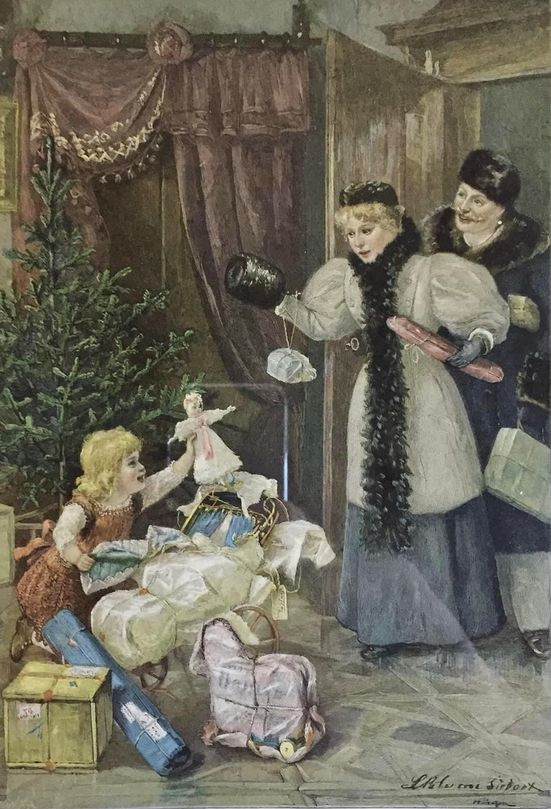
Weihnachten- Nach dem Schenken, 1888


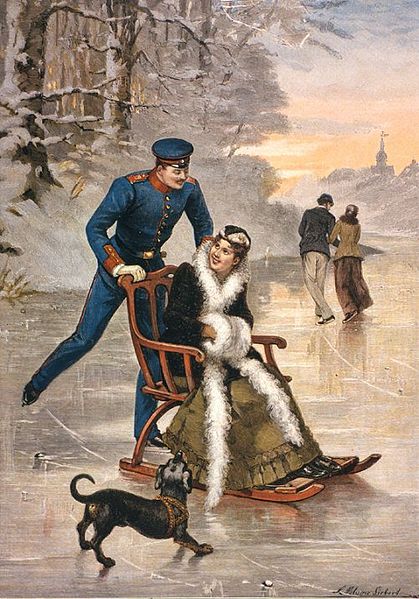
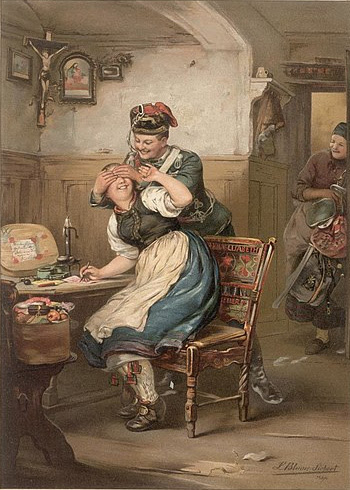
Ludwig Blume-Siebert was a famous German illustrator and painter of intimate family scenes in which children and pets were often present.
Born in Arolsen - today Bad Arolsen - a small town in northern Hesse, on 23 September 1853, he was noticed, still a youth, by the painter Wilhelm von Kaulbach who recognized his talent to the point of wanting him, at the age of 17, as a pupil at the Nuremberg School of Applied Arts, run by his son-in-law. Blume-Siebert perfected himself at the Düsseldorf Academy of Art and then at the Munich Academy of Fine Arts, where he learned to paint the idyllic and folkloric scenes of country life that brought him success, appearing above all in the illustrated magazine Die Gartenlaube at the end of the XIXth century.
All those that I want to show you here are taken from it, I want to make you aware of the joy that, in their simplicity, they manage to convey.

And with these lovely images I wish to all My Little Old World's 
far dear friends and loyal readers 
a Serene New Year filled with joy, satisfied hopes, 
dreams come true, health and Love.
With all my heart 


Die Weihnachtsurlaub (1894)


Die Weihnachtspostkutsche (1893)


Kalte Hände, (?)


Bitte! Bitte! (1889)


Unerwartete Bescherung (1887)


Der Weihnachtsmarkt (?)


Verfrühte Weihnachtsüberraschung (?)


Weihnachten im Forsthaus (1891)


Ein Herzensgeschenk (1888) 


Ludwig Blume-Siebert fu un celebre illustratore e pittore tedesco di scene d’intimità famigliare in cui spesso erano presenti bambini e animali da compagnia.
Nato ad Arolsen - oggi Bad Arolsen - un piccolo centro dell’Assia settentrionale, il 23 settembre 1853, fu notato, ancora giovinetto, dal pittore Wilhelm von Kaulbach che ne riconobbe il talento al punto da volerlo a frequentare, all’età di 17 anni, la Scuola di Arti Applicate di Norimberga, gestita da suo genero. Blume-Siebert si perfezionò all’Accademia d’Arte di Düsseldorf e quindi all’Accademia di Belle Arti di Monaco, dove imparò a dipingere le scene di vita di campagna idilliache e folkloristiche che gli diedero il successo, apparendo soprattutto sulla rivista illustrata Die Gartenlaube, sul finire del secolo XIX°.
Da essa sono tratte tutte quelle che desidero mostrarvi oggi, per rendervi edotti della gioia che, nella loro semplicità, riescono a trasmettere.

E con queste graziose immagini auguro 
a tutti i carissimi amici ed affezionati lettori di My Little Old World 
un Sereno Anno Nuovo 
prodigo di gioia, di speranze appagate, di sogni realizzati, di salute, di Amore.
Con tutto il cuore 


LINKING WITH:


domenica 26 dicembre 2021

Louisa May Alcott's Christmas Legacy


"Now, I believe every one has had a Christmas present and a good time. Nobody has been forgotten, not even the cat," said Mrs. Ward to her daughter, as she looked at Pobbylinda, purring on the rug, with a new ribbon round her neck and the remains of a chicken bone between her paws.
It was very late, for the Christmas-tree was stripped, the little folks abed, the baskets and bundles left at poor neighbors' doors, and everything ready for the happy day which would begin as the clock struck twelve. They were resting after their labors, while the yule log burned down...

Louisa May Alcott, Rosa's Tale, Source: Aunt Jo's Scrap-Bag, Volume 5, 1879


Today I want to deal with a special topic.
I want to tell you about an authoress that we all know and have learned to love over the years through the numerous readings she left us as a legacy: Louisa May Alcott.
Her voice, like that of Charles Dickens, whom she loved and admired so much, knows no fashions, the barriers of time do not stop it and continues to resonate inexorably and to create the atmosphere of these days full of magic and profound meanings, since the passion she had for the Holiday Season really knew no bounds.
In fact, Christmas inspired her many stories, fairy tales and novels.
And it is certainly not a coincidence that her famous novel Little Women, the one that consecrated her to success, starts right from a Christmas morning, a particular Christmas, not only because it was without any gift, but because it will be loaded with truer and authentic principles that the heart of a good Christian makes its own and observes without making any effort: the love for other people, the charity, the renunciation for those who suffer, the warmth of the family are the values ​​that most gratify our soul, especially during the Christmas period, which they give it meaning and depth more than a gift to be discarded that perhaps excites us, but the prestige of which is exhausted in something purely material.

But in reality this is not what I intended to tell to you today, or rather, it was not my intention to deal with it in this way ... I want to tell you about how Louisa May Alcott contributed to making of Christmas the real Christmas we still celebrate today.
Can you imagine a Santa Claus preparing gifts for children without the help of his faithful, hardworking and tireless goblins or elves, if you prefer, who, with a red or green hood, also take care of his reindeer?
The Scandinavian tradition teaches us to distinguish the Ljosalfar (Seelie court), the light elves, who are the good ones who defended the houses from evil spirits, from the Svartalfar (Unseelie court), or dark elves, who are mischievous sprites.
They are fairy beings, especially the light ones are very good and beautiful, they are generally as tall as a three year old child, and have the ability to transform themselves.
But how was it possible that from the mythology of northern Europe these little creatures became part of the world of Santa Claus in the United States during the Victorian era?
Well, it was our inexhaustible writer who first mentioned the elves in literature, which she called the 'Santa Little Helpers'.
During the Summer of 1855 our Louisa May Alcott finished a collection of Christmas stories entitled Christmas Elves.
We read in her correspondence:

Finished fairy book in September. [...] October.– [...] May illustrated my book, and tales called "Christmas Elves." Better than "Flower Fables." Now I must try to sell it.
[Innocent Louisa, to think that a Christmas book could be sold in October.–L. M. A.] 1

This book never saw the light, her publisher didn't agree to sell the aforementioned collection of short stories even in the following December. A few months later May became seriously ill and died. Louisa reacted to the pain of the loss of her beloved sister by taking care of her niece, Louisa May Nieriker, known as Lulu, to whom she dedicated new books of Christmas fairy tales.
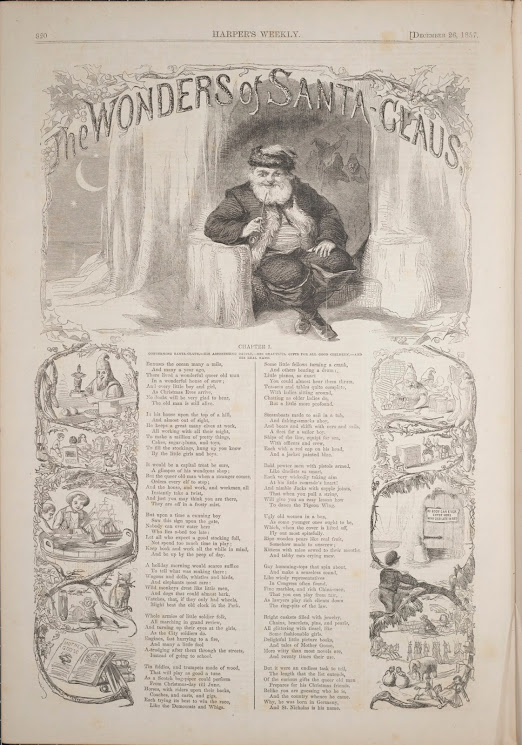
The original manuscript, which thus lost its importance, has been lost, but some extracts have been saved in other works of the writer, such as in the poem The Wonders of Santa Claus, published in the magazine HARPER'S WEEKLY in the issue of 26 December 1857, in which was narrated the fervent activity of the helping elves busy in Santa's workshop. 


1857 - Harpers weekly : a journal of civilization, [Shenandoah.Iowa: Living History.Inc.] - https://library.si.edu/image-gallery/99827-


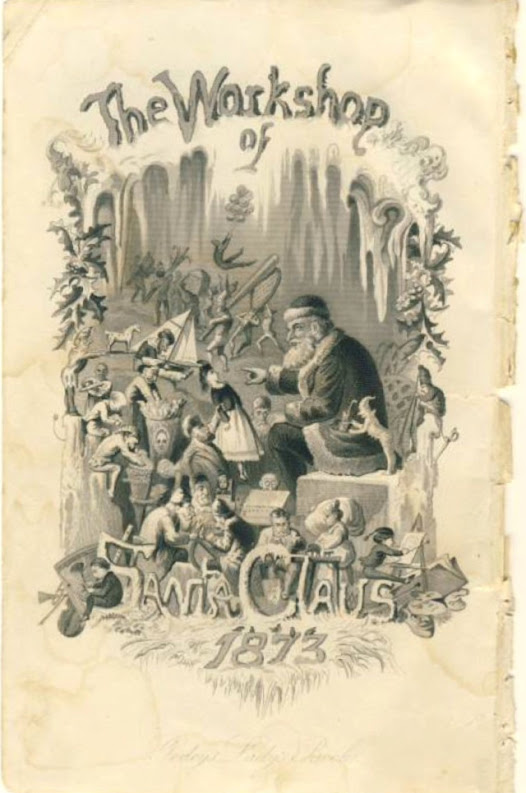
The image of the elves was later popularized by The Godey's Lady's Book, the famous American women's magazine published from 1830 to 1878. The cover illustration of the Christmas issue of 1873 showed Santa Claus surrounded by toys and elves and in the caption that the 'accompanied it read:

"In this way takes place the preparation of toys to be distributed to the little ones in the period before Christmas"


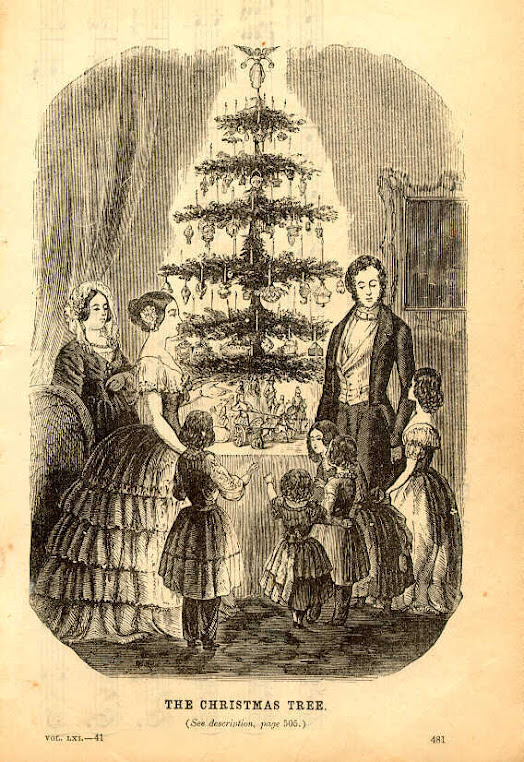
The Godey's Lady's Book magazine played an important role in influencing the Christmas traditions that were developing in the United States during the Victorian period: for example, it was the cover of the 1850 Christmas issue that presented, for the first time, the Christmas tree as we still decorate it today.


And therefore, to conclude, it was thanks to the pen of our Louisa May Alcott and her fervent imagination that we owe the passage of the figure of the elf, belonging for centuries to the Scandinavian mythology, to that of the willing elf who helps Santa Claus to pack his toys: we are therefore also indebted for this too to this authoress who loved Christmas to the point of reinventing its myths and stories in an imagination very personal and filled with phantasy, which still continues to speak to us today.


May this Holiday Season go on filling your home with Joy, 
your heart with Love, and your life with laughter.

See you soon 


L'eredità natalizia di Louisa May Alcott


- IMMAGINE 1 - Fotografia d'introduzione con un ritratto giovanile di Louisa May Alcott


"Orbene, credo che tutti abbiano ricevuto un dono per Natale e si siano divertiti. Nessuno è stato dimenticato, nemmeno il gatto", disse la signora Ward a sua figlia, mentre guardava Pobbylinda, che, facendo le fusa sul tappeto, con un nuovo nastro intorno al collo, teneva ciò che rimaneva di un osso di pollo tra le zampe.
Era molto tardi, perché l'albero di Natale era stato spogliato, i piccoli erano a letto, i cesti ed i fagotti erano stati lasciati alle porte dei vicini più poveri e tutto era pronto per il felice giorno che sarebbe iniziato quando l'orologio avrebbe suonato le dodici. Tutti stavano riposando dopo le loro fatiche, mentre il ceppo di Natale continuava ad ardere...

Louisa May Alcott, Rosa's Tale, da: Aunt Jo's Scrap-Bag, Volume 5, 1879


Quest'oggi desidero trattare di un argomento speciale.
Voglio parlarvi di un'autrice che tutti noi conosciamo ed abbiamo imparato ad amare nel corso degli anni attraverso le numerose letture che ci ha lasciato in eredità: Louisa May Alcott.
La sua voce, come quella di Charles Dickens, che tanto amava ed ammirava, non conosce mode, non la fermano le barriere del tempo e continua a risuonare inesorabile e a fare l'atmosfera di questi giorni ricchi di magia e di profondi significati, poiché la passione che ella nutriva per le festività natalizie non conosceva davvero limiti. 
Il Natale le ispirò infatti numerose storie, fiabe e racconti.
E non è di certo un caso che il suo celeberrimo romanzo Piccole Donne, quello che la consacrò al successo, prenda avvio proprio da una mattina di Natale, un Natale particolare, non solo perché senza doni, ma perché si caricherà di princìpi più veri ed autentici che il cuore di un buon cristiano fa propri ed osserva senza compiere alcuno sforzo: l'amore per il prossimo, la carità, la rinuncia per chi soffre, il calore della famiglia sono i valori che più gratificano, specialmente nel periodo natalizio, che gli conferiscono senso e spessore più di un dono da scartare che magari entusiasma, ma il cui prestigio si esaurisce in qualcosa di meramente materiale.

Ma in realtà non è di questo che intendevo parlarvi oggi, o meglio, non era mia intenzione trattarne in questo modo... ci tengo qui a dirvi di come Louisa May Alcott contribuì a fare del Natale che ancora oggi festeggiamo il vero Natale.
Riuscite ad immaginare un Babbo Natale che prepara i doni senza l'aiuto dei suoi fedeli, operosi ed instancabili folletti od elfi, se preferite, che, con il cappuccio rosso o verde si prendono inoltre cura delle sue renne?
La tradizione scandinava ci insegna a distinguere i Ljosalfar (Seelie court in inglese), gli elfi chiari, che sono quelli buoni che difendevano le case dagli spiriti malvagi, dagli Svartalfar (Unseelie court in inglese), ovvero elfi scuri, che sono spiritelli dispettosi.
Essi sono esseri fatati, in modo particolare quelli chiari sono molto buoni e belli, sono alti generalmente come una bimbo di tre anni, e hanno la capacità di trasformarsi.
Ma come è stato possibile che dalla mitologia del nord Europa queste piccole creature entrassero a far parte del mondo di Babbo Natale negli Stati Uniti durante l'epoca vittoriana?
Ebbene, fu proprio la nostra inesauribile scrittrice la prima a nominare in letteratura gli elfi, che definì i 'Santa Little Helpers', gli Aiutanti di Babbo Natale.
Durante l’estate del 1855 la Alcott terminò una raccolta di racconti natalizi intitolata Christmas Elves, Gli Elfi di Natale.
Leggiamo nel suo epistolario:

Finito il libro di fate a Settembre. [...] Ottobre. [...] May ha fatto le illustrazioni del mio libro di racconti intitolato Christmas Elves. È migliore di Flowers Fable. Ora devo cercare di venderlo. [Quanto sei ingenua Louisa a pensare che un libro natalizio possa essere venduto ad  ottobre.–L. M. A.]1

Questo libro non vide mai la luce, il suo editore non accettò di vendere la suddetta raccolta di racconti neppure nel dicembre successivo. Alcuni mesi dopo May si ammalò gravemente e morì. Alcott reagì al dolore per la perdita della sorella occupandosi della nipote, Louisa May Nieriker, detta Lulù cui dedicò nuovi libri di favole natalizie.
Il manoscritto originale, che perse, così, di importanza, è andato perduto, ma se ne sono salvati taluni estratti in altre opere della scrittrice, come nel poema The Wonders of Santa Claus, pubblicato sulla rivista HARPER'S WEEKLY nel numero del 26 dicembre 1857, in cui veniva narrata la fervente attività degli elfi aiutanti affaccendati nel laboratorio di Babbo Natale.


- IMMAGINE 2 - 1857 - Harpers weekly : a journal of civilization, [Shenandoah.Iowa: Living History.Inc.] - https://library.si.edu/image-gallery/99827-


L’immagine degli elfi fu in seguito resa popolare da The Godey’s Lady’s Book, la celeberrima rivista femminile americana pubblicata dal 1830 al 1878. L’illustrazione di copertina del numero natalizio del 1873 mostrava Babbo Natale circondato da giocattoli ed elfi e nella didascalia che l'accompagnava si leggeva:

In questo modo, ha luogo la preparazione dei giocattoli da distribuire ai piccoli nel periodo che precede il Natale


- IMMGINE 3 - Copertina del numero natalizio del 1873 di The Godey’s Lady’s Book


La rivista The Godey’s Lady’s Book giocò un ruolo importante nell’influenzare le tradizioni natalizie che si stavano sviluppando negli Stati Uniti durante il periodo vittoriano: per esempio, fu la copertina del numero di Natale del 1850 a presentare, per la prima volta, l'albero di Natale come siamo usi decorarlo ancora oggi.


- IMMAGINE 4 - Copertina del numero natalizio del 1850 di The Godey’s Lady’s Book


E quindi, per concludere, fu grazie alla penna della nostra Louisa May Alcott e alla sua fervida immaginazione che si deve il passaggio della figura del folletto, appartenente da secoli alla mitologia scandinava, a quella dell'elfo volenteroso che aiuta Babbo Natale a confezionare i giocattoli: siamo perciò debitori anche di ciò verso quest'autrice che amò il Natale a tal punto da reinventarne i miti e le storie in un immaginario personalissimo e pieno di fantasia, che ancora oggi continua a parlarci.


Possano queste Feste procedere a colmate le vostre case di Gioia, 
il vostro cuore di Amore, e la vostra vita di risate.

A presto 


LINKING WITH: