Visualizzazione post con etichetta Victorian garden. Mostra tutti i post

domenica 28 settembre 2025

"AN APPLE A DAY KEEPS THE DOCTOR AWAY" ~ A curious Victorian interest in Apples


We may think it to be a modern phrasing, but it dates back to the end of the 19th century, with early print examples found as early as 1887.


Along with the curiosity for inventions and everything "technological", the Victorian age was also a time marked by a great interest for plants of all kinds. Botanists were interested in studying and documenting the different types and varieties of pretty much anything that lived outdoors: just think about the stunning gardens which surrounded country mansions we've largely dealed with. But also walled kitchen gardens and orchards were much cared for. Flowers, trees and fruits were the centre of attention and amongst fruits apples got a particular amount of consideration. Identifying and cultivating were both focused on. The number would grow more and more.
Grafting, the technique of forging branches of two different fruits or vegetables together with the intent on creating new produce with qualities of both was a widely popular practice. Being a robust fruit grown on thick branches the apple was a natural candidate. Eventually thousands of varieties were created and/or identified, especially in England, though only a small fraction of those are still in production today. This craze resulted in a huge increase in production as well. According to Crumbs on the Table, around 3,000 new orchards were planted each year during the 1880s and 90s. 
And since fall is sweeping the country, and apples, although today are available all year round, once were a typical fall fruit, I thought ~ My little old world ~ readers may like to celebrate it with a bit of Victorian flavour. But before suggesting you a few recipes I found out in my Victorian cookbooks, let's go on talking about this particular and curious Victorian interest.
Trying to make a research with the meaning of learning something more about the cultivars specifically breeded in the Victorian age, I literally lost myself, alas! since the list is so long you cannot even image. 


Arthur John Elsley, Picking Apples.


Thus I thought to mention just some of them starting from those good to eat nice and fresh just picked. Amongst the most popular varieties obtained during the Victorian age there were: Carswell's Orange, Cellini, Beauty of Bath, Charles Ross, Chaxhill Red, Chorister Boy, Houblon, Miller's Seedling, Sitchamton Russet, Christmas Pearmain, Claygate Pearmain, Yellow Ingestrie, Cornish Gilliflower, Cowan's Seedling, John Standish, Mabbott's Pearmain, Cowarne Quoining, Cox's Orange Pippin, Laxton's Superb, September Beauty, Pomona, Nanny, Downton Pippin, Duchesse's Favourite, Summer Golden Pippin, Duke of Devonshire, Golden Knob, Lord Burghley, Saint Edmund's Pippin, Forge, Dymock Red, Miss Baron, Miss Phillimore, Morris's Russet, Stoke Edith Pippin, Rivers' Early Peach, Egremont Russet, May Queen, Rivers' Nonsuch, King Georg V, King's Acre Pippin, Lady Sudely, Dungay, Federal Pearmain, Glory of the West, Armorel, Brownlee's Russet, also known as Brownlee's graue Reinette, introduced in 1848, is green with red flush and covered with russet, Gipsy King, Winter Quarrenden, Saint Martins, Rosemary Russet, Worcester Pearmain, Gladstone, Frogmore Prolific, Golden Nonpareil, a wintry apple, Golden Harvey, one of the richest and most excellent dessert apple, but also Sturmer Pippin and Falstaff were considered good for dessert, that means eaten at the end of the lunch. 


Frederick Morgan, Apples Picking.


Amongst the Victorian apples good both for eating at once and for cooking there wereBaxter's Pearmain, introduced in 1821, Wadhurst Pippin, a fall apple introduced in 1850 just like the Small's Admirable; Golden Spire, Lady Henniker, Roundway Magnum Bonum, introduced in 1864; Gascoyne's Scarlet, introduced in 1871; Histon Favourite, introduced in 1883; Atalanta, introduced in 1893; Early Victoria, introduced in 1899 the same year of Paroquet; and Sansapareil, Rival, Lord Kitchener, introduced in 1900.
Besides there were those breeded just to be good for cooking, baking and making pies, such as Bushey Grove, Byfleet Seedling, Byford Wonder, Wickham's Pearmain, Carlisle Codlin, Chelmsford Wonder, Wanstall, Tyler's Kernel, Crimson Queening, Curl Tai, Dean's Codlin, a wintry apple, Thomas Rivers, Longstart, Dewdney's Seedling, a late Summer apple, Doctor Hogg, Royal Late, Lord Suffield, Monarch, Domino, Annie Elizabeth,  Emneth Early, Evagil, Goosebery Pippin, Grantonian, Golden Monday, Pott's Seedling, Scarlet Tiffing, Yorkshire Greening, High Canons, Hormead Pearmain, Striped Beefing, Peasgood Nonsuch, Golden Noble, Sir William Gibbon's, Schoolmaster, King Harr, Lane's Prince Albert, the tree of which crumbles for Christmas, Royal Jubilee, Sandringham, Pott's Seedling, Tom Putt, Smart's Prince Arthur, Sleeping Beauty, New Hawthornden, Nelson Codlin, Lord Derby, Lucombe's Seedling, Grenadier, Fillbasket.


Frederick Morgan, The Apple Pickers.


And eventually there were also the cultivars studied especially for making cider, such as Hagloe Crab, Knotted Kernel, Ellis Bitter, Red Jersey (a.k.a. Loral Drain), Ponsford, Kingston Black, Strawberry Norman, Paignton Marigold, Brown Snout, Golden Spire, Harry Masters Jersey, Stead's Kernel, Pennard Bitter, Cherry Norman, Yarlington Mill, Egremont Russet, resembling a pear in shape, White Jersey, White Norman, Taylor's Sweet (a.k.a. Taylor's), Eggleton Styre, Red Norman, Chisel Jersey, Crimson King, also known as John Toucher's or the Bewley Down Pippin, is a traditional cider apple cultivar originating in Somerset, such as the Dabinett and the Dove.
Not to mention the varieties of apples grown in England since the 16th- 17th century which also went on being raised in the Victorian age.
Just beacuse apples were such a popular snack during the 19th century, special devices were produced to allow people to easily enjoy them nice and fresh, but they were also a common after-dinner treat served both as part of baked desserts and on their own. When served on their own the use of special fruit forks and knives would haave been  necessary, allowing one to easily hold the apple in place while cutting it into bite-sized pieces. A Victorian etiquette book of 1880 advised, ‘In eating pears or apples, they would be peeled and cut into halves and quarters with a fruit knife and fork.”


Above you can see a Victorian mother of pearl handled pocket fruit knife and fork, each with its own little leather carrying case.
But when the apples were so many to peel, maybe for an apple pie in the kitchen of a large mansion where large Victorian wealthy families lived, it was a fairly hard work to do! And of course, the apple peeler and corer was invented! This clever device was invented in the 1860s. The Apple Museum says that the first patent was issued to E.L. Pratt in 1863, but the very first to be known and spread was the brainchild of a David H. Goodall, an inventory of many Victorian age appliances to be used in the kitchen. By 1866 they were making quite the splash and undoubtedly making things much easier for chefs all over the world.


An August 1866 advertisement on the American Agriculturist introduces his readers to a new machine called the "Lightning Apple Parer" on page 287.


Goodell's Lightning Apple Parer was a huge success. According to an article about David H. Goodell in the June 1883 volume of The Granite Monthly he had sold 7,200 dozen machines by 1868. However, including push-off mechanisms to make removal of an apple from the fork easier became popular during the 1870's. Goodell made several attempts to include a push-off spring on the Lightning Style Parers, but none of these attempts was a resounding success. Eventually it was added and if you want to see how The Lightning Apple Parer works, click HERE for the video. I suggest you to watch it,  this "contraption" is truly great!
It goes without saying that along with the increase in demand for apples, came a larger market for them and “Apple ladies” appeared on busy thoroughfares: some of them came directly from the near countryside


An "Apple lady" dressed as a peasant, 1898, William John Chatles Pitcher design (V&A Museum).


and some lived in the town, went to buy their apples in the nearest farms and kept their pantries well-stocked.


An Apple lady dressed for strolling through the town, 1890 (V&A Museum).


Well, I think this article has become longer than I thought when I start writing, thus to suggest you the apples recipes I'm waiting for you with the next one.
But let me end by quoting a special fall period during which apples were picked: it is etched in my memory since I was a little girl and I'm sure you all do know it too. It's drawn from Little Women
"There were a great many holidays at Plumfield, and one of the most delightful was the yearly apple–picking. For then the Marches, Laurences, Brookes and Bhaers turned out in full force and made a day of it. [...] The old orchard wore its holiday attire. Goldenrod and asters fringed the mossy walls. Grasshoppers skipped briskly in the sere grass, and crickets chirped like fairy pipers at a feast. Squirrels were busy with their small harvesting. Birds twittered their adieux from the alders in the lane, and every tree stood ready to send down its shower of red or yellow apples at the first shake. Everybody was there. Everybody laughed and sang, climbed up and tumbled down. Everybody declared that there never had been such a perfect day or such a jolly set to enjoy it, and everyone gave themselves up to the simple pleasures of the hour as freely as if there were no such things as care or sorrow in the world." (LITTLE WOMEN part 2, CHAPTER 47: HARVEST TIME, p. 611.).
Just Louisa May Alcott was able to describe a simple image depicting an idillyc and romantic picture with every single word!


May your day be filled with joy and smiles, 
Dearest Friends and Readers.
See you soon 


Dany


"UNA MELA AL GIORNO TOGLIE IL MEDICO DI TORNO"
~ Un particolare interesse nutrito per le mele in epoca vittoriana

Potremmo pensare che si tratti di un modo di dire moderno, ma risale alla fine del XIX secolo, con primi esempi a stampa risalenti addirittura al 1887.


IMMAGINE DI COPERTINA - Stampa vittoriana di una cultivar di mela del periodo.


Accanto alla curiosità per le invenzioni e per tutto ciò che era "tecnologico", l'età vittoriana fu anche un periodo caratterizzato da un grande interesse per le piante di ogni tipo. I botanici di dedicarono a studiare e documentare le diverse tipologie e varietà di praticamente tutto ciò che viveva all'aperto: basti pensare agli splendidi giardini che circondavano le residenze aristocratiche di campagna di cui abbiamo più volte ampiamente parlato. Ma anche gli orti e i frutteti erano molto curati. Fiori, alberi e frutti erano al centro dell'attenzione e, tra i frutti, le mele ricevettero una particolare considerazione. L'identificazione delle varie cultivar e la coltivazione di nuove erano entrambe attività su cui si concentrava l'attenzione, sicché il loro numero delle varietà sarebbe cresciuto sempre di più.
L'innesto, ossia la tecnica di forgiare rami di due frutti o ortaggi diversi con l'intento di creare nuovi prodotti con le qualità di entrambi, divenne una pratica molto diffusa. Essendo un frutto robusto coltivato su rami spessi, la mela era una candidata naturale. Alla fine furono create e/o identificate migliaia di varietà, soprattutto in Inghilterra, sebbene solo una piccola parte di queste sia ancora in produzione oggi. Questa mania portò anche a un enorme aumento della produzione. Secondo Crumbs on the Table, tra il 1880 e il 1890 vennero piantati circa 3.000 nuovi frutteti ogni anno.
E poiché l'autunno sta dilagando nella campagna e le mele, sebbene oggi siano disponibili tutto l'anno, un tempo erano un frutto tipicamente autunnale, ho pensato che ai lettori di ~ My little old world ~ sarebbe piaciuto celebrarlo con un tocco di sapore vittoriano. Ma prima di suggerirvi alcune ricette che ho trovato nei miei libri di cucina vittoriani, continuiamo a parlare di questo particolare e curioso interesse vittoriano.
Cercando di fare una ricerca con l'intento di saperne di più sulle cultivar specificamente coltivate in epoca vittoriana, mi sono letteralmente persa, ahimè! dato che la lista è così lunga che non potete nemmeno immaginare.


IMMAGINE 2 - Arthur John Elsley, Picking Apples.


Ho pensato quindi di citarne solo alcune, partendo da quelle considerate buone da mangiare belle fresche appena raccolte. Tra le varietà più popolari ottenute durante l'epoca vittoriana c'erano: Carswell's Orange, Cellini, Beauty of Bath, Charles Ross, Chaxhill Red, Chorister Boy, Houblon, Miller's Seedling, Sitchamton Russet, Christmas Pearmain, Claygate Pearmain, Yellow Ingestrie, Cornish Gilliflower, Cowan's Seedling, John Standish, Mabbott's Pearmain, Cowarne Quoining, Cox's Orange Pippin, Laxton's Superb, September Beauty, Pomona, Nanny, Downton Pippin, Duchesse's Favourite, Summer Golden Pippin, Duke of Devonshire, Golden Knob, Lord Burghley, Saint Edmund's Pippin, Forge, Dymock Red, Miss Baron, Miss Phillimore, Morris's Russet, Stoke Edith Pippin, Rivers' Early Peach, Egremont Russet, May Queen, Rivers' Nonsuch, King Georg V, King's Acre Pippin, Lady Sudely, Dungay, Federal Pearmain, Glory of the West, Armorel, Brownlee's Russet, nota anche come Brownlee's graue Reinette, introdotta nel 1848, dal colore verde con sfumature rosse e ricoperta di ruggine, Gipsy King, Winter Quarrenden, Saint Martins, Rosemary Russet, Worcester Pearmain, Gladstone, Frogmore Prolific, Golden Nonpareil, una mela invernale, Golden Harvey, una delle mele da dessert più ricche ed eccellenti, ma anche Sturmer Pippin e Falstaff erano considerate adatte per essere consumate a fine pasto.


IMMAGINE 3 - Frederick Morgan, Apples Picking.


Tra le mele vittoriane adatte sia al consumo diretto che alla cottura c'erano: la Baxter's Pearmain, introdotta nel 1821, la Wadhurst Pippin, una mela autunnale introdotta nel 1850 proprio come la Small's Admirable; la Golden Spire, la Lady Henniker, la Roundway Magnum Bonum, introdotte nel 1864; la Gascoyne's Scarlet, introdotta nel 1871; la Histon Favourite, introdotta nel 1883; l'Atalanta, introdotta nel 1893; la Early Victoria, introdotta nel 1899, lo stesso anno della Paroquet; e le Sansapareil, Rival, Lord Kitchener, introdotte nel 1900.
Inoltre, vi erano varietà selezionate solo per essere adatte per essere cucinate, in pentola o al forno, e dalla polpa dalla consistenza ideale per la preparazione di torte, come Bushey Grove, Byfleet Seedling, Byford Wonder, Wickham's Pearmain, Carlisle Codlin, Chelmsford Wonder, Wanstall, Tyler's Kernel, Crimson Queening, Curl Tai, Dean's Codlin, una mela invernale, Thomas Rivers, Longstart, Dewdney's Seedling, una mela di fine estate, Doctor Hogg, Royal Late, Lord Suffield, Monarch, Domino, Annie Elizabeth, Emneth Early, Evagil, Goosebery Pippin, Grantonian, Golden Monday, Pott's Seedling, Scarlet Tiffing, Yorkshire Greening, High Canons, Hormead Pearmain, Striped Beefing, Peasgood Nonsuch, Golden Noble, Sir William Gibbon's, Schoolmaster, King Harr, Prince Albert di Lane, il cui albero si spoglia per Natale, Royal Jubilee, Sandringham, Pott's Seedling, Tom Putt, Prince Arthur di Smart, Sleeping Beauty, New Hawthornden, Nelson Codlin, Lord Derby, Lucombe's Seedling, Grenadier, Fillbasket.


IMMAGINE 4 - Frederick Morgan, The Apple Pickers.


Ed infine vi erano anche le cultivar studiate appositamente per la produzione di sidro, come Hagloe Crab, Knotted Kernel, Ellis Bitter, Red Jersey (nota anche come Loral Drain), Ponsford, Kingston Black, Strawberry Norman, Paignton Marigold, Brown Snout, Golden Spire, Harry Masters Jersey, Stead's Kernel, Pennard Bitter, Cherry Norman, Yarlington Mill, Egremont Russet, dalla forma simile a una pera, White Jersey, White Norman, Taylor's Sweet (nota anche come Taylor's), Eggleton Styre, Red Norman, Chisel Jersey, Crimson King, nota anche come John Toucher's, Bewley Down Pippin, una cultivar tradizionale di mele da sidro originaria del Somerset, come la Dabinett e la Dove.
Per non parlare delle varietà di mele che crescevano in Inghilterra dal XVI al XVII secolo e che continuarono ad essere coltivate anche in epoca vittoriana. Proprio perché le mele erano uno spuntino così popolare durante il XIX secolo, vennero prodotti appositi dispositivi per permetterne il consumo per gustarle con facilità e godere della loro freschezza. Ma erano anche un comune spuntino dopo cena, servite sia come parte di dolci da forno che da sole. Quando servite da sole, era necessario l'uso di speciali forchette e coltelli da frutta, che permettevano di tenere facilmente ferma la mela mentre la si tagliava a pezzetti. Un manuale di galateo vittoriano del 1880 consigliava: "Quando si mangiano pere o mele, queste vanno sbucciate e tagliate a metà e in quarti con un coltello e una forchetta da frutta".


IMMAGINE 5


Qui sopra potete vedere un coltellino da frutta e una forchetta tascabili risalenti all'epoca vittoriana con impugnatura in madreperla, ognuno con la propria piccola custodia in pelle.
Ma quando le mele da sbucciare erano tante, magari per una torta da prepararsi nella cucina di una grande villa dove vivevano numerose famiglie vittoriane benestanti, il tempo richiesto poteva essere molto! E come potevano i vittoriani a non pensare di inventare lo sbucciatore-levatorsoli! Questo ingegnoso dispositivo fu brevettato negli anni '60 dell'Ottocento. L'Apple Museum afferma che il primo brevetto fu rilasciato a E.L. Pratt nel 1863, ma il primo a essere conosciuto e diffuso fu il progetto di un certo David H. Goodall, inventore di molti attrezzi da cucina di epoca vittoriana. Nel 1866 fece scalpore e senza dubbio rese molto più facile il lavoro a chef di tutto il mondo: si chiamava Lightning Apple Parer.


IMMAGINE 6 - Un annuncio pubblicitario dell'agosto 1866 tratto dalla rivista American Agriculturist presenta ai suoi lettori, a p. 287, una nuova apparecchiatura chiamata "Lightning Apple Parer".


Il Lightning Apple Parer di Goodell fu un enorme successo. Secondo un articolo pubblicato nel numero di giugno 1883 di The Granite Monthly, entro il 1868 David H. Goodell aveva venduto 7.200 dozzine dei suoi nuovi attrezzi. Tuttavia, l'introduzione di meccanismi di estrazione a spinta per facilitare la rimozione di una mela dalla forchetta divenne popolare solo durante gli anni '70 dell'Ottocento. Goodell tentò più volte di includere una molla di estrazione sul suo Lightning Apple Parer, ma nessuno di questi tentativi ebbe un successo clamoroso. Alla fine fu aggiunta e, se volete vedere come funziona il Lightning Apple Parer, cliccate QUI per il video. Vi consiglio di guardarlo, questo marchingegno è davvero sorprendente ed entusiasmante!
Inutile dire che, con l'aumento della domanda di mele si aprì un mercato più ampio per il loro commercio e le "signore delle mele" apparvero sulle strade trafficate: alcune di loro provenivano direttamente dalle campagne circostanti 


IMMAGINE 7 -  Una "signora delle mele" con i suoi abiti da contadina, 1898, William John Chatles Pitcher design (V&A Museum).


mentre altre vivevano in città, andavano a comprare le mele nelle fattorie più vicine e tenevano le loro dispense ben rifornite.


IMMAGINE 8 - Una "signora delle mele" vestita da città, 1890 (V&A Museum).


Beh, credo che questo post sia diventato più lungo di quanto pensassi quando ho iniziato a scriverlo, ragion per cui per proporvi le ricette a base di mele vi do appuntamento al prossimo.
Ma lasciate che concluda citando un periodo autunnale speciale in cui si raccoglievano le mele: è impresso nella mia mente fin da quando ero bambina e sono sicura che lo conoscete anche voi. È tratto da Piccole Donne :
"C'erano moltissime feste a Plumfield, e una delle più deliziose era la raccolta annuale delle mele. Perché allora i March, i Laurence, i Brooke e i Bhaer si riversavano in massa e ne facevano una giornata. [...] Il vecchio frutteto indossava i suoi abiti festivi. Solidago e aster orlavano i muri muschiosi. Le cavallette saltellavano vivaci nell'erba secca e i grilli frinivano come pifferai fatati a un banchetto. Gli scoiattoli erano impegnati con il loro piccolo raccolto. Gli uccelli cinguettavano i loro saluti dagli ontani nel vialetto, e ogni albero era pronto a far cadere la sua pioggia di mele rosse o gialle al primo scossone. Tutti erano lì. Tutti ridevano e cantavano, si arrampicavano e si tuffavano. Tutti dichiaravano che non c'era mai stata una giornata così perfetta o un gruppo così allegro per godersela, e tutti si abbandonavano ai semplici piaceri del momento con la stessa libertà, come se al mondo non esistessero preoccupazioni o dispiaceri."(LITTLE WOMEN part 2, CHAPTER 47: HARVEST TIME, p. 611.).
Solo Louisa May Alcott poteva riuscire a descrivere un'immagine semplice trasformandola in un dipinto idilliaco e romantico con ogni singola parola!


Possa la vostra giornata essere colma di gioia e di sorrisi, 
Carissimi Amici e Lettori,
A presto 


Dany


LINKING WITH:


domenica 14 maggio 2023

Ludwig Messel and Nymans Manor House and Gardens


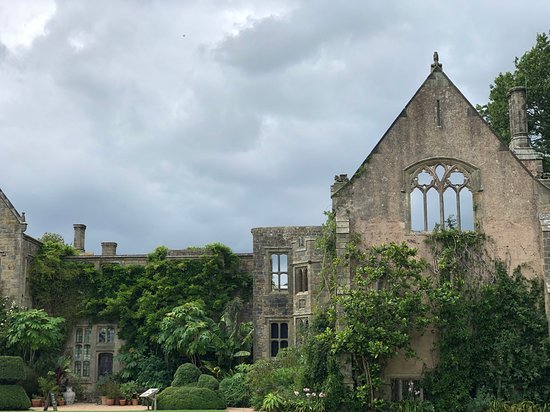
Nymans House and Gardens, situated in Mid-Sussex, belong to the National Trust which preserves ancient mansions, castles and estates that have belonged to rich and powerful people of hundreds of years ago. Nymans appears to be a medieval manor house with an extensive Gothic part so old to has fallen into decay.
In fact, having a look back in time, Nymans seems to have been truly a medieval estate named  after an otherwise forgotten family called NYNWEMAN in the early XIVth century. The property went through various hands, the Gatland family building a house on the site of the present one sometime in the XVIth or XVIIth century, before that it all ended up in the XIXth century with one George Harrington, who rebuilt the house and enlarged the estate. But our story begins in 1890 when the entire 600-acre plot was purchased by a wealthy German stockbroker, Ludwig Ernest Wilhelm Leonard Messel, originally from Darmstadt. 
Ludwig was the son of Simon Messel and Emilie Lindheim and he was born on 9 January 1847. In 1816, his grandfather, Aron, had founded a banking house in Darmstadt, which was then part of the Grand Duchy of Hesse. Young Ludwig came to Britain in 1868 with his brother Rudolf, allegedly with gold coins sewn into their shirts with which to ease their early days in the Country. Some say the Messels left their Country to avoid persecution, for they were a Jewish family. Although people who professed the Jewish religion weren't seen with great favour in German-speaking Countries since the age of the first Crusade (1096), this seems to make little sense then – Hesse was no more or less anti-Semitic than anywhere else in north-west Europe at the time, including the UK. Perhaps, like the Rothschilds, the Messels hoped to establish an international family business. Perhaps they were simply seeking their fortunes, and looking for opportunities, as people have done before and since. And, anyway, according to one account, Rudolf went back to Hesse to serve as a stretcher-bearer in the Franco-Prussian War of 1870-71. Ludwig didn’t come back, but maybe didn't even intended to stay. The thing is that in 1871 he married Annie Cussans  


in the London disctrict of Lambeth and in 1873 founded the stockbroking firm of L. Messel & Company. 
And bought Nymans in 1890. According to the National Trust he did it “to integrate himself into English society”. It’s a curious expression, given he’d lived here for 20 years, married an Englishwoman, established a successful business and had a family, all before he acquired his grand domain. Maybe he purchased Nymans simply because he wanted a big estate, loved gardening, and had amassed enough of a fortune to indulge himself. Maybe, like his wealthy Victorian contemporaries, he felt he needed a suitable country mansion in which to entertain, as it was usual then. Maybe, despite apparently being a British subject by this time, his German-Jewish background was unacceptable to some and having a nice property helped overcome some social prejudice. 
Ludwig had a great interest in trees and plants and began the development of Nymans’ tree planting and collection of shrubs and flowers. He developed the walled garden, the heather garden and the pergola walk. An original Regency mansion was part of Nymans then and he wanted to turn it into a place for family life and for his guests.
Anne and Ludwig had six children and it was the eldest son of theirs, Leonard, who inherited the property in 1916. He was an even more enthusiastic plantsman than his father, and added greatly to the Nymans collections. And it was he who built a new house in the Tudor and Gothic style. 


So the house which appears to be medieval and which we see today is little over 100 years old. In October 1947 a disastrous fire swept through most of the property creating the burnt out shell we see today at the southern end.
The house was only partially re-built after the fire and became probably, even more fascinating with its appearance of ruin, and earned so much as for charm and antiquity.
What we can see today of the most part the historic mansion is simply a Gothic fairy tale, acting as a romantic background for the gardens and surrounding woodland.
Nymans' became one of the homes of Anne Messel, Leonard’s daughter, who married Ronald Armstrong Jones. Their son, Anthony, married Queen Elisabeth II’s sister, Princess Margaret, in 1960, who became Lord Snowdon in 1961. For many years they lived in the Nymans' estate. Leonard gave Nymans to The National Trust in 1954 but the house continued to be lived in by the family.
Anne’s second husband was the Earl of Rosse and Anne lived with her husband mainly in Ireland in Birr Castle, but she often came to live at Nymans. Anne was one of the founders of The Victorian Society which aimed to preserve the (then unfashionable) art and architecture of the Victorian period.
Anne was also a keen gardener and took a hand in Nymans’ continuing development.


With her husband she added rhododendrons, camellias, hydrangeas, hypericums, agapanthus, hardy fuschias and more roses. In 1979, following the death of her husband she returned permanently to Nymans to spend her final years here. She was Director of the Garden until 1987. She died at Nymans in July 1992 aged 90.
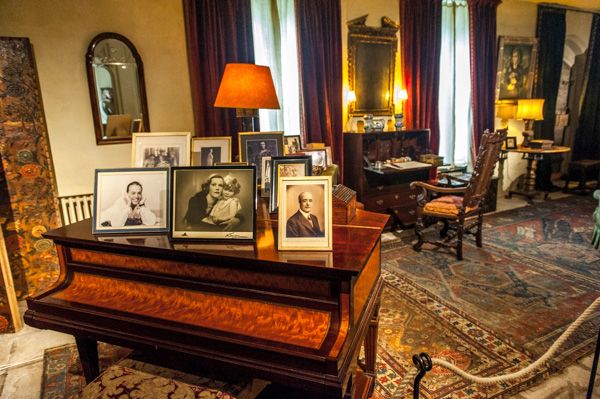
In addition to the extensive gardens, which are listed in Historic England's Register of Parks and Gardens, when the house re-opens it is the one Anne lived in that visitors can see.
Here you are some shots of the interiors taken from the web:


I sincerely hope you've enjoyed this so wonderful stroll trhough History, Beauty and Elegance!


With heartfelt gratitude, 
I'm sending You all my best.
See you soon 


Ludwig Messel e la Tenuta di Nymans 


IMMAGINE DI COPERTINA, IMMAGINE 2 - 3 - 4 - Rovine della dimora di Nymans


Il complesso di Nymans, situato nel Mid-Sussex, appartiene al National Trust che conserva antiche dimore, castelli e tenute appartenute a persone facoltose e potenti centinaia di anni fa. A giudicare dal suo aspetto Nymans appare come un maniero medievale con un'ampia parte gotica talmente antica da essere caduta in rovina.
In realtà, guardando indietro nel tempo, Nymans sembra essere stata davvero una tenuta medievale che prese il nome da una famiglia altrimenti dimenticata chiamata Nynweman all'inizio del XIV secolo. La proprietà passò attraverso varie mani, la famiglia Gatland costruì una casa sul sito dell'attuale nel XVI o XVII secolo, prima che tutto finisse nel XIX secolo con un certo George Harrington, che ricostruì la casa e ampliò la proprietà. Ma la nostra storia inizia nel 1890 quando l'intero appezzamento di 600 acri fu acquistato da un ricco agente di cambio tedesco, Ludwig Ernest Wilhelm Leonard Messel, originario di Darmstadt.
Ludwig era figlio di Simon Messel ed Emilie Lindheim ed era nato il 9 gennaio 1847. Nel 1816 suo nonno Aron aveva fondato una banca a Darmstadt, che allora faceva parte del Granducato d'Assia. Il giovane Ludwig arrivò in Gran Bretagna nel 1868 con suo fratello Rudolf, presumibilmente con monete d'oro cucite all'interno delle loro camicie con cui 'alleviare' i loro primi giorni nel Paese. Alcuni dicono che i Messel lasciarono il loro Paese per evitare la persecuzione, perché appartenevano ad una famiglia ebrea. Sebbene le persone che professavano la religione ebraica non fossero viste di buon occhio nei paesi di lingua tedesca già dall'epoca della prima crociata (1096), tutto ciò sembra avere poco senso, vista l'epoca di cui stiamo parlando: l'Assia non era né più né meno antisemita di quanto fosse qualsiasi altra parte dell'Europa nordoccidentale all'epoca, Regno Unito compreso. Forse, come i Rothschild, i Messel speravano di fondare un'azienda familiare internazionale. Forse stavano semplicemente cercando fortuna e opportunità, come tanta gente fece prima e dopo. E, comunque, secondo un resoconto, Rudolf tornò in Assia per servire come barelliere nella guerra franco-prussiana del 1870-71. Ludwig non fece ritorno, ma forse non aveva neppure intenzione di restare. Il fatto è che nel 1871 sposò Annie Cussans 


IMMAGINE 5 - Anne Cussans e Ludwig Messels


nel quartiere londinese di Lambeth e nel 1873 fondò la società di intermediazione in borsa di L. Messel & Company.
Ed acquistò Nymans nel 1890. Secondo il National Trust lo fece “per integrarsi nella società inglese”. È un'espressione curiosa, dato che aveva vissuto in Inghilterra per 20 anni, sposato una donna inglese, avviato un'attività di successo e aveva una famiglia, tutto prima di acquisire il suo grande dominio. Forse lo fece semplicemente perché desiderava una grande tenuta, amava il giardinaggio e aveva accumulato abbastanza fortuna da sbizzarrirsi. Forse, come i suoi ricchi contemporanei vittoriani, avvertiva il bisogno di una residenza di campagna adatto in cui intrattenere amici secondo la moda del tempo. Forse, nonostante fosse apparentemente un suddito britannico a quel tempo, il suo background ebraico-tedesco era inaccettabile per alcuni e avere una bella proprietà poteva essergli di aiuto a superare alcuni pregiudizi sociali.
Ludwig aveva un grande interesse per alberi e piante e iniziò lo sviluppo della piantagione di alberi a Nymans e la raccolta di arbusti e fiori. Sviluppo il walled-garden, l'heather garden ed il pergola walk. A quel tempo di Nymans faceva parte una villa Regency originale ed egli voleva trasformarla in un luogo per la vita familiare ed i ricevimenti.
Anne e Ludwig ebbero sei figli e fu il primogenito, Leonard, ad ereditare la proprietà nel 1916. Egli era un giardiniere ancora più entusiasta del padre e aggiunse molto alle collezioni di Nymans. Ed è stato lui a costruire una nuova casa in stile Tudor e gotico.


IMMAGINE 6 - 7 - 8 - Vedute dall'esterno della parte restaurata dell'edificio che continuò ad essere abitata 


Quindi l'edificio che sembra medievale e che vediamo oggi vanta poco più di 100 anni. Nell'ottobre del 1947 un disastroso incendio divampò nella maggior parte della proprietà creando quel 'guscio bruciato' che vediamo oggi all'estremità meridionale della residenza. Essa è stata ricostruita solo in parte ed è diventata, probabilmente, ancor più affascinante con il suo aspetto da rudere che tanto le ha conferito in quanto a fascino ed antichità. Quello che possiamo vedere oggi della maggior parte della dimora storica è semplicemente una fiaba gotica, che fa da sfondo romantico ai giardini e ai boschi circostanti.
Nymans divenne una delle case di Anne Messel, la figlia di Leonard, che sposò Ronald Armstrong Jones. Il loro figlio, Anthony, sposò la sorella della regina Elisabetta II, la principessa Margaret, nel 1960, e divenne Lord Snowdon nel 1961. Per molti anni vissero nella tenuta di Nymans.
Leonard cedette Nymans al National Trust nel 1954, ma la casa continuò ad essere abitata dalla famiglia.
Il secondo marito di Anne fu il conte di Rosse. Anne visse con suo marito principalmente in Irlanda a Birr Castle, ma spesso si trasferiva a Nymans. Ella fu una delle fondatrici di The Victorian Society che mirava a preservare l'arte e l'architettura (allora fuori moda) del periodo vittoriano.
Anne era anche un'appassionata giardiniera e ha contribuito al continuo sviluppo di Nymans.


IMMAGINE  9 - 10 - 11 - La loggia, la piccionaia e le rovine viste dai giardini
 

Con il marito aggiunse alla collezione del parco rododendri, camelie, ortensie, iperici, agapanthus, fucsie resistenti e rose. Nel 1979, dopo la morte del marito, tornò definitivamente a Nymans per trascorrevi i suoi ultimi anni. Fu Direttrice del Giardino fino al 1987. Si spense a Nymans nel luglio 1992 all'età di 90 anni.
Oltre agli ampi giardini, che sono annoverati tra quelli dell'Historic England's Register of Parks and Gardens (Registro Storico dei Parchi e dei Giardini Inglesi), quando la casa riapre è quella in cui Anne visse che i visitatori possono vedere.
Eccovi alcune immagini degli interni prese dal web:


IMMAGINE 12 - 13 - 14 - 15 - 16 - 17 - 18 - 19


Spero sinceramente che abbiate gradito questa meravigliosa 'passeggiata' compiuta attraverso la Storia, la Bellezza e l'Eleganza!


Con sentita gratitudine,
Vi invio ogni bene.
A presto 


Dany


LINKING WITH:


Angie from God's Growing Garden has featured this pot of mine today, May 23, 2023!
I thank you from the bottom of my heart, Dearie •♥•


lunedì 21 novembre 2016

AUSTIN & MABEL: The Amherst Affair which gave us the Emily Dickinson we love.


"WE SHOULD HAVE BEEN BORN LATER, THAT IS ALL. ONE OR TWO HUNDRED YEARS FROM NOW THE WORLD WOULD REJOICE WITH US."1


EMILY is called in Amherts "the myth". She has not been out of her house for fifteen years ... She writes the strangest poems & very remarkable ones. She is in many respects a genius. She wears always white & has her hair arranged as was the fashion fifteen years ago when she went into retirement. She wanted me to come & to sing her, but she would not see me. She has frequently sent me flowers & poems, & we had a very pleasant friendship in that way. So last Sunday I went over there with Mr.[Austin] Dickinson. Miss Vinnie, the other sister, who does occasionally go out, told me that if I had been otherwise than a very agreeable person she would have been dreadfully tired of my name even, for she says all the members of her brother's family have so raved about me that ordinarly she would hate the sound of Mrs. Todd. 


Mabel Loomis Todd's Journal, 
September 15, 1882 2


♥•*´¨`*•♥•♥•*´¨`*•♥•♥•*´¨`*•♥•
EMILY viene chiamata ad Amherts "Il mito". Sono quindici anni che non esce di casa ... Scrive le poesie più strane e più straordinarie. Ella è per molti aspetti un genio. Veste sempre di bianco e ha i capelli raccolti come era di moda quindici anni fa, quando cominciò il suo ritiro. Voleva che andassi da lei a cantare, ma non mi vide mai. Mi ha spesso inviato dei fiori e delle poesie, e abbiamo goduto di una piacevole amicizia basata su queste cose. Così domenica scorsa mi recai da lei con Mr.[Austin] Dickinson. La signorina Vinnie, l'altra sorella, che occasionalmente esce di casa, mi ha detto che se non fossi stata una persona gradevole sarebbe stata terribilmente infastidita persino dall'udire il mio solo nome, ma, ella sostiene, tutti i membri della famiglia di suo fratello sono così entusiasti di me che sapeva non avrebbe potuto odiare la musica della signora Todd.


Mabel Loomis Todd Journal,
15 settembre 1882, 2


Non era davvero quel che si dice una gran bellezza, Mabel Loomis, anzi - gli occhi troppo grandi e prominenti, la bocca carnosa e leggermente storta e la bassa statura, poco rispettose delle dovute proporzioni le sue fattezze, sottraevano alla sua immagine grazia ed armonia - ma aveva tutto, davvero tutto per risultare carismatica e di buona compagnia; nata in una famiglia di modestissime origini il 10 novembre del 1856 ( anno in cui Austin, fratello maggiore di Emily Dickinson, & Susan Huntington Gilbert convolarono a nozze )Cambridge nel Massachusetts, ella trascorse buona parte della propria infanzia presso svariate boardinghouses, ossia case-alloggio per indigenti od orfanotrofi per i più poveri, ma alla estrema miseria alla quale era costretta a vivere la Natura sembrò trovare compensazione nel dotarla di numerose inclinazioni artistiche: ella imparò ancora ragazzina a suonare mirabilmente il pianoforte, si diceva cantasse con una voce da soprano in modo divino, dipingeva abilmente ( quando si trovò presso la boardinghouse di Boston prese lezioni da Abigail May Alcott, soprattutto per affinare la sua capacità nel disegno botanico ), sapeva scrivere racconti e poesie perché si era fatta una propria cultura che le consentirà, da adulta, di frequentare ambienti anche medio ed alto borghesi di una certa levatura e soprattutto, raggiunta la maggiore età, Mabel si considerava alfine pienamente soddisfatta di sé, della donna che era divenuta e del successo che otteneva in società, laddove era molto ricercata nei salotti e corteggiata ...
anzi, la sua era vera compiacenza ...

[...] Dipingeva ad olio e con gli acquerelli su tela, carta, legno e porcellana; suonava il pianoforte con giudizio e molto bene, e cantava con una bella voce da soprano ben esercitata. Era una buona lettrice, aveva ambizioni come autore, e pubblicò numerosi saggi prima ancora di divenire adulta. Lungi dal nascondere le sue abilità, aveva un modo di porsi affascinante e spavaldo che le permetteva di attirare l'attenzione delle persone radunate in ogni stanza in cui faceva ingresso. In realtà ella traeva gran diletto dal sentirsi gli occhi di tutti puntati addosso, e non risparmiava davvero il suo talento per suscitare ammirazione e guadagnare lodi. 3 


1883, ritratto di Mabel del Lovell Studio, Amherst,
  The Todd-Bingham Picture Collection Manuscripts & Archives, Yale University.
Copyright sconosciuto


Mabel a quanto pare era pronta per il matrimonio. Quasi diciannove la sua vincente graziosità e la sua intelligenza vivace ne facevano il punto d'interesse di ogni incontro ed era proprio lì che ella maggiormente gradiva trovarsi.

La madre aveva cercato di crescerla una buona donna di casa, capace nelle faccende di tutti i giorni e nel confezionarsi gli abiti da sé, cosa alquanto diffusa al tempo presso i ceti meno abbienti, trasmettendole tutta la propria maestria, ma Mable era ferma nei propri propositi già all'età di sedici anni ...

"[...] La moda cambia, gli abiti si logorano, ma le acquisizioni della mente sono imperiture come l'eternità." 5 

Destino volle che un giorno incontrasse David Todd, insigne matematico e studioso di astronomia che s'invaghì di lei


Ritratto ufficiale del fidanzamento di David e Mabel Gallery by Bowdoin's Gallery, Washington DC, 1878. Fotografia di dominio pubblico da The Todd-Bingham Picture Collection Manuscripts & Archives, Yale University. 


e la condusse all'altare anche se il carattere di Mabel non mutò nel modo più assoluto dopo il matrimonio, ma Dave si sentiva lusingato dall'avere una moglie corteggiata praticamente da chiunque la conoscesse !

"Non riesco a spiegarlo, ma sento in me una forte e seducente potenza, e magnetismo abbastanza per affascinare una stanza piena di gente - cosa che ho già fatto, in realtà ... Ho flirtato scandalosamente con tutti gli uomini che ho visto - ma nel modo in cui David ama che lo faccia. Ho semplicemente sentito come se potessi attirare ogni uomo di qualsiasi portata. Se tale potenza rimane completamente imbottigliata mi sento inquieta e febbricitante come un'aquila in gabbia, ma se la uso nel modo innocente in cui sono solita fare sono soddisfatta - anche se ambirei a qualche parola in più per conquistare ". 6 

David era nato il 19 di marzo del 1855 in una fattoria a Lake Ridge, vicino New York da una famiglia di tradizioni contadine, ma di idee progressiste, tanto che il padre lo volle a frequentare nel 1873 la scuola superiore di Amherts per comprendere quale delle due passioni che lo animavano coltivare principalmente, se quella per l'astronomia o quella per l'organo, ed il fatto di poter utilizzare il telescopio nel laboratorio della scuola fece nascere in lui l'interesse e la curiosità per lo studio dei satelliti di Giove, studio che lo tenne impegnato per i seguenti dodici anni durante i quali il pianeta continuò ad orbitare intorno al sole.
Il 2 di marzo del 1879, tre giorni prima del suo matrimonio, leggiamo nel diario di Mabel:

"La mia adolescenza è stata brillante al massimo, e dopo due inverni  trascorsi in allegria e 'fuori dai gangheri', è il momento giusto per sposarsi. E ho anche visto gran parte del mondo ... e tutti mi conoscono, e sono la preferita, e il mio matrimonio è di interesse personale per un centinaio di cari amici ... non ho mai saputo che cosa in me, induca la gente ad amarmi così tanto -. ma è così. " 7

Costoro si trasferirono ad Amherst proprio in occasione della celebrazione del 25° anniversario di matrimonio di Austin & Susan Dickinson e nel giugno del 1881 a David Todd, già docente di Astronomia, venne offerto il posto di direttore dell'osservatorio astronomico della citta del Massachusset.
Frattanto era già nata una bimba dalla loro unione, Millicent, il 5 febbraio del 1880, che, data la scarsa propensione per la maternità da parte di Mabel - che ben comprendiamo - la quale faceva ogni conto possibile per aver rapporti con il marito nei periodi di maggior sterilità secondo quanto insegnavano la pratica e le conoscenze mediche del tempo, venne affidata alle cure della nonna materna, Molly Loomis, che la crebbe come fosse sua.


Molly Loomis, la piccola Millicent, Nonna Loomis e Mabel.


Ad Amherst i Todd trovarono dimora nella zona 'bene' della città proprio di fronte agli Evergreens ( residenza costruita nel 1857 sulla proprietà dei Dickinson per alloggiare Austin & Susan ), dalla parte opposta di Main Street, in quello che nominarono Queen Anne Cottage o the Dell


Fotografia tratta dal testo di Polly Longsworth, Austin and Mabel: The Amherst Affair and Love Letters of Austin Dickinson and Mabel Loomis Todd, University of Massachusetts Press, 1999, in cui si vedono, a partire dalla sinistra, il Queen Anne Cottage, di fronte l'edificio degli Evergreens e sullo sfondo la Homestead dei Dickinsons 


e Mabel non mancò, già da subito, di rubare il cuore del diciassettenne Ned Dickinson, il figlio maggiore di Austin e di Susan: si conobbero alla festa di compleanno della sorella Mattie e fu così che Mabel cominciò con il frequentare questa famiglia tra le più stimate della città; la sua ambizione non poteva guidarla altrove, ma nessuno avrebbe mai immaginato che sarebbe nata una relazione così tanto intensa con il fratello della poetessa, al tempo ancora non famosa, una relazione che durò ininterrottamente per tredici anni - iniziò l'11 settembre del 1882 e si concluse solamente con la morte di Austin ...

Decine di pensieri scritti e piccoli doni scambiati durante i successivi tre anni e mezzo attestano che Emily e Mabel provassero affetto reciproco, ma del legame che li univa più intimamente - il loro amore per Austin - non è mai stato fatto cenno. L'Homestead divenne il posto più sicuro per Mabel ed Austin, dato che dal 1882 Sue raramente vi ci si recò. Emily, pienamente consapevole di ciò che accadeva nella sua casa, gioiva della rinnovata felicità di Austin e della sua presenza più frequente, e si rallegrava indirettamente dell'allegria e della spontaneità che Mabel recava alla Homstead. 8


L'Homestead, probabilmente la prima casa di mattoni costruita Amherst, Massachusetts, in una fotografia di fine ottocento. Essa venne edificata intorno al 1813 per Samuel Fowler Dickinson e Lucretia Gunn Dickinson, nonni di Emily, la quale vi nacque nel 1830.
Courtesy of Emily Dickinson Museum: The Homestead and the Evergreens


Per costruire l'edificio degli Evergreens, la prima dimora cui fu dato un nome ad Amherst, posta a fianco della Homestead dei Dickinsons e sul medesimo prato, furono necessari due anni, dall'ottobre del 1885, quando Austin si dichiarò per iscritto a Susan, fino al 1887, ed una volta portato a termine fu, proprio per quest'ultima, un sogno che si era realizzato:


 Entrance Hall degli Evergreens


Susan era un'abilissima ed orgogliosa padrona di casa 


e del suo matrimonio ci è dato di sapere ben poco - nulla di scritto è giunto a noi - se non che, dopo che Austin si dichiarò per lettera, ella rimase titubante sul da farsi circa il proprio destino per più di venti mesi; sappiamo inoltre che ella più volte abortì e tentò, inutilmente, di abortire anche quando era in attesa del loro figlio primogenito Ned, cosa che lo rese un invalido per tutta la sua vita, che la sua unione con Austin durò 26 anni, ovvero finché non s'insinuò tra le loro vite la figura della brillante Mabel Loomis Todd, e anche se Susan era ben consapevole della relazione che ella aveva con il marito, mai la famiglia Austin Dickinsons si separò, un po' per riguardo alle apparenze, un po' per amore dei figli, così almeno sosteneva Mabel che giunse a ritenersi e a definirsi la vera moglie del suo amante, le mancava solamente di portarne il cognome !

Nel 1893 Sue scrisse un lungo saggio (un "piccolo diario" ella lo chiamava) dal titolo "Annals of the Evergreens" che riepilogava i momenti più brillanti del suo matrimonio: la sua memoria per il colore, per i gesti, il sapore, l'odore, il suono, e le temperature ci rivela una Sue vivacemente sensuale, capace di creare agli Evergreens un ambiente accattivante per amici rari ed ospiti affascinanti da intrattenere al tavolo della cena o da illuminare fino a tarda sera davanti il fuoco della biblioteca. Ella intratteneva orgogliosamente personaggi del calibro di Ralph Waldo Emerson, Wendell Philliphs, Frederick Law Olmsted, Henry Ward Beecher, governatore dello stato, il più conviviale degli amministratori del college, e intimi eccellenti come Samuel Bowles, che fu per lei il "creatore di prospettive infinite.". 9


Salotto degli Evergreens.


E mentre Susan viveva giorni sereni identificandosi nella propria splendida lussuosa dimora, decorandola quotidianamente con composizioni floreali che ella stessa creava con i fiori del proprio giardino, Mabel, con l'anno 1887, sposterà la propria fede dall'anulare della mano sinistra a quello della mano destra e si considererà sempre più la vera, autentica, sola moglie di Austin.

Con l'anno 1887 Mabel spostò la sua fede alla mano destra, e durante il 1888 lei ed Austin tentarono di concepire un figlio, un impegno che definirono 'l'esperimento.' La spedizione di Austin nel Kansas e a New Orleans nel 1887 potrebbe essere stato, almeno in parte, un viaggio di prova per vedere come la vita insieme ad ovest avrebbe potuto funzionare, poiché il diario di Mabel indica che lei e Austin seriamente abbracciavano il progetto di lasciare Amherst (con o senza David Todd non è chiaro ). 10 
Eppure Austin aveva amato Susan, questa donna dal carattere così complesso, così introverso ed aperto solo verso coloro che reputava degni della sua stima ... 

... Austin e Sue sembrano essere stati per Emily i più grandi aspetti della propria personalità, le proiezioni della piccola, limitata Emily, che si sentiva più coraggiosa e potente a stare in casa per esplorare il mondo. In retrospettiva, i tre insieme - Austin Sue ed Emily - erano una sorta di triumvirato uniti in quel periodo da legami inspiegabili forgiati da Emily e apparentemente sintonizzati su una certa frequenza interiore speciale, tale che anche la bella, socievole Vinnie e la timida, ritrosa Mattie, che circolava spesso nel prato, non l'avvertivano. Austin e Sue erano gli Eletti di Emily. 11

... Forse era proprio Emily a tenerli uniti e fu la sua dipartita, occorsa il 15 maggio dell'anno 1886, ad allontanarli definitivamente l'uno dall'altra, chissà ...
L'anno 1890 fu cruciale per Mabel poichè la vide spesso attiva sul piano sociale come protagonista di numerose conferenze, tenute nei più disparati luoghi, allo scopo di propagandare i testi scritti dal marito, le sue ultime, nuove scoperte in campo astronomico e le straordinarie doti poetiche della Emily Dickinson che aveva amato e che andava scoprendo grazie alle poesie che per caso Vinnie aveva rinvenuto nel cassettone della stanza della poetessa e che le aveva consegnato.
Nei tre anni successivi infatti la vediamo impegnata nel comporre e nel dare alle stampe i primi volumi contenenti la produzione poetica del mito di Amherst e nell'organizzare la sua corrispondenza in un epistolario, e per questo le fu necessaria la collaborazione, attiva e presente, di Vinnie la quale cercò di procurarle quante più lettere possibili chiedendole ad amici, parenti, conoscenti ( ella aveva ricevuto disposizioni dalla sorella di distruggere ogni sua lettera presente in casa e da lei conservata ).


Frattanto il primo volume delle poesie di Emily Dickinson era stato pubblicato alla fine del 1890 e, ahimè, recava molte alterazioni apportate dalla stessa Mabel. Thomas Wentworth Higginsonautore, politico e patriota statunitense, una sorta di 'amico di penna' di Emily, il quale l'aveva sostenuta durante tutta la sua produzione poetica e le fu accanto come corrispondente amichevole e gioviale, collaborò con Mabel per pubblicare tali manoscritti ma non condivideva le modifiche che ella aveva di suo pugno apportate ai testi originali; il secondo volume venne pubblicato l'anno successivo, però, sempre meno convinto da come Mabel gestiva il lavoro, Higginson si ritirò da un'ulteriore collaborazione editoriale. 
Le lettere vennero messe in ordine da Mabel solo dopo il 9 Novembre del 1891 quando anche il secondo volume delle poesie venne pubblicato ...

Fino ad allora ella aveva intascato la cifra di $ 150, duramente guadagnati, ma Mabel era consapevole di preferire di gran lunga guadagnare dalle conferenze, poiché lo stesso importo corrispondeva a nove simposi che ella tenne durante il 1892 e altri sei nel 1893, la metà dei quali su Emily Dickinson, l'altra metà sul Giappone. La maggior parte dei suoi comizi si tenevano in clubs femminili e in gruppi riuniti nelle chiese, ma fu memorabile quello che si tenne all'Amherst College il 2 giugno del 1892 su Emily Dickinson, di fronte a 110 docenti e altri cittadini, con il presidente Gates che introdusse il discorso. Più del denaro ella caramente amava l'apprezzamento schiacciante da cui veniva inondata dopo ogni performance.12

Il 16 agosto del 1895 Mabel perse il suo compagno che si spense all'età di 66 anni, e a questo dolore profondo, da che ella si considerava autenticamente vedova e vestirà il lutto per moltissimo tempo, si accompagnò una diatriba con Lavinia, Vinnie, la sorella minore di Emily Dickinson, che non mancò di condurle persino in tribunale: quale 'vedova' di Austin, Mabel pretendeva tutto quanto egli aveva ricevuto in eredità dal padre e tutto quanto gli era appartenuto, meno la residenza degli Evergreens che sarebbe rimasta a Susan ed ai ragazzi - questo, ella sosteneva, le era stato promesso dallo stesso Austin e ricordava persino di aver firmato un foglio che mai fu ritrovato, in cui Austin stesso le prometteva inoltre quale ricompensa per quello che stava facendo per Emily, una striscia di un loro prato a confine con il Dell in cui egli aveva piantato gli alberi ed i cespugli da fiore che più la sua amata gradiva; 

Mabel agli inizi del XX° secolo ancora in lutto per Austin


dal canto suo Vinnie non solo non concordava con tutto ciò, ma pretendeva, oltre i $200 che Mabel le aveva anticipato quali diritti, almeno qualche riga di riconoscimento per aver recuperato tutti i manoscritti lirici e la corrispondenza che Mabel aveva organizzato in volumi e pubblicato con l'aiuto parziale ) di Thomas Wentworth Higginson, al quale la stessa Vinnie in quell'occasione si appoggiò.


Lavinia Norcross Dickinson, 'Vinnie', la sorella minore di Emily


E se la relazione amorosa intercorsa per 13 anni passò del tutto inosservata agli occhi della seppur contenuta popolazione del piccolo centro di Amherst, questo contenzioso TODD-DICKINSON fu al centro delle 'cronache' del villaggio per un lungo periodo, ossia finché tutto non si risolse come per legge.


Il terzo volume delle poesie di Emily Dickinson venne pubblicato nel 1896 e secondo Brenda Wineapple, studiosa della produzione poetica della nostra, fu questo il volume con i testi "più purgati", data l'assenza di Higginson che si raccomandava sul mantenere il tutto inalterato e semplicemente di trascriverlo: ormai in molti erano entrati in contatto con la sua personalità, complessa ed al contempo affascinante, riflessa dalla sua poetica senza eguali grazie alle conferenze tenute con infervorata passione da Mabel: se tutto questo fu in gran parte dovuto all'amor proprio di questa autrice ed editrice rampante, amor proprio che fu ulteriormente accresciuto dagli eventi di quegli anni, a noi sta il doverla comunque ringraziare per quanto ha donato alla storia della letteratura del mondo intero ... ed ai nostri cuori. 


Grazie come sempre per la vostra attenzione, carissimi, e che la gioia e la serenità d'animo siano sempre con voi,

a presto 💕


BIBLIOGRAFIA:

Polly Longsworth, Austin and Mabel: The Amherst Affair and Love Letters of Austin Dickinson and Mabel Loomis Todd, University of Massachusetts Press, 1999.


CITAZIONI:

1 - Polly Longsworth, Austin and Mabel: The Amherst Affair and Love Letters of Austin Dickinson and Mabel Loomis Todd, University of Massachusetts Press, 1999, 
INTRODUCTION, pag. 8;

2 - op. cit., INTRODUCTION, pag. 3;

3 - ivi, pag. 9;

4 - ivi, pag. 34;

5 - ivi, pag. 24; 

6 - ivi, pag. 58;

7 - ivi, pag. 50;

8 - ivi, pag. 64, nota a piè pagina;

9 - ivi, pag. 112;

10 - ivi, pag. 120; 

11 - ivi, pag. 93;

12 - ivi, pag. 374.


"WE SHOULD HAVE BEEN BORN LATER, THAT IS ALL. ONE OR TWO HUNDRED YEARS FROM NOW THE WORLD WOULD REJOICE WITH US." 1,


- picture 1 -  Austin Dickinson & Mabel Loomis Todd


EMILY is called in Amherts "the myth". She has not been out of her house for fifteen years ... She writes the strangest poems & very remarkable ones. She is in many respects a genius. She wears always white & has her hair arranged as was the fashion fifteen years ago when she went into retirement. She wanted me to come & to sing her, but she would not see me. She has frequently sent me flowers & poems, & we had a very pleasant friendship in that way. So last Sunday I went over there with Mr.[Austin] Dickinson. Miss Vinnie, the other sister, who does occasionally go out, told me that if I had been otherwise than a very agreeable person she would have been dreadfully tired of my name even, for she says all the members of her brother's family have so raved about me that ordinarly she would hate the sound of Mrs. Todd. 


Mabel Loomis Todd's Journal, 
September 15, 1882 2


- picture 2 on the left - It was not really what is named a great beauty, Mabel Loomis, indeed - her too large and prominent eyes, her full and slightly crooked mouth and her short stature, little respectful of the due proportions her features, took away grace and harmony by her image - but she had everything, really everything to be charismatic and of good company; born in a modest family on November 10th, 1856 the year when Austin, Emily Dickinson's older brother & Susan Huntington Gilbert got married ) in Cambridge, Massachusetts, she spent much of her childhood in various boardinghouses, but the to extreme poverty which she was forced to live in, the Nature seemed to wanted to compensate her gifting her with numerous artistic inclinations: she learned to play the piano admirably yet as a young girl, it was said that she sang with a soprano voice in a divine way, she painted so cleverly ( when she found herself at the boardinghouse in Boston, she took lessons from Abigail May Alcott, especially to hone her skills in botanical watercolor), she knew how to write stories and poems because she made a own culture by herself which will allow her, as an adult, to attend also environments of the middle and upper classes of a certain prosperity and above all, come of age, Mabel considered at last herself fully satisfied for the woman who she had become, and for the success that she obtained in the society, since she was much sought after and romanced in the gatherings she joined ...
indeed, hers was true complaisance ...

[...] She painted in oil and watercolors on canvas, paper, wood and china; she played the piano seriously and well, and sang in a lovely, trained soprano. She was well-read, had ambitions as an author, and had had several essays published while growing up. Far from being retiring about her abilities, she put herself forward with a vivaciuos charm which enabled her to attract the attention of the gathering in any room she entered. In fact she took intense pleasure in feeling all eyes turned toward her, and quite indulged her flair for arousing admiration and winning lavish praise. 3 


- picture 3 - 1883, portrait of Mabel taken by the Lovell Studio, Amherst, Todd-Bingham Picture Collection Manuscripts & Archives, Yale University. Copyright unknown


Mabel apparently was eligible for marriage. Almost nineteen her winning prettiness and spirited intelligence made her the natural center of any gathering and that was exactly where she most enjoyed being. 4 

Her mother tried to raise her a good housewife, able in the every-day homeworks and in sewing clothes for herself, something quite common at the time among the lower classes, and to teach her all her mastery, but Mabel was firm in her intentions already at the age of sixteen ...

"[...] Fashion change, robes wear out, but the acquisitions of the mind are imperishable as eternity." 5 

Fate had it, one day she met David Todd, a distinguished mathematician and scholar of astronomy who fell in love with her


- picture 4 - David and Mabel's engagement portrait by Bowdoin's Gallery, Washington DC, 1878. Public domain photo from the Todd-Bingham Picture Collection Manuscripts & Archives, Yale University.


and led her to the altar even if the character of Mabel didn't change in any way after the wedding, but Dave felt flattered by having a wife wooed by virtually everyone who knew her!

"I cannot explain it, but I feel strenght & attractive power, & magnetism enough to fascinate a room full of people - which I have done, actually ... I have flirted outrageously with every man I have seen - but in a way which David likes to have me, too. I have simply felt as if I could attract any man of any amount. If the power is fully bottled up I get restless & feverish like a caged eagle, but if I exercise in the innocent way I do I am satisfied - only if I sight for more words to conquer." 6 

David was born on March 19th, 1855 in a farm in Lake Ridge, near New York in a family of peasant traditions, but with progressive ideas, to the point that his father wanted him to attend the Amherst High School in 1873 to understand which of the two passions that animated him was bettere to cultivate mainly, if astronomy or to play the organ, but being able to use the telescope in the school laboratory gave birth to his interest and curiosity for the study of Jupiter's satellites, study that kept him busy for the following twelve years during which the planet will continue to orbit around the sun.

On March 2nd, 1879, three days before her wedding, Mabel diary reads:

"My young-girl life has been brilliant in the extreme, & after two winters' gaiety, & being 'out', [it] is about the right time to be married. And I have seen much of the world ... & everybody knows about me, & I'm a favorite, & my marriage is of personal interest for hundred dear friends ... I never did know what it is about me which causes people to love me so much - but there it is." 7

They moved to Amherst just when the celebration of Austin & Susan Dickinson' s 25th wedding anniversary was taking place and in June 1881 David Todd, former Professor of Astronomy, was offered to become director of the astronomical observatory of the little city of Massachusetts.
Meanwhile from their marriage it was already born a child, Millicent, on February 5th, 1880, whom, given Mabel's low propensity for motherhood - thing we do well understand - who did every possible account for having relations with her husband during the less fertile periods of the month, as the medical knowledge of the time teached, was entrusted to the care of her maternal grandmother, Molly Loomis, who raised her as if she were her daughter.


- picture 5 - Molly Loomis, the little Millicent, Grandma Loomis and Mabel.


In Amherst the Todds found a house in the 'well-to-do area' of the city right in front of the Evergreens (the residence built in 1857 on the Dickinson's property to house Austin Dickinson & Susan), just on the opposite side of Main Street, in what they named Queen Anne Cottage or the Dell 


- picture 6 - Photograph from the book by Polly Longsworth, Austin and Mabel: The Amherst Affair and Love Letters of Austin Dickinson and Mabel Loomis Todd, University of Massachusetts Press, 1999, in which we can see, from left to right, the Queen Anne Cottage, the building of the Evergreens facing it and the Homestead of the Dickinsons on the background.


and Mabel did not fail, already now, to steal the heart of the seventeen Ned Dickinson, Austin & Susan's eldest son: they met at Mattie's birthday party  - Mattie was Ned's sister - and that was how Mabel began by attending this family which was among the most esteemed of the town; her ambition could not drive her anywhere else, but no one would have ever imagined that it would be born a relationship so intense with the brother of the poet, at the time not famous yet, a relationship that lasted continuously for thirteen years - it began on September 11th, 1882, and ended with Austin's departure ...

Dozens of notes and attentions exchanged during the next three and a half years attest to Emily and Mabel's mutual affection but the tie that bound them most intimately - their love for Austin - was never alluded to. The Homestead became the safest place for Mabel and Austin to meet, for by 1882 Sue rarely went there. Emily, fully aware of what was occuring in her home rejoiced in Austin's renewed happiness and his more frequent presence, and enjoyed indirectly the gaiety and spontaneity that Mabel brought to the quite mansion. 8 


- picture 7 - The Homestead, probably the first brick house in Amherst, Massachusetts, in a photograph dating back to the end of the XIXth c. It was built around 1813 for Samuel Fowler Dickinson and Lucretia Gunn Dickinson, grandparents of Emily, who was born there in 1830. Courtesy of Emily Dickinson Museum: The Homestead and the Evergreens


- picture 8 - The Homestead: the back garden


To build the Evergreens - next to the Homestead of Edward Dickinsons and lying on the same lawn - the first dwelling which was given a name in Amherst to, were necessary two years, since October 1885, when Austin declared his love in writing to Susan, until 1887, and once it was completed, it was, for the latter, a dream that had come true:


- picture 9 - The Evergreens, view from outside


- picture 10 -The Evergreens, view from outside, detail


- picture 11 - The Evergreens, Entrance Hall 


- picture 12 - The Evergreens, Entrance Hall, detail


Susan was a skilled and proud hostess


- picture 13 - Portrait of Susan Huntington Gilbert Dickinson


and about her marriage is given us to know very little, nothing written has come to us, we just know that after Austin declared himself by letter she was hesitant about what to do with her own life for more than twenty months, we also know that she miscarried several times and tried, unsuccessfully, to have an abortion even when she was expecting their first born son Ned, thing that made him become a cripple for all his life, that her union with Austin lasted 26 years, or until they it crept between their lives the figure of the brilliant Mabel Loomis Todd, and although Susan was well aware of the relationship that she had with her husband, the Austin Dickinsons family never separated, maybe for respect of appearances, maybe for the sake of the children, the fact is that Mabel came to  consider and define herself the real wife of her lover, she only missed to bear his surname !

In 1893 Sue wrote a long essay ( a "little journal" she called it) entitled "Annals of the Evergreens" which ricapitulated the brightest moments of her marriage: her memory for color, gesture, flavor, smell, sound, and temperature reveals Sue to have been a lively sensualist, providing at the Evergreens an appealing setting for rare friends and magnetic guests to gather at the dining table or shine far into the night before the library fire. She proudly entertained such notables as Ralph waldo Emerson, Wendell Philliphs, Frederick Law Olmsted, Henry Ward Beecher, the governor of the state, the most convivial of the college trustees, and royal intimates like Samuel Bowles, who was for her the "creator of endless perspectives." 9 


- picture 14 - Parlor of the Evergreens


- picture 15 - Parlor of the Evergreens


And while Susan lived peaceful days identifying herself in her beautiful, luxurious home, decorating it every day with the flowers that she herself picked up in her garden, Mabel, with the year 1887, will shift her 'fede ring' from her left hand to her right hand and will always consider herself as the true, authentic, only wife of Austin.

By 1887 Mabel wore her wedding ring on her right hand, and during 1888 they attempted to conceive a child, an effort referred to between them as 'the experiment.' Austin's expedition to Kansas and New Orleans in 1887 may have been, at least in part, a scouting trip to see how life together in the west would work, for Mabel's diary indicates that she and Austin seriously contemplating leaving Amherst ( with or without David Todd is not clear ). 10 


- picture 16 on the left - And yet Austin had loved Susan, this woman with such a complex personality, so introverted and open only to those deemed worthy of her esteem ...

... Austin and Sue seem to have been for Emily larger aspects of her own personality, projections of the small, restricted Emily, who felt bravest and most powerful staying at home to explore the world. In retrospection, the three together - Austin Sue and Emily - were a triumvirate united at this period by inexplicable bonds of Emily's forging and seemingly tuned to some special inner frequency, that even the pretty, social Vinnie and the shy, retiring Mattie, who circulated through their field, were not sensitive to. Austin and Sue were Emily's Elect. 11 

... Maybe it was just Emily to keep them together and it was her departure, on May 15th, 1886, which definitively separated them, heaven knows ...

The year 1890 was crucial for Mabel for it saw her often active as a protagonist of many conferences held in various locations in order to propagate the texts written by her husband, his latest, new discoveries in astronomy and the extraordinary poetry of the Emily Dickinson she had loved and whom was discovering thanks to the poems which Vinnie had found in the drawer of the poet's room.

During the following three years, in fact we see her engaged in composing and giving to the press the first volumes containing the poetic production of the myth of Amherst and organizing her correspondence in a collection of letters, and that's why it was necessary the collaboration, active and lively, of Vinnie who tried to procure her as many letters as possible asking to friends, relatives, acquaintances (she had received provisions from her sister to destroy every letter of hers in their house).


- picture 17 on the right - Photographic portrait of American writer Mabel Loomis Todd from American Women-Fifteen Hundred Biographies with Over 1,400 Portraits, Frances E. Willard and Mary A. Livermore, editors. Mast, Crowell & Kirkpatrick, 1897 


Meanwhile, the first volume of Emily Dickinson's poems was published at the end of 1890 and, alas, it bore many alterations made by the same Mabel. Thomas Wentworth Higginsonauthor, politician and American patriot, who had argued Emily throughout her poetical production and was friendly by her side with a jovial correspondence, something like a Emily's friend pen, collaborated with Mabel during the publishing of these manuscripts but didn't agree with the changes to the original texts she had made by her own hand; the second volume was published the following year, however, less and less convinced by how Mabel ran the job, Higginson retired from further publishing collaborations.
The letters were put in order by Mabel after November 9th, 1891 when the second volume of poems was published ...

By the time she pocketed a hard-earned $150, Mabel knew she much preferred to earn her income by lecturing, for the same amount was hers by way of nine talks she gave during 1892 and six more in 1893, half of them about Emily Dickinson and half about Japan. Most of her lectures were in women's clubs and church groups, but one memorable on Emily Dickinson was given in Amherst College on June 2, 1892, before 110 faculty and other townspeople, with President Gates introducing her. More than money, she dearly loved the overwhelming appreciation that was showered upon her after each performance.12

On August 16th, 1895 Mabel lost her companion who died at the age of 66 years, and this deep pain, since she considered herself the authentical widow of Austin and will wear mourning for a long time, was accompanied by a dispute with Lavinia, Vinnie, the younger sister of Emily Dickinson, who did not fail to lead them even in court for as Austin's widow Mabel demanded all what he had inherited from his father and everything that belonged to him, except for the Evergreens, which would have remained  to Susan and the boys - this, she claimed, were Austin's promises and she even remembered that had signed a paper, that never was found, in which the same Austin also promised her as a reward for what she was doing for Emily's poems, a strip of a lawn of theirs to the border with the Dell where he had planted trees and flowering bushes which her beloved liked so much;


- picture 18 - Mabel in the eraly XXth c. still mourning Austin


for her part, Vinnie not only did not agree with everything, but demanded, besides the $ 200 that Mabel had anticipated her such rights, at least a few lines of recognition for retrieving all the manuscripts and the correspondence that Mabel had organized into volumes and published with the help partial ) of Thomas Wentworth Higginson, to whom the same Vinnie leaned in this case.


- picture 19 - Lavinia Norcross Dickinson, 'Vinnie', Emily's younger sister


And if the loving relationship lasting 13 years passed entirely unnoticed by the albeit limited population of the small village of Amherst, this litigation TODD-DICKINSON was at the center of the 'news' of the town for a long time, that is until everything ended by law.


- picture 20 - The whole collection of Emily Dickinson's poems


The third volume of Emily Dickinson's poems was published in 1896 and according to Brenda Wineapple, a scholar of the poetic production of 'ours', this was the volume with the "most purged" texts, given the absence of Higginson who it was advisable to keep everything unchanged and to simply transcribe it: now in many had come in contact with her personality, complex and fascinating at the same time, reflected by her poetry without equal thanks to the lectures smitten with passion by Mabel: if all this was largely due to the self-respect  of this author and rampant publisher, self-respect which was further increased by the events of those years, we owe to thank her for all she has given to the history of the entire world literature ... and to our hearts.


- picture 21


- picture 22


Thanks as always for your attention, dear ones, and that the joy and the peace of mind may always be with you,

see you soon 💕


BIBLIOGRAPHY:

Polly Longsworth, Austin and Mabel: The Amherst Affair and Love Letters of Austin Dickinson and Mabel Loomis Todd, University of Massachusetts Press, 1999.


QUOTATIONS:

1 - Polly Longsworth, Austin and Mabel: The Amherst Affair and Love Letters of Austin Dickinson and Mabel Loomis Todd, University of Massachusetts Press, 1999, 
INTRODUCTION, pg. 8;

2 - op. cit., INTRODUCTION, pg. 3;

3 - ivi, pg. 9;

4 - ivi, pg. 34;

5 - ivi, pg. 24; 

6 - ivi, pg. 58;

7 - ivi, pg. 50;

8 - ivi, pg. 64, note at the foot of the page;

9 - ivi, pg. 112;

10 - ivi, pg. 120; 

11 - ivi, pg. 93;

12 - ivi, pg. 374.


LINKING WITH: