Visualizzazione post con etichetta XVIIIth century. Mostra tutti i post

lunedì 15 novembre 2021

༺ The First Thanksgiving Day ༻


The First Thanksgiving, 1621, by Jean Leon Gerome Ferris (1863–1930)


The first Thanksgiving is commonly traced back to 1621, when in the city of Plymouth, Massachusetts, the Pilgrim Fathers who had fled England to reach the New World, after nearly dying of starvation on their journey and learning to farm from the American natives, gathered themselves to thank the Lord who had granted them the Gift of a good harvest. However, at least a couple of traditions trace the origin of this holiday back to before then. The inhabitants of San Elizario, Texas, claim that the first Thanksgiving was celebrated in 1585 by the Spanish explorer Juan de Oñate, who survived, with 500 followers, crossing the Chihuahuan desert in Mexico. As soon as the thirsty travelers reached the Rio Grande River, they feasted on water and fish. While the Spanish admiral Pedro Menendes de Aviles may have celebrated the first Thanksgiving twenty years earlier, in 1565, in Florida, together with 500 soldiers and hundreds of Timucua Amerindians.
Although Thanksgiving has been celebrated since the 1600s, it wasn't until the 1700s that each State began to institute a day of celebration for this tradition. In 1789, George Washington, then commander of the Continental Army, proclaimed that a national day of public thanksgiving and prayer should be observed. But it was only with Abraham Lincoln, in 1863, that the last Thursday in November was set as the date still in vogue today (if you're interested in this topic I suggest you to click HERE and read the post that ~ My little old world ~ published about Sarah Josepha Hale who promoted this celebration to the president).
As for the traditional food that still accompanies this holiday today, as you all know, it is the turkey, 


Thanksgiving menu from 1899 at the Sturtevant House, a popular hotel between Broadway and 29th Street in New York (which was in operation from 1871 to 1903). 
75 cents for the whole meal was a pretty good deal, wasn't it?
 You could only get an entree for that much at The Plaza on the same night.


but why exactly this wild bird that lived spontaneously in the American bushes? 
Have you ever wondered why the turkey is the protagonist of the Thanksgiving tables for centuries?


Victorian postcard illustrating a typical Thanksgiving Dinner

This story takes us back to the time of the Aztec people, in the newly conquered Americas, who offered them in gift to the Spaniards who imported them to Europe. In a short time his presence became so common that everyone forgot where he came from. Ironically, the very American turkey was then "re-imported" over a century later to the Massachusetts coast by the Pilgrim Fathers of the Mayflower who started his intensive consumption.
And today, even in appearance, the 45 million turkeys that are served on American tables on the fourth Thursday in November are only distant relatives of those tasted by the conquistadors, of course!
It is not certain that in the first days of Thanksgiving they boiled, in the pot, the same dishes that abound today. For example, instead of turkey, it is likely that the main meats were initially those of wild deer procured by the Wampanoag Indians (those who would have helped the Pilgrim Fathers). In turn, the settlers would have preferred duck or geese to turkey. And certainly there was no shortage of seafood in these first banquets, including lobsters, clams, mussels and eels. Cranberry sauce and sweet potatoes would only appear on the menu at a later date.
And if the first Thanksgiving tables may have been varied, we wouldn't have seen the protein-based culinary extravaganzas of the last few decades. One of these is the "turducken" (from turkey, turkey, duck, duck and chicken, chicken). Basically a boneless turkey containing a boneless duck with chicken inside. The dish, very popular in Louisiana, would appear in butchers between 1970 and 1980, and would later become the emblem of Cajun cuisine (typical of the area). Even if the tradition of stuffing meats with other meats, such as matryoshkas, has even more ancient origins, in the French cuisine of the 19th century.


And so, my American friends of mine, 
let me wish you a Prosperous and Merry Thanksgiving Day!


And for those who aren't American, 
I'm sending my warmest embrace for wishing a loving week
See you soon ❤


Il primo Ringraziamento


- IMMAGINE 1 - The First Thanksgiving, 1621, by Jean Leon Gerome Ferris (1863–1930)


Il primo Ringraziamento viene comunemente fatto risalire al 1621, quando nella città di Plymouth, nel Massachusetts, i Padri Pellegrini che erano fuggiti dall'Inghilterra per raggiungere il Nuovo Mondo, dopo essere quasi morti di stenti durante il loro viaggio e aver imparato a coltivare dai nativi americani, si radunarono per ringraziare il Signore che aveva concesso loro il dono di un buon raccolto. Tuttavia, almeno un paio di tradizioni fanno risalire l'origine di questa festa a prima di allora. Gli abitanti di San Elizario, in Texas, affermano che il primo Ringraziamento sia stato celebrato nel 1585 dall'esploratore spagnolo Juan de Oñate, sopravvissuto, con 500 seguaci, attraversando il deserto di Chihuahua in Messico. Non appena i viaggiatori assetati raggiunsero il Rio Grande, banchettarono con acqua e pesce. Mentre l'ammiraglio spagnolo Pedro Menendes de Aviles potrebbe aver celebrato il primo Ringraziamento vent'anni prima, nel 1565, in Florida, insieme a 500 soldati e centinaia di amerindi Timucua.
Sebbene il Ringraziamento sia stato celebrato fin dal 1600, si dovette attendere fino al XVIII secolo prima che ogni Stato iniziasse ad istituire un giorno di celebrazione per questa tradizione. Nel 1789, George Washington, allora comandante dell'esercito continentale, emanò un proclama con cui sanciva che si dovesse osservare una giornata nazionale di ringraziamento pubblico e di preghiera. Ma fu solo con Abraham Lincoln, nel 1863, che l'ultimo giovedì di novembre fu fissato come data ufficiale per il giorno del Ringraziamento, data che rimane tutt'oggi in voga (se siete interessati vi consiglio di cliccare QUI e di leggere il post che ~ My little old world ~ pubblicò su Sarah Josepha Hale che di tale festa si fece promotrice presso il presidente).
Come tutti sapete, il cibo che tradizionalmente accompagna questa festa è il tacchino, 


- IMMAGINE 2 - Menù del Ringraziamento del 1899 allo Sturtevant House, un famoso hotel situato tra Broadway e la 29a  Strada a New York (che fu in attività dal 1871 al 1903). 75 centesimi costava l'intero pasto, mentre al The Plaza con la stessa cifra ci si poteva permettere in quell'occasione una sola portata!


ma perché proprio questo uccello selvatico che viveva spontaneamente nelle sterpaglie delle praterie americane?
Vi siete mai chiesti perché il tacchino è da secoli protagonista delle tavole del Ringraziamento?


- IMMAGINE 3 - Cartolina vittoriana che illustra una tipica tavola imbandita per la cena del Ringraziamento


Questa storia ci riporta ai tempi del popolo azteco, nelle Americhe appena conquistate, dove i nativi li offrivano in dono agli spagnoli che li importavarono in Europa. In breve tempo la sua presenza divenne così comune che tutti dimenticarono da dove in realtà il tacchino proveniva. Ironia della sorte, il tacchino molto americano fu poi "reimportato" oltre un secolo dopo sulla costa del Massachusetts dai Padri Pellegrini del Mayflower che ne iniziarono il consumo intensivo.
E oggi, anche in apparenza, i 45 milioni di tacchini che vengono serviti sulle tavole americane il quarto giovedì di novembre sono solo lontani parenti di quelli assaggiati dai conquistadores, ovviamente!
Non è detto che nei primi giorni del Ringraziamento si facessero bollire, in pentola, gli stessi piatti che abbondano oggi. Ad esempio, invece del tacchino, è probabile che le carni principali fossero inizialmente quelle di cervo selvatico procurate dagli indiani Wampanoag (quelli che avrebbero aiutato i Padri Pellegrini). A loro volta, i coloni avrebbero preferito l'anatra o le oche al tacchino. E di certo in questi primi banchetti non mancavano i frutti di mare, tra cui aragoste, vongole, cozze e anguille. La salsa di mirtilli rossi e le patate dolci sarebbero apparse nel menu solo in un secondo tempo.
E se le prime tavole del Ringraziamento fossero state variate, non avremmo visto di certo le stravaganze culinarie a base di proteine ​​degli ultimi decenni. Uno di questi è il "turducken" (da tacchino, turkey, anatra, duck e pollo, chicken). Fondamentalmente si tratta di un tacchino disossato contenente un'anatra disossata con un pollo, sempre disossato, al suo interno. Il piatto, molto popolare in Louisiana, sarebbe apparso nelle macellerie tra il 1970 e il 1980, e sarebbe poi diventato l'emblema della cucina Cajun (tipica della zona). Anche se la tradizione di farcire le carni con altre carni, come le matrioske, ha origini ancora più antiche, ovvero appartiene alla cucina francese dell'Ottocento.


E così, miei amici americani,
permettetemi di augurarvi un felice e prospero giorno del Ringraziamento!
E a coloro che americani non sono,
invio il mio più caloroso abbraccio per augurare una piacevole settimana 
A presto ❤


LINKING WITH:


domenica 11 febbraio 2018

Napoleon's obsession for coffee.


“As soon as coffee is in your stomach, there is a general 
commotion. 
Ideas begin to move… smiles arise, the paper is 
covered. 
Coffee is your ally and writing ceases to be a 
struggle.”

Honoré de Balzac (1799 - 1850)


Napoleon's Coffee Set from St.Helena


And they were precisely the French and the Americans, even before than the English, who could taste the precious drink obtained from the 'beans' grown in the tropical colonies - and fall in love with it - perhaps as a result due to where their respective nations had placed their colonial possessions; we know, in fact, that the Georgian period saw the opening of the first coffee-houses in London, following the example of the much older Viennese ones, which were locals reserved for men only, in which the wealthy gentlemen gathered to spend time in company, exchanging their ideas while sipping a cup of the precious brew, we know that in the Regency era were really numerous the coffee-houses that had been opened in the meantime when tea was still a novelty, and much more expensive than coffee, but we also know that in France and in America coffee was known and appreciated by famous people since the early XVIIIth century: from the Parisian philosopher Voltaire, who claimed to owe his own intuitions to the benefits of coffee, of which he drank from 40 to 50 cups a day, mixed with chocolate, to King Louis XV, who had managed to grow coffee plants directly in the greenhouses of Versailles and loved to offer it to his guests, but didn't abuse it; to Benjamin Franklin, who claimed that "Among the many luxuries of the table ... coffee can be considered one of the most precious, it exalts the happiness without poisoning and the pleasant flow of spirits it causes ... it is never followed by sadness, languor or weakness ", to the third president of the United States, as well as author of the Declaration of Independence, Thomas Jefferson, lover of wine, but not only, connoisseur and passionate coffee drinker.

We know today that coffee allows us vivacity, both intellectual and physical, and promptness of reflexes, which is a precious source of antioxidants and therefore has the power to reduce the risk of contracting some serious diseases, including those due to brain deterioration, things that at the time were ignored, but of coffee was appreciated the immediate induction of the increase in blood pressure and therefore the tone and the sensation of well-being that it immediately derives from it.

The Emperor of the French, Napoleon Bonaparte, knew it well, and it is just of him that I want to tell you today.


Napoleon in his dining room at Longwood House, St.Helena


History teaches us that He did not become passionate about coffee as soon as he knew it, indeed, as soon as He tasted it he found it not at all captivating, but with the passing of the time He became an authentic lover, or, perhaps, it would be more appropriate to say, a real coffee - dependent.

At first He began drinking two cups of bitter and pure coffee a day, one for breakfast and one after dinner, in the evening, but, with the flowing of years, aware of the beneficial aspects of this drink that had the ability to invigorate His spirits, keep Him in good mood and always active, He began to not to able to live without it - and there are those who still today claims that His heroic undertakings could not have been achieved without the support of caffeine!

Coffee became one of the many things He could not do without ... He refrained from drinking wine and any other alcoholic beverage, but He had a genuine passion for politics, for war, for beautiful women and for coffee - and he arrived to drink up to 50 cups at any time of day.

One of the most famous stories related to Napoleon's weakness for coffee is linked to his last days. According to the St.Helena Coffee website:

''A few days before the end, Marechal Bertrand recorded that Napoleon kept begging for coffee and that his new 'doctor', Antonmarchi (he was, in fact, a dissecting room assistant), allowed him a few spoonful’s. Then, as the Emperor declined further, Bertrand writes:

That morning, he had asked twenty times if he could be allowed some coffee. 'No, Sire', 'Might the doctors allow me just a spoonful?' 'No, Sire, not at the moment, your stomach is too irritated, you would vomit a little earlier, perhaps.' He had already vomited perhaps nine times during the day. What a great change had overtaken him! Tears came to my eyes, seeing this formidable man, who had commanded with such authority, in a manner so absolute, beg for a spoonful of coffee, seek permission, obedient as a child, asking again and again for permission and not obtaining it, without ever losing his temper. At other times during his illness, he would have thrown his doctors out, flouted their advice and done as he wanted. Now he was as docile as a child. So, here is the great Napoleon: pitiful, humble.''


Death of Napoleon on St Helena, May 5, 1821, by Carl von Steuben (1788-1856), ca 1828


We still do ignore what the real causes that induced His stomach disease were, if His death was due to arsenic poisoning or cancer, the fact is that during the autopsy that was done after His death Dr. Antonmarchi found traces of coffee in his stomach ... because you have to know that once exiled to St.Helena, Napoleon found an excellent coffee, which induced him to aggravate his dependence ... the state of constant depression in which He spent the days of His last exile, the boredom that often caught Him, the bitterness for the fate that had been touched Him, sanctioned by the Congress of Vienna that had eventually deposed him to put on the French throne King Louis XV, without any doubt induced Him to exaggerate with the coffee more than how much He was used to do.

Although Napoleon preferred the coffee of St. Helena to all the others, as it was the only thing good, he claimed, that the island offered Him (an excellent quality of Arabica coffee had in fact been cultivated in plantations by the East India Company that of the island held possession since 1733), He was willing to drink whatever coffee was available. For example, just when he was spending His days at Longwood House,


Nhà Longwood (Unknown author)


Sir Hudson Lowe, governor of the island and jailer of Napoleon, gave Him as a gift a wooden case filled with coffee that the Emperor ordered had to be placed in the pantry. Charles Tristan, better known as the Marquis Montholon, thought that Napoleon wouldn't have accepted it and was amazed when the Emperor began by saying "A good coffee is a precious thing in this horrible place" and decided to drink it without fear that it might have been poisoned.

Finally I will mention a sentence that Napoleon once said: " The strong and abundant coffee wakes me in.It gives me a warmth, an unusual strength, a pain that is not without pleasure. I would suffer rather than be senseless."
And I wonder if what was the reason for His glory was also the cause of His suffering and eventually His death ...


INTERIOR [A VIEW OF THE ROOM AT LONGWOOD WHERE NAPOLEON DIED ON ST. HELENA] - 
Attributed to Jean-François Villain after a drawing by Louis-Joseph-Narcisse Marchand


I'll never be grateful enough for the interest and affection which you follow me with, 
dear friends and readers, 
I have no words to thank you as you deserve ...


See you soon 💕


BIBLIOGRAPHIC SOURCES:


Barden, Thomas M., Humanizing the Corsican Ogre, at State University of New York at Geneseo; 

Forsyth, William, and Hudson Lowe, History of the Captivity of Napoleon at St. Helena, Volume 2,  1853; 

Saint-Arroman, Auguste, Coffee, Tea and Chocolate, 1852;

Smallman, David L., Quincentenary: A Story of St Helena, 1502-2002, 2003;

Ukers, William Harrison, All About Coffee, 1922.

Website St.Helena Coffee


“Non appena il caffè è nel vostro stomaco, vi è una generale 

commozione. 
Le idee cominciano a muoversi… spuntano i sorrisi e la carta 

 si copre. 
Il caffè è il vostro unico alleato e scrivere cessa di essere uno 

sforzo.”


Honoré de Balzac (1799 - 1850)


- immagine 1 - Servizio da caffè appartenuto a Napoleone conservato a St.Helena


E furono proprio i Francesi e gli Americani, prima ancora degli Inglesi, a poter gustare la preziosa bevanda ottenuta dai 'chicchi' coltivati nelle colonie tropicali - e ad innamorarsene - forse di conseguenza a dove le rispettive nazioni avevano collocati i loro possedimenti coloniali; sappiamo infatti che il periodo Georgiano vide aprire le prime coffee-houses a Londra, sull'esempio di quelle viennesi, ben più antiche, che erano locali riservati a soli uomini, in cui i gentlemen più facoltosi si riunivano per trascorrere il tempo in compagnia, scambiando le proprie idee mentre sorseggiavano una tazzina del preziosissimo infuso, che in epoca Regency erano realmente numerose le coffee-houses che nel frattempo erano state aperte quando il tè era ancora una novità, e del caffè ben più costoso, ma sappiamo anche che in Francia ed in America il caffè era conosciuto ed apprezzato da personaggi famosi già dagli inizi del XVIII°secolo: dal filosofo parigino Voltaire, il quale sosteneva di dovere le proprie intuizioni proprio ai benefici del caffè, del quale ne beveva da 40 a 50 tazzine il giorno, mischiato con il cioccolato, a Re Luigi XV, il quale era riuscito a coltivare piante di caffè direttamente nelle serre di Versailles ed amava offrirlo ai propri ospiti, senza però abusarne; da Benjamin Franklin, il quale sosteneva che "Tra i numerosi lussi della tavola ... il caffè può essere considerato uno dei più preziosi. Esalta l'allegria senza intossicare ed il piacevole flusso di spiriti che provoca ... non è mai seguito da tristezza, languore o debolezza", al terzo presidente degli Stati Uniti, nonché autore della Dichiarazione d'Indipendenza, Thomas Jefferson, amante del vino, ma non solo, conoscitore ed appassionato bevitore di caffè.

Sappiamo oggi che il caffè ci consente vivacità, sia intellettuale che fisica e prontezza di riflessi, che è una preziosa fonte di antiossidanti e che perciò ha il potere di ridurre il rischio di contrarre alcune malattie anche gravi, incluse quelle dovute al deterioramento cerebrale, cose che al tempo si ignoravano, ma del caffè si apprezzava l'immediata induzione dell'aumento della pressione sanguigna e perciò il tono e la sensazione immediata di benessere che da esso subito deriva.

Lo sapeva bene anche l'Imperatore dei Francesi, Napoleone Buonaparte, ed è proprio di lui che oggi voglio raccontarvi.


- immagine 2 - Napoleone nella sua sala da pranzo a Longwood House - St.Helena


La Storia ci insegna che Egli non si appassionò nell'immediato del caffè, anzi, non appena lo assaggiò non lo trovò per nulla accattivante, ma con il tempo ne divenne un autentico amatore, o, forse, sarebbe più appropriato dire, un vero e proprio caffè - dipendente.
Dapprincipio cominciò con il bere due tazzine di caffè amaro e puro il giorno, una a colazione ed una dopo cena, la sera, ma con il tempo, accortosi degli aspetti benefici di questa bevanda che aveva la capacità di rinvigorire il suo spirito, mantenerlo di buonumore e sempre attivo, cominciò con il non poterne più fare a meno - e vi è chi ancora oggi sostiene che le sue grandi imprese non avrebbero potuto essere realizzate senza il sostegno della caffeina!

Il caffè divenne così una delle tante cose di cui non poteva fare a meno ... si asteneva dal bere vino e qualsiasi altra bevanda alcolica, ma aveva un'autentica passione per la politica, per il fare la guerra, per le belle donne e per il caffè, del quale giunse a bere fino a 50 tazzine ad ogni ora del giorno.


Una delle storie più famose legate alla debolezza di Napoleone per il caffè è legata ai suoi ultimi giorni. Secondo il sito St.Helena Coffee:

'' Pochi giorni prima della fine, il maresciallo Bertrand registrò che Napoleone cominciò ad elemosinare del caffè al suo nuovo 'dottore', Antonmarchi (in realtà François Carlo Antonmarchi era quello che oggi potremmo definire un anatomo-patologo e seguì Napoleone dal 1818 fino al giorno del suo decesso, il 5 maggio del 1821), il quale gliene concesse qualche cucchiaiata. Poi, mentre l'imperatore si placò, Bertrand scrisse:

Quella mattina, aveva chiesto venti volte se poteva permettersi un caffè. "No, Sire", "Potrebbero i medici permettermi solo un cucchiaio?" "No, Sire, non al momento, il Vostro stomaco è troppo irritato, probabilmente vi farebbe vomitare." Aveva già vomitato forse nove volte durante il giorno. Che grande cambiamento aveva subito! Mi vennero le lacrime agli occhi vedendo questo uomo formidabile, che aveva comandato con una tale autorità, in modo così assoluto, mendicare un cucchiaio di caffè, chiederne l'autorizzazione, obbediente come un bambino, chiede ancora ed ancora il permesso per averlo e non ottenerlo, senza mai perdere la calma. In altri momenti della sua malattia avrebbe buttato fuori dalla stanza i suoi dottori, infastidito dai loro consigli e avrebbe fatto come voleva. Ora era docile come un bambino. Quindi, ecco il grande Napoleone: pietoso, umile."


- immagine 3 - Death of Napoleon on St Helena, May 5, 1821, by Carl von Steuben (1788-1856), ca 1828


Non sappiamo ancora con esattezza quali furono le reali cause che indussero questa sua malattia allo stomaco, se si trattò di avvelenamento da arsenico o di tumore, sta di fatto che eseguita l'autopsia dopo la sua morte il dottor Antonmarchi trovò nel suo stomaco tracce di caffè, ... perché dovete sapere che una volta esiliato a S.Elena, Napoleone vi trovò un ottimo caffè, il che lo indusse ad aggravare la sua dipendenza ... lo stato di costante depressione in cui trascorse i giorni del suo ultimo esilio, la noia che spesso lo coglieva, l'amarezza per il destino che gli era toccato, sancito dal Congresso di Vienna che lo aveva definitivamente deposto per mettere sul trono francese Re Luigi XV, lo indussero senza alcun dubbio ad esagerare con il caffè più di quanto già non fosse uso fare. 

Sebbene Napoleone preferisse il caffè di Sant'Elena a tutti gli altri, in quanto era l'unica cosa, sosteneva, che l'isola di buono gli offriva (un'ottima qualità di caffè arabico era stato infatti coltivato in piantagioni dalla Compagnia delle Indie Orientali che dell'isola deteneva il possesso già con il 1733), era comunque disposto a bere qualunque caffè fosse disponibile. Ad esempio, proprio mentre trascorreva i suoi giorni a Longwood House,


- immagine 4 - Nhà Longwood (Autore sconosciuto)


Sir Hudson Lowe, governatore dell'isola e carceriere di Napoleone, gli elargì come dono una cassa di caffè che l'imperatore fece riporre nella dispensa. Charles Tristan, meglio conosciuto come il Marchese Montholon, pensò che Napoleone non l'avrebbe accettato e si stupì quando l'Imperatore esordì dicendo "Un buon caffè è una cosa preziosa in questo posto orribile". e decise di berlo senza timore che potesse essere stato avvelenato.

Concludo infine citando una frase che Napoleone una volta ebbe a pronunciare: "Il caffè forte e abbondante mi sveglia. Mi dà un calore, una forza insolita, un dolore che non è privo di piacere. Preferirei soffrire piuttosto che essere insensato."


E chissà se ciò che fu motivo della sua gloria non sia anche stato motivo della sua sofferenza ed infine del suo decesso ...


- immagine 5 - INTERIOR [A VIEW OF THE ROOM AT LONGWOOD WHERE NAPOLEON DIED ON ST. HELENA] - Attribuito a Jean-François Villain, su un disegno di Louis-Joseph-Narcisse Marchand


Non vi sarò mai abbastanza grata per l'interesse e l'affetto con cui mi seguite, 
carissimi amici e lettori, 
non ho parole per ringraziarvi come meritate ...


A presto 💕


FONTI BIBLIOGRAFICHE:


Barden, Thomas M., Humanizing the Corsican Ogre, at State University of New York at Geneseo; 

Forsyth, William, and Hudson Lowe, History of the Captivity of Napoleon at St. Helena, Volume 2,  1853; 

Saint-Arroman, Auguste, Coffee, Tea and Chocolate, 1852;

Smallman, David L., Quincentenary: A Story of St Helena, 1502-2002, 2003;

lunedì 27 novembre 2017

A Day with Qeen Marie Antoinette.


Even though it was lived between comforts and luxury, sometimes excessively, have you ever wondered how contrived and complex a day of a woman who was sitting on a throne in the XVIIIth and XIXth centuries could be?
Nothing was left to chance, everything was strictly not only foreseen, but laid down and strictly observed, nothing could be omitted, there was a rigid protocol that established even the slightest detail to follow ...


... and often all this represented a bond that closely linked the free spirits that lived and marked the History of those ages, not least the Queen of France Marie Antoinette, the AUSTRIAN, as she was called with disdain by her poeple, a daughter of Empress Maria Teresa of Austria, and became a consort of Dolphin Louis XVI in May 1770, named King after the death of his grandfather Louis XV, which occurred in May 1774, shortly after they got married.
Knowing how adamant the protocol of the Viennese court was, still adhering to the Spanish one dating back to the XVIth century, that of the court of Paris could represent a sort of 'lightening' of all that in Vienna was imposed, and perhaps the young girl who went to Paris to marry herself (Marie Antoinette went to Paris to get married at the age of 14) really thought just this way at the time, but let's read together with me how it was organized a Queen's day and you can understand why she often wandered around the gardens surrounding the rural village of the Petit Trianon that her husband had donated her, wearing just a simple muslin dress and often with a floral hat that made her almost unrecognizable to the most!


(Louis XVI offered the Petit Trianon to his young bride when his grandfather, Louis XV, who had made it build for his favorite, first Madame de Pompadour, later the Duchesse du Barry, had just died and there Marie Antoinette created a personal and intimate universe, far from the splendour of the court, by making build the Théâtre de la Reine, and adding an English garden that enlivened the monotony of the rest of the park. Richard Mique erected many buildings, between 1777 and 1782, such as a temple dedicated to Love, an "Alpine garden" with its 'belvedere' and a game of fountains, and, in a more rustic style, a borough (Hameau de la Reine) drawn by the painter Hubert Robert, according to the Russian inspiration prevailing at the time proclaiming a return to the purity and clearness of nature completed the ensemble.). 

At this moment she was especially happy with a new pastime. Amidst the stately halls of Versailles she had often longed for a villa on a smaller scale, which she might call of her own; and the wish was now gratified. [...] and, pleased with her new toy, Marie Antoinette, still a girl in her impulsive eagerness for a fresh pleasure (she was not yet nineteen), begun to busy herself with remodeling the pleasure-grounds with which it was surrounded. [ ...] She imported English drawings and hired English gardeners. She visited in person le Count de Caraman, and one or two other nobles, who had already done something by their example to inoculate the Parisians with the new fashion. And prsently lawns and shrubberies, winding walks and irregular shaped flower-beds, supplanted the stately uniformity of the terraces, alleys converging on central fountains, or on alcoves as solid and stiff as the palace itself, and trees cut into all kinds of fantastic shapes, which had previously been regardedas the masterpieces of the gardeners' invention. Her happiness was at its height when, at the end of a few months, all was completed to her liking, and she could invite her husband to an intertainment in a retreat which was wholly her own, and the chief beauties of which were her own work. 1


At 8.00, Her Majesty was awakened; a woman of the wardrobe came to her room carrying a basket with what were called "offers", namely two or three 'chemises', some handkerchiefs and some towels.

Then came the first waiting woman with the 'gazette des atours', a book that contained fabric samples of all the Queen's clothes, who for every season had twelve 'toilettes', twelve 'semi-toilettes', that were less formal dresses, and twelve sumptuous dresses with 'panniers', the striking straw padding that 18th-century fashion wanted to put on the lingerie and under the dress to round and pad the hips. The Queen picked the patterns of the dresses she wished to wear on that day by scoring them with a pin. What she had chosen was then handed over into large taffeta baskets and there there had to be "a sumptuous dress, a less formal one for the afternoon and an evening dress for theater and dinner."

The Queen was then wrapped in a long, flannel-like dress buttoned to the bottom and went to have a bath. The servants attending it (bathers) reached her with the bathing items and when she had finished, a large sheet was kept tended high to protect her from prying eyes and let her dry herself in private; so she went back to her bed wearing a white taffeta cloak and took in her hands either her embroidery work or a book to read.


A little purse belonging to the Queen which she embroidered herself


Breakfast time was set at 9.00 when, in the queen's room, a valet ran a tray with a cup of hot chocolate or coffee, and an hour later Marie Antoinette could go to visit the King's aunt in her apartments and then to the King's ones; at 11.00, her hair was dressed according to the style she liked more and therefore, when she was ready, she curtsied to everyone in the room (often swe was already reached by the King's brothers).

At noon came the time of the 'Grand Toilette' during which the Queen was got ready for lunch and the whole day, and for all the court ladies and the personal servants came with this the most important rite of the whole day: the ladies sat in circle around her  who was in the middle of the room in front of her toilet; this rite began with the cleansing of her face with detergents and astringent creams on which a whitening cream and a whitening and perfumed powder were applied. Rouge reddens her cheeks and pomade glosses her lips and since as a little girl Marie Antoinette suffered from smallpox, the little scars that were left on her cheeks were disguised with small points made with the dark pencil to simulate litle mouches - and it was so that the fashion of the pale face spurred by the often mischievously drawn mouches near the lips was launched; then her beloved toilet water, scented with orange flowers, was sprinkled on her face and on her body, and finally she wore, one by one, all her garments ( as first all it was done by her personal maids, but later the famous Mademoiselle Rose Bertin became responsable of this whole rite - she the first stylist in History, of whom HERE, long ago, I had the pleasure of telling you. )
All this shouldn't last more than half an hour as it was followed by the the rite of the Holy Mass, which the Queen and her consort heard daily before lunch (and in this case the Queen was accompanied by her following, first of all the Princesse de Lamballe,  at whom the ministers of worship joined); at 13.00 o'clock it was presented to Hes Majesty, who in the meantime retired in her rooms, the lunch menu directly from the hands of the maître d'hôtel.
Lunch in public was held every Sunday in the nobility's cabinet. On that day, the ladies titled, and then able to  enjoy the privilege of appearing among the chosen ones, sat on folding chairs placed on both sides of the table, while the not-noble ladies stood. The Queen dined alone with the King: behind the King's chair there was the captain of the guard and the first valet, behind the Queen's chair was her valet, the chief squirrel and her maître d'hôtel. The meal began when the Prince closer to the King presented him with a bowl to wash his hands and when the Princess closer to the Queen provided the same service.

Lunch was a sort of frugal snack given the Queen usually dined with only a small portion of meat and never drank wine.
After the meal the Queen visited the Dolphin's apartment and then returned to her apartments with her ladies to dedicate herself to correspondence or to read and it is at this time of the day that she removed her cumbersome and binding 'pannier' and the bottom of her dress, preferring to wear a light dress, in cotton or muslin, for the rest of the day.
At 3:00 pm she went back to visit the King's aunt and an hour later she received the Abbot in her apartments; at 5:00 p.m. there was an hour of music or singing lesson (Marie Antoinette played the harpsichord), after which she came back to pay a call to the King's aunt or went on a walk in the gardens.


At 7:00 p.m. all the preparations for the evening started, from the changing of the Queen's toilette, to arranging those activities that would have followed dinner, such as attending a theatrical performance or playing cards.
Dinner was served at 9:00 p.m. and was for the Queen a meal a little more substantial than lunch, as it usually consisted of a cup of broth, a chicken wing and a glass of water where she dipped some biscuits as a dessert. If the King wasn't present, dinner should only be served by female servants.
At 11:00 p.m. a procedure similar to the one that followed the awakening was repeated before the Queen laid down, even though it should be said that this time the offers from the wardrobe were a nightgown, a night cap and a pair of socks for the next morning; after the Queen was dressed for the night, everything she had wore during the day was taken to the wardrobe room to be repaired or cleaned.
I reveal a secret to you: to keep her hands beautiful the Queen often slept with waxed gloves.

Also for the king there was a very similar ceremony before the night retreat; while the Queen was waiting for her husband, her first maid was sitting at the foot of her bed; then the King came, and all the servants who had accompanied him were led to their rooms from the Queen's first maid, so she finally came to close the door of the Queen's room before going to bed.


Thanking you heartily for the love and interest I always read in your comments,
I'm send you a big hug, 
wishing you all my best.


See you soon 💕


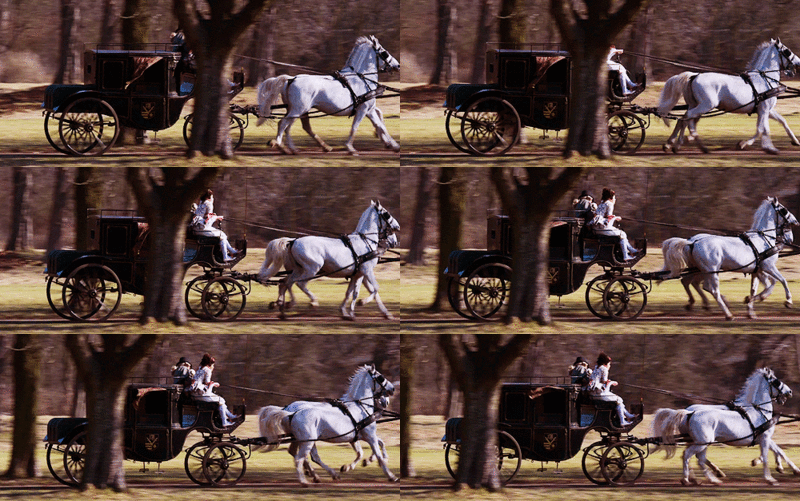
ALL THE IMAGES WITHOUT CAPTION ARE FROM THE FILM MARIE ANTOINETTE  by  SOFIA COPPOLA, 2006.


BIBLIOGRAPHIC SOURCES:

Marie-France Boyer, Francois Halard, The Private Realm of Marie Antoinette, Thames & Hudson, 1996;

Elisabeth De Feudeau, From Marie-Antoinette's Garden: An Eighteenth-Century Horticultural Album, Alain Baraton, 2013;

Hélène Delalex, A Day with Marie Antoinette (A Day at), Flammarion-Slp edition, 2015;

Hélène Delalex, Alexandre Maral, Nicolas Milavanovic, Marie-Antoinette, J. Paul Getty Museum, 2016;

Charles Duke Yonge, The Life of Marie Antoinette, Queen of France, 1876;

Maxime de La Rocheterie, The Life of Marie Antoinette, 1893.


QUOTATIONS:

1 - Charles Duke Yonge, The Life of Marie Antoinette, Queen of France, 1876, p. 99.


Anche se vissuta tra agi e lusso, talvolta decisamente eccessivi, vi siete mai chiesti quanto potesse essere artificiosa e complessa la giornata di una donna che nel XVIII e nel XIX secolo sedeva su di un trono ?
Nulla era lasciato al caso, tutto era rigorosamente non solo previsto, ma sancito e strettamente osservato, nulla poteva essere tralasciato, vi era un rigido protocollo che stabiliva anche il minimo dettaglio da seguire ...


- fotografia 1


... e spesso tutto ciò rappresentava un vincolo che legava strettamente gli spiriti liberi che in quelle epoche vissero e segnarono la storia, non ultima la Regina di Francia Marie Antoinette, l'AUSTRIACA, come veniva chiamata con spregio dai suoi sudditi, figlia dell'Imperatrice Maria Teresa d'Austria e divenuta consorte del Delfino Luigi XVI nel maggio del 1770, nominato re dopo la morte del nonno Luigi XV, occorsa nel maggio 1774, poco dopo il matrimonio.
Sapendo quanto fosse rigido il protocollo alla corte viennese, ancora aderente a quello spagnolo risalente al XVI secolo, viene da pensare che la corte di Parigi potesse rappresentare una sorta di 'alleggerimento' di tutto quanto a Vienna era imposto, e forse la giovanissima promessa sposa (Marie Antoinette si recò a Parigi per sposarsi all'età di soli 14 anni) davvero lo pensò, a suo tempo, ma leggete con me come era organizzata una sua giornata da regina e ben riuscirete a comprendere perché spesso la si vedesse girovagare nei giardini che circondavano il villaggio rurale del Petit Trianon che il marito le aveva donato, abbigliata di un semplice abito di mussola e spesso con un floscio cappello che la rendevano quasi irriconoscibile ai più !


- fotografia 2


- fotografia 3


- fotografia 4


- fotografia 5


- fotografia 6


- fotografia 7


(Luigi XVI offrì il Petit Trianon alla sua giovane sposa quando il nonno, Luigi XV, che lo aveva fatto costruire per la sua favorita, prima Madame de Pompadour, cui poi 'succedette' la Duchesse du Barry, era appena deceduto; Marie Antoinette vi creò un universo personale e intimo, lontano dai fasti della corte, facendovi costruire il Théâtre de la Reine (un teatro di società), ed aggiungendo un giardino all'inglese che vivacizzava la monotonia del resto del parco. Richard Mique vi eresse molti edifici, tra il 1777 e il 1782, ossia un tempio dedicato all'Amore, un "giardino alpino", con un suo belvedere ed un gioco di fontane, ed, in uno stile più rustico, un borghetto - Hameau de la Reine - disegnato dal pittore Hubert Robert, completò l'insieme, secondo l'ispirazione russoviana imperante al tempo che proclamava un ritorno alla purezza e alla sorgività della natura.).

In quel momento era particolarmente felice per questo suo nuovo passatempo. Tra le maestose sale di Versailles aveva spesso desiderato una villa di dimensioni più ridotte, che potesse chiamare sua; e il desiderio era ora gratificato. [...] e, felice del suo nuovo giocattolo, Maria Antonietta, ancora una ragazza nella sua impulsiva impazienza alimentata da un nuovo piacere (non aveva ancora diciannove anni), iniziò a pendersi cura di rimodellare i terreni da cui era circondata. [...] Importò disegni inglesi e assunse giardinieri inglesi. Visitò di persona il Conte di Caraman e uno o due altri nobili, che avevano già fatto qualcosa con il loro esempio per introdurre ai parigini questa nuova moda. E ora prati e arbusti, passeggiate a chiocciola e aiuole di forma irregolare, soppiantarono la maestosa uniformità delle terrazze, i vicoli che convergevano sulle fontane centrali, o le alcove solide e rigide come il palazzo stesso, e gli alberi tagliati in tutti i tipi di forme fantastiche, che erano stati precedentemente considerati come i capolavori dell'invenzione dei giardinieri. La sua felicità era al culmine quando, alla fine di alcuni mesi, tutto fu completato a suo piacimento, e lei poté invitare suo marito ad un incontro  in un rifugio che era interamente suo, e le cui bellezze principali erano frutto del suo lavoro. 1


- fotografia 8


- fotografia 9


- fotografia 10


- fotografia 11


- fotografia 12


Alle ore 8,00 Sua Maestà veniva destata; una guardarobiera raggiungeva la sua stanza recando un cesto con quelle che venivano chiamate "offerte", ossia due o tre 'chemises', alcuni fazzoletti ed alcuni asciugamani.
Giungeva quindi la prima cameriera personale con la 'gazette des atours', un libro che conteneva campioni di tessuto di tutti gli abiti della regina la quale per ogni stagione aveva dodici 'toilettes', dodici 'semi-toilettes', ovvero abiti meno formali, e dodici abiti sontuosi corredati di 'panniers', le vistose imbottiture di paglia che la moda del XVIII secolo voleva poste sulla biancheria e sotto l'abito ad arrotondare ed imbottire i fianchi. La regina selezionava i capi che intendeva indossare quel giorno segnando i campioni con uno spillo. Ciò che aveva scelto le veniva quindi consegnato in grandi cesti di taffetà e vi dovevano essere compresi "un vestito sontuoso, uno meno formale per il pomeriggio ed un vestito da sera per il teatro e la cena".

La regina si avvolgeva quindi in una lunga veste di flanella inglese abbottonata sul fondo e si accingeva a fare il bagno: gli addetti a seguirla durante questa cerimonia la raggiungevano con gli articoli da bagno e quando ella aveva concluso, un ampio lenzuolo veniva tenuto alto ben teso per proteggerla da occhi indiscreti e lasciarla asciugare in privato; quindi se ne tornava a letto con indosso un mantello di taffetà bianco e prendeva in mano il suo ricamo o un libro da leggere.


- fotografia 13 - Piccola borsetta appartenente alla regina da lei stessa ricamata


L'ora della colazione era stabilita per le 9,00, quando, nella stanza della regina, un valletto recava un vassoio con una tazza di cioccolata calda o di caffè ed un'ora dopo Marie Antoinette poteva recarsi in visita negli appartamenti della zia del re e quindi in quelli del re; alle 11,00 i suoi capelli venivano acconciati secondo lo stile che più gradiva e quindi si rivolgeva a tutti i presenti nella stanza che assistevano compiendo inchini ( spesso era già stata raggiunta dai fratelli del re ).

A mezzogiorno giungeva il momento della 'Grand Toilette' durante il quale la regina si preparava per il pranzo e per tutte le dame di corte e le cameriere personali giungeva con questo il rito più importante dell'intera giornata: in cerchio si disponevano intorno a lei, che, davanti la sua toilette, sedeva al centro della stanza; si cominciava con la pulizia del viso che veniva effettuata con detergenti e creme astringenti sulle quali venivano applicate una crema ed una cipria sbiancante e profumata e dato che da bambina Marie Antoinette soffrì di vaiolo, le antiestetiche cicatrici che le erano rimaste sulle guance venivano camuffate con piccoli punti fatti con la matita scura a simulare dei nei - e fu così che venne lanciata la moda del volto pallido ingentilito da nei posticci spesso maliziosamente disegnati vicino le labbra; quindi veniva aspersa sul volto e sul corpo della regina la sua amata acqua di toilette profumata ai fiori d'arancio prima del rito della vestizione di cui, dapprincipio, si occupavano le sue cameriere personali, poi di tutto ciò diverrà responsabile la famosa Mademoiselle Rose Bertin, la prima stilista della storia, di cui QUI, tempo fa, ebbi già il piacere di narrarvi.

Tutto ciò non doveva durare più di mezz'ora poiché ad esso seguiva il rito della S.Messa cui quotidianamente la regina ed il suo consorte assistevano prima del pranzo ( ed anche in questo caso la regina era accompagnata dal suo seguito, tra cui primeggiava la Princesse de Lamballe, cui si univano i ministri di culto); alle 13,00 in punto veniva presentato a Sua Maestà, che nel frattempo, dopo la funzione, si era ritirata nelle sue stanze, il menù per il pranzo direttamente dalle mani del maître d’hôtel.
Il pranzo 'in pubblico' si teneva ogni domenica nel gabinetto dei nobili. In quel giorno, le signore titolate e che quindi godevano del privilegio di figurare tra le prescelte, sedevano su sedie pieghevoli  ai due lati del tavolo, mentre le dame senza titolo rimanevano in piedi. La regina pranzava da sola con il re: dietro la sedia del re si trovava il capitano della guardia ed il primo valletto, dietro la sedia della regina stava il suo valletto, il capo scudiero ed il suo maître d'hôtel. Il pasto aveva inizio quando il principe più vicino al re gli presentava una ciotola per lavarsi le mani e quando la principessa più vicina alla regina prestava il medesimo servizio.

Quello del pranzo era una sorta di frugale spuntino visto che la regina di solito pranzava con solo una piccola porzione di carne e non beveva mai vino.
Dopo il pasto la regina visitava l'appartamento del Delfino e poi tornava nei suoi appartamenti con le sue dame per dedicarsi alla corrispondenza o alla lettura ed è in questo momento della giornata che ella rimuoveva il suo ingombrante e costrittivo 'pannier' e la parte inferiore del suo abito, preferendo indossare un abito leggero, di cotone o mussola, per il resto della giornata.
Alle ore 15,00 si recava nuovamente in visita alla zia del re ed un'ora più tardi riceveva l'abate nei suoi appartamenti; alle ore 17,00 era prevista un'ora di lezione di musica ( Marie Antoinette suonava il clavicembalo) o di canto dopo la quale tornava a far vista alla zia del re oppure si dedicava a passeggiare in giardino.


- fotografia 14


Alle ore 19,00 cominciavano i preparativi per la serata, dal cambio di toilette per la regina all'allestimento di quelle attività che avrebbero seguito la cena, come l'assistere ad una rappresentazione teatrale o giocare alle carte.
La cena veniva servita alle ore 21,00 in punto e rappresentava per la regina un pasto un po' più sostanzioso rispetto al pranzo, poiché generalmente constava di una tazza di brodo, un'ala di pollo ed un bicchiere d'acqua in cui ella immergeva alcuni biscotti come dessert. Se il re non era presente, la cena doveva essere servita solamente da personale di servizio femminile.
Alle ore 23, 00 una procedura simile a quella che seguiva il risveglio veniva ripetuta prima che la regina si coricasse, anche se va detto che questa volta le offerte recate dalla guardarobiera nel suo cesto erano una camicia da notte, un berretto da notte e le calze per il mattino successivo; dopo che la regina si era abbigliata per la notte, tutto ciò che aveva indossato durante il giorno veniva portato nella stanza guardaroba per le riparazioni o le pulizie.

Vi svelo un segreto: per mantenere le proprie mani bellissime la regina si coricava spesso con guanti cerati.

Anche per il re era prevista una cerimonia molto simile prima del ritiro notturno: mentre la regina attendeva suo marito ed il suo seguito, la sua prima cameriera sedeva ai piedi del suo letto; giunto il re, tutti i servitori che lo avevano accompagnato se ne andavano condotti nelle proprie stanze dalla prima cameriera della regina, quindi costei tornava infine a chiudere la porta della stanza della regina prima di andarsene a dormire.


Ringraziandovi di cuore per l'affetto e l'interesse che sempre dimostrate per le mie pubblicazioni, 
vi invio un forte abbraccio augurandovi ogni bene.


A presto 💕


TUTTE LE IMMAGINI SENZA DIDASCALIA SONO STATE TRATTE DAL FILM MARIE ANTOINETTE di SOFIA COPPOLA, 2006.

FONTI BIBLIOGRAFICHE:

Marie-France Boyer, Francois Halard, The Private Realm of Marie Antoinette, Thames & Hudson, 1996;

Elisabeth De Feudeau, From Marie-Antoinette's Garden: An Eighteenth-Century Horticultural Album, Alain Baraton, 2013;

Hélène Delalex, A Day with Marie Antoinette (A Day at), Flammarion-Slp edition, 2015;

Hélène Delalex, Alexandre Maral, Nicolas Milavanovic, Marie-Antoinette, J. Paul Getty Museum, 2016;

Charles Duke Yonge, The Life of Marie Antoinette, Queen of France, 1876;

Maxime de La Rocheterie, The Life of Marie Antoinette, 1893.


CITAZIONI:

1 - Charles Duke Yonge, The Life of Marie Antoinette, Queen of France, 1876, pag 99.


LINKING WITH:


AWWW MONDAYS

TUESDAY WITH A TWIST


Dave's WORDLESS WEDNESDAY


THURSDAY FAVORITE THINGS
This blog post was featured by ANGELINA at PETITE HAUS and  BEV at ECLECTIC RED BARN  !!!
Thank you lovely ladies, I have no words which to thank you with ❤

VINTAGE CHARM PARTY