Visualizzazione post con etichetta Easter. Mostra tutti i post

domenica 2 aprile 2023

"Twas Easter-Sunday."


"Twas Easter-Sunday. The full-blossomed trees filled all the air with fragrance and with joy."

Henry Wadsworth Longfellow (American literate,1807-1882)


“For I remember it is Easter morn, and Life and Love and Peace are all new born.”

 Alice Freeman Palmer (American educator, 1855-1902)


“The day the Lord created Hope was probably the same day He created Spring.” 

 Bernard Williams (British philosopher, 1929-2003)


 "Easter spells out Beauty, the rare Beauty of new Life."

Samuel Dickey Gordon (American author and evangelical lay minister,1859-1936)


“If people did not love one another, I really don't see what use there would be in having any Spring.” 

Victor Hugo (French poet, dramatist, writer and politician, 1802-1885)


 "The story of Easter is the story of God’s wonderful window of divine surprise." 

Anthony Carl Knudsen (American businessman and politician, 1874-1931)


May God shower you with Blessings, Love, and Peace this Easter, 
Dearest Friends of mine!


P.S. I love you to know that all the nests, little and large, you may see in the vignettes above, have been made by our free-living birdies: they belong to last year 'season of love' and we've gathered them last Summer when they fell down from the trees.


 ⊱♡❀♡

Era la Domenica di Pasqua


"Era la domenica di Pasqua. Gli alberi in piena fioritura riempivano tutta l'aria di profumo e di gioia."

Henry Wadsworth Longfellow (letterato americano, 1807-1882)


"Ecco, ricordo che è il mattino di Pasqua, e la Vita, l'Amore e la Pace sono tutti appena nati."

  Alice Freeman Palmer (educatrice americana, 1855-1902)


“Il giorno in cui il Signore creò la Speranza fu probabilmente lo stesso giorno in cui creò la Primavera.”

  Bernard Williams (filosofo britannico, 1929-2003)


"La Pasqua enuncia la Bellezza, la rara Bellezza della nuova Vita."

Samuel Dickey Gordon (autore americano e ministro laico evangelico, 1859-1936)


“Se le persone non si amassero, davvero non vedo a che cosa servirebbe la Primavera.”

Victor Hugo (poeta, drammaturgo, scrittore e politico francese, 1802-1885)


  "La storia della Pasqua è la storia della meravigliosa finestra divina sorprendente di Dio."

Anthony Carl Knudsen (uomo d'affari e politico americano, 1874-1931)


 ⊱♡❀♡


Possa Dio inondarVi di Benedizioni, Amore e Pace 
in questa S. Pasqua,
miei Carissimi Amici!


Dany

P.S. Mi piace farvi sapere che tutti i nidi, piccoli e grandi, che potete vedere nelle immagini sono stati fatti dai nostri uccellini che vivono liberi: appartengono alla "stagione dell'amore" dell'anno scorso e li abbiamo raccolti la scorsa estate quando sono caduti dagli alberi.

martedì 28 marzo 2023

⊰ Victorian Spring and Easter Traditions ⊱


For much of History, Easter was a more festive day then Christmas and, as it happened for this last one's traditions we still preserve today, the Victorians brought us also the evolution of Easter celebrations. No season was so celebrated as Spring as a promise of rebirth. 
Easter was just the beginning.


FLOWERING SUNDAY MADE CEMETERY BECOME FESTIVE ZONES ~

To be more precise, it all begaun with Flowering Sunday. In southern Wales and nearby portions of England, Palm Sunday is called 'Sul y Blodau' ('Flowering Sunday') and it is traditional to decorate graves with flowers on that day, especially in the industrial towns and villages. Scholars Alan and Karen Jabbour have postulated that Flowering Sunday might be connected to Appalachian cemetery decoration traditions. 


Dressing the grave with flowers by Thomas Onwyn (1853)


Welsh cemetery whitecleaning and decoration traditions may have begun as an Easter celebration or seasonal rite before becoming more commonly associated with Palm Sunday.
The Early Tourists in Wales website catalogues tourists’ comments about Wales from 18th and 19th century books, magazines, newspapers and elsewhere. According to Early Tourists in Wales, by the middle of the 19th century, Flowering Sunday attracted large crowds:
“The number of visitors reported to have visited the cemeteries were very large (10,000 to the new cemetery in Cardiff in 1879, 20,000 in 1889 and 50,000 in 1898; 25,000 to Swansea cemetery in 1906). There were problems with crowd control resulting in the need for extra police or the distribution of tickets only to those visiting relatives’ graves. The demand for flowers for this custom was so great that they were sent from London.”
Cemeteries begun a place where to meet in and where to gather for a party or a Spring pic-nic.
It might seem strange from our perch in the present to imagine cemeteries as a party site. But they offered a popular destination for picnics at a time before parks were created for urban populations. Pic-nics were very popular on holidays especially Easter or Easter Monday.


 EASTER DECORATIONS ~

As for churches where people attended Easter services they would be decorated with flowers, as were homes. Women in particular would create lace and beadwork in floral designs in order to cover their tables and shelves and dressed their homes with wreats, branches of blossoming trees or bunches of flowers: they tended to be simple yet beautiful ones such as lilacs, lilies, pansies and tulips.

 EASTER GREETING CARDS ~ 

It was the very beginning of the Victorian age when Sir Rowland Hill created the Uniform Penny Post meaning: in fact January 1840 marked the advent of the Uniform One Penny Postage Rate. Since then cards became a more economical way of staying in touch than ever, especially around Easter time.


Greetings cards featuring symbolic images such as the cross or spring imagery such as lambs and bunnies were distributed. They tended to be printed on brightly coloured paper in order to emphasise the happy and lively nature of spring. People either bought the cards at a cheap price or made their own ones.


 HAVING FUN WITH DYEING, ROLLING AND HUNTING FOR EGGS ~ 

Whilst eggs had always been distributed between people, chocolate eggs were properly introduced around the Victorian era. The famed chocolatier John Cadbury was already releasing them in 1842, but in 1875 in particular, his company released the Cadbury’s Creme Egg. 


An Easter Holiday, the Children of Bloomsbury Parochial School in a Wood at Watford 
by James Aumonier, 1874


The tradition of the Easter egg hunt and egg roll was introduced from Germany to England during the Victorian era. Children still hunt for colorful eggs, with the one with the most declared the winner, often going home with a prize. Egg rolling involves children rolling eggs down hillsides to see who can roll their egg the farthest. Eggs were often given up for Lent, so the eggs used in the hunt and rolling were eaten on Easter Sunday. 
Of course, eggs had to be dyed days before: in order to make different colors eggs were boiled with leaves or onions. They  got red ones by boiling them with onion skins and beetroot, gold with marigold flower, violet with mallow flower, and green with periwinkle leaves.
During the early Victorian age also cardboard eggs were often lined with bits of satin and contained little sweet treats. 


 EASTER BONNETS AND EASTER PARADE ~

The Easter parade as we know it today has its origin in the Victorian era, too. Victorians were devout, and after attending Easter services, were known to stroll through the streets showing off their spring finery. The tradition of the Easter bonnet, born during the Regency period,  became very popular during this age. (HERE you may read My little old world's post about it) 


During Victorian times, a beau might give a pair of gloves to his sweetheart. If she wore them during the parade, it was considered an announcement of her acceptance of his proposal.
One of the biggest Easter parades takes place still today in New York City, where it has been part of the spring tradition for more than 100 years. Fifth Avenue from 49th to 57th Streets plays host from 10 a.m. to 4 p.m. on Easter Sunday to the biggest stroll of finery, including some very fancy bonnets.


EASTER MEAL ~

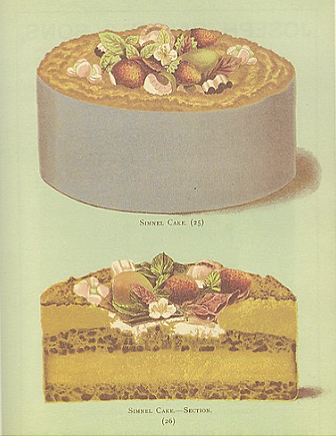
Easter meals were also a popular Victorian tradition. As we have seen at the very beginning of this reading, Easter was for many centuries far more important than Christmas. And thus it was at table too. Chief among the food associated with it in Great Britain in the XIXth century were new season lamb, paired with vegetable dishes (Pray, today let's pay respect to our lambs!). Accompanying them were hot chocolate buns and Easter breads. Additionally, egg dishes were served so as to not waste eggs from the easter egg hunts. As for cakes, particular favourite of the Victorians was the SIMNEL CAKE, 


The Victorian Book of Cakes: Treasury of Recipes, techniques and decorations from the golden age of cake-making: a classic Victorian book reissued for the modern reader 
by Lewis, T. Percy; Bromley, A. G.


a light fruit cake with eleven marzipan balls on top representing Jesus’ disciples (excluding Judas, who had infamously betrayed Jesus to the Romans).
By the way, we must say that in Avis' time it wasn't associated with Easter, but it was more a Mothering Sunday bake, being Mothering Sunday the fourth Sunday in Lent also named Refreshment Sunday of Lent, or Simnel Sunday – just after the cake. It was the day that children working away in service traditionally returned to their Mother Church and saw their families. Over the years Mothering Sunday has become a celebration of real mothers rather than the Mother Church, the largest church in the diocese. They were the Victorians who made of it the Easter Cake par excellence. Today Simnel Cake is enjoyed both on Easter Day and on Mothering Day. 


I'm leaving You with the best wishes for a serene remainder of your week
thanking You as usual for Your kindness and goodwill.
See you soon 


⊰ Tradizioni vittoriane legate alla primavera e alla Pasqua 


IMMAGINE DI COPERTINA - Da una cartolina pasquale tardo vittoriana

Per gran parte della storia la Pasqua è stata un giorno più festivo del Natale e, come è successo per le tradizioni di quest'ultimo che conserviamo ancora oggi, i vittoriani ci hanno portato anche l'evoluzione delle celebrazioni pasquali. Per loro nessuna stagione era celebrata come la primavera in quanto promessa di rinascita.
La Pasqua era solo l'inizio.


~ LA DOMENICA DELLA FIORITURA TRASFORMAVA I CIMITERI IN ZONE DI FESTA ~

Per essere più precisi, tutto cominciava con la Domenica della Fioritura. Nel Galles meridionale e nelle parti vicine dell'Inghilterra, la Domenica delle Palme è chiamata "Sul y Blodau" ("Domenica della fioritura") ed è tradizione decorare le tombe con fiori in quel giorno, specialmente nelle città e nei villaggi industriali. Gli studiosi Alan e Karen Jabbour hanno ipotizzato che la Domenica della Fioritura potrebbe essere collegata alle tradizioni di decorazione dei cimiteri tipica degli Appalachi.


IMMAGINE 2 - Dressing the grave with flowers di Thomas Onwyn (1853)


Le tradizioni di pulitura e decorazione dei cimiteri gallesi potrebbero essere iniziate come celebrazione pasquale o rito stagionale prima di diventare più comunemente associate alla Domenica delle Palme.
Il sito web Early Tourists in Wales cataloga i commenti dei turisti sul Galles da libri, riviste, giornali del XVIII e XIX secolo. Secondo Early Tourists in Wales, verso la metà del XIX secolo, la Domenica della Fioritura attirava grandi folle:
“Il numero di visitatori che hanno riferito di aver visitato i cimiteri era molto elevato (10.000 nel nuovo cimitero di Cardiff nel 1879, 20.000 nel 1889 e 50.000 nel 1898; 25.000 nel cimitero di Swansea nel 1906). Ci sono stati problemi con il controllo della folla che hanno portato alla necessità di polizia extra o alla distribuzione di biglietti solo a coloro che visitavano le tombe dei parenti. La richiesta di fiori per questa usanza era così grande che venivano inviati da Londra.
I cimiteri sono diventati un luogo dove incontrarsi e dove riunirsi per una festa o un pic-nic primaverile.
Potrebbe sembrare strano dal nostro punto di vista oggi immaginare i cimiteri come un luogo di festa. Ma essi offrivano una destinazione popolare per i pic-nic in un'epoca precedente alla creazione di parchi per le popolazioni urbane. I pic-nic erano molto popolari nei giorni festivi, specialmente a Pasqua o Pasquetta.


  ~ LE DECORAZIONI PASQUALI ~

Per quanto riguarda le chiese in cui le persone si recavano per le funzioni pasquali, esse venivano addobbate con fiori, così come lo erano le case. Le donne in particolare creavano pizzi e puntine con disegni floreali per coprire i loro tavoli e le loro mensole e vestivano le loro case con ghirlande, rami di alberi in fiore o mazzi di fiori: essi tendevano ad essere semplici ma, nella loro semplicità, belli come lillà, gigli, viole del pensiero e tulipani. 


~ I BIGLIETTINI AUGURALI ~

Era proprio l'inizio dell'era vittoriana quando Sir Rowland Hill creò il significato di Uniform Penny Post: infatti il gennaio 1840 segnò l'avvento dell'Uniform One Penny Postage Rate. Da allora le carte sono diventate un modo più economico che mai per rimanere in contatto, soprattutto nel periodo pasquale.


IMMAGINE 3 - Cartolina pasquale vittoriana


Venivano consegnati biglietti augurali con immagini simboliche come la croce o con immagini primaverili come agnelli e coniglietti. Essi erano generalmente stampati su carta dai colori vivaci per enfatizzare la natura felice e gioiosa della primavera. Le persone compravano le cartoline a un prezzo basso o ne creavano di proprie.


~ DIVERTIRSI TINGENDO, FACENDO ROTOLARE E CACCIANDO LE UOVA ~

Mentre le uova sono sempre state distribuite tra le persone, quelle di cioccolato sono state propriamente introdotte in epoca vittoriana. Il famoso cioccolatiere John Cadbury le aveva già progettate nel 1842, ma fu nel 1875 in particolare, che la sua azienda mise in commercio le Cadbury's Creme Egg.


IMMAGINE 4 - An Easter Holiday, the Children of Bloomsbury Parochial School in a Wood at Watford by James Aumonier, 1874


Le tradizioni della caccia alle uova di Pasqua e quella di farle rotolare lungo i pendii furono introdotte dalla Germania all'Inghilterra durante l'era vittoriana. I bambini vanno ancora a caccia di uova colorate, e quella che ne trova di più torna a casa vincitrice con un premio. Il rotolamento delle uova coinvolge i bambini che rotolano le uova lungo i declivi per vedere chi può rotolare il proprio uovo più lontano. Le uova venivano spesso non consumate durante la Quaresima, quindi le uova utilizzate nella caccia e nel rotolamento venivano mangiate la domenica di Pasqua.
Certo, le uova dovevano essere tinte giorni prima: per ottenere colori diversi le uova venivano bollite con foglie o cipolle. Se ne ottenevano di rosse facendole bollire con rezzole di cipolla e barbabietole, di dorate con fiori di calendula, di violette con fiori di malva e verdi con foglie di pervinca.
Durante la prima età vittoriana anche le uova di cartone erano spesso rivestite con pezzetti di raso e contenevano piccoli dolcetti.


  ~ I CAPPELLINI DI PASQUA E LA PARATA PASQUALE ~

Anche la parata pasquale come la conosciamo oggi ha origine nell'era vittoriana. I vittoriani erano persone molto devote e, dopo aver assistito alle funzioni pasquali, erano note per passeggiare per le strade sfoggiando i propri abiti primaverili. La tradizione del cappellino pasquale, nata durante il periodo Regency, divenne molto popolare proprio in questa epoca.
(QUI potete leggere il post che My little old world dedicò all'argomento).


IMMAGINE 5 - Cartolina raffigurante una giovane Lady che sfoggia il suo cappellino di Pasqua ed il suo nuovo abito della festa


Durante l'epoca vittoriana, un fidanzato poteva regalare un paio di guanti alla sua dolce metà. Se questa li indossava durante la sfilata, significava che accettava la sua proposta.
Una delle più grandi parate pasquali si svolge ancora oggi a New York City, dove fa parte della tradizione primaverile da oltre 100 anni. La Fifth Avenue dalla 49a alla 57a strada ospita dalle 10:00 alle 16:00 la domenica di Pasqua la più grande passeggiata di raffinatezza, comprese alcuni cappellini molto fantasiosi.


~ IL PRANZO DI PASQUA ~

Anche i pasti pasquali erano una popolare tradizione vittoriana. Come abbiamo visto proprio all'inizio di questa lettura, la Pasqua è stata per molti secoli molto più importante del Natale. E così lo era anche a tavola. Il primo tra i cibi ad essa associati in Gran Bretagna nel XIX secolo era l'agnello di nuova stagione, abbinato a piatti di verdure (Vi prego, rispettiamo i nostri agnelli oggi!). Ad accompagnarli c'erano focacce al cioccolato caldo e pani pasquali. Inoltre, venivano serviti piatti a base di uova per non sprecare le uova della caccia alle uova di Pasqua. Per quanto riguarda le torte, particolarmente apprezzata dai vittoriani era la SIMNEL CAKE,


IMMAGINE 6 - La SIMNEL CAKE tratta da The Victorian Book of Cakes: Treasury of Recipes, techniques and decorations from the golden age of cake-making: a classic Victorian book reissued for the modern reader di Lewis, T. Percy; Bromley, A. G.


una torta leggera alla frutta con undici palline di marzapane in cima che rappresentano i discepoli di Gesù (escluso Giuda, che lo aveva infamemente tradito consegnandolo ai romani).
A proposito, dobbiamo dire che ai tempi degli avi essa non era associata alla Pasqua, ma era più un dolce della Domenica della Madre, essendo la Domenica della Madre la quarta domenica di Quaresima chiamata anche Domenica del Ristoro di Quaresima, o Domenica di Simnel – nome mutuato dalla torta, appunto. Era il giorno in cui i bambini che lavoravano lontano da casa tornavano tradizionalmente alla loro Chiesa Madre e vedevano le loro famiglie. Negli anni la Domenica della Madre è diventata una festa delle vere madri piuttosto che della Chiesa Madre, la chiesa più grande della diocesi. Furono i vittoriani a farne il dolce pasquale per eccellenza. Oggi la SIMNEL CAKE si gusta sia il giorno di Pasqua che il giorno della Festa della Mamma.


 Vi lascio con i migliori auguri per un sereno prosieguo di settimana,
ringraziandoVi come sempre 
per la Vostra gentilezza e benevolenza.
A presto 


Dany


LINKING WITH:


venerdì 2 aprile 2021

The Art of Reading in the Victorian Age.


Giuseppe Bezzuoli (Firenze, 1784-1855) 

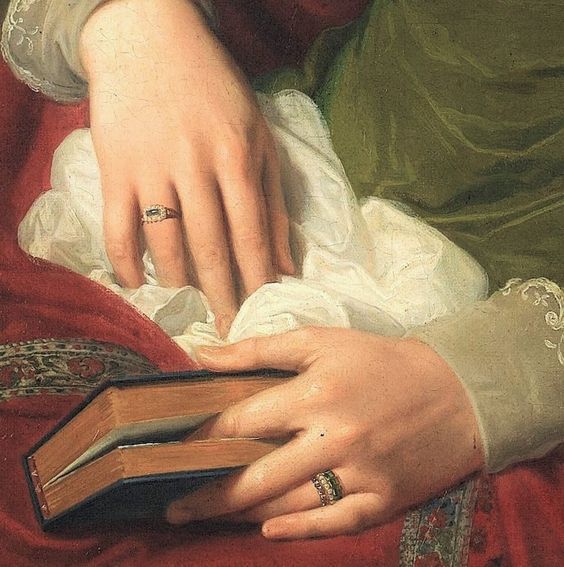
RITRATTO DI UFFICIALE DI CAVALLERIA BRITANNICA E DI SUA MOGLIE (dettaglio)


Victorian women were real passionate readers. The increased literacy rate from

schooling, the cheaper production, and the wider availability of books in the

libraries promoted reading, as well as, around the half of the Victorian age, gas 

and electric lighting also meant that reading after the sunset or before sleeping

at night didn’t have to be by candlelight or by the messy and weak light of oil

lamps.


Edward John Pointer (Paris, 1836-London, 1919)

AN EVENING AT HOME


Novels were often serialized in monthly parts, making them cheaper, more 

easily accessible and shared. Weekly or monthly segments often ended on a

“cliff-hanger” to keep readers hooked and anticipating the next installment.


Maria R.Dixon (American, 1823-1896)

WOMAN IN BONNET READING A BOOK


Thomas Benjamin Kennington (British, 1856-1916)

TITLE UNKNOWN


 William Kay Blacklock (British, 1872-1924)

QUIET READ


Peter Philipp Rumpf (German, 1821-1896) 

YOUNG WOMAN READING IN THE PARK


For women belonging to the wealthier classes, who could afford first editions,

reading from their own collection was an everyday occurrence.

Six months after the original publication, books became cheaper, being issued as

single volumes. 


Alfred Emile Léopold Joseph Victor Stevens (Brussels, 1823-Paris, 1906)

THE READER


Charles Baugniet (Belgian, 1814-1886)

THE READER


Auguste Toulmouche (French, 1829-1890)

SWEET DOING NOTHING


Auguste Toulmouche (French, 1829-1890)

IN THE LIBRARY


And the growth of the rail network helped make novels cheaper also at

railway stations. There was always something new to read during a long journey.


Augustus Leopold Egg (London, 1816-Algeirs, 1863)

THE TRAVELLING COMPANIONS


Fiction was thought to hold influential power over readers.

The 18th-century view that reading contemporary novels was a time-wasting 

leisure activity gave way to 19th-century idea on their ability to educate.

Victorians believed that although novels lacked the cultural seriousness of 

classical texts, they did bring awareness of historical periods and were able to

develop Christian moral values.


George Goodwin Kilburne (London, 1839-1924)

A YOUNG LADY READING IN AN INTERIOR 


That’s why the during the XIXth century the most widely read novel in England

was The Uncle Tom's Cabin (1852) by the American writer Harriet Beecher 

Stowe, which spread anti-slavery ideals.

But if novels could influence for the good, they were thought to be also able to

influence for the bad, expecially amongst young girls or people without culture

belonging to working classes, who could be encouraged to emulate fictional

criminals' life whose adventures were told.


Alexander Mark Rossi (British, 1840-1916)

FORBIDDEN BOOKS


Maybe it was the reason that leaded Charles Dickens to write educational 

novels: his stories portrayed the lower classes and had always a moral which, 

implicitly, became an example to follow for each reader.

Queen Victoria was the most enthusiastic reader of his, given She always

wanted to be the the first to read the last novel he wrote before it was published,

not with a puritan purpose or to control it, but because, with their values, his 

books were the true expression of the Age she was the Emblem of.


Dickens had the intelligence and the capability to become an integral part of that

world that was still making itself, both from an intellectual and from a moral 

point of view, and probably, to find 'translated' in words what became to Her

the meaning of an Age, animated Her enjoyment, Her fervor and Her delight.

We should say that Charles Dickens was the real Victorian writer. 


I sincerely hope you've enjoyed this travel bck in the Age we all love and, 

with utmost thankfulness, 

I'm sending much love to each of you

See you soon and Happy Easter 💕


L'Arte di leggere nell'Era Vittoriana.


1 - Giuseppe Bezzuoli (Firenze, 1784-1855) 

RITRATTO DI UFFICIALE DI CAVALLERIA BRITANNICA E DI SUA MOGLIE (dettaglio)


Le ladies vittoriane erano lettrici davvero appassionate. L'aumento del tasso di

alfabetizzazione promosso dall’obbligo scolastico, la produzione più economica e

la più ampia disponibilità di libri nelle biblioteche promossero la lettura, così 

come, intorno alla metà del XIX° secolo, l'illuminazione a gas ed elettrica

resero agibile anche leggere dopo il tramonto o prima di dormire la notte, cosa 

che prima era possibile solo al lume di una candela o di una lampada ad olio 

dalla luce debole e confusa.


2 - Edward John Pointer (Parigi, 1836-Londra, 1919), AN EVENING AT HOME


I romanzi erano spesso pubblicati in fascicoli mensili, il che li rendeva più

economici, più facilmente accessibili e condivisibili. La parte che veniva 

pubblicata spesso finiva con un "cliff-hanger", una sorta di richiamo che serviva

per mantenere viva la memoria del lettore e anticipare la prossima puntata.


3 - Maria R.Dixon (Americana, 1823-1896) WOMAN IN BONNET READING A BOOK


4 - Thomas Benjamin Kennington (Britannico, 1856-1916) TITLE UNKNOWN


5 - William Kay Blacklock (Britannico, 1872-1924 QUIET READ


6 - Peter Philipp Rumpf (Tedesco, 1821-1896) YOUNG WOMAN READING IN THE PARK


Per le ladies appartenenti alle classi più abbienti che potevano permettersi le

edizioni appena pubblicate, leggere dalla propria collezione era una quasi

un’esigenza quotidiana. Sei mesi dopo la pubblicazione originale, i libri 

vedevano il loro prezzo scendere, dato che anche quelli che erano stati 

pubblicati in fascicoli venivano venduti in volumi singoli.


7- Alfred Emile Léopold Joseph Victor Stevens (Bruxelles, 1823-Paris, 1906) THE READER


8 - Charles Baugniet (Belga, 1814-1886) THE READER


9 - Auguste Toulmouche (Francese, 1829-1890) SWEET DOING NOTHING


10 - Auguste Toulmouche (Francese, 1829-1890) IN THE LIBRARY


E l'incremento delle reti ferroviarie contribuì a rendere i libri più economici 

anche nelle stazioni. C'era sempre qualcosa di nuovo da leggere durante un 

lungo viaggio. 


11 - Augustus Leopold Egg (Londra, 1816-Algeri, 1863) THE TRAVELLING COMPANIONS


Era opinione diffusa che la narrativa potesse influenzare la mentalità dei lettori.

Mentre nel XVIII° secolo si credeva che la lettura di romanzi contemporanei 

fosse un'attività di svago che riempiva il tempo e distraeva dall'ozio, durante

il periodo vittoriano si fece largo l'idea che essi avessero un valore educativo.

I vittoriani credevano che, sebbene i romanzi mancassero della serietà

culturale dei testi classici, inducessero comunque consapevolezza dei periodi 

storici e fossero in grado di sviluppare valori morali cristiani.


12 - George Goodwin Kilburne (Londra, 1839-1924) A YOUNG LADY READING IN AN

 INTERIOR 


Ecco perché durante il XIX° secolo il romanzo più letto in Inghilterra fu The 

Uncle Tom's Cabin - La capanna dello zio Tom (1852) della scrittrice americana

Harriet Beecher Stowe, che diffondeva ideali contro la schiavitù.

Ma se i romanzi potevano esercitare un’influenza positiva sul lettore, si pensava 

che fossero anche in grado di influenzarlo negativamente, specialmente se si

trattava di ragazze o di persone prive di cultura appartenenti alle classi 

lavoratrici, che potevano essere incoraggiate a emulare la vita dei criminali

immaginari le cui vicende venivano in essi raccontate.


13 - Alexander Mark Rossi (British, 1840-1916) FORBIDDEN BOOKS


Forse fu proprio questo il motivo che spinse Charles Dickens a scrivere romanzi

didattici: le sue storie ritraevano le classi socialmente più basse e avevano

sempre una morale che, implicitamente, diventava un esempio da seguire per

ogni lettore. La regina Vittoria era la sua lettrice più entusiasta, dato che ha 

sempre voluto essere la prima a leggere l'ultimo romanzo che questi scriveva 

prima che fosse pubblicato, non con uno scopo puritano o per controllarlo, ma

perché, con i loro valori, i suoi libri erano la vera espressione dell'era di cui Ella 

era l'emblema.


FOTOGRAFIA: la PRINCIPESSA BEATRICE legge con la madre, la REGINA VICTORIA


Dickens ebbe l'intelligenza e la capacità di diventare parte integrante di quel 

mondo che ancora si stava facendo, sia da un punto di vista intellettuale che 

da un punto di vista morale, e probabilmente, il fatto di trovare 'tradotto' in 

parole quello che divenne per Lei il significato di un'epoca, animava il Suo

divertimento, il Suo fervore ed il Suo diletto.

Dovremmo dire che Charles Dickens fu il vero scrittore vittoriano.


Spero di tutto cuore che abbiate apprezzato anche questo piccolo 'viaggio' 

nell'era che tutti noi amiamo e, 

con la più sincera gratitudine, 

invio tutto il mio affetto a ciascuno di voi


A presto e Felice Pasqua💕


Linking with:

PINK SATURDAY

BLUE MONDAY

INSPIRE ME MONDAY

TUESDAY WITH A TWIST

Thank you Angie at God's Growing Garden for featuring this post 

WONDERFUL WEDNESDAY BLOG HOP

LITTLE THINGS THURSDAY