Visualizzazione post con etichetta silhouette. Mostra tutti i post

mercoledì 24 giugno 2015

Patrick Branwell, the 'lost' Brontë.


"Non piango perchè colta dal lutto ... ma per il relitto del talento, la rovina della promessa, l'estinzione triste e prematura di quella che avrebbe potuto essere una luce splendente ed ardente. Mio fratello era di  un anno più giovane di me. Tempo fa nutrii  ambizioni ed aspirazioni per lui, che sono tristemente perite ... C'è una tale amarezza ed un senso di pietà in me sia per la sua vita che per la sua dipartita, come uno sgomento per il vuoto che ha connotato tutta la sua esistenza che non sono capace di descrivere. "


(Lettera di Charlotte Brontë all'amico William S. Williams, il giorno dopo il funerale del fratello Branwell avvenuto il 2 ottobre 1848).


Anne, Emily e Charlotte Brontë, ritratte dal loro fratello Branwell (1 gennaio 1834).
Egli si dipinse fra le sorelle, ma successivamente rimosse la sua immagine in modo da non ingombrare il dipinto.


Il cognome Brontë ci suggerisce volti femminili della tanto fertile, artisticamente parlando, epoca vittoriana, e romanzi divenuti famosi in quanto dettati da un insolito talento, ma della famiglia facevano parte anche Maria, Elizabeth e Branwell, non meno talentuoso delle tre più note sorelle Charlotte, Emily Jane ed Anne che gli sopravvissero. 

Patrick Branwell nacque il 26 giugno 1817 ed in qualità di unico figlio maschio il padre, il pastore anglicano di Hawthorn, Patrick Brontë, volle educarlo a casa per farne un erudito e mentre le sue cinque sorelle furono inviate in collegio perché fossero seguite in modo più adeguato al loro sesso, egli rimase a casa per studiare greco e latino; la morte prematura di Maria ed Elizabeth rispettivamente a 9 e a 10 anni di tubercolosi date le malsane condizioni del pensionato femminile colpirono emotivamente Branwell nel profondo rendendolo ancor più vulnerabile di quanto già non fosse di sua natura.
Dotato di spirito artistico palesò presto inclinazione per le arti figurative e già da fanciullo cominciò con lo scrivere con le tre sorelle che divennero famose poemetti e storie, ma sicuramente era la pittura che più rispondeva alla sua espressività.
Eppure proprio Branwell, snello, di bassa statura, con un volto dai bei lineamenti e dall'espressione che palesava un temperamento bizzarro ma un ingegno vivissimo, dai capelli fulvi e la carnagione rosea, colori tipici degli irlandesi  il cui sangue nelle vene gli proveniva dal padre, cordiale ed espansivo, com’è tipico di quel popolo, dai modi galanti - questo il suo ritratto tracciato dalla scrittrice Elizabeth Gaskell che scrisse la biografia della sfortunata amica Charlotte Brontë - dotato di ottima memoria e di fervida immaginazione era indubbiamente il più geniale di tutta la famiglia e le sue tre sorelle lo amavano, lo ammiravano e lo viziavano. ( sotto un ritratto attribuito a Sir Edwin Landseer datato 1838 delle tre sorelle Brontë )


Nel 1835 scrisse una lettera alla Royal Academy of Arts nella speranza di esservi ammesso. I primi biografi annotarono un trasferimento a Londra per studiare pittura, che si concluse rapidamente in seguito seguito all'aver speso in modo dissoluto nel bere il denaro che gli era stato dato; altri biografi hanno ipotizzato che fosse troppo timido per presentarsi presso l'Accademia, più recentemente vi è chi addirittura suggerisce che Brontë non inviò neppure la lettera o tanto meno compì il viaggio a Londra. Secondo Francis Leyland, amico di Branwell e futuro biografo di famiglia, il suo primo lavoro fu quello di usciere in una scuola di Halifax ed è certo che egli lavorò come ritrattista a Bradford nel 1838 e 1839 - celebre quello della sua padrona di casa la signora Kirby e un ritratto di Emily che dimostrano un vero talento sia per lo stile satirico che per la ritrattistica.
Sta di fatto che purtroppo nel 1839 egli tornò ad Haworth sommerso dai debiti: stava facendosi strada in lui la malìa per il vizio che lo condurrà velocemente alla dipendenza dall'alcool e dall'oppio al punto di manifestare vere e proprie manie ( viene da pensare che le sorelle Brontë, per la drammaticità dei loro personaggi maschili quali Heathcliff in Wuntering Heights di Emily, e Mr.Rochester in Jane Eyre di Charlotte, si siano ispirate proprio agli eccessi del fratello, eroe romantico che spesso si trasfigurava al punto da incutere in loro timore ).

Branwell compose inoltre poesie, che inviò ai maggiori poeti del tempo, come Wordsworth  e Coleridge, ricevendone giudizi lusinghieri; reca la data del 19 gennaio 1837 la lettera che egli scrisse al poeta Wordsworth, nella quale lo invitava ad esprimere un giudizio sulla sua poesia, accludendo  anche sei strofe di un suo componimento:


'Signore,
ardentemente vi supplico di leggere e sottoporre al vostro giudizio quanto vi ho inviato, perché dal giorno della mia nascita, fino a questo diciannovesimo anno della mia vita, ho vissuto tra colline isolate, dove non potevo né so quello che è stato, o che cosa avrei potuto fare. Ho letto per la stessa ragione per cui ho mangiato o bevuto, perché è stato un vero e proprio desiderio di natura. Ho scritto sullo stesso principio per cui ho esternato  ciò che prova la mente; né ho potuto farne a meno, poiché è venuto, è venuto fuori da sé, e si è concluso. Infatti, così come la presunzione, che non può alimentarsi che con lusinghe, fino ad oggi non una mezza dozzina di persone in tutto il mondo sanno che io abbia mai scritto una riga.

'Ma un cambiamento è avvenuto, signore; e sto raggiungendo un'età in cui devo fare qualcosa per me stesso: le possibilità che possiedo devono essere mettere a frutto per un fine preciso, e siccome io ancora non le conosco devo chiedere ad altri se sono valenti. Ma non c'è uno qui una persona capace di dirmelo; e ancora, se sono senza valore, il tempo sarà d'ora in poi troppo prezioso per essere sprecato su di loro.

'Perdonatemi, signore, se ho osato consultarvi per primo, voi le cui opere sono quelle che ho più amato nella nostra letteratura, e che siete per me una divinità della mente, perché posiate per primo il vostro sguardo su di uno dei miei scritti, e possa chiedervi sentenza del suo contenuto. Devo consultare per primo colui la cui sentenza sia inoppugnabile e tale è colui che ha sviluppato la teoria della poesia e del suo esercizio in modo da richiedere un posto nella memoria di mille anni a venire.

'Il mio obiettivo, signore, è quello di sbucare nel mondo, e per questo mi fido solo della poesia, che potrebbe lanciare la nave, ma non può sostenerne la scia; sforzi sensibili e prosa scientifica, audaci e vigorosi nel mio cammino nella vita, darebbero un ulteriore titolo a conoscenza del mondo; e poi, ancora, la poesia deve fare luce ed incoronare quel nome con la gloria; ma niente di tutto questo può essere mai iniziato senza mezzi, e siccome io non possiedo che questi, devo in ogni forma sforzarmi per guadagnarli. Sicuramente, in questo giorno, quando non c'è un poeta la cui scrittura merita una moneta da sei pence, il campo deve essere aperto, se un uomo migliore può fare un passo in avanti.


'Quello che vi mando è la Prefatory Scene di un soggetto molto più lungo, in cui ho cercato di sviluppare forti passioni e principi deboli alle prese con una immaginazione elevata e sentimenti acuti, finché, come i giovani induriscono verso la vecchiaia, le azioni malvagie ed i  brevi godimenti finiscono in miseria mentale e corporea rovina. Ora, inviarvi tutto questo sarebbe come farmi beffa della vostra pazienza; ciò che vedete, non pretende di essere nulla più che la descrizione di un bambino fantasioso. Ma leggetelo, signore; e, come se fosse una luce in una totale oscurità, quanto tenete alla vostra bontà di cuore, fornitemi una risposta, anche una sola parola, dicendomi se devo scrivere, o scrivere non di più. Perdonate l'indebita ardore, perché i miei sentimenti in questa materia non possono essere freddi; e credetemi, signore, con profondo rispetto,

'Il vostro davvero umile servitore,


Là dov’Egli  in gloria splendente regna,
oltre i  notturni cieli stellati,
nel  Suo paradiso di luce,
ah! Perché io non posso esservi?

Spesso sveglio all’alba del Natale,
nell’insonne crepuscolo disteso e solo,
pensieri strani m’affollano la mente
di com’Egli per me sia morto.

E spesso giacendo nella mia camera
mi sono destato piangendo
risvegliato dai sogni in cui lo contemplavo morente
sul palo maledetto.

E spesso mia madre ha detto,
mentre il capo le abbandonavo sul grembo,
che temeva ch’io non per il tempo fossi fatto
ma per l’Eternità. 

Perciò posso ben chiaro leggere il mio diritto
a dimorare nei cieli,
e  lasciate ch’io dalle paure mi congeda
ed i miei occhi piangenti asciughi!

Su questa lastra di marmo giacerò,
ed ignorerò  il mondo
per contemplare, sul suo trono di ebano,
la luna che avanza nella gloria. 1


Scoraggiato dalla lunga attesa senza risposta alcuna dall'amico, in seguito, portato analogamente agli altri Brontë per l’arte grafica, si dedicò alla pittura, 
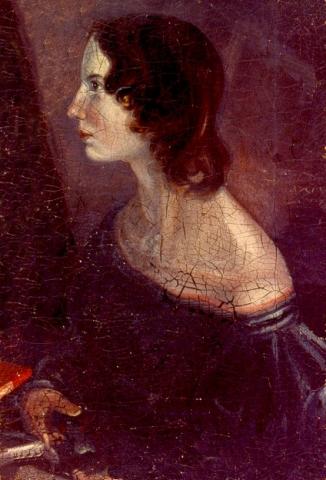


Ritratto di Emily, 1834


raggiungendo risultati eccellenti che suscitarono le lodi di tutti, ma Branwell, pur con innate attitudini per ogni attività in cui si cimentasse era incostante e non portava mai a termine le sue opere, per cui di questo talentuoso ed eclettico talento, quasi nulla ci è pervenuto, ed anche il suo nome è scivolato nell’oblio, soverchiato dalla fama di quello delle, seppur meno dotate, ben valenti sorelle.

Nel 1839 vi fu un altro allontanamento di Branwell da casa, poichè andò a studiare pittura a Bradford, ma dopo poco ritornò deludendo ancora una volta tutta la sua famiglia; nel 1842, dopo aver tentato la carriera di pittore ritrattista, aver smesso di dipingere ed essersi impiegato come precettore nel Cumberland, trovò un lavoro nella ferrovia Manchester- Leeds, ma ben presto perse anche quest’impiego perché licenziato per incuria.
Nel gennaio del 1845 approdò, infine, a Thorp Green, in qualità di precettore del figlio maschio dei Robinson, la stessa famiglia in cui insegnava Anne; gradevole d’aspetto, galante, abile conversatore, scrittore, pittore, con tutte queste attitudini non mancò di affascinare Mrs. Lydia Robinson, maggiore di lui quasi vent’anni; i due s’innamorarono ed intrecciarono  una relazione, ma quando il marito venne a conoscenza di questa relazione cacciò Branwell per 'indegnità' e fu questa la più grande, ultima amarezza riservatagli dalla sua breve esistenza.


Negli ultimi anni della sua vita egli cominciò ad usare l’oppio per alienarsi gradatamente, stordendosi, da una vita che lo aveva solamente deluso, finché, distrutto dall’alcool, dalla droga, dai fallimenti della sua esistenza e dal male di famiglia, la tisi, si spense tra le braccia della povera Emily che per il dolore gli sopravvisse non più di tre mesi: era il 24 settembre del 1848.


Scriverà Thomas Merton (1915 - 1968) circa un secolo più tardi:


L’arte ci consente di trovare noi stessi e di perdere noi stessi nel medesimo momento.


Con sempre più grande affetto e devozione vi giunge il mio caloroso abbraccio, miei carissimi amici e lettori,

a presto 


Bibliografia:

Juliet Barker, The Brontës, Weidenfeld and Nicolson, London, 1994;

Daphne du Maurier, The Infernal World of Branwell Brontë, (Victor Gollancz 1960 ), Penguin Books, 1972;

THE BRONTË FAMILY WITH SPECIAL REFERENCE TO PATRICK BRANWELL BRONTË, BY FRANCIS A. LEYLAND IN TWO VOLUMES, VOL. I, HURST AND BLACKETT, PUBLISHERS, LONDON, 13, GREAT MARLBOROUGH STREET, 1886.


Citazioni:

1 - THE BRONTË FAMILY WITH SPECIAL REFERENCE TO PATRICK BRANWELL BRONTË, BY FRANCIS A. LEYLAND IN TWO VOLUMES, VOL. I, HURST AND BLACKETT, PUBLISHERS, LONDON, 13, GREAT MARLBOROUGH STREET, 1886, CHAPTER XIII, Branwell's Letter to Wordsworth, with Stanzas‌, pag.193.


“I do not weep from a sense of bereavement…but for the wreck of talent, the ruin of promise, the untimely dreary extinction of what might have been a burning and shining light. My brother was a year my junior. I had aspirations and ambitions for him one-long ago-they have perished mournfully…There is such a bitterness of pity for his life and death-such a yearning for the emptiness of his whole existence as I cannot describe.” 


(Letter from Charlotte Brontë to her friend William S. Williams, the day after Branwell’s funeral on October 2, 1848) 


- picture 1 - Anne, Emily and Charlotte Brontë, portrayed by their brother Branwell (1 January 1834).
He painted himself among his sisters, but later removed his image so as not to clutter up the painting.


The name Brontë suggests female faces belonging to the so fertile, artistically speaking, Victorian era, and novels became famous as dictated by an unusual talent, but there were also other family members such as Maria, Elizabeth an Branwell, no less talented than the three most famous sisters Charlotte, Emily Jane and Anne who survived him.


- picture 2 on the left - Patrick Branwell was born on June 26th, 1817 and as the an only son his father, the Anglican pastor of Hawthorn, Patrick Brontë, wanted to educate him at home to make him a scholar and so, while his five sisters were sent to a boarding school because they were followed in a way more appropriate to their sex, he staied at home learning greek and latin ; the premature death of Maria and Elizabeth at 9 and 10 years of tuberculosis given the unhealthy conditions of the boarding school struck emotionally Branwell in his deep making him even more vulnerable than he was in his nature ( Maria and Elizabeth were his older sisters ).
Endowed by artistic spirit he showed early inclination for the arts, and already as a child began by writing together with his three sisters who became famous, poems and stories, but surely it was the painting that most responded to his expressiveness.
And yet Branwell, slender, short of stature, with a face with fine features and an expression that revealed itself a bizarre temperament but a lively wit, red-haired and with a rosy complexion, typical colors of the Irish whose blood came from his father, friendly and outgoing, as it is typical of those  people, by the gallant ways - this is the portrait drawn by the writer Elizabeth Gaskell, who wrote the biography of her unfortunate friend Charlotte Brontë - with an excellent memory and imagination was undoubtedly the most brilliant of the whole family and his three sisters loved him, admired him and spoil him. (Beneath a portrait attributed to Sir Edwin Landseer dated 1838 of the three Bronte sisters)


- picture 3 on the right - In 1835 he wrote a letter to the Royal Academy of Arts in the hope of being admitted. The early biographers wrote down that he moved  to London to study painting, but he spent the money he was given in profligate way, that is in drinking; other biographers have speculated that he was too shy to go to the Academy, more recently there are those who even suggests that Brontë neither sent a letter, or did the journey to London. According to Francis Leyland, Branwell's friend and future biographer of the family, his first job was to usher in a school in Halifax and it's certain that he worked as a portrait painter in Bradford in 1838 and 1839 - the most famous ones are those of his landlady Mrs. Kirby and a portrait of Emily showing a real talent for both satirical style and for portraiture.
The fact is, unfortunately, that in 1839 he returned to Haworth heavily in debt: he was making his way in the spell for the vice that will lead him quickly to dependence on alcohol and opium to the point of manifesting real delusions (we could think that the Brontë sisters, for the drama of their male characters such as Heathcliff in Emily's Wuntering Heights, or Mr.Rochester in Charlotte's Jane Eyre, are inspired by the excesses of their brother, romantic hero often transfigured enough to instill in their even fear).

Branwell also composed poems, which he sent to the major poets of the time, such as Wordsworth and Coleridge, receiving flattering judgments; it is dated January 19th, 1837 a letter he wrote to the poet Wordsworth, in requesting him to make a judgment on his poetry, also enclosing six stanzas of a poem of his:


- picture 4


                                                                                                                   'Haworth, near Bradford,

                                                                                                          'Yorkshire, January 19th, 1837.
'Sir,
'I most earnestly entreat you to read and pass your judgment upon what I have sent you, because from the day of my birth, to this the nineteenth year of my life, I have lived among secluded hills, where I could neither know what I was, or what I could do. I read for the same reason that I ate or drank—because it was a real craving of nature. I wrote on the same principle as I spoke—out of the impulse and feelings of the mind; nor could I help it, for what came, came out, and there was the end of it. For as to self-conceit, that could not receive food from flattery, since to this hour not half-a-dozen people in the world know that I have ever penned a line.

'But a change has taken place now, sir; and I am arrived at an age wherein I must do something for myself: the powers I possess must be exercised to a definite end, and as I don't know them myself I must ask of others what they are worth. Yet there is not one here to tell me; and still, if they are worthless, time will henceforth be too precious to be wasted on them.

'Do pardon me, sir, that I have ventured to come before one whose works I have most loved in our literature, and who most has been with me a divinity of the mind, laying before him one of my writings, and asking of him a judgment of its contents. I must come before some one from whose sentence there is no appeal; and such a one is he who has developed the theory of poetry as well as its practice, and both in such a way as to claim a place in the memory of a thousand years to come.

'My aim, sir, is to push out into the open world, and for this I trust not poetry alone—that might launch the vessel, but could not bear her on; sensible and scientific prose, bold and vigorous efforts in my walk in life, would give a further title to the notice of the world; and then, again, poetry ought to brighten and crown that name with glory; but nothing of all this can be ever begun without means, and as I don't possess these, I must in every shape strive to gain them. Surely, in this day, when there is not a writing poet worth a sixpence, the field must be open, if a better man can step forward.

'What I send you is the Prefatory Scene of a much longer subject, in which I have striven to develop strong passions and weak principles struggling with a high imagination and acute feelings, till, as youth hardens towards old age, evil deeds and short enjoyments end in mental misery and bodily ruin. Now, to send you the whole of this would be a mock upon your patience; what you see, does not even pretend to be more than the description of an imaginative child. But read it, sir; and, as you would hold a light to one in utter darkness—as you value your own kind-heartedness—return me an answer, if but one word, telling me whether I should write on, or write no more. Forgive undue warmth, because my feelings in this matter cannot be cool; and believe me, sir, with deep respect,

'Your really humble servant,

'P. B. Brontë.'


Mrs. Gaskell gives the following six stanzas, which are about a third of the whole, and declares them not to be the worst part of the composition:—


'So where He reigns in glory bright,
Above those starry skies of night,
Amid His Paradise of light,
Oh, why may I not be?
'Oft when awake on Christmas morn,
In sleepless twilight laid forlorn,
Strange thoughts have o'er my mind been borne
How He has died for me.
'And oft, within my chamber lying,
Have I awaked myself with crying,
From dreams, where I beheld Him dying
Upon the accursed tree.
'And often has my mother said,
While on her lap I laid my head,
She feared for time I was not made,
But for Eternity.
'So "I can read my title clear
To mansions in the skies,
And let me bid farewell to fear,
And wipe my weeping eyes."
'I'll lay me down on this marble stone,
And set the world aside,
To see upon her ebon throne
The Moon in glory ride.' 1


Downhearted for having not received any answer from his friend, he, later, like all the others Brontë brought to graphic art, decided to devote himself to painting,


- picture 5 - Emily's portrait, 1834


achieving excellent results that aroused the praise of everyone, but Branwell, even with innate aptitudes for each activity in which he confronted himself was uneven and never enden his works, so of this talented and  eclectic genius, almost nothing has survived , and also his name has slipped into oblivion, overwhelmed by the fame of that of, though less equipped, his well-talented sisters.

In 1839 there was another departure of Branwell from home, as he went to study painting in Bradford, but soon returned disappointing once again all his family; in 1842, after attempting a career as a portrait painter, he stopped painting and was assumed as a tutor in Cumberland, than found a job in the railroad Manchester- Leeds, but soon lost even this because fired for negligence.
In January of 1845 he arrived, finally, at Thorp Green, as tutor to the son of Robinsons, the same family where taught Anne; nice-looking, gallant, clever conversationalist, writer, painter, with all these attitudes Branwell didn't fail to fascinate Mrs. Lydia Robinson, almost twenty years older than he; the two fell in love and intertwined a relationship, but when her husband came and know this, dismissed Branwell for 'unworthiness'.

During the last years of his life he began to use opium to gradually alienate himself from a life that had only disappointed him, until getting destroyed by alcohol, drugs, from the failures of his life and from the evil of the family, tuberculosis, till he died in the arms of the poor Emily that for the pain survived him no more than three months: it was September 24th, 1848.


Thomas Merton (1915 - 1968) will write about a century later:


Art enables us to find ourselves and lose ourselves at the same time.


With more and more great affection and devotion it comes to you my warm embrace, my dear friends and readers,

see you soon 


Bibliography:

Juliet Barker, The Brontës, Weidenfeld and Nicolson, London, 1994;

Daphne du Maurier, The Infernal World of Branwell Brontë, (Victor Gollancz 1960 ), Penguin Books, 1972;

THE BRONTË FAMILY WITH SPECIAL REFERENCE TO PATRICK BRANWELL BRONTË, BY FRANCIS A. LEYLAND IN TWO VOLUMES, VOL. I, HURST AND BLACKETT, PUBLISHERS, LONDON, 13, GREAT MARLBOROUGH STREET, 1886.


Quotations:

1 - THE BRONTË FAMILY WITH SPECIAL REFERENCE TO PATRICK BRANWELL BRONTË, BY FRANCIS A. LEYLAND IN TWO VOLUMES, VOL. I, HURST AND BLACKETT, PUBLISHERS, LONDON, 13, GREAT MARLBOROUGH STREET, 1886, CHAPTER XIII, Branwell's Letter to Wordsworth, with Stanzas‌, page 193. 

venerdì 12 dicembre 2014

Mr. Joel Roberts Poinsett and the ' Star of the Holy Night' - The history of the Poinsettia.


Figlio di un medico francese, Joel Roberts Poinsett (1779 - 1851) - sopra lo vediamo in un ritratto di Charles Fenderich (1805 - 1887) - fu nominato, nel 1825, primo ambasciatore degli Stati Uniti in Messico dal presidente Madison, opportunità che gli permise di coronare la propria carriera come diplomatico e politico; pur avendo conseguito una laurea in medicina, egli era un amante profondamente appassionato della botanica tanto da curare numerose greenhouses nella sua proprietà a Greenville nel South Carolina.

Durante una visita nella parte più meridionale di questa 'nuova terra', e precisamente nella zona conosciuta come 'Taxco del Alarcon', egli s'imbattè casualmente, con immensa meraviglia, nella splendida fioritura invernale della pianta allora conosciuta con il nome di 'Mexican flame leaf' un cespuglio con immensi fiori rossi dalle antichissime origini; questo arbusto tropicale, che conta circa 100 specie diverse e raggiunge in natura, nel suo habitat di origine, un'altezza pari a 12 piedi ( oltre i 3,5 metri )  era conosciuto come 'Cuetlaxochitl' presso l'antico popolo degli Aztechi che ne utilizzava i fiori per compiere riti religiosi, essendo considerato il colore rosso simbolo di purezza, per ricavarne una tintura utile per tingere indumenti e truccare il viso, e dal lattice che è contenuto negli steli fioriferi veniva ottenuta una bevanda febbrifuga.


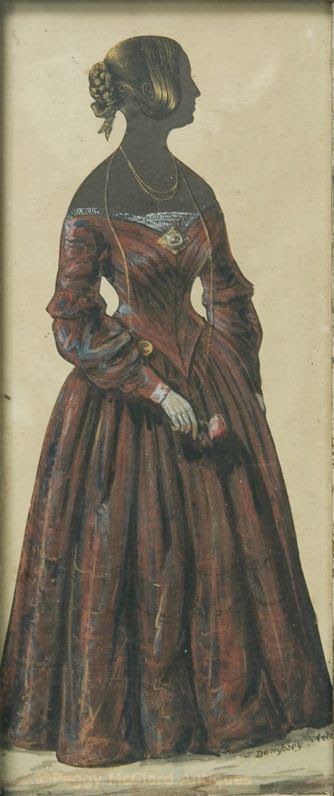
 Silhouette from “Brown’s Portrait Gallery”, published by E.B. Kellogg and E.C. Kellogg in 1845


Inevitabilmente interessato a questa nuova pianta, Poinsett ne inviò un 'campione' ad alcuni amici, tra cui John Barroom di Philadelphia, che consegnò la pianta a Robert Buist, un vivaista di sua conoscenza in Pennsylvania. Robert Buist fu probabilmente la prima persona ad aver venduto le stelle di Natale con il loro nome botanico, ovvero il nome latino con cui ancora oggi la conosciamo, quello di 'Euphorbia pulcherrima' (che significa, 'la più bella Euphorbia'). 
Si suppone che divenne nota con il nome di Poinsettia intorno alla metà degli anni 1830, quando si diffuse la notizia che fu proprio Mr Poinsett ad importarla in America dal Messico.


Ma come venne legata tradizionalmente la Poinsettia ad il Natale ce lo racconta questa vecchia leggenda messicana:


C'era una volta una ragazza molto molto povera che si chiamava Pepita e che non aveva alcun dono da portare al bambino Gesù la notte della Vigilia di Natale. Mentre Pepita si stava tristemente incamminando in direzione della cappella, suo cugino Pedro che era con lei cercò di riconfortarla dicendole: "Sono certo che anche il più piccolo dono, dato con amore renderà il piccolo Gesù felice."

Pepita non sapeva realmente cosa poter donare, e fu così che estirpò una manciata di erbacce a bordo della strada e ne fece un piccolo mazzo, sentendosi imbarazzata perché di più non poteva donargli; mentre camminava attraverso la cappella per raggiungere l'altare, si ricordò delle parole di Pedro e sentendosi risollevata, raggiunto il presepe, si inginocchiò per posarvi ai piedi il suo umile dono: improvvisamente, il mazzo di erbe infestanti fiorì in una profusione di fiori rosso vivo a forma di stella, che da quel giorno sono conosciuti come 'Flores de Noche Buena', o 'fiori della Notte Santa'; la forma a stella del fiore della Poinsettia e le foglie sono talvolta interpretati quale simbolo della Stella di Betlemme, la cometa che guidò i Re Magi alla capanna dove nacque Gesù, le brattee, ovvero le foglie colorate di rosso simboleggiano il sangue di Cristo, mentre le foglie bianche rappresentano la sua purezza.


In tarda epoca Regency, perciò, ed ancor più in epoca vittoriana, la Stella di Natale si unirà alle altre piante con cui gli americani decoravano le proprie case, ovvero al vischio, all'agrifoglio, all'edera e solamente nel periodo tardo vittoriano, ed ancor più in quello edoardiano, acquisterà fama anche in Gran Bretagna, già allora notoriamente più tradizionalista.


Anche oggi, ahimè, il nostro tempo sta per volgere al termine, dopo avervi raccontato questi piccoli aneddoti e curiosità sull'origine dei simboli che ancor oggi leghiamo al periodo natalizio, concludo estendendo a voi tutti l'invito alla conferenza che domenica terrò insieme con Massimo Sannelli, scrittore, autore, regista, attore ... che emozione immensa mi attende e che onore per me !
Sarebbe questa un'ottima occasione per conoscervi, io vi aspetto, a Finale Ligure, mi raccomando, se non avete altri impegni, saremo là a parlare del periodo vittoriano, dell'Imperatrice Elisabetta d'Austria e dell'aura di fascino che sempre con sè recava e che ancora oggi, per noi tutti che ne celebriamo il ricordo, continua ad essere ben presente e viva.
Pubblico qui di seguito la locandina dell'evento che contiene indicazioni più precise sull'orario ed il luogo in cui avverrà l'incontro, 


non esitate a contattarmi (tenutageremia@gmail.com) se sarete nei paraggi ed avrete bisogno di ulteriori ragguagli per raggiungerci
Vi lascio con l'augurio che nel vostro cuore lo spirito del Natale trovi albergo sempre, ogni giorno dell'anno ... e vi aspetto !


A presto 


- picture 1


The son of a French doctor, Joel Roberts Poinsett (1779 - 1851) - above we see him in a portrait by Charles Fenderich (1805 - 1887) - was appointed, in 1825, the first US ambassador to Mexico by President Madison, opportunity that allowed him to crown his career as a diplomat and politician; in despite of having a degree in medicine, he was a deeply passionate lover of botany to the pointo to take care of several greenhouses located inside his property in Greenville, in South Carolina.


During a visit in the southest part of this' new land ', and more precisely in the area known as ' the Taxco Alarcon', he came upon by chance, with great astonishment, in the beautiful winter flowering of the plant then known as the 'Mexican flame leaf ', a bush with huge red flowers of very ancient origins; this tropical shrub, which has about 100 different species and reaches, in its natural habitat, the height of 12 feet, was called 'Cuetlaxochitl' by the ancient people of the Aztecs who used the flowers to make religious rites, being the colour red considered a symbol of purity, to obtain a useful dye for clothing and for their faces, and from the latex contained in the flowering stems was obtained a febrifuge beverage.


- picture 2 - Silhouette from “Brown’s Portrait Gallery”, published by E.B. Kellogg and E.C. Kellogg in 1845


Inevitably interested in this new plant, Poinsett sent a 'champion' to some friends of his, including John Barroom from Philadelphia, who gave the litle plant to Robert Buist, a nurseryman of his knowledge living in Pennsylvania. Robert Buist was probably the first person to have sold the Poinsettia with its botanical name, which is the Latin name by which we know it today, that of 'Euphorbia pulcherrima' (meaning 'the most beautiful Euphorbia').
It is supposed that it became known as Poinsettia in the mid-1830s, when it spread the new that it was Mr Poinsett to import it into America from Mexico.


But how it became traditionally linked to Christmas ? Well, there's an old Mexican legend that goes in this way:


- picture 3


Once upon a time there was a very very poor girl named Pepita who had no gift to bring to the baby Jesus on the night of the Christmas Eve. While Pepita was sadly walking towards the chapel, her cousin Pedro, who was with her, tried to console her saying: "I am sure that even the smallest gift, given with love, will make the baby Jesus happy."


Pepita truly didn't know what to bring him, and so it was that she thought to eradicate a handful of weeds at the edge of the road and made a small bouquet, feeling quite embarrassed because she hadn't anything more precious; as soon as she walked through the chapel to reach the altar, she remembered the words of Pedro and suddenly felt relieved; she reached the crib, knelt herself to place there, at its foot, her humble gift: suddenly, this bunch of weeds bloomed in a profusion of live-red flowers star-shaped, which, from that day, are known as 'Flores de Noche Buena', or 'flower of the Holy Night'; the star-shaped flower and the leaves of the Poinsettia are sometimes interpreted as a symbol of the Star of Bethlehem, the comet that guided the Magi to the hut where Jesus was born, the bracts or red coloured leaves symbolize the blood of Christ, while the white leaves represent his purity.


- picture 4


In the late Regency period, therefore, and even more in the Victorian era, the Poinsettia will join the other plants with which Americans decorated their homes, that is the mistletoe, the holly, the ivy and only in the late Victorian age and in the Edwardian one it will acquire fame in Britain, already notoriously traditionalist.


- picture 5 - VintageHolidayCrafts.com


Even today, alas, our time is coming to the end, after having been told these little anecdotes and curiosities about the origin of the symbols that we still today bind to the Christmas Season, I'm concluding by extending to all of you an invitation to the conference that next Sunday I will keep together with Massimo Sannelli, author, actor, artist, filmmaker ... such an immense emotion and a great honour are awaiting for me!
This would be an excellent opportunity to meet you, I know that for my English-speaking friends it wouldbe very hard to realize, in Finale Ligure, if you have no other commitments, we will be there to talk about the Victorian age, the Empress Elizabeth of Austria and of the aura of charm that always she brought with her, that even today, for all of us who celebrate her memory, continues to be very present and alive.

Here below you can see the poster of the event that contains more precise indications about the time and the place where the meeting will take place, 


please contact me (tenutageremia@gmail.com) if you will be nearby and will need further information to reach us. 
I'm leaving you with the hope that in your heart the Spirit of Christmas dwells always, every day of the year.... and I'm waiting for you !


See you soon 


sabato 25 gennaio 2014

Silhouettes, the ancient art of the shadow.


'Amongst my reminescences of personal belongings and the 

charm of old portraiture, none has given me greater pleasure 

than the silhouette by bygone days. The souvenir, sometimes

cut by gifted amateurs, was exchanged amongst friends

in my early days as the photograph is to-day.'


Ancient silhouette by the American silhouettist William Bache, widely famous from the period of 1760 to 1860


'Pensando alle rimembranze personali più care ed al fascino della 

vecchia ritrattistica, nulla mi ha dato più piacere delle silhouette 

dei tempi passati. Il ricordo, talvolta ritagliato da dilettanti 

talentuosi, era al tempo della mia infanzia oggetto di scambio tra 

amici come la fotografia lo è oggi '.


La storia ci insegna che fu l'antico popolo degli Etruschi il primo a subire il fascino delle ombre e a giocare con esse creando le caratteristiche immagini di profilo che ancora oggi possiamo ammirare dipinte su vasi ed anfore che si sono conservate, e potremmo dire che proprio questa forma di pittura sia la prima espressione artistica delle varie antiche civiltà del bacino del Mediterraneo, da quella Egizia, a quella Fenicia, a quella Greca, etc; intorno al I secolo d.C. Plinio il Vecchio narra la storia di una giovane ragazza corinzia del V secolo, Dibutade, che inventò questo tipo di disegno quando tracciò la sagoma o silhouette del suo amante, proiettata sulla parete da una candela, perché egli stava per partire ed ella voleva conservare un ricordo dell'amato con cui consolarsi durante la sua assenza.


Dibutade in un dipinto del pittore Neo-Classico Joseph-Benoît Suvée (1743 – 1807)


La storia di Dibutade è curiosa e merita attenzione non solo perché descrive lo stesso metodo a lume di candela utilizzato nel XIX° secolo per dipingere le silhouette, ma anche perché l'artista è una donna, una dilettante, e nel suo intento è guidata dal produrre un ricordo dell'amato, tutte circostanze, queste, che erano spesso determinanti la creazione del ritratto di profili. 


Durante il 1700, l'interesse scientifico ed enciclopedico promosso dall'Illuminismo francese, condusse a studi approfonditi sull'anatomia e sulla fisiognomica, alla redazione di veri e propri trattati sull'argomento ( primo fra tutti quello di Johann Caspar Lavater (1741-1801) Von der physiognomik del 1775 da cui è tratta questa stampa a sinistra) e all'invenzione persino di una macchina detta Limomachianecessaria a tenere perfettamente immobile il viso di chi era in posa per la creazione del profilo.

Perciò l'attenzione per i tratti caratteristici del viso fece sì che l' art de l'ombre conoscesse un nuovo impulso a diffondersi, anche se va detto che esulano completamente l'ambito scientifico i motivi che condussero questa forma d'arte al successo che ebbe durante l'epoca Regency e più tardi in quella Vittoriana ( pensate che durante l'epoca di Jane Austen divenne persino un gioco di società per le giovani donne).


Tre erano i metodi con cui poter ricavare le sagome o i ritratti di profili da conservare inserendoli in cornice:

- la pittura di un contorno scuro pieno su di una superficie di colore chiaro che fosse carta, cartone, gesso, avorio, ecc. fu in assoluto il primo metodo utilizzato in Francia per realizzare silhouette ed è legato al nome di Francis Torond  (1743 - 1812) che intorno al 1770 dipinse ad inchiostro per primo sagome scure con una precisione nei dettagli a dir poco inverosimile ...


Conversation


 Playing Cards


Lady with a Birdcage


Mr. and Mrs. Smith of  Hailsham and Aunt Everard, c. 1777


per giungere a William Wellings (1778 -1796) che rifiniva e perfezionava le sagome dipinte con tocchi in acquerello per aggiungere alle immagini tridimensionalità e profondità


Naval's Officers


Introduction of Edward to the Knights*


acquerelli che erano, in taluni casi, composti di pagliuzze bronzate, come si nota in questi dipinti realizzati per mezzo della Royal Victoria Gallery's technique (1840's);


- un secondo metodo consisteva nell'utilizzare le forbici per tagliare un profilo da un foglio di carta nera o comunque di colore scuro per poi applicarlo su di uno sfondo, generalmente dipinto, di colore chiaro


American Victorian Silhouette


ma vi era anche chi ritagliava le sagome speculari per poi applicarle sotto il vetro;


Un raro esempio di 'reverse cut-out on glass' silhouette del XIX° secolo che ritrae una famiglia che suona strumenti musicali


- ed infine un terzo metodo era quello di ricavare con il ritaglio l'immagine del profilo nel centro di un foglio, che fosse chiaro o scuro e sovrapporre quest'ultimo ad un altro di tinta contrastante. Questa tecnica è nota come "hollow-cut". ( taglio del vuoto o taglio concavo )


Qui le silhouette sono in negativo


Ma perchè se inizialmente era definita art de l'ombre questa tecnica ritrattistica muterà nome?
Da dove proviene il nome 'Silhouette' ?

La spiegazione è legata al nome di Etienne de Silhouette (1709-1767), Ministro francese delle finanze nominato dal Re Sole, Luigi XIV, ma ci chiediamo in che modo, poichè diverse sono le ipotesi: quella più comune è che, a causa di quanto breve è il tempo necessario per portare a termine il ritratto di un profilo, si alluda in tono sarcastico alla brevità del suo mandato - eletto nel corso dell'anno 1759 da Luigi XIV, prese di mira le classi più agiate, introdusse un'imposta fondiaria che gravava sui nobili francesi e ridusse loro il reddito, tassando inoltre tutti i segni esteriori di ricchezza; ovviamente trovò una forte opposizione da parte dell'ancien régime, della nobiltà e della chiesa che prima di allora da ogni forma di gravame erano esenti e fu così che dopo solo otto mesi fu costretto a ritirarsi dal suo incarico -; un'altra spiegazione la troviamo nella passione con cui, anche se da dilettante, questi si dedicava con successo ed orgoglio proprio all'art de l'ombre tanto che la collezione che possedeva al suo castello divenne presto piuttosto nota; vi è infine una terza spiegazione, più bizzarra, ma forse più verosimile: in Francia il nome di Silhouette era diventato sinonimo di 'a buon mercato', si chiamava 'gilet à la Silhouette' il gilet da uomo senza tasche e perciò da poco non solo perché costava meno la sua realizzazione ( meno stoffa e perciò meno lavoro ), ma anche perchè il fatto che non avesse tasche suggeriva immediatamente che chi lo vestiva non possedesse denaro da mettervi dentro, ( e qui l'allusione sarebbe allora alle politiche fallimentari di Silhouette ). Come le abitudini 'à la Silhouette', quindi, anche i ritratti silhouette erano ben più economici poichè eseguiti in minor tempo rispetto a quelli tradizionali e perciò il nome rimase nel tempo.


Emily Bronte e Charlotte Bronte nelle Silhouettes di Elizabeth Baverstock


Infatti la diffusione di questa tecnica ritrattistica, soprattutto seguendo la seconda e la terza metodologia, che più si divulgarono durante il 1800, ebbe motivazioni precipuamente economiche divenendo una forma popolare di ritrarre volti e figure poichè coloro che non potevano permettersi di spendere il denaro necessario per farsi ritrarre su tela con acquerelli, pastelli o colori ad olio, potevano contare su di una seduta di pochi minuti e di poca spesa; dalla Francia perciò velocemente si diffusero Silhouettist in Inghilterra e successivamente dall'Inghilterra all'America; tra di essi figurano nomi di spicco che meritano di essere ricordati il primo dei quali, sia per importanza che per cronologia, è senza alcun dubbio Auguste Amant Constant Fidèle Edouart (1789-1861), detto più semplicemente Augustin Edouart, ritrattista francese di nascita, che acquistò fama soprattutto lavorando in Inghilterra, in Scozia e negli Stati Uniti nel corso del XIX° secolo specializzandosi in ritratti di silhouette; nato a Dunkerque lasciò la Francia nel 1814 e si trasferì a Londra dove a partire dal 1825 divenne famoso per la creazione di importanti silhouette, tra cui quella di Fanny Brawne, amata da John Keats


quella dell'Imperatore dei Francesi, Napoleone Bonaparte


 quella dell'autrice Sarah Josepha Buell Hale


quelle di Sir Walter Scott ad Abbotsford


ed altre che, anche se non legate a nomi di personaggi celebri, sono prestigiose per la tecnica che le contraddistingue


The Magic Lantern


Woman in the Garden


Portrait of Sarah Wistar Pennock and her Daughter, Isabella Liddon Pennock


Autoritratto, 1828


Ma fu all'Inghilterra che si legarono i nomi più celebri: molto spesso i Silhouettist sceglievano quartieri altolocati di grandi città, centri balneari o termali (quali Bath, per esempio), luoghi frequentati da molte persone in quanto riuscendo a portare a termine i loro ritratti in una manciata di minuti, magari per un solo penny a silhouette, si garantivano comunque una vita dignitosa contando sulla quantità di richieste.

Numerosi furono coloro che durante il XIX° secolo operarono a Brighton, per esempio, da John Gapp of the Chain Pier, così nominato perchè lavorava alla Third Tower nel centro del Chain Pier


ad Edgard Adolphe, come Edouart nato in Francia (1808 - 1890)


a George Cutter Atkinson ( ? - ? )


Ma ci pensate che al tempo vi erano artisti, tra cui si distinse Jane Read ( ? - ? ), capaci di dipingere silhouette a rovescio sul vetro, il vetro concavo da cornice ...


Saranno stati anche artisti dei poveri, così come furono definiti al tempo, ma che arte era la loro, quale talento possedevano ...


Conversation avec une lettre, c.1850


A tale proposito mi piace ricordare William Morris (1834 - 1896) che proprio in quegli anni scriveva:


Il più grande nemico dell'arte è il lusso.


- La bellezza della vita, 1880


A presto amici miei cari, vi abbraccio con affetto, vi ringrazio e vi aspetto per nuovi ...
' viaggi ' tra le meraviglie che appartengono al nostro tempo passato 


Bibliografia:

Johann Kaspar Lavater, Von Der Physiognomik, Antigonos Verlag, 2012

Emily Neville Jackson, THE HISTORY OF SILHOUETTES, The Connoisseur Publisher, London, 1861 (https://archive.org/details/historyofsilhoue00jackuoft )

Shades and Shadow-Pictures: The Materials and Techniques of American Portrait Silhouettes, The American Institute for Conservation (http://cool.conservation-us.org/coolaic/sg/bpg/annual/v18/bp18-07.html )


Citazioni e Note:

1 - Emily Neville Jackson, THE HISTORY OF SILHOUETTES, The Connoisseur Publisher, London, 1861, prefazione

* Durante l'epoca Regency non era infrequente che famiglie con prole numerosa dessero in adozione almeno uno dei propri figli a parenti facoltosi; così accadde per Edward Austen, fratello di Jane, che venne adottato dalla famiglia Knight.


'Amongst my reminescences of personal belongings and the 

charm of old portraiture, none has given me greater pleasure 

than the silhouette by bygone days. The souvenir, sometimes

cut by gifted amateurs, was exchanged amongst friends

in my early days as the photograph is to-day.'


- picture 1 - 


History teaches us that it was the ancient Etruscans people the first to undergo the charm of the shadows and play with them creating the characteristic profile image that we can still admire painted on the vases and the amphorae that are preserved, and we could say that this form of painting is the first artistic expression of the various ancient civilizations of the Mediterranean area, from the Egyptian one, to the Phoenician, to the Greek one, etc.; around the first century AD Pliny the Elder tells the story of a young Corinthian girl from the Vth century, Dibutade, who invented this type of design when she traced the outline or silhouette of her lover, projected on the wall by a candle, because he was about to leave and she wanted to keep a remembrance from her lover with which to console herself during his absence.


- picture 2 - Dibutade in a Neo-Classical painting by Joseph-Benoît Suvée (1743 - 1807) 


The story of Dibutade is curious and deserves attention not only because it describes the same method, by candlelight, used in the XIXth century to paint the silhouette, but also because the artist is a woman, an amateur, and to her goal is guided by producing a memory of her beloved, all circumstances, these, which often determined the creation of the portrait of profiles.


- picture 3 on the left - During the 1700s, the scientific and encyclopedic interest promoted by the French Illuminism, conducted to extensive studies on the anatomy and physiognomy, to the preparation of real treatises on the subject (first of all that of Johann Caspar Lavater
(1741-1801 ) Von der Physiognomik in 1775 from which is taken this print on the left) and even the invention of a machine called Limomachia, necessary to keep motionless the face of who was posing for the creation of the profile.


- picture 4 on the right - Therefore, the attention to the characteristic features of the face meant that the 'art de l'ombre' knew a new impulse to spread, although it must be said that are completely outside the domain of science the reasons that led this form of art to the succes it had was during the Regency and, later, the Victorian era (just think that during the Jane Austen's era it even became a parlor game for young women).


There were three methods by which to obtain the silhouettes or portraits of profiles to be stored by placing in the frame: 

- the painting of a dark full outline of an area of pale color that could be of paper, cardboard, plaster, ivory, etc.. it was the very first method ever used in France to make silhouette and is linked to the name of Francis Torond (1743 - 1812) who in the 1770s painted in ink the first dark shapes with a precision and so fine detail so to say almost unbelievable ...


- picture 5 - Conversation

- picture 6 -
 Playing Cards

- picture 7 - 
Lady with a Birdcage

- picture 8 -
Mr. and Mrs. Smith of Hailsham and Aunt Everard, c. 1777


till arriving to William Wellings (1778 -1796) who improved and perfected his silhouettes with the addition of touches in watercolor to add to his paintings the three-dimensional component and the depth


- picture 9 - Naval's Officers

- picture 10 - 
Introduction of Edward to the Knights*


watercolors that were, in some cases, made of bronzed particles, as you can see in these paintings made with the Royal Victoria Gallery's technique (1840's);


- picture 11

- picture 12


- a second method was to use scissors to cut a profile from a sheet of black paper or of another dark color and then apply it on a light-colored background, usually painted, 


- picture 13 - American Victorian Silhouette


but there were those who also cut out the shapes in mirror image and applied them under the glass;


- picture 14 - A rare example of 'reverse cut-out on glass' silhouette of the XIXth century that depicts a family playing musical instruments
http://boxhouse-antiques.com/english-regency-period-silhouette-picture.html


- and, finally, a third method was that to obtain with the clipping the profile image in the center of a sheet, it could be dark or light, and overlay the latter to another of contrasting color. This technique is known as "hollow-cut"


- picture 15 - Here the silhouette are negative


But why if this portraiture technique was initially defined 'art de l'ombre' will change its name ?
Where does the name 'Silhouette' come from ?

The explanation is linked to the name of Etienne de Silhouette (1709-1767), French Minister of Finance appointed by the Sun King, Louis XIV, but it is to be seen in which way, because there are different hypothesis: the most common is that, due to how short is the time required to complete the portrait of a profile, it alludes sarcastically to the brevity of his term - elected in the year 1759 by Louis XIV, took aim at the better-off classes, introduced a 'property tax' that weighed on the French nobles and reduced their income by taxing, furthermore, all the outward signs of wealth; obviously he found a strong opposition from the 'ancien regime', the nobility and the church which before then from were exempt from any form of appeal and so it was that after only eight months he was forced to retire from his post -; another explanation is found in the passion with which, although as an amateur, he devoted himself with success and pride in the 'art de l'ombre' so that the collection he had in his castle became soon quite well known; and there is finally a third explanation, most bizarre, but perhaps more likely: in France the name of Silhouette had become synonymous of ' cheaply ', a 'gilet à la Silhouette' was a man gilet without pockets and therefore cheap not only because it was cheaper its realization ( less fabric and therefore less work ), but also because the fact that if it had no pockets immediately suggested that those who wore it didn't have any money to put in ( and hence the allusion would then be to the failed policies of Silhouette). As the habits ' à la Silhouette ', therefore, the portraits of silhouette were well cheapest as performed in less time compared to the traditional ones, and that's why the name remained in time.


- picture 16 - Emily Bronte and Charlotte Bronte in Silhouettes by Elizabeth Baverstock


In fact, the spread of this technique portraiture, especially following the second and third method, which were more popularized during the 1800s, was primarily owned to economic reasons and became a popular form of portraying faces and figures as those who could not afford to spend the money necessary to be portrayed on canvas with watercolors, pastels or oil paints, could count on a few minutes of sitting and on a few money of outlay; from France therefore the Silhouettist quickly spread to England and then from England to America; among them there are prominent names that deserve to be remembered, the first of which, both in importance and in history, is without any doubt Auguste Amant Constant Fidele Edouart (1789-1861): known simply as Augustin Edouart, he was a French-born portrait painter who gained fame mainly working in England, Scotland and in the United States during the XIXth century, specialized in portraits of silhouette; born in Dunkerque he left France in 1814 and moved to London, where since 1825 became famous for the creation of important silhouettes, among which that of Fanny Brawne , loved by John Keats 


- picture 17


that of the Emperor of the French, Napoleon Bonaparte


- picture 18


that of the author Sarah Josepha Buell Hale


- picture 19


those of Sir Walter Scott at Abbotsford


- picture 20


and others which, although not related to famous personalities' names, are prestigious for the technique that distinguishes them


- picture 21 - The Magic Lantern

- picture 22 - Woman in the Garden

- picture 23 - Portrait of Sarah Wistar Pennock and her Daughter, Isabella Liddon Pennock

- picture 24 - Selfportrait, 1828


But it was to England that were tied the most celebrated names: the Silhouettist very often chose high-ranking districts of large cities, seaside resorts or spas towns (such as Bath, for example), places frequented by many people for, as being able to carry out their portraits in a matter of minutes, even for a single penny a silhouette, they could however guarantee themselves a decent life relying on the volume of the requests.

Many were those who during the XIXth century worked in Brighton, such as John Gapp of the Chain Pier, so named because he worked at the Third Tower in the center of the Chain Pier


- picture 25


to Edgard Adolphe, as Edouart born in France (1808 - 1890)


- picture 26

- picture 27


to George Atkinson Cutter (? -?).


- picture 28


But do you think that at the time there were artists, among which Jane Read (? -?) distingued, able to paint silhouette upside down on the glass, the concave frame glass  ... ?


- picture 29

- picture 30

- picture 31


They will also have been artists of the poor, as they were called at the time, but that was their art, what a talent they had ...


- picture 32 - Conversation avec une lettre, c.1850


By the way I like to remember William Morris (1834 - 1896) who wrote just in those years:


The greatest enemy of art is the luxury.


- The beauty of life, 1880


Thank you so much my dearest friends, I embrace you with much love and  .. see you soon for new 'travels' amongst the wonders belonging to our past time 


Bibliography:

Johann Kaspar Lavater, Von Der Physiognomik, Antigonos Verlag, 2012

Emily Neville Jackson, THE HISTORY OF SILHOUETTES, The Connoisseur Publisher, London, 1861 (https://archive.org/details/historyofsilhoue00jackuoft )

Shades and Shadow-Pictures: The Materials and Techniques of American Portrait Silhouettes, The American Institute for Conservation (http://cool.conservation-us.org/coolaic/sg/bpg/annual/v18/bp18-07.html )


Quotations and Notes:

1 - Emily Neville Jackson, THE HISTORY OF SILHOUETTES, The Connoisseur Publisher, London, 1861, foreword

* During the Regency period wasn't uncommon for families with numerous offspring to give up for adoption at least one of their children to wealthy relatives, so it happened to Edward Austen, Jane's brother, who was adopted by the Knight family.


Composite image by 4 silhouettes by Augustin Edouart (1789 - 1861), from left to right:
- John Henry Alexander; Mr Weekes; John Francis Theodon; John Lloyd , 1832
- Mrs Robert Beveridge; Anne Beveridge; Andrew Beveridge; Hugh Beveridge; Robert Beveridge, 1832
- Jane Anderson; Esther Ainslie; Helena Anderson; Mrs Arkley; Charles Atherton, circa 1830
- Sarah Siddons; Tyrone Power; Tyrone Power, 1832


LINKING WITH: