Visualizzazione post con etichetta Bad Ischl. Mostra tutti i post

martedì 18 maggio 2021

♚ NOBLE MANSIONS AND CROWNS ♚ The Kaiservilla in Bad Ischl, Emperor Franz Josef and Empress Elisabeth's Summer retreat.


The Esplanade of Ischl by Rudolf von Alt,1840


Like a gem among the gems set between the mountains that are dressed in mother-of-pearl at sunset waiting to turn gilded the next morning and the alpine lakes with the clear turquoise waters of the Salzburger reliefs - Ischl owes its name to the Celtic term Iscla or Iscula, the name given to the river that today runs alongside the Imperial Villa and which we find already written in a document of the year 829, to finally become Ischl about two hundred years later.

But it is with the XIXth century that it also acquires importance as a spa, when to its highly saline mineral springs are recognized therapeutic properties, already known at the time of Emperor Maximilian, but in those years confirmed by Doctor Josef Götz who recognizes them, specifically, useful above all for treating disorders of the motor, respiratory and cardiovascular systems and therefore opens the first thermal establishment there in 1823. Since then, the small town of Ischl has been transformed into a holiday resort for diplomats and aristocrats, not least the Austrian chancellor Prince Metternich who rented a charming villa built in 1834 for Dr. Josef Eltz, a Viennese lawyer, located at the foot of the hill called Jainzen, from which one could enjoy an enchanting view over the village.


Ischl by Hubert Sattler, 1863


On the advice of the court doctor, Dr. Wierer, according to whom to the waters of the small spa could also be attributed curative properties against sterility, the Archduke Franz Karl, brother of the Austrian Emperor Ferdinand I, and the Archduchess Sophie, his wife, born Princess of Bavaria as the daughter of King Maximilian I, married in 1824 and after three years of marriage still childless, began to 'cure' themselves in Ischl in 1827. On 18th, August 1830 it was born in Schönbrunn Palace in Vienna, the future Emperor Franz Joseph followed on July 6th, 1832 by Ferdinand Maximilian, future Emperor of Mexico, on July 30th, 1833 by their brother Karl Ludwig, on October 27th, 1835 the first and only female, Maria Anna , who died at the age of four, and finally Ludwig Viktor, born on May 15th, 1842 (in reality the couple had six children, if we also take into account the little one who was born dead on October 24th, 1840). It goes without saying that what Dr. Wierer was persuaded of found wide confirmation in the facts and that the family of archdukes since then saw in Ischl a place invested with a sort of sacredness, to which they returned every year to spend the Summer holidays, almost to celebrate a 'thanksgiving rite'.


View of Bad Ischl with the imperial villa in foreground, engraving, XIXth c. by L.Rohbock, A.Fesca


Already in the summer of 1831 the inhabitants of the village saw for the first time the little Franz Josef who celebrated his first birthday there and, since then, every year, until his death, which took place on November 21st, 1916, on August 18th he didn't fail to be found in Ischl where not only the imperial family met, but also all the inhabitants of the village celebrated what from 1849 became no longer a simple birthday, but the birthday of an illustrious person (on December 2nd, 1848, when the all the Europe was inflamed by revolutionary uprisings, the Emperor of Austria, Ferdinand I, abdicated in favor of his brother, Archduke Franz Karl, who refused the succession after a few hours that he had been granted and ceded the throne to his eldest son who became Emperor with the name of Franz Josef I). On August 16th, 1853, Archduchess Ludovika, wife of Duke Maximilian Joseph in Bavaria, called Max, and sister of Sophie, went to Ischl with her two eldest daughters, Helene, called Néné, aged nineteen, and Elisabetta, called Sisi, who was only sixteen. Sofia, as the mother of the Emperor, had organized this meeting in the smallest details so that his son could get to know Elena, because it was her will that she would have become his future bride and one day sit on the imperial throne at his side. The meeting took place in the hall of the Hotel Austria, where Ludovica had booked her own rooms - Franz Josef, as usual, had already taken up residence, with his entourage, at the mayor of the town, while his parents were renting for nine years the Villa of Dr. Eltz, which has become Villa Mastalier. It was tea time, or four in the afternoon, when for the first time the young emperor's eyes met those of his very young cousin, Sisi, two doe eyes, brown, deep, so much so as to seem almost velvet.


A photography of the aged nineteen Helene in Bavaria ready to become the spouse of her cousin Franz Josef


Litography from 1853 by Franz Seraph Hanfstaengl portraying a very young Sisi at the time of her first fated stay at Ischl


And so it was that during the whole week that followed that day, spent in Ischl, it was the youngest of the Wittelsbach sisters who won the heart of the twenty-three year old Franz Josef, who will ensure, for the first time, that his will prevail over the plans of his mother who until then had planned every little step of his life: love had made the young Emperor sure of his intentions and for no reason did he want to give up his own intentions.


Participation with which the engagement of Franz Josef and Elisabeth was officially announced


Therefore the birth of this great love is also linked to Ischl, and the announcement of the engagement, although in an unofficial way; but not only: every year, Franz  Josef and Elisabeth will return there, even with their children, and will stay in what will called Kaiservilla, the Imperial Villa, which was donated by Archduchess Sophie to her son on the occasion of his wedding with the beloved Elisabeth. She bought the Villa in which she had spent the Summer holidays with her husband for many years, the Villa Mastalier, and ordered to the architect Antonio Legrenzi to add two wings to it, to enlarge it and so that it would assume, seen from above, the shape of a great 'E' in honor of her future daughter-in-law. This place surrounded by nature was loved a lot by Sisi and by all the children she had from Franz Josef, but the one who felt most attached to it was their youngest child, Marie Valerie, hes favorite, who inherited it and continued to bring on the tradition of staying there in the Summer with the new, large family to which she had given life by marrying Archduke Franz Salvator of the Habsburg branch of Tuscany (the couple had 10 children).


The Kaiservilla


Today the Villa has become for the most part a museum of considerable interest as it preserves the rooms intact, complete with furnishings and personal objects, as they were at the time when Franz Josef and Elisabeth spent their holidays there.


Just some rooms are used as accommodation for Maria Valeria's son-in-law, Archduke Markus Emanuel Salvator of Habsburg-Lorraine, who inherited it from his father Hubert Salvator (second son of the archducal couple), who lives there with his family. 


Even today our time has passed quickly and, if you have followed me this far, I wish you all the best by giving you an appointment at the next post.

See you soon 


La Kaiservilla in Bad Ischl, rifugio estivo del Kaiser Francesco Giuseppe e della sua amata consorte Elisabetta (Sisi).


IMMAGINE 1 - The Esplanade of Ischl by Rudolf von Alt,1840 


Come una gemma tra le gemme incastonate tra le montagne che si vestono di madreperla al tramonto in attesa di indorarsi il mattino successivo ed i laghi alpini dalle limpide acque turchine del salisburghese - da epoche remote regione ricchissima grazie al sale, l'oro bianco custodito dai suoi rilievi - Ischl deve il suo nome al termine celtico Iscla o Iscula, nome dato al fiume che costeggia oggi la Villa Imperiale e che troviamo scritto già in un documento dell'anno 829, per divenire infine Ischl circa duecento anni dopo.

Ma è con il XIX secolo che Ischl acquista importanza anche quale centro termale, quando alle sue sorgenti di acque minerali altamente saline vengono riconosciute proprietà terapeutiche, già note all'epoca dell'imperatore Massimiliano, ma in quegli anni confermate dal Dottor Giuseppe Götz che le riconosce, nello specifico, utili soprattutto per curare disturbi dell'apparato motorio, del sistema respiratorio e di quello cardiovascolare e vi apre, perciò, nel 1823, il primo stabilimento termale. Da allora il piccolo centro di Ischl si trasforma in luogo di villeggiatura per diplomatici ed aristocratici, non ultimo il cancelliere austriaco, principe Metternich il quale affittò una ridente villa costruita nel 1834 per il Dottor Giuseppe Eltz, avvocato viennese, situata ai piedi della collina chiamata Jainzen, dalla quale si poteva godere di un'incantevole vista sul paese. 


IMMAGINE 2Ischl by Hubert Sattler, 1863


Su consiglio del medico di Corte, il Dottor Wierer, secondo il quale alle acque del piccolo centro termale si potevano ascrivere anche proprietà curative contro la sterilità, l'arciduca Francesco Carlo, fratello dell'Imperatore d'Austria Ferdinando I, e l'arciduchessa Sofia, sua consorte, nata principessa di Baviera, quale figlia del re Massimiliano I, sposatisi nel 1824 e dopo tre anni di matrimonio ancora senza figli, iniziarono a 'curarsi' a Ischl nel 1827. Il 18 agosto del 1830 venne alla luce, nel Castello di Schönbrunn a Vienna, il futuro imperatore Francesco Giuseppe cui seguì il 6 luglio del 1832 Ferdinando Massimiliano, futuro imperatore del Messico, il 30 luglio del 1833 il loro fratello Carlo Ludovico, il 27 ottobre del 1835 la prima ed unica femmina, Maria Anna, spirata a soli quattro anni, ed infine Ludovico Vittorio, nato il 15 maggio 1842 (in realtà la coppia ebbe ben sei figli, se teniamo conto anche del piccolo che nacque morto il 24 ottobre del 1840). Inutile dire che ciò di cui era persuaso il Dr.Wierer trovò ampia conferma nei fatti e che la famiglia degli arciduchi da allora vide in Ischl un luogo investito da una sorta di sacralità, in cui ogni anno tornava per trascorrervi le vacanze estive, quasi a celebrare un rito di ringraziamento.


IMMAGINE 3View of Bad Ischl with the imperial villa in foreground, incisione del XIX° sec. ca. by L.Rohbock, A.Fesca


Già nell'estate del 1831 gli abitanti del paese videro per la prima volta il piccolo Francesco Giuseppe che ivi festeggiò il suo primo compleanno e, da allora, ogni anno, fino alla sua dipartita, occorsa il 21 novembre del 1916, il 18 di agosto non mancava di farsi trovare ad Ischl dove non solo la famiglia imperiale si riuniva, ma anche tutti gli abitanti del villaggio celebravano quello che a partire dal 1849 divenne non più un semplice compleanno, bensì un genetliaco (il 2 dicembre del 1848, quando l'Europa tutta era infuocata dai moti rivoluzionari, l'imperatore d'Austria, Ferdinando I, abdicò in favore del fratello, l'arciduca Francesco Carlo, il quale rifiutò la successione dopo poche ore che gli era stata concessa e cedette il trono al figlio primogenito che divenne imperatore con il nome di Francesco Giuseppe I). Il 16 agosto del 1853 l'arciduchessa Ludovica, moglie del duca Massimiliano Giuseppe in Baviera, detto Max, e sorella di Sofia, si recò ad Ischl con le sue due figlie maggiori, Elena, detta Néné, di diciannove anni, ed Elisabetta, detta Sisi, che ne aveva solamente sedici: Sofia, in qualità di madre dell'imperatore, aveva organizzato nei minimi dettagli  tale incontro affinché questi potesse conoscere Elena, perché era suo volere che divenisse la sua futura sposa ed un giorno sedesse sul trono imperiale al suo fianco. L'incontro avvenne nella hall dell'Hotel Austria, dove Ludovica aveva prenotato le proprie stanze - Francesco Giuseppe, come di consueto, aveva già preso alloggio, con il suo seguito, presso il sindaco della cittadina, mentre i suoi genitori prendevano in affitto ormai da nove anni la villa del Dr. Eltz, divenuta Villa Mastalier. Era l'ora del tè, ovvero le quattro del pomeriggio, quando per la prima volta gli occhi del giovane imperatore, incrociarono quelli della giovanissima cugina, Sisi, due occhi da cerbiatto, castani, profondi, tanto da sembrare quasi di velluto.


IMMAGINE 4 - Fotografia della diciannovenne arciduchessa Elena in Baviera pronta per divenire la sposa del cugino Francesco Giuseppe


IMMAGINE 5Litografia del 1853 by Franz Seraph Hanfstaengl che ritrae una giovanissima Sisi al tempo del suo primo fatale soggiorno ad Ischl


E fu così che durante tutta la settimana che a quel giorno fece seguito, trascorsa ad Ischl, fu proprio la più piccola delle sorelle Wittelsbach a conquistare il cuore del ventitreenne Francesco Giuseppe, il quale farà sì, per la prima volta, che la sua volontà prevalga sui progetti della madre che fino ad allora aveva programmato ogni più piccolo passo della sua vita: l'amore aveva reso il giovane imperatore sicuro delle proprie intenzioni e per nulla ragione voleva rinunciare ai propri propositi.


IMMAGINE 6Partecipazione con cui venne annunciato ufficialmente il fidanzamento di Francesco Giuseppe ed Elisabetta 


Perciò ad Ischl è legata anche la nascita di questo grande amore, e l'annuncio del fidanzamento, anche se in via ufficiosa; ma non solo: ogni anno, Francesco Giuseppe ed Elisabetta vi faranno ritorno, anche con i loro figli, alloggiando in quella che venne chiamata Kaiservilla, la Villa Imperiale, che venne donata dall'arciduchessa Sofia al figlio in occasione delle sue nozze con l'amata Elisabetta: ella acquistò la villa in cui per molti anni aveva trascorso con il marito le vacanze estive, la Villa Mastalier, e vi fece aggiungere dall'architetto Antonio Legrenzi due ali, per ampliarla e perché assumesse, vista dall'alto, la forma di una grande 'E' in onore della futura nuora. Questo luogo immerso nella natura fu amato molto da Sisi e da tutti i figli che ebbe da Francesco Giuseppe, ma colei che più vi si sentì più legata fu l'ultimogenita, Maria Valeria, la sua  prediletta, la quale la ereditò e continuò a portare avanti la tradizione di alloggiarvi l'estate con la nuova, numerosa famiglia cui aveva dato a sua volta vita maritando l'arciduca Francesco Salvatore del ramo Asburgo di Toscana (la coppia ebbe infatti ben 10 figli).


IMMAGINE 7 - La Kaiservilla


Oggi la villa e divenuta per la maggior parte un museo di notevole interesse in quanto conserva intatti gli ambienti, con tanto di arredi e di oggetti personali, quali erano al tempo in cui vi trascorrevano le vacanze Francesco Giuseppe ed Elisabetta.


IMMAGINE 8 - Sala da pranzo


IMMAGINE 9 - Posacenere in argento su di un tavolino collocato in un disimpegno


IMMAGINE 10 - Studiolo dell'imperatrice


IMMAGINE 11 - Salottino di rappresentanza


IMMAGINE 12 - Studiolo dell'imperatore


Solamente alcune stanze sono adibite ad alloggio del nipote di Maria Valeria, l'arciduca Markus Emanuele Salvatore d'Asburgo-Lorena, che lo ha ricevuto in eredità dal padre Umberto Salvatore (secondogenito della coppia arciducale), il quale vi risiede con la propria famiglia.


Anche oggi il nostro tempo è trascorso veloce e, se mi avete seguita fin qui, vi auguro ogni bene dandovi appuntamento al prossimo post.

A presto 


LINKING WITH:


lunedì 23 marzo 2015

I cani dell'Imperatrice.


Essere amati profondamente da qualcuno dà forza. Amare profondamente qualcuno dà coraggio.

Lao Tzu (filosofo cinese, 500 a.C. circa)


Corfù, 1861 ( Con l'Imperatrice Houseguard, sconosciuto il nome dell'altro cane che dorme ai suoi piedi 


Un'anima inquieta e solitaria che, interdetta nel comunicare la profondità e la complessità del proprio essere a chi non ha il dono, raro, della sua stessa sensibilità, trova rispondenza nell'animo degli animali e comunica con gioia e trasporto con i cavalli di cui, in gran numero, si circonda, ( ve ne parlai qui ) e con i cani, anch'essi spesso presenti a corte intorno a lei - con non altrettanto piacere da parte dell'arciduchessa Sofia - cani di razze differenti che spesso voleva comparissero nelle fotografie che le venivano fatte, quasi come se di lei fossero parte, parte di quell'angelica romantica creatura, sospesa tra sogno e realtà, che altro era rispetto all'Imperatrice che vediamo comparire nei ritratti ufficiali, la statuaria, solenne consorte dell'Imperatore d'Austria Ungheria.

Quanti sono i contenuti che non ammettono verbalizzazione alcuna, ma possono solamente essere percepiti ... è questa non una pecca, bensì un dono, prezioso, che ancora ci tiene uniti al mondo animale, forse oggi più ancora di allora difficile da mantenere vivo, il cui prestigio non ha paragone e prezzo alcuno ... e questo Elisabetta bene lo sapeva e lo comprendeva, e cercò, con successo, di trasmetterlo anche alla propria prole.


Puoi conoscere il cuore di un uomo già dal modo in cui egli tratta gli animali. 

Immanuel Kant (filosofo tedesco, 1724 - 1804)


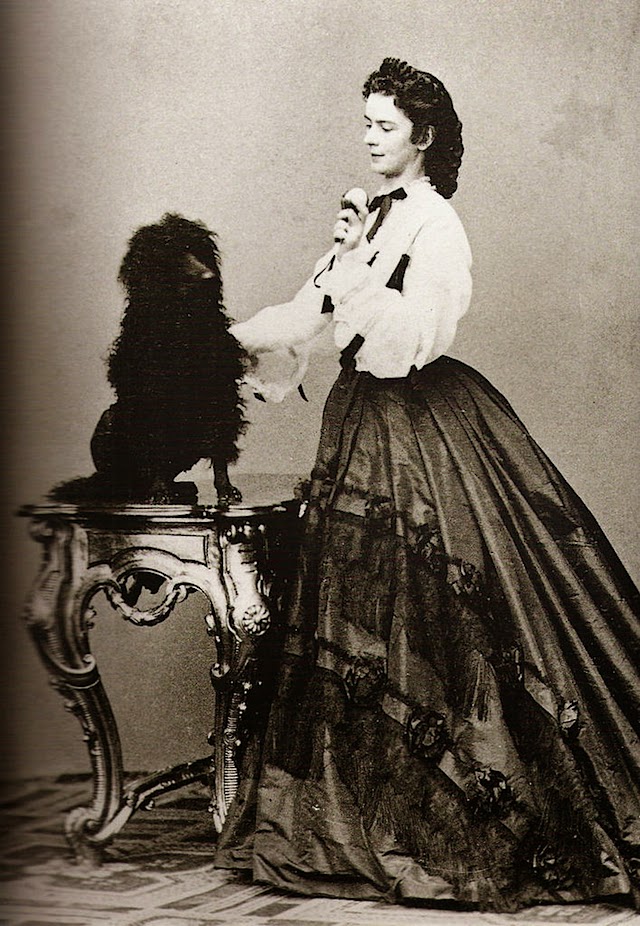
L'Imperatrice con il suo barboncino Platon


L'Imperatrice durante la sua seppur breve vita ebbe molti cani, tra i più piccoli vi fu Platon all'inizio degli anni sessanta, il barboncino nero con il quale sembra dialogare e che persino in un'occasione riesce a strapparle un seppur debole sorriso ( foto scattate da Ludwig Angerer nel 1862 ),


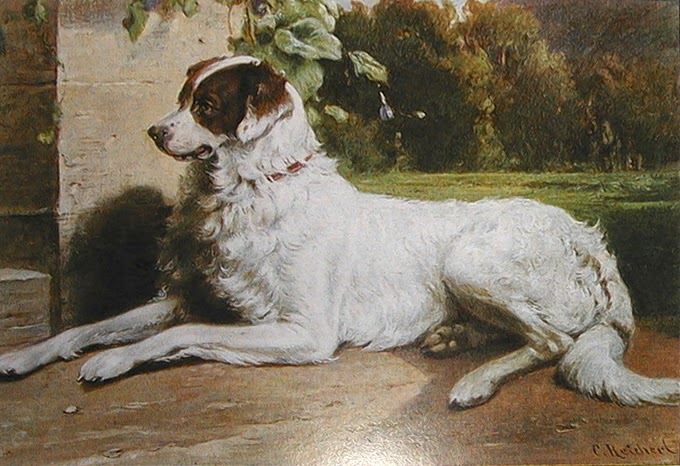
ma con il tempo sempre più si fece conquistare da quelli di grossa taglia; il primo che ebbe un posto speciale nel suo cuore fu uno splendido lupo irlandese che ella chiamò
Houseguard 


Houseguard by Carl Reichert, 1873


con il quale si fece ritrarre nella celebre serie scattata tra il 1866 ed il 1867 da Emil Rabending, scatti che sono per me, per molteplici ragioni, tra i più amati


... ebbene sì, spesso i suoi cani le 'facevano sbocciare' quel sorriso che raramente ornava il volto di questo delicato, 'pallido fiore sotto l'uragano'... 

Anche se probabilmente il più celebre rimane Shadow, l'alano nero con cui condivise il dolore generato dalla tragedia di Mayerling


e che realmente, in quei giorni così bui, era divenuto l'ombra di questa 'eroina del sogno' 2  per descriverla con le parole di D'Annunzio, di questa 'fanciulla di giglio, non nata per le pene del mondo' 3


L'anima ha dei momenti superiori 
che la colgono - sola - 
quando amici occasioni della terra
si sono ritirati senza scampo - 

o quand'ella è salita di sua forza
a troppo ardite cime
per guardare più in basso, a qualcos'altro
che non sia quella nuova onnipotenza -

Questo mortale annullamento
è raro - 
ma ha la vaghezza di un'apparizione
al servizio dell'aria - 

Lo svelamento che l'eternità
concede a pochi eletti -
la smisurata forma
dell'immortalità-


Emily Dickinson, 306 4


Ma vediamo insieme i suoi 'compagni', almeno quelli che ci sono accessibili dal web, tutti dipinti dal pittore della Vienna Vittoriana Carl Reichert (1836 - 1918) particolarmente capace e perciò apprezzato per le sue rappresentazioni del mondo animale, soprattutto cani e gatti


Hamlet


Roma


Brave


La piccola Marie Valerie ritratta da Franz Schrotzberg con un Leonberger, con ogni probabilità si tratta di Brave


 Qui ancora Marie Valerie con Brave in una fotografia di Victor Angerer


 Foto scattata alle soglie della Kaiservilla di Bad Ischl dove uno dei tanti 'badanti' tiene due cani dell'Imperatrice, sicuramente Shadow in piedi e Mohamed coricato


Fanton e Morfy


Per questa sue caratteristiche che ben conosciamo e che ce la rendono ancor oggi così amabile, l'Imperatrice fu indotta sempre più ad isolarsi e a condurre una vita riservata e solinga, ma, con le parole di Erich Fromm, tratte da L'arte di amare, vi lascio a riflettere ....
Scriveva questi negli anni '50


Paradossalmente, la capacità di stare soli è la condizione prima per la capacità d'amareed ancora


  Dare è la più alta espressione di potenza. Nello stesso atto di dare, io provo la mia forza, la mia ricchezza, il mio potere. Questa sensazione di vitalità e di potenza mi riempie di gioia. Mi sento traboccante di vita e di felicità. Dare dà più gioia che ricevere, non perché è privazione, ma perché in quell'atto mi sento vivo.6


Erich Fromm (sociologo e psicoanalista tedesco, 1900 - 1980)


Carl Reichert, Besuch im Pferdestall, 1918


Non è stato questo un argomento di facile trattazione perché poco si trova a questo proposito anche nei testi autobiografici, ma ho comunque voluto farvi dono di tutto quanto è di mia conoscenza a tale proposito, per completare questo puzzle che è la complessa, magnificamente misteriosa ed affascinante personalità di questa Sovrana Figura.

Vi giunge quindi, arrivati qui, il mio sempre più affettuoso e riconoscente saluto che vi accompagna fino al nostro prossimo incontro, 

a presto   


Bibliografia:


Hellmut Andics, Die Frauen der Habsburger, WILHELM HEYNE VERLAG, München1995

Elisabetta d'Austria, Diario poeticoMGS PRESS SAS, 1998

ELISABETTA D'AUSTRIA NEI FOGLI DI DIARIO DI COSTANTIN CHRISTOMANOS, Adelphi edizioni S.p.A., Milano, 1989

Maria Valeria d'Asburgo, La prediletta - Il diario della figlia di Sissi, a cura di Martha e Horst Schad, traduzione di Flavia Floradini, MGS PRESS, 2001


Conte Egon Cesar Corti, L'imperatrice ElisabettaMondadori, Milano, 1937

Gabriele D'Annunzio, LA VIRTU' DEL FERRO, in «Il Mattino», 29-30 settembre 1898, riportato in Gabriele D’Annunzio, Scritti giornalisticiMeridiani, Mondadori, vol.II, ora anche sul web nella sezione ANTOLOGIA del sito UNA RAPIDA EBBREZZA, curato da Massimo Sannelli e Vincenzo Laura
http://unarapidaebbrezza.blogspot.it/2011/12/dannunzio.html )

Emily Dickinson, EMILY DICKINSON TUTTE LE POESIE, Arnoldo Mondadori Editore, Milano, 1997,

Eric Fromm, L'arte di Amare, traduzione di Marilena Damiani, Mondadori, Milano, 1996

Brigitte Hamann, Elisabeth. Kaiserin wieder Willen, Amalthea Verlag, Wien, München, 1982


Brigitte Hamann, (a cura di), ELISABETH Bilder einer KaiserinAmalthea Verlag, 1998

Gabriele Praschl - Bichler, L'Imperatrice Elisabetta, Longanesi & C., Milano, 1997

Oscar Wilde, Poesie, Lorenzo Barbera Editore, Srl, Siena, 2006


Citazioni:

1 - Oscar Wilde, LA BELLA DONNA DELLA MIA MENTE in  Poesie, Lorenzo Barbera Editore, Srl, Siena, 2006, pag.67

2 - La virtù del ferro, in «Il Mattino», 29-30 settembre 1898, riportato in Gabriele D’Annunzio, Scritti giornalisticiMeridiani, Mondadori, vol.II, ora anche sul web nella sezione ANTOLOGIA del sito UNA RAPIDA EBBREZZA, curato da Massimo Sannelli e Vincenzo Laura
http://unarapidaebbrezza.blogspot.it/2011/12/dannunzio.html )

3 -  Oscar Wilde, MADONNA MIA in  Poesie, Lorenzo Barbera Editore, Srl, Siena, 2006, pag. 40

4 - Emily Dickinson, EMILY DICKINSON TUTTE LE POESIE, Arnoldo Mondadori Editore, Milano, 1997, 306, pag. 330 

5 - Eric Fromm, L'arte di Amare, traduzione di Marilena Damiani, Mondadori, Milano, 1996, pag. 119

6 - Eric Fromm, L'arte di Amare, op. cit., pag. 34


The Empress' dogs.


Being deeply loved by someone gives you strength. To love someone deeply gives you courage.

Lao Tzu (Chinese philosopher, 500 a.C. circa)


- picture 1 - Corfu, 1861 (with her Houseguard, unknown the name of the dog sleeping at her feet)


- picture 2


A restless and solitary soul, to which was forbidden to communicate the depth and complexity of Her soul being so few those who have the rae gift of Her same sensibility, finds correspondence in the soul of animals and communicates with joy and transport with horses which, in large numbers, surrounds Her, (here I already wrote about it) and with dogs, which are also often present at Court around her - not with the same pleasure from Archduchess Sofia - dogs of different breeds that often she wanted by Her side in the photographs that were made Her, almost as if they were part of Her, part of that angelic romantic creature, suspended between dream and reality, who was someone else compared with the Empress we see appearing in official portraits, the statuary, solemn consort of the  Emperor of Austria Hungary.

How many are the contents that don't admit any verbalization, but can only be perceived ... this is not a flaw, but rather a gift, a precious precious, that still binds us to the animal world, perhaps now more even then difficult to keep alive, the prestige of which has no comparison and no money ... and that Elisabeth knew and understood well, and tried, successfully, to transmit also to her offspring.


You know the heart of a man already by the way he treats animals.

Immanuel Kant (German philosopher, 1724-1804)


- picture 3 - The Empress with her poodle Platon


The Empress during her short life had many dogs, among the smallest there was Platon in the early sixties, the black poodle with which she seems to talk to, and, in one occasion, even manages to snatch Her an albeit weak smile (photos by Ludwig Angerer in 1862)


- picture 4


- picture 5


but over time She became increasingly conquered by those of larger size; the first which had a special place in Her heart was a wonderful Irish wolfhound She call Houseguard


- picture 6 - Houseguard by Carl Reichert, 1873


with which She was portrayed in the famous series taken between 1866 and 1867 by Emil Rabending, shots that are to me, for several reasons, the most beloved


- picture 7


- picture 8


- picture 9


- picture 10


- picture 11


... Yes, often Her dogs made flourish that smile that rarely adorned the face of this delicate, 'pale flower under the hurricane'1  ...


Although probably the most famous remains Shadow, the black Great Dane with whom She shared the pain generated by the tragedy of Mayerling


- picture 12 


and that really, in those such dark days, had truly become the shadow of this' dream heroine '2 to describe Her with D'Annunzio's words, this' lily-girl, not born for the pains of this world of ours'3


The Soul's Superior instants
Occur to Her—alone—
When friend—and Earth's occasion
Have infinite withdrawn—

Or She—Herself—ascended
To too remote a Height
For lower Recognition
Than Her Omnipotent—

This Mortal Abolition
Is seldom—but as fair
As Apparition—subject
To Autocratic Air—

Eternity's disclosure
To favorites—a few—
Of the Colossal substance
Of Immortality


Emily Dickinson, 306 4 


But let's see Her 'mates', at least those that are accessible from the web, all painted by the painter of the Victorian Vienna Carl Reichert (1836 - 1918) who was particularly capable and so appreciated for his representation of the animal world, especially dogs and cats


- picture 13 - Hamlet


- picture 14 - Roma


- picture 15 - Brave


- picture 16 - Here the little Marie Valerie is portrayed by Franz Schrotzberg with a Leonberger, probably he's Brave


- picture 17 - Here with Brave again in a photograph by Victor Angerer


- picture 18 - Photograph taken just outside the Kaiservilla in Bad Ischl, where one of the several 'Nannies' holds two of the Empress' dogs, definitely Shadow standing and Mohamed lying.


- picture 19 - Fanton and Morfy


Because of these characteristics that we well know and which today make her so lovable more and more, the Empress was increasingly driven to isolate herself and to lead a private and solitary life, but, with the words of Erich Fromm, taken from "The Art of Loving" I leave you to ponder ....
He wrote in the 1950s


Paradoxically, the ability to be alone is the first condition for the ability to love. 5  and still


   Giving is the highest expression of power. In
 the same act of giving, I feel my strength, my
 wealth, my power. This feeling of vitality and potency fills me with joy. I feel full of life and happiness. Giving gives more joy than to receive, because it is not deprivation, but because in that act I feel alive. 6


Erich Fromm (German sociologist and psychoanalyst, 1900-1980)


- picture 20 - Carl Reichert, Besuch im Pferdestall, 1918


It was not easy to deal with this topic because we can find so little about it even in the autobiographical texts, but I wanted to make you this gift, to let you know everything I know about it, to complete this puzzle that is the complex, and magnificently mysterious and fascinating personality of this Sovereign Lady.

So, arrived here, my most affectionate and grateful greeting comes to you and will accompany you until we'll meet again,


see you soon   


Bibliography:


Hellmut Andics, Die Frauen der Habsburger, WILHELM HEYNE VERLAG, München1995

Elisabetta d'Austria, Diario poeticoMGS PRESS SAS, 1998

ELISABETTA D'AUSTRIA NEI FOGLI DI DIARIO DI COSTANTIN CHRISTOMANOS, Adelphi edizioni S.p.A., Milano, 1989

Maria Valeria d'Asburgo, La prediletta - Il diario della figlia di Sissi, a cura di Martha e Horst Schad, traduzione di Flavia Floradini, MGS PRESS, 2001


Conte Egon Cesar Corti, L'imperatrice ElisabettaMondadori, Milano, 1937

Gabriele D'Annunzio, LA VIRTU' DEL FERRO, La virtù del ferro, in «Il Mattino», 29-30 settembre 1898, collected in Gabriele D’Annunzio, Scritti giornalisticiMeridiani, Mondadori, vol.II, now also on the web in the section ANTOLOGIA of the site UNA RAPIDA EBBREZZA edited by Massimo Sannelli and Vincenzo Laura
http://unarapidaebbrezza.blogspot.it/2011/12/dannunzio.html )

Emily Dickinson, EMILY DICKINSON TUTTE LE POESIE, Arnoldo Mondadori Editore, Milano, 1997,

Eric Fromm, L'arte di Amare, traduzione di Marilena Damiani, Mondadori, Milano, 1996


Brigitte Hamann, Elisabeth. Kaiserin wieder Willen, Amalthea Verlag, Wien, München, 1982


Brigitte Hamann, (a cura di), ELISABETH Bilder einer KaiserinAmalthea Verlag, 1998

Gabriele Praschl - Bichler, L'Imperatrice Elisabetta, Longanesi & C., Milano, 1997

Oscar Wilde, Poesie, Lorenzo Barbera Editore, Srl, Siena, 2006


Quotations:

1 - Oscar Wilde, LA BELLA DONNA DELLA MIA MENTE in  Poesie, Lorenzo Barbera Editore, Srl, Siena, 2006, page 67

2 -.from the article La virtù del ferro, in «Il Mattino», 29-30 settembre 1898, collected in Gabriele D’Annunzio, Scritti giornalisticiMeridiani, Mondadori, vol.II, now also on the web in the section ANTOLOGIA of the site UNA RAPIDA EBBREZZA edited by Massimo Sannelli and Vincenzo Laura
http://unarapidaebbrezza.blogspot.it/2011/12/dannunzio.html )

3 -  Oscar Wilde, MADONNA MIA in  Poesie, Lorenzo Barbera Editore, Srl, Siena, 2006, page 40

4 - Emily Dickinson, EMILY DICKINSON TUTTE LE POESIE, Arnoldo Mondadori Editore, Milano, 1997, 306, page 330 

5 - Eric Fromm, L'arte di Amare, traduzione di Marilena Damiani, Mondadori, Milano, 1996, page 119

6 - Eric Fromm, L'arte di Amare, op. cit., page 34


This post is linked up to the lovely blog