Visualizzazione post con etichetta Daisy Greville Countess of Warwick. Mostra tutti i post

venerdì 6 marzo 2015

The lovely Countess of Warwick, mistress of the Prince of Wales.


E' noto che Albert Edward, Principe di Galles ( chiamato amorevolmente in famiglia Bertie ), figlio primogenito della Regina Victoria e che in quanto tale sarebbe divenuto re - con il nome di Edoardo VII - alla sua morte occorsa il 22 gennaio 1901, fosse molto 'sensibile', ovvero avesse un debole, come comunemente si dice, per il gentil sesso, che perciò molte furono le donne al cui fascino soccombette, e che numerosi furono anche gli atteggiamenti lesivi della morale di cui venne accusato - almeno un paio di volte presenziò in tribunale uscendone sempre, ovviamente, immune, per scandali 'matrimoniali' - ma colei di cui mi accingo a parlarvi ebbe nel suo cuore un posto del tutto unico e speciale ... sto pensando alla bellissima Frances Evelyn ( Daisy) Maynard


contessa di Warwick del cui carisma ho già avuto modo, anche se brevemente, di farvi qui menzionefu ella probabilmente l'ultima Lady dell'alta società inglese sul finire del XIX secolo dotata di bellezza, eleganza, carattere gradevole e spiritoso e molta, davvero molta opulenza tanto da essere stata prescelta dalla Regina Victoria quale futura consorte per il figlio minore, il principe Leopold, divenuto duca di Albany, ma egli era già innamorato di un'altra donna e senza alcun dubbio la repulsione per la rigidità della vita di corte lasciò Daisy 


ben lieta della decisione presa e scelse piuttosto di sposare, nell'anno 1881, Francis Greville ovvero Lord Brooke, erede della Contea di Warwick (1893) e con ciò di divenire una delle più influenti e popolari Myladies aristocratiche del tempo, manifestando questa sua ricchezza sia nella residenza di Londra che al Castello di Warwick


 e mai mostrarsi se non magnificamente abbigliata. 


Durante la sua agiata vita alcune storie amorose non particolarmente discrete con uomini influenti e potenti fecero persino sì che si guadagnasse lo pseudonimo di 'Babbling Brooke' (un riferimento al suo titolo di Lady Brooke che le era stato conferito con il matrimonio e che le appartenette fino a che Lord Brooke non ereditò il titolo di Conte di Warwick) data la sua incapacità a mantenere segreti circa la sua vita privata.

Nata a Easton Lodge 


vicino a Great Dunmow, il 10 dicembre 1861 fu uno dei tre figli dell'Onorevole colonnello e della sua seconda moglie Blanche FitzRoy.

Come buona parte degli aristocratici londinesi di fine secolo con il marito faceva parte del circolo di 
Marlborough House 


presieduto proprio da Albert Edward, Principe di Galles (seduto al centro ), già sposo di Alessandra di Danimarca - Il giorno in cui la principessa andò in sposa al principe Albert Edward di Sassonia-Coburgo-Gotha futuro re Edoardo VII del Regno Unito di Gran Bretagna e Irlanda, non fu particolarmente felice né per lui, perché sapeva che il suo sarebbe stato un matrimonio all'insegna della propria infedeltà, animato da numerose relazioni extraconiugali, né per la sua austera madre, la regina Vittoria di Hannover, vedova da poco più di un anno - 


e a partire dal 1886 Daisy fu coinvolta in relazioni amorose con diversi uomini potenti, in particolare proprio con il Principe di Galles; il primo fu Lord Charles Beresford cui poi subentrò l'erede al trono, in una relazione piuttosto lunga che cominciò con il 1891 per concludersi nel 1898, prima che egli fosse incoronato re, quando ella si innamorò di Joseph Laycock, uno scapolo milionario che servì la patria in qualità di ufficiale dell'esercito nella guerra boera ( ma intanto il principe stava già pensando ad altre braccia tra cui trovare consolazione !)


Dopo la morte di Edoardo VII, e avendo grandi debiti, ella cercò di recuperare danaro ricattando il nuovo re, Giorgio V, con la minaccia di rendere pubbliche le lettere d'amore che le aveva scritto Edoardo VII, prova certa del suo amore per lei e quindi del suo adulterio ( egli era già sposato quando frequentava Lady Warwick ), ma l'esperienza e l'astuzia di Lord Stamfordham riuscirono a fermarla sostenendo che il diritto d'autore apparteneva comunque al Re. 
Dopo che la High Court la trattenne dal pubblicare le lettere in Gran Bretagna, ella minacciò di venderle ai media americani e fu allora che si fece avanti un industriale e politico britannico Arthur Du Cros il quale si offrì di pagare £ 64.000 (nel 2012 equivalevano a £ 6.190.545) ovvero l'intero ammontare dei debiti di Daisy in cambio delle lettere d'amore e, a riconoscimento della la sua generosità, fu nominato baronetto nel 1916.

Nel 1928, Daisy stava per essere reclusa in qualità di debitrice insolvente, ma venne rilasciata a condizione che, se e quando avesse pubblicato le sue memorie, si sarebbe impegnata a sottoporle ad un letterato; oggi tale manoscritto è considerato uno dei documenti scritti più attendibili e vividi sulla società edoardiana ed, in quanto tale, spesso viene citato.

Accadeva sovente che chi viveva valendosi dell'opulenza e del denaro altrui finisse la propria esistenza in condizioni indigenti e miserrime, ahimè ....

Mi permetto infine, prima di congedarmi con sempre crescente affetto e gratitudine, di consigliarvi la lettura di questo bellissimo, appassionante testo biografico


che tra gli altri ha ispirato questo mio post.


A presto 


Bibliografia:


Sushila Ananad, Daisy, the Life and Love of the Countess of Warwick, Piatkus, 2009

Christopher Hibbert, Edward VII: The Last Victorian King,
Palgrave Macmillan Trade, 2007


It's much well known that Albert Edward, Prince of Wales (lovingly called in family 'Bertie'), the eldest son of Queen Victoria, future king - with the name of Edward VII - after her death that will be occurred on January 22nd, 1901, was very 'sensitive', had a weak, as it's commonly said, for the fair sex and that therefore there were many women whose charm succumbed, and also many 'scandals' ensuing saw him as a protagonist - at least a couple of times he was present in court and always, of course, went out immune to 'matrimonial' scandals - but the one that I am going to tell you about had in his heart a place completely unique and special ... I'm thinking of the beautiful Frances Evelyn (Daisy) Maynard,


- picture 1 - Frances Evelyn Daisy Greville, 1879


Countess of Warwick, whose charisma I have already, albeit quite briefly, had the chanche to talk you here about; she was probably the last English Lady from the high society in the late XIXth century with beauty, elegance, a pleasant and witty character and a lot, really a lot of wealth that's why she was chosen by Queen Victoria as a future wife for her younger son, the Prince Leopold, who became Duke of Albany, but he was already in love with another, and with no a doubt the repulsion for the rigidity of the Court life left Daisy


- picture 2


- picture 3


- picture 4


well pleased with this decision and chose instead to marry, in 1881, Francis Greville, namely Lord Brooke, heir to the County of Warwick (1893) and thus to become one of the most influential and popular aristocrtas Myladies of the time, manifesting this wealth of hers both in the residence of London and in Warwick Castle


- picture 5


and never show herself if not magnificently dressed.


- picture 6


- picture 7


- picture 8 


During her wealthy life, some love affairs, with influential and powerful men weren't particularly discreet and thet's why she earned the nickname of 'Babbling Brooke' (a reference to her of Lady Brooke she got with her marriageand she held until Lord Brooke didn't inherited the title of Earl of Warwick) given her inability to keep secrets about her private life.

Born at Easton Lodge


- picture 9


near Great Dunmow, on December 10th, 1861, she was one of three children of the Honourable Colonel and his second wife Blanche FitzRoy.

With lots of the aristocracy of the end of the XIXth century London she was part with her husband of Marlborough House Set


- picture 10


just chaired by Albert Edward, then Prince of Wales ( sat in the middle ), already husband of Princess Alexandra of Denmark - the day of their marriage wasn't particularly happy for neither for him, because he knew that his would be a marriage in the name of his infidelity, animated by numerous love affairs, nor for his austere mother, Queen Victoria of Hanover, a widow for a little over a year -


- picture 11


and from 1886 Daisy was involved in love relationships with several powerful men, in particular with the Prince of Wales; the first lover of hers was Lord Charles Beresford which took over the heir to the throne, in a relationship that lasted quite long, from 1891 to 1898, anyway before he was crowned king, in the moment when she fell in love with Joseph Laycock, a millionaire bachelor who served England as an army officer in the Boer War ( but the prince was already thinking about someone else who able to console him !)


- picture 12


- picture 13


After the death of Edward VII, given the large amount of debtsshe had, Daisy sought to recover money by blackmailing the new King George V, by threatening to public the love letters that Edward VII wrote her, certain proof of his love for her and then of his adultery (he was already married when he was in love with her), but the experience and guile of Lord Stamfordham managed to stop claiming that the copyright belonged to the King anyway.
After the High Court deterred her from publishing these letters in Britain, she threatened to sell them to the American media, and it was then that a British industrialist and politician Arthur Du Cros offered to pay £ 64,000 (in 2012 they were equivalent to £ 6,190,545), namely the entire amount of her debts in exchange of the love letters and, in recognition of his generosity, in 1916 he was named a baronet.

In 1928, Daisy was going to be locked up in prison as an insolvent debtor, but was released on condition that, if and when she would have published her memoirs, would have entrust a man of letters; today this manuscript is considered one of the most reliable and vivid written documents about the Edwardian society and, as such, is often cited.

It often happenes that those who lived availing of opulence and abusing of other people's money end their existence in destitute and miserable conditions, alas ....

Allow me finally, before taking leave of you with growing affection and gratitude, to recommend the reading of this beautiful, fascinating biographical text


- picture 14


which among the others has inspired my post.


See you soon 


Bibliographic sources:


Sushila Ananad, Daisy, the Life and Love of the Countess of WarwickPiatkus, 2009

Christopher Hibbert, Edward VII: The Last Victorian King,
 Palgrave Macmillan Trade, 2007


martedì 30 settembre 2014

Daisy Daisy, Give me your answer do! - Riding a bicycle in history.


Daisy Daisy,
Give me your answer do!
I'm half crazy,
All for the love of you!
It won't be a stylish marriage,
I can't afford a carriage,
But you'll look sweet on the seat
Of a bicycle built for two !


Tre incantevoli fotografie d'epoca che ritraggono altrettanti modelli di biciclette per due, concepite tra il 1886 ed il 1890, per introdurre l'argomento ed accompagnare i versi della canzone che Henry Dacre compose nel 1892, quando ormai la bicicletta era uno spettacolo quasi quotidiano di cui godere nelle città tardo vittoriane: si tratta di una canzone che divenne immensamente popolare, sia nei locali pubblici di Londra che in quelle d'oltremare il cui testo tratta di un tandem - una bicicletta fatta per due - e la Daisy in questione si suppone fosse la contessa di Warwick, Frances Evelyn 'Daisy' Greville, 


Daisy Greville ritratta nel 1890


donna affascinante conosciuta per il suo essere attivamente coinvolta nella lotta per la conquista dei diritti femminili nonchè per essere l'amante del Principe di Galles ... e noi che abbiamo un animo romantico accettiamo con piacere questa versione, anche se sembra non fortemente supportata da sicure testimonianze, e la facciamo nostra !

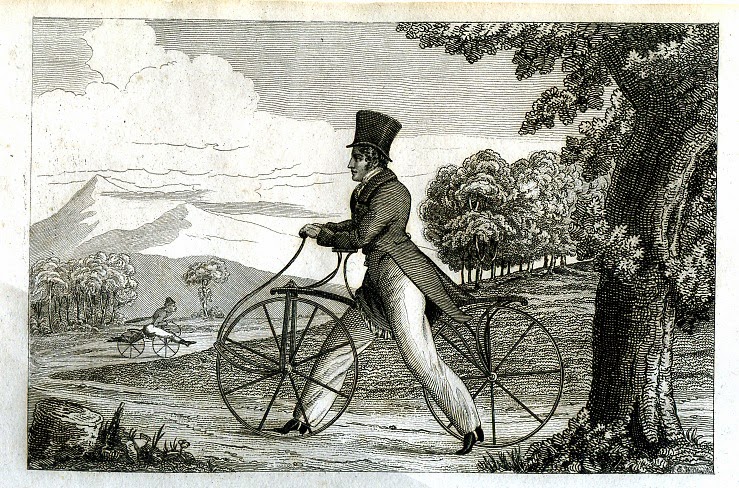
Era l'inizio del secolo, esattamente il gennaio del 1818 quando in Germania, a Mannheim il barone Karl Drais brevettò la Laufmaschine termine che in tedesco significa velocipede


- pedestrian curricle verrà definito in inglese - una simpaticissima bicicletta con un manubrio particolare, fatto per appoggiarvisi il petto onde farvi forza per potenziare la spinta delle gambe, poichè il velocipede, come si intuisce dal termine stesso, si valeva non ancora di pedali per muoversi, bensì dei piedi .... su di esso, in pratica, si correva seduti, tanto per intenderci !

Un anno dopo, la versione inglese fu brevettata da Denis Johnson e divenne al tempo davvero una mania nonostante Keats ebbe a definirla 'il nulla del giorno'; era considerato il cavallo dei dandies in quanto erano spesso i frivoli giovani del tempo a guidarla e Keats aveva ragione quando ipotizzava che la sua popolarità sarebbe stata di breve durata: la costante spinta lungo il terreno logorava velocemente le suole degli stivali dei 'signorini', che spesso venivano fermati mentre sfrecciavano pericolosamente ai lati delle strade e multati due pounds, una somma decisamente considerevole considerato che stiamo parlando dei primi anni del 1800.

La prima macchina a pedale si crede sia stato costruito nel 1839 dal fabbro scozzese, Kirkpatrick MacMillan ma fu solamente nel 1861 che il produttore di carrozze francese, Pierre Michaux, inventò la prima bicicletta che aveva i pedali direttamente collegati alla ruota anteriore; non credo fosse molto comoda da guidare tanto che venne soprannominata Boneshaker ( letteralmente scuoti - ossa )


a causa delle terribili vibrazioni causate dal fatto che le ruote di legno erano avvolte da cerchi di ferro e le strade erano ancora tutte completamente sterrate, dissestate e notevolmente sassose.


Ad essa subentrò perciò il modello denominato High Wheeler o Penny Farthing


in cui la ruota anteriore ruota molto più grande della posteriore tentava di ovviare al disagio dello scuotimento consentendo anche le ampie dimensioni della stessa di non entrare nelle buche che sovente erano presenti sulle strade; dal 1870 al 1890 questi veicoli crebbero notevolmente in popolarità perchè consentiva di muoversi più velocemente che per mezzo del cavallo ed offriva una maggiore libertà per chi abitava in città. 
Inutile dire che la bicicletta, così concepita, continuava a rimanere un mezzo di locomozione scomodo e persino malsicuro fino a che nel 1885 John Kemp Starley, nipote di James, concepì con successo la safety bicycle, la 'bicicletta sicura' conosciuta come Rover, che mai fu brevettata, caratterizzata da due ruote di eguali dimensioni, di cui quella anteriore sterzante, con una catena dentellata che consentiva la trasmissione del movimento alla ruota posteriore.  
Diffusa con enorme successo sia nel Nord America che nel vecchio continente, la "safety bicycle" soppiantò definitivamente i modelli precedenti, ancor più quando solamente tre anni più tardi John Dunlop pensò di rivestire le ruote con una camera d'aria per attutire le vibrazioni originate dall'irregolarità del selciato.

In epoca edoardiana, l'hobby del ciclismo divenne molto popolare, soprattutto presso il pubblico femminile, 


Un 'cycling club' della fine del XIX secolo 


  Edwardian ladies in 1906


tanto che venne creata una linea di abbigliamento appositamente studiata per conciliare i dettami della moda del tempo con l'esigenza di muovere le gambe per articolare i pedali:


 la biancheria intima constava di una gonna pantalone, e così pure l'abito


e per rendere tutto ancor più semplice ed agevole Amelia Bloomer (1818 - 1894) creò un modello di pantaloni prettamente femminili adatti per praticare ogni tipo di attività sportiva per la nuova donna edoardiana, la Gibson Girl
( se ancora non lo avete letto vi suggerisco il post di My little old world in cui ne trattai: http://sweetlydreamingofthepast.blogspot.it/2014/05/charles-dana-gibson-e-lideale.html )


Bambola di carta con abiti per ciclismo


... ma di Amelia Bloomer e del Bloomerism vi parlerò in una delle prossime occasioni !

Miei carissimi ed affezionati compagni di viaggio, questi nostri appuntamenti sono sempre più entusiasmanti e preziosi per me, vi lascio con un abbraccio colmo di affetto e di gratitudine... e con le note della canzone DAISY BELL che mi ha ispirato questo mio scritto.


click


A presto 


- picture 1


Daisy Daisy,
Give me your answer do!
I'm half crazy,
All for the love of you!
It won't be a stylish marriage,
I can't afford a carriage,
But you'll look sweet on the seat
Of a bicycle built for two !


- picture 2

- picture 3


Three charming vintage photographs depicting a few models of bicycles for two, belonging to the years between 1886 and 1890, to introduce this topic and accompany the lyrics of the refrain of the song which in 1892 Henry Dacre wrote, when the bicycle was an almost daily sight of which enjoy in the late Victorian cities: it is a song that became immensely popular, both in music halls of London that in those overseas, the text of which is about a tandem - a bicycle made for two - and the Daisy in question is supposed to be the Countess of Warwick, Frances Evelyn 'Daisy' Greville,


- picture 4 - Daisy Greville portrayed in 1890


charming woman known for being actively involved in the struggle for women's rights as well as to be the mistress of the Prince of Wales ... and we, who have a romantic soul, with pleasure accept this version, although it seems not strongly supported by secure evidence, and make it our own! 

It was the beginning of the century, exactly January 1818 when in Mannheim, Germany, Baron Karl Drais patented the Laufmaschine term which in German means velocipede


- picture 5


- Pedestrian curricle it'll be defined in English - a very nice bike with a particular handlebar, made to lean against one's chest in order to force it and to increase the thrust of the legs, as the velocipede, as you can imagine from the term itself, moved thanks to one's feet .... on it, in practice, people ran sitting, so to speak! 

A year later, the English version was patented by Denis Johnson and became a craze of the time in spite Keats had to call it 'the nothingness of the day'; it was considered the dandies's horse as they were often such frivolous youth to ride it and Keats was right when he suggested that its popularity was short-lived: the constant push along the ground quickly wore out the soles of the boots of these 'gentlemen', which were often stopped while darting dangerously to the side of the road and fined two pounds, a very substantial sum considering that we are talking about the early 1800's. 

The first foot machine is believed to have been built in 1839 by the Scottish blacksmith Kirkpatrick MacMillan, but it was only in 1861 that the French manufacturer of carriages, Pierre Michaux, invented the first bicycle that had the pedals attached directly to the front wheel; I think it wasn't very comfortable to drive in fact it was nicknamed Boneshaker 


- picture 6


because of the terrible vibrations caused by the fact that the wooden wheels were wrapped by iron hoops and the streets were still all completely unpaved, bumpy and considerably rocky.


- picture 7


So it took over the model called High Wheeler or Penny Farthing,


- picture 8

- picture 9


in which the front wheel much larger than the rear one attempting to remedy the discomfort of the shaking also because of the large size of the wheel that didn't easily enter in the holes that were often present on the roads; during the years 1870-1890 these vehicles grew greatly in popularity because they allowed to move faster than by horse and offered more freedom for those who lived in the city. 
Needless to say that bikes, so conceived, continued to remain a means of locomotion uncomfortable and even unsafe until in 1885 John Kemp Starley, grandson of James, conceived a successful safety bicycle also known as Rover, which was never patented, characterized by two wheels of equal size, of which the front one steerable, with a toothed chain which allowed the transmission of the movement to the rear wheel. 
Spread with enormous success both in North America than in the old continent, the safety bicycle definitively supplanted the previous models, especially when only three years later John Dunlop thought to coat the wheels with an air chamber to absorb vibrations arising by the irregularity of the paving. 

In the Edwardian era, the hobby of cycling became very popular, especially among the female people,


- picture 10 - A 'cycling club' of the late XIXth century

- picture 11 - Edwardian ladies portrayed in 1906


so much so that it was created a line of clothing specifically designed to reconcile the dictates of the fashion of the time with the need to move legs to articulate the pedals:


- picture 12


the underwear consisted of a divided skirt, and so was the gown


- picture 13

- picture 14


and to make things even more simple and easy Amelia Bloomer (1818 - 1894) created a model of purely feminine pants suitable for every kind of sporting activity for the new Edwardian woman, the Gibson Girl ( If you haven't already read it I suggest you the post from My little old world in which I treated about it


- picture 15 - Paper doll with suits for cycling

- picture 16


But... about Amelia Bloomer and Bloomerism I'm going to tell you in a future occasion ! 

My dear and precious traveling companions, these appointments of ours are always more and more exciting and valuable for me, I leave you with a hug full of love and gratitude ... and with the DAISY BELL notes, the song that inspired me my writing.


 - picture 17 - click  DAISY BELL  to listen to the original song


See you soon