«Due amanti silenziosi somigliano a due arpe con lo stesso diapason
e pronte a confondere le voci in una divina armonia.»
A. Karr (1808 - 1890)

Mi chiedo come, chiunque di noi che abbia una qualche conoscenza del temperamento dell'Imperatrice Elisabetta d'Austria, immagini il carattere del suo consorte, Francesco Giuseppe I, posto dall'abdicazione del padre, Francesco Carlo d'Asburgo-Lorena nel 1848, già giovanissimo ed in un periodo storico connotato da notevole tumultuosità ed incertezze, alla vigilia della Prima Guerra d'Indipendenza combattuta nel Lombardoveneto contro l'italia, a guida dell'Impero Austriaco (che nel 1867 diverrà con l'annessione del Regno d'Ungheria Impero Austroungarico).

Christian Fries, ritratto del 1848
Dalla lettura delle parole vergate dall'Augusta Sovrana nei suoi scritti privati e soprattutto da quelle annotate dalla piccola Marie Valerie nel suo diario si evince il ritratto di un uomo molto ligio al suo dovere, sposo innanzitutto al dovere imperiale, un uomo semplice, di poche pretese che riposava per poche ore la notte su di una branda militare per ridestarsi alle cinque del mattino, fare un bagno e quindi prender posto al proprio scrittoio nello studio del palazzo imperiale mentre tutti ancora dormono, per iniziare con il prendere in esame la voluminosa quantità di plichi che quotidianamente lo attendeva; piuttosto introverso, difficilmente lasciava trapelare il proprio intimo, ma era un uomo con le proprie passioni, capace di amare i propri figli, bisognoso di dolcezza più di quanto tenesse a dimostrare, amante della natura e delle escursioni in alta montagna, della vita all'aria aperta di cui spesso, come dei propri affetti, doveva privarsi, amante della caccia, legato soprattutto al Salzkammergut.*
Di bell'aspetto, nel pieno degli anni della giovinezza e della maturità ( qui lo vediamo in una foto del 1865 che lo ritrae all'età di 35 anni )
.jpg)
aveva molto che poteva attrarre le giovani fanciulle, da quelle più interessate a quelle senza grandi pretese, quelle che ignoravano o non pensavano al fatto che egli fosse, tra le altre cose, anche Imperatore.
Questo racconto ci porta in una delle regioni che più amo, il 'Lake District' austriaco, la regione costellata di laghi alpini che come perle sono incastonate tra i monti che fanno da spalliera al Salisburghese

... piccoli paesi in cui il tempo sembra essersi fermato secoli fa, abitatati solo che da anziani e fanciulli giocosi, punteggiano i laghi e le montagne come in un presepe e guglie di campanili aguzzi, che emergono dalle onde del verde mare di velluto delle praterie dei pascoli alpini, si ergono altissimi quasi a sfiorare il cielo; armenti al pascolo in ogni dove comunicano ancor oggi l'incontaminatezza di tale Natura.


Nel 1837 molti nobili austriaci vennero a conoscenza di queste lande da sogno grazie anche al destino che a tali luoghi legava la famiglia imperiale: dopo anni di matrimonio e cinque aborti l'arciduchessa Sofia fu consigliata di sottoporsi ad una cura con le acque salmastre che scorrono sotto il paese di Bad Ischl e nel 1830 diede alla luce il primo figlio, sano e futuro erede al trono, Franz Joseph ( cui fecero seguito altri 3 maschi, Maximilian nato nel 1832, Karl Ludwig nato nel 1833, Ludwig Viktor nato nel 1842 ed una femmina, Maria Anna Carolina nata nel 1835 ); va da sé che da allora la famiglia imperiale considerasse questi luoghi alla stregua di un santuario in cui l'arciduchessa volle che venisse costruita una dimora estiva, la Kaiservilla, un semplice edificio in stile Biedermeier circondato da un ampio parco in stile inglese. (nel 1854 ne farà dono al figlio come presente di nozze modificandone la struttura originaria in modo tale che, osservata dall'alto, assumesse la forma di una 'E' in onore della futura Imperatrice.)

Per l'esattezza la nostra storia ci conduce sulle sponde orientali del Mondsee,

nell'oberburgau


Vista dell'oberburgau dallo Schaftberg
dove già nel 1500 si ergeva ed era rinomata la fattoria dei Grauwitz al centro di un ampio podere situato tra gli alpeggi dell'Eisenau ed i boschi dello Schlafberg, che durante il periodo estivo fungeva anche da locanda stagionale; gli Asburgo conoscevano molto bene questi luoghi e gli allora proprietari, i Pointinger, avendo spesso alloggiato alla locanda durante le loro escursioni estive.
Nel 1869 Theresia Pointinger, Reserl, aveva 23 anni e "nonostante siano in quattro tra fratelli e sorelle, è, a buon diritto, l'orgoglio dei genitori. Durante gli anni trascorsi nella fattoria di famiglia, Reserl è diventata una donna responsabile, in grado di svolgere con disinvoltura le sue mansioni. Grazie al suo carattere forte e vigoroso ha saputo distinguersi dagli altri ed è diventata un'importante persona di riferimento nella fattoria. Questa determinazione e la generosità verso i più deboli la spingono a confrontarsi con sfide sempre nuove. Istintivamente Reserl è attratta dalla solitudine della natura, dalla quale riesce a trarre sempre nuovi insegnamenti, e che, consentendole di liberare la mente e i pensieri, diventa la sua più preziosa alleata."1
Ella lavorava presso la fattoria di famiglia accogliendo e ristorando i turisti di passaggio ai tavoli che nella bella stagione erano posti sotto gli alberi del prato davanti a casa e, quando era il periodo della transumanza, si trasferiva nella malga con la propria mandria per occuparsi della produzione di latte, burro e formaggi, da far scendere poi a valle, attività in cui era specializzata;

La Schartenalm, l'alcova dell'Imperatore
Una sera, dopo aver chiuso la stalla, in procinto di rincasare,"un cacciatore attira la sua attenzione. Non lo si distinguerebbe dagli altri cacciatori, se non fosse per gli abiti che indossa: un cappello in feltro grigio, un giubbotto in loden grigio e i calzettoni anch'essi grigi. Quando il cacciatore si avvicina alla baita di Reserl, nonostante la luce fioca del tramonto, la ragazza riconosce in quell'andatura leggera e singolare Francesco Giuseppe, l'imperatore d'Austria. Reserl è stupita, e felice, che dopo aver fatto visita alla tenuta dei genitori Francesco Giuseppe abbia deciso di proseguire alla volta dell'Eisenau. Non sa ancora che quest'incontro avrebbe cambiato per sempre la sua vita. [ ...] Reserl invita Francesco Giuseppe ad accomodarsi nella baita. All'interno il fuoco scoppietta nel focolare. Francesco Giuseppe si toglie il giubbotto e mangia con gusto gli schmarren che Reserl gli ha preparato in una piccola padella sul fuoco. L'imperatore chiede a Reserl informazioni sulla sua vita, su quello che fa e se il lavoro alla malga sia tutto sulle sue spalle. Quassù per Francesco Giuseppe non esisistono differenze di ceto sociale; la grandiosità delle montagne e la forza della natura rendono infatti gli uomini consapevoli dei propri limiti e talvolta aiutano a diventare più forti.
Francesco Giuseppe si siede accanto a Reserl e qualche istante più tardi la sua mano si avvicina al grembo della ragazza. La mano sottile di Reserl risponde all'invito dell'imperatore, e quando, poco dopo, le labbra di Francesco Giuseppe si posano sulle sue, i due si abbandonano finalmente alla passione che per molto tempo avevano dovuto soffocare." 2
Fu questo l'episodio che segnò l'inizio di una relazione che durò per più di dieci anni e da cui nasceranno: Anton (6 aprile 1870) di cui non si trova alcuna fotografia,
Franziska (1 gennaio 1872),

Mathias (5 dicembre 1872),
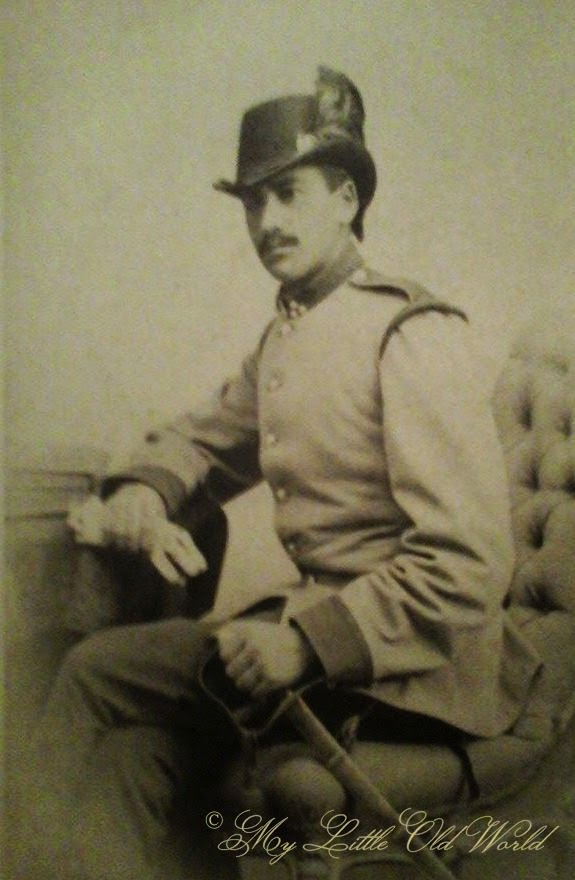
Wilhelmine (28 maggio 1877),

A partire dagli anni settanta l'Imperatrice e Francesco Giuseppe vivono una vita sempre più separata, tanto che quest'ultimo giunge a pensare che i viaggi che ella conduce spesso recando con sé la piccola Maria Valeria siano un pretesto per tenerlo lontano da sé, il che non fa che rafforzare il legame affettivo che lo unisce a Reserl, ma gli impegni a Vienna non sempre lo lasciano libero di dedicarsi alla caccia e di abbandonare la capitale per rifugiarsi nella Kaiservilla, il suo piccolo 'paradiso in terra' come amabilmente lo definiva.
Reserl nell'aprile del 1874 aveva frattanto sposato Wilhelm Buchwald, un capocaccia rimasto vedovo solo un mese prima che da tempo la corteggiava e che da molto era a conoscenza della sua relazione con l'Imperatore, aveva quindi una sua famiglia e perciò quando, dopo alcuni anni, Francesco Giuseppe tornerà da lei riaccendendo in lei l'antica passione e nascerà Wilhelmina, quarta figlia dell'Imperatore - il cui nome non a caso è il femminile di quello di suo marito, datole proprio al fine di rassicurarlo sulla sua paternità - questa verrà allevata insieme con gli altri figli dei Buchwald che si trasferiranno definitivamente negli anni ottanta in Baviera in cerca di fortuna.

Si tratta di una storia vera custodita per più di cento anni in seno alla famiglia Pointinger e svelata in punto di morte da sorella Friedbuga, la monaca francescana nipote di Reserl, e prozia di Hubert Pointinger - entrambi discendenti da Mathias - autore del testo tradotto in italiano con il titolo: L'ALTRA DINASTIA - I QUATTRO FIGLI SEGRETI DI FRANCESCO GIUSEPPE ed edito dalla casa editrice MGS PRESS di Trieste.

Grazie a tutti, all'autore, alla traduttrice e agli editori che ci hanno consentito di addentrarci in quegli aspetti più privati della vita di questi personaggi per conoscerne i lati più umani e fallibili e grazie a voi, miei cari lettori, che sono certa avrete apprezzato questa parte di storia praticamente inedita.
A presto ♥


Bibliografia:
Hellmut Andics, Die Frauen der Habsburger, WILHELM HEYNE VERLAG, München, 1995
Maria Valeria d'Asburgo, La prediletta - Il diario della figlia di Sissi, a cura di Martha e Horst Schad, traduzione di Flavia Floradini, MGS PRESS, 2001
Elisabetta d'Austria, Diario poetico, MGS PRESS SAS, 1998
ELISABETTA D'AUSTRIA NEI FOGLI DI DIARIO DI COSTANTIN CHRISTOMANOS, Adelphi edizioni S.p.A., Milano, 1989
Hubert Pointiger, L'ALTRA DINASTIA - I QUATTRO FIGLI SEGRETI DI FRANCESCO GIUSEPPE, MGS PRESS, Trieste, 2008
Gabriele Praschl-Bichler, L'IMPERATRICE ELISABETTA, Longanesi & C. Editore, 1997
Irma Szàray, Elisabeth, gli ultmi anni. L'imperatrice raccontata dalla sua Dama d'onore, MGS PRESS, Trieste, 2010
Citazioni e note:
*Il principato o arcivescovato di Salisburgo fu in passato potente e ricco, di una ricchezza smisurata la maggior parte della quale proveniente dal sottosuolo ovvero dalle miniere di sale nel monte Dürrnberg conosciute già 2500 anni fa dai Celti; l´oro bianco, che in parte diede il nome alla città di Salisburgo, luogo in cui il sale veniva fatto scendere dalle miniere, fu in passato estremamente prezioso perché questi luoghi ne detennero il primato per secoli in quanto a commercio nel vecchio continente.
1 - Hubert Pointiger, L'ALTRA DINASTIA - I QUATTRO FIGLI SEGRETI DI FRANCESCO GIUSEPPE, MGS PRESS, Trieste, 2008, pag. 14
2 - Op.cit., pag 16

Franz Joseph and the Princess of Salt: the secret children of the Emperor.
«Two silent lovers resemble two harpswith the same pitchand ready to confuse their voices in a divine harmony.»
A. Karr (1808 - 1890)
- picture 1
I wonder how, anyone of us who has some knowledge of the temperament of the Empress Elizabeth of Austria, thinks the character of her consort was, the Emperor Francis Joseph I, placed, by the abdication of his father, Charles Francis of Habsburg-Lorraine in 1848, thus very young and in a historical period characterized by considerable turbulence and uncertainties, at the eve of the First War of Independence fought in Lombardoveneto against Italy, to guide the Austrian Empire (which in 1867 will become, with the annexation of the Kingdom of Hungary, the Austro-Hungarian Empire).
- picture 2 - Christian Fries' portrait, 1848
Reading the words traced from the Augusta Sovereign in her private writings and especially those from the little Marie Valerie noted in her diary, we deduce the portrait of a man very loyal to his duty, groom, first of all, to his imperial duty, a simple man of few claims who rested for a few hours in deepest of the night of an army cot to awaken at five o'clock in the morning, had a bath, and then seat at his desk in the study of the imperial palace while everyone was still asleep, to begin with consider the massive amount of parcels that every day awaited him; rather introverted, hardly leaked his inner world, but he was a man with his own passions, able to love his children, in need of sweetness more than he cared to show, a lover of nature and of hiking in the mountains, lover of the outdoors life which often, as of his beloved ones, had to deprive himself, fond of hunting, especially linked to the Salzkammergut.*
Good-looking, in full of the years of his youth and maturity (here we see him in a photo of 1865 showing him at age of 35)
- picture 3
he certainly had much that could attract the young girls, those most interested and those with no great pretensions, those who ignored or didn't think the fact he was, among the other things, also the Emperor.
This story takes us to one of the regions that I love more, the Austrian 'Lake District' region, dotted with alpine lakes like pearls set among the mountains which form the back of the Salzburg Land
- picture 4
... Small villages where time seems to have stopped centuries ago, inhabited only by elderly people and playful children, dotting the lakes and mountains as in a crib, spiers and sharpened steeples, emerging from the waves of the sea of the green velvet meadows of alpine pastures, to seem to push themselves tall enough almost for touching the sky; cattle grazing everywhere communicate still nowadays this pristine Nature.
- picture 5
- picture 6
In 1837 many Austrian nobles were aware of these dreamlands thanks to fate that linked the imperial family to these places: after years of marriage and five abortions, the Archduchess Sophie was advised to undergo a cure with the brackish waters flowing below the village of Bad Ischl and in 1830 she finally gave birth to her first child, healthy and future heir to the throne, Franz Joseph (which was followed by three other males, Maximilian born in 1832, Karl Ludwig born in 1833, Ludwig Viktor born in 1842 and a female, Maria Anna Carolina born in 1835 ); it goes without saying that since the imperial family considered these places like a sanctuary where the Archduchess wanted to be built a summer residence for her huge family, the Kaiservilla, a simple Biedermeier-style building surrounded by a large park in English style. (in 1854 it will became her wedding present to her son Franz Joseph after having made change its original structure in such a way that, seen from above,it would have taken the shape of an 'E' in honor of the future Empress.)
- picture 7
To be more precise our history leads us on the eastern shores of the Mondsee,
- picture 8
in the oberburgau
- picture 9
- picture 10
where already in 1500 stood and was renowned the Grauwitz farm built in the midde of a large estate situated between the pastures of the Eisenau and the woods of the Schlafberg, that during the summer season was also a sesonal inn; the Habsburgs knew very well these places and the Pointingers, who were the owner at that time, having often stayed at the inn during their summer excursions.
In 1869 Theresia Pointinger, Reserl, was 23 years old and, "despite four brothers and sisters, is, rightly, the pride of her parents. During the years spent at the family farm, Reserl has become a responsible woman, able to perform her duties with ease. Thanks to her strong and vigorous temperament she has been able to stand out from the others and has become an important reference person inside the farm. This determination and generosity towards the weak push her to confront herself with new challenges. Instinctively Reserl is attracted by the solitude of nature, from which she can always draw new teachings, and that, by allowing her to clear her mind and thoughts, becames her most valuable ally. "1
She worked at the family farm refreshing and welcoming the tourists that, passing there, seat at the tables which in the beautiful season were placed under the trees in the front lawn, and when was the transhumance period, she moved to the hut with her herd to deal with the production of milk, butter and cheese - to bring down to the valley - activities which she was specialized in;
- picture 11
the hut was situated at 1782 meters above the sea level on the crossroads of many hunting hiking quite often frequented, the nearest of which was the one who started from the Kaiservilla in Bad Ischl, where the imperial family spent the most of the summer and the Emperor the entire period of the duration of the hunting season.
One evening, after closing the barn, about to come back home, "a hunter caughts her attention. He wouldn't be distinguished from the other hunters, if not for the clothes he wears: a gray felt hat, a gray loden jacket and socks, also gray. When the hunter approaches Reserl's hut, despite the dim light of the sunset, the girl recognizes in that gait, slight and singular, Franz Joseph, Emperor of Austria. Reserl is surprised, and happy, that after visiting her parents Franz Joseph decided to continue and walk till the Eisenau. She doesn't know yet that this meeting would have changed her life forever. [...] Reserl invites Franz Joseph to sit inside her chalet. The fire crackles in the hearth. Franz Joseph takes off his jacket and eats heartily the schmarren that Reserl has prepared for him in a small pan on the stove. The emperor asks Reserl information about her life, about what she does and if the work at the hut is all on her shoulders. Up here for Franz Joseph there are no differences in social classes; the grandeur of the mountains and the force of nature in fact make men aware of their limits and sometimes help them to get stronger.
Franz Joseph sits next to Reserl and a moment later his hand approaches the womb of the girl. The fine hand of Reserl responds to the Emperor's invitation, and when, shortly after, the lips of Francis Joseph alight on hers, the two finally indulge in the passion that for long they have had to choke. "2
This was the episode that marked the beginning of a relationship that lasted for more than ten years and from which will born: Anton (April 6th, 1870) of whom I couldn't find any photographs,
Franziska (January 1st, 1872),
- picture 12
Mathias ( December 5th, 1872),
- picture 13
Wilhelmine ( May 28th, 1877),
- picture 14
the first three of which will be grown from the sister of Reserl, Franziska, at the Pointinger farm.
Since the seventies the Empress and Franz Joseph live a life increasingly separate, so that the latter comes to think that the trips she leads often bringing with her the little Maria Valeria are a pretext to keep him away from her, the which only strengthens the emotional bond that link him to Reserl, but the commitments in Vienna not always leave him free to devote himself to hunting and to leave the capital to seek refuge in the Kaiservilla, his little 'paradise on earth' as he lovingly called it.
Reserl in April of the year 1874, in the meanwhile, married Wilhelm Buchwald, an imperial huntsman widowed only for a month, who has long courted her before and was very aware of her relationship with the Emperor, had thus a family and so when, after some years, Franz Joseph will return to her lighting back in her the old passion and Wilhelmina, the fourth daughter of the Emperor, will born - her name is not coincidentally the feminine of that of her husband, given her in order to reassure him about his paternity - she will grow together with the other children of the Buchwalds that will permanently move in the eighties to Bavaria in search of fortune.
- picture 15
This is a true story kept for over a hundred years in the family Pointinger and revealed on her deathbed by sister Friedbuga, Reserl's grand-daughter who became Franciscan sister, and great-aunt of Hubert Pointinger - both descendants of Mathias - author of the text translated into Italian with the title: L'ALTRA DINASTIA - I QUATTRO FIGLI SEGRETI DI FRANCESCO GIUSEPPE published by the MGS PRESS of Trieste ( here you can find the book in English and here you may download the kindle version )
- picture 16
I feel I have to thank you all, the author, the translator and the editors who have allowed us to penetrate into the most private aspects of the lives of these characters to know the most human and fallible aspects of their personality, and thanks to you, my dear readers, I am sure that you've loved this part of history for the most unknown.
See you soon ♥


Bibliography:
Hellmut Andics, Die Frauen der Habsburger, WILHELM HEYNE VERLAG, München, 1995
Maria Valeria d'Asburgo, La prediletta - Il diario della figlia di Sissi, a cura di Martha e Horst Schad, traduzione di Flavia Floradini, MGS PRESS, 2001
Elisabetta d'Austria, Diario poetico, MGS PRESS SAS, 1998
ELISABETTA D'AUSTRIA NEI FOGLI DI DIARIO DI COSTANTIN CHRISTOMANOS, Adelphi edizioni S.p.A., Milano, 1989
Brigitte Hamann, Elisabeth. Kaiserin wieder Willen, Amalthea Verlag, Wien, München, 1982
Hubert Pointiger, L'ALTRA DINASTIA - I QUATTRO FIGLI SEGRETI DI FRANCESCO GIUSEPPE, MGS PRESS, Trieste, 2008
Gabriele Praschl-Bichler, L'IMPERATRICE ELISABETTA, Longanesi & C. Editore, 1997
Irma Szàray, Elisabeth, gli ultmi anni. L'imperatrice raccontata dalla sua Dama d'onore, MGS PRESS, Trieste, 2010
Quotations and notes:
* The Principality or Archbishopric of Salzburg was once powerful and rich, with an immeasurable wealth the most of which coming from the underground, the salt mines in Dürrnberg already known 2500 years ago by the Celts; the white gold, which in part gave the name to the city of Salzburg, where the salt was sent down from the mines, was once extremely valuable because these places for centuries held the primacy in this trade around the old continent.
1 - Hubert Pointiger, L'ALTRA DINASTIA - I QUATTRO FIGLI SEGRETI DI FRANCESCO GIUSEPPE, MGS PRESS, Trieste, 2008, pag. 14
2 - Op.cit., pag 16
Hellmut Andics, Die Frauen der Habsburger, WILHELM HEYNE VERLAG, München, 1995
Maria Valeria d'Asburgo, La prediletta - Il diario della figlia di Sissi, a cura di Martha e Horst Schad, traduzione di Flavia Floradini, MGS PRESS, 2001
Elisabetta d'Austria, Diario poetico, MGS PRESS SAS, 1998
ELISABETTA D'AUSTRIA NEI FOGLI DI DIARIO DI COSTANTIN CHRISTOMANOS, Adelphi edizioni S.p.A., Milano, 1989
Hubert Pointiger, L'ALTRA DINASTIA - I QUATTRO FIGLI SEGRETI DI FRANCESCO GIUSEPPE, MGS PRESS, Trieste, 2008
Gabriele Praschl-Bichler, L'IMPERATRICE ELISABETTA, Longanesi & C. Editore, 1997
Irma Szàray, Elisabeth, gli ultmi anni. L'imperatrice raccontata dalla sua Dama d'onore, MGS PRESS, Trieste, 2010
Quotations and notes:
* The Principality or Archbishopric of Salzburg was once powerful and rich, with an immeasurable wealth the most of which coming from the underground, the salt mines in Dürrnberg already known 2500 years ago by the Celts; the white gold, which in part gave the name to the city of Salzburg, where the salt was sent down from the mines, was once extremely valuable because these places for centuries held the primacy in this trade around the old continent.
1 - Hubert Pointiger, L'ALTRA DINASTIA - I QUATTRO FIGLI SEGRETI DI FRANCESCO GIUSEPPE, MGS PRESS, Trieste, 2008, pag. 14
2 - Op.cit., pag 16


