Visualizzazione post con etichetta horses. Mostra tutti i post

domenica 16 gennaio 2022

When the Mails was saved by a Clever Bolting Horse


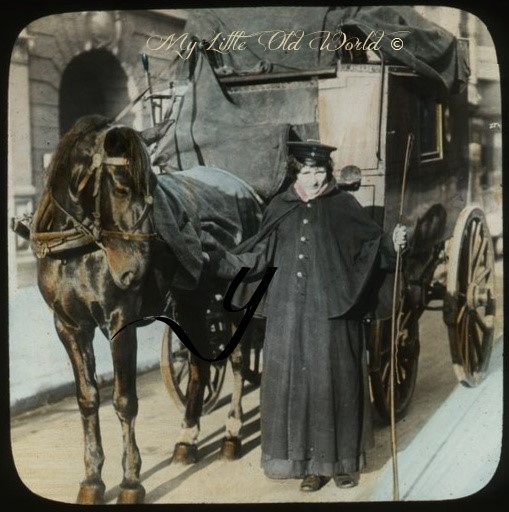
A horse drawn mailcart ready to start and to deliver the mail


The intelligence of the horse is widely demostrated: he's able to reason, to discern and decide his behavior on the basis of his own experiences and he's able to understand and interpret the men's words too, especially from the tone and the inflection they use.
But I'm sure that what I'm telling you today is such an unusual news, that it's almost hard to believe it!
Let's come back to 1894, to be more precise to Saturday 15 September and let's take the issue of the LEEDS TIMES which was published just that day; on page 8 we can read that 

An attempt was made to rob the mailcart whilst it was being driven on Thursday night from Ramsgate to Dover. The driver was suddenly attacked by two men. He was cut about the head and face and found passed out. 

If we go on reading this aricle, we come to know that the ill fated driver 

was struck in the back of the head with a heavy implement. He was later found unconscious on a roadway near Sandwich. What the thieves intended to steal from the mail cart is unclear, for they were ultimately thwarted in their goal. Having seen them attack his master, the mail horse bolted away with the mail before the two villains could catch him.

The horse was apparently familiar with the mail route and, despite having no human to guide him, he galloped straight for the next mail stop at Sandwich and delivered the mail on his own. He was so efficient in his endeavor that having arrived at Sandwich, an edition of the DUNDEE EVENING TELEGRAPH 
dating back to two days later states that 

Not a single piece of mail was reported to be missing. The driver later recovered and proceeded on his journey. 

The newspapers do not explicitly say so, but I suppose that he reconnected with his horse at Sandwich. As for the horse, though reports do refer to him as an “intelligent horse” who saved the mail bags, there is no more information about him.
Loose horses, when frightened, will often head straight home to the safety of their stable—no matter how intricate the journey or how burdensome their cargo. For example, an 1882 edition of the THETFORD & WATTON TIMES and of the PEOPLE'S WEEKLY JOURNAL reports on a farmer who was driving a cart of sheep into town. When he climbed down to latch a gate, his horse bolted away with the cart and the sheep.  As the article states:

Although there were two or three turns in the road, it passed them all safely, and turned into the gateway of its home without doing the least damage to itself or cart.

But let's come back to the 'hero' of our story.
Granted, he did not live in Sandwich, but it was a regular stop on his route and a place which he was familiar with. Horses are far intellligent, we said it, but we may think that there are more kinds of intelligence: the newspapers allude that the mail horse’s work ethic and his intelligence inspired him to continue on with the mail delivery, but we can argue that he merely galloped to the closest place of safety. 
In any case, he demonstrated a very remarkable mental capacity.
We call them all 'animals', but for their sensitiveness, they're all gifted creatures which make our lives better lives and which can teach us so, so much if we are able to observe them and to listen to them!
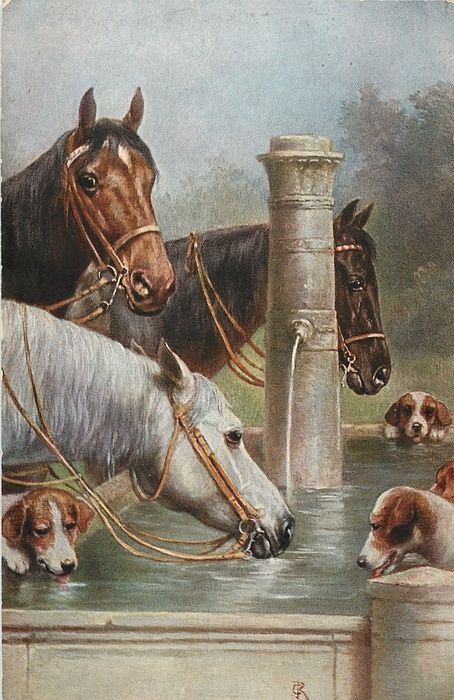

MAN'S BEST FRIEND - Three horses and four foxhounds at water trough, 
by Carl Reichert, Austrian painter (1836-1918)


I thank you for the time you devoted to this reading and to me today, 
I'm truly glad to have such lovely readers and friends!
With the deepest joy and love ever, 
I hope to 
See you soon 


SOURCES:

https://www.britishnewspaperarchive.co.uk/


Quando il carico postale fu salvato da un diligente cavallo in fuga.


IMMAGINE 1 - Un carro postale guidato da un cavallo pronto a partire e a consegnare il suo carico


L'intelligenza del cavallo è ampiamente dimostrata: è in grado di ragionare, di discernere e decidere il proprio comportamento in base alle proprie esperienze ed è in grado di comprendere e interpretare la parola dell'uomo, soprattutto dal tono e dall'inflessione utilizzata.
Nonostante ciò, quella che mi accingo a raccontarvi oggi è una notizia talmente insolita, che è quasi difficile da credersi!
Torniamo al 1894, più precisamente a sabato 15 settembre, e prendiamo il numero del LEEDS TIMES che fu pubblicato proprio quel giorno; a pagina 8 leggiamo che

È stato fatto un tentativo di rapinare il carro postale mentre veniva condotto giovedì notte da Ramsgate a Dover. Il conducente è stato improvvisamente aggredito da due uomini. Fu trovato con tagli alla testa e sul volto e privo di sensi.

Se continuiamo a leggere questo articolo, veniamo a sapere che lo sfortunato conducente

è stato colpito alla nuca con un attrezzo pesante. Successivamente è stato trovato incosciente su una strada vicino a Sandwich. Non è chiaro cosa i ladri intendessero rubare dal carro della posta, poiché alla fine furono vanificati nel loro obiettivo. Dopo averli visti attaccare il suo padrone, il cavallo che trainava il carro è scappato via con la posta prima che i due malvagi potessero catturarlo.

Apparentemente il cavallo conosceva il percorso della posta e, nonostante non avesse un essere umano a guidarlo, galoppò dritto verso la prossima fermata, che era il centro di Sandwich, e consegnò la posta da solo. Fu così efficiente nel suo sforzo che, essendo arrivato a Sandwich, un'edizione del 1894 del DUNDEE EVENING TELEGRAPH datata due giorni dopo teneva a dichiarare che 

Non era stata segnalata la mancanza di un solo pezzo dal carico trasportato. Il conducente si è poi ripreso e ha quindi proseguito il suo viaggio.

I giornali non lo dicono esplicitamente, ma probabilmente l'uomo avrà recuperato il suo cavallo a Sandwich. Per quanto riguarda il cavallo, sebbene i rapporti si riferiscano a lui come a un "cavallo intelligente" che ha salvato i sacchi della posta, non ci sono più informazioni che lo riguardano.
I cavalli sciolti, quando sono spaventati, spesso tornano direttamente a casa, al sicuro nella loro stalla, non importa quanto intricato il viaggio o quanto gravoso sia il loro carico. Ad esempio, un'edizione del 1882 del THETFORD & WATTON TIMES e del PEOPLE'S WEEKLY JOURNAL riportano la notizia di un contadino che stava guidando un carro di pecore in città. Quando scese per chiudere un cancello, il suo cavallo corse via con il carro e le pecore. Come è scritto sull'articolo:

Sebbene ci fossero due o tre curve sulla strada, le superò tutte in sicurezza e svoltò nel cancello della sua casa senza fare il minimo danno a se stesso o al carro.

Tornando al protagonista della nostra storia, è certo che non vivesse a Sandwich, ma era quella una tappa fissa lungo il suo percorso e un luogo che ben conosceva. I cavalli sono molto intelligenti, lo abbiamo detto, ma possiamo pensare che ci siano più tipi di intelligenza: i giornali alludono al fatto che l'etica del lavoro del cavallo addetto al trasporto della posta e la sua intelligenza lo abbiano ispirato a continuare con la consegna del suo carico, ma possiamo anche pensare che abbia semplicemente galoppato verso il più vicino luogo di sicurezza.
In ogni caso, diede esibizione di una capacità mentale davvero notevole.
Li chiamiamo tutti 'animali', ma per la loro sensibilità sono tutte creature dotate che rendono la nostra vita migliore e che possono insegnarci davvero molto se riusciamo ad osservarle e ad ascoltarle!


IMAGINE 2 - MAN'S BEST FRIEND - Three horses and four foxhounds at water trough, 
di Carl Reichert, pittore austriaco (1836-1918)


Vi ringrazio per il tempo che avete dedicato a questa lettura e a me oggi,
Sono davvero felice di avere lettori e amici così adorabili!
Con la gioia e l'amore più profondi che mai,
Spero di riavervi presto qui 


venerdì 2 maggio 2014

Arthur John Elsley, blessed childhood!


 Golden Hours ( click on the image to enlarge it )


Amate l'infanzia; favoritene i giuochi, le gioie, le amabili inclinazioni. 


Kiss and be friends


Chi di voi non ha rimpianto talvolta questa età in cui il riso non si spegne mai sulle labbra e l'anima è sempre serena?

( Jean-Jacques Rousseau, filosofo, saggista e pedagogista, 1712 - 1778 )


Home Team  ( click on the image to enlarge it )


Per ciascuno di noi l'infanzia rappresenta un momento idillico, lieto, spensierato, da ricordare, un momento di pace e di serenità, quella che spesso vorremmo ritrovare e che cerchiamo di ricreare nella nostra vita da adulti ...  come possedendo una sorta di paradiso interiore ciascun fanciullo vaga alla scoperta del mondo, per porre un prezioso sigillo alla propria vita ... quasi come fosse un piccolo scrigno, infatti, egli raccoglie esperienze, eventi, sensazioni, gioie, emozioni talvolta grandi, per custodirle dentro di sé, quali monili da non smarrire mai ...
Conoscete qualcosa di più incantevole del sorriso di un fanciullo, quel sorriso giocondo che sorge spontaneo e si dipinge sul volto di un fanciullo durante i momenti di gioco


Love at first sight


o quel sorriso d'intesa che nasce quando sente di condividere il mondo di un animale domestico con cui riesce a comunicare perchè così simile a lui, appartenete al suo stesso universo?


One at a time


Mi chiedo se avete mai provato queste emozioni ... se avete avuto la fortuna di crescere con cani o gatti al vostro fianco, sapete che ci donano attimi di gioia profonda ed indescrivibile .... comunicare con loro è come, cantando, riuscire ad afferrare una nota difficile e poi sentire, con l'orecchio, che ci si è riusciti .. ci si sente liberi, leggeri, appagati, beati, veri ...


Wake up, it's Christmas Morning


Ebbene, oggi voglio parlarvi di un artista che riuscì a dare espressione a tutto questo, a quegli istanti di esultanza, di gaiezza profonda, di gioia autentica, come solo quella dell'infanzia può essere, a quella letizia spensierata donata dai momenti ludici e di diletto con gli animali: Arthur John Elsley.


Keepback - Geep Up


Arthur John Elsley nacque a Londra, quinto di sei figli, da John Elsley, cocchiere di professione ed artista per diletto, e da Emily Freer.

Da fanciullo cominciò con il prendere passione a ritrarre gli animali visti durante le frequenti visite allo zoo e le gite in campagna compiute sovente in bicicletta e all'età di quattordici anni i genitori lo iscrissero alla South Kensington School of Art (poi al Royal College of Art); durante questi anni la sua crescente bravura verrà ostacolata da una forma di morbillo che gli minerà la vista costringendolo ad una precoce progressiva miopia.

Nel 1878 espose alla Royal Academy il suo primo dipinto intitolato "A Portrait of an old Pony " e, con il 1882, terminato il ciclo di studi accademici, scelse di accettare incarichi da privati e dipingere su commissione ritraendo principalmente cavalli, cani e bambini, 


A Helping Hand


Well Done !


dipingendo spesso per la famiglia Benett-Stanford di Preston Manor in Brighton, dove sono ancora tutt'oggi conservati parte dei suoi dipinti.


Which may I keep ?


E' del 1882 il dipinto
I'se bigger quello che probabilmente gli darà al celebrità poichè divenne subito talemente celebre da richiedere si essere dipinto una seconda volta in un'ulteriore copia.


I'se biggest


Amico di molti pittori celebri del periodo vittoriano Elsley, a partire dal 1889, si trasferirà nello studio di Frederick Morgan, anch'egli già affermato pittore di soggetti e scene idilliche legate all'infanzia, ma non abile nel ritrarre gli animali, cosa in cui il nostro, invece, eccelleva; tra di loro nacque un sodalizio che durerà per anni e darà risultati eccellenti da un punto di vista artistico.


Favourite of the Litter


Spesso nei suoi ritratti, che diverranno col tempo scene sempre più composite e complesse, ritroviamo la moglie Emm ( Emily ) sposata nel 1893 e la figlia Marjorie: sul finire del XIX secolo, l'incrinarsi dell'amicizia con Morgan indusse infatti Elsley ad aprirsi uno studio in proprio in cui lavorare; frattanto, la sua vista peggiorerà, sempre meno lascerà il proprio luogo di lavoro ed i suoi dipinti saranno spesso il risultato di schizzi tratti da più sedute o fatti dopo gite all'aperto.


 Home Again !


 Crossing the Stream


Learning to Swim


 Swing swing


Summer Day


Va comunque detto che tra il 1878 ed il 1827, periodo che rappresenta il culmine della sua carriera, Arthur John Elsley esporrà alla Royal Academy un totale di ben 52 dipinti, ma grandi furono anche le soddisfazioni che trasse dal vedere impiegate le propri immagini nei calendari di Thomas D. Murphy Co., dalla ditta di saponi Ivy Soap, da quella di filati Brook's Sewing Cottons, da quella di dolciumi Peek Freans biscuits & cakes e dal Bibby’s Quarterly, periodico di 'country and home life'.


Durante la prima guerra mondiale egli verrà persino assunto da una fabbrica di munizioni per la quale quello della miopia più che un difetto era quasi un pregio e con il 1930 abbandonerà a poco a poco la pittura per continuare a dedicarsi ad altri lavori manuali che da sempre lo dilettavano, il giardinaggio ed i lavori artigianali con il legno.

Si spegnerà all'età di 92 anni nella sua dimora di Turnbridge Wells dopo una lunga vita costellata di successi e dall'appagamento derivato dall'aver infuso festosità e dolcezza in tutti coloro che hanno avuto il piacere di osservare le sue opere d'arte e credo che con il passare del tempo i suoi dipinti, divenuti icone per eccellenza dell'infanzia nel periodo edoardiano, mantengano tutt'oggi il loro carisma e la loro pregevolezza quali espressione di giocondità profonda. 


 Bedtime Story


Goodnight


Certa che abbiate, per la vostra sensibilità, apprezzato queste meravigliose scene animate da unica soavità, mi stringo a voi in un caloroso abbraccio !

A presto 


- picture 1 - Golden Hours


Love children; encourage their games, their joys, their amiable inclinations.


- picture 2 - Kiss and be Friends


Who among you hasn't sometimes regretted that age when laughter never goes on the lips and the soul is always serene ? 


( Jean-Jacques Rousseau, Philosopher, essayist and educator, 1712 - 1778 )


- picture 3 - Home Team


For each of us childhood represents a moment idyllic, happy, carefree, a moment to remember, a moment of peace and serenity, that often we would like to find again and taht we try to recreate in our adult lives ... as possessing a sort of inner paradise each child wanders to discover the world, to put a seal on his precious life ... almost like a small chest, in fact, he collects experiences, events, feelings, joys, emotions sometimes even great, to keep them within himself such as jewelry not to loose ever ... 
Do you know anything more delightful than a child's smile, that joyful smile that spontaneous appears on a child's face during the moments of game


- picture 4 - Love at first sight


or that knowing smile that bornes when he feels to share the world of a pet whom he's able to communicate with because so much like him, belonging to the same universe ?


- picture 5 - One at a time


I wonder if you have ever experienced these emotions ... if you were lucky enough to grow up with cats or dogs by your side, you know that they can give us moments of profound and indescribable joy .... to communicate with them is like, singing, be able to grab a difficult note and then to hear, with the ear, that it was possible .. you feel free, lightweight, fulfilled, blessed, real ...


- picture 6 - Wake up, it's Christmas Morning


Well, today I want to talk to you of an artist who was able to give expression to all this, to those moments of joy, of deep gaiety, of authentic glee, as just like that of childhood can be, to that carefree joy given by the moments of fun and delight with animals: Arthur John Elsley.


- picture 7 - Keepback - Geep Up


Arthur John Elsley was born in London, the fifth of six children, by John Elsley, coachman by profession and artist for fun, and Emily Freer. 

As a boy, he began to take the passion to portray the animals seen during his frequent visits to the zoo and the rides he often had by bycicle in the countrysideo and when he was fourteen, his parents enrolled him at the South Kensington School of Art (later the Royal College of Art); during these years his growing prowess will hampered by a form of measles that will undermine his view forcing him to an early progressive myopia. 

In 1878 he exhibited at the Royal Academy his first painting entitled "A Portrait of an old Pony" and, in 1882, completed the cycle of academic studies, he chose to accept assignments from private and paint on commission portraying mainly horses, dogs and children,


- picture 8 - A Helping Hand


- picture 9 - Well Done !


often depicting fo the Benett - Stanford family in Brighton, by Preston Manor, where they are still preserved today some paintings of his.


- picture 10 - Which may I keep ?


It's from 1882 the painting I'se biggest that probably will give him the celebrities for it soon became famous as much as to require to be painted a second time in an extra copy.


- picture 11 - I'se biggest


Friend of many famous painters of the Victorian period Elsley, starting from 1889, will move in the study of Frederick Morgan, who also was painter of idyllic scenes and subjects related to childhood, but not skillful in portraying animals, in which what Ellsey, however, excelled; among them born a partnership that will last for years and will give excellent results from an artistic point of view.


- picture 12 - Favourite of the Litter


Often in his portraits, which over time will become more and more complex scenes, we can find his wife Emm (Emily), married in 1893, and their daughter Marjorie: in the late XIXth century, the crack of the friendship with Morgan led Elsley to open a study on his own in which to work; in the meanwhile, his eyesight will get worse, he'll leave his study fewer and fewer and his paintings will often be the result of sketches drawn from multiple sessions or after trips outdoors.


- picture 13 - Home Again !


- picture 14 -  Crossing the Stream


- picture 15 - Learning to Swim


- picture 16 - Swing swing


- picture 17 - Summer Day


It should be said that between 1878 and 1827, a period that represents the culmination of his career, Arthur John Elsley exhibit at the Royal Academy a total of 52 paintings, but they were also great the satisfactions that he drew from seeing his own pictures used in calendars by Thomas D. Murphy Co., by the Ivy soap, by the Brook's Sewing Cottons, by the Peek Freans biscuits & cakes and the Bibby's Quarterly, the journal of 'country and home life'.


- picture 18


During The Great War he will even hired by a munitions factory for which the myopia was, more than a defect, almost a virtue and from 1930 he'll gradually abandon painting to continue to pursue other manual jobs that have always dabbled him, such as gardening and woodworks. 

He will go off at the age of 92 years at his home in Tunbridge Wells after a long life full of success and fulfillment derived from having infused playfulness and sweetness in all those who have had the pleasure of observing his works of art and I believe that with the passage of time his paintings, that have become icons of childhood for excellence in the Edwardian period, still maintain their charisma and their preciousness as an expression of deep mirth.


- picture 19Bedtime Story


- picture 20 - Goodnight


Sure that you, in the name of your sensitivity, enjoyed these wonderful images of scenes by the unique gentleness, I hug you with much love ! 

See you soon 


LINKING WITH: