domenica 9 gennaio 2022

"I'm glad that you're in contact with the forgotten descendants" - U.S. Hapsburgs


Mr and Mrs James Longstreet Cleveland
HAPSBURG (US) AND WIFE
© Daniela Lasagnini


"I'm glad that you're in contact with the forgotten descendants"

That's a phrase taken from an e-mail I received some days ago from a member of the House of Habsburg-Lorraine which is the further confirmation I was looking for after having written my book.
For sure you do remembrer that in late Winter of 2021 I published my history essay Il figlio americano di Rodolfo d'Asburgo - Rudolf von Habsburg's American son, for MGS PRESS, in which, after almost three years of researches and work on private documents taken hidden, I was able to rebuilt the love-story between the misterious Princess K (Tsar Alexander II's last illegitimate daughter) and Crown Prince Rudolf, the 'fruit' of which was a baby boy born in Hot Springs, Arkansas.
He lived in Missouri, Washington DC and Colorado, was known with the name of James Longstreet Cleveland and had such an adventurous life that sounds almost like a romantic novel.
But everything's true and ratified (I also received a confirmation from a descendant of His belonging to the Habsburgs).
This story is told and published for the very first time and for the first time too I succeded in giving both an identity and a face to Princess K... You can just imagine how many people grew enthusiastic, but also how many, with a soul filled with distrust and hatred, have tried to denigrate this story and have written malicious words on socials, trying to limit its diffusion, without thinking that even speaking publicly not well about something, you make it become famous and viral! 

We know that when Crown Prince Rudolf's son died, on July 1st, 1938, he left a very young wife, Mrs Gertrude, and a little child aged 4, James Gillaspy, but after the census dating back to 1940 the data colleceted are approachable only by those people who are able and demostrate consanguineity, that's why I was cut off from going on further.
But my publisher and I didn't give up... He encouraged me to go on with my researches... Ascertained that James Longstreet Cleveland was Crown Prince Rudolf's American son, how about his offspring?
It sounded like it was impossible to find it...
And after all these months I've eventually reached a result: in America, and to be more precise in the State of Missouri, they're still living the grandchildren of James Cleveland Longstreet; his child had a few children, they have now another surname - in the United States it is very easy to change identities - and they lead the life of ordinary people. Of their ancestors, Archduke Rudolph, their great-grandfather, and James, their grandfather, they keep the memory alive even in not wanting to exhibit their noble roots as well as in the remarkable similarity of the facial features.
The confirmation, as mentioned, came to us from a member of the Habsburg-Lorraine Family. For months, despite the insistent e-mails we exchanged, he managed to gloss over the question I asked him:

"Are there any descendants of James Cleveland Longstreet in America?"

Then, suddenly, after I promised him in the last e-mail that it was not our intention to spread the names of James's descendants, he put me in contact with a person who lives in Missouri ... And from this contact came the confirmation, then sealed by the phrase quoted at the beginning.
I reiterate that we firmly want to keep the word given both to the Habsburg-Lorraine and to the American branch of their descent and I conclude by saying that I have also come into possession of a document - tha enlistment certificate thanks to which he took part in the Great War - compiled by James himself, claiming to be James Cleveland Longstreet Hapsburg, document which I deal with in my book on page 64 of which there is no trace in the American public archives.
I publish it below for you!
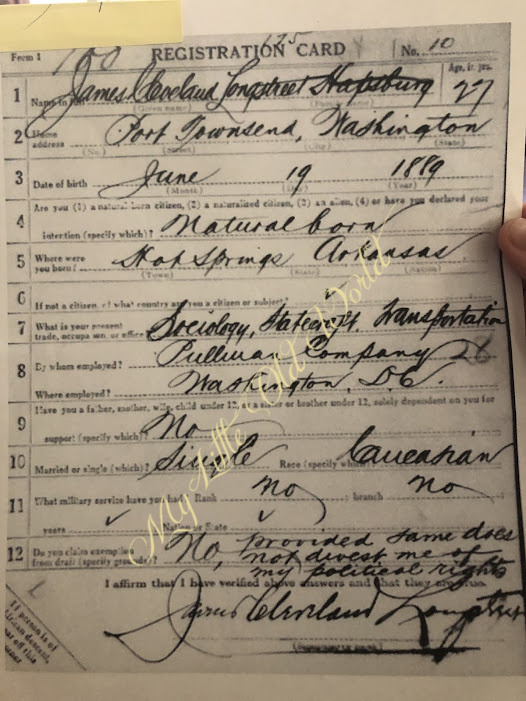

Oh, by the way, I'm publishing below also the original of a draft of an article appeared in a newspaper or magazine in the USA on July 31st, 1934 which is a unique copy I found on the back side of the photo I put as 'frontispiece' which I bought by an antiquarian.
That's also a quite curious story.
As an antiques lover I found myself, shortly after the middle of last month, leafing through an online catalog of an Icelandic antiques dealer based in Reykjavík; it had been published only ten days earlier and dealt exclusively with images that portray famous personalities from the world of entertainment, politics, sport, culture in general who were in the limelight from the beginning to the end of the last century.
These original single-copy photographs have been found in photographic archives of mainly British and Scandinavian editorial presses; kept for many years - the most recent date back to 30/40 ago, the oldest over 100 - in the archive of a European newspaper based in Latvia (Riga), far from everyone's eyes, they have only recently been put up for sale as a collector's items.
And this is how, quite by chance, I found myself in front of the image of James Longstreet Cleveland portrayed together with his wife in a photograph that bears the stamping of a prestigious photographic studio in New York.
As I wrote before, it is dated 1934 and together with it I bought the draft of the article which, on July 31st of the same year, was published together with the image.
Obviously I purchased this material which I consider very precious!
Not only beacuse the photograph comes from New York, but since the draft is written in English, I consider for sure that the European newspaper that published both the photograph and the article bought them from a US publisher.
I hope you'll be able to read it, it's quite faded by the time which has passed since then...


U.S. HAPSBURGS TURN DOWN CHANCE TO AUSTRIAN THRONE.


© Daniela Lasagnini


And thus, after having added another small piece to the unfortunate Crown Prince Rudolph of Habsburg-Lorraine's life through his American son and his descendants still living in Missouri, our time together is ending today too, alas!
In the hope that what we dealed today with, which is the tail end of the content of my book, has also thrilled you - given it's everything absolutely unpublished -
I wish you all a happy week.

See you soon 


"Sono lieto che sia in contatto con i discendenti dimenticati" - Gli Asburgo d'America


- IMMAGINE 1 - Mr and Mrs James Longstreet Cleveland
ASBURGO (STATUNITENSE) CON LA MOGLIE
© Daniela Lasagnini


Il titolo riprende una frase tratta da una e-mail ricevuta alcuni giorni fa da un membro della Casa d'Asburgo-Lorena che rappresenta l'ulteriore conferma che cercavo dopo aver scritto il mio libro.
Di sicuro ricordereta che a fine inverno dello scorso anno pubblicai il mio saggio di storia dal titolo Il figlio americano di Rodolfo d'Asburgo per la Casa Editrice MGS PRESS, in cui, dopo quasi tre anni di ricerche e lavoro su documenti privati ​​tenuti nascosti, sono riuscita a ricostruire la storia d'amore tra la misteriosa Principessa K (ultima figlia illegittima dello zar Alessandro II) e il principe ereditario Rodolfo d'Asburgo, il cui 'frutto' fu un figlio maschio nato a Hot Springs, in Arkansas.
Egli visse in Missouri, a Washington DC ed in Colorado; conosciuto con il nome di James Longstreet Cleveland ebbe una vita talmente avventurosa e romantica da sembrare quasi un romanzo.
Ma è tutto vero e confermato (ricevetti a suo tempo conferma di questa storia da un discendente degli Asburgo).
Nel mio libro questa storia viene raccontata per la prima volta e anche per la prima volta sono riuscita a dare sia un'identità nonché un volto alla Principessa K... potete immaginare quante persone si siano entusiasmate, ma anche quante, con l'animo intossicato da diffidenza ed astio, abbiano cercato di denigrare questa storia e hanno scritto parole malevole sui social, cercando di limitare la divulgazione del libro, senza pensare che anche parlando male di qualcosa pubblicamente, la si fa diventare famosa e virale!

Sappiamo che, quando morì, il 1 luglio 1938, il figlio dell'arciduca Rodolfo lasciò una giovanissima moglie, Mrs Gertrude, e un bambino dell'età di 4 anni, James Gillaspy, ma dopo il censimento del 1940 i dati raccolti sono avvicinabile solo da coloro che sono in grado di dimostrare consanguineità, ed è così che mi si è impedito di andare oltre.
Ma il mio editore ed io non ci siamo arresi... Egli mi ha incoraggiata a proseguire con le mie ricerche ed, appurato che James Longstreet Cleveland era il figlio americano del principe ereditario Rodolfo, che ne è stato della sua discendenza?
Sembrava impossibile trovarne traccia.
E dopo tutti questi mesi alla fine sono stata in grado di raggiungere un risultato: in America, e per la precisione nello Stato del Missouri, vivono ancora i nipoti di James Cleveland Longstreet; suo figlio ebbe più figli, i quali ora hanno un altro cognome - negli Stati Uniti è molto facile cambiare identità - e conducono una vita da gente comune. Dei loro antenati, l'arciduca Rodolfo, loro bisnonno, e James, loro nonno, mantengono vivo il ricordo anche nel non voler esibire la loro nobile ascendenza oltre che nella notevole simiglianza dei tratti somatici.
La conferma, come detto, ci è arrivata da un membro della Famiglia Asburgo-Lorena. Per mesi, nonostante le mail insistenti che ci scambiavamo, Questi è riuscito a sorvolare sulla domanda che gli ponevo:

"Ci sono discendenti di James Cleveland Longstreet in America?"

Poi, all'improvviso, dopo avergli promesso nell'ultima mail che non era nostra intenzione diffondere i nomi dei discendenti di James, mi ha messo in contatto con una persona che abita nel Missouri... E da questo contatto è arrivata la conferma, poi suggellata dalla frase citata all'inizio.
Ribadisco che vogliamo fermamente mantenere la parola data sia agli Asburgo-Lorena che al ramo americano della loro discendenza e concludo dicendo che sono anche entrata in possesso di un documento - il certificato di arruolamento grazie al quale prese parte alla Grande Guerra - compilato dallo stesso James che si dichiara James Cleveland Longstreet Hapsburg, documento che ho citato nel mio libro a pagina 64, ma di cui non vi è traccia negli archivi pubblici americani.
Lo pubblico qui di seguito per voi!


- IMMAGINE 2 - FOTOGRAFIA DEL DOCUMENTO DI ARRUOLAMENTO DI JAMES CLEVELAND LONGSTREET HAPSBURG (Grande Guerra)


Ah, a proposito, pubblico qui sotto anche l'originale di una bozza di un articolo apparso su un giornale o una rivista negli USA il 31 luglio 1934 che ho trovato sul retro della foto che ho messo come 'frontespizio' acquistata da un antiquario.
Anche questa è una storia abbastanza curiosa.
Da cultrice di antiquariato mi sono trovata, poco dopo la metà del mese scorso, a sfogliare un catalogo on-line di un antiquario islandese con sede a Reykjavík; era stato pubblicato solo dieci giorni prima e trattava esclusivamente di immagini che ritraggono personaggi famosi del mondo dello spettacolo, della politica, dello sport, della cultura in generale, che furono alla ribalta delle cronache dagli inizi alla fine del secolo scorso.
Queste fotografie originali in copia unica sono state rinvenute in archivi fotografici di stampa editoriale principalmente britannici e scandinavi; custodite per molti anni – le più recenti datano 30/40 fa, le più vecchie oltre 100 – nell’archivio di una testata giornalistica europea con sede in Lettonia (Riga), lontano dagli occhi di tutti, sono state messe in vendita solo di recente come materiale da collezione.
Ed è così che, in modo del tutto fortuito, mi sono trovata di fronte l’immagine di James Longstreet Cleveland ritratto, insieme con la moglie, in una fotografia che reca il timbro di un prestigioso studio fotografico di New York, nel 1934, cui è acclusa la bozza dell’articolo che il 31 luglio dello stesso anno venne pubblicato insieme con essa.
Ovviamente ho acquistato questo materiale che ritengo decisamente prezioso.
Poiché la bozza è scritta in inglese ritengo con certezza che la testata giornalistica europea che ha pubblicato sia la fotografia che l’articolo abbia acquistato entrambi da un giornale statunitense.
Di seguito traduco il testo dello scritto:


- ASBURGO (AMERICANO) CON LA MOGLIE -

GLI ASBURGO STATUNITENSI RIFIUTANO LA POSSIBILITA' DI SALIRE AL TRONO AUSTRIACO.

PROVIDENCE, MO. --- A PROVIDENCE, IN MISSOURI, QUESTA COPPIA E' CONOSCIUTA COME COMPOSTA DAL SIGNOR JAMES CLEVELAND LONGSTREET E SIGNORA. IN AUSTRIA SAREBBERO CONOSCIUTI COME RUDOLF ALEKSANDER NICHOLAS MARIE D'ASBURGO E CONSORTE.
NONOSTANTE SIA STATO ALLEVATO IN ALCUNI ORFANOTROFI DI ST.LOUIS MR. LONGSTREET E' ACCLAMATO COME IL FIGLIO DEL PRINCIPE EREDITARIO RUDOLF D'AUSTRIA E PERCIO' DIRETTO EREDE ALLA CORONA. QUESTO PERSONAGGIO E' AVVOLTO DA UN RAGGUARDEVOLE MISTERO E ROMANTICISMO. LA CONTESSA LARISCH, NIPOTE DELLA SPOSA DEL FU IMPERATORE FRANZ JOSEF SI STA FACENDO PROMOTRICE DI UNA MOSSA MONARCHICA IN SUO FAVORE.
LA VERITA' E' CHE QUESTI NON VORREBBE SALIRE AL TRONO ANCHE QUALORA GLI VENISSE OFFERTO. EGLI SOSTIENE CHE NON LO HA MAI RECLAMATO NONOSTANTE LE PRESSIONI CHE GLI SONO STATE FATTE. TENTO' DI CONQUISTARE UN SEGGIO AL SENATO PER LO STATO DI WASHINGTON ANNI FA, MA FU BATTUTO. SI CONSIDERA UN CITTADINO AMERICANO A PIENO TITOLO.

 © Daniela Lasagnini


E così, dopo aver aggiunto un altro piccolo tassello alla vita dello sfortunato principe ereditario Rodolfo d'Asburgo-Lorena attraverso il suo figlio americano ed i suoi discendenti che vivono tutt'oggi in Missouri, 
anche oggi il nostro tempo insieme sta finendo, ahimè!
Nella speranza che ciò di cui abbiamo trattato oggi, che è 'la coda' del contenuto del mio libro, abbia entusiasmato anche voi - dato che si tratta interamente di materiale che vede la pubblicazione per la prima volta -
auguro a tutti una felice settimana.

A presto 


lunedì 3 gennaio 2022

~⚜~ Our Home is our Nest ~⚜~


Our Home is our peaceful refuge, it is where we rest our weary soul;
It is the place where we collect our amulets, where happiness is complete because there it is Love that dictates the law.
It is the place that most gives us security, comfort, makes us feel protected and satisfied.
Our Home is our Nest.


It is during these days of Winter and of celebration, in which we are a little outside because of the cold temperatures and the few hours of light that the sun of this season presents us as a gift, that our Home comes back to life, to make us feel that it too has a soul, the one made of all the years it has lived and that we too have contributed to enriching, a soul that increases every day with everything we live in it.


In our Home, Winter is made up of the scents of the logs burning in the fireplace, of the spices with which we prepare the traditional cakes and biscuits of the holidays and that are hung on the Christmas Tree as decorations, of homemade bread, perfumes that have no time and that indeed, They seem to stop time in a set of rituals, sensations, suggestions that we have always known and that are centuries old.


We need this wonderful season to rediscover the richness of these Home treasures just as we need the holidays to re-appreciate the joy of Love, the greatest Gift we possess!

The poem I transcribed below, which bears the signature of Charles Swain, helps us to understand and remember just this, namely that the true concept of Home is not so much that of the place where you live, circumscribed by four walls: Home is being with the people who are dearest to us, we're at Home when we'retogether with them.


HOME DEFINED
Home’s not merely four square walls,
Though with pictures hung and gilded:
Home is where affection calls,
Filled with shrines the heart hath builded!
Home! go watch the faithful dove,
Sailing ‘neath the heaven above us;
Home is where there’s one to love!
Home is where there’s one to love us!

(Charles Swain, English poet, 1801-1874)


John Ruskin (1819-1900), the far famous British art critic whose conception not only of art, but also of architecture, strongly influenced Victorian and Edwardian aesthetics - let's not forget that he was also a painter, a writer and a poet - argued:


This is the true nature of home -
it is the place of Peace; the shelter, not only from all injury, but from all terror, 
doubt, and division.


And again:


If men lived like men indeed, their houses would be temples 
- temples which we should hardly dare to injure, and in which it would make us holy to be permitted to live.


AND WHILE THE SECRET GARDEN

 
IS SLEEPING UNDER A BLANKET MADE OF SNOWFLAKES, WARMTH AND SILENCE 
AND DREAMING OF THE FIRST SPRING BUDS,
WE ENJOY THE WARMTH OF OUR FAMILY'S LOVE 
WHICH IS CRADLED AND WARDED BY OUR BELOVED HOME


In the Hope that your Holidays are still blessing your heart, 
I'm sending my dearest love to you
See you soon 


 ~⚜~ La nostra Casa è il nostro Nido ~⚜~ 


La nostra Casa è il rifugio dove troviamo pace, 
è dove riposiamo la nostra anima stanca;
È il luogo dove raccogliamo i nostri amuleti, 
dove la felicità è completa perché lì è l'Amore che detta legge.
È il luogo che più ci dà sicurezza, conforto, che ci fa sentire protetti e soddisfatti.
La nostra Casa è il nostro Nido.


IMMAGINI 2 - 3- 4- 5 - 6 - 7 - 8 - Interni di Tenuta Geremia


E' durante questi giorni d'inverno e di festa, in cui si sta poco fuori per le temperature rigide e per le poche ore di luce che il sole di questa stagione ci dona, che la nostra Casa torna a rivivere, a farci sentire che anch'essa ha un'anima, quella fatta di tutti gli anni che ha vissuto e che abbiamo contribuito ad arricchire anche noi, un'anima che accresce ogni giorno di ciò che in essa viviamo.


IMMAGINE 9 - Collage natalizio


Nella nostra Casa l'inverno è fatto dei profumi della legna che arde nel camino, delle spezie con cui prepariamo i dolci tradizionali delle feste e che sono appesi all'albero come decorazioni, del pane fatto a mano, profumi che non hanno tempo e che, anzi, il tempo sembrano proprio fermarlo in un'insieme di rituali, di sensazioni, di suggestioni che conosciamo da sempre e che sono vecchie di secoli.


 IMMAGINE 10 - Affetti ed altre immagini interni


Abbiamo bisogno di questa meravigliosa stagione per riscoprire la ricchezza di questi tesori casalinghi così come abbiamo bisogno delle feste per riapprezzare la gioia degli affetti, il Dono più grande che possediamo!


E la poesia che ho trascritto di seguito, che reca la firma di Charles Swain, ci aiuta a comprendere e a ricordare proprio questo, ossia che il vero concetto di Casa non è tanto quello del luogo in cui si vive, circoscritto da quattro pareti: Casa è stare con le persone che più ci sono care, siamo a Casa quando siamo insieme con loro.


DEFINIZIONE DI CASA
Casa non è solo l'insieme di quattro mura squadrate,
Sebbene con quadri appesi ed incorniciati in oro:
Casa è dove l'affetto ci chiama,
E' il luogo colmo di luoghi sacri che il cuore ha edificato!
Casa! Vai a guardare la colomba fedele,
Che sorvola sotto il cielo sopra di noi;
Casa è dove c'è qualcuno da amare!
Casa è dove c'è qualcuno che ci ama!

(Charles Swain, poeta inglese, 1801-1874)


Anche John Ruskin (1819-1900), il celeberrimo critico d'arte britannico la cui concezione non solo sull'arte, ma anche sull'architettura, influenzò fortemente l'estetica vittoriana ed edoardiana - non dimentichiamo che fu anche pittore, scrittore e poeta - sosteneva:


Questa è la vera natura della casa -
è il luogo della Pace; il rifugio, non solo da ogni offesa, ma da ogni terrore, 
dubbio e divisione.


Ed ancora:


Se gli uomini vivessero davvero come uomini, 
le loro case sarebbero templi, templi che difficilmente oseremmo ferire e in cui ci renderebbe santi se ci fosse permesso di viverci.


E MENTRE IL GIARDINO SEGRETO


IMMAGINE 11 - Porta del Giardino Segreto


STA DORMENDO SOTTO UNA COPERTA FATTA DI FIOCCHI DI NEVE, 
TEPORE E SILENZIO
E SOGNA DEI PRIMI GERMOGLI DI PRIMAVERA,
NOI GODIAMO DEL CALORE DELL'AMORE DELLA NOSTRA FAMIGLIA
CHE È CULLATA E PROTETTA DALLA NOSTRA AMATA CASA.


Nella speranza che le vostre feste vi stiano ancora riscaldando il cuore,
Vi invio tutto il mio affetto 
A presto 


LINKING WITH:


This post was featured by Laurie at Ridge Haven Homstead at the very first edition of this new Blog Hop, a true honour to me!
I heartily thank you, Dear Lady **


I was featured by Bev at Eclectic Red Barn!
I cannot how to express all my gladness and my greatitude, Adorable Lady, blessed be **


domenica 26 dicembre 2021

Louisa May Alcott's Christmas Legacy


"Now, I believe every one has had a Christmas present and a good time. Nobody has been forgotten, not even the cat," said Mrs. Ward to her daughter, as she looked at Pobbylinda, purring on the rug, with a new ribbon round her neck and the remains of a chicken bone between her paws.
It was very late, for the Christmas-tree was stripped, the little folks abed, the baskets and bundles left at poor neighbors' doors, and everything ready for the happy day which would begin as the clock struck twelve. They were resting after their labors, while the yule log burned down...

Louisa May Alcott, Rosa's Tale, Source: Aunt Jo's Scrap-Bag, Volume 5, 1879


Today I want to deal with a special topic.
I want to tell you about an authoress that we all know and have learned to love over the years through the numerous readings she left us as a legacy: Louisa May Alcott.
Her voice, like that of Charles Dickens, whom she loved and admired so much, knows no fashions, the barriers of time do not stop it and continues to resonate inexorably and to create the atmosphere of these days full of magic and profound meanings, since the passion she had for the Holiday Season really knew no bounds.
In fact, Christmas inspired her many stories, fairy tales and novels.
And it is certainly not a coincidence that her famous novel Little Women, the one that consecrated her to success, starts right from a Christmas morning, a particular Christmas, not only because it was without any gift, but because it will be loaded with truer and authentic principles that the heart of a good Christian makes its own and observes without making any effort: the love for other people, the charity, the renunciation for those who suffer, the warmth of the family are the values ​​that most gratify our soul, especially during the Christmas period, which they give it meaning and depth more than a gift to be discarded that perhaps excites us, but the prestige of which is exhausted in something purely material.

But in reality this is not what I intended to tell to you today, or rather, it was not my intention to deal with it in this way ... I want to tell you about how Louisa May Alcott contributed to making of Christmas the real Christmas we still celebrate today.
Can you imagine a Santa Claus preparing gifts for children without the help of his faithful, hardworking and tireless goblins or elves, if you prefer, who, with a red or green hood, also take care of his reindeer?
The Scandinavian tradition teaches us to distinguish the Ljosalfar (Seelie court), the light elves, who are the good ones who defended the houses from evil spirits, from the Svartalfar (Unseelie court), or dark elves, who are mischievous sprites.
They are fairy beings, especially the light ones are very good and beautiful, they are generally as tall as a three year old child, and have the ability to transform themselves.
But how was it possible that from the mythology of northern Europe these little creatures became part of the world of Santa Claus in the United States during the Victorian era?
Well, it was our inexhaustible writer who first mentioned the elves in literature, which she called the 'Santa Little Helpers'.
During the Summer of 1855 our Louisa May Alcott finished a collection of Christmas stories entitled Christmas Elves.
We read in her correspondence:

Finished fairy book in September. [...] October.– [...] May illustrated my book, and tales called "Christmas Elves." Better than "Flower Fables." Now I must try to sell it.
[Innocent Louisa, to think that a Christmas book could be sold in October.–L. M. A.] 1

This book never saw the light, her publisher didn't agree to sell the aforementioned collection of short stories even in the following December. A few months later May became seriously ill and died. Louisa reacted to the pain of the loss of her beloved sister by taking care of her niece, Louisa May Nieriker, known as Lulu, to whom she dedicated new books of Christmas fairy tales.
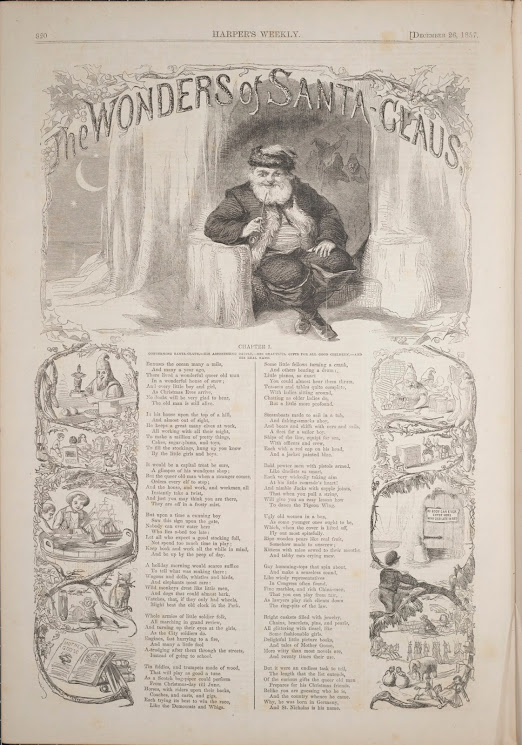
The original manuscript, which thus lost its importance, has been lost, but some extracts have been saved in other works of the writer, such as in the poem The Wonders of Santa Claus, published in the magazine HARPER'S WEEKLY in the issue of 26 December 1857, in which was narrated the fervent activity of the helping elves busy in Santa's workshop. 


1857 - Harpers weekly : a journal of civilization, [Shenandoah.Iowa: Living History.Inc.] - https://library.si.edu/image-gallery/99827-


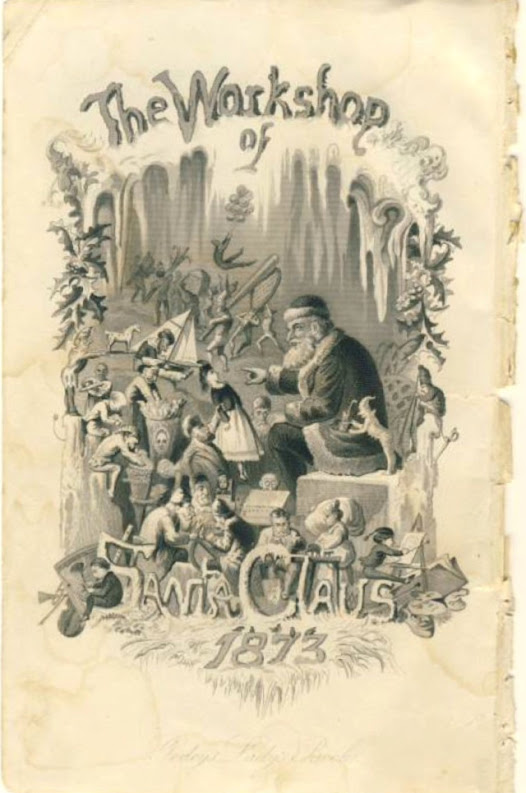
The image of the elves was later popularized by The Godey's Lady's Book, the famous American women's magazine published from 1830 to 1878. The cover illustration of the Christmas issue of 1873 showed Santa Claus surrounded by toys and elves and in the caption that the 'accompanied it read:

"In this way takes place the preparation of toys to be distributed to the little ones in the period before Christmas"


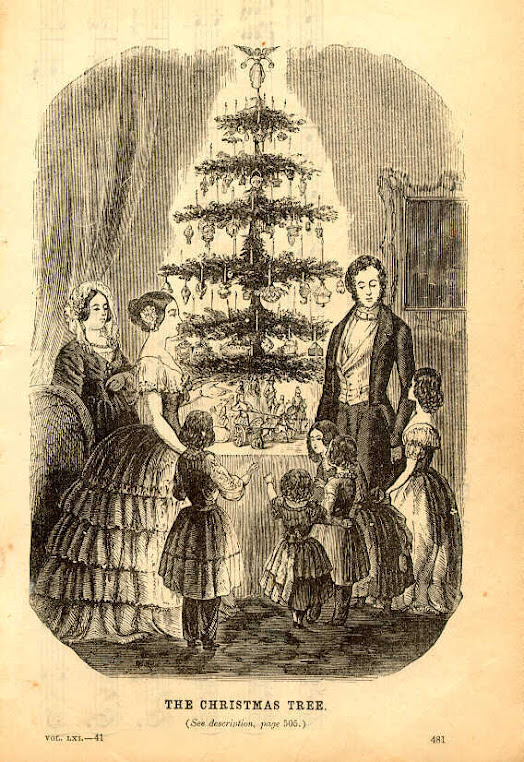
The Godey's Lady's Book magazine played an important role in influencing the Christmas traditions that were developing in the United States during the Victorian period: for example, it was the cover of the 1850 Christmas issue that presented, for the first time, the Christmas tree as we still decorate it today.


And therefore, to conclude, it was thanks to the pen of our Louisa May Alcott and her fervent imagination that we owe the passage of the figure of the elf, belonging for centuries to the Scandinavian mythology, to that of the willing elf who helps Santa Claus to pack his toys: we are therefore also indebted for this too to this authoress who loved Christmas to the point of reinventing its myths and stories in an imagination very personal and filled with phantasy, which still continues to speak to us today.


May this Holiday Season go on filling your home with Joy, 
your heart with Love, and your life with laughter.

See you soon 


L'eredità natalizia di Louisa May Alcott


- IMMAGINE 1 - Fotografia d'introduzione con un ritratto giovanile di Louisa May Alcott


"Orbene, credo che tutti abbiano ricevuto un dono per Natale e si siano divertiti. Nessuno è stato dimenticato, nemmeno il gatto", disse la signora Ward a sua figlia, mentre guardava Pobbylinda, che, facendo le fusa sul tappeto, con un nuovo nastro intorno al collo, teneva ciò che rimaneva di un osso di pollo tra le zampe.
Era molto tardi, perché l'albero di Natale era stato spogliato, i piccoli erano a letto, i cesti ed i fagotti erano stati lasciati alle porte dei vicini più poveri e tutto era pronto per il felice giorno che sarebbe iniziato quando l'orologio avrebbe suonato le dodici. Tutti stavano riposando dopo le loro fatiche, mentre il ceppo di Natale continuava ad ardere...

Louisa May Alcott, Rosa's Tale, da: Aunt Jo's Scrap-Bag, Volume 5, 1879


Quest'oggi desidero trattare di un argomento speciale.
Voglio parlarvi di un'autrice che tutti noi conosciamo ed abbiamo imparato ad amare nel corso degli anni attraverso le numerose letture che ci ha lasciato in eredità: Louisa May Alcott.
La sua voce, come quella di Charles Dickens, che tanto amava ed ammirava, non conosce mode, non la fermano le barriere del tempo e continua a risuonare inesorabile e a fare l'atmosfera di questi giorni ricchi di magia e di profondi significati, poiché la passione che ella nutriva per le festività natalizie non conosceva davvero limiti. 
Il Natale le ispirò infatti numerose storie, fiabe e racconti.
E non è di certo un caso che il suo celeberrimo romanzo Piccole Donne, quello che la consacrò al successo, prenda avvio proprio da una mattina di Natale, un Natale particolare, non solo perché senza doni, ma perché si caricherà di princìpi più veri ed autentici che il cuore di un buon cristiano fa propri ed osserva senza compiere alcuno sforzo: l'amore per il prossimo, la carità, la rinuncia per chi soffre, il calore della famiglia sono i valori che più gratificano, specialmente nel periodo natalizio, che gli conferiscono senso e spessore più di un dono da scartare che magari entusiasma, ma il cui prestigio si esaurisce in qualcosa di meramente materiale.

Ma in realtà non è di questo che intendevo parlarvi oggi, o meglio, non era mia intenzione trattarne in questo modo... ci tengo qui a dirvi di come Louisa May Alcott contribuì a fare del Natale che ancora oggi festeggiamo il vero Natale.
Riuscite ad immaginare un Babbo Natale che prepara i doni senza l'aiuto dei suoi fedeli, operosi ed instancabili folletti od elfi, se preferite, che, con il cappuccio rosso o verde si prendono inoltre cura delle sue renne?
La tradizione scandinava ci insegna a distinguere i Ljosalfar (Seelie court in inglese), gli elfi chiari, che sono quelli buoni che difendevano le case dagli spiriti malvagi, dagli Svartalfar (Unseelie court in inglese), ovvero elfi scuri, che sono spiritelli dispettosi.
Essi sono esseri fatati, in modo particolare quelli chiari sono molto buoni e belli, sono alti generalmente come una bimbo di tre anni, e hanno la capacità di trasformarsi.
Ma come è stato possibile che dalla mitologia del nord Europa queste piccole creature entrassero a far parte del mondo di Babbo Natale negli Stati Uniti durante l'epoca vittoriana?
Ebbene, fu proprio la nostra inesauribile scrittrice la prima a nominare in letteratura gli elfi, che definì i 'Santa Little Helpers', gli Aiutanti di Babbo Natale.
Durante l’estate del 1855 la Alcott terminò una raccolta di racconti natalizi intitolata Christmas Elves, Gli Elfi di Natale.
Leggiamo nel suo epistolario:

Finito il libro di fate a Settembre. [...] Ottobre. [...] May ha fatto le illustrazioni del mio libro di racconti intitolato Christmas Elves. È migliore di Flowers Fable. Ora devo cercare di venderlo. [Quanto sei ingenua Louisa a pensare che un libro natalizio possa essere venduto ad  ottobre.–L. M. A.]1

Questo libro non vide mai la luce, il suo editore non accettò di vendere la suddetta raccolta di racconti neppure nel dicembre successivo. Alcuni mesi dopo May si ammalò gravemente e morì. Alcott reagì al dolore per la perdita della sorella occupandosi della nipote, Louisa May Nieriker, detta Lulù cui dedicò nuovi libri di favole natalizie.
Il manoscritto originale, che perse, così, di importanza, è andato perduto, ma se ne sono salvati taluni estratti in altre opere della scrittrice, come nel poema The Wonders of Santa Claus, pubblicato sulla rivista HARPER'S WEEKLY nel numero del 26 dicembre 1857, in cui veniva narrata la fervente attività degli elfi aiutanti affaccendati nel laboratorio di Babbo Natale.


- IMMAGINE 2 - 1857 - Harpers weekly : a journal of civilization, [Shenandoah.Iowa: Living History.Inc.] - https://library.si.edu/image-gallery/99827-


L’immagine degli elfi fu in seguito resa popolare da The Godey’s Lady’s Book, la celeberrima rivista femminile americana pubblicata dal 1830 al 1878. L’illustrazione di copertina del numero natalizio del 1873 mostrava Babbo Natale circondato da giocattoli ed elfi e nella didascalia che l'accompagnava si leggeva:

In questo modo, ha luogo la preparazione dei giocattoli da distribuire ai piccoli nel periodo che precede il Natale


- IMMGINE 3 - Copertina del numero natalizio del 1873 di The Godey’s Lady’s Book


La rivista The Godey’s Lady’s Book giocò un ruolo importante nell’influenzare le tradizioni natalizie che si stavano sviluppando negli Stati Uniti durante il periodo vittoriano: per esempio, fu la copertina del numero di Natale del 1850 a presentare, per la prima volta, l'albero di Natale come siamo usi decorarlo ancora oggi.


- IMMAGINE 4 - Copertina del numero natalizio del 1850 di The Godey’s Lady’s Book


E quindi, per concludere, fu grazie alla penna della nostra Louisa May Alcott e alla sua fervida immaginazione che si deve il passaggio della figura del folletto, appartenente da secoli alla mitologia scandinava, a quella dell'elfo volenteroso che aiuta Babbo Natale a confezionare i giocattoli: siamo perciò debitori anche di ciò verso quest'autrice che amò il Natale a tal punto da reinventarne i miti e le storie in un immaginario personalissimo e pieno di fantasia, che ancora oggi continua a parlarci.


Possano queste Feste procedere a colmate le vostre case di Gioia, 
il vostro cuore di Amore, e la vostra vita di risate.

A presto 


LINKING WITH: