Liebe Stéphanie!

Mia amata Stéphanie,

stai ormai per liberarti della mia presenza e del fastidio che ti procura; cerca di essere felice a modo tuo.
Prenditi cura della povera piccola, è tutto ciò che rimane di me.
A tutti i conoscenti, in particolare Bombelles, Spindler, Latour, Wowo (forse il soprannome della baronessa Von Welden, la tata di Rudolf), Gisela, Leopold, ecc, ecc, porgi loro i miei ultimi saluti.
Vado tranquillamente verso la morte, che sola può salvare il mio buon nome.
Ti abbraccio affettuosamente.
Il tuo amato
Rudolf.
Queste le poche, ultime, disperate parole vergate con mano tremula ed incerta dal giovane Rudolf, Rodolfo d'Asburgo, Arciduca e Principe ereditario al trono imperiale d'Austria Ungheria, scritte poco prima della sua morte avvenuta all'alba del 30 Gennaio del 1889 nel padiglione di caccia del castello di Mayerling situato nel bosco viennese a

pochi chilometri a sud est di Vienna, in prossimità di Alland, episodio che, scuotendo il mondo intero, colpiva duramente la Dinastia degli Asburgo mettendone in discussione l'onorabilità ed al contempo privando l'Imperatore Francesco Giuseppe di un erede diretto.
La proprietà di Mayerling era stata acquistata da Rodolfo tre anni prima la tragedia, nel 1886, e da lui fu trasformata in un 'casino' di caccia: le stanze arredate in modo semplice e l'atmosfera molto poco convenzionale che vi regnava avevano reso ai suoi occhi questo luogo ancor più ameno, qui tutto era molto bello poichè lontano da ogni formalità, qui egli poteva rifugiarsi e sentirsi libero, poteva lasciare da parte le uniformi per vestirsi con pantaloni alla zuava lontano dagli occhi del mondo.
Fitta, intricata la trama data dalle ipotesi che attorno all'episodio della sua morte insieme con quella dell'amante Marie Vetsera, da allora sono state fatte ... la prima e la più accettabile per gli Asburgo fu quella del duplice suicidio, ma andiamo con ordine lasciandoci guidare innanzitutto dalla storia.
Rodolfo era nato il 21 agosto dell'anno 1858; terzogenito, ma primo ed unico maschio della coppia imperiale, e perciò erede al trono, fu educato secondo le rigide regole che il protocollo imponeva ad un futuro governante, burocrate, condottiero seguendo metodologie piuttosto rudi e quindi, già da fanciullo, crebbe nella residenza imperiale di Schönbrunn in un clima che non rendeva per lui questo meraviglioso castello così differente da una caserma;

Rudolf in una fotografia del 1861 con l'uniforme da colonnello donatagli dal padre
fragile ed emotivo di natura, di temperamento molto più simile a quello della madre che non a quello dell'Imperatore suo padre, mal sopporterà questi anni della propria infanzia che lo renderanno ancor più vulnerabile, volubile, per usare un termine molto calzante dovremmo dire ribelle ...

Come la madre Rodolfo era uno spirito libero ed il tempo che da adolescente e da adulto trascorrerà al fianco del padre lo renderanno sempre più consapevole del proprio essere inadeguato come futuro imperatore, e di questo si colpevolizzava, così come sentiva gravare su di sé il peso del proprio disamore per Stefania (Stéphanie Clotilde de Saxe-Cobourg et Gotha ) la principessa del Belgio che, per ragioni di Stato, fu indotto dal padre a prendere in moglie nel 1881 e dalla quale ebbe una figlia, la piccola Elisabeth Marie, detta Erzsy, diminutivo tratto dall'ungherese, nata nel settembre del 1883.


Non erano felici Rodolfo e Stefania, non era semplice tenerlo celato, a Vienna lo notava chiunque ed anche in famiglia se ne rendevano conto tutti:
4 MAGGIO 1886 - Rodolfo è venuto al ballo di Corte in onore di Vienna ma grazie a Dio senza Stefania. Gisella ha riso molto perchè per il pranzo mamma ed io ci siamo vestite meglio del solito ed ha detto che in realtà tutta la famiglia lo considera una persona di riguardo. Il povero! Purtroppo è proprio vero. 1
E l'Imperatrice vedeva di giorno in giorno crescere nello sguardo di questo figlio, a cui era legata da una profonda simiglianza nei tratti del volto e nello spirito, la tristezza, la malinconia, lo sconforto: la desolazione l'aveva dipinta in volto, Rodolfo stava cambiando velocemente, non era più lo stesso ...
5 MAGGIO 1886 - Rodolfo sempre semplice e naturale, quasi come ai bei vecchi tempi, quando ancora non aveva portato a casa quella sua "Coburgo sempre in agguato" ... E' strano, è una persona completamente diversa quando non c'è Stefania. 2

.. Rodolfo stava cominciando a vivere soggiogato da uno stato depressivo che lo stava invecchiando velocemente, condizionava il suo umore e sempre più sovente parlava della propria precoce dipartita
La dama di corte scrisse più tardi: « Nessuno attribuì all'affermazione di essere vicino alla fine l'importanza dovuta; tutti se ne ricordarono solo in seguito ». 3
Durante gli anni '80 del 1800 forte e saldo stava crescendo il legame affettivo tra l'Imperatrice e la nipote Marie Luise Larisch von Wallersee,

figlia illegittima (perchè nata precedentemente il matrimonio) del fratello Luigi duca in Baviera e della moglie Henriette Mendel, le legava la passione per i cavalli, ma soprattutto l'amore per la piccola Maria Valeria;

Marie Larisch era spesso al seguito di Sisi, a Schönbrunn e a Gödöllö, era parte della famiglia e così il destino volle che presto, esattamente il 5 novembre del 1888, presentasse a corte la figlia dell'amica baronessa Hélèna Vetsera la giovane Marie detta Mary ( nella foto sotto, l'ultima scattata prima della morte Mary Vetsera è a destra ):

fu quello un momento fatale perchè questa giovane, dallo sguardo intenso ed affascinante, illuminato dalla gioia di vivere che solo la giovinezza sprigiona, ammaliò il principe Rodolfo; i due divennero presto amanti - Rodolfo s'invaghì a tal punto della giovane che chiese una dispensa a Papa Leone XIII affinchè annullasse il suo matrimonio per prenderla in moglie, ma ovviamente questo permesso gli venne negato dal Vaticano - ma la cosa peggiore fu che proprio Marie Luise, non solo teneva celata questa relazione illegittima ( di cui erano, però, a conoscenza anche l'Imperatore e la stessa Stefania ) ma accompagnava la giovane Mary agli incontri con Rodolfo, e così fece anche la sera di quel fatidico 28 Gennaio del 1889 ... Mary e la contessa Larisch uscirono insieme come al solito, ma la contessa questa volta tornò sola dicendo di essere stata abbandonata da Mary che infatti, salita sulla carrozza guidata da Bratfisch, si fece portare a Mayerling.
Il 29 gennaio abbiamo avuto un diner in famiglia durante il quale Rodolfo, che avevo visto l'ultima volta all'Opera il 22.1, non si è fatto vedere. Era a caccia a Mayerling e ci ha fatto dire da Filippo Coburgo che aveva un po' di raffreddore e febbre e che preferiva starsene tranquillo là fuori. 4
Filippo, principe di Coburgo, cognato di Rodolfo, insieme con il conte Giuseppe Emanuele Hoyos, aiutante di campo, era stato invitato a Mayerling per una battuta di caccia che si sarebbe dovuta tenere il giorno seguente, Mercoledì 30 Gennaio e fu proprio lui, quella tragica mattina, dopo avere scoperto la morte dei due amanti, ad esigere dal personale di servizio di Mayerling - il cameriere Loschek, il guardiacaccia Wodiczek, due cuoche, due garzoni - il giuramento del silenzio, che verrà rispettato.

Gusti mi disse che la mamma mi chiamava. Io vado su di corsa allegramente e trovo la mamma nella mia camera da letto." Rodolfo è molto malato - non c'è speranza ( io le sedevo in grembo ) - impallidirai - è il peggio".
Non so perchè io dico: "Si è ucciso ?" e allorchè la mamma chiede tutta spaventata perchè lo credessi, allora capii che era vero. Ci inginocchiammo, ma in momenti come quello non si può pregare come si deve. La mamma disse che dovevo essere calma come lei, per via di papà, e lo ero, infatti. Lei stessa gli aveva dato la notizia portata dal conte Hoyos e mentre col pensiero ero ancora con lui, cui neppure questa massima amarezza viene risparmiata, entrò nella stanza. - Le parole non possono esprimere quanto mi abbia fatto male vederlo; gli gettai le braccia al collo. Restammo così abbracciati e piangemmo e il suo esempio eroico sostenne mamma e me.
Venni mandata quindi da Stefania, per farla venire qui. Tutto, tutto le aveva detto la contessa Tarouca, sciagurata donna ! Lei continuò a chiedere perdono a tutti noi, perchè sentiva bene che la sua mancanza di dedizione aveva contribuito a indurre Rodolfo a questo orrore. Mamma è stata sublime con lei, affettuosa e quasi materna, senza amarezza. 5

Le finestre della camera da letto non erano chiuse dalle tende, ma ai piedi del letto c'era un paravento e vicino ad esso, a destra e a sinistra, ardevano delle candele davanti al crocifisso. E lì giaceva Rodolfo - l'ultima speranza degli Asburgo, l'unico figlio maschio dei nostri poveri genitori, mio fratello, il cattivo "Nazi" della mia infanzia, morto - morto. Era così bello e giaceva così pacificamente, il bianco lenzuolo tirato su fino al petto e coperto di fiori tutt'attorno. La leggera fasciatura attorno al suo capo non lo sfigurava - le sue guance e le sue orecchie erano ancora imporporate del sano rossore della gioventù - l'espressione inquieta, spesso amaramente beffarda che in vita gli era stata spesso propria, aveva lasciato il posto ad un sorriso pacificato - non mi era mai sembrato così bello - pareva dormire ed essere tranquillo, felice. E tuttavia s'impadronì di me con prepotenza l'orrore, il silenzio della morte ... Gli posai dei fiori sul letto e gli feci il segno della croce sulla fronte. 6

E' comprensibile che l'Imperatrice attribuì alla nipote una responsabilità schiacciante nella tragedia di Mayerling poichè ella fu la complice necessaria di un destino raccapricciante, ma non ne fu l'autrice, e quasi sicuramente senza la sua complicità Mary avrebbe trovato ugualmente il modo di appagare i propri desideri; sta di fatto che fu Marie Larisch a procurare il primo incontro di Mary con Rodolfo al Prater e fu lei che la condusse per la prima volta al Palazzo Imperiale, ma sicuramente senza neppure sospettare a cosa questo avrebbe condotto (c'è anche chi sostiene che allora la loro relazione durasse già da un paio d'anni e fosse perciò cominciata quando Mary aveva solamente 15 anni ).
E comunque a Marie Louise fu impedito di presenziare al funerale del cugino e non fu mai più ricevuta a corte, fu allontanata non solo dalla famiglia imperiale, ma anche da Vienna ... dolore che si sommava al dolore per la povera Sisi che quando amava amava con tutta sè stessa ...

Dopo Mayerling, fuggirà in Baviera e quindi a Londra nel tentativo di contrastare e sopravvivere emotivamente alle accuse di due famiglie addolorate per gli affetti perduti.
Elisabetta a Valeria dopo le esequie di Rodolfo: « Adesso, tutti coloro che sin dal mio arrivo qui hanno parlato tanto male di me potranno essere tranquilli che passerò senza lasciare una traccia in Austria ». 7
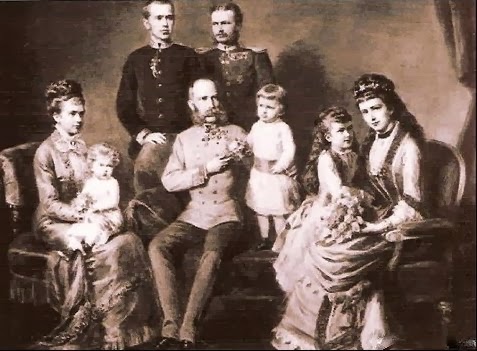
tragico episodio: in un primo tempo si pensava che i giovani si fossero tolti la vita per tramite di una dose di veleno, ovvero che la Vetsera avesse avvelenato Rodolfo e poi si fosse avvelenata a sua volta, ma una più attenta analisi dei fatti eseguita già poche ore dopo l'accaduto deporrà contro questa prima versione, ed allora si fece sempre più verosimile la tesi del doppio suicidio - Solo il giorno dopo la coppia imperiale apprese dal medico personale dottor Wiederhofer come erano realmente morti i due amanti . Wiederhofer vide ( secondo quanto annotato da Valeria ) la « ragazza distesa sul letto, i capelli sciolti sulle spalle, una rosa tra le mani congiunte ... Rodolfo in posizione semiseduta, la rivoltella caduta dalla mano irrigidita sul pavimento; nel bicchiere c'era solo del cognac. Il dottore adagiò la salma, ormai fredda, sulla schiena; il cranio era spaccato, la pallottola era entrata attraverso una tempia e uscita da quella opposta. La ragazza presentava la stessa ferita. Entrambe le pallottole sono state trovate nella stanza ». 8 - Rodolfo avrebbe sparato alla giovane e si sarebbe quindi tolto la vita -, quella che fu fatta divenire ufficiale, magari, chissà, celando elementi ben più infamanti ( dopo la seconda guerra mondiale venne fatta anche l'ipotesi che la giovane fosse stata incinta e che abbia chiesto a Rodolfo di aiutarla ad abortire, che abbia perciò così perso la vita e che quindi il giovane, smarrito, si sia tolta la propria a sua volta) o trame a sfondo politico forse ancor più losche ...
Sconcertante la confessione dell'ultima Imperatrice degli Asburgo, Zita di Borbone-Parma ( nella foto qui sotto ritratta il giorno del suo matrimonio con il marito Carlo I ed il prozio l'Imperatore Francesco Giuseppe il 21 Ottobre del 1911)

che nel Marzo del 1983 rivelò ad un giornalista del "Kronen Zeitung" elementi non ancora noti e che consentono oggi di fare nuova e forse definitiva luce su quest'episodio che, proiettando nel buio anche le più ferme certezze, dicendo a viva voce che il male e l'odio esistono e con il loro spirito gelido sono i grado di raffreddare ed oscurare anche l'alba più luminosa e chiara, mirando ovunque, ottenebrando e spegnendo anche stelle che brillano ben più in alto di noi, scosse bruscamente il vecchio mondo: si tratta di elementi che mai erano stati rivelati prima di allora in quanto appartenenti esclusivamente al privato della famiglia, ella era nata tre anni dopo la tragedia di Mayerling ed inserita presto nell'entourage dell'Imperatore meglio di qualsiasi storico era a conoscenza della realtà effettiva ed inoltre aveva promesso al marito, l'Imperatore Carlo, succeduto nel 1916 a Francesco Giuseppe e deceduto nel 1922, di rendere giustizia all'Arciduca Rodolfo rivelando che fu ucciso per motivi politici.
Fino ad allora, in esilio in Svizzera, mai era stata interpellata, ma secondo le sue parole non si trattò di un doppio suicidio, bensì di un omicidio commesso da agenti stranieri.


Rodolfo ritratto con Guglielmo II intorno al 1880
Se Francesco Giuseppe e Sisi furono molto rapidamente informati sull'accaduto e diffusero la versione del suicidio per il pubblico, è perché la posta in gioco, in quanto a politica, era realmente troppo alta e le persone di rango dell'Impero sarebbero state compromesse. Secondo l'imperatrice Zita, Francesco Giuseppe avrebbe detto che agì per tenere in vita la monarchia e ricorda (e non è la sola a fare di questo menzione) che due furono i telegrammi inviati al Papa per chiedere l'autorizzazione a celebrare un rito funebre religioso; si sa che la Chiesa cattolica lo nega per i suicidi, per cui dopo il primo rifiuto l'Imperatore fu obbligato a dire la verità al Papa che concedette questa volta il permesso, ma di quel telegramma non rimane prova né a Vienna né in Vaticano.
La versione ufficiale vuole che si sia tolto la vita in quanto mentalmente instabile, incapace d'intendere e di volere, diremmo oggi, unica condizione a cui è concesso a chi si toglie la vita di ricevere i sacramenti.
Il dossier dell'accaduto tra la notte del 29 e la mattina del 30 di Gennaio 1889, redatto dal primo ministro Conte Taafe, fu bruciato in un incendio molto sospetto al suo castello a Ellischau, in Boemia, mentre la copia che ne fu fatta venne rubata; in esso si leggeva che il maniscalco del paese di Mayerling fu interpellato di prima mattina, prima ancora di avvisare gli Imperatori affinché provvedesse a ridimensionare la scena del crimine, a riparare i danni fatti a mobili, alla finestra aperta con il vetro rotto e scardinata dall'esterno, al sangue presente un po' ovunque, insomma mutare la scena che palesemente era quella di una vivace colluttazione.
Mi sono sempre chiesta perché nelle fotografie ufficiali della salma dell'Arciduca Rodolfo egli indossasse i guanti che apparentemente sembrano addirittura vuoti, ed ho capito che non si tratta di nulla di casuale ( aveva le mani seriamente ferite ) e la fasciatura del capo, stando a quanto sostenne l'Arciduchessa Gisella che toccò il fratello, nascondeva non una foro d'arma da fuoco, bensì la scatola cranica fracassata.

Povero, infelice fratello ! Cosa può essere accaduto in quell'anima, tanto da essere spinta ad un gesto così estremo e ad infliggere il peggio ai suoi genitori ... 9
Non esiste più Mayerling, il castello è divenuto un convento di Carmelitane, luogo di culto e di devozione, la stanza in cui avvenne la tragedia fu immediatamente fatta demolire dall'Imperatore ed al suo posto fu fatta costruire una cappella; dove era situato il letto su cui furono rinvenuti i corpi esanimi l'altare ed il crocifisso ancor oggi implorano pietà per quelle due povere anime cui il destino strappò così brutalmente la vita.

Lungo, lunghissimo questo mio scritto e me ne scuso, ma non ho trovato il modo di esporre più concisamente un argomento così vasto ed ancora in discussione, perdonatemi.
Vi ringrazio e vi abbraccio con tanto, tanto affetto.
A presto ♥


☞ Altri post sulla casa d'Asburgo

Maria Valeria d'Asburgo, figlia prediletta, l'unica.

Il Castello di Miramare, apotesosi dell'artisticità di Massimiliano d'Asburgo.

Ludwig e Sissi, due anime legate da un unico, grande sogno romantico.
Fonti bibliografiche:
Hellmut Andics, Die Frauen der Habsburger, WILHELM HEYNE VERLAG, München, 1995
Elisabetta d'Austria, Diario poetico, MGS PRESS SAS, 1998
Maria Valeria d'Asburgo, La prediletta - Il diario della figlia di Sissi, a cura di Martha e Horst Schad, traduzione di Flavia Floradini, MGS PRESS, 2001
Brigitte Hamann, Elisabeth. Kaiserin wieder Willen, Amalthea Verlag, Wien, München, 1982
Gerd Holler, MAYERLING, LONGANESI, 1982
Gabriele Praschl-Bichler, L'IMPERATRICE ELISABETTA, Longanesi & C. Editore, 1997John T. Salvendy, Ribelle reale. Ritratto psicologico di Rodolfo d'Asburgo, Mursia, Milano, 1995
http://marilynkaydennis.wordpress.com/2011/08/24/elisabeth-the-suffering-empress-part-6/
Citazioni:
1 / 2 - Maria Valeria d'Asburgo, La prediletta - Il diario della figlia di Sissi, a cura di Martha e Horst Schad, traduzione di Flavia Floradini, MGS PRESS, 2001, pag. 65;
3 - Brigitte Hamann, Elisabeth. Kaiserin wieder Willen, Amalthea Verlag, Wien, München, 1982, pag. 369;
4 - Maria Valeria d'Asburgo, La prediletta - Il diario della figlia di Sissi, op.cit., pag. 147;
5 - Maria Valeria d'Asburgo, op. cit., pag. 148;
6 - Maria Valeria d'Asburgo, op. cit., pag. 150;
7 - Brigitte Hamann, Elisabeth. Kaiserin wieder Willen, op. cit., pag. 375;
8 - Brigitte Hamann, op. cit., pag. 371;
9 - Maria Valeria d'Asburgo, La prediletta - Il diario della figlia di Sissi, op.cit., pag. 149.

January 30th, 1889: Mayerling, the Habsburgs' tragic fate.
My beloved Stéphanie
- picture 1
- picture 2 on the left - you are now to get rid of my presence and of the annoyance it takes to you.
Seeks to be happy in your own way.
Take care of the poor little girl, she's all that remains of me.
To all acquaintances, especially Bombelles, Spindler, Latour, Wowo (perhaps the nickname of the Baroness Von Welden, the nanny of Rudolf), Gisela, Leopold, etc., etc., bring them my last goodbyes.
I'm going quietly to my death, which only can save my good name.
I embrace you affectionately.
Your beloved
Rudolf.
- picture 3
kilometers southeast of Vienna, close to Alland, an episode that, shooking the whole world, hit hard the Habsburg Dynasty by questioning the integrity and at the same time depriving the Emperor Francis Joseph of a direct heir.
The Mayerling property was purchased by Rudolf three years before the tragedy, in 1886, and was transformed by him into a hunting - lodge: the rooms simply furnished and the very unconventional atmosphere that reigned there had made to his eyes this place even more pleasant, here everything was fine as far away from any formalities, here he could take refuge and feel free, he could put aside his uniforms and dress with breeches away from the eyes of the world.
Dense, intricate the plot that with by the assumptions about the episode of his death along with that of his mistress, Marie Vetsera, since then, have been made ... the first and the most acceptable for the Habsburgs was that of double suicide, but first of all first let's be guided primarily by history.
Rudolf was born on August 21st, 1858, third son, but the first and only male of the Imperial couple, and therefore heir to the throne, was educated according to the strict rules that the protocol required for a future ruler, bureaucrat, leader, following methods rather rudi and then, already as a child, he grew up in the royal palace of Schönbrunn in such an atmosphere that didn't make this wonderful castle to his eyes so different from a barrack;
- picture 4 - Rudolf in a photograph dated 1861 with the colonel's uniform given to him as a gift by his father
with a fragile and emotional nature, temperament much more similar to that of her mother than to the Emperor's his father, he'll suffer hardly these years of his childhood that will make he even more vulnerable, fickle, to use a term very accurate, we should say rebel ...
- picture 5
As his mother Rudolf was a free spirit and the time, as a teenager and as an adult, he'll spend with his father will make him more aware of his being inappropriate as a future Emperor, and of this he blamed himself, as he felt the burden upon himself of the disaffection for Stéphanie (Stéphanie Clotilde de Saxe-Cobourg Gotha et) Princess of Belgium, which, for reasons of state, he was induced by his father to marry in 1881 and with whom had a daughter, the little Elisabeth Marie, called Erzsy, diminutive taken from the Hungarian, born in September of 1883.
- picture 6
- picture 7
- picture 8
Rudolf and Stéphanie weren't happy, it wasn't easy to keep it hidden, in Vienna everyone noticed it and in the family they all realized of it:
May 4, 1886 - Rudolf came to the dance in honor of the Court of Vienna, but thanks to God without Stéphanie. Gisella laughed a lot because for lunch Mom and I were dressed better than usual, and she said it was because the whole family considers him a person of respect. The poor man ! Regrettably it is true. 1
And the Empress saw growing, from day to day, in the eyes of this child of hers, which was bound by a deep similarity in facial features and spirit to, sadness, melancholy, dejection: he had painted on his face the desolation, Rudolf was changing quickly, he wasn't the same anymore ...
May 5, 1886 - Rudolf always simple and natural, almost like as in the good old days, when he still hadn't brought home his " Coburg always lurking " ... It's weird, he's a completely different person when there is not Stéphanie. 2
- picture 9
.. Rudolf was beginning to live subjugated by a depressive state that was aging him quickly, conditioned his mood and he more and more often spoke of his early demise
The lady of Court will write later: "No one attributed at the statement of being near to the end the due importance, all remembered it only as a result." 3
During the 80s the 1800s was growing strong and healthy the emotional bond between the Empress and her niece Marie Luise von Larisch Wallersee
- picture 10
illegitimate daughter (because born before the marriage) of his brother Duke Louis in Bavaria and his wife Henriette Mendel, they were bounded by a deep passion for horses, but especially by the love for the little Maria Valeria;
- picture 11
Marie Larisch was often next to Sissi, in Schönbrunn and in Gödöllő, she was part of the family and so the fate would have it, soon, exactly on November 5, 1888, that she presented to the Court her friend Baroness Hélèna Vetsera's daughter, the young Marie said Mary (in the photo below, the last taken before her death, Mary Vetsera is on the right):
- picture 12
that was a fatal moment because this young girl, with intense and charming look, illuminated by the joy of living that only the youth releases, bewitched Prince Rudolf and the two became soon lovers - Rudolf fell in love to the point of asking for a dispensation to Pope Leo XIII for annulling his marriage and to make her as wife, but of course this permission was denied by the Vatican - but the worst thing was that just Marie Luise, not only kept hidden this illegitimate relationship (of which were, however, aware the Emperor and the same Stéphanie) but accompanied the young Mary to the meetings with Rudolf, and so did the evening of that fateful January 28th, 1889 ... Mary and the Countess Larisch went out together, as usual, but this time the Countess returned alone, saying that she had been abandoned by Mary who, in fact, climb into the carriage driven by Bratfisch, who had himself carried her to Mayerling.
On January 29th, we had a family diner during which Rudolf, whom I had last seen at the Opera the day 22.1, wasn't present. He was hunting at Mayerling and made us say by Philip Coburg that had a little cold and fever, and that he preferred to keep quiet there. 4
Philip, Prince of Coburg, Rudolf's brother in law, together with Count Giuseppe Emanuele Hoyos, aide-de-camp, had been invited to Mayerling for a hunt that was to be held the following day, Wednesday, January 30th, and it was he, that tragic morning, after discovering the death of the two lovers, to demand to the staff of Mayerling - the waiter Loschek, the gamekeeper Wodiczek, the two cooks, the two boys - the oath of silence, which will be respected.
- picture 13 on the left - Inside the impressive building of the Hofburg in Vienna, the official residence of the Imperial couple during the winter period, on January 30th at 11 o'clock a.m. the Empress, just ended the hour of her morning exercise, was preparing to take part to the ancient greek lesson; the reading of Homer by his player was about to begin when Ida Ferenczy, the Hungarian lady of company, came to warn that the Count Hoyos had to talk to her with extreme urgency ... the news of the death of her son made her dumbfounded and soon burst her into tears; she laied down on her bed in despair because the forces were not, and in that moment the Emperor came into her room ... the Emperor, too soon, he didn't have to see her in tears, but after a short tête-à-tête the time to communicate what happened to Maria Valeria arrived:
Gusti told me that Mom was calling me. I go happily upstarirs and find Mom in my bedroom. " Rudolf is very sick - there is no hope ( I sat in her lap ) - you will turn pale - it is the worst."
I do not know why I say: " He killed himself ? " And when Mom ask me all scared because I thought it, then I realized it was true. We knelt, but in moments like this you cannot pray as you should. Mom said I had to be calm like her, because of dad, and I was, in fact. She herself had given him the news brought by Count Hoyos and while my thoughts were still with him, whom, even this maximum bitterness was spared, he entered the room. - No words can express how much it made me suffer to see him, I threw my arms around his neck. We remained so embraced and wept, and his heroic example argued Mom and me.
I was then sent to Stéphanie, for her to come here. Everything, everything the countess Tarouca, wretched woman, had said her! She continued to ask for forgiveness from all of us, because she felt good that her lack of dedication had helped to induce Rudolf in this horror. Mom was sublime with her, affective and almost maternal, without any bitterness. 5
- picture 14
The windows in the bedroom weren't closed by the curtains, but at the foot of the bed there was a screen and next to it, left and right, the candles were burning in front of the crucifix. And there laid Rudolf - the last hope of the Habsburgs, the only son of our poor parents, my brother, the ugly " Nazi" of my childhood, dead - dead. He was so beautiful and was lying so peacefully, the white sheet pulled up to his chest and covered with flowers all around. The light bandage around his head didn't disfigured him - his cheeks and his ears were still flushed with the healthy blush of youth - the expression restless, often bitterly mocking that in life had often been his own, had given the way to a peaceful smile - I had never seen him so beautiful - he seemed to sleep and be quiet, happy. And however with arrogance the horror took possession of me, the silence of the death ... I put my flowers on the bed and made the sign of the cross on his forehead. 6
- picture 15
It is understandable that the Empress attributed to her nephew an overwhelming responsibility in the tragedy of Mayerling because she was the necessary accomplice of a gruesome fate, but she wasn't the author, and almost certainly without her complicity Mary would have found a way to equally satisfy her own desires; the fact is that it was Marie Larisch to procure the first meeting of Mary with Rudolf in the Prater and it was she who led her for the first time at the Imperial Palace, but definitely she didn't even suspect what this would have lead to (there's also those who argue that their relationship lasted for a couple of years and was therefore began when Mary was only 15).
Anyway, Marie Louise was prevented from attending the funeral of her cousin and was never received at Court again, was removed not only by the Imperial family, but also from Vienna ... pain that was added to pain for the poor Sissi who, when loved, loved with all herself ...
- picture 16
After Mayerling, she fled to Bavaria and then to London in the attempt to fight and survive emotionally to the accusations of two families grieving for the lost of their affections.
Elizabeth to Marie Valerie after the funeral of Rudolf: "Now, everyone who ever since my arrival here have talked so ill about me can be assured that I will pass without leaving a trace in Austria." 7
- picture 17
But let's get to the assumptions that have been made to find an explanation for such a tragic episode: at first it was thought that the young people had taken their lives by means of a dose of poison, or that the Vetsera had poisoned Rudolf and then him in turn was poisoned, but a more careful analysis of the facts performed already a few hours after the incident deposed against this first version, and then became more and more likely the thesis of the double suicide - Just the day after the Imperial couple learned from the personal physician Dr. Wiederhofer as the two lovers were actually dead. Wiederhofer saw (as noted by Valeria ) 'the girl lying on the bed, her hair loose on her shoulders, a rose between her clasped hands ... Rudolf in semi-sitting position, the gun fell from his stiffly hand on the floor, in the glass there was only some cognac. The doctor laid his body, now cold, on his back, his skull was cracked, the bullet had gone through his temple and went out from the opposite direction. The girl had the same injury. Both the bullets were found in the room. " 8 - Rudolf would have allegedly shot the young woman and then would have taken his own life - the one that was made to become official, maybe, Heaven knows, concealing elements far more outrageous (after the Second World War was also made the assumption that the young woman had been pregnant and had asked Rudolf to help her to have an abortion, so therefore, had lost her life and that the young Rudolf, mislaid, had taken his in turn) or plots politically motivated perhaps even more sinister ...
Disconcerting the confession of the last Habsburg Empress Zita of Bourbon-Parma ( portrayed in the photo below on the day of her marriage with her husband Charles I and his great-uncle the Emperor Franz Joseph on October 21st, 1911)
- picture 18
who in March of 1983 revealed to a reporter of the " Kronen Zeitung " elements which weren't available yet and that allow us today to make new and perhaps definitive light on this episode that, by projecting in the dark even the firmest certainty, saying aloud that the the evil and the hate exist and with their frosty spirit are able to cool and dim even the most bright and clear dawn, aiming anywhere, darken and turning off also stars that shine far above us, suddenly shook the old world: these are elements that had never been revealed before then as belonging exclusively to the private of the family, she was born three years after the tragedy of Mayerling and inserted early in the Emperor's entourage better than any historian was aware of the effective facts and also had promised to her husband, the Emperor Charles I, who succeeded in 1916 to Franz Joseph and died in 1922, to render justice to the Archduke Rudolf by revealing that he was killed for political reasons.
Until then, in exile in Switzerland, she had never been requested, but in her words it wasn't a double suicide, but a murder committed by foreign agents.
- picture 19 on the left - From time Rudolf led secretly journalistic activity under the pseudonym of Julius Felix, expressing openly the friction with the privileged classes - we are in the age in which was taking field a conservative current that become animated by the militant nationalism and the systematic antisemitism and we're talking of the Austria where Hitler was born and grew up, and Rudolf was the heir to the throne of a multinational state, and furthermore friend of Jewish journalists and bankers - the distrust with which he lived the alliance with Prussia - he hated Wilhelm II, his contemporary, who considered the bane of Europe (and we know how the story, alas, will give him reason soon !) so as to suggest to his sister Marie Valerie, once that Archduke Franz Ferdinand will succeed to Franz Joseph, to leave Austria and emigrate abroad - and distribuited progressives leaflets in which he gave clear expression to his liberal point of view, which collected the most revolutionary sympathies and made him the center of a plot: as revealed by the last Empress of Habsburg they were brewing to depose Franz Joseph as King of Hungary and replace him with his son, but Rudolf didn't agree at all, and the fact that he knew too much, however, costed him his own life ... he was told, he knew he would be assassinated, he knew that it wasn't just a threat, and he believed it, he confessed it to a few close relatives, including his uncle Karl Ludwig, Franz Joseph's brother, Zita's father in law, in fact.
- picture 20 - Rudolph and Wilhelm II in a portrait from around 1880
If Franz Joseph and Sissi were very quickly informed about the incident and spread the version of the suicide it is because the stakes, in terms of policy, was really too high and the people of the rank of the Empire would have been compromised. According to Empress Zita, Franz Joseph said that he acted to keep alive the monarchy and remembers (and she's not the only one to mention this) that two telegrams were sent to the Pope to ask for the permission to celebrate a religious funeral; you know that the Catholic Church denies it for the suicide, so after the first rejection, the Emperor was forced to tell all the truth to the Pope and he conceded then the permit, but there is no proof of that telegram neither in Vienna nor in Vatican.
The official version has it that Rudolf took his life as incapable of discernment, we would say today, the only condition in which it's granted to those who take their own lives to receive the sacraments.
The dossier of the incident between the 29th and the morning of January 30th, 1889, prepared by the Prime Minister Count Taafe, was burned in a very suspicious fire at his castle in Ellischau, Bohemia, and the copy that was made was stolen; in it you could be read that the blacksmith of the village of Mayerling was consulted early in the morning, even much more before the Emperors were aware, to arrange to resize the scene of the crime, to repair the damages done to the furniture, the open window with the broken glass and unhinged from the outside, the blood a little everywhere, in short, he had to change the scene that was clearly that of a lively scuffle.
- picture 21 on the right - I always wondered why in the official photographs of the body of the Archduke Rudolf he was wearing gloves which seem even empty, and I realized that it's not anything random (his hands were seriously injured) and the bandage at his head, according to as argued by Archduchess Gisella who touched his brother, didn't hide a hole concealed by a firearm, but his smashed braincase.
Poor, unhappy brother ! What may have happened in that soul, so as to be driven to an act so extreme and to inflict the worst to his parents ... 9
Mayerling isn't there anymore, the castle became a Carmelite convent, a place of worship and devotion, the room where the tragedy occurred was immediately made demolish by the Emperor and in its place was built a chapel; where the was the bed on which were founded the exanimate bodies the altar and the crucifix still implore mercy for those two poor souls whose destiny so brutally snatched life.
- picture 22
Long, so long this writing of mine and I do sincerely apologize, but I haven't found a way to expose more concisely a subject so vast and still under discussion, forgive me.
I thank you and embrace you with lots and lots of love.
See you soon ♥


☞ More about the Habsburgs

Marie Valerie of Habsburg, favourite daughter, the only one

The Castle of Miramare, apotheosis of the Maximilian of Habsburg's artistic talent.

Ludwig and Sissi, two souls linked by an only, high, romantic dream.
Bibliographic sources:
Hellmut Andics, Die Frauen der Habsburger, WILHELM HEYNE VERLAG, München, 1995
Elisabetta d'Austria, Diario poetico, MGS PRESS SAS, 1998
Maria Valeria d'Asburgo, La prediletta - Il diario della figlia di Sissi, a cura di Martha e Horst Schad, traduzione di Flavia Floradini, MGS PRESS, 2001
Brigitte Hamann, Elisabeth. Kaiserin wieder Willen, Amalthea Verlag, Wien, München, 1982
Gerd Holler, MAYERLING, LONGANESI, 1982
Gabriele Praschl-Bichler, L'IMPERATRICE ELISABETTA, Longanesi & C. Editore, 1997John T. Salvendy, Ribelle reale. Ritratto psicologico di Rodolfo d'Asburgo, Mursia, Milano, 1995
http://marilynkaydennis.wordpress.com/2011/08/24/elisabeth-the-suffering-empress-part-6/
Quotations:
1 / 2 - Maria Valeria d'Asburgo, La prediletta - Il diario della figlia di Sissi, a cura di Martha e Horst Schad, traduzione di Flavia Floradini, MGS PRESS, 2001, p. 65;
3 - Brigitte Hamann, Elisabeth. Kaiserin wieder Willen, Amalthea Verlag, Wien, München, 1982, p. 369;
4 - Maria Valeria d'Asburgo, La prediletta - Il diario della figlia di Sissi, op.cit., p. 147;
5 - Maria Valeria d'Asburgo, op. cit., p. 148;
6 - Maria Valeria d'Asburgo, op. cit., p. 150;
7 - Brigitte Hamann, Elisabeth. Kaiserin wieder Willen, op. cit., p. 375;
8 - Brigitte Hamann, op. cit., p. 371;
9 - Maria Valeria d'Asburgo, La prediletta - Il diario della figlia di Sissi, op.cit., p. 149.