Visualizzazione post con etichetta The Godey's Lady's Book. Mostra tutti i post

lunedì 8 dicembre 2025

Queen Charlotte of the United Kingdom and the very first Christmas as we know it


We all know that Christmas, as we celebrate it today, with the decorated fir tree and the exchange of gifts, has Victorian origins. Credit for this is attributed to Prince Albert of Saxe-Coburg, consort of Queen Victoria, as these ancient customs originate in Germany and date back to the time of the Reformation, that is the 16th century. Tradition holds that Martin Luther was the first to decorate a fir tree for his family to celebrate the birth of the Lord. A critic of Christianity and the corruption that was clouding it, and a celebrated initiator of the Protestant Reformation, he curiously was the first to place candles atop the branches of a Tannenbaum, to bring the mystical meaning of Yule, or Yuletide, as Christmas was then called, more vividly and concretely. One Winter night in 1536, legend has it, Luther was walking through a pine forest near his home in Wittenberg when he suddenly looked up and saw thousands of stars shining like jewels among the tree branches. This marvelous spectacle inspired him to create a candlelit fir tree in his home so that Christmas might remind his children of the starry sky from which the Savior descended... Indeed, even today, for each of us, in the light of a candle lies all the meaning and joy of Revelation, the magic of life, the most intimate atmosphere of Christmas.


Luther amidst his family at Wittenberg on Christmas Eve, 1536.
Engraving by J. Bannisten c.1850.
Photo: The Granger Collection, New York / Cordon Press.


Throughout the 17th century, trees of various types that were illuminated by candlelight became popular across Southern Germany whilst in Charlotte’s homeland of Mecklenburg-Strelitz, a single, mighty yew branch being decorated rather than a whole tree. Samuel Taylor Coleridge visited the country in 1799 and wrote of the traditions there. Among them, he noted, there was that of the yew branch linked to Christmas.

"There is a Christmas custom here which pleased and interested me. The children make little presents to their parents, and to each other; and the parents to the children. For three or four months before Christmas the girls are all busy; and the boys save up their pocket money, to make or purchase these presents. What the present is to be is cautiously kept secret, and the girls have a world of contrivances to conceal it -- such as working when they are out on visits, and the others are not with them; getting up in the morning before daylight; and the like. then, on the evening before Christmas day, one of the parlours is lighted up by the children, into which the parents must not go. 
A great yew bough is fastened on the table at a little distance from the wall, a multitude of little tapers are fastened in the bough, but so as not to catch it till they are nearly burnt out, and coloured paper hangs and flutters from the twings. Under this bough, the children lay out in great order the presents they mean for their parents, still concealing in their pockets what they intend for each other. Then the parents are introduced, and each presents his little gift, and then bring out the rest one by one from their pockets, and present them with kisses and embraces. 
Where I witnessed this scene there were eight or nine children, and the eldest daughter and the mother wept aloud for joy and tenderness; and the tears ran down the face of the father, and he clasped all his children so tight to his breast, it seemed as if he did it to stifle the sob that was rising within him. I was very much affected. 
The shadow of the bough and its appendages on the wall, and arching over on the ceiling, made a pretty picture, and then the raptures of the very little ones, when at last the twings and their needles began to take fire and snap! -- Oh, it was a delight for them!"

What is certain is that Albert deserves credit for the spread of these traditions, which have now become popular among all social classes and which, from England, quickly spread to embrace the entire Christian world.
It was December 1848 when a lithograph of the English royal family gathered around a decorated fir tree, illuminated and surrounded by gifts at the base, appeared in "The Illustrated London News, Christmas Supplement": it was the first time the public had seen such an image. 


Christmas Tree at Windsor Castle from ‘Illustrated London News, Christmas Supplement’, 1848 
(19th Century Collection, 19th C. Coll, 030 ILL). This illustration from the December 1848 Christmas Supplement to the Illustrated London News, shows the royal family gathered round a Christmas Tree at Windsor Castle. When this image first appeared in the Illustrated London News, it attracted a huge amount of attention. 


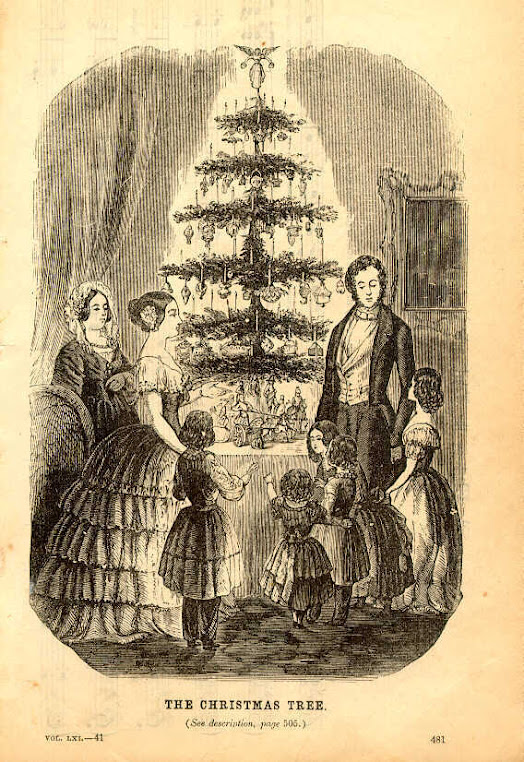
Two years later, in 1850, the first Christmas Tree — that very same image — appeared in American women's magazine we do know so well, " The Godey's Lady's Book". It was the beginning of the widespread diffusion of Christmas traditions, given the admiration all Americans had for the English royals.
Albert also inaugurated the custom of distributing gifts to needy children housed in orphanages and foundling homes in and around London, a custom that Queen Victoria maintained even after his untimely death.
But while it's true that the Victorian Christmas has Teutonic origins and had its cradle at the English court, it wasn't celebrated for the first time in 1848, but almost half a century earlier. It was on December 25, 1800, that the first Christmas we know as Victorian knocked on the doors of the castle of .......: it had been brought from Germany by Queen Charlotte, consort of King George III.
Her full name was Sophia Charlotte of Mecklenburg-Strelitz, and she was born a princess at Mirow Castle in northeastern Germany. She made history as the fifteen-year-old bride of a young King George III of the United Kingdom (September 8, 1761) and subsequently wore the crowns of Queen consort of Great Britain and Ireland and Electress (later Queen consort) of Hanover. The queen was a patron of the arts and knew, among others, Johann Christian Bach, Johann Sebastian's son, and Wolfgang Amadeus Mozart. She also had a passion for botany and contributed to the foundation of the royal gardens at Kew. It is said that despite never having met before their wedding, George III and Queen Charlotte were very happy together. They had fifteen children, thirteen of whom reached adulthood.


Queen Charlotte in a portrait by William Beechey dated 1796.


Charlotte was devoted to her homeland and when she came to England as a bride, she brought many traditions with her. Among them was the traditional Christmas yew branch and Charlotte used the tradition as a way to gather the royal household. She and her ladies-in-waiting positioned and decorated the bough in the centre of the Queen’s House’s largest room inside Windsor Castle. As evening fell and the tapers were lit, the court assembled around the yew and sang carols. Then, by the light of the tree, they exchanged opulent gifts to celebrate Christmas.
In 1800, Queen Charlotte was planning a Christmas Day party for the children of the most important and wealthy families in Windsor, but also the poorest in London weren't forgotten.
Dr. John Watkins, one of Queen Charlotte's biographers, described the magical scene in the "Memoirs of Her Most Excellent Majesty Sophia-Charlotte":

"Sixty poor families had a substantial dinner given them and in the evening the children of the principal families in the neighbourhood were invited to an entertainment at the Lodge. Here, among other amusing objects for the gratification of the juvenile visitors, in the middle of the room stood an immense tub with a yew tree placed in it, from the branches of which hung bunches of sweetmeats, almonds and raisins in papers, fruits and toys most tastefully arranged and the whole illuminated by small wax candles. After the company had walked round and admired the tree, each child obtained a portion of the sweets which it bore together with a toy, and then all returned home quite delighted."

From this episode guided by a  deep sense of charity and filled with joy, Christmas and its traditions, which we still love and respect today, originate.


I embrace with deep affection all ~ My little old world ~ 
dear Followers and Readers and warmly greet those who have read my words for the very first time!
See you soon ❤


Dany


SOURCES:

Hubert, Maria; The Great British Christmas, The History Press, Cheltenham, Gloucestershire, UK, 1999.

Kummerow, Marion; German Christmas Traditions, Create Space Independent Publishing Platform Publisher, Scotts Valley, California, USA, 2012.

Gray, Annie; THE GREEDY QUEEN - Eating with Victoria, Profile Books Ltd., London, UK, 2017.


La Regina Charlotte del Regno Unito ed il primo Natale come lo festeggiamo ancora oggi


Tutti noi sappiamo che il Natale, come lo celebriamo oggi, con l'abete decorato e lo scambio dei doni, ha origini vittoriane e se ne attribuisce il merito al principe Albert di Sassonia-Coburgo, consorte della regina Victoria, in quanto sono queste antiche usanze originarie della Germania che datano all'epoca della Riforma, ossia la XVI secolo - la tradizione vuole che sia stato proprio Martin Lutero il primo a decorare un abete per la propria famiglia per festeggiare il giorno in cui si celebra la nascita del Signore.
Critico nei confronti del cristianesimo e della corruzione che lo stava offuscando, e divenuto celebre iniziatore della riforma protestante, curiosamente, pose per primo alcune candele sulla sommità dei rami di un Tannenbaum, per rendere più vivo e concreto il significato mistico dello Yule o Yuletide, come allora si chiamava il Natale: una notte d'inverno nel 1536, così narra la leggenda, Lutero stava camminando in una pineta vicino la sua casa a Wittenberg quando improvvisamente alzò gli occhi e vide migliaia di stelle che brillavano come gioielli tra i rami degli alberi. Questo spettacolo meraviglioso lo ispirò a creare un abete illuminato da candele in casa sua affinché il Natale potesse ricordare ai suoi figli il cielo stellato da cui il Salvatore è sceso ... C'è, infatti, ancor oggi e per ognuno di noi, nella luce di una candela, tutto il significato e la gioia della Rivelazione, la magia della vita, la più intima atmosfera del Natale.


IMMAGINE - Luther amidst his family at Wittenberg on Christmas Eve, 1536.
Incisione di J. Bannisten, c. 1850.
Foto: The Granger Collection, New York / Cordon Press.


Nel corso del XVII secolo, alberi di vario tipo illuminati a lume di candela divennero popolari in tutta la Germania meridionale, mentre nella patria di Charlotte, il Meclemburgo-Strelitz, veniva decorato un singolo, imponente ramo di tasso anziché un albero intero. Samuel Taylor Coleridge visitò il paese nel 1799 e descrisse le tradizioni locali. Tra queste, notò, c'era quella natalizia del ramo di tasso.

"C'è un'usanza natalizia qui che mi è piaciuta e ha suscitato il mio interesse. I bambini fanno piccoli regali ai genitori e tra di loro; e i genitori ai figli. Per tre o quattro mesi prima di Natale le ragazze sono tutte impegnate; e i ragazzi risparmiano la loro paghetta per preparare o acquistare questi regali. Il contenuto del regalo viene tenuto accuratamente segreto, e le ragazze hanno un mondo di espedienti per nasconderlo, come lavorare quando sono fuori per visite e gli altri non sono con loro; alzarsi la mattina prima dell'alba; e simili. Poi, la sera prima di Natale, uno dei salotti viene illuminato dai bambini, in cui i genitori non devono entrare.
Un grande ramo di tasso viene fissato al tavolo a una certa distanza dal muro, una moltitudine di piccole candele sono fissate al ramo, ma in modo da non impigliarsi finché non sono quasi consumate, e carta colorata pende e svolazza dai rami. Sotto questo ramo, i bambini dispongono in grande ordine i regali che intendono fare ai genitori, nascondendoli ancora nelle loro tasche ciò che si augurano l'un l'altro. Poi vengono presentati i genitori, ognuno presenta il suo piccolo regalo, poi tirano fuori il resto, uno a uno, dalle tasche, e li offrono con baci e abbracci.
Dove ho assistito a questa scena c'erano otto o nove bambini, e la figlia maggiore e la madre piangevano forte di gioia e tenerezza; e le lacrime scorrevano sul volto del padre, che stringeva tutti i suoi figli così forte al petto, che sembrava lo facesse per soffocare il singhiozzo che gli saliva dentro. Ne fui molto commosso.
L'ombra del ramo, e di ciò che vi viene appeso, sul muro, e quella che si inarcava sul soffitto, creavano un grazioso quadro, e poi l'estasi dei più piccoli, quando finalmente i germogli e i loro aghi iniziarono a infiammarsi e a schioccare! Oh, che gioia per loro!

Quel che è certo è che ad Albert si deve il merito della diffusione di queste che sono diventate ormai tradizioni popolari presso ogni ceto sociale e che, dall'Inghilterra, si sono velocemente diffuse fino ad abbracciare per intero il mondo cristiano. 
Era il dicembre del 1800 quando su The Illustrated London News, Christmas Supplement apparve una litografia della famiglia reale inglese raccolta intorno ad un abete decorato, illuminato e circondato di doni alla base: era la prima volta che il popolo vedeva un'immagine del genere. 


IMMAGINE - Christmas Tree at Windsor Castle from Illustrated London News, Christmas Supplement, 1848 (19th Century Collection, 19th C. Coll, 030 ILL).

Due anni dopo, nel 1850, il primo albero di Natale, ovvero quella stessa immagine, fece la propria apparizione su di una rivista femminile americana che ben conosciamo, The Godey's Lady's Book. Era l'inizio della diffusione delle tradizioni natalizie su larga scala, vista l'ammirazione che tutti gli americani nutrivano per i reali inglesi. 
Albert inaugurò anche l'usanza di distribuire doni ai bambini bisognosi che erano alloggiati negli orfanotrofi e brefotrofi di Londra e dintorni, usanza che la regina Victoria volle mantenere anche dopo la sua precoce scomparsa. 
Ma se è vero che il Natale vittoriano  ha origini teutoniche ed ebbe alla corte inglese la propria culla, non si celebrò per la prima volta nel 1848, bensì quasi mezzo secolo prima. Era il 25 dicembre dell'anno 1800 quando il primo Natale che conosciamo come vittoriano bussò alle porte del castello di ....... : lo aveva portato dalla sua Germania la regina Charlotte, consorte di re Giorgio III.
Il suo nome per intero era Sophia Charlotte di Mecklenburg-Strelitz, ed era nata principessa nel castello di Mirow, nella Germania nord-orientale. Passò alla storia in quanto divenne la sposa quindicenne di un giovane re Giorgio III del Regno Unito (8 settembre 1761) e calzò quindi la corona di Regina consorte di Gran Bretagna e Irlanda e di elettrice (poi Regina consorte) di Hannover.
La regina fu una patrona delle arti e conobbe, tra gli altri, Johann Christian Bach, figlio di Johann Sebastian, e Wolfgang Amadeus Mozart. Aveva inoltre la passione per la botanica e contribuì alla fondazione dei giardini reali di Kew. Si narra che nonostante non si fossero mai visti prima delle nozze Giorgio III e la regina Charlotte siano stati molto felici insieme. Ebbero quindici figli, tredici dei quali raggiunsero l'età adulta.


IMMAGINE - Queen Charlotte, ritratto di William Beechey datato 1796.


Charlotte era devota alla sua patria e quando arrivò in Inghilterra come sposa, portò con sé molte tradizioni. Tra queste vi era quella del ramo di tasso natalizio, e Charlotte usò questa consuetudine per radunare la famiglia reale. Lei e le sue dame di compagnia posizionarono e decorarono il ramo al centro della sala più grande della Queen's House nel Castello di Windsor. Al calar della sera, quando le candele venivano accese, la corte si riunì attorno al tasso e cantò canti natalizi. Poi, alla luce dell'albero, si scambiarono doni opulenti per celebrare il Natale.
Nel 1800, la regina Charlotte stava organizzando una festa di Natale per i figli delle famiglie più importanti e ricche di Windsor, ma anche i più poveri di Londra non furono dimenticati.
Il Dr. John Watkins, uno dei biografi della regina Carlotta, descrisse la magica scena nelle "Memoirs of Her Most Excellent Majesty Sophia-Charlotte":

"Sessanta famiglie povere ricevettero un pranzo sostanzioso e la sera i figli delle famiglie più importanti del quartiere furono invitati a un intrattenimento alla Loggia. Qui, tra gli altri oggetti divertenti per la gratificazione dei giovani visitatori, al centro della stanza si trovava un'immensa tinozza con dentro un albero di tasso, dai cui rami pendevano mazzi di dolciumi, mandorle e uvetta in carta, frutta e giocattoli disposti con grande gusto e il tutto illuminato da piccole candele di cera. Dopo che la compagnia ebbe fatto il giro dell'albero e ammirato l'albero, ogni bambino ricevette una porzione dei dolci che conteneva insieme a un giocattolo, e quindi tutti tornarono a casa deliziati."

Da questo episodio, guidato da un profondo senso della carità e colmo di gioia, trae origine il Natale e le sue tradizioni, che ancora oggi amiamo e rispettiamo.


Abbraccio con profondo affetto tutti i cari Followers e Lettori 
di ~ My little old world ~ e saluto calorosamente coloro 
che leggono le mie parole per la prima volta!
A presto ❤

 Dany


FONTI BIBLIOGRAFICHE:

Hubert, Maria; The Great British Christmas, The History Press, Cheltenham, Gloucestershire, UK, 1999.

Kummerow, Marion; German Christmas Traditions, Create Space Independent Publishing Platform Publisher, Scotts Valley, California, USA, 2012.

Gray, Annie; THE GREEDY QUEEN - Eating with Victoria, Profile Books Ltd., London, UK, 2017.


LINKING WITH:


Once again I'm over the moon thanks to Angie @ God's Growing Garden who featured this post today!
I have no words which to thank you with, Dearie, you truly made my day ♥


martedì 15 novembre 2022

VICTORIAN LADIES' WORKS OF ART: Making Jewels with Hair


If you do reflect upon it, nothing lasts forever...

Sometimes a love ends,

sometimes a friendship fades away...

How many bonds can deteriorate.

But cut a lock of hair to the person you love,

and it will keep its color, her light for decades,

indeed, even for centuries. 


The Victorians taught us that. In fact, the art of working human hair, one of the many traditions of the XIXth century, has come down to us as if it had remained frozen in time. And My Little Old World has already mentioned it to you by discussing, some time ago, the importance that, in the collective imagination, female hair had in the Victorian era, so much so that, if their robustness allowed it, they were not cut for a whole life.


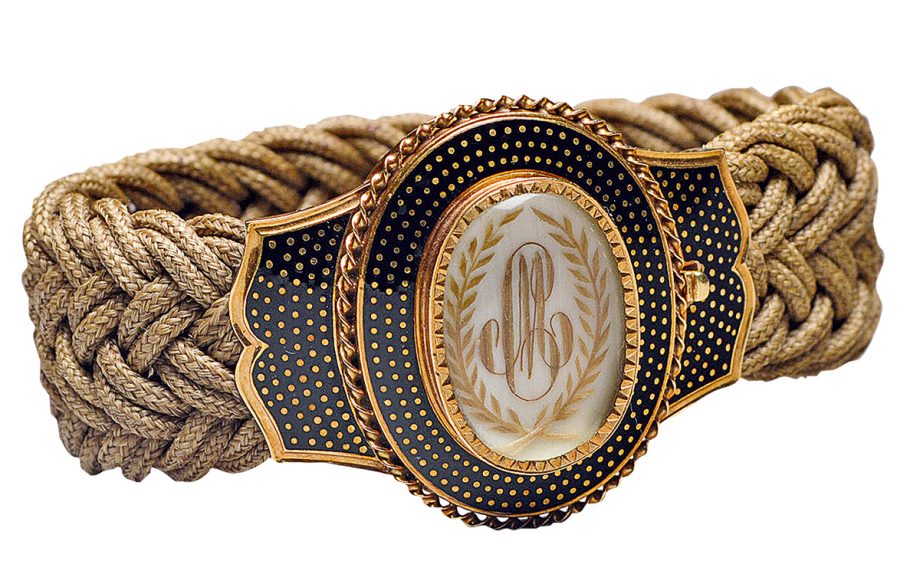
Back then, locks of hair were wisely woven into jewels, wrapped around themselves to resemble flower petals, even ground to be used in pigments and what we find ourselves today to confront with are authentic masterpieces made to defeat the laws of existence. The hair of a loved one, and who had been lost, was preserved as a memento mori already during the Shakespearean period and probably from well before eras. In fact, in some Egyptian tombs there are frescoes that seem to represent scenes in which pharaohs and queens exchange locks of hair as a sign of love. From 1600-1700 a sort of cult, aimed at preserving the memory of deceased loved ones, began: at that time infant mortality was very high, but also that of adults reached exorbitant numbers. And making personal objects, especially jewelry, with locks of their hair, gradually became a custom. But in the Victorian era, this art, which became more and more widespread and practiced, was mainly aimed at making paintings with family trees, objects to be exchanged as a token of love or friendship, frames for portraits, etc. using the hair of people who were still alive. It was not unusual that to be wowen were hair of different colors because it belonged to different people, perhaps united by a family bond: for example, a gift given to a father by three daughters of his. It could also have been a simple bookmark, but to insert it in a journal assumed the meaning of having with you the true essence of who had donated that hair. In the image below, a tree represents an American Methodist congregation: the shoots covering the branches are made with the hair of each member who was part of it.


From the collection of John Whitenight and Frederick LaValley. Photo by Alan Kolc. Courtesy of the College of Physicians of Philadelphia and the Mütter Museum


And here they are some other jewels and a framed drawing to hang to a wall belonging to private collections.


It is likely that they were, above all, the Victorian ladies who devote themselves to this art, which today appears so unusual to us and which reached the peak of its diffusion around 1850; probably it was a parlor pastime, as it was making wax flowers (click HERE to read the post that My Little Old World dedicated to this topic), to embroider, to sew, to create photocollages (click HERE to read the post that My Little Old World dedicated to this topic). But among all the artistic works mentioned, the one who worked human hair was certainly the most particular, that which required much skillness and that only high-ranking people could afford: not everybody could buy what it was needed and, let's remember it, many were the women who had to work to support their families and certainly they had no way to think about leisure.

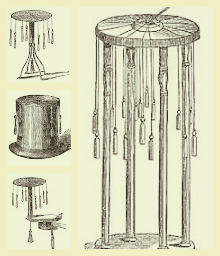
To wrap the strands of hair it was necessary to have a working table with a circular base that had to meet certain requirements. In reality there were several types of braiding tables: one was made in the shape of a pouf and was named ladies' table; it could be used while seated, but often cluttered to the point of hindering the lady who was sitting beside. The other had longer legs and was a full-fledged perch table, but it was more inconvenient to work on it because you had to lean forward. There was still another, the smallest one, which had to be anchored to a side of a table. But there were also those ladies who were clever enough to simply use an inverted cylindrical container, or a hat, on the bottom of which, in the center, they had made a hole; various pieces of twine branched off from it as many as they were required by the pattern they'd chosen, and the strands were tied to them. At the head of each piece of twine they were tied wooden shuttles or lead weights to use them easily. Finally, special patterns, collected in catalogs or manuals, were a valid help to create these very complex artistic objects. The image below represents the cover of the best known, and probably most used one, dating back to 1870.


A. Bernhard & Co. Catalogue, 1870 Manufacturers of Diamond Work & Ornamental Hair Jewelry importers of German Jewelry, Watches, Diamonds, etc.etc.
169 Broadway, Gilsey Building, Rm. 3 New York


But the more sophisticated families and the less industrious ladies went to real artisans who had handed down this art for generations. Unfortunately the names of the various artists have not reached us and all the works that have been preserved are anonymous.
The first thing to do was to prepare the hair strands by properly cleansing them following some instructions with much care. The following are taken from a 1850s serie of issues of The Godey’s Lady’s Book: 

“Sort the tress, which is about to be used, into lengths, tie the ends firmly and quite straight with pack thread, put the hair into a small saucepan with about a pint and a half of water, and a piece of soda of the size of a nut, and boil it for a quarter of an hour or twenty minutes; take it out, shake off the superfluous moisture, and hang it up to dry, but not near a fire.”

“When it has become perfectly dry, divide it into strands containing from twenty to thirty hairs each, according to the fineness of the hair or the directions given for the pattern about to be worked. It must be observed that every hair in the strand should be of the same length, and the strands should be all of an equal length.” 

"Knot each end of each strand, then take the requisite number of leaden weights, weighing about three quarters or half an ounce each, and affix about a quarter of a yard of pack thread to each of them; lay them down side by side on the table, and to the other ends of the pack thread affix the strands of hair already prepared, knotting them on with a weaver's or sailor's knot; care must be taken all this time to prevent any entanglement or derangement of the hair."

"The other ends of the strands must now be gathered together, firmly tied with pack thread, and then gummed with a cement composed of equal parts of yellow wax and shellac melted together and well amalgamated, and then rolled into sticks for use. We now come to the table and the arrangement of the strands on it."

And thus had come the time to proceed following the creativity or the chosen models, letting oneself be guided by the patterns.


Here you are some pages from the A. Bernhard & Co. Catalogue, 1870 Manufacturers of Diamond Work & Ornamental Hair Jewelry representing some models of jewels or small keepsakes in hair


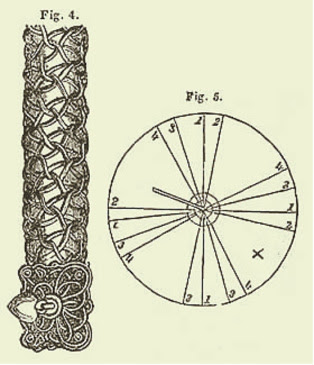
I don't go into the descriptive details of every single pattern because they look like real puzzles just reading them; I limit myself to publishing some images and just the starting indications, always taken from the same issues of The Godey's Lady's Book, so that you can at least realize what these ladies of ours were capable of:


A PATTERN FOR A BRACELET (Fig. 4.)

"Sixteen strands of twenty-five or thirty hairs each, according to the fineness of the hair. For this pattern the strands must be arranged in fours, and numbered."


CHAIN OR GUARD PATTERN (Fig. 6.)

"Ten strands only, of about twenty hairs each, are required for this. They must be arranged thus."


A PATTERN FOR A CHAIN OR A GUARD (Fig. 2.)

"For this pattern, sixteen strands, each consisting of about twenty hairs, are required. These must be arranged in pairs on the circle on the table, at equal distances, and so that the opposite pairs shall be in direct lines with each other."


And I'm stopping here, Victorian ladies were much more patient and ingenious than us, that's sure! But it must be said that they could afford to devote much more time to leisure than we can dedicate to it today, perhaps this is what we lack most, alas!


Thanking you with all my heart for following me up to here,
I'm giving you an appointment at the next post,
while sending you much love.
See you soon ❤  


LE OPERE D'ARTE REALIZZATE DALLE LADIES VITTORIANE: Gioielli creati con capelli veri


IMMAGINE 1 - Orecchini fatti con capelli veri montati su oro

Se ci pensate bene, nulla dura per sempre...

Talvolta finisce un amore,

talvolta si logora un'amicizia...

Quanti legami possono deteriorarsi.

Ma tagliate una ciocca di capelli alla persona che avete cara,

ed essa manterrà il suo colore, la sua luce per decenni,

anzi, persino per secoli.


Ce lo hanno insegnato i Vittoriani. Infatti l'arte che lavorava capelli umani, una delle numerose tradizioni del XIX° secolo, è giunta fino a noi come fosse rimasta congelata nel tempo. E My Little Old World ve ne ha già fatto cenno trattando, tempo fa, dell'importanza che, nell'immaginario collettivo, avevano, in epoca vittoriana, i capelli femminili tanto che, se la loro robustezza lo consentiva, non si tagliavano per una vita intera. 


IMMAGINE 2 - Lady vittoriana con la sua lunga chioma


A quel tempo ciocche di capelli venivano sapientemente intrecciate in gioielli, avvolte su sé stesse per assomigliare a petali di fiori, persino macinate per essere utilizzate in pigmenti e ciò con cui ci troviamo a confrontarci oggi  sono autentici capolavori realizzati per sconfiggere le leggi dell'esistenza. I capelli di una persona amata, e che si era perduta, erano conservati come memento mori già a partire dal periodo shakespeariano e probabilmente da epoche ben antecedenti. In alcune tombe egizie si trovano, infatti, affreschi che sembrano rappresentare scene in cui faraoni e regine si scambiano ciocche di capelli in segno d'amore. Dal 1600-1700 prese avvio una sorta di culto volto a preservare il ricordo dei cari deceduti: allora era altissima la mortalità infantile, ma anche quella degli adulti raggiungeva cifre esorbitanti. E fabbricare oggetti personali, soprattutto gioielli, con ciocche della loro chioma, divenne a poco a poco una consuetudine. Ma in epoca vittoriana, questa arte che divenne sempre più diffusa e praticata, era più che altro volta a fabbricare quadri con alberi genealogici, a confezionare oggetti da scambiare come pegno d'amore o d'amicizia, ad incorniciare ritratti, etc. utilizzando chiome di persone ancora in vita. Non era inusuale che venissero intrecciati capelli di colori differenti perché appartenenti a persone diverse, magari unite da un legame di parentela: per esempio un dono fatto ad un padre da tre figlie. Poteva anche trattarsi di un semplice segnalibro, ma inserirlo in un diario personale assumeva il significato di avere con sé la vera essenza di chi aveva donato quei capelli. Nell'immagine qui sotto un albero rappresenta una congregazione metodista americana: i germogli che ne rivestono i rami sono fatti con i capelli di ciascun membro che ne faceva parte.


IMMAGINE 3 - Dalla collezione di John Whitenight e Frederick LaValley. Fotografia di Alan Kolc. Courtesy of the College of Physicians of Philadelphia and the Mütter Museum


Ed eccovi altri monili ed un disegno incorniciato e da conservare appeso ad una parete come ornamento che fanno parte di collezioni amatoriali.


IMMAGINI 4-5-6-7-8-9


Si suppone che a dedicarsi a quest'arte, che oggi ci appare così inconsueta e che raggiunse il culmine della sua diffusione attorno al 1850, fossero soprattutto le ladies vittoriane e che si trattasse di un passatempo da salotto, così come lo erano fabbricare fiori di cera (clicca QUI per leggere il post che all'argomento ha dedicato My Little Old World), ricamare, cucire, creare photocollages (clicca QUI per leggere il post che all'argomento ha dedicato My Little Old World).
Ma tra tutti quelli menzionati, quello che lavorava capelli umani era di sicuro il lavoro artistico più artificioso e che potevano permettersi solamente persone altolocate, non fosse altro per ciò di cui ci si doveva munire per realizzare intrecci di ogni tipo. Non tutti potevano acquistare ciò che occorreva e, ricordiamolo, molte erano le donne che dovevano lavorare per sostentare la propria famiglia e non avevano di certo modo di dedicarsi ad occupazioni dilettevoli.


IMMAGINE 10 A SINISTRA - Esempi dei vari tavoli da lavoro utilizzati per intrecciare capelli


Per avvolgere su sé stessi i capelli era necessario munirsi di un tavolino da lavoro con base circolare che doveva rispondere a determinati requisiti. In realtà ne esistevano diversi tipi: uno era fatto a forma di pouf e veniva chiamato ladies' table - tavolino per signore; poteva essere utilizzato stando seduti, ma spesso ingombrava al punto da impicciare la dama che era seduta accanto. L'altro aveva gambe più lunghe ed era un tavolino fatto a trespolo a tutti gli effetti, ma era più scomodo lavorarvi perché si doveva stare protratti in avanti. Un altro ancora, il più piccolo, veniva ancorato su di un lato di un tavolo. Ma vi era anche chi si ingegnava ed usava semplicemente un contenitore cilindrico rovesciato, o un cappello, sul cui fondo, al centro, aveva praticato un foro; da esso si diramavano i vari fili di spago, cui venivano legate le ciocche di capelli, a capo dei quali erano fissate delle navette in legno o pesi di piombo per impugnarli agevolmente. Appositi schemi erano, infine, un valido aiuto per realizzare questi oggetti artistici così tanto complessi, ed erano raccolti in cataloghi o manuali. L'immagine riportata di seguito rappresenta la copertina di quello più noto, e probabilmente il più utilizzato, risalente al 1870.


IMMAGINE 11 - A. Bernhard & Co. Catalogue, 1870 Manufacturers of Diamond Work & Ornamental Hair Jewelry importers of German Jewelry, Watches, Diamonds, etc.etc.,169 Broadway, Gilsey Building, Rm. 3 New York


Ma le famiglie più sofisticate e le ladies poco operose si rivolgevano a veri e propri artigiani che si tramandavano questa arte da generazioni. Purtroppo i nomi dei vari artisti non sono pervenuti a noi e  tutte le opere che si sono conservate sono anonime.
La prima cosa da fare era preparare le ciocche di capelli detergendole adeguatamente seguendo scrupolosamente alcune istruzioni. Le seguenti sono tratte da alcuni numeri del  del Godey's Lady's Book risalenti agli anni '50 del 1800:

"Separare la treccia, che sta per essere utilizzata, in lunghezze, legare le estremità saldamente e abbastanza dritte con filo da impacco, mettere i capelli in una piccola casseruola con circa mezzo litro d'acqua e un pezzo di soda della dimensione di una noce e fare bollire per un quarto d'ora o venti minuti; tirare fuori i capelli, scrollare via l'umidità superflua e appenderli ad asciugare, ma non vicino al fuoco."

"Quando saranno diventati perfettamente asciutti, dividerli in ciocche contenenti da venti a trenta capelli ciascuna, secondo la finezza del capello o le indicazioni date per il disegno da lavorare. Si deve prestare attenzione a che tutti i capelli della ciocca siano della stessa lunghezza e che le ciocche siano tutte lunghe uguali."

"Annodare ciascuna estremità di ogni ciocca, quindi prendere il numero richiesto di pesi di piombo, del peso di circa tre quarti o mezza oncia ciascuno, e attaccare circa un quarto di iarda di filo da imballaggio a ciascuno di essi; adagiarli uno accanto all'altro su di un tavolo, e alle altre estremità del filo legare le ciocche di capelli già preparate, annodandole con un nodo da tessitore o da marinaio; bisogna fare molta attenzione, durante tutte queste operazioni, al fine di evitare che i capelli si aggroviglino o si scompongano".

"Le altre estremità delle ciocche devono ora essere raccolte insieme, legate saldamente con filo da impacco, quindi gommate con una malta composta da parti uguali di cera gialla e gommalacca fuse insieme e ben amalgamate, e quindi arrotolate in bastoncini per l'uso. Raggiungere infine il tavolo da lavoro e disporre le ciocche su di esso."

Era così giunto il momento di procedere seguendo la creatività o i modelli scelti, lasciandosi guidare dagli schemi.


IMMAGINE 12 - Artigiano al lavoro

IMMAGINE 13 - Alcune pagine tratte dall' A. Bernhard & Co. Catalogue, 1870 Manufacturers of Diamond Work & Ornamental Hair Jewelry che riportano modelli cui ispirarsi per creare gioielli di ogni tipo e per tutti i gusti


Non scendo nei dettagli descrittivi di ogni singolo schema perché sembrano degli autentici rompicapo solo a leggerli; mi limito a pubblicare alcune immagini e le indicazioni di partenza, sempre tratte dai medesimi numeri del Godey's Lady's Book, perché vi rendiate almeno conto di cosa erano capaci queste nostre ladies:


SCHEMA PER UN BRACCIALETTO (IMMAGINE 14) 

"Sono necessarie sedici ciocche di venticinque o trenta capelli ciascuna, a seconda della finezza dei capelli. Per questo modello le ciocche devono essere disposte a quattro e numerate."


SCHEMA PER INTRECCIARE UNA CATENA (IMMAGINE 15)

"Solo dieci ciocche, di circa venti capelli ciascuna, sono necessarie per questo schema. Devono essere disposte come illustrato dall'immagine:


SCHEMA PER UNA CATENA O UN GIROCOLLO (IMMAGINE 16)

"Per questo schema, sono necessarie sedici ciocche, ciascuna composta da circa venti capelli. Queste devono essere disposte in coppia sul piano del tavolo da lavoro, a pari distanze, e in modo che le coppie opposte siano perfettamente di rimpetto tra loro."


Ed io mi fermo qui, le ladies vittoriane erano decisamente molto più pazienti ed ingegnose di noi. Ma va detto anche che potevano permettersi di dedicare agli svaghi molto più tempo di quanto possiamo dedicarvi noi oggi, forse è questo che più ci fa difetto, purtroppo!


Ringraziandovi con tutto il cuore per avermi seguita fino a qui, 
vi do appuntamento al prossimo post,
e vi auguro ogni bene.
A presto ❤


LINKING WITH:


domenica 26 dicembre 2021

Louisa May Alcott's Christmas Legacy


"Now, I believe every one has had a Christmas present and a good time. Nobody has been forgotten, not even the cat," said Mrs. Ward to her daughter, as she looked at Pobbylinda, purring on the rug, with a new ribbon round her neck and the remains of a chicken bone between her paws.
It was very late, for the Christmas-tree was stripped, the little folks abed, the baskets and bundles left at poor neighbors' doors, and everything ready for the happy day which would begin as the clock struck twelve. They were resting after their labors, while the yule log burned down...

Louisa May Alcott, Rosa's Tale, Source: Aunt Jo's Scrap-Bag, Volume 5, 1879


Today I want to deal with a special topic.
I want to tell you about an authoress that we all know and have learned to love over the years through the numerous readings she left us as a legacy: Louisa May Alcott.
Her voice, like that of Charles Dickens, whom she loved and admired so much, knows no fashions, the barriers of time do not stop it and continues to resonate inexorably and to create the atmosphere of these days full of magic and profound meanings, since the passion she had for the Holiday Season really knew no bounds.
In fact, Christmas inspired her many stories, fairy tales and novels.
And it is certainly not a coincidence that her famous novel Little Women, the one that consecrated her to success, starts right from a Christmas morning, a particular Christmas, not only because it was without any gift, but because it will be loaded with truer and authentic principles that the heart of a good Christian makes its own and observes without making any effort: the love for other people, the charity, the renunciation for those who suffer, the warmth of the family are the values ​​that most gratify our soul, especially during the Christmas period, which they give it meaning and depth more than a gift to be discarded that perhaps excites us, but the prestige of which is exhausted in something purely material.

But in reality this is not what I intended to tell to you today, or rather, it was not my intention to deal with it in this way ... I want to tell you about how Louisa May Alcott contributed to making of Christmas the real Christmas we still celebrate today.
Can you imagine a Santa Claus preparing gifts for children without the help of his faithful, hardworking and tireless goblins or elves, if you prefer, who, with a red or green hood, also take care of his reindeer?
The Scandinavian tradition teaches us to distinguish the Ljosalfar (Seelie court), the light elves, who are the good ones who defended the houses from evil spirits, from the Svartalfar (Unseelie court), or dark elves, who are mischievous sprites.
They are fairy beings, especially the light ones are very good and beautiful, they are generally as tall as a three year old child, and have the ability to transform themselves.
But how was it possible that from the mythology of northern Europe these little creatures became part of the world of Santa Claus in the United States during the Victorian era?
Well, it was our inexhaustible writer who first mentioned the elves in literature, which she called the 'Santa Little Helpers'.
During the Summer of 1855 our Louisa May Alcott finished a collection of Christmas stories entitled Christmas Elves.
We read in her correspondence:

Finished fairy book in September. [...] October.– [...] May illustrated my book, and tales called "Christmas Elves." Better than "Flower Fables." Now I must try to sell it.
[Innocent Louisa, to think that a Christmas book could be sold in October.–L. M. A.] 1

This book never saw the light, her publisher didn't agree to sell the aforementioned collection of short stories even in the following December. A few months later May became seriously ill and died. Louisa reacted to the pain of the loss of her beloved sister by taking care of her niece, Louisa May Nieriker, known as Lulu, to whom she dedicated new books of Christmas fairy tales.
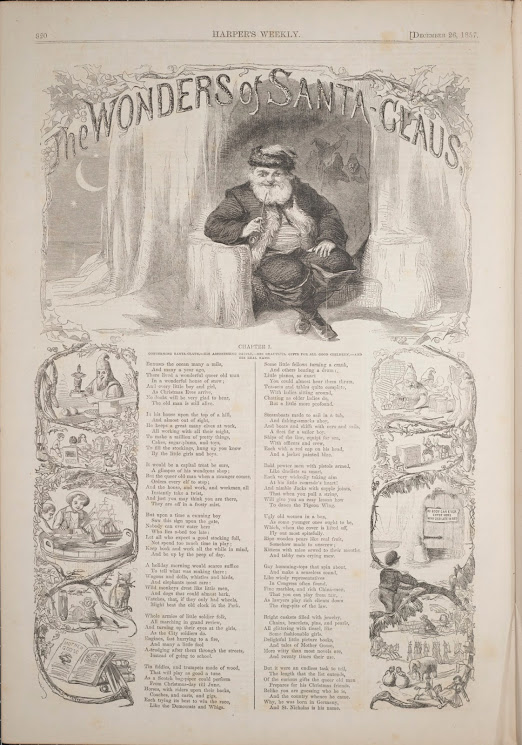
The original manuscript, which thus lost its importance, has been lost, but some extracts have been saved in other works of the writer, such as in the poem The Wonders of Santa Claus, published in the magazine HARPER'S WEEKLY in the issue of 26 December 1857, in which was narrated the fervent activity of the helping elves busy in Santa's workshop. 


1857 - Harpers weekly : a journal of civilization, [Shenandoah.Iowa: Living History.Inc.] - https://library.si.edu/image-gallery/99827-


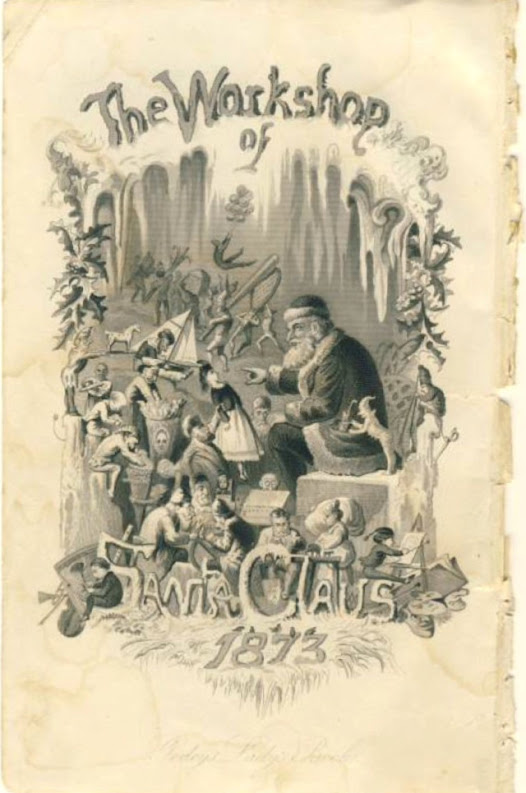
The image of the elves was later popularized by The Godey's Lady's Book, the famous American women's magazine published from 1830 to 1878. The cover illustration of the Christmas issue of 1873 showed Santa Claus surrounded by toys and elves and in the caption that the 'accompanied it read:

"In this way takes place the preparation of toys to be distributed to the little ones in the period before Christmas"


The Godey's Lady's Book magazine played an important role in influencing the Christmas traditions that were developing in the United States during the Victorian period: for example, it was the cover of the 1850 Christmas issue that presented, for the first time, the Christmas tree as we still decorate it today.


And therefore, to conclude, it was thanks to the pen of our Louisa May Alcott and her fervent imagination that we owe the passage of the figure of the elf, belonging for centuries to the Scandinavian mythology, to that of the willing elf who helps Santa Claus to pack his toys: we are therefore also indebted for this too to this authoress who loved Christmas to the point of reinventing its myths and stories in an imagination very personal and filled with phantasy, which still continues to speak to us today.


May this Holiday Season go on filling your home with Joy, 
your heart with Love, and your life with laughter.

See you soon ❤


L'eredità natalizia di Louisa May Alcott


- IMMAGINE 1 - Fotografia d'introduzione con un ritratto giovanile di Louisa May Alcott


"Orbene, credo che tutti abbiano ricevuto un dono per Natale e si siano divertiti. Nessuno è stato dimenticato, nemmeno il gatto", disse la signora Ward a sua figlia, mentre guardava Pobbylinda, che, facendo le fusa sul tappeto, con un nuovo nastro intorno al collo, teneva ciò che rimaneva di un osso di pollo tra le zampe.
Era molto tardi, perché l'albero di Natale era stato spogliato, i piccoli erano a letto, i cesti ed i fagotti erano stati lasciati alle porte dei vicini più poveri e tutto era pronto per il felice giorno che sarebbe iniziato quando l'orologio avrebbe suonato le dodici. Tutti stavano riposando dopo le loro fatiche, mentre il ceppo di Natale continuava ad ardere...

Louisa May Alcott, Rosa's Tale, da: Aunt Jo's Scrap-Bag, Volume 5, 1879


Quest'oggi desidero trattare di un argomento speciale.
Voglio parlarvi di un'autrice che tutti noi conosciamo ed abbiamo imparato ad amare nel corso degli anni attraverso le numerose letture che ci ha lasciato in eredità: Louisa May Alcott.
La sua voce, come quella di Charles Dickens, che tanto amava ed ammirava, non conosce mode, non la fermano le barriere del tempo e continua a risuonare inesorabile e a fare l'atmosfera di questi giorni ricchi di magia e di profondi significati, poiché la passione che ella nutriva per le festività natalizie non conosceva davvero limiti. 
Il Natale le ispirò infatti numerose storie, fiabe e racconti.
E non è di certo un caso che il suo celeberrimo romanzo Piccole Donne, quello che la consacrò al successo, prenda avvio proprio da una mattina di Natale, un Natale particolare, non solo perché senza doni, ma perché si caricherà di princìpi più veri ed autentici che il cuore di un buon cristiano fa propri ed osserva senza compiere alcuno sforzo: l'amore per il prossimo, la carità, la rinuncia per chi soffre, il calore della famiglia sono i valori che più gratificano, specialmente nel periodo natalizio, che gli conferiscono senso e spessore più di un dono da scartare che magari entusiasma, ma il cui prestigio si esaurisce in qualcosa di meramente materiale.

Ma in realtà non è di questo che intendevo parlarvi oggi, o meglio, non era mia intenzione trattarne in questo modo... ci tengo qui a dirvi di come Louisa May Alcott contribuì a fare del Natale che ancora oggi festeggiamo il vero Natale.
Riuscite ad immaginare un Babbo Natale che prepara i doni senza l'aiuto dei suoi fedeli, operosi ed instancabili folletti od elfi, se preferite, che, con il cappuccio rosso o verde si prendono inoltre cura delle sue renne?
La tradizione scandinava ci insegna a distinguere i Ljosalfar (Seelie court in inglese), gli elfi chiari, che sono quelli buoni che difendevano le case dagli spiriti malvagi, dagli Svartalfar (Unseelie court in inglese), ovvero elfi scuri, che sono spiritelli dispettosi.
Essi sono esseri fatati, in modo particolare quelli chiari sono molto buoni e belli, sono alti generalmente come una bimbo di tre anni, e hanno la capacità di trasformarsi.
Ma come è stato possibile che dalla mitologia del nord Europa queste piccole creature entrassero a far parte del mondo di Babbo Natale negli Stati Uniti durante l'epoca vittoriana?
Ebbene, fu proprio la nostra inesauribile scrittrice la prima a nominare in letteratura gli elfi, che definì i 'Santa Little Helpers', gli Aiutanti di Babbo Natale.
Durante l’estate del 1855 la Alcott terminò una raccolta di racconti natalizi intitolata Christmas Elves, Gli Elfi di Natale.
Leggiamo nel suo epistolario:

Finito il libro di fate a Settembre. [...] Ottobre. [...] May ha fatto le illustrazioni del mio libro di racconti intitolato Christmas Elves. È migliore di Flowers Fable. Ora devo cercare di venderlo. [Quanto sei ingenua Louisa a pensare che un libro natalizio possa essere venduto ad  ottobre.–L. M. A.]1

Questo libro non vide mai la luce, il suo editore non accettò di vendere la suddetta raccolta di racconti neppure nel dicembre successivo. Alcuni mesi dopo May si ammalò gravemente e morì. Alcott reagì al dolore per la perdita della sorella occupandosi della nipote, Louisa May Nieriker, detta Lulù cui dedicò nuovi libri di favole natalizie.
Il manoscritto originale, che perse, così, di importanza, è andato perduto, ma se ne sono salvati taluni estratti in altre opere della scrittrice, come nel poema The Wonders of Santa Claus, pubblicato sulla rivista HARPER'S WEEKLY nel numero del 26 dicembre 1857, in cui veniva narrata la fervente attività degli elfi aiutanti affaccendati nel laboratorio di Babbo Natale.


- IMMAGINE 2 - 1857 - Harpers weekly : a journal of civilization, [Shenandoah.Iowa: Living History.Inc.] - https://library.si.edu/image-gallery/99827-


L’immagine degli elfi fu in seguito resa popolare da The Godey’s Lady’s Book, la celeberrima rivista femminile americana pubblicata dal 1830 al 1878. L’illustrazione di copertina del numero natalizio del 1873 mostrava Babbo Natale circondato da giocattoli ed elfi e nella didascalia che l'accompagnava si leggeva:

“In questo modo, ha luogo la preparazione dei giocattoli da distribuire ai piccoli nel periodo che precede il Natale”


- IMMGINE 3 - Copertina del numero natalizio del 1873 di The Godey’s Lady’s Book


La rivista The Godey’s Lady’s Book giocò un ruolo importante nell’influenzare le tradizioni natalizie che si stavano sviluppando negli Stati Uniti durante il periodo vittoriano: per esempio, fu la copertina del numero di Natale del 1850 a presentare, per la prima volta, l'albero di Natale come siamo usi decorarlo ancora oggi.


- IMMAGINE 4 - Copertina del numero natalizio del 1850 di The Godey’s Lady’s Book


E quindi, per concludere, fu grazie alla penna della nostra Louisa May Alcott e alla sua fervida immaginazione che si deve il passaggio della figura del folletto, appartenente da secoli alla mitologia scandinava, a quella dell'elfo volenteroso che aiuta Babbo Natale a confezionare i giocattoli: siamo perciò debitori anche di ciò verso quest'autrice che amò il Natale a tal punto da reinventarne i miti e le storie in un immaginario personalissimo e pieno di fantasia, che ancora oggi continua a parlarci.


Possano queste Feste procedere a colmate le vostre case di Gioia, 
il vostro cuore di Amore, e la vostra vita di risate.

A presto ❤


LINKING WITH: