Visualizzazione post con etichetta Christmas paintings. Mostra tutti i post

sabato 23 dicembre 2023

Capturing Christmas with Anton Pieck

Today I'm introducing you to a far famous painter from the Netherlands, much better known as a children books illustrator: Anton Pieck.
Anton Franciscus Pieck was born on 19 April 1895 in Den Helder a small village located in the far north of what today is Holland and lived to the grand old age of 92. He was the son of Henri Christiaan Pieck and Petronella Neijfs, and twin brother of the painter and illustrator Henri Christiaan Pieck. He was a painter, artist and graphic artist and spent most of his life teaching children how to draw. His works are noted for their nostalgic and fairy tale-like character and are widely popular, appearing regularly on cards and calendars. I love the attention he payid to details in every picture of his and the muted colours and dark interiors which give each scene a very Dickensian atmosphere. 
Here you have a little slideshow collecting those I thought to be his most beautiful images which captured the Christmas Spirit. Alas, most of them have no title, given they’re drawn from the books he illustrated.
However I’m sure you’ll appreciate his so sweet way to depict what he saw walking along the streets, crowded with peple running busy straight and left and inside houses he dwelled, just during the very days before Christmas.


With sincere gratitude for taking the time for visiting 
~My little old world~ 
I'm wishing to every Friend and Reader a 
Merry Christmas with lots of Love! 
I hope You receive one Blessing after another this coming year.
See you soon ❤


Dany


LINKING WITH:


This blog-post was featured by Laurie at the last
Sunday Sunshine Blog-Hop of the year 2023!
I'm feeling so happy for your appreciation, dear friend, thank you!




venerdì 30 dicembre 2022

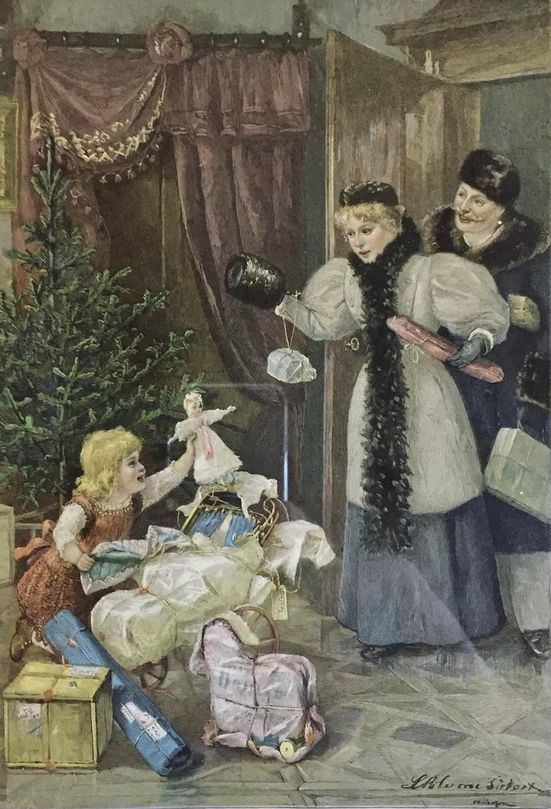
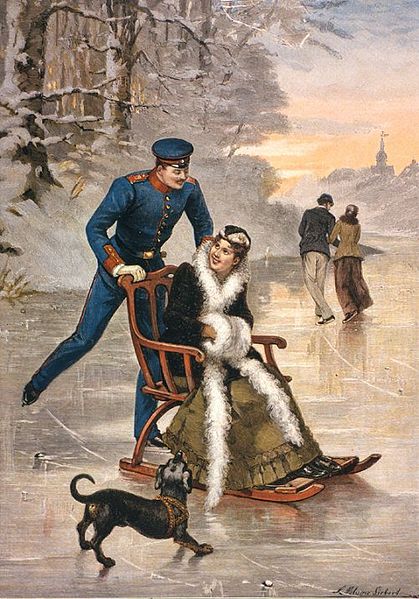
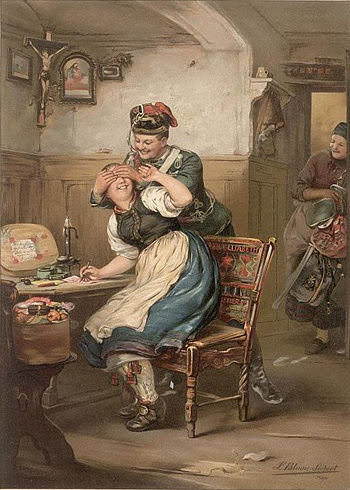
The Holiday Season Atmosphere in Blume-Siebert's paintings


Weihnachten- Nach dem Schenken, 1888


Ludwig Blume-Siebert was a famous German illustrator and painter of intimate family scenes in which children and pets were often present.
Born in Arolsen - today Bad Arolsen - a small town in northern Hesse, on 23 September 1853, he was noticed, still a youth, by the painter Wilhelm von Kaulbach who recognized his talent to the point of wanting him, at the age of 17, as a pupil at the Nuremberg School of Applied Arts, run by his son-in-law. Blume-Siebert perfected himself at the Düsseldorf Academy of Art and then at the Munich Academy of Fine Arts, where he learned to paint the idyllic and folkloric scenes of country life that brought him success, appearing above all in the illustrated magazine Die Gartenlaube at the end of the XIXth century.
All those that I want to show you here are taken from it, I want to make you aware of the joy that, in their simplicity, they manage to convey.

And with these lovely images I wish to all My Little Old World's 
far dear friends and loyal readers 
a Serene New Year filled with joy, satisfied hopes, 
dreams come true, health and Love.
With all my heart ❤


Die Weihnachtsurlaub (1894)


Die Weihnachtspostkutsche (1893)


Kalte Hände, (?)


Bitte! Bitte! (1889)


Unerwartete Bescherung (1887)


Der Weihnachtsmarkt (?)


Verfrühte Weihnachtsüberraschung (?)


Weihnachten im Forsthaus (1891)


Ein Herzensgeschenk (1888) 


Ludwig Blume-Siebert fu un celebre illustratore e pittore tedesco di scene d’intimità famigliare in cui spesso erano presenti bambini e animali da compagnia.
Nato ad Arolsen - oggi Bad Arolsen - un piccolo centro dell’Assia settentrionale, il 23 settembre 1853, fu notato, ancora giovinetto, dal pittore Wilhelm von Kaulbach che ne riconobbe il talento al punto da volerlo a frequentare, all’età di 17 anni, la Scuola di Arti Applicate di Norimberga, gestita da suo genero. Blume-Siebert si perfezionò all’Accademia d’Arte di Düsseldorf e quindi all’Accademia di Belle Arti di Monaco, dove imparò a dipingere le scene di vita di campagna idilliache e folkloristiche che gli diedero il successo, apparendo soprattutto sulla rivista illustrata Die Gartenlaube, sul finire del secolo XIX°.
Da essa sono tratte tutte quelle che desidero mostrarvi oggi, per rendervi edotti della gioia che, nella loro semplicità, riescono a trasmettere.

E con queste graziose immagini auguro 
a tutti i carissimi amici ed affezionati lettori di My Little Old World 
un Sereno Anno Nuovo 
prodigo di gioia, di speranze appagate, di sogni realizzati, di salute, di Amore.
Con tutto il cuore ❤


LINKING WITH:


sabato 24 dicembre 2022

Holly, symbol of Christmas, in legends, myths, history


"In December, in the misty forests,

only the holly adorned itself for the rebirth

from the sun to the palest equinox.

Standing in its greener and more solid mantle,

taking shape against the sad crowd of jagged trees,

rich in its vermilion pendants,

awaits, wizard king of the great woods, 

to lift up the Christmas star."


Pierre Lieutaghi (1939) French writer and ethnobotanist.


CELTIC MYTHOLOGY

King Holly and King Oak

The fight between King Holly and King Oak, twin brothers, symbolizes the confrontation between the cold season (Winter time) and the hot season (Summer time). In fact, the Celts divided the year into two periods, i.e. two seasons, a bright one and a dark one, thus marking the wheel of time. The two brothers competed to determine who will have the right to reign the longest. This conflict took place at the time of Yule (the pre-Christian feast of the western Winter solstice, which some would attribute to a sort of proto-Christmas among some Germanic peoples), when King Oak cut off King Holly's head and took his place on the throne until the middle of the year. King Holly, the dark twin, ruled from Litha to Yule. He represented abstention from work and rest. The holly tree is evergreen and its bright red berries shine when everything else is fruitless, symbolizing that King Holly is the keeper of life during his brother's repose. On the Winter solstice, wreaths of holly commemorated the defeat of  King Holly, interpreted by some as the forerunner of Santa Claus.

The Celts believed that its branches constituted an excellent hiding place for the fairies, the elves and the spirits of the wood who found refuge there during the cold season. 
 And that often the fairies who lived there would enter the houses during the Winter months to take a break from the cold and harsh conditions. It goes without saying that holly was a sacred plant for them. The druids, ancient priests of the Celtic peoples, particularly venerated this tree which featured prominently among the seven sacred trees of their grove. It was the tree of Taranis, god of lightning, the eighth tree of the Druidic alphabet. They cut its thorny branches to make sticks of life because they believed they could draw on the energy of the holly to increase their own.According to Gallic beliefs (the Gauls were part of the Celtic population that inhabited continental Europe at the time of the Romans) injuring the holly tree, so magical and so long -living - it can live up to 180 years - would have caused serious problems to nearby villages.
To cut the life sticks correctly it was therefore necessary to follow a ritual for which it was essential to prick oneself because a drop of blood was essential. The red berries embodied feminine energy, while the mistletoe berries symbolized the masculine seed. United in the Winter solstice ritual these two plants became "mythical relatives" and played the fundamental role of ensuring a renewed life in Spring.
Holly was planted near houses to protect them from evil spells, negative intrusions and evil spirits. Holly was perceived as a sign of good luck: that's why the infants were wet in an infusion of it; its branches were hanging over the door and windows, so that only kind people could enter the houses. What fascinated the druids was that holly was both a poisonous (berry) and medicinal (leaves) plant. In fact holly berries are poisonous to humans but a good winter food source for birds. The leaves of the holly tree were used to treat colds and fevers largely associated with the winter months. As a flower remedy holly is said to rid people of jealousy and hatred and open the heart to love.
In Gaelic folklore (Gaelic people consisted of a Celtic ethnolinguistic group that landed in Ireland and occupied, in later times, Scotland as well), Holly was the lord of the woods during the months when the light was failing and was the rival of Oak for favors to the lady of the woods, Birch, who switched her allegiance from Oak to Holly every year in Midsummer, then back at the Winter solstice.


NORDIC MYTHOLOGY

God Heimdall

The Holly was dedicated to the bright and protective god Heimdall, the watchful caretaker of the Rainbow Bridge that connected the world of humans to that of the gods. Heimdall watched over the sacred ceremonial space. Since he guaranteed the connection between these two worlds, his presence was enough to breathe the sacred and, during the funeral celebrations, ensured the passage of the soul by the world of humans to the world of the deceased. The Germanic and Scandinavian peoples placed decks or holly bushes in the sacred spaces. These bushes represented the presence of Heimdall and invoked his protection. Installing garlands of holly at the gates and sacred spaces therefore was equivalent to symbolically put the god Heimdall to the custodian of these spaces. He protected the human world - symbolized by the house - from the outside world that in Winter was transformed into a dark, hostile and terrifying world, a playing land for the forces of evil.


ROMANS MYTHOLOGY

The Saturnalia


Roberto Bompiani, (1821-1908), I Saturnalia


They were the holly twigs that the Romans used during the Saturnalia which celebrated the god Saturn. These festivities coincided with the end of agricultural activities close to the Winter solstice, and were held between 17 and 24 December.
During these great popular celebrations, social barriers disappeared, meals were organized, gifts were exchanged, little statues were offered to children. Often the Romans offered each other garlands of holly and it was also customary to decorate houses, altars, statues of Saturn with branches of this plant, to adorn themselves or thank loved ones with floral arrangements of greenery and flowers with a message. The Latin writer Pliny the Elder, already in 100 BC, advised to plant it in home gardens: he leaves us written that the prickly leaves of the holly kept demons away.


AMERICAN NATIVES TRADITIONS

Like ancient Europeans, some Native Americans in eastern North America also believed that the prickly leaves of the holly ward off evil spirits, witches, and lightning from the sky. It is for this reason that they planted holly near their homes.
They had also discovered a method of drying the berries which retained all their luster and plumpness. They were used to decorate clothing and hair with holly as well as to use it as a trade currency with other tribes where it did not grow naturally.
The sprigs of holly painted on objects or embroidered on clothes were auspicious. For Native American warriors, the whole plant had a symbolic strength: the rigidity of its wood represented their resistance, the thorns their ferocity and the persistent color of the leaves their courage in the face of the enemy.
In the XVIth century some missionaries discover in central South America that the Guarani (a group of Amerindian populations from the Amazon regions of Brazil, Argentina, Bolivia, Uruguay and Paraguay), are known to have been the first to have cultivated holly (Ilex paraguariensis).


THE ADVENT OF CHRISTIANITY

Holly comes from Holy

According to the Gospel of St. Mark, King Herod tried to massacre male children under the age of two, to be sure of eliminating the one whom the prophetic texts announced as the Messiah king of the Jews. Mary, Joseph and the child were forced to leave the city of Bethlehem in Galilee to flee to Egypt. To feed them and quench their thirst, the palm bent down offering them its fruits, a spring sprang from its roots to quench their thirst.
When Herod's soldiers approached perilously, a holly bush rose up and, with a miraculous impulse, rushed in and enveloped the Holy Family in a wall of thorny leaves, thus hiding and saving them. Mary blesses it and since then, according to the tradition, it has kept its leaves green.
After proclaiming mistletoe as decidedly pagan, holly certainly had a popular place since it  became associated with Christmas, because when the pagan rites were replaced with the Christian ones, many of the symbols of the previous I believe were maintained, overlapping these new meanings. In fact they placed Christmas on December 25 making the new festivity coincide with the previous ancient tradition. Among the symbols maintained there's our holly too, which has simply taken on a different symbolic connotation.
Medieval Christians associated the holly wood with Christ's cross, the thorns of its leaves with the crown of thorns in the Passion, and even the color of its fruits with the blood shed during the crucifixion. In some legends, holly fruits were white before Christ's blood turned them red.
In Middle Ages Europe, the holly was a symbol of happiness. The maidens drew an omen by silently counting the thorns of the holly leaves collected at night. The counting of the quills accompanied by the nursery rhyme "girl, woman, widow, nun", repeated in series, designated their presumed destiny. Also during the Middle Ages, due to its protective reputation, the holly often appeared on coats of arms in heraldry. 
Nowadays we cannot fail to underline how well this plant can represent the spirit of the holidays, giving joy and warding off misfortunes. This is why we have found it, for hundreds of years, always present in advent calendars and good luck cards.
And every Winter it is present in every house of ours, since there's no Christmas without holly berries and leaves.


And now, Dearest friends of mine, 
let me se send you many blessings on your Christmas, 
may it be filled with coziness, Joy, lights, Warmth, and Love.
Merry Christmas to you all!


Frederick Morgan, (1847-1927) Christmas 


L'agrifoglio, simbolo del Natale, nelle leggende, nei miti, nella storia


"A dicembre, nelle foreste nebbiose,
solo l'agrifoglio si adornava per la rinascita
dal sole al più pallido equinozio.
Fermo nel suo manto più verde e solido,
che si staglia contro la folla triste degli alberi frastagliati,
ricco dei suoi pendenti vermigli,
attende, mago re dei grandi boschi, di alzare la stella di Natale." 


Pierre Lieutaghi (1939) scrittore ed etnobotanico francese.


Mitologia celtica

Re Agrifoglio e Re Quercia

La lotta tra il Re Agrifoglio e il Re Quercia, fratelli gemelli, simboleggia il confronto tra la stagione fredda (il periodo invernale) e la stagione calda (il periodo estivo). I Celti dividevano, infatti, l'anno in due periodi, ovvero due stagioni, una stagione luminosa e una stagione buia, segnando così la ruota del tempo. I due fratelli competevano per determinare chi avrà il diritto di regnare più a lungo. Questo conflitto avveniva al tempo di Yule (festa precristiana del solstizio d'inverno occidentale, che alcuni attribuirebbero a una sorta di proto-Natale presso alcuni popoli germanici), quando Re Quercia taglia la testa a Re Agrifoglio e prende il suo posto sul trono fino a metà anno. Re Agrifoglio, il gemello oscuro, governa da Litha a Yule. Rappresenta l'astensione dal lavoro e il riposo. Il suo albero è sempreverde e le sue bacche rosso vivo brillano quando tutto il resto è infruttuoso, a simboleggiare che Re Agrifoglio è il custode della vita durante il riposo di suo fratello. Al solstizio d'inverno, le ghirlande di agrifoglio commemoravano la sconfitta del Re Agrifoglio, interpretato da taluni come il precursore di Babbo Natale. 
I Celti credevano che i suoi rami costituissero un ottimo nascondiglio per le fate, gli elfi e gli spiriti del bosco che vi trovavano rifugio durante la stagione fredda. E che spesso le fate che vivevano entrassero nelle case durante i mesi invernali per prendersi una pausa dal freddo e dalle condizioni difficili. Inutile dire che per loro l'agrifoglio era una pianta sacra.
I druidi, antichi sacerdoti dei popoli celtici, veneravano particolarmente questo albero che figurava in primo piano tra i sette alberi sacri del loro boschetto. Era l'albero di Taranis, dio del fulmine, l'ottavo albero dell'alfabeto druidico. Essi ne tagliavano i rami spinosi per farne bastoncini di vita poiché credevano di attingere all'energia dell'agrifoglio per aumentare la propria.
Secondo le credenze galliche (i Galli erano parte della popolazione celtica che abitava l'Europa continentale all'epoca dei romani) ferire l'albero dell'agrifoglio, così magico e così longevo - può raggiungere i 180 anni di vita - avrebbe causato seri problemi ai villaggi vicini.
Per tagliare correttamente i bastoncini di vita era necessario seguire, quindi, un rituale per il quale era fondamentale pungersi, perché una goccia di sangue era essenziale. Le bacche rosse incarnavano l'energia femminile, mentre le bacche di vischio simboleggiavano il seme maschile. Unite nel rito del solstizio d'inverno queste due piante divennero "parenti mitiche" e svolsero il ruolo fondamentale di garantire una vita rinnovata in primavera.
L'agrifoglio veniva piantato vicino alle case per proteggerle da incantesimi malvagi, intrusioni negative e spiriti maligni.
Ciò che affascinava i druidi era che l'agrifoglio fosse sia una pianta  velenosa (bacche) che medicamentosa (foglie).
Nel folklore gaelico (il popolo gaelico era costituito da un gruppo etnolinguistico celtico che sbarcò in Irlanda e occupò, in epoche successive, anche la Scozia), Agrifoglio era il signore dei boschi durante i mesi in cui la luce veniva a mancare ed era il rivale di Quercia quanto a favori alla signora dei boschi, Betulla, che cambiava la sua fedeltà da Quercia ad Agrifoglio ogni anno a mezza estate, e poi, di nuovo, al solstizio d'inverno.


MITOLOGIA NORDICA

Dio Heimdall

L'Agrifoglio era dedicato al dio luminoso e protettivo Heimdall, il vigile custode del Ponte dell'Arcobaleno che collegava il mondo degli umani a quello degli dei. Heimdall vegliava sul sacro spazio cerimoniale. Poiché garantiva il collegamento tra questi due mondi, bastava la sua presenza per respirare il sacro e, durante le celebrazioni funebri, assicurava il passaggio dell'anima dal mondo degli umani al mondo dei defunti. I popoli germanici e scandinavi collocavano mazzi o cespugli di agrifoglio negli spazi sacri. Questi cespugli rappresentavano la presenza di Heimdall e invocavano la sua protezione. Porre ghirlande di agrifoglio alle porte e negli spazi sacri equivaleva, quindi, a chiamare simbolicamente il dio Heimdall quale custode di questi spazi. Proteggeva il mondo umano - simboleggiato dalla casa - dal mondo esterno che in inverno si trasformava in un mondo oscuro, ostile e terrificante, terreno di gioco delle forze del male.


MITOLOGIA ROMANA

I Saturnalia

Dipinto di Roberto Bompiani, (1821-1908) dal titolo I Saturnalia

Erano i rametti di agrifoglio che i Romani usavano durante i Saturnalia volti a celebrare il dio Saturno. Questi festeggiamenti coincidevano con la fine delle attività agricole a ridosso del solstizio d'inverno, e si svolgevano tra il 17 e il 24 dicembre.
Durante queste grandi feste popolari sparivano le barriere sociali, si organizzavano pasti, si scambiavano doni, si offrivano statuine ai bambini. Spesso i romani si offrivano reciprocamente ghirlande di agrifoglio ed era anche consuetudine addobbare case, altari, statue di Saturno con rami di questa pianta, adornarsi o ringraziare i propri cari con composizioni floreali di verde e fiori con un messaggio. Lo scrittore latino Plinio il Vecchio, già nel 100 a.C., consigliava di piantarlo nei giardini domestici: ci lascia scritto che le foglie spinose dell'agrifoglio tengono lontani i demoni.


TRADIZIONI DEI NATIVI AMERICANI

Come gli antichi europei, anche alcuni nativi americani del Nord America orientale credevano che le foglie spinose dell'agrifoglio allontanassero gli spiriti maligni, le streghe e i fulmini dal cielo. È per questo motivo che piantavano l'agrifoglio vicino alle loro dimore.
Avevano anche scoperto un metodo per essiccare le bacche che conservavano tutta la loro lucentezza e carnosità. Erano soliti decorare vestiti e capelli con agrifoglio ed usarlo come valuta commerciale con altre tribù dove non cresceva naturalmente.
I rametti di agrifoglio dipinti sugli oggetti o ricamati sugli abiti erano di buon auspicio. Per i guerrieri nativi americani l'intera pianta aveva una forza simbolica: la rigidità del suo legno rappresentava la loro resistenza, le spine la loro ferocia e il colore persistente delle foglie il loro coraggio di fronte al nemico.
Nel XVI secolo alcuni missionari scoprirono nell'America centro-meridionale che i Guarani (un gruppo di popolazioni amerindie delle regioni amazzoniche di Brasile, Argentina, Bolivia, Uruguay e Paraguay), sarebbero stati i primi ad aver coltivato l'agrifoglio (Ilex paraguariensis).


L'AVVENTO DEL CRISTIANESIMO

Holly (che in inglese traduce agrifoglio) viene da Holy

Secondo il Vangelo di San Marco re Erode cercò di massacrare i bambini maschi di età inferiore ai due anni per essere sicuro di eliminare colui che i testi profetici annunciavano come il Messia re dei Giudei. Maria, Giuseppe e il bambino furono costretti a lasciare la città di Betlemme in Galilea per fuggire in Egitto. Per nutrirli e dissetarli, la palma si chinò offrendo loro i suoi frutti e dalle sue radici scaturì una sorgente per dissetarli.
Quando i soldati di Erode si avvicinarono pericolosamente, un cespuglio di agrifoglio si alzò e, con un impulso miracoloso, avvolse la Sacra Famiglia in un muro di foglie spinose, nascondendola e salvandola. Maria lo benedisse e da allora, secondo la tradizione, mantiene verdi le sue foglie.
Dopo aver proclamato il vischio come decisamente pagano, l'agrifoglio ebbe sicuramente un posto popolare poiché venne associato al Natale, perché quando i riti pagani furono sostituiti da quelli cristiani, molti dei simboli del precedente credo furono mantenuti, sovrapponendosi a questi nuovi significati. Infatti il cristianesimo collocò il Natale al 25 dicembre facendo coincidere la nuova festività con la precedente antica tradizione. Tra i simboli mantenuti c'è anche il nostro agrifoglio, che ha semplicemente assunto una connotazione simbolica diversa.
I cristiani medievali associavano il legno di agrifoglio alla croce di Cristo, le spine delle sue foglie alla corona di spine della Passione e persino il colore dei suoi frutti al sangue versato durante la crocifissione. In alcune leggende i frutti di agrifoglio erano bianchi prima che il sangue di Cristo li facesse diventare rossi.
Nell'Europa del Medioevo, l'agrifoglio era un simbolo di felicità. Le fanciulle vi leggevano un presagio contando silenziosamente le spine delle foglie di agrifoglio raccolte di notte. Il conteggio degli aculei accompagnato dalla filastrocca "fanciulla, donna, vedova, suora", ripetuta in serie, ne designava il presunto destino. Durante il Medioevo l'agrifoglio mantenne la sua fama protettiva, tanto da comparire spesso sugli stemmi araldici.
Al giorno d'oggi non si può non sottolineare come questa pianta possa ben rappresentare lo spirito delle feste, donando allegria e scongiurando le disgrazie. Per questo lo troviamo, da centinaia di anni, sempre presente nei calendari dell'avvento e nelle carte portafortuna.
E ogni inverno è presente in ogni nostra casa, perché non c'è Natale senza bacche e foglie di agrifoglio.


E ora, miei carissimi amici, 
permettetemi di inviarvi i miei più cari auguri per il vostro Natale,
possa Esso essere colmo di intimità, di gioia, di luci, di calore e di amore.
Buon Natale a tutti voi!

Frederick Morgan, (1847-1927) Christmas 


martedì 24 dicembre 2013

Edgar Albert Guest - At Christmas.


A man is at his finest
     towards the finish of the year;
He is almost what he should be
     when the Christmas season is here;
Then he's thinking more of others
     than he's thought the months before,
And the laughter of his children
     is a joy worth toiling for.
He is less a selfish creature than
     at any other time;
When the Christmas spirit rules him
     he comes close to the sublime.


When it's Christmas man is bigger
     and is better in his part;
He is keener for the service
     that is prompted by the heart.
All the petty thoughts and narrow
     seem to vanish for awhile
And the true reward he's seeking
     is the glory of a smile.
Then for others he is toiling and
     somehow it seems to me
That at Christmas he is almost
     what God wanted him to be.


If I had to paint a picture of a man
     I think I'd wait
Till he'd fought his selfish battles
     and had put aside his hate.
I'd not catch him at his labors
     when his thoughts are all of pelf,
On the long days and the dreary
     when he's striving for himself.
I'd not take him when he's sneering,
     when he's scornful or depressed,
But I'd look for him at Christmas
     when he's shining at his best.


Man is ever in a struggle
     and he's oft misunderstood;
There are days the worst that's in him
     is the master of the good,
But at Christmas kindness rules him
     and he puts himself aside
And his petty hates are vanquished
     and his heart is opened wide.
Oh, I don't know how to say it,
     but somehow it seems to me
That at Christmas man is almost
     what God sent him here to be.


Un uomo è al suo meglio
     verso la fine dell'anno;
E' quasi ciò che dovrebbe essere
     quando la stagione del Natale è qui;
Pensa più agli altri
     di quanto facesse mesi prima,
E le risate dei suoi figli
     sono una gioia per cui vale la pena faticare.
E' la creatura meno egoista 
     in assoluto;
Quando lo spirito del Natale lo governa
     egli si avvicina al sublime.


Quando è Natale l'uomo è più grande
     ed è meglio nella sua parte;
Egli è più capace nel fare ciò
     che gli viene dettato dal cuore.
Tutti i pensieri meschini e angusti
     sembrano scomparire per un po'
E la vera ricompensa che cerca
     è la gloria di un sorriso. 
Poi, per altri si affatica e
     in qualche modo mi sembra
Che a Natale sia quasi
     ciò che Dio voleva che fosse.


Se dovessi dipingere un quadro di un uomo
     Penso aspetterei
Fino a che abbia combattuto le sue battaglie egoistiche
     e abbia messo da parte i suoi rancori.
Non lo ritrarrei al suo lavoro
     quando i suoi pensieri sono tutti presi dal denaro,
O in lunghi e tristi giorni
     in cui lotta per se stesso.
Io non lo ritrarrei quando è beffardo,
     quando è sprezzante o depresso,
Ma cercherei di farlo a Natale
     quando risplende del proprio meglio.


L'uomo è sempre in lotta
     ed è spesso frainteso;
Ci sono giorni in cui il peggio che è in lui
     è padrone del bene 
Ma a Natale la bontà lo governa
     e si fa da parte
E i suoi odi meschini sono vinti
     e il suo cuore si spalanca.
Oh , non so come dirlo,
     ma in qualche modo mi sembra
Che a Natale l'uomo sia quasi
     ciò che Dio volesse che fosse quando lo ha mandato qui. 


 Edgar Albert Guest (1881– 1959)


Con tanto amore ♥


Edgar Albert Guest (1881 - 1959) fu un prolifico poeta anglo-americano popolare nella prima metà del XX° secolo e divenne noto come poeta del popolo. Dal suo primo lavoro pubblicato sul Detroit Free Press fino alla sua morte nel 1959, Guest scrisse circa 11.000 poesie, pubblicate in circa 300 giornali e raccolti in più di 20 libri; fu insignito del titolo di Poeta Laureato del Michigan e a tutt'oggi rimane il solo ad aver ricevuto tale riconoscimento.


Il dipinto è del pittore tedesco Felix Schlesinger (1833 - 1910)