Visualizzazione post con etichetta Stéphanie of Belgium. Mostra tutti i post

martedì 10 maggio 2016

May 10th, 1881: 135 years ago they were celebrated the nuptials of Prince Rudolph of Habsburg and Princess Stéfanie of Belgium.


Era risaputa la puntigliosità del Principe Ereditario d'Asburgo, a cui nulla, in realtà, faceva difetto: 


Heinrich von Angeli, Crown Prince Rudolf in naval uniform with the Order of the Golden Fleece,
dipinto ad olio, 1885


Rudolph era prestante, colto, amato dal suo popolo e soprattutto erede al trono della dinastia più prestigiosa d'Europa che stava vivendo proprio sotto la guida dell'accorto governo del Kaiser Franz Joseph il suo periodo di maggior splendore, decoro e valore.
Era perciò egli un partito ambito da molte case regnanti e quando il 10 maggio del 1880 rese noto come ufficiale il suo fidanzamento con la principessa Stéphanie del Belgio (nome completo Stéphanie Clotilde Louise Herminie Marie Charlotte de Saxe-Cobourg et Gotha), 


figlia del re dei belgi Leopoldo II e della regina consorte Marie Henriette nata arciduchessa d'Asburgo Lorena, lo stupore dilagò e tra il popolo e tra i diplomatici: all'età di 22 anni Rudolph aveva dichiarato di essere alla ricerca di una consorte che non avesse più di 20 anni e Stéphanie allora ne aveva 16, perciò rientrava nei canoni stabiliti dal principe, ma per molti poteva puntare decisamente più in alto. 
Scarsamente dotata dalla natura che di lei aveva fatto una fanciulla non molto graziosa, fin troppo alta al punto da risultare sgraziata e talvolta goffa, impacciata negli atteggiamenti e decisamente poco colta, a detta di molti era del tutto inadeguata a vestire il ruolo di futura Imperatrice, ma la volontà dell'Imperatore era ferrea 


Fotografia ufficiale del fidanzamento di Stéphanie e Rudolph, 10 maggio 1880.


Painting Allegory on the betrothal of Crown Prince Rudolf and Stephanie of Belgium by Sophia and Marie Görlich, 1881.


Prima pagina dell'ALLGEMEINE ZEITUNG che rende noto il fidanzamento dei due principi


- fu infatti il Kaiser, interessato solo a salvaguardare il futuro della dinastia degli Asburgo, a condurre direttamente le trattative per questo matrimonio - ed acconsentendo a sposare la principessa Stéphanie Rudolph sembrò quasi voler conquistare definitivamente il cuore del padre, superando così le varie e nette divergenze politiche che da tempo li stavano allontanando, raffreddando il loro legame, già piuttosto flebile ed intriso di incomprensioni.
Inutile dire che l'Imperatrice Elisabeth avrebbe preferito per il figlio un matrimonio d'amore ed il trascorrere del tempo non farà che darle ragione, ahimè !


Wedding Crown Prince Rudolph & Stéphanie, foto montaggio pubblicato come stampa datato 1881


La data del matrimonio venne fissata per il 10 di maggio dell'anno successivo, nell'attesa che la futura sposa raggiungesse la pubertà, e, con il passare dei mesi, fu sempre più chiaro a tutti che si trattava di un'ennesima unione sancita da volontà dinastica, ovvero da ragion di stato, che nessuno spazio concede ai sentimenti.

Già il matrimonio dei genitori di Stéphanie era stato governato da un siffatto interesse: 
era il 22 agosto del 1853 quando Marie Henriette, di soli 16 anni, convolò a nozze con il diciottenne principe Leopoldo del Belgio, erede al trono: egli era il secondogenito superstite di Leopoldo I del Belgio e il sua moglie Louise d'Orléans e Marie Henriette, già cognata di Carlotta del Belgio, futura imperatrice del Messico, divenne con il matrimonio cugina di Victoria del Regno Unito; tale unione fu organizzata per rafforzare lo stato della monarchia belga poiché il re del Belgio, di religione protestante, a capo, inoltre, di una monarchia di nuova costituzione, volle che il figlio sposasse un membro di una prestigiosa dinastia cattolica ed il nome Asburgo ( anche se era Asburgo Lorena ) conservava in essa una delle sue qualità più importanti.


Il sontuoso ingresso del corteo nuziale a Vienna accolto trionfalmente dal popolo.


L'imperatrice accompagna lo sposo all'altare.


Fotografia ufficiale dello sposalizio dei principi Stéphanie e Rudolph


Gli sposi durante la funzione


La principessa Stéphanie del Belgio in Neue Illustrierte Zeitung -  edizione speciale pubblicata in occasione del matrimonio del Principe Ereditario Rudolph con Stéphanie. No. 33. 10.5. 1881


Tornando al nostro sposalizio, se esso ebbe luogo il 10 maggio presso la sontuosa Augustinerkirche a Vienna, il banchetto nuziale, come da protocollo, si tenne la sera precedente al Palazzo della Hofburg, ospitato dai genitori dello sposo, l'Imperatore e l'Imperatrice in persona, con la partecipazione dei genitori della sposa che aveva raggiunta Vienna proprio quella stessa mattina, ma vi erano anche altri ospiti illustri quali il principe ereditario e la principessa ereditaria di Germania (il futuro Imperatore Federico III e l'Imperatrice Viktoria), il Principe di Galles (il futuro Re Edoardo VII del Regno Unito) e il principe Guglielmo di Prussia (il futuro Imperatore Guglielmo II di Germania).


Dalla collezione privata Royal Menu Collection di © Jake Smith


Per la prima volta gli ospiti di questa prestigiosa cena furono intrattenuti dalle note del valzer Viennese composto per l'occasione da Eduard Strauss intitolato 'Schleier und Krone' (velo e corona); e pensando a quanto fosse intriso di fascino e di splendore il banchetto tenutosi al palazzo imperiale di Vienna, gli ospiti dell'imperatore mai avrebbero potuto immaginare di essere testimoni di un matrimonio imperiale che sarebbe finito tragicamente con il 'suicidio' (?) dell'impetuoso sposo, erede al possente trono austro-ungarico, occorso il 30 gennaio di otto anni dopo.

Uno dei più stretti confidenti dell'imperatore Francesco Giuseppe, il Barone von Margutti ricordava: 

'Il matrimonio era stato covato dai diplomatici e l'Imperatore era tutto fuoco e fiamme per esso. Per lui, un fanatico legittimista, significava splendori freschi per la sua gloriosa dinastia. Nella sua casa stava arrivando la figlia di un re che era legato a quasi tutte le famiglie reali del tempo'. 1

Ma l'imperatrice la pensava in altro modo tanto da negare, e per un tempo abbastanza lungo, il proprio consenso.

'Odiava apertamente il Re dei Belgi,' ricorda Margutti 'e non aveva nessun tipo di simpatia per la moglie, l'insignificante e incolore regina Henriette - ricordiamo che era un'Asburgo ! ( N.d.A.) -. Né pensava diversamente della Principessa Stéphanie. Considerava la sua formazione troppo poco profonda e la sua natura troppo frivola '. 2


Mi piace concludere questo post celebrativo di un evento che segnò la storia, non solo quella degli Asburgo, ma dell'intera Europa tardo vittoriana, con una citazione che non solo compendia i festeggiamenti di quei solenni giorni, ma ben rende l'idea di quali furono i prodromi ed i primi passi mossi da questa coppia, che dapprincipio, a dispetto di quanto è risaputo, visse momenti di serenità: 

La Principessa Stéphanie trascorse la sua prima notte sul suolo austriaco a Salisburgo e giunse a Vienna il 6 Maggio 1881, quattro giorni prima del matrimonio. I festeggiamenti popolari seguirono un modello ormai familiare, culminando con la cerimonia di matrimonio nella Augustinerkirche, anche se la lista degli invitati fu decisamente ben più sorprendente: vi era incluso sia il futuro re Edoardo VII che il suo nipote prussiano, il futuro Kaiser Guglielmo II. Il nemico personale di Rudolph, il cardinale principe Schwarzenberg, officiò il matrimonio affiancato da più di venti altri prelati. Johann Strauss dedicò il suo Myrthenblüthenwaltzer a Stéphanie, mentre Eduard Strauss compose un altro valzer, Schleier und Krone (Velo e Corona). Come fecero i suoi genitori, anche il principe ereditario trascorse con la sua novella sposa i propri primi giorni di vita coniugale a Laxenburg. L'imperatrice cercò di non interferire, probabilmente per il più delicato dei Motivi, poiché Elisabeth conservava vividi ricordi del vecchio imbarazzo causato dalla propria suocera, ma se ella li lasciò indisturbati, nessun'altro interferì, anzi. Secondo le memorie di Stéphanie, un'abbondante nevicata fuori stagione li accolse quando raggiunsero Laxenburg: fu decisamente demoralizzante uscire dalla carrozza ed essere avvolti 'da un soffio di aria fredda come il ghiaccio di una cantina', mentre l'odore predominante degli interni era 'di muffa': 'non ci sono piante, nessun fiore per festeggiare il mio arrivo ... nessun tappeto, nessuna toilette, nessuna stanza da bagno, nient'altro che una toilette a tre piedi con brocca e catino per lavarsi '. Lei e suo marito avevano 'poco di cui parlare: eravamo praticamente degli estranei'. Il principe ereditario, loquace fino ad essere incauto in compagnia familiare, non riusciva a trovare nulla che potesse interessare una principessa goffa di sei anni più giovane di lui. Sapeva che la madre aveva già soprannominato la propria nuora 'l'insipida sempliciotta' (Das hässliche Trampeltier)?
Troppo spesso storie di discordie familiari nascono da incidenti gonfiati dai ricordi e richiamati alla mente nelle avversità. Così accadde con le leggende tradizionali sui primi anni di vita insieme di Rudolph e Stéphanie. Ciò che si evince dalle lettere di quest'ultima suggerisce un'unione ben più che felice. Dopo una settimana a Laxenburg, costoro si diressero a Budapest, dove la Principessa Ereditaria fu festeggiata come la nipote del più popolare dei Palatini*. Poi fu d'obbligo tornare ai doveri di guarnigione a Praga, dove Rudolph trovò Stéphanie pronta a condividere i suoi interessi. Ello lo accompagnava nelle visite ufficiali e di tanto in tanto anche alle spedizioni di caccia. Il suo spirito guadagnò in vitalità trovando un punto di appoggio nella vita tumultuosa di Rudolph, quale ufficiale dell'esercito ed erede al trono. 3


Sappiamo che li attendeva un destino tragico e crudele che cominciò a prender forma dopo che la Principessa Stéphanie diede alla luce la piccola Elisabeth Marie detta Erzsi ( diminutivo dall'ungherese Erzebet ) il 2 settembre del 1883, nipote prediletta del Kaiser, unica figlia della coppia ( Stéphanie non poté più concepire ), che mai avrebbe potuto dare un erede legittimo alla corona asburgica, ma questa è un'altra storia, che già vi raccontai tempo fa ...


E dopo aver partecipato virtualmente a questi fasti nuziali, vi giunga colmo di affetto e di riconoscenza il mio saluto, carissimi lettori che passate di qui per la prima volta e voi, amici fedeli che sempre mi seguite, accettate il mio più caloroso ringraziamento !

A presto ❤


FONTI BIBLIOGRAFICHE:


Sigrid-Maria Grössing (Autore), C. Giovanella (a cura di), F. Foradini (Traduttore), Rodolfo d'Asburgo. Libero pensatore, rubacuori, psicopatico,  Mgs Press,  2006;

Brigitte Hamann, Kronprinz Rudolf. Ein Leben. Amalthea, Wien 2005;

Alan Palmer, Twilight of the Habsburgs: The Life and Times of Emperor Francis Joseph,
Faber & Faber, 1994; 

Royal Menus ... a history of Royal dinings - Franz Joseph & 'Sissi' Host Wedding Banquet at Hofburg Palace;

John T. Salvendy (Autore), S. Melani (Traduttore), Ribelle reale. Ritratto psicologico di Rodolfo, Ugo Mursia Editore, 1995. 


CITAZIONI E NOTE:

* il nonno paterno di Stéphanie, Erzherzog Joseph von Österreich-Lothringen fu Palatino d'Ungheria dal 1796 al 1847.

1, 2 - Royal Menus ... a history of Royal dinings - Franz Joseph & 'Sissi' Host Wedding Banquet at Hofburg Palace

3 - Alan Palmer, Twilight of the Habsburgs: The Life and Times of Emperor Francis Joseph, Faber & Faber, 1994, Chapter 14 - FATHER AND SON.


- picture 1


It was common knowledge Crown Prince of Austria's meticulousness, to whom nothing, really, was lacking:


- picture 2 - Heinrich von Angeli, Crown Prince Rudolf in naval uniform with the Order of the Golden Fleece, oil painting, 1885


Rudolph was handsome, learned, loved by his people and especially the heir to the throne of Europe's premier dynasty that was living right under the guidance of Kaiser Franz Joseph's government his heyday, his period of most decor and value.
Therefore he was a good match coveted by many ruling houses and when on May 10th, 1880 became known as official his engagement to the Princess Stéphanie of Belgium (full name Stéphanie Clotilde Louise Herminie Marie Charlotte of Saxe-Cobourg et Gotha)


- picture 3


daughter of King Leopold II of the Belgians and of Queen Consort Marie Henriette, born Archduchess of Habsburg-Lorraine, the astonishment spread both amongst the people and the diplomats: at the age of 22 Rudolph claimed to be looking for a wife who hadn't to be more than 20 years old and Stéphanie,  then 16, fell within the rules established by the prince, but for many he could focus decisively higher: poorly endowed by Nature that made of her a girl not very pretty, too tall to the point of being ungraceful and sometimes awkward, ill at ease in her attitudes and definitely not very cultured, according to many was completely inadequate to dress the role of the future Empress but the Emperor's will was adamant


- picture 4 - Official photograph of the betrothal of Stéphanie and Rudolf, May 10th, 1880


- picture 5 - Painting Allegory on the betrothal of Crown Prince Rudolf and Stephanie of Belgium by Sophia and Marie Görlich dated 1881


- picture 6 - Front page of the Allgemeine Zeitung announcing the engagement of Princess Stéphanie and Prince Rudolph


- actually it was the Kaiser, only interested about safeguarding the future of the Habsburg dynasty, to lead directly the negotiations leading to this marriage - and agreeing to marry the Princess Stéphanie Rudolph seemed almost wanting to conquer definitely his father's heart, so overcoming the various and net political divergences that for so long  time were moving them apart, cooling their bond, already rather weak and steeped in misunderstandings.

Needless to say, that Empress Elizabeth would have preferred for his son a love marriage and the passage of time couldn't hep but give reason to her, alas!


- picture 7 - Wedding Crown Prince Rudolf & Stéphanie, photomontage published as a print dated 1881


The wedding date was set for May 10th of the following year, for the bride hadn't still reached her puberty, and, with each passing month, it was increasingly clear that this was yet another union sanctioned by dynastic will, that is by reasons of state, that no space allow to sentiments.

Already the marriage of Stéphanie's parents was ruled by such interest: it was August 22nd, 1853 when Marie Henriette, aged only 16 years, wed the 18 years old Prince Leopold of Belgium, heir to the throne: he was the second surviving son of Leopold I of Belgium and his wife Louise d'Orléans and Marie Henriette, already sister-in- law of Charlotte of Belgium, future empress of Mexico, became  cousin with Victoria of the United Kingdom by marriage; this union was organized to strengthen the status of the Belgian monarchy since the King of Belgium, protestant, head also of a new monarchy, wanted his son to marry a member of a prestigious catholic dynasty and the name Habsburg kept in it one of its most important qualities.


- picture 8 - The sumptuous arrival of the wedding procession in Vienna triumphantly welcomed by the people.


- picture 9 - The Empress accompanies the groom to the altar.


- picture 10 - Official photograph of the wedding of Princess Stephanie and Prince Rudolph.


- picture 11 - The bride and groom during the function.


- picture 12 - Princess Stephanie of Belgium in Neue Illustrierte Zeitung - Special edition on the occasion of the wedding of crown prince Rudolf with Stephanie. No. 33. 10.5. 1881


Returning to our marriage, if it took place on May 10th in the sumptuous Augustinerkirche in Vienna, the wedding banquet, as per protocol, was held the night before at the Hofburg Palace, hosted by the groom's parents, the Emperor and Empress in person, with the participation of the bride's parents who had reached Vienna that very same morning, but there were also other distinguished guests such as the Crown Prince and Crown Princess of Germany (future Emperor Frederick III and future Empress Viktoria), the Prince of Wales (future King Edward VII of the United Kingdom) and Prince William of Prussia (future Emperor Wilhelm II of Germany).


- picture 13 - From the private Royal Menu Collection of © Jake Smith


For the first time, the guests at this prestigious dinner were entertained by the Viennese waltz composed for the occasion by Eduard Strauss entitled 'Schleier und Krone' (veil and crown) and thinking of how the banquet held at the Imperial Palace in Vienna was filled with charm and splendor, the guests of the Emperor never would have imagined to be witnesses of an imperial wedding that would tragically end with the 'suicide' (?) of the impetuous groom, heir to the throne of the mighty Austro-Hungarian Empire, which occurred on January 30th, eight years later.

One of the closest confidants of the Emperor Francis Joseph, Baron von Margutti, remembered:

‘This marriage was hatched by the diplomats and the Emperor was all fire and flame for it. To him, a legitimist fanatic, it meant fresh splendors for his glorious dynasty.  Into his House came a King's daughter who was related to nearly all the royal families of the day.’1

But the Empress was thinking otherwise and for quite a long time she denied  her consent for this marriage.

'She positively hated the King of the Belgians,’ recalled Margutti ‘and had no sort of liking for his wife, the insignificant and colorless Queen Henriette. Nor did [Empress] Elisabeth think much of Princess Stéphanie. She considered her education too shallow and her nature too frivolous.’2

I like to end this post of mine celebrating the event which marked History, not only that of the Habsburgs, but of the whole late Victorian Europe, with a quote that sums up not only the celebration of those solemn days, but well makes the idea of how they were the first warnings and the first steps taken by this couple, which at first, in spite of what is known, lived moments of serenity:

Princess Stephanie spent her first night on Austrian soil at Salzburg and arrived in Vienna on 6 May 1881, four days before the wedding. The popular festivities followed as familiar a pattern as the marriage ceremony in the Augustinerkirche, though the guest list was even more striking: it included both the future King Edward VII and his Prussian nephew, the future Kaiser William II. Rudolph's personal enemy, Cardinal Prince Schwarzenberg, officiated at the wedding with more than twenty other prelates to assist him. Johann Strauss dedicated his Myrthenblüthenwaltzer to Stephanie, while Eduard Strauss composed another waltz, Schleier und Krone ( Veil and Crown ). Like his parents, the Crown Prince and his bride spent their first days of married life at Laxenburg. The Empress did not seek to interfere, probably for the kindest of motivs, for Elizabeth had vivid recollections of old embarassement caused by her mother-in-law. But if the Empress did not fuss around them, nobody else did, either. According to Stephanie's memoirs, unseasonal snow was falling when they reached Laxenburg: it was dispiriting to step out of the carriage and be met ' by a breath of air as cold as ice in a cellar', while the predominant smell was 'of mould' : ' No plants, no flowers to celebrate my arrival ... no carpets, no dressing-table, no bathroom, nothing but a wash handstand on a three-legged framework'. She and her husband had 'little to say to each other; we were virtual strangers'. The Crown Prince, recklessly loquacious in familiar company, could think of nothing to interest a gauche princess six years his junior. Did he know that his mother had already dubbed her daughter-in-law 'the plain bumpkin' ( das hässliche Trampeltier )?
All too often, tales of marital discord spring from incidents inflated in reminiscence and recollected in adversity. So it is with the traditional legends of Rudolph and Stephanie's early life together. The evidence of his letters suggest a far happier association. After a week in Laxenburg, they travelled to Budapest, where the Crown Princess was fêted as a grandaughter of the most popular of the Palatines. Then back to garrison duties in Prague, where he found Stephanie ready to share his interests. She accompanied him on official visits and occasionally on hunting expeditions and shoots, too. Her vitality of spirit quickened once she gained a solid foothold in Rudolph's topsy-turvy life, as army officer and heir apparent. 3


We know that was waiting for them a tragic and cruel fate that began to take shape after that Princess Stephanie gave birth to the little Elisabeth Marie said Erzsi (diminutive of the Hungarian Erzebet) on September 2nd, 1883, the Emperor's favourite  granddaughter and the couple's only daughter (Stéphanie couldn't conceive anymore ), which never could give a rightful heir to the Habsburg crown, but that's another story that I already told you long ago ...

And after participating virtually to these sumptuous wedding celebrations, I hope will reach you full of affection and gratitude my greeting, dear readers who pass here for the first time and you, faithful friends who always follow me, please accept my warmest thanks!

See you soon ❤


BIBLIOGRAPHIC SOURCES:

Sigrid-Maria Grössing (Autore), C. Giovanella (a cura di), F. Foradini (Traduttore), Rodolfo d'Asburgo. Libero pensatore, rubacuori, psicopatico,  Mgs Press,  2006;

Brigitte Hamann, Kronprinz Rudolf. Ein Leben. Amalthea, Wien 2005;

Alan Palmer, Twilight of the Habsburgs: The Life and Times of Emperor Francis Joseph,
Faber & Faber, 1994; 

Royal Menus ... a history of Royal dinings - Franz Joseph & 'Sissi' Host Wedding Banquet at Hofburg Palace;

John T. Salvendy (Autore), S. Melani (Traduttore), Ribelle reale. Ritratto psicologico di Rodolfo, Ugo Mursia Editore, 1995. 


QUOTATIONS AND NOTES:

* Stéphanie paternal grandfather, Erzherzog Joseph von Österreich-Lothringen was Palatine of Hungary from 1796 to 1847.

1, 2 - Royal Menus ... a history of Royal dinings - Franz Joseph & 'Sissi' Host Wedding Banquet at Hofburg Palace

3 - Alan Palmer, Twilight of the Habsburgs: The Life and Times of Emperor Francis Joseph, Faber & Faber, 1994, Chapter 14 - FATHER AND SON.


giovedì 30 gennaio 2014

30 GENNAIO 1889: Mayerling, il tragico destino degli Asburgo.


Liebe Stéphanie! 


Mia amata Stéphanie,


stai ormai per liberarti della mia presenza e del fastidio che ti procura; cerca di essere felice a modo tuo. 

Prenditi cura della povera piccola, è tutto ciò che rimane di me. 

A tutti i conoscenti, in particolare Bombelles, Spindler, Latour, Wowo (forse il soprannome della baronessa Von Welden, la tata di Rudolf), Gisela, Leopold, ecc, ecc, porgi loro i miei ultimi saluti.

Vado tranquillamente verso la morte, che sola può salvare il mio buon nome. 

Ti abbraccio affettuosamente.

Il tuo amato

   Rudolf.


Queste le poche, ultime, disperate parole vergate con mano tremula ed incerta dal giovane Rudolf, Rodolfo d'Asburgo, Arciduca e Principe ereditario al trono imperiale d'Austria Ungheria, scritte poco prima della sua morte avvenuta all'alba del 30 Gennaio del 1889 nel padiglione di caccia del castello di Mayerling situato nel bosco viennese a  


pochi chilometri a sud est di Vienna, in prossimità di Alland, episodio che, scuotendo il mondo intero, colpiva duramente la Dinastia degli Asburgo mettendone in discussione l'onorabilità ed al contempo privando l'Imperatore Francesco Giuseppe di un erede diretto.
La proprietà di Mayerling era stata acquistata da Rodolfo tre anni prima la tragedia, nel 1886, e da lui fu trasformata in un 'casino' di caccia: le stanze arredate in modo semplice e l'atmosfera molto poco convenzionale che vi regnava avevano reso ai suoi occhi questo luogo ancor più ameno, qui tutto era molto bello poichè lontano da ogni formalità, qui egli poteva rifugiarsi e sentirsi libero, poteva lasciare da parte le uniformi per vestirsi con pantaloni alla zuava lontano dagli occhi del mondo.

Fitta, intricata la trama data dalle ipotesi che attorno all'episodio della sua morte insieme con quella dell'amante Marie Vetsera, da allora sono state fatte ... la prima e la più accettabile per gli Asburgo fu quella del duplice suicidio, ma andiamo con ordine lasciandoci guidare innanzitutto dalla storia.

Rodolfo era nato il 21 agosto dell'anno 1858; terzogenito, ma primo ed unico maschio della coppia imperiale, e perciò erede al trono, fu educato secondo le rigide regole che il protocollo imponeva ad un futuro governante, burocrate, condottiero seguendo metodologie piuttosto rudi e quindi, già da fanciullo, crebbe nella residenza imperiale di Schönbrunn in un clima che non rendeva per lui questo meraviglioso castello così differente da una caserma; 


Rudolf in una fotografia del 1861 con l'uniforme da colonnello donatagli dal padre


fragile ed emotivo di natura, di temperamento molto più simile a quello della madre che non a quello dell'Imperatore suo padre, mal sopporterà questi anni della propria infanzia che lo renderanno ancor più vulnerabile, volubile, per usare un termine molto calzante dovremmo dire ribelle ...


Come la madre Rodolfo era uno spirito libero ed il tempo che da adolescente e da adulto trascorrerà al fianco del padre lo renderanno sempre più consapevole del proprio essere inadeguato come futuro imperatore, e di questo si colpevolizzava, così come sentiva gravare su di sé il peso del proprio disamore per Stefania (Stéphanie Clotilde de Saxe-Cobourg et Gotha ) la principessa del Belgio che, per ragioni di Stato, fu indotto dal padre a prendere in moglie nel 1881 e dalla quale ebbe una figlia, la piccola Elisabeth Marie, detta Erzsy, diminutivo tratto dall'ungherese, nata nel settembre del 1883.


Non erano felici Rodolfo e Stefania, non era semplice tenerlo celato, a Vienna lo notava chiunque ed anche in famiglia se ne rendevano conto tutti:

4 MAGGIO 1886 - Rodolfo è venuto al ballo di Corte in onore di Vienna ma grazie a Dio senza Stefania. Gisella ha riso molto perchè per il pranzo mamma ed io ci siamo vestite meglio del solito ed ha detto che in realtà tutta la famiglia lo considera una persona di riguardo. Il povero! Purtroppo è proprio vero. 1


E l'Imperatrice vedeva di giorno in giorno crescere nello sguardo di questo figlio, a cui era legata da una profonda simiglianza nei tratti del volto e nello spirito, la tristezza, la malinconia, lo sconforto: la desolazione l'aveva dipinta in volto, Rodolfo stava cambiando velocemente, non era più lo stesso ...

5 MAGGIO 1886 - Rodolfo sempre semplice e naturale, quasi come ai bei vecchi tempi, quando ancora non aveva portato a casa quella sua "Coburgo sempre in agguato" ... E' strano, è una persona completamente diversa quando non c'è Stefania. 2


.. Rodolfo stava cominciando a vivere soggiogato da uno stato depressivo che lo stava invecchiando velocemente, condizionava il suo umore e sempre più sovente parlava della propria precoce dipartita

La dama di corte scrisse più tardi: « Nessuno attribuì all'affermazione di essere vicino alla fine l'importanza dovuta; tutti se ne ricordarono solo in seguito ». 3 


Durante gli anni '80 del 1800 forte e saldo stava crescendo il legame affettivo tra l'Imperatrice e la nipote Marie Luise Larisch von Wallersee,


figlia illegittima (perchè nata precedentemente il matrimonio) del fratello Luigi duca in Baviera e della moglie Henriette Mendel, le legava la passione per i cavalli, ma soprattutto l'amore per la piccola Maria Valeria;


Marie Larisch era spesso al seguito di Sisi, a Schönbrunn e a Gödöllö, era parte della famiglia e così il destino volle che presto, esattamente il 5 novembre del 1888, presentasse a corte la figlia dell'amica baronessa Hélèna Vetsera la giovane Marie detta Mary ( nella foto sotto, l'ultima scattata prima della morte Mary Vetsera è a destra ):


fu quello un momento fatale perchè questa giovane, dallo sguardo intenso ed affascinante, illuminato dalla gioia di vivere che solo la giovinezza sprigiona, ammaliò il principe Rodolfo; i due divennero presto amanti - Rodolfo s'invaghì a tal punto della giovane che chiese una dispensa a Papa Leone XIII affinchè annullasse il suo matrimonio per prenderla in moglie, ma ovviamente questo permesso gli venne negato dal Vaticano - ma la cosa peggiore fu che proprio Marie Luise, non solo teneva celata questa relazione illegittima ( di cui erano, però, a conoscenza anche l'Imperatore e la stessa Stefania ) ma accompagnava la giovane Mary agli incontri con Rodolfo, e così fece anche la sera di quel fatidico 28 Gennaio del 1889 ... Mary e la contessa Larisch uscirono insieme come al solito, ma la contessa questa volta tornò sola dicendo di essere stata abbandonata da Mary che infatti, salita sulla carrozza guidata da Bratfisch, si fece portare a Mayerling.

Il 29 gennaio abbiamo avuto un diner in famiglia durante il quale Rodolfo, che avevo visto l'ultima volta all'Opera il 22.1, non si è fatto vedere. Era a caccia a Mayerling e ci ha fatto dire da Filippo Coburgo che aveva un po' di raffreddore e febbre e che preferiva starsene tranquillo là fuori. 4

Filippo, principe di Coburgo, cognato di Rodolfo, insieme con il conte Giuseppe Emanuele Hoyos, aiutante di campo, era stato invitato a Mayerling per una battuta di caccia che si sarebbe dovuta tenere il giorno seguente, Mercoledì 30 Gennaio e fu proprio lui, quella tragica mattina, dopo avere scoperto la morte dei due amanti, ad esigere dal personale di servizio di Mayerling - il cameriere Loschek, il guardiacaccia Wodiczek, due cuoche, due garzoni - il giuramento del silenzio, che verrà rispettato.


Nel solenne palazzo della Hofburg di Vienna, la residenza ufficiale della coppia imperiale durante il periodo invernale, il 30 Gennaio alle ore 11 l'Imperatrice, appena conclusa l'ora di ginnastica mattutina, si stava apprestando a prender parte alla lezione di greco antico; la lettura di Omero da parte del suo lettore stava per cominciare quando giunse Ida Ferenczy, la dama di compagnia ungherese, per avvisarla che il conte Hoyos doveva parlarle con estrema urgenza ... la notizia della morte del figlio la attonì e scoppiò in lacrime, si coricò disperata sul letto perchè le forze le vennero meno ed in quel mentre giunse nella sua stanza l'Imperatore ..., troppo presto, non doveva mostrarsi in lacrime, ma dopo un breve tête-à-tête giunse il momento di comunicare l'accaduto a Maria Valeria: 

Gusti mi disse che la mamma mi chiamava. Io vado su di corsa allegramente e trovo la mamma nella mia camera da letto." Rodolfo è molto malato - non c'è speranza ( io le sedevo in grembo ) - impallidirai - è il peggio".
Non so perchè io dico: "Si è ucciso ?" e allorchè la mamma chiede tutta spaventata perchè lo credessi, allora capii che era vero. Ci inginocchiammo, ma in momenti come quello non si può pregare come si deve. La mamma disse che dovevo essere calma come lei, per via di papà, e lo ero, infatti. Lei stessa gli aveva dato la notizia portata dal conte Hoyos e mentre col pensiero ero ancora con lui, cui neppure questa massima amarezza viene risparmiata, entrò nella stanza. - Le parole non possono esprimere quanto mi abbia fatto male vederlo; gli gettai le braccia al collo. Restammo così abbracciati e piangemmo e il suo esempio eroico sostenne mamma e me.

Venni mandata quindi da Stefania, per farla venire qui. Tutto, tutto le aveva detto la contessa Tarouca, sciagurata donna ! Lei continuò a chiedere perdono a tutti noi, perchè sentiva bene che la sua mancanza di dedizione aveva contribuito a indurre Rodolfo a questo orrore. Mamma è stata sublime con lei, affettuosa e quasi materna, senza amarezza. 5 


Le finestre della camera da letto non erano chiuse dalle tende, ma ai piedi del letto c'era un paravento e vicino ad esso, a destra e a sinistra, ardevano delle candele davanti al crocifisso. E lì giaceva Rodolfo - l'ultima speranza degli Asburgo, l'unico figlio maschio dei nostri poveri genitori, mio fratello, il cattivo "Nazi" della mia infanzia, morto - morto. Era così bello e giaceva così pacificamente, il bianco lenzuolo tirato su fino al petto e coperto di fiori tutt'attorno. La leggera fasciatura attorno al suo capo non lo sfigurava - le sue guance e le sue orecchie erano ancora imporporate del sano rossore della gioventù - l'espressione inquieta, spesso amaramente beffarda che in vita gli era stata spesso propria, aveva lasciato il posto ad un sorriso pacificato - non mi era mai sembrato così bello - pareva dormire ed essere tranquillo, felice. E tuttavia s'impadronì di me con prepotenza l'orrore, il silenzio della morte ... Gli posai dei fiori sul letto e gli feci il segno della croce sulla fronte. 6


E' comprensibile che l'Imperatrice attribuì alla nipote una responsabilità schiacciante nella tragedia di Mayerling poichè ella fu la complice necessaria di un destino raccapricciante, ma non ne fu l'autrice, e quasi sicuramente senza la sua complicità Mary avrebbe trovato ugualmente il modo di appagare i propri desideri; sta di fatto che fu Marie Larisch a procurare il primo incontro di Mary con Rodolfo al Prater e fu lei che la condusse per la prima volta al Palazzo Imperiale, ma sicuramente senza neppure sospettare a cosa questo avrebbe condotto (c'è anche chi sostiene che allora la loro relazione durasse già da un paio d'anni e fosse perciò cominciata quando Mary aveva solamente 15 anni ).
E comunque a Marie Louise fu impedito di presenziare al funerale del cugino e non fu mai più ricevuta a corte, fu allontanata non solo dalla famiglia imperiale, ma anche da Vienna ... dolore che si sommava al dolore per la povera Sisi che quando amava amava con tutta sè stessa ...


Dopo Mayerling, fuggirà in Baviera e quindi a Londra nel tentativo di contrastare e sopravvivere emotivamente alle accuse di due famiglie addolorate per gli affetti perduti.

Elisabetta a Valeria dopo le esequie di Rodolfo: « Adesso, tutti coloro che sin dal mio arrivo qui hanno parlato tanto male di me potranno essere tranquilli che passerò senza lasciare una traccia in Austria ». 7


Ma veniamo alle ipotesi che sono state fatte per trovare una spiegazione ad un così
tragico episodio: in un primo tempo si pensava che i giovani si fossero tolti la vita per tramite di una dose di veleno, ovvero che la Vetsera avesse avvelenato Rodolfo e poi si fosse avvelenata a sua volta, ma una più attenta analisi dei fatti eseguita già poche ore dopo l'accaduto deporrà contro questa prima versione, ed allora si fece sempre più verosimile la tesi del doppio suicidio -  Solo il giorno dopo la coppia imperiale apprese dal medico personale dottor Wiederhofer come erano realmente morti i due amanti . Wiederhofer vide ( secondo quanto annotato da Valeria ) la « ragazza distesa sul letto, i capelli sciolti sulle spalle, una rosa tra le mani congiunte ... Rodolfo in posizione semiseduta, la rivoltella caduta dalla mano irrigidita sul pavimento; nel bicchiere c'era solo del cognac. Il dottore adagiò la salma, ormai fredda, sulla schiena; il cranio era spaccato, la pallottola era entrata attraverso una tempia e uscita da quella opposta. La ragazza presentava la stessa ferita. Entrambe le pallottole sono state trovate nella stanza ». 8 - Rodolfo avrebbe sparato alla giovane e si sarebbe quindi tolto la vita -, quella che fu fatta divenire ufficiale, magari, chissà, celando elementi ben più infamanti ( dopo la seconda guerra mondiale venne fatta anche l'ipotesi che la giovane fosse stata incinta e che abbia chiesto a Rodolfo di aiutarla ad abortire, che abbia perciò così perso la vita e che quindi il giovane, smarrito, si sia tolta la propria a sua volta) o trame a sfondo politico forse ancor più losche ...

Sconcertante la confessione dell'ultima Imperatrice degli Asburgo, Zita di Borbone-Parma ( nella foto qui sotto ritratta il giorno del suo matrimonio con il marito Carlo I ed il prozio l'Imperatore Francesco Giuseppe il 21 Ottobre del 1911)


che nel Marzo del 1983 rivelò ad un giornalista del "Kronen Zeitung" elementi non ancora noti e che consentono oggi di fare nuova e forse definitiva luce su quest'episodio che, proiettando nel buio anche le più ferme certezze, dicendo a viva voce che il male e l'odio esistono e con il loro spirito gelido sono i grado di raffreddare ed oscurare anche l'alba più luminosa e chiara, mirando ovunque, ottenebrando e spegnendo anche stelle che brillano ben più in alto di noi, scosse bruscamente il vecchio mondo: si tratta di elementi che mai erano stati rivelati prima di allora in quanto appartenenti esclusivamente al privato della famiglia, ella era nata tre anni dopo la tragedia di Mayerling ed inserita presto nell'entourage dell'Imperatore meglio di qualsiasi storico era a conoscenza della realtà effettiva ed inoltre aveva promesso al marito, l'Imperatore Carlo, succeduto nel 1916 a Francesco Giuseppe e deceduto nel 1922, di rendere giustizia all'Arciduca Rodolfo rivelando che fu ucciso per motivi politici.

Fino ad allora, in esilio in Svizzera, mai era stata interpellata, ma secondo le sue parole non si trattò di un doppio suicidio, bensì di un omicidio commesso da agenti stranieri. 


Da tempo Rodolfo conduceva segretamente attività giornalistica sotto lo pseudonimo di Julius Felix, manifestando apertamente l'attrito con le classi privilegiate - siamo nell'epoca in cui stava prendendo campo una corrente conservatrice che diverrà animata dal nazionalismo militante e dall'antisemitismo sistematico e stiamo parlando dell'Austria in cui nacque e crebbe Hitler, e Rodolfo era l'erede al trono di uno stato multinazionale e per di più amico di giornalisti e banchieri ebrei - la diffidenza con cui viveva l'alleanza con la Prussia - detestava Guglielmo II, suo coetaneo, che considerava la rovina d'Europa ( e noi oggi sappiamo quanto la storia, ahimè, gli darà presto ragione !) tanto da suggerire alla sorella Maria Valeria, una volta che sarebbe succeduto a Francesco Giuseppe l'arciduca Francesco Ferdinando, di lasciare l'Austria ed emigrare all'estero - e divulgava volantini progressisti in cui dava palese espressione alla propria liberalità, cosa che riscosse simpatie tra i più rivoluzionari e lo pose al centro di un complotto: secondo quanto rivelato dall'ultima Imperatrice degli Asburgo si stava tramando di deporre Francesco Giuseppe come re d'Ungheria e sostituirlo con il figlio, ma Rodolfo non era d'accordo ed il fatto che comunque sapesse troppo gli costò la vita ... gli fu detto, sapeva che sarebbe stato assassinato, sapeva che non era solo una minaccia, ed egli, convinto, lo confessò a pochi intimi, tra cui lo zio Karl Ludwig, fratello di Francesco Giuseppe, suocero di Zita, appunto.


Rodolfo ritratto con Guglielmo II intorno al 1880


Se Francesco Giuseppe e Sisi furono molto rapidamente informati sull'accaduto e diffusero la versione del suicidio per il pubblico, è perché la posta in gioco, in quanto a politica, era realmente troppo alta e le persone di rango dell'Impero sarebbero state compromesse. Secondo l'imperatrice Zita, Francesco Giuseppe avrebbe detto che agì per tenere in vita la monarchia e ricorda (e non è la sola a fare di questo menzione) che due furono i telegrammi inviati al Papa per chiedere l'autorizzazione a celebrare un rito funebre religioso; si sa che la Chiesa cattolica lo nega per i suicidi, per cui dopo il primo rifiuto l'Imperatore fu obbligato a dire la verità al Papa che concedette questa volta il permesso, ma di quel telegramma non rimane prova né a Vienna né in Vaticano. 
La versione ufficiale vuole che si sia tolto la vita in quanto mentalmente instabile, incapace d'intendere e di volere, diremmo oggi, unica condizione a cui è concesso a chi si toglie la vita di ricevere i sacramenti. 

Il dossier dell'accaduto tra la notte del 29 e la mattina del 30 di Gennaio 1889, redatto dal primo ministro Conte Taafe, fu bruciato in un incendio molto sospetto al suo castello a Ellischau, in Boemia, mentre la copia che ne fu fatta venne rubata; in esso si leggeva che il maniscalco del paese di Mayerling fu interpellato di prima mattina, prima ancora di avvisare gli Imperatori affinché provvedesse a ridimensionare la scena del crimine, a riparare i danni fatti a mobili, alla finestra aperta con il vetro rotto e scardinata dall'esterno, al sangue presente un po' ovunque, insomma mutare la scena che palesemente era quella di una vivace colluttazione.


Mi sono sempre chiesta perché nelle fotografie ufficiali della salma dell'Arciduca Rodolfo egli indossasse i guanti che apparentemente sembrano addirittura vuoti, ed ho capito che non si tratta di nulla di casuale ( aveva le mani seriamente ferite ) e la fasciatura del capo, stando a quanto sostenne l'Arciduchessa Gisella che toccò il fratello, nascondeva non una foro d'arma da fuoco, bensì la scatola cranica fracassata.


Povero, infelice fratello ! Cosa può essere accaduto in quell'anima, tanto da essere spinta ad un gesto così estremo e ad infliggere il peggio ai suoi genitori ... 9


Non esiste più Mayerling, il castello è divenuto un convento di Carmelitane, luogo di culto e di devozione, la stanza in cui avvenne la tragedia fu immediatamente fatta demolire dall'Imperatore ed al suo posto fu fatta costruire una cappella; dove era situato il letto su cui furono rinvenuti i corpi esanimi l'altare ed il crocifisso ancor oggi implorano pietà per quelle due povere anime cui il destino strappò così brutalmente la vita.


Lungo, lunghissimo questo mio scritto e me ne scuso, ma non ho trovato il modo di esporre più concisamente un argomento così vasto ed ancora in discussione, perdonatemi.

Vi ringrazio e vi abbraccio con tanto, tanto affetto.

A presto ♥


☞ Altri post sulla casa d'Asburgo 


Maria Valeria d'Asburgo, figlia prediletta, l'unica.


Il Castello di Miramare, apotesosi dell'artisticità di Massimiliano d'Asburgo.

Ludwig e Sissi, due anime legate da un unico, grande sogno romantico.


Fonti bibliografiche:

Hellmut Andics, Die Frauen der Habsburger, WILHELM HEYNE VERLAG, München, 1995

Elisabetta d'Austria, Diario poetico, MGS PRESS SAS, 1998

Maria Valeria d'Asburgo, La prediletta - Il diario della figlia di Sissi, a cura di Martha e Horst Schad, traduzione di Flavia Floradini, MGS PRESS, 2001


Brigitte Hamann, Elisabeth. Kaiserin wieder Willen, Amalthea Verlag, Wien, München, 1982


Gerd Holler, MAYERLING, LONGANESI, 1982

Gabriele Praschl-Bichler, L'IMPERATRICE ELISABETTA, Longanesi & C. Editore, 1997

John T. Salvendy, Ribelle reale. Ritratto psicologico di Rodolfo d'Asburgo, Mursia, Milano, 1995

http://marilynkaydennis.wordpress.com/2011/08/24/elisabeth-the-suffering-empress-part-6/


Citazioni:

1 / 2 - Maria Valeria d'Asburgo, La prediletta - Il diario della figlia di Sissi, a cura di Martha e Horst Schad, traduzione di Flavia Floradini, MGS PRESS, 2001, pag. 65;

3 - Brigitte Hamann, Elisabeth. Kaiserin wieder Willen, Amalthea Verlag, Wien, München, 1982, pag. 369;

4 - Maria Valeria d'Asburgo, La prediletta - Il diario della figlia di Sissi, op.cit., pag. 147;

5 - Maria Valeria d'Asburgo, op. cit., pag. 148;

6 - Maria Valeria d'Asburgo, op. cit., pag. 150;

7 - Brigitte Hamann, Elisabeth. Kaiserin wieder Willen, op. cit., pag. 375;

8 - Brigitte Hamann, op. cit., pag. 371;

9 - Maria Valeria d'Asburgo, La prediletta - Il diario della figlia di Sissi, op.cit., pag. 149.


January 30th, 1889: Mayerling, the Habsburgs' tragic fate.


My beloved Stéphanie


- picture 1


- picture 2 on the left - you are now to get rid of my presence and of the annoyance it takes to you. 

Seeks to be happy in your own way. 

Take care of the poor little girl, she's all that remains of me. 

To all acquaintances, especially Bombelles, Spindler, Latour, Wowo (perhaps the nickname of the Baroness Von Welden, the nanny of Rudolf), Gisela, Leopold, etc., etc., bring them my last goodbyes. 

I'm going quietly to my death, which only can save my good name. 


I embrace you affectionately. 


Your beloved 


    Rudolf. 


These are the few last, hopeless words penned by trembling and uncertain hand by the young Rudolf, Rudolf of Habsburg, Archduke and Crown Prince to the imperial throne of Austria-Hungary, written shortly before his death at the dawn on January 30th, 1889 in the Mayerling hunting Castle located in the Wienerwald at a few


- picture 3


kilometers southeast of Vienna, close to Alland, an episode that, shooking the whole world, hit hard the Habsburg Dynasty by questioning the integrity and at the same time depriving the Emperor Francis Joseph of a direct heir.

The Mayerling property was purchased by Rudolf three years before the tragedy, in 1886, and was transformed by him into a hunting - lodge: the rooms simply furnished and the very unconventional atmosphere that reigned there had made to his eyes this place even more pleasant, here everything was fine as far away from any formalities, here he could take refuge and feel free, he could put aside his uniforms and dress with breeches away from the eyes of the world.

Dense, intricate the plot that with by the assumptions about the episode of his death along with that of his mistress, Marie Vetsera, since then, have been made ... the first and the most acceptable for the Habsburgs was that of double suicide, but first of all first let's be guided primarily by history.


Rudolf was born on August 21st, 1858, third son, but the first and only male of the Imperial couple, and therefore heir to the throne, was educated according to the strict rules that the protocol required for a future ruler, bureaucrat, leader, following methods rather rudi and then, already as a child, he grew up in the royal palace of Schönbrunn in such an atmosphere that didn't make this wonderful castle to his eyes so different from a barrack;


- picture 4 - Rudolf in a photograph dated 1861 with the colonel's uniform given to him as a gift by his father 


with a fragile and emotional nature, temperament much more similar to that of her mother than to the Emperor's his father, he'll suffer hardly these years of his childhood that will make he even more vulnerable, fickle, to use a term very accurate, we should say rebel ...


- picture 5


As his mother Rudolf was a free spirit and the time, as a teenager and as an adult, he'll spend with his father will make him more aware of his being inappropriate as a future Emperor, and of this he blamed himself, as he felt the burden upon himself of the disaffection for Stéphanie (Stéphanie Clotilde de Saxe-Cobourg Gotha et) Princess of Belgium, which, for reasons of state, he was induced by his father to marry in 1881 and with whom had a daughter, the little  Elisabeth Marie, called Erzsy, diminutive taken from the Hungarian, born in September of 1883.


- picture 6 

- picture 7

- picture 8


Rudolf and Stéphanie weren't happy, it wasn't easy to keep it hidden, in Vienna everyone noticed it and in the family they all realized of it:

May 4, 1886 - Rudolf came to the dance in honor of the Court of Vienna, but thanks to God without Stéphanie. Gisella laughed a lot because for lunch Mom and I were dressed better than usual, and she said it was because the whole family considers him a person of respect. The poor man ! Regrettably it is true. 1

And the Empress saw growing, from day to day, in the eyes of this child of hers, which was bound by a deep similarity in facial features and spirit to, sadness, melancholy, dejection: he had painted on his face the desolation, Rudolf was changing quickly, he wasn't the same anymore ...

May 5, 1886 - Rudolf always simple and natural, almost like as in the good old days, when he still hadn't brought home his " Coburg always lurking " ... It's weird, he's a completely different person when there is not Stéphanie. 2


- picture 9


.. Rudolf was beginning to live subjugated by a depressive state that was aging him quickly, conditioned his mood and he more and more often spoke of his early demise 


The lady of Court will write later: "No one attributed at the statement of being near to the end the due importance, all remembered it only as a result." 3 

During the 80s the 1800s was growing strong and healthy the emotional bond between the Empress and her niece Marie Luise von Larisch Wallersee


- picture 10


illegitimate daughter (because born before the marriage) of his brother Duke Louis in Bavaria and his wife Henriette Mendel, they were bounded by a deep passion for horses, but especially by the love for the little Maria Valeria;


- picture 11


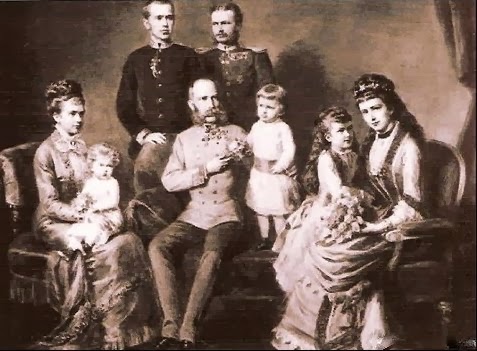
Marie Larisch was often next to Sissi, in Schönbrunn and in Gödöllő, she was part of the family and so the fate would have it, soon, exactly on November 5, 1888, that she presented to the Court her friend Baroness Hélèna Vetsera's daughter, the young Marie said Mary (in the photo below, the last taken before her death, Mary Vetsera is on the right):


- picture 12


that was a fatal moment because this young girl, with intense and charming look, illuminated by the joy of living that only the youth releases, bewitched Prince Rudolf and the two became soon lovers - Rudolf fell in love to the point of asking for a dispensation to Pope Leo XIII for annulling his marriage and to make her as wife, but of course this permission was denied by the Vatican - but the worst thing was that just Marie Luise, not only kept hidden this illegitimate relationship (of which were, however, aware the Emperor and the same Stéphanie) but accompanied the young Mary to the meetings with Rudolf, and so did the evening of that fateful January 28th, 1889 ... Mary and the Countess Larisch went out together, as usual, but this time the Countess returned alone, saying that she had been abandoned by Mary who, in fact, climb into the carriage driven by Bratfisch, who had himself carried her to Mayerling.

On January 29th, we had a family diner during which Rudolf, whom I had last seen at the Opera the day 22.1, wasn't present. He was hunting at Mayerling and made us say by Philip Coburg that had a little cold and fever, and that he preferred to keep quiet there. 4

Philip, Prince of Coburg, Rudolf's brother in law, together with Count Giuseppe Emanuele Hoyos, aide-de-camp, had been invited to Mayerling for a hunt that was to be held the following day, Wednesday, January 30th, and it was he, that tragic morning, after discovering the death of the two lovers, to demand to the staff of Mayerling - the waiter Loschek, the gamekeeper Wodiczek, the two cooks, the two boys - the oath of silence, which will be respected.


- picture 13 on the left - Inside the impressive building of the Hofburg in Vienna, the official residence of the Imperial couple during the winter period, on January 30th at 11 o'clock a.m. the Empress, just ended the hour of her morning exercise, was preparing to take part to the ancient greek lesson; the reading of Homer by his player was about to begin when Ida Ferenczy, the Hungarian lady of company, came to warn that the Count Hoyos had to talk to her with extreme urgency ... the news of the death of her son made her dumbfounded and soon burst her into tears; she laied down on her bed in despair because the forces were not, and in that moment the Emperor came into her room ... the Emperor, too soon, he didn't have to see her in tears, but after a short tête-à-tête the time to communicate what happened to Maria Valeria arrived:

Gusti told me that Mom was calling me. I go happily upstarirs and find Mom in my bedroom. " Rudolf is very sick - there is no hope ( I sat in her lap ) - you will turn pale - it is the worst."
I do not know why I say: " He killed himself ? " And when Mom ask me all scared because I thought it, then I realized it was true. We knelt, but in moments like this you cannot pray as you should. Mom said I had to be calm like her, because of dad, and I was, in fact. She herself had given him the news brought by Count Hoyos and while my thoughts were still with him, whom, even this maximum bitterness was spared, he entered the room. - No words can express how much it made me suffer to see him, I threw my arms around his neck. We remained so embraced and wept, and his heroic example argued Mom and me.

I was then sent to Stéphanie, for her to come here. Everything, everything the countess Tarouca, wretched woman, had said her! She continued to ask for forgiveness from all of us, because she felt good that her lack of dedication had helped to induce Rudolf in this horror. Mom was sublime with her, affective and almost maternal, without any bitterness. 5


- picture 14 


The windows in the bedroom weren't closed by the curtains, but at the foot of the bed there was a screen and next to it, left and right, the candles were burning in front of  the crucifix. And there laid Rudolf - the last hope of the Habsburgs, the only son of our poor parents, my brother, the ugly " Nazi" of my childhood, dead - dead. He was so beautiful and  was lying so peacefully, the white sheet pulled up to his chest and covered with flowers all around. The light bandage around his head didn't disfigured him - his cheeks and his ears were still flushed with the healthy blush of youth - the expression restless, often bitterly mocking that in life had often been his own, had given the way to a peaceful smile - I had never seen him so beautiful - he seemed to sleep and be quiet, happy. And however with arrogance the horror took possession of me, the silence of the death ... I put my flowers on the bed and made ​​the sign of the cross on his forehead. 6


- picture 15


It is understandable that the Empress attributed to her nephew an overwhelming responsibility in the tragedy of Mayerling because she was the necessary accomplice of a gruesome fate, but she wasn't the author, and almost certainly without her complicity Mary would have found a way to equally satisfy her own desires; the fact is that it was Marie Larisch to procure the first meeting of Mary with Rudolf in the Prater and it was she who led her for the first time at the Imperial Palace, but definitely she didn't even suspect what this would have lead to (there's also those who argue that their relationship lasted for a couple of years and was therefore began when Mary was only 15).  
Anyway, Marie Louise was prevented from attending the funeral of her cousin and was never received at Court again, was removed not only by the Imperial family, but also from Vienna ... pain that was added to pain  for the poor Sissi who, when loved, loved with all herself ...


- picture 16


After Mayerling, she fled to Bavaria and then to London in the attempt to fight and survive emotionally to the accusations of two families grieving for the lost of their affections. 


Elizabeth to Marie Valerie after the funeral of Rudolf: "Now, everyone who ever since my arrival here have talked so ill about me can be assured that I will pass without leaving a trace in Austria." 7


- picture 17


But let's get to the assumptions that have been made to find an explanation for such a tragic episode: at first it was thought that the young people had taken their lives by means of a dose of poison, or that the Vetsera had poisoned Rudolf and then him in turn was poisoned, but a more careful analysis of the facts performed already a few hours after the incident deposed against this first version, and then became more and more likely the thesis of the double suicide - Just the day after the Imperial couple learned from the personal physician Dr. Wiederhofer as the two lovers were actually dead. Wiederhofer saw (as noted by Valeria ) 'the girl lying on the bed, her hair loose on her shoulders, a rose between her clasped hands ... Rudolf in semi-sitting position, the gun fell from his stiffly hand on the floor, in the glass there was only some cognac. The doctor laid his body, now cold, on his back, his skull was cracked, the bullet had gone through his temple and went out from the opposite direction. The girl had the same injury. Both the bullets were found in the room. " 8 - Rudolf would have allegedly shot the young woman and then would have taken his own life - the one that was made to become official, maybe, Heaven knows, concealing elements far more outrageous (after the Second World War was also made the assumption that the young woman had been pregnant and had asked Rudolf to help her to have an abortion, so therefore, had lost her life and that the young Rudolf, mislaid, had taken his in turn) or plots politically motivated perhaps even more sinister ...

Disconcerting the confession of the last Habsburg Empress Zita of Bourbon-Parma ( portrayed in the photo below on the day of her marriage with her husband Charles I and his great-uncle the Emperor Franz Joseph on October 21st, 1911)


- picture 18


who in March of 1983 revealed to a reporter of the " Kronen Zeitung " elements which weren't available yet and that allow us today to make new and perhaps definitive light on this episode that, by projecting in the dark even the firmest certainty, saying aloud that the the evil and the hate exist and with their frosty spirit are able to cool and dim even the most bright and clear dawn, aiming anywhere, darken and turning off also stars that shine far above us, suddenly shook the old world: these are elements that had never been revealed before then as belonging  exclusively to the private of the family, she was born three years after the tragedy of Mayerling and inserted early in the Emperor's entourage better than any historian was aware of the effective facts and also had promised to her husband, the Emperor Charles I, who succeeded in 1916 to Franz Joseph and died in 1922, to render justice to the Archduke Rudolf by revealing that he was killed for political reasons.

Until then, in exile in Switzerland, she had never been requested, but in her words it wasn't a double suicide, but a murder committed by foreign agents.


- picture 19 on the left - From time Rudolf led secretly journalistic activity under the pseudonym of Julius Felix, expressing openly the friction with the privileged classes - we are in the age in which was taking field a conservative current that become animated by the militant nationalism and the systematic antisemitism and we're talking of the Austria where Hitler was born and grew up, and Rudolf was the heir to the throne of a multinational state, and furthermore friend of Jewish journalists and bankers - the distrust with which he lived the alliance with Prussia - he hated Wilhelm II, his contemporary, who considered the bane of Europe (and we know how the story, alas, will give him reason soon !) so as to suggest to his sister Marie Valerie, once that Archduke Franz Ferdinand will succeed to Franz Joseph, to leave Austria and emigrate abroad - and distribuited progressives leaflets in which he gave clear expression to his liberal point of view, which collected the most revolutionary sympathies and made ​​him the center of a plot: as revealed by the last Empress of Habsburg they were brewing to depose Franz Joseph as King of Hungary and replace him with his son, but Rudolf didn't agree at all, and the fact that he knew too much, however, costed him his own life ... he was told, he knew he would be assassinated, he knew that it wasn't just a threat, and he believed it, he confessed it to a few close relatives, including his uncle Karl Ludwig, Franz Joseph's brother, Zita's father in law, in fact.


- picture 20 - Rudolph and Wilhelm II in a portrait from around 1880


If Franz Joseph and Sissi were very quickly informed about the incident and spread the version of the suicide it is because the stakes, in terms of policy, was really too high and the people of the rank of the Empire would have been compromised. According to Empress Zita, Franz Joseph said that he acted to keep alive the monarchy and remembers (and she's not the only one to mention this) that two telegrams were sent to the Pope to ask for the permission to celebrate a religious funeral; you know that the Catholic Church denies it for the suicide, so after the first rejection, the Emperor was forced to tell all the truth to the Pope and he conceded then the permit, but there is no proof of that telegram neither in Vienna nor in Vatican.
The official version has it that Rudolf took his life as incapable of discernment, we would say today, the only condition in which it's granted to those who take their own lives to receive the sacraments.

The dossier of the incident between the 29th and the morning of January 30th, 1889, prepared by the Prime Minister Count Taafe, was burned in a very suspicious fire at his castle in Ellischau, Bohemia, and the copy that was made was stolen; in it you could be read that the blacksmith of the village of Mayerling was consulted early in the morning, even much more before the Emperors were aware, to arrange to resize the scene of the crime, to repair the damages done to the furniture, the open window with the broken glass and unhinged from the outside, the blood a little everywhere, in short, he had to change the scene that was clearly that of a lively scuffle.


- picture 21 on the right - I always wondered why in the official photographs of the body of the Archduke Rudolf he was wearing gloves which seem even empty, and I realized that it's not anything random (his hands were seriously injured) and the bandage at his head, according to as argued by Archduchess Gisella who touched his brother, didn't hide a hole concealed by a firearm, but his smashed braincase.


Poor, unhappy brother ! What may have happened in that soul, so as to be driven to an act so extreme and to inflict the worst to his parents ... 9


Mayerling isn't there anymore, the castle became a Carmelite convent, a place of worship and devotion, the room where the tragedy occurred was immediately made demolish by the Emperor and in its place was built a chapel; where the was the bed on which were founded the exanimate bodies the altar and the crucifix still implore mercy for those two poor souls whose destiny so brutally snatched life.


- picture 22


Long, so long this writing of mine and I do sincerely apologize, but I haven't found a way to expose more concisely a subject so vast and still under discussion, forgive me.

I thank you and embrace you with lots and lots of love.

See you soon ♥


 ☞  More about the Habsburgs


Marie Valerie of Habsburg, favourite daughter, the only one


The Castle of Miramare, apotheosis of the Maximilian of Habsburg's artistic talent.


Ludwig and Sissi, two souls linked by an only, high, romantic dream.


Bibliographic sources:

Hellmut Andics, Die Frauen der Habsburger, WILHELM HEYNE VERLAG, München, 1995

Elisabetta d'Austria, Diario poetico, MGS PRESS SAS, 1998

Maria Valeria d'Asburgo, La prediletta - Il diario della figlia di Sissi, a cura di Martha e Horst Schad, traduzione di Flavia Floradini, MGS PRESS, 2001


Brigitte Hamann, Elisabeth. Kaiserin wieder Willen, Amalthea Verlag, Wien, München, 1982


Gerd Holler, MAYERLING, LONGANESI, 1982

Gabriele Praschl-Bichler, L'IMPERATRICE ELISABETTA, Longanesi & C. Editore, 1997

John T. Salvendy, Ribelle reale. Ritratto psicologico di Rodolfo d'Asburgo, Mursia, Milano, 1995

http://marilynkaydennis.wordpress.com/2011/08/24/elisabeth-the-suffering-empress-part-6/


Quotations:

1 / 2 - Maria Valeria d'Asburgo, La prediletta - Il diario della figlia di Sissi, a cura di Martha e Horst Schad, traduzione di Flavia Floradini, MGS PRESS, 2001, p. 65;

3 - Brigitte Hamann, Elisabeth. Kaiserin wieder Willen, Amalthea Verlag, Wien, München, 1982, p. 369;

4 - Maria Valeria d'Asburgo, La prediletta - Il diario della figlia di Sissi, op.cit., p. 147;

5 - Maria Valeria d'Asburgo, op. cit., p. 148;

6 - Maria Valeria d'Asburgo, op. cit., p. 150;

7 - Brigitte Hamann, Elisabeth. Kaiserin wieder Willen, op. cit., p. 375;

8 - Brigitte Hamann, op. cit., p. 371;

9 - Maria Valeria d'Asburgo, La prediletta - Il diario della figlia di Sissi, op.cit., p. 149.