Visualizzazione post con etichetta Victorian education. Mostra tutti i post

martedì 20 gennaio 2026

Teaching Victorian Children (and adults) by telling Stories with a Moral End

 
Victorians placed great importance to moral lessons and cultivate them through education, literature, and social norms to grow in children a sense of duty, discipline, and Christian virtue. This focus was evident in school curricula that included hymns and stories where good behaviour was rewarded and bad ones was punished, and in a social code that valued thrift, self-reliance, and respectability. 


School days often began with prayers and religious songs aimed at reinforcing moral values. Lessons were frequently interspersed with tales designed to demonstrate the importance of good behavior, and in children's literature, they became a primary vehicle for moral education, with characters compensate for their goodness, diligence, and good manners, or penalized for their wickedness, iniquity, or malice.
Such tales were often published with an eye toward impressing upon the readers (male and female, young and old) the importance of various social mores; working hard, honesty, wasting not a moment, obeying parents, being on time, respecting one’s elders, etc. with the goal of shaping children into respectable adults.
Although this moral façade existed, the Victorian age also had a hypocritical undercurrent with social problems like child labor and prostitution hidden beneath the strict public image. 
It dates back to 1875 an edition of AESOP'S FABLES published by Cassell Petter & Galpin London which you may think was addressed to children. 


But I've read a tale which recalls to me that of "The Grasshopper and the Ant" on the WATERLOO CURIER, a newspasper from Waterloo, Iowa, dated 21st January 1880.
Of course children didn't read newspapers. Thus we can deduce that such a story was addressed to adult people.
Let's read it together.

THE TWO SQUIRRELS.

ONCE there were two squirrels, who lived neighbors to each other in a great forest. One pleasant but frosty day, when the nuts were dropping, they both started out from their holes in the big chestnut trees, and began to frisk about in the sunshine and to chatter and eat nuts. These two squirrels looked just alike, but, in reality, they were very different; for one of them, after playing a few minutes, began to fill his cheeks with nuts, and scamper off to his hole, to pack them away. But the other kept on playing and eating, and seemed to think of nothing but having a good time.
“Why don’t you work part of the time?” asked the busy squirrel. “Don’t you know that a long, cold winter is coming, when all these nice nuts will be covered with snow?”
“There will be plenty of time to work before the snow comes. We don’t have weather like this every day, and I am going to enjoy myself while it lasts. I can work when the sun doesn’t shine so warm and bright. If you choose to spend all of your time working, you can. But as for me, I intend to enjoy myself.”
“So do I,” said the smart squirrel, “but I intend to get my work done first. After I get my hole full of nuts. I shall have nothing to worry about. No matter how hard the wind blows, or how deep the snow is, I shall have enough for all winter. I am well and strong to-day, and it is pleasant to work out here in the sunshine, but to-morrow I may be sick or it may storm.

“So I shall work, and you may play,
All this bright October day;
But when the storms of winter roar,
Don’t come begging at my door.”

So the days passed on. Up and down, up and down, the busy squirrel went, until his hole was full to running over with ripe fat nuts. But the lazy squirrel played and frisked about, filled his stomach instead of his cheeks with nuts, and laughed at those who were wasting such pleasant days in labor. But at last one morning when he waked up he was surprised to find how cold it seemed. He peeped out of his hole, and behold! it was snowing. The ground was already covered an inch deep.
“Whew! exclaimed he, “the snow has come early, this year. It surely is not time for winter yet. I must go to work, after this melts away, as it surely must, and lay in my food for winter. But as he looked around at the bare branches of the trees, and heard the wind whistling through them, he thought o himself; “This certainly seems like winter, bit it cannot be possible that it has come so soon. But I must see what I can find for breakfast. I guess I can scratch away the snow, and get a few nuts.”
So out he went, and as he passed his neighbor’s home, he glanced up slyly to see if she were looking out. He felt ashamed. He went off quite a distance, and finding a spot where he remembered he saw some nuts the day before, commenced to scratch away the snow. He found several, but it was cold work, and made his paws ache. He went back to his nest, wondering what he should do, if winter had really come in earnest. All day long the snow kept falling. Night came, and he had to go to bed without any supper.
In the morning, he felt almost starved. He looked out; the snow was very deep, and more was falling. He thought of all the nice nuts that lay under it, and wished that he had taken time in the warm, sunny days to gather them. But it was too late now. His heart was very heavy and his stomach very empty. He thought of his neighbor with her nest packed so full of walnuts, chestnuts and delicious little beechnuts. It made him very, very hungry. As the day passed by, he felt as if he could not endure it any longer. So he went over to his neighbor’s house and peeped in. There she was, as snug and warm as could be, cracking nuts, and singing to her mate:

“I’m glad we worked when days were warm,
And saved for stormy weather;
For had we not, in this bad storm
We might have starved together.”

He stood there so ashamed that he could not speak for a while. He had never begged before, and it was hard work–much harder than gathering nuts in the sunshine would have been–but he had to confess, at last, that he was nearly starved, and to ask for a few nuts.
“I should be glad to give you enough to last you all winter, if I had them to spare,” said the squirrel, “but I only laid in enough for my own family, and the signs foretell a very hard winter. I can give you a few for your breakfast though.
So the poor squirrel took them, and went home. But they didn’t last long. Oh! the miserable hungry days that followed! The squirrel pined day after day for food. He was glad to get anything to eat. Sometimes he found a few nuts that had staid on the trees, and when a thaw came, as it did occasionally, he could find some under the snow. Often he was glad even to chew bark, and nibble the buds from the trees. But it was a hard winter, and he was a thin, miserable-looking squirrel when spring came. But it taught him a good lesson, and when another fall came, and the nuts began to drop, there wasn’t a busier squirrel to be found. When his neighbor saw how smart he was, she changed her old song a little. It was now,

“First we’ll work and then we’ll play,
On this bright October day;”

and he sang with her, at the top of his voice.
 
–Lizzie C. Deering in Examiner and Chronicle of Waterloo, Iowa, January 21, 1880.


In the hope You've enjoyed this reading,
I'm wishing You my very best, 
dearest Readers!
See you soon ❤


 Dany


Insegnare ai bambini vittoriani (e agli adulti) raccontando storie con un finale a sfondo educativo

I vittoriani attribuivano grande importanza agli insegnamenti morali e li coltivavano per tramite dell'istruzione, della letteratura e delle norme sociali al fine di far crescere nei bambini il senso del dovere, la disciplina e le virtù cristiane. Questa attenzione era evidente già nei programmi scolastici, che includevano inni e storie in cui il buon comportamento veniva ricompensato e quello malvagio punito, e in un codice sociale che valorizzava la parsimonia, l'autosufficienza e la rispettabilità.


IMMAGINE DI COPERTINA.


Le giornate scolastiche spesso iniziavano proprio con preghiere e canti religiosi volti a rafforzare i valori morali. Le lezioni erano spesso intervallate da racconti pensati per mostrare l'importanza della buona condotta e, nella letteratura per l'infanzia, le storie divennero un veicolo primario di educazione morale, con personaggi che venivano ricompensati per la loro bontà, diligenza ed educazione, oppure penalizzati per la loro malvagità, iniquità o malizia.
Questi racconti venivano spesso pubblicati con l'obiettivo di imprimere nei lettori (uomini e donne, giovani e anziani) l'importanza di vari costumi sociali: lavorare sodo, essere onesti, non perdere tempo, obbedire ai genitori, essere puntuali, rispettare gli anziani, ecc., con il fine di crescere i bambini in adulti rispettabili.
Sebbene questa facciata morale esistesse, l'età vittoriana, purtroppo, aveva anche un sottofondo ipocrita, con problemi sociali come il lavoro minorile e la prostituzione nascosti dietro una rigida immagine pubblica.
Risale al 1889 un'edizione delle AESOP'S FABLES (FIABE DI ESOPO) pubblicata da London D. Nutt, che potreste pensare fosse rivolta ai bambini. 


Ma ho letto una fiaba che mi ricorda "La cicala e la formica" sul WATERLOO CURIER, un quotidiano di Waterloo, Iowa, datato 21 gennaio 1880.
Naturalmente i bambini non leggevano i giornali. Quindi possiamo dedurre che una storia del genere fosse rivolta a un pubblico adulto.
Leggiamola insieme.

I DUE SCOIATTOLI.

C'erano una volta due scoiattoli, un maschio ed una femmina, che erano vicini di casa in una grande foresta. Un giorno d'autunno, piacevole ma gelido, mentre le noci cominciavano a cadere, entrambi uscirono dalle loro tane scavate nei grandi tronchi di castagno e iniziarono a saltellare al sole, chiacchierando e mangiando noci. A vederli si sarebbe detto che questi due scoiattoli fossero uguali, ma in realtà erano molto diversi; uno di loro, la femmina, dopo aver giocato per qualche minuto, iniziò a riempirsi le guance di noci e a correre verso la sua tana per riporle; l'altro, il maschio, continuava a giocare e mangiare, e sembrava non pensare ad altro che a divertirsi.
"Perché non lavori un po' di tempo?" chiese la scoiattolina indaffarata. "Non sai che sta arrivando un lungo e freddo inverno, quando tutte queste belle noci saranno coperte di neve?" "Ci sarà un sacco di tempo per lavorare prima che arrivi la neve. Non abbiamo un tempo così bello tutti i giorni, e ho intenzione di spassarmela finché dura. Posso lavorare quando il sole non splende così caldo e luminoso. Se scegli di passare tutto il tuo tempo a lavorare, fallo pure. Ma per quanto mi riguarda, ho intenzione di divertirmi."
"Anch'io", disse la scoiattolina intelligente, "ma prima intendo finire il mio lavoro, Dopo aver riempito la mia tana di noci non avrò nulla di cui preoccuparmi. Non importa quanto forte soffierà il vento o quanto alta sarà la neve, ne avrò abbastanza per tutto l'inverno. Oggi sto bene e sono forte, ed è piacevole lavorare qui al sole, ma domani potrei ammalarmi o potrebbe esserci brutto tempo.

"Quindi lavorerò, e tu potrai giocare,
per tutto questo luminoso giorno di ottobre;
ma quando ruggiranno le tempeste invernali,
non venire alla mia porta a mendicare."

Così i giorni passarono. La scoiattolina indaffarata andava su e giù, su e giù, finché la sua tana non fu piena di grosse noci mature fino a traboccare. Ma lo scoiattolo maschio, pigro e giocherellone, continuava a trastullarsi e saltellava in giro, riempiendosi lo stomaco invece delle guance di noci e ridendo di coloro che sprecavano giornate così piacevoli a faticare. Ma finalmente una mattina, quando si svegliò, fu sorpreso di scoprire quanto freddo fosse arrivato. Sbirciò fuori dalla sua tana, ed ecco! Stava nevicando. Il terreno era già coperto di qualche centimetro di neve.
"Uffa!" esclamò, "la neve è arrivata presto, quest'anno. Non è ancora tempo d'inverno. Devo andare al lavoro, dopo che questa si sarà sciolta, come sicuramente dovrà, e fare scorta di cibo per l'inverno". Ma mentre si guardava intorno, tra i rami spogli degli alberi e il vento che fischiava, pensò tra sé e sé: "Questo sembra proprio inverno, ma non è possibile che sia arrivato così presto. Devo vedere cosa riesco a trovare per colazione. Credo che potrò grattare via la neve e trovare qualche noce".
Così uscì e, passando davanti alla casa della vicina, alzò lo sguardo furtivamente per vedere se lei stesse guardando fuori. Si vergognò. Si allontanò un bel po' e, trovando un punto dove ricordava di aver visto delle noci il giorno prima, iniziò a grattare via la neve. Ne trovò diverse, ma era un lavoro disagevole e gli facevano male le piccole dita per il gelo. Tornò al suo nido, chiedendosi cosa avrebbe dovuto fare se l'inverno fosse davvero arrivato. Per tutto il giorno la neve continuò a cadere. Giunse la notte e dovette andare a letto senza cena.
Al mattino si sentì quasi affamato. Guardò fuori; la neve era molto alta e ne cadeva ancora. Pensò a tutte le belle noci che vi giacevano sotto e sospirò al pensiero di non essersi preso il tempo, durante giornate calde e soleggiate, per raccoglierle. Ma ormai era troppo tardi. Il suo cuore era molto pesante e lo stomaco molto vuoto. Pensò alla sua vicina con il suo nido così pieno di noci, castagne e deliziose faggiole. Gli venne una fame tremenda. Mentre Il giorno passava sentì di non poterne più resistere. Così andò a casa della vicina e sbirciò dentro. Lei era lì, al conforto del caldo come non mai, a schiacciare noci e cantare al suo compagno:

"Sono contenta che abbiamo lavorato quando le giornate erano calde,
e risparmiato per il tempo tempestoso;
perché se non lo avessimo fatto, con questa bufera,
saremmo potuti morire di fame insieme."

Rimase lì così in vergogna che non riuscì a parlare per un po'. Non aveva mai mendicato prima, ed era un lavoro duro – molto più duro che raccogliere noci al sole – ma alla fine dovette riconoscere di essere sul punto di morire di fame e chiedere qualche noce.
"Sarei felice di dartene abbastanza per tutto l'inverno, se ne avessi da parte", disse la scoiattolina, "ma ne ho messe da parte solo per la mia famiglia, e i segni predicono un inverno molto duro. Posso dartene però un po' per colazione."
Così il povero scoiattolo le prese e tornò a casa. Ma non durarono a lungo. Oh! i giorni miserabili e affamati che seguirono! Lo scoiattolo si struggeva giorno dopo giorno per il cibo. Era contento solo quando riusciva a trovare qualcosa da mangiare. A volte si accontentava di qualche noce rimasta sugli alberi, e quando arrivava il disgelo, come accadeva occasionalmente, riusciva a trovarne qualcuna sotto la neve. Spesso era contento persino di masticare la corteccia e rosicchiare le gemme dagli alberi. Ma era un inverno duro, e si ritrovò ad essere magro e dall'aspetto miserabile quando arrivò la primavera. Ma quello che era accaduto gli insegnò una buona lezione, tant'é che quando giunse un altro autunno, e le noci cominciarono a cadere, non si trovava uno scoiattolo più indaffarato di lui. Quando la sua vicina vide quanto fosse sveglio, cambiò un po' la sua vecchia canzone. Ora cantava:

"Prima lavoreremo e poi giocheremo,
in questa luminosa giornata d'ottobre";

ed egli, a squarciagola, cantava con lei.

–Lizzie C. Deering in Examiner and Chronicle of Waterloo, Iowa, 21 gennaio 1880.


IMMAGINE 3 - I DUE SCOIATTOLI.


Nella speranza che abbiate apprezzato la lettura di questo articolo,
Vi auguro ogni bene, carissimi Lettori!
A presto ❤

 Dany


LINKING TO:


venerdì 18 aprile 2025

༺ THE COOKING GARDEN ༻ A course of cooking for pupils of all ages by Miss Emily Huntington, 1885


It was just a few days ago that I came to know this outstanding book. And it happened thanks to a lovely friend of mine: Becky Diamond. She's a Researcher, Writer and Historian, qualified in History of food and she has also a BLOG of her own where she shares recipes and the fruit of her work - she loves to deep the knowledge of what is called The Gilded Age of Food, namely the 19th century. I had the chance to introduce her to you in ~ My little old world ~ post  PORTRAIT OF A LADY~ Mrs. Elizabeth Goodfellow, written after having read her first book which her, so kindly, sent me (Mrs.Goodfellow - THE STORY OF AMERICA'S FIRST COOKING SCHOOL, Westholme Publishing, United States of America, 2012); and then in the post The Thousand-Dollar Dinner, the first cookery challenge in History which I wrote thanks to the second book she wrote and which I received once again directly from her. (The Thousand Dollar Dinner: America's First Great Cookery Challenge, Westholme Publishing, Yardley, Pennsylvania, October 28, 2015).
So today we're going to know Miss Emily Huntington (1841 – 1909) who was an American author and home economics educator, and her The Cooking Garden this time thanks to the last post Becky published on her blog; Becky mentions this book and shares the link which lead us to read it wholly on the Internet Archive.
She was inspired by a recipe she read on it and suggests to her readers a new version of it; I, instead, want to let you know the intuition this Victorian lady had in writing her book. We have to go back a little further in time to find Friedrich Fröbel (1782 – 1852), a German pedagogist who theorized the KINDERGARTEN, on which modern school for infancy are based. He believed that to play was fundamental for every child in order to learn and grow, but we must think about exploratory games which have to be played outdoors, in a garden, precisely - hence the term KINDERGARTEN which translated from German means "garden for the children" - where a child can move freely directing his attention towards what captures him most. Today it sounds so obvious to us but it wasn't the same at the beginning of the 19th century, it was something which sounded almost revolutionary. All it takes me back to my studies - I graduated in History and Philosophy at Psicopedagogic address, so I'd love to go on with this topic which is quite familiar to me, but I don't want to bore you, that's why I'm stopping here!
Knowing this theory, Miss Huntington thought about teaching children, or better, little girls, the art of cooking as if it would a game. Using this approach, she wrote several books addressed to adults who hoped to educate their children, specifically daughters, in cooking skills. The one proposed by Miss Huntington became a real educational method so much so that in 1880, the Kitchen-Garden Association was formed in New York, with the goal of educating the children of the "laboring classes" through her approach: classes were provided by the Association throughout New England until 1885, when it was dissolved and reformed as the Industrial Education Association, with a larger goal and mission. The organization was partially funded by the philanthropist Grace Hoadley Dodge who had been a volunteer teacher with Emily Huntington. Among the major effects of this organization there were the introduction of classes in manual arts in the New York City public schools and the founding of Teachers College at the Columbia University.

But let's come back to our book. It is enough to look at its cover to understand its educational purposes:


there are pots and cooking tools looking like the ones we used when we were little girls playing with dolls; a pentagram, which makes us think of music; and a bell, which generally rings at the beginning and at the end of a lesson. Its complete title is in fact: 
The course consists of 10 lessons in each of which different foods are taken into consideration that form the basis for 4 recipes. But, quite unusually, the text begins with a letter addressed to the teachers followed by one for the students.
These are the very first words written by Miss Huntington who goes on to provide very detailed instructions on how to proceed in creating the ideal place in which to hold "her" lessons:

 « FOR THE TEACHER,
Dear Friend: —
This book Is for those who are anxious to teach simple cooking, in classes. The world is full of cook-books, with excellent receipts, easily adapted to this system. What I have tried to do, is to help you to a plan of work. 
I have uniform aprons for the scholars, and also for the young lady teachers. A reliable char-woman comes in at the close of each lesson to put things to rights. In evening classes, when girls are taught who are at work during the day, I have not thought it best to keep them a moment after the lesson to wash up the dishes and put each in its place. If the lessons are too long they tire both teacher and pupils, and spoil the effect. So, I have a diagram of the room, and topics to work by, that all may be arranged when the lesson begins; and the receipt charts should be on the wall, and the materials ready to start the lesson the moment the pupils march into the room. An hour and a half should be the outside limit of a lesson. In the Order of Exercises you will see " Songs" are referred to. 

I have found songs with hints and rules in them very useful, in teaching children especially. As turning over leaves is inconvenient, I have had the cooking songs printed on large cards. [...] At the close of the lesson I have had the cooked dishes arranged on a tray and placed in front of the teacher for suggestions and comments from her, while the class marched in review past the table, after which the pupils were allowed to eat or carry home samples of the food; this adds greatly to the enthusiasm of the lesson. Then the dishes to be washed were carried to the sink, all the scholars marching together, as seen in the illustration at the close of this book, and the class dismissed. 

Each course of lessons must vary and be adapted to place and circumstances. To some teachers, the rhyming songs may seem useless, if not foolish; but I have found them valuable, even with girls twenty (20) years of age, in keeping the class in order, and their minds on the lesson, while waiting for a kettle to boil or a cake to bake. Appoint a special one to take charge of the fire or dish in the meantime, that nothing be spoiled. [...] »
And addressing the children she begins like this:
 « My Dear Young Friends : —
It is very pleasant to me to be able to give you cooking lessons. You will enjoy them very much. It makes such a difference in a home if you know how things should be done, and the surest way to keep people good natured in a family is to give them good things to eat.
It is quite right that it should be so, and it is especially due to those who earn the money to buy the food that they should enjoy it when put on to the table ; and it is no harder to learn to cook well than it is to cook ill. [...] »
After having given instruction about lighting the fire in the stove, using and cleaning the tools, teaching something about the aliments which will be used in the receipts showing thus a quite deep knowledge of food and giving a last suggestion (« The last thing you should do before begining to cook is to wash your hands and clean your nails.»), she ends as follows:


« Do not expect success at first, and it would be a mistake to attempt receipts so expensive that you could not repeatedly try them, and by patient effort bring satisfactory results at last. All the receipts of this course will be simple and inexpensive.»
Every lesson really seems like a game, with the tables that, depending on what is being taught, need to be moved differently in relation to the teacher's desk and the stove, with different songs and a letter with questions and answers about the topic of the day that will be read while the food is cooking.
And only what appears to a child as a game attracts him and teaches him something, which is always something important.
I invite you to read this book in depth, which is really very enjoyable and engaging: we can consider it a sort of manual, but much more intelligent than the modern ones.
I also invite you to visit Becky on her blog to read the revisited version of CREAMED CARROTS that she suggests to put on the table on the occasion of the meal for the Sunday in which we celebrate Easter.
By the way, 


in addition to my usual thanks, 
you're receiving my most heartfelt wishes 
for a Easter filled with Peace, Love, Serenity.


Dany


 ༺ THE COOKING GARDEN ༻
Corso di gastronomia per alunni di ogni età 
di Miss Emily Huntington, 1885


IMMAGINE 1 - Introduzione alla prima lezione. 


Solamente pochi giorni fa ho scoperto questo libro straordinario. E l'ho scoperto grazie ad una cara amica: Becky Diamond. È ricercatrice, scrittrice e storica, specializzata in storia di arte culinaria e anche curatrice di un BLOG in cui condivide ricette e i frutti del suo lavoro: ama approfondire la conoscenza di quella che viene chiamata l'Età d'Oro dell'Arte Culinaria, ovvero il XIX secolo. Ho avuto l'opportunità di presentarvela nel post di ~ My little old world ~ PORTRAIT OF A LADY~ Mrs. Elizabeth Goodfellow, scritto dopo aver letto il suo primo libro che ella, così gentilmente, mi inviò (Mrs.Goodfellow - THE STORY OF AMERICA'S FIRST COOKING SCHOOL, Westholme Publishing, Stati Uniti d'America, 2012); e poi nel post The Thousand-Dollar Dinner, la prima sfida culinaria della storia, che ho scritto grazie al suo secondo libro, anch'esso ricevuto direttamente da lei (The Thousand Dollar Dinner: America's First Great Cookery Challenge, Westholme Publishing, Yardley, Pennsylvania, 28 ottobre 2015). Oggi faremo la conoscenza di Miss Emily Huntington (1841-1909), scrittrice americana ed educatrice in economia domestica, e del suo The Cooking Garden, conosciuto questa volta grazie all'ultimo post che Becky ha pubblicato sul suo blog; Becky ci fornisce il titolo di questo libro e condivide il link che ci porta a leggerlo per intero su Internet Archive. Lei si è ispirata a una ricetta che ha letto e ne propone ai lettori una nuova versione, io invece voglio raccontarvi l'intuizione che questa signora vittoriana ha avuto nello scrivere questo suo libro. Dobbiamo tornare ancora un po' indietro nel tempo per trovare Friedrich Fröbel
(1782 – 1852), pedagogista tedesco che teorizzò il KINDERGARTEN, su cui si basa la moderna scuola dell'infanzia. Egli riteneva che giocare fosse fondamentale per ogni bambino al fine di imparare e crescere, ma dobbiamo pensare a giochi esplorativi che devono essere praticati all'aperto, in un giardino, appunto - da qui il termine KINDERGARTEN che tradotto dal tedesco significa "giardino dei bambini" - dove un bambino può muoversi liberamente indirizzando la sua attenzione verso ciò che più lo cattura. Oggi ci sembra così ovvio, non era lo stesso all'inizio del XIX secolo, anzi, allora poteva apparire come qualcosa di rivoluzionario. Tutto questo mi riporta ai miei studi: sono laureata in Storia e Filosofia a indirizzo psicopedagogico, quindi mi piacerebbe continuare con questo argomento che mi è piuttosto familiare, ma non voglio annoiarvi, ecco perché mi fermo qui! Conoscendo questa teoria, Miss Huntington ha pensato di insegnare ai bambini, o meglio alle bambine, a cucinare come se fosse un gioco. Con questo approccio, scrisse diversi libri indirizzati ad adulti che speravano di educare i propri figli, in particolare le femmine, alle competenze culinarie.
Quello proposto da Miss Huntington con questo suo libro divenne un vero e proprio metodo educativo tanto che, nel 1880, venne fondata a New York la Kitchen-Garden Association, con l'obiettivo di istruire le bambine appartenenti alle classi operaie attraverso il suo approccio: i corsi furono tenuti dall'Associazione in tutto il New England fino al 1885, quando fu sciolta e riformata come Industrial Education Association, con un obiettivo e una missione più ampi. L'organizzazione fu parzialmente finanziata dalla filantropa Grace Hoadley Dodge, che era stata insegnante volontaria con Emily Huntington. Tra i principali effetti di questa organizzazione vi furono l'introduzione di corsi di arti manuali nelle scuole pubbliche di New York e la fondazione del Teachers College presso la Columbia University.

Ma torniamo al nostro libro. Basta guardarne la copertina per capirne le finalità didattiche: 


IMMAGINE 2 - Copertina.


ci sono pentolini e utensili da cucina che ricordano quelli che usavamo da bambine quando giocavamo con le bambole; un pentagramma, che ci fa pensare alla musica; e un campanello, che generalmente suona all'inizio e alla fine di una lezione. Il suo titolo per intero è infatti:
Il corso consta di 10 lezioni in ognuna delle quali sono presi in considerazione alimenti differenti che fanno da base per 4 ricette. Ma, cosa non consueta, il testo inizia con una lettera indirizzata agli insegnanti seguita da una per gli alunni.
Sono queste le primissime parole scritte da Miss Huntington che prosegue fornendo istruzioni ben dettagliate su come procedere nel creare il luogo ideale in cui tenere le "sue" lezioni: 

 « PER L'INSEGNANTE,
Caro amico: -
Questo libro è per coloro che sono ansiosi di insegnare la cucina semplice, in classe. Il mondo è pieno di libri di cucina, con ottime ricette, facilmente adattabili a questo sistema. Ciò che ho cercato di fare è aiutarvi ad elaborare un piano di lavoro.


IMMAGINE 3 A DX - Tratta da pag. 6.


Ho grembiuli che fungono da uniformi per gli studenti e anche per le giovani insegnanti. Una donna delle pulizie affidabile entrerà alla fine di ogni lezione per sistemare le cose. Nelle classi serali, quando si insegna alle ragazze che lavorano durante il giorno, ho pensato fosse inopportuno trattenerle un momento dopo la lezione per lavare i piatti e rimetterli al loro posto. Se le lezioni sono troppo lunghe, stancano sia l'insegnante che gli alunni e ne rovinano l'effetto. Quindi, ho uno schema dell'aula e degli argomenti su cui lavorare, in modo che tutto possa essere sistemato all'inizio della lezione; le tabelle delle ricette dovrebbero essere appese al muro e il materiale pronto per iniziare la lezione nel momento in cui gli alunni entrano in aula. Un'ora e mezza dovrebbe essere il limite massimo di una lezione. Nell'elenco degli esercizi vedrete che si fa riferimento alle "Canzoni". 


IMMAGINE 4 A SX - Tratta da pag. 154.


Ho trovato le canzoni con suggerimenti e regole molto utili, soprattutto quando si tratta di insegnare ai bambini. Poiché voltare pagina è scomodo, ho fatto stampare le canzoni culinarie su cartoncini di grandi dimensioni. [...] Alla fine della lezione ho fatto disporre i piatti cucinati su di un vassoio e li ho fatti porre davanti all'insegnante per suggerimenti e commenti, mentre la classe sfilava in rassegna davanti al tavolo; dopodiché agli alunni è stato permesso di mangiare o di portare a casa degli assaggi del cibo. Questo contribuisce notevolmente all'entusiasmo per la lezione.
Poi i piatti da lavare sono stati portati al lavandino, tutti gli studenti marciavano insieme, come si vede nell'illustrazione alla fine di questo libro, e la classe è stata congedata. Ogni ciclo di lezioni deve variare ed essere adattato al luogo e alle circostanze. 


IMMAGINE 5 A DX - Tratta da pag. 194.


Ad alcuni insegnanti, le canzoni in rima possono sembrare inutili, se non sciocche; ma le ho trovate preziose, anche con ragazze di vent'anni, per mantenere l'ordine in classe e la loro attenzione concentrata sulla lezione, mentre aspettano che l'acqua bolla o che una torta cuocia. Nominate una persona speciale che si occupi del fuoco o del piatto nel frattempo, affinché nulla venga rovinato. [...] »
E rivolgendosi agli alunni, esordisce così:
 « Miei cari giovani amici: —
Mi è cosa molto gradita potervi dare lezioni di cucina. Vi piaceranno moltissimo. Sapere come si fanno le cose fa davvero la differenza in una casa, ed il modo più sicuro per mantenere il buon umore in famiglia è offrire del buon cibo.
È giusto che sia così, ed è soprattutto doveroso per coloro che guadagnano i soldi per comprare il cibo che lo apprezzino quando viene servito in tavola; e imparare a cucinare bene non è più difficile che cucinare male. [...] »
Dopo aver dato istruzioni su come accendere il fuoco nella stufa, usare e pulire gli utensili, aver spiegato qualcosa sugli alimenti che saranno utilizzati nelle ricette, dimostrando così una conoscenza piuttosto approfondita in fatto di alimentazione e aver dato un ultimo suggerimento («L'ultima cosa che dovreste fare prima di iniziare a cucinare è lavarvi le mani e pulirvi le unghie.»), conclude come segue: 


IMMAGINE 6 - Pagina che introduce la lezione settima.


« Non aspettatevi il ​​successo all'inizio, e sarebbe un errore tentare ricette così costose da non poterle provare ripetutamente e, con un impegno paziente, ottenere alla fine risultati soddisfacenti. Tutte le ricette di questo corso saranno semplici ed economiche.»
Ogni lezione sembra davvero un gioco, con i tavoli che, a seconda di quanto viene insegnato, vanno spostati in modo differente rispetto alla cattedra e alla stufa, con canzoni differenti e una lettera, seguita da domande e risposte sull'argomento del giorno che andranno prese in considerazione durante la cottura del cibo.
E solo ciò che appare ad un bimbo come un gioco lo attira e gli insegna qualcosa, ma sempre qualcosa d'importante.
Vi invito ad approfondire la lettura di questo libro che davvero è molto divertente e coinvolgente: possiamo considerarlo una sorta di manuale, ma molto più intelligente di quelli moderni. 
Vi invito, inoltre, a far visita a Becky sul suo blog per leggere la versione rivisitata delle CREAMED CARROTS che ella suggerisce di mettere in tavola in occasione del pasto per la domenica in cui si festeggia la S. Pasqua.
A tale proposito, 


oltre ai miei soliti ringraziamenti, 
ricevete i miei più sentiti auguri 
per una S. Pasqua colma di Pace, Amore, Serenità.

Dany


LINKING TO: 


Angie at  God's Growing Garden featured this post of mine.
I'm overjoyed, I thank you from the bottom of my heart dear Lady!


venerdì 25 novembre 2022

The Oread Institute in Worcester (MASS.), the first College for Girls in History


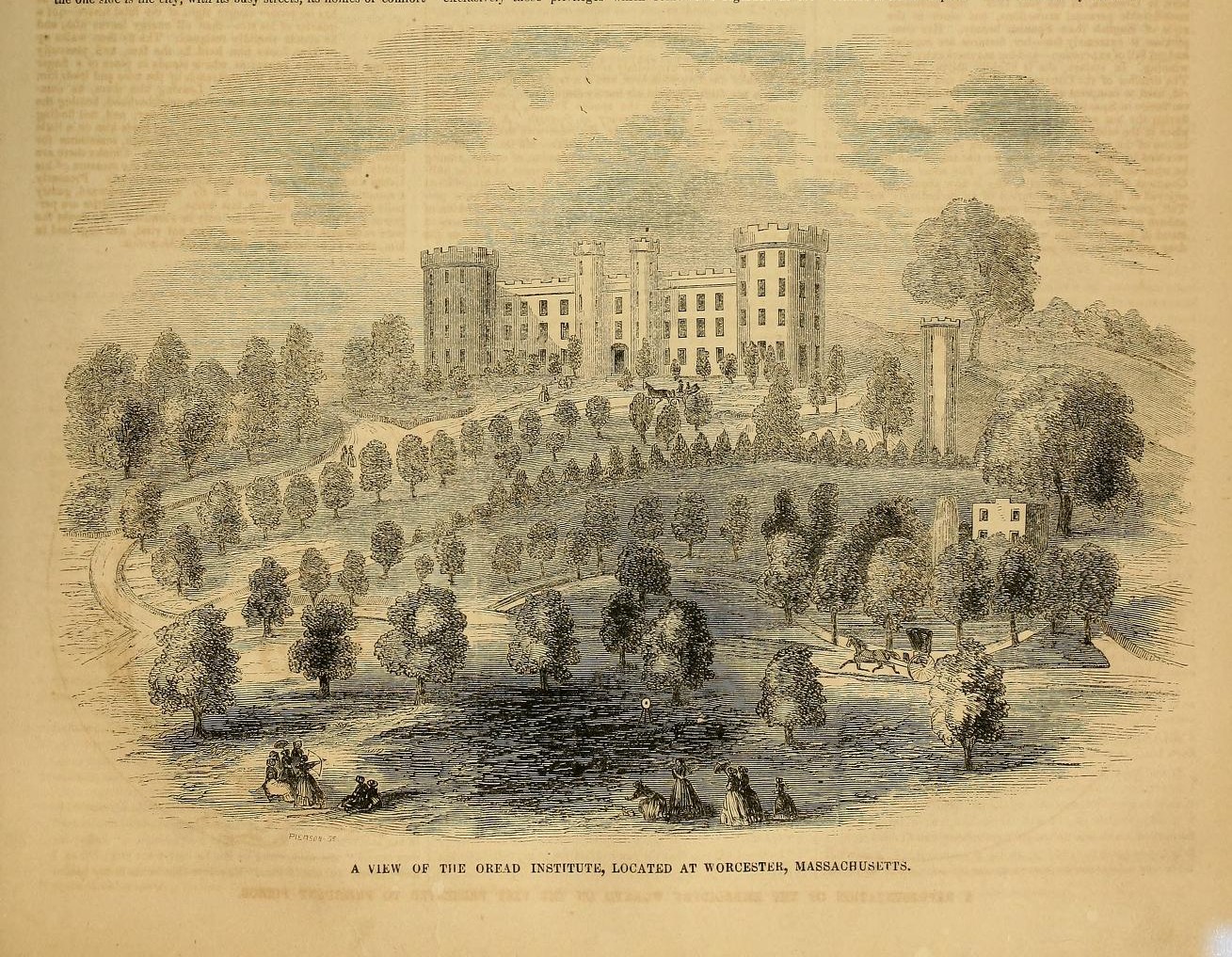
Saturday, March 19, 1853, the GLEASON'S PICTORIAL of Boston read:

THE OREAD INSTITUTE, WORCESTER, MASS.,
[...] is a Female Collegiate Seminary, founded in 1848, by Eli Thayer, A. M., the present Principal, and incorporated in 1851. The building is 250 feet in length, and affoids ample accommodations to 150 pupils. The walls are of stone, and varying in thickness from two to four feet. The whole structure is grand and imposing, reminding one of the feudal castles of the middle ages. This Institute has a commanding site, overlooking the beautiful city of Worcester and the surrounding country, so that the landscape spread to the view of the dwellers within was scarcely ever exceeded in beauty. On the one side is the city, with its busy streets, its homes of comfort and peace, and its heaven-pointing steeples, seen perchance be- neath the rising curtain of mist which morning lifts from the valley, or in the brightness of noontide, or in the mild radiance of the sunset's glory. On the other, is the open countiy, with its hills, its groves, and its vales, through which tlie streamlet wanders, softly singing to the music of the wind harp. And not brighter is the scene without the castle than within. There a band of sisters dwell together in perfect unity, rejoicing in the beautiful light of learning and love. Climbing together the steep sides of the "Hill of Science," each strives that time, in its swift flight, may bear some worthy record to the throne of God. Here woman enjoys exclusively those privileges which some have regarded as the rightful prerogative of the other sex, having the advantages of a collegiate course of study, if she chooses. And in the attainment of that to whic she has long aspired, she is happy. The stranger, passing through the almost endless halls, and glancing into the numerous and cheerful apartments of the castle, is gladdened by the sight of many happy countenances, and the beaming of eyes that reveal the powerful workings of the mind within. Nor is the moral nature neglected in the culture of the intellectual ; and the morning and evening prajer ascends from the grateful hearts of that loving band of sisters to a common Father; while day by day the blossoms of piety — the becoming ornaments of woman — are tended in an atmosphere of Chiristian charity and love. (p.177)

This is the high-sounding presentation of the institute that was read in perhaps the most popular newspaper in the entire New England region. Opened on May 14, 1848, when it was not yet fully completed, it had already reached the pinnacle of its fame.

 
Eli Thayer was born in Mendon, Massachussets, on June 11th, 1819 from Benjamin Thayer and Ruth Alden, daughter of Rev. Noah Alden of Bellingham. He received his early education  in the district schools of Mendon, at the  Bellingham  High  School,  and  in  the  Academy at  Amherst. He was prepared for college at the Worcester "Manual  Labor  School," afterwards  the Worcester Academy, and graduated from Brown in 1845, the Salutatorian of his class. On  his return to Worcester, the following autumn, he taught in the Worcester Academy and soon  became its Principal, but gave up this position in 1849 in order to assume the management of  his own new school, the Oread Institute, situated on the opposite hill. He was married in 1846 to Miss Caroline M. Capron of Millville, Massachussets, and had seven children. His five daughters, Clara, Ida, Eva, Cora and Anna, were all pupils at the Oread, and his eldest son, John Alden, was Principal of the school in 1879. His other son, George, went to live to New York City. Mr. Thayer died in Worcester, on April 15th, 1899. 

When Mr. Thayer looked for of a place for his institute, he thought Goat Hill to be perfect for the school he dreamed about: it was near enough to the city to make the literary, musical and church opportunities of the latter accessible, and it was, at the same time, quite a little outside of the very heart of it.

"To live in the city is one thing, and to live a long way out of it, where nothing is going on, not nearly so much as on a farm, and to be allowed to go to the city only at stated times, is quite another." wrote one of the new-comers at the Oread in the fall of 1855. In another letter written by a girl still arrived in the fifties we can read: "There seemed to be a charming freedom and a really poetic element in those days to the hill-top with such a boundless view in all directions, and such a full and enjoyable liberty in the inner life of the school," and also: "The scholars were all expected to spend an hour at least every day out of doors. How beautiful we thought that to be always, but in the bright June days with the whole country-side  around us it was ideal — perfect! And towards New Worcester, towards the wild open country, we had no limit to our walks if we returned in time for the next duties of school. One may well imagine the exquisite sense of freedom and enjoyment which this daily exercise gave to us young girls!"(p.11-12)

Actually when Eli Thayer decided to give life to a school for girls, it was a romantic age that inspiried him also from an architectural point of view, that of the serving knights and of ladies locked in the towers of magnificent castles waiting for who could save them: I'm talking about the Middle Ages. He dreamed of 

a building in the form of a quadrangle with an inner court about 170 feet square. Circular towers 50 feet in diameter and four stories high were to be placed at the four corners. These were to be connected by four halls, each three stories high  and 40 feet deep, the whole to be used for dormitories, recitation and lecture rooms, dining rooms, reception rooms, and other apartments which such an institution would require. The  building thus planned was  designed to accommodate about six hundred students, more than were then found in any American college. The foundation of the north  tower was laid in 1848 and the tower completed in 1849. The south tower was finished in 1850, and the east hall, connecting these two towers, in 1852, the whole having a frontage of  250  feet. The other parts included in the original plan were never begun. It is an interesting  fact that the stone used in the construction of the building was quarried from the hill on which it was to be erected. (p.1)

In fact if you look at the images above, you truly think them to come from a fairy tales book. They come from the book the title of which is HISTORY of The Oread Collegiate Institute, WORCESTER, MASS. (1849-1881) WITH BIOGRAPHICAL SKETCHES


and they date back to the '70s. 
But where does the name of this stunning castle come from? 
Oreade (Oread in English) was a nymph of the mountains and hills drawn from the classical literature who followed Diana (he read about her in Virgil's Aeneid).

The course of study includes a preparatory in an academical department, the latter occupying for years. In mathematics the students are taken through a thorough corse, including the Calculus. Natural science is illustrated by nature and art. Latin and Greek are studied with care. […] Art and poetry are carefully attended to and outside to study hours ornamentals have a due share of attention. Music has a high place in the curriculum. Drawing, painting, elocution and the art of composition have their proper place. Regular gymnastic exercises are engaged in by every pupil as a means of health as well as of graceful carriage. The study of German, Italian, Spanish is optional. The French language is part of the course, and in the advances classes recitations are conducted in French. The library contains about four thousand volumes. The social, moral and religious culture of the students is a matter of the utmost care. Bible study by the principle, together with family devotions, Bible-class and Sabbath services, while entire free, […] are directed to the religious and moral development of the mind and heart of the students. (p.123)

And how was a day at Oread Castle organized?
Here's what a pupil wrote in her own words:

"Breakfast was at 6.30 summer and winter. As we went to the dining  room each carried down her oil lamp to be filled and carried back when we went  from dinner. At breakfast while the rolls were coming in we each recited a verse of Scripture. After breakfast we had to care for our rooms. All the water used for toilet purposes had to be carried to their rooms by the girls themselves. For the first two or three years of the school it was brought from a spring, half way down the hill to the left. Afterwards we brought it from the dining room. Every morning before school began a certain time was set apart for each one in turn of every two occupants of a room to be in her chamber quite alone for whatever devotional purpose she chose. School was opened at half past eight, and morning devotions  were presided over by Mr. Thayer. Then followed recitations and study periods. At least an hour's recreation was required every day,  and this was, as has been said, usually taken in the form of rambles over the country roads and pastures to the southwards.

An attempt was made to introduce archery about this time, but for some reason it did not become popular and was soon given up. Evening devotions were presided over by the Preceptress, and at this time the roll was called and reports on conduct made. Friday evening we were all invited to an 'at home' in the parlor, were we were received by the teachers. We made a little change in our dress, principally by unbuttoning our sleeves and basting a muslin puff into the cap of the sleeves. Short sleeves in winter made our evening dress. Music, games, capping poetry and sometimes charades formed the entertainment. Capping poetry was one of Mr. Thayer's favorite diversions. He even gave his Geometry class  practice in it for a few moments every day, thinking it one of the best ways to stimulate the memory. Someone started a line of poetry, chosen at random, and anyone who could think quickest repeated another line which must begin with the letter with which the last quotation ended."

But these young women were prepared to their practical life too.

"Saturday there were no recitations. The morning was devoted to domestic matters. The laundry was made ready, and all who chose could go and do up their collars, ruffles and puff's. Each one must sweep and carefully dust her own room. In the afternoon we were supposed to do our mending, write letters, etc., and there were short study hours in the evening." (HISTORY of The Oread Collegiate Institute, WORCESTER, MASS. (1849-1881) WITH BIOGRAPHICAL SKETCHES, pp.14-15)

The school operated until 1881 when Eli Thayer's son, John Alden Thayer, director of the Oread Istitute then, took ill. Nobody took his place thus the collegiate was closed and the castle remained abandoned for several years. After 17 years it was opened the Oread Institute of Domestic Science. Although it has no connection of any kind with the Oread Collegiate Institute, yet Oread Castle was Oread Castle still to all who ever knew and loved it, and a brief account of its new occupants and the changes which have taken place in the Castle and its surroundings in the past cannot fail to be of interest to all who knew it in former days. After that school closed, the building spent many years as a Gothic ruin, crumbling before the eyes of the city. It's truly a pity that the city of Worcester decided to demolish it in the 1930s. Today the site remains an open space, preserving the memory of Oread Castle: its name is Oread Castle Park.


SOURCES:

GLEASON'S PICTORIAL

HISTORY of The Oread Collegiate Institute, WORCESTER, MASS. (1849-1881) WITH BIOGRAPHICAL SKETCHES

History of Worcester County, Massachusetts, embracing a comprehensive history of the county from its first settlement to the present time, with a history and description of its cities and towns (1879)


I sincerely hope not to have bored you with such a long tale, but I thought it to be so interesting and enjoyable to know about this institute which went down in history. 
And I wanted you to know that it's still remembered today in Worcester and, to be more precise, in the park which still bare the name of Oread Castle.
I thank you all from the deep of my heart!

See you soon ❤


L'Istituto Oread a Worcester (Massachusset), primo college femminile della storia


IMMAGINE 1 - FRONTESPIZIO RAFFIGURANTE UNA VEDUTA DELL'OREAD INSTITUTE, SITUATO A WORCESTER, MASSACHUSETTS, TRATTA DAL GLEASON'S PICTORIAL (18/03/1853)

Sabato 19 marzo 1853, sul GLEASON'S PICTORIAL di Boston si leggeva:

L'ISTITUTO OREAD, SITO A WORCESTER, NELLO STATO DEL MASSACHUSSETS,
[...] è un collegio di preparazione femminile, fondato nel 1848 da Eli Thayer, A. M., l'attuale preside, e legalmente riconosciuto nel 1851. L'edificio è lungo 250 piedi e offre ampie sistemazioni per 150 alunne. Le pareti sono di pietra e di spessore variabile da due a quattro piedi. L'intera struttura è grandiosa e imponente, e ricorda un castello feudale del medioevo. Questo istituto ha una collocazione imponente, che domina la bellissima città di Worcester e la campagna circostante, scelta per far sì che il paesaggio diffuso alla vista degli abitanti dall'interno non fosse quasi mai superata in bellezza. Da un lato vi è la città, con le sue strade trafficate, le sue case pacifiche e confortevoli, e i suoi campanili che puntano verso il cielo, visti forse sotto la cortina di foschia crescente che il mattino si solleva dalla valle, o nel chiarore del mezzogiorno, o nel mite splendore della gloria del tramonto. Dall'altra vi è la contea aperta, con le sue colline, i suoi boschetti e le sue valli, attraverso le quali vaga il ruscello, che canta dolcemente la musica dell'arpa del vento. E non più fulgida è la scena fuori del castello che dentro. Là un gruppo di sorelle abita insieme in perfetta unità, gioendo nella bella luce dell'apprendimento e dell'amore. Scalando insieme i ripidi pendii della "Collina della Scienza", ciascuno si impegna affinché il tempo, nel suo rapido volo, possa portare un degno ricordo al trono di Dio. Qui la giovine gode esclusivamente di quei privilegi che alcuni hanno ritenuto legittima prerogativa dell'altro sesso, avendo i vantaggi di un corso di studi collegiale, se lo desidera. E nel raggiungimento di ciò a cui ha a lungo aspirato, ella è felice. Un estraneo, passando per le sale quasi infinite, e guardando nei numerosi e allegri appartamenti del castello, è rallegrato dalla vista di molti volti felici e dal bagliore degli occhi che rivelano il potente lavoro della mente. Ma la natura morale non è trascurata nella cultura dell'intellettuale; e la preghiera mattutina e serale ascende dai cuori grati di quell'amoroso gruppo di sorelle a un Padre comune; mentre giorno dopo giorno i fiori della pietà — ornamenti divenuti della donna — sono curati in un'atmosfera di carità e di amore cristiani. (p.177)

Questa l'altisonante presentazione dell'istituto che si leggeva sul quotidiano forse più divulgato dell'intera regione del New England. Aperto il 14 maggio del 1848, quando ancora non era stato del tutto ultimato, aveva già raggiunto l'apice della sua fama. 

IMMAGINE 2 SULLA SINISTRA: Eli Thayer da giovane

Eli Thayer nacque a Mendon, Massachussets, l'11 giugno 1819, da Benjamin Thayer e Ruth Alden, figlia del Rev. Noah Alden di Bellingham. Ricevette la sua prima educazione nelle scuole distrettuali di Mendon, alla Bellingham High School e all'Accademia di Amherst. Fu preparato per il college presso la "Manual Labor School" di Worcester, in seguito all'Accademia di Worcester, e si diplomò alla Brown nel 1845, il "Salutatorian" (secondo per voto) della sua classe. Al suo ritorno a Worcester, l'autunno successivo, insegnò all'Accademia di Worcester e ne divenne presto il preside, ma rinunciò a questa posizione nel 1849 per assumere la direzione della sua nuova scuola, l'Oread Institute, situata sulla collina di fronte. Si sposò nel 1846 con la signorina Caroline M. Capron di Millville, Massachusetts, ed ebbe sette figli. Le sue cinque figlie, Clara, Ida, Eva, Cora e Anna, erano tutte allieve dell'Oread e suo figlio maggiore, John Alden, ne divenne il preside nel 1879. L'altro figlio, George, andò a vivere a New York City. Eli Thayer morì a Worcester, il 15 aprile 1899.

Quando Mr.Thayer cercò un luogo in cui collocare il suo istituto, pensò che Goat Ill fosse perfetto per la scuola dei suoi sogni: era vicino alla città quanto bastava perché venissero colte opportunità d'incontri in ambito letterario, musicale ed ecclesiastico, ed era, al tempo stesso, lontano dal cuore pulsante di essa. 

"Vivere in città è una cosa, vivere molto lontano da essa, dove non succede niente, ma proprio lontanamente come si fosse in una fattoria, e poter andare in città solo a orari prestabiliti, è tutt'altro." scriveva uno dei nuovi arrivati ​​all'Oread nell'autunno del 1855. In un'altra lettera scritta da una ragazza arrivata sempre negli anni cinquanta si legge: "Sembrava vi fosse un'incantevole libertà ed un elemento realmente poetico in quei giorni vissuti sulla vetta della collina con una vista così sconfinata in tutte le direzioni, e una libertà così piena e piacevole anche nella vita interna della scuola", e ancora: "Gli studiosi attendevano tutti di trascorrere almeno un'ora ogni giorno all'aperto. Pensavamo che fosse sempre bellissimo, ma nelle luminose giornate di giugno con tutta la campagna che ci circondava era l'ideale, era perfetto! E verso New Worcester, verso l'aperta campagna selvaggia, non avevamo limite nelle nostre passeggiate se tornavamo in tempo per gli impegni scolastici che ancora ci attendevano. Si può ben immaginare lo squisito senso di libertà e di divertimento che questo esercizio quotidiano dava a noi giovani ragazze!" (p.11-12)

In realtà quando Eli Thayer decise di dar vita a una scuola per ragazze, fu ispirato da un'era romantica anche da un punto di vista architettonico, quella dei cavalieri serventi e delle dame chiuse nelle torri di magnifici castelli in attesa di chi potesse salvarle: sto parlando del Medioevo. Egli sognava

un edificio a forma di quadrilatero con corte interna di circa 16 metri quadrati. Ai quattro angoli dovevano essere collocate torri circolari di poco più di 15 metri di diametro e alte quattro piani. Queste dovevano essere collegate da quattro sale, ciascuna alta tre piani e profonda 12 metri, il tutto da utilizzare per dormitori, sale di recitazione e conferenze, sale da pranzo, sale di ricevimento e altri appartamenti che una tale istituzione avrebbe richiesto. L'edificio così progettato era concepito per accogliere circa seicento studenti, più di quanti se ne trovassero allora in qualsiasi college americano. Le fondamenta della torre nord furono posate nel 1848 e la torre fu completata nel 1849. La torre sud fu terminata nel 1850 e la sala est, che collegava queste due torri, nel 1852, il tutto con una facciata di 250 piedi. Le altre parti previste dal progetto originario non furono mai iniziate. La cosa interessante è che la pietra utilizzata nella costruzione dell'edificio fu estratta dalla collina su cui doveva essere eretto. (pag.1)

Infatti, se guardate le immagini qui sotto, viene davvero da pensare che siano tratte da un libro di fiabe. Esse provengono da un libro intitolato HISTORY of The Oread Collegiate Institute, WORCESTER, MASS. (1849-1881) WITH BIOGRAPHICAL SKETCHES e risalgono agli anni '70 del 1800

IMMAGINE 3 ED IMMAGINE 4: L'Oread Castle visto dall'esterno

Ma da dove proviene il nome di questo incantevole castello?
Oreade (Oread in inglese) era una ninfa delle montagne e delle colline tratta dalla letteratura classica che succedette a Diana (egli ne lesse nell'Eneide di Virgilio).

Il corso di studi prevede una propedeutica in un dipartimento accademico, che occupa alcuni anni. In matematica gli studenti seguono un corso approfondito, compreso il calcolo. La scienza naturale è illustrata dalla natura e dall'arte. Il latino e il greco sono studiati con cura. […] L'arte e la poesia vengono affrontate con cura e, al di fuori delle ore di studio, le piante ornamentali hanno la dovuta parte di attenzione. La musica occupa un posto importante nel curriculum. Il disegno, la pittura, l'elocuzione e l'arte della composizione hanno la dovuta importanza. Regolari esercizi ginnici sono praticati da ogni allieva come mezzo per la salute oltre che per l'acquisizione di un portamento aggraziato. Lo studio del tedesco, dell'italiano e dello spagnolo sono facoltativi. La lingua francese fa parte del corso e nelle classi avanzate le recitazioni sono condotte in francese. La biblioteca contiene circa quattromila volumi. La cultura sociale, morale e religiosa degli studenti è oggetto della massima cura. Lo studio biblico prende avvio dal principio e, insieme alle devozioni familiari, alle lezioni bibliche e ai servizi del sabato, pur se completamente gratuiti, […] sono diretti allo sviluppo religioso e morale della mente e del cuore degli studenti. (pag.123)

E come era organizzata una giornata all'Oread Castle?
Ecco cosa scisse un'allieva con parole sue:

"La colazione era alle 6.30 sia d'estate che d'inverno. Mentre andavamo in sala da pranzo, ognuna portava giù la propria lampada a olio perché fosse riempita per riportarla nella stanza conclusa la cena. A colazione, mentre arrivavano i panini, ognuna di noi recitava un versetto tratto dalle Scritture. Dopo colazione dovevamo occuparci delle nostre stanze - tutta l'acqua usata per i servizi igienici doveva essere portata nelle stanze dalle ragazze stesse: per i primi due o tre anni di scuola veniva presa da una sorgente situata a metà del collina a sinistra. Successivamente l'abbiamo presa dalla sala da pranzo. Prima dell'inizio delle lezioni, ogni giorno veniva dato a ciascuna di noi un certo tempo da poter dedicare all'attività devozionale che avevamo scelto; a turno di due per volta venivamo, perciò, lasciate nella nostra stanza per il tempo stabilito. La scuola veniva aperta alle otto e mezza e le devozioni mattutine erano presiedute dal signor Thayer in persona, seguivano poi le recitazioni e lo studio. Ogni giorno ci spettava almeno un'ora di ricreazione, che, come si è detto, si trascorreva di solito gironzolando sulle strade di campagna e sui pascoli verso sud.

IMMAGINE 5: Alcune studentesse fotografate durante il tempo trascorso all'aperto in ricreazione

Fu fatto un tentativo di introdurre il tiro con l'arco in questo periodo, ma per qualche motivo non divenne popolare e venne presto abbandonato. Le devozioni serali erano presiedute dalla Precettrice, e, in quell'occasione, veniva fatto l'appello e redatti i rapporti sulla condotta che le allieve avevano tenuto durante la giornata. Venerdì sera eravamo tutte invitate ad un amichevole raduno in salotto, dove venivamo ricevuti dagli insegnanti. Per l'occasione, apportavamo una piccola modifica al nostro vestito, principalmente sbottonando le maniche e imbastendo un volant di mussola nella parte di manica avvolta su sé stessa. Le maniche corte in inverno facevano del nostro abito un abito da sera. Musica, giochi, poesie e talvolta sciarade costituivano l'intrattenimento con cui ci deliziavamo allora. La poesia di chiusura era uno dei diversivi preferiti del signor Thayer, che mirava ad irrobustire la memoria. Ci faceva persino pratica di geometria per alcuni istanti ogni giorno, pensando che fosse uno dei modi migliori per stimolarla. Qualcuno iniziava citando il verso di una poesia, scelto a caso, e chi riusciva a pensare più velocemente ripeteva un altro verso che doveva cominciare con la lettera con cui terminava l'ultima citazione."

Ma queste giovani donne erano preparate anche alla vita pratica che avrebbero dovuto affrontare da adulte.

"Sabato non vi erano recitazioni. La mattinata era dedicata alle faccende domestiche. Si preparava la biancheria da lavare e chi voleva poteva andare ad aggiustarsi colletti, balze e sbuffi. Ciascuna doveva spazzare e spolverare con cura la propria stanza. Nel pomeriggio dovevamo provvedere a rammendare, scrivere lettere, ecc., e c'erano brevi ore di studio la sera." (HISTORY of The Oread Collegiate Institute, WORCESTER, MASS. (1849-1881) WITH BIOGRAPHICAL SKETCHES, pp.14-15)

La scuola operò fino al 1881 quando il figlio di Eli Thayer, John Alden Thayer, allora direttore dell'Oread Institute, si ammalò. Nessuno prese il suo posto così l'istituto venne chiuso e il castello rimase abbandonato per diversi anni. Dopo 17 anni fu aperto l'Oread Institute of Domestic Science. Sebbene non avesse alcun legame di alcun tipo con l'Oread Collegiate Institute, l'Oread Castle era ancora il l'Oread Castle per tutti coloro che lo conoscevano e lo amavano; e un breve resoconto dei suoi nuovi occupanti e dei cambiamenti che hanno avuto luogo nel Castello e nel suo circondario in passato non poteva non interessare tutti coloro che l'hanno conosciuto. Dopo la chiusura di quella scuola, l'edificio trascorse molti anni come un rudere gotico, crollando a poco a poco davanti agli occhi della città. È davvero un peccato che la città di Worcester abbia deciso di demolirlo negli anni '30. Oggi il luogo rimane uno spazio aperto che conserva la memoria dell'Oread Castle: il suo nome è Oread Castle Park.


Spero sinceramente di non avervi annoiato con un racconto così lungo, ma ho pensato che fosse così interessante e gradevole conoscere da vicino questo istituto passato alla storia. E sapere che ancora oggi è ricordato. 
Ringrazio tutti voi dal profondo del cuore!

A presto ❤


LINKING WITH: