Visualizzazione post con etichetta country life. Mostra tutti i post

giovedì 10 aprile 2025

Myles Birket Foster painting the "Domestic Love"


 Domestic Love : not in proud palace lulls 

Is often seen thy beauty to abide : 

Thy dwelling is in lowly cottage walls, 

That in the thickets of the woodbine hide : 

With hum of bees around, and from the side 

Of woody hills some little bubbling spring. 

Shining along through banks with harebells dyed ; 

And many a bird to warble on the wing, 

When Morn her saffron robe o'er heaven and earth doth fling.


At the Cottage Door by Myles Birket Foster


The romantic movement characterizing the 19th century and that permeated all the major arts, first among them poetry and painting, even before musica, has left in the shadow many names that have been bearers of this new vision of Nature, of life, of affections and feelings, either with the use of words or with their brushes. Personally I think it to be right that they also deserve to be named here by ~ My little old world ~ because they have given their contribution to Victorian culture. One of them is Myles Birket (o Birkett) Foster, a British illustrator, watercolourist and engraver who lived in the midst of the Victorian age: I will begin to talk to you about him starting from these verses that I have reported above, verses that he collected and published in 1874 in a text entitled Beauties of English landscape where we can find sonnets and songs among the most representative of Romanticism. The ones I have chosen bear the signature of George Croly (1780-1860), Irish poet, novelist, historian and Anglican priest, another little-known name, this time among those who devoted themselves to poetry.

Myles Birket Foster was born in 1825 in North Shields, England of a primarily Quaker family, and moved with his parents and siblings south to London in 1830, where his father founded M. B. Foster & sons — a successful beer-bottling company. He was schooled at Hitchin, Hertfordshire and initially went into family's business. However, noticing his talent for art, his father secured him an apprenticeship with the wood-engraver, Ebenezer Landells, where he worked on illustrations for Punch magazine and the Illustrated London News. He also found work as a book illustrator and in the 1850s he trained himself to paint in watercolours quickly becoming a successful artist in that medium. His illustrations of Longfellow’s Evangeline and books of poetry by other contemporaries were a great success. In the 1860s he became an Associate of the Royal Watercolour Society and exhibited over 400 of his works at the Royal Academy for over more than two decades. Foster travelled widely around the country, also visiting the Rhine Valley, Swiss Lakes and Italy. It was after he moved to Witley, in Surrey, in 1863 that he produced the works for which he is best known - a sentimentalised view of the contemporary English countryside, particularly in the west Surrey area. Although criticised for their idealised view of rural life, they were recognised for their detail and execution. 

He became ill in 1893 and moved to Weybridge, remaining in Surrey. He continued painting, but died on 27 March 1899. His obituary in The Times referred to him as "certainly the most popular water-colour artist of our time".
Honestly I have the desire to show you all the watercolours of his, but I'm publishing just some of them that, in my opinion, remain the most expressive and representative of his production, a sort of "domestic poetry in painting".


The Lilac Cottage


Children Gathering Blackberries


The Ferry


An Afternoon in the Garden 


Ring a Ring o' Rose


Primroses


Tea Time


The Milkmaid


Teaching Dolly to Walk


At the Well


The Itinerant Fiddler


Shelling Peas


The Swing


The Magpie


The 1st of May Garlands Day


The Shepherdess


The Wheelbarrow


In the hope to have let you spend some light-hearted time with me, I''m sending you an embrace filled with the scents of our Spring

See you soon ❤ 


Dany


As for our Spring, maybe you like 

to take a look at this post 

∽❀∼ MY SPRING SCRAPBOOK ∽❀∼

(Click on the image to read it)


L'Amore Domestico nelle tele di Myles Birket Foster

Amore domestico: non è nelle ore flemmatiche dei fieri palazzi

Che spesso si vede la tua bellezza dimorare:

La tua dimora è nelle umili mura di una casa,

Che nei cespugli dei caprifogli si nascondono:

Con il ronzio delle api intorno, e di lato

A colline boscose con qualche piccola sorgente gorgogliante,

Che risplende, lungo le sue rive, delle tinte delle campanule;

E animate da molti uccelli che gorgheggiano in volo,

Quando il mattino lancia la sua veste color zafferano sul cielo e

sulla terra.


IMMAGINE 1 - At the Cottage Door di Myles Birket Foster


Il movimento romantico che ha caratterizzato il XIX secolo e che ha permeato di sé tutte le arti maggiori, prima ancora che la musica la poesia e la pittura, ha lasciato in ombra molti nomi che di questa nuova visione della Natura, della vita, degli affetti e dei sentimenti si sono fatti portatori, o con l'uso di parole o con i loro pennelli. Personalmente ritengo doveroso che anche loro meritino di essere nominati qui da ~ My little old world ~ perché hanno comunque dato il loro contributo alla cultura vittoriana. Uno di essi è Myles Birket Foster, illustratore, acquerellista ed incisore britannico che visse nel pieno dell'età vittoriana: inizio a parlarvi di lui partendo da questi versi che ho riportato sopra, versi che egli raccolse e pubblicò nel 1874 in un testo dal titolo Beauties of English landscape e che vede uniti sonetti e canti tra i più rappresentativi del Romanticismo. Questi che ho scelto recano la firma di George Croly (1780-1860) poeta, romanziere, storico e sacerdote anglicano irlandese, altro nome poco noto, questa volta tra coloro che furono dediti alla poesia.


IMMAGINE 2 A SINISTRA - Fotografia di Myles Birket Foster


Myles Birket Foster nacque nel 1825 a North Shields, in Inghilterra, da una famiglia prevalentemente quacchera, e si trasferì con i genitori e i fratelli a sud, a Londra, nel 1830, dove suo padre fondò la M. B. Foster & Sons, un'azienda di successo per l'imbottigliamento della birra. Studiò a Hitchin, nell'Hertfordshire, e inizialmente entrò nell'azienda del padre. Tuttavia, notando il suo talento per l'arte, questi gli assicurò un apprendistato presso l'incisore su legno Ebenezer Landells, dove lavorò a illustrazioni per la rivista Punch e l'Illustrated London News. Trovò anche lavoro come illustratore di libri e negli anni '50 dell'Ottocento si dedicò a dipingere ad acquerello, diventando rapidamente un artista talentuoso in questa tecnica. Le sue illustrazioni dell'Evangeline di Longfellow e di libri di poesia di altri contemporanei furono un grande successo. Negli anni '60 dell'Ottocento divenne membro associato della Royal Watercolour Society ed espose oltre 400 delle sue opere alla Royal Academy per oltre due decenni. Foster viaggiò molto per le campagne della sua Inghilterra, visitando anche la valle del Reno, i laghi svizzeri e l'Italia. Fu dopo essersi trasferito a Witley, nel Surrey, nel 1863, che produsse le opere per cui è più noto: egli presenta una visione sentimentale della campagna inglese del suo tempo, in particolare nella zona occidentale della contea che abitava e che si estende nell'Inghilterra del sud-est. Sebbene criticate per la loro visione idealizzata della vita rurale, esse furono riconosciute per la loro cura dei dettagli e la loro esecuzione. 

Si ammalò nel 1893 e si trasferì a Weybridge, rimanendo nel Surrey. Continuò a dipingere, ma morì il 27 marzo 1899. Il suo necrologio sul Times lo definì "indubbiamente l'acquerellista più popolare del nostro tempo". Nonostante mi piacerebbe mostrarvi tutti i suoi dipinti, di seguito ne pubblico solamente alcuni che, secondo me, rimangono tra i più espressivi e rappresentativi della sua "poetica domestica su tela".


IMMAGINE 3 - The Lilac Cottage

IMMAGINE 4 - Children Gathering Blackberries

IMMAGINE 5 - The Ferry

IMMAGINE 6 - An Afternoon in the Garden 

IMMAGINE 7 - Ring a Ring o' Rose

IMMAGINE 8 - Primroses

IMMAGINE 9 - Tea Time

IMMAGINE 10 - The Milkmaid

IMMAGINE 11 - Teaching Dolly to Walk

IMMAGINE 12 - At the Well

IMMAGINE 13 - The Itinerant Fiddler

IMMAGINE 14 - Shelling Peas

IMMAGINE 15 - The Swing

IMMAGINE 16 - The Magpie

IMMAGINE 17 - The 1st of May Garlands Day

IMMAGINE 18 - The Shepherdess

IMMAGINE 19 - The Wheelbarrow


Nella viva speranza di avervi fatto trascorrere un po' di tempo col cuore leggero insieme con me,
Vi invio un abbraccio colmo dei profumi della nostra primavera

A presto ❤


Dany


LINKING WITH:


lunedì 7 marzo 2022

"In seed-time learn, in harvest teach, in winter enjoy"


 In seed-time learn, in harvest teach, 

in winter enjoy.


~William Blake (1757-1827) from The Marriage of Heaven and Hell, 1790-1793


Durante il tempo della semina impara, 


in quello del raccolto insegna, 


dell'inverno godi.


~William Blake (1757-1827) da The Marriage of Heaven and Hell, 1790-1793


Blow, blow, thou winter wind,

Thou art not so unkind

As man's ingratitude;

Thy tooth is not so keen

Because thou art not seen,

Although thy breath be rude...


From William Shakespeare's poem Blow, Blow, Thou Winter Wind first published in 1623 in the famous play As You Like It (1599-1600).


Have you ever tried to take a nice walk in the Nature early in a Winter morning, when the sun is about to peek over the horizon?
There is an intimacy with the 'whole', a confidentiality that no other season gives us a gift.
In all other seasons, people experience a kind of openness next to each other; only in winter can you have longer and quieter moments in which to enjoy belonging to yourself.
The winter days are transparent, pure, spotless, with a veil of snow or frost, animated by the crisp air and the sun that shines shyly without heating.
The simplicity of winter has a profound moral: the return of nature after a season of splendor and prodigality, the return to simple and austere habits.

•❆•*´¨`*•❆•*´¨`*•❆•


Avete mai provato a concedervi una bella passeggiata nella natura il mattino presto d'inverno, quando il sole sta per fare capolino all'orizzonte?
Vi è un'intimità con il tutto, una riservatezza di cui nessun'altra stagione ci fa dono.
In tutte le altre stagioni le persone vivono una sorta di apertura gli uni accanto agli altri; solo in inverno si possono avere momenti più lunghi e tranquilli in cui gustare l’appartenenza a sé stessi.
I giorni d'inverno sono trasparenti, puri, senza macchia, con un velo di neve o di gelo, animati dall'aria frizzante e dal sole che illumina timido senza scaldare.
La semplicità dell’inverno ha una profonda morale: il ritorno della natura dopo una stagione di splendore e prodigalità, il ritorno alle abitudini semplici ed austere.


Soffia, soffia, vento d'inverno,

Che non sei così crudele,

Come l'ingratitudine dell'uomo;

Il tuo dente non si fa così tagliente

Solo perché non sei visto,

Nonostante il tuo alito sia vigoroso...


Dalla poesia di William Shakespeare (1564-1616) Blow, Blow, Thou Winter Wind pubblicata per la prima volta nel 1623 nella famosa commedia As You Like It (1599-1600).


In the hope You've enjoyed this walk made hand in hand with me 

breathing the cool of our Winter, 

I'm sending blessings to You all

See you soon ❤


Nella speranza che abbiate gradito questa passeggiata 

fatta mano nella mano con me

respirando il fresco del nostro inverno,

auguro ogni bene a tutti Voi

A presto ❤


LINKING WITH:


lunedì 31 gennaio 2022

Living the old ways ~ Our Winter Sundays' breakfast


You know how much we do love living the old ways!

As you know, I so love to keep alive ancient family traditions and costums and to learn and to make ours old uses which are still new to us.
That's why, almost thirty years ago, we left a big city like Genoa to come and live in the open country on the borderline between Liguria and Piedmont, we wanteed to begin a new life starting from the past.
We left behind our shoulders the pollution and the awful noise of the city to start a 'little old world of ours'!
They are our professions which made us make up our minds, but if we wouldn't had loved the old ways, we coudn't had been able to live here, to decide to restore an ancient big country mansion dating back to the XVth century all made of stones - which was until the beginning of the last century the biggest farm of the valley - to use wood as heating, and so on.
We wanted to recover ancient values, that's all.
Amongst what I like to keep alive there are ancient recipes, and today I want to suggest you a few of them for your breakfast, which are truly comfortable to start a day in the cold season.
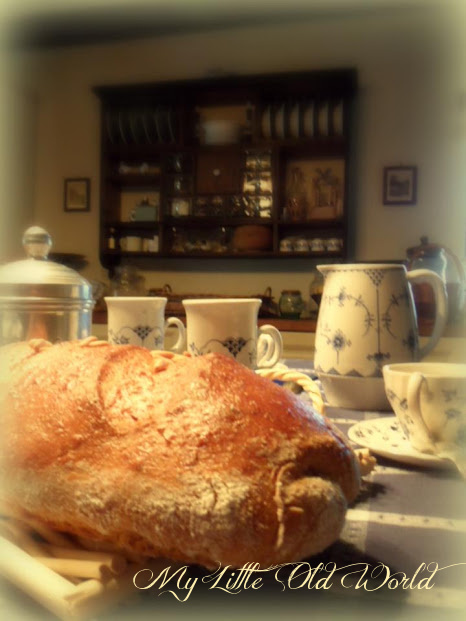
There's nothing like a piece of soft, home-baked bread, and this pumpkin bread, maybe still warm, if tasted with home made marmalade, is really a source of energy and good mood for a day to spend together with your family!


  ~ Pumpkin Bread ~


490 gr. all-purpose flour, plus more for surface and bowl

1 tablespoon brown sugar

1 cup milk

1 package rapid-rise yeast

18 gr. salt

a pinch of cayenne pepper

100 gr. pumpkin purée

1 tablespoon unsalted butter, softened for buttering pan

1 large egg, lightly beaten with 1 teaspoon of water


In a large bowl, stir together 450 gr. of flour, the brown sugar, yeast, salt, and the cayenne. Add the milk, pumpkin, and stir to combine. (Dough will be slightly sticky.)Turn dough out onto a lightly floured surface and knead until it forms a smooth ball. (Add up to 1/4 cup more flour if needed.) Sprinkle a large bowl with flour and add ball of dough, turning to coat. Cover with plastic wrap and refrigerate overnight. Butter a 9- by 5-inch loaf pan with 1 tablespoon butter. Transfer dough to a lightly floured surface and use hands to flatten to a rectangle, about 9 by 10 inches. Roll dough into a log and place seam-side down in loaf pan. Cover loosely with plastic wrap or a kitchen towel and let rise at room temperature until almost doubled in volume, 1 to 1 1/4 hours.
Preheat oven to 200°. Using a sharp knife, slash loaf down center. Brush loaf with egg wash. Bake until your loaf sounds hollow when tapped, 40 to 50 minutes. Turn out of pan onto a wire rack to cool. 


Another cake we use to eat for breakfast during this season is this one: although it has chocolate as its main ingredient, it's very light (it's quite thin) and fast to prepare.


 ~ Truffle Cake ~


40 gr. peeled hazelnuts
100 gr. butter
120 gr. dark chocolate in pieces
2 tablespoons of unsweetened cocoa powder
3 eggs
100 gr. brown sugar
½ teaspoon vanilla extract 
20 gr. starch
powdered sugar for sprinkling

Heat the oven to 180°(150 if ventilated), grease and sprinkle with flour a round pan with a diameter of 28 cm.
Toast the hazelnuts just enough to let them smell and chop them coarsely; put the butter, chocolate and cocoa in a saucepan and, stirring, keep over very low heat until the chocolate has completely melted, then remove from the heat and let it cool.
With an electric whisk, whip the egg whites until stiff and place them into the fridge; then take a rather large bowl and whip the egg yolks with the sugar and the vanilla extract until you get a very frothy mixture, to which add the chocolate mixture, the starch, the hazelnuts and finally, with the help of a tablespoon of metal, the whites flapping from bottom to top. Then put in the previously prepared pan and bake for about 30 minutes; leave to cool before serving, taking care to sprinkle with icing sugar before bring to the table.


And then I'm ending with the most delicious ones, which is a little longer to prepare, but it's very tasty and a treat with your afternoon tea too!


 ~ Marmelade Bakewell Tart ~


 For the shortcrust pastry:
100 gr. sifted flour
50 gr. softened butter
1 yolk and a half
a pinch of vanillin


For the filling:
80 gr. butter at room temperature
80 gr. brown sugar
the zest of half a lemon
1 rather large whole egg
80 gr. peeled powered almonds 
25 gr. starch
70 gr. peach jam
20 gr. of sliced ​​almonds
powdered sugar for sprinkling


Put the flour in a bowl with a pinch of salt; make a hole in the center and place the butter, egg yolks, sugar and vanilla in it. Work the ingredients first with the help of the tines of a fork and then with the palm of the hand until a homogeneous consistency is obtained; then wrap the dough in a sheet of aluminum foil and let it rest in the fridge for about an hour.
After this time, heat the oven to 180°, take a pan of 18 cm., spread the shortcrust pastry on a sheet of baking paper in a disk as large as the pan plus the edges, then line the pan, fill with dried beans and bake covered with aluminum foil for 10 minutes; then remove the foil and the beans and continue cooking for another 6-8 minutes.
Remove the pan from the oven and reduce the temperature to 150°.
Prepare the filling by combining the sugar with the butter with a whisk in a soft and frothy mixture; add the grated lemon zest, the egg and continue beating to make it swell again and increase in volume before adding the powdered almonds and the starch.
Spread the jam on the now set shortcrust pastry up to the edges and then place the almond mixture on it. Place into the oven and cook for approx. 25 minutes.
Sprinkle with the almond fillets and continue cooking for another 25 minutes; if necessary to brown the surface of the cake, grill for a few minutes.
Allow to cool well and sprinkle with icing sugar before serving.


I hope You'll enjoy yourself, Dearest Friends and Readers, 

both trying to make and tasting your cakes!

See you soon 
❤


Vivere come un tempo ~ La nostra colazione

 delle domeniche d'inverno

- IMMAGINE 1 - Il nostro tavolo della colazione con il Pane di Zucca pronto da affettare.


Sapete quanto amiamo vivere all'antica!


Non è una novità per voi se vi dico che amo molto mantenere vive antiche tradizioni e usanze di famiglia e imparare e fare nostre vecchie consuetudini che, magari, per noi sono ancora nuove.
Ecco perché, quasi trent'anni fa, abbiamo lasciato una grande città come Genova per venire ad abitare in aperta campagna al confine tra Liguria e Piemonte, volevamo iniziare una nuova vita partendo dal passato.
Ci siamo lasciati alle spalle l'inquinamento e il terribile frastuono della città per iniziare a vivere in un nostro "piccolo vecchio mondo"!
Furono le nostre professioni a farci maturare questa decisione, ma se non avessimo amato i vecchi modi di vivere non avremmo potuto abitare qui, decidere di restaurare un antico grande edificio di campagna risalente al XV° secolo tutto in pietra - che fu fino all'inizio del secolo scorso la più grande fattoria della valle - tornare all'utilizzo della legna come riscaldamento, e così via.
Volevamo recuperare antichi valori, tutto qui.
Tra ciò che mi piace conservare e mantenere vi sono antiche ricette ed oggi voglio suggerirvene alcune per la vostra colazione, che sono davvero confortevoli per iniziare una giornata nella stagione fredda. 
Non c'è niente che possa essere paragonato ad un pezzo di pane soffice fatto in casa, e questo pane alla zucca, magari ancora tiepido, se gustato con della marmellata artigianale, è davvero una fonte di energia e di buon umore per una giornata da trascorrere insieme in famiglia!


 ~ Pane di Zucca ~

490 gr. farina per tutti gli usi, più altra per la superficie e la ciotola
1 cucchiaio di zucchero di canna
1 tazza di latte
1 confezione di lievito a lievitazione rapida
18 gr. sale
un pizzico di pepe di Caienna
100 gr. purè di zucca
1 cucchiaio di burro a temperatura ambiente per la teglia
1 uovo grande, leggermente sbattuto con 1 cucchiaino d'acqua

In una ciotola capiente, unire 450 gr. di farina, lo zucchero di canna, il lievito, il sale e il pepe di Caienna. Aggiungere il latte, la zucca e mescolare per amalgamare. (L'impasto risulterà leggermente appiccicoso.) Rovesciare l'impasto su una superficie leggermente infarinata e impastare fino a formare una palla liscia. (Aggiungere fino a 1/4 di tazza in più di farina, se necessario.) Cospargere una grande ciotola di farina e aggiungere una palla di pasta, girandola per ricoprire. Coprire con pellicola trasparente e conservare in frigorifero per una notte. Imburrare una teglia da plum cake con 1 cucchiaio di burro. Trasferire l'impasto su una superficie leggermente infarinata e usare le mani per appiattirlo in un rettangolo, di circa cm. 23 x 26. Arrotolare l'impasto e metterlo con la cucitura rivolta verso il basso nello stampo da plum cake. Coprire senza stringere con pellicola trasparente o un canovaccio da cucina e lasciare lievitare a temperatura ambiente fino al raddoppio del volume, da un'ora ad un'ora ed un quarto.
Preriscaldare il forno a 200°. Usando un coltello affilato, fare una piccola incisione sulla pagnotta al centro. Spennellare la pagnotta con l'uovo sbattuto. Cuocere fino a quando la pagnotta suona vuota quando viene picchiettata, da 40 a 50 minuti. Sfornare su una griglia e lasciare raffreddare.


Un'altra torta che usiamo spesso per colazione in questa stagione è la seguente: nonostante abbia il cioccolato come ingrediente principale, è molto leggera (è piuttosto sottile) e veloce da preparare.


~ Torta Tartufata ~


- IMMAGINE 2 - La Torta Tartufata appena sfornata


40 gr. nocciole sgusciate
100 gr. burro
120 gr. cioccolato fondente a pezzi
2 cucchiai di cacao amaro in polvere
3 uova
100 gr. zucchero scuro
½ cucchiaino di estratto di vaniglia (io ho usato una bustina di vanillina)
20 gr. fecola
zucchero a velo per spolverizzare


Scaldare il forno a 180° (150 se ventilato), imburrare e spolverare di farina una teglia tonda del diametro di 28 cm.
Tostare le nocciole quel tanto da fare loro uscire il profumo e sminuzzarle grossolanamente; in un pentolino mettere il burro, il cioccolato ed il cacao e, mescolando, tenere su fuoco bassissimo fino a che il cioccolato si sarà completamente sciolto, quindi togliere dal fuoco e lasciare freddare.
Con la frusta elettrica montare gli albumi a neve e riporli in frigo; quindi prendere una terrina piuttosto capiente e montarvi i tuorli con lo zucchero e la vaniglia, fino a che si otterrà un composto ben spumoso, cui unire il composto di cioccolato, la fecola, le nocciole ed infine, con l'aiuto di un cucchiaio di metallo, i bianchi sbattendo dal basso verso l'alto.
Mettere quindi nella teglia precedentemente preparata ed infornare per circa 30 minuti; lasciare raffreddare prima di servire avendo cura di spolverizzare con lo zucchero a velo prima di portare in tavola.


E per concludere eccovi la più sfiziosa, che è un po' più lunga da preparare, ma è molto gustosa e una delizia anche con il vostro tè pomeridiano!


 ~ Crostata di Bakewell alla Marmellata ~

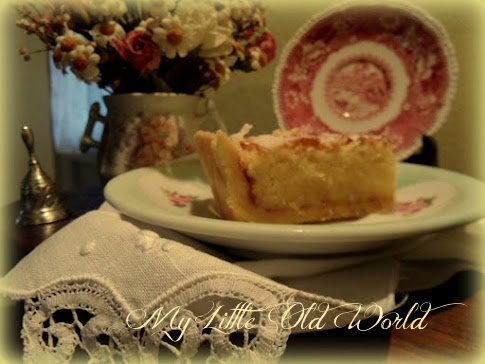
- IMMAGINE 3 - Una fetta di Crostata di Bakewell (paese della contea del Derbyshire rinomato per i suoi dolci)


Per la pasta frolla:
100 gr. Farina setacciata
50 gr. burro ammorbidito
1 tuorlo e mezzo
un pizzico di vanillina


Per il ripieno:
80 gr. burro a temperatura ambiente
80 gr. zucchero di canna
la scorza di mezzo limone
1 uovo intero piuttosto grande
80 gr. mandorle sbucciate
25 gr. amido
70 gr. marmellata di pesche
20 gr. di mandorle affettate
zucchero a velo per spolverizzare


In una ciotola mettete la farina con un pizzico di sale; fare un buco al centro e mettervi il burro, i tuorli, lo zucchero e la vaniglia. Lavorare gli ingredienti prima aiutandosi con i rebbi di una forchetta e poi con il palmo della mano fino ad ottenere una consistenza omogenea; quindi avvolgete l'impasto in un foglio di carta alluminio e far riposare in frigo per circa un'ora.
Trascorso questo tempo, scaldare il forno a 180°, prendere una teglia di 18 cm., stendere la pasta frolla su un foglio di carta da forno in un disco grande quanto la teglia più i bordi, quindi foderare la teglia, farcire con i fagioli secchi e infornare per 10 minuti coperti con un foglio di alluminio; quindi togliere la carta stagnola ed i fagioli e continuare la cottura per altri 6-8 minuti.
Togliere la teglia dal forno e abbassare la temperatura a 150°.
Preparare il ripieno unendo lo zucchero con il burro con una frusta in un composto morbido e spumoso; aggiungere la scorza di limone grattugiata, l'uovo e continuare a sbattere per farlo gonfiare nuovamente e aumentare di volume prima di aggiungere le mandorle in polvere e l'amido.
Spalmare la marmellata sulla pasta frolla ora ben aderente fino ai bordi e poi adagiarvi sopra il composto di mandorle. Infornare e cuocere per ca. 25 minuti.
Cospargere con i filetti di mandorle e continuate la cottura per altri 25 minuti; se necessario far dorare la superficie sulla griglia per dolci per qualche minuto.
Lasciar raffreddare bene e spolverizzare con zucchero a velo prima di servire.