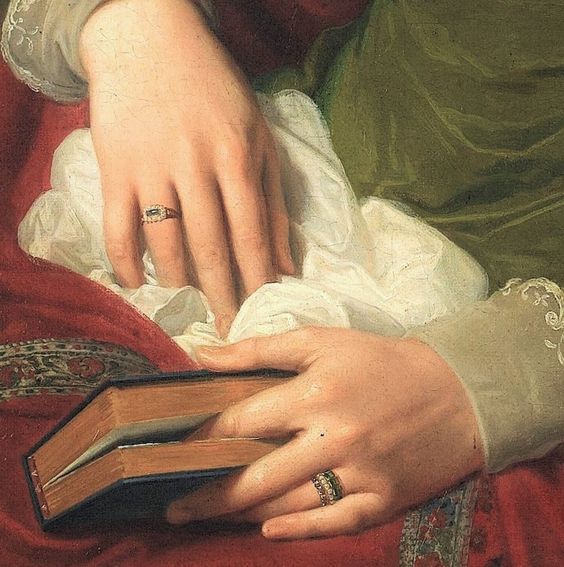
Visualizzazione post con etichetta books. Mostra tutti i post

sabato 10 maggio 2025

SOFIA L'IMPERATRICE NELL'OMBRA di Daniela Lasagnini


Questa è la stupenda locandina con cui si celebra nelle librerie l'uscita del mio ultimo libro, il terzo, che è nuovamente una biografia storica pubblicata per la casa editrice MGS PRESS di Trieste, la prima che esce in Italia dell'arciduchessa Sofia, madre dell'imperatore Francesco Giuseppe I.


E' trascorso più di un anno da che ho letto i suoi scritti privati, i suoi carteggi e quanto del suo diario personale è stato reso noto. Ebbene, in quell'occasione mi sono trovata a dialogare con una donna straordinaria per l'epoca in cui visse, ma dire solo questo sarebbe davvero riduttivo. Proprio la sua eccezionalità e quanto poco si sa di lei mi ha spronata a raccontarne la vita, perché l'arciduchessa Sofia che tutti siamo abituati a conoscere non ha nulla a che spartire con quella che realmente visse alla Corte di Vienna. Nell’immaginario collettivo ella incarna l’archetipo della suocera scomoda ed impicciona, superba e presuntuosa, così come l’hanno voluto coniare le pellicole e i testi diffusi con l’intento di mettere in luce la natura tormentata della mitica imperatrice d’Austria. L’inarrivabile Sissi, icona di bellezza, di classe e di stile, era nota anche per la sua mestizia, in parte legata alla perdita dei due figli, in parte causata dal clima che respirava a Corte: vi si sentiva uno spirito libero prigioniero in una gabbia dorata di cui, si deduce, fosse proprio Sofia a detenerne la chiave. Ma la storia, quella vera, quella con la 'S' maiuscola che attinge a fonti che ancora possiamo leggere, ci racconta altro. Questo libro, prima biografia italiana dell’arciduchessa Sofia Federica, nata principessa di Baviera dai monarchi Massimiliano I e Federica Carolina nel 1805, scritto dopo un’attenta lettura di quanto rinvenuto nei suoi documenti personali, ne presenta al lettore un ritratto del tutto inedito. 

Da queste pagine emerge la figura di una donna dall’intelligenza singolare rispetto agli uomini del suo tempo, che la rese dotata di numerosi talenti, cultrice di tutte le arti, amante di politica e capace di rinunciare al trono, che un tempo sognava, in nome del figlio primogenito che volle imperatore. Ma Sofia era anche genuina, affabile e di buon cuore. Andata in sposa all’arciduca Francesco Carlo d’Asburgo-Lorena nel 1824 fu subito ammirata dall’intera Corte viennese: per la sua eleganza era oggetto delle attenzioni dei signori della nobiltà e dell’aristocrazia, mentre le dame vedevano in lei un ideale, un esempio da seguire. Ciò che più amava era riunire la famiglia per avere accanto i quattro figli, cui si era unita la sua “amata bambina” – così chiamava Sissi che per lei sarà sempre la figlia che il destino non le concesse – e, come fosse una madre e una nonna borghese, tenere vivi i valori legati al focolare domestico: la spontaneità, l’intimità e la solidità dei legami tra congiunti. Ciò che più la fece soffrire fu non riuscire a trovare corrisposti i sentimenti per la sua “bambina” che mai smise di amare ed ammirare nonostante, dopo i primi tempi, questa sempre più si allontanò da lei dimostrando ostilità nei suoi confronti. Dico dopo i primi tempi perché dapprincipio Sissi contraccambiava le sue attenzioni ed il suo amore confessando di aver trovato in lei la madre che mai aveva avuto: Ludovica era una donna fredda, staccata, attenta a crescere con cura solo la figlia primogenita, Helene detta Nené, ed il figlio maschio cadetto, Karl Theodor detto Gackel. Così le aveva aperto il suo cuore. Sofia era diventata la spalla su cui la giovane imperatrice rimpiangeva la sua Baviera, i suoi boschi e dava sfogo ai suoi crucci coniugali. Ma accadde qualcosa che l'allontanò per sempre dalla suocera: fu come se un'incantesimo si fosse irrimediabilmente rotto, Sissi era molto suscettibile e non era capace di perdonare. Altro non vi voglio raccontare, mi spingerei troppo oltre. Concludo dicendovi che sarà la tragica morte di Massimiliano, divenuto imperatore del Messico e giustiziato a Querétaro dalle truppe di Benito Juarez il 19 giugno 1867 a ridurre Sofia l’ombra di sé stessa: irrimediabilmente minata nel fisico e nello spirito gli sopravviverà di soli cinque anni. Si spegnerà alle prime luci dell'alba del 28 maggio 1872 all'età di 67 anni.
Chi desidera acquistarlo lo trova già vendita, oltre che sul sito della CASA EDITRICE MGS PRESS, su AMAZON e su IBS.

RingraziandoVi come sempre per il tempo che mi dedicate, 
auguro a Tutti, cari Amici e Lettori di ~ My little old world ~ 
un sereno weekend di primavera
A presto ❤ 


Dany


Sophie, the Empress in the Shadows

IMAGE 1 - Presentation poster

This is the outstanding poster that celebrates the realased in bookstores of my latest book, the third, which is once again a historical biography published by the MGS PRESS publishing house of Trieste, the first to be published in Italy of Archduchess Sophie, mother of Emperor Franz Joseph I.


More than a year has passed since I read her private writings, her correspondence and what has been made known of her personal diary. Well, on that occasion I found myself talking to an extraordinary woman for the time in which she lived, but to say only that would be truly reductive. Her exceptionality and how little is known about her has spurred me to tell her life, because the Archduchess Sophie that we are all used to know has nothing to do with the one who actually lived at the Court of Vienna. In the collective imagination she embodies the archetype of the inconvenient and intrusive, haughty and presumptuous mother-in-law, as the films and texts released with the intent of highlighting the tormented nature of the legendary Empress of Austria have coined. The unrivaled Sissi, an icon of beauty, class and style, was also known for her sadness, partly linked to the loss of her two children, partly caused by the climate she breathed at Court: she felt like a free spirit imprisoned in a golden cage of which, it is deduced, Sofia herself held the key. But the story, the real one, the one with a capital 'S' that can still be read in documents, tells us something else. 


IMAGE 2 - Cover of the book


This book, the first Italian biography of Archduchess Sophie Frederica, born Princess of Bavaria to the monarchs Maximilian I and Frederica Carolina in 1805, written after a careful reading of what was found in her personal documents, introduces the reader to a completely new portrait of her. From these pages emerges the figure of a woman with a singular intelligence compared to the men of her time, which made her gifted with numerous talents, a scholar of all the arts, a lover of politics and capable of renouncing the throne, which she once dreamed of, in the name of the firstborn son of hers who she wanted to be emperor. But Sophie was also genuine, affable and kind-hearted. Having married Archduke Franz Charles of Habsburg-Lorraine in 1824, she was immediately admired by the entire Viennese Court: for her elegance she was the object of attention of the lords of the nobility and the aristocracy, while the ladies saw in her an ideal, an example to follow. What she loved most was to reunite the family to have her four children at their side, joined by her “beloved little girl” – that’s what she called Sissi, who for her will always be the daughter that fate denied her – and, as if she were a bourgeois mother and grandmother, to keep alive the values ​​linked to the domestic hearth: spontaneity, intimacy and the solidity of the bonds between relatives. What made her suffer most was not being able to find reciprocation of the feelings for her “little girl” who she never stopped loving and admiring even though, after the first times, the girl increasingly distanced herself from her, demonstrating hostility towards her. I say after the first times because at first Sissi reciprocated her attentions and her love, confessing that she had found in her the mother she had never had: Ludovica was a cold, detached woman, careful to lovingly raise only her firstborn daughter, Helene called Nené, and her younger son, Karl Theodor called Gackel. That’s why she had opened her heart to her. Sophie had become the shoulder on which the young empress longed for her Bavaria, her woods and vented her marital worries. But something happened that distanced her from her mother-in-law forever: it was as if a spell had been irremediably broken, Sisi was very susceptible and incapable of forgiving. I don't want to tell you anything else, I'd go too far. I will conclude by telling you that it was the tragic death of Maximilian, who had become Emperor of Mexico and was executed in Querétaro by Benito Juarez's troops on 19 June 1867, that reduced Sophie as a shadow of herself: irremediably undermined in body and spirit, she survived him by only five years. She passed away at the very first lights of the dawn on May 28, 1872 at the age of 67.
Who wants to by it can find it already on sale on the website CASA EDITRICE MGS PRESS, on AMAZON and on IBS.
Of course, it's written in Italian.


Thanking You as usual for the time You always devote to me,
I wish All the Friends and Readers of ~ My little old world ~
a peaceful Spring weekend
See you soon ❤

Dany


venerdì 2 aprile 2021

The Art of Reading in the Victorian Age.


Giuseppe Bezzuoli (Firenze, 1784-1855) 

RITRATTO DI UFFICIALE DI CAVALLERIA BRITANNICA E DI SUA MOGLIE (dettaglio)


Victorian women were real passionate readers. The increased literacy rate from

schooling, the cheaper production, and the wider availability of books in the

libraries promoted reading, as well as, around the half of the Victorian age, gas 

and electric lighting also meant that reading after the sunset or before sleeping

at night didn’t have to be by candlelight or by the messy and weak light of oil

lamps.


Edward John Pointer (Paris, 1836-London, 1919)

AN EVENING AT HOME


Novels were often serialized in monthly parts, making them cheaper, more 

easily accessible and shared. Weekly or monthly segments often ended on a

“cliff-hanger” to keep readers hooked and anticipating the next installment.


Maria R.Dixon (American, 1823-1896)

WOMAN IN BONNET READING A BOOK


Thomas Benjamin Kennington (British, 1856-1916)

TITLE UNKNOWN


 William Kay Blacklock (British, 1872-1924)

QUIET READ


Peter Philipp Rumpf (German, 1821-1896) 

YOUNG WOMAN READING IN THE PARK


For women belonging to the wealthier classes, who could afford first editions,

reading from their own collection was an everyday occurrence.

Six months after the original publication, books became cheaper, being issued as

single volumes. 


Alfred Emile Léopold Joseph Victor Stevens (Brussels, 1823-Paris, 1906)

THE READER


Charles Baugniet (Belgian, 1814-1886)

THE READER


Auguste Toulmouche (French, 1829-1890)

SWEET DOING NOTHING


Auguste Toulmouche (French, 1829-1890)

IN THE LIBRARY


And the growth of the rail network helped make novels cheaper also at

railway stations. There was always something new to read during a long journey.


Augustus Leopold Egg (London, 1816-Algeirs, 1863)

THE TRAVELLING COMPANIONS


Fiction was thought to hold influential power over readers.

The 18th-century view that reading contemporary novels was a time-wasting 

leisure activity gave way to 19th-century idea on their ability to educate.

Victorians believed that although novels lacked the cultural seriousness of 

classical texts, they did bring awareness of historical periods and were able to

develop Christian moral values.


George Goodwin Kilburne (London, 1839-1924)

A YOUNG LADY READING IN AN INTERIOR 


That’s why the during the XIXth century the most widely read novel in England

was The Uncle Tom's Cabin (1852) by the American writer Harriet Beecher 

Stowe, which spread anti-slavery ideals.

But if novels could influence for the good, they were thought to be also able to

influence for the bad, expecially amongst young girls or people without culture

belonging to working classes, who could be encouraged to emulate fictional

criminals' life whose adventures were told.


Alexander Mark Rossi (British, 1840-1916)

FORBIDDEN BOOKS


Maybe it was the reason that leaded Charles Dickens to write educational 

novels: his stories portrayed the lower classes and had always a moral which, 

implicitly, became an example to follow for each reader.

Queen Victoria was the most enthusiastic reader of his, given She always

wanted to be the the first to read the last novel he wrote before it was published,

not with a puritan purpose or to control it, but because, with their values, his 

books were the true expression of the Age she was the Emblem of.


Dickens had the intelligence and the capability to become an integral part of that

world that was still making itself, both from an intellectual and from a moral 

point of view, and probably, to find 'translated' in words what became to Her

the meaning of an Age, animated Her enjoyment, Her fervor and Her delight.

We should say that Charles Dickens was the real Victorian writer. 


I sincerely hope you've enjoyed this travel bck in the Age we all love and, 

with utmost thankfulness, 

I'm sending much love to each of you

See you soon and Happy Easter 💕


L'Arte di leggere nell'Era Vittoriana.


1 - Giuseppe Bezzuoli (Firenze, 1784-1855) 

RITRATTO DI UFFICIALE DI CAVALLERIA BRITANNICA E DI SUA MOGLIE (dettaglio)


Le ladies vittoriane erano lettrici davvero appassionate. L'aumento del tasso di

alfabetizzazione promosso dall’obbligo scolastico, la produzione più economica e

la più ampia disponibilità di libri nelle biblioteche promossero la lettura, così 

come, intorno alla metà del XIX° secolo, l'illuminazione a gas ed elettrica

resero agibile anche leggere dopo il tramonto o prima di dormire la notte, cosa 

che prima era possibile solo al lume di una candela o di una lampada ad olio 

dalla luce debole e confusa.


2 - Edward John Pointer (Parigi, 1836-Londra, 1919), AN EVENING AT HOME


I romanzi erano spesso pubblicati in fascicoli mensili, il che li rendeva più

economici, più facilmente accessibili e condivisibili. La parte che veniva 

pubblicata spesso finiva con un "cliff-hanger", una sorta di richiamo che serviva

per mantenere viva la memoria del lettore e anticipare la prossima puntata.


3 - Maria R.Dixon (Americana, 1823-1896) WOMAN IN BONNET READING A BOOK


4 - Thomas Benjamin Kennington (Britannico, 1856-1916) TITLE UNKNOWN


5 - William Kay Blacklock (Britannico, 1872-1924 QUIET READ


6 - Peter Philipp Rumpf (Tedesco, 1821-1896) YOUNG WOMAN READING IN THE PARK


Per le ladies appartenenti alle classi più abbienti che potevano permettersi le

edizioni appena pubblicate, leggere dalla propria collezione era una quasi

un’esigenza quotidiana. Sei mesi dopo la pubblicazione originale, i libri 

vedevano il loro prezzo scendere, dato che anche quelli che erano stati 

pubblicati in fascicoli venivano venduti in volumi singoli.


7- Alfred Emile Léopold Joseph Victor Stevens (Bruxelles, 1823-Paris, 1906) THE READER


8 - Charles Baugniet (Belga, 1814-1886) THE READER


9 - Auguste Toulmouche (Francese, 1829-1890) SWEET DOING NOTHING


10 - Auguste Toulmouche (Francese, 1829-1890) IN THE LIBRARY


E l'incremento delle reti ferroviarie contribuì a rendere i libri più economici 

anche nelle stazioni. C'era sempre qualcosa di nuovo da leggere durante un 

lungo viaggio. 


11 - Augustus Leopold Egg (Londra, 1816-Algeri, 1863) THE TRAVELLING COMPANIONS


Era opinione diffusa che la narrativa potesse influenzare la mentalità dei lettori.

Mentre nel XVIII° secolo si credeva che la lettura di romanzi contemporanei 

fosse un'attività di svago che riempiva il tempo e distraeva dall'ozio, durante

il periodo vittoriano si fece largo l'idea che essi avessero un valore educativo.

I vittoriani credevano che, sebbene i romanzi mancassero della serietà

culturale dei testi classici, inducessero comunque consapevolezza dei periodi 

storici e fossero in grado di sviluppare valori morali cristiani.


12 - George Goodwin Kilburne (Londra, 1839-1924) A YOUNG LADY READING IN AN

 INTERIOR 


Ecco perché durante il XIX° secolo il romanzo più letto in Inghilterra fu The 

Uncle Tom's Cabin - La capanna dello zio Tom (1852) della scrittrice americana

Harriet Beecher Stowe, che diffondeva ideali contro la schiavitù.

Ma se i romanzi potevano esercitare un’influenza positiva sul lettore, si pensava 

che fossero anche in grado di influenzarlo negativamente, specialmente se si

trattava di ragazze o di persone prive di cultura appartenenti alle classi 

lavoratrici, che potevano essere incoraggiate a emulare la vita dei criminali

immaginari le cui vicende venivano in essi raccontate.


13 - Alexander Mark Rossi (British, 1840-1916) FORBIDDEN BOOKS


Forse fu proprio questo il motivo che spinse Charles Dickens a scrivere romanzi

didattici: le sue storie ritraevano le classi socialmente più basse e avevano

sempre una morale che, implicitamente, diventava un esempio da seguire per

ogni lettore. La regina Vittoria era la sua lettrice più entusiasta, dato che ha 

sempre voluto essere la prima a leggere l'ultimo romanzo che questi scriveva 

prima che fosse pubblicato, non con uno scopo puritano o per controllarlo, ma

perché, con i loro valori, i suoi libri erano la vera espressione dell'era di cui Ella 

era l'emblema.


FOTOGRAFIA: la PRINCIPESSA BEATRICE legge con la madre, la REGINA VICTORIA


Dickens ebbe l'intelligenza e la capacità di diventare parte integrante di quel 

mondo che ancora si stava facendo, sia da un punto di vista intellettuale che 

da un punto di vista morale, e probabilmente, il fatto di trovare 'tradotto' in 

parole quello che divenne per Lei il significato di un'epoca, animava il Suo

divertimento, il Suo fervore ed il Suo diletto.

Dovremmo dire che Charles Dickens fu il vero scrittore vittoriano.


Spero di tutto cuore che abbiate apprezzato anche questo piccolo 'viaggio' 

nell'era che tutti noi amiamo e, 

con la più sincera gratitudine, 

invio tutto il mio affetto a ciascuno di voi


A presto e Felice Pasqua💕


Linking with:

PINK SATURDAY

BLUE MONDAY

INSPIRE ME MONDAY

TUESDAY WITH A TWIST

Thank you Angie at God's Growing Garden for featuring this post ❤

WONDERFUL WEDNESDAY BLOG HOP

LITTLE THINGS THURSDAY