Visualizzazione post con etichetta Fanny Angerer Feifalik. Mostra tutti i post

martedì 13 febbraio 2024

Empress Elisabeth of Austria and the Adventure at the Masquerade Ball of "Mardi Gras"1874


Today I'm taking you with me to Vienna in the year 1874: the Carnival, known in German as Fasching, has begun, officially inaugurating the ball season. On the evening of Mardi Gras, Shrove Tuesday, at the Musikverein, headquarters of the Society of the Friends of Music inaugurated four years earlier, the most elegant ball is held, which all of Vienna talks about and at which gentlemen, ladies and even young ladies belonging to the best society meet themselves. In the Regency Vienna, balls were very important and organized at the Hofburg  by Archduchess Sofia herself, the mother of Emperor Franz Joseph, since she loved them so much: the dances season began with the Fasching and lasted until the beginning of Lent. This was one of the traditions that she inaugurated when she gained importance at Court, but, like all the others, it was lost after her death in 1872. But let's get back to our story. The Empress, always traveling around the world, is occasionally in Vienna, while Franz Joseph is absent, he left for Petersburg on February 11th to return the Tsar's visit and will remain away from the capital until the 22nd. To Elisabeth, as usual bored of having to stay in the imperial palace, suddenly feels like going to this ball that intrigues her so much, but she will have to do it in great secrecy.
Only the Lady of Honor Ida Ferenczy, the indispensable hairdresser Fanny Feifalik and Countess Gabriele Pálffy de Erdõd, trusted Lady-in-waiting, are in on the secret, but they must swear not to betray it at all.


As soon as everyone is asleep, Elisabeth gets up, puts on a domino tail, of very heavy yellow brocade, of imprudent luxury, and places a reddish wig on her magnificent hair. She then covers her face with a mask edged with a long black lace, so that not the slightest part of her face or even the back of her neck remains visible, neither in front nor behind her. Ida Ferenczy, in red domino, constantly calls the Empress  « Gabriele ».

This is precisely to cast any suspicion on Countess Pálffy who was also tall and slender like the Empress. Ida Ferenczy, for that evening, will be «Henriette ». Elisabeth and Ida sit in the gallery and observe all the guests meeting cheerfully, but, when 11.00 pm arrives, the Empress admits that she doesn't feel the fun that she was sure would have enjoyed that evening.
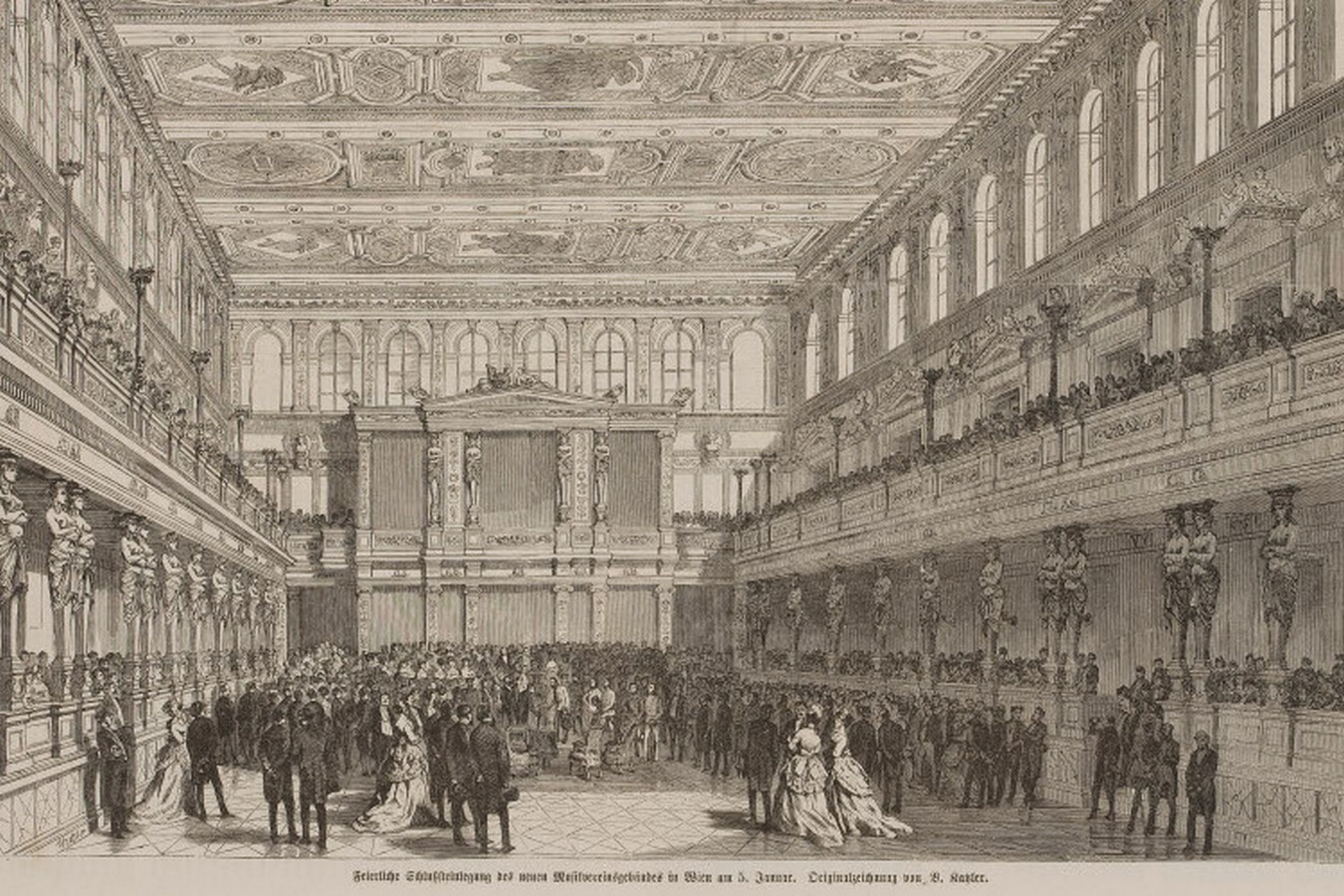

"Gabriele, please, choose someone in the room whom you like and who is not from the Court society; and I will bring him up here to you. At such parties you have to talk to people, to tease them."
"Yes, do you think so?" replies the yellow domino, looking down into the room. He notices a young, elegant man walking alone and whose face is new to her. She points it out to Ferenczy and she immediately goes down into the room, approaches the stranger from behind, surprisingly slips her arm under his and begins to question him lively about whether she [...]
Then the domino suddenly asks him:
"Would you like to do me a favor?"
"I'd love that."
"I'm here with a beautiful friend of mine, who is all alone on her in the gallery and bored out of her mind. Would you like to keep her some company?"
"Of course."
And here the red domino leads his protégé to the yellow domino, who watched the maneuver with amusement.

The young man with whom the Empress spent the rest of that evening was called Friedrich (Fritz) Pacher List zu Theinburg, he was 26 years old and worked as a ministerial official. Finding themselves facing each other, the two immediately begun a conversation. She asked him what they say in Vienna about the Empress, the Emperor and the Court and she was amused by his answers. Saying she was unable to meet him a second time because she is often busy traveling abroad, she promised to willingly exchange correspondence with this new friend of hers. That evening the Empress had asked Fritz to give her his address and had given him the address of a post office box where to address his messages: "Gabriele FL36". The young man felt curious and want to know who is really hiding behind that mask, surely having already guessed that she was a lady of the high Viennese nobility. The discomfort of Elisabeth, or Gabriele, among the crowd, her too slender figure, her elegant gait and the "aura" that surrounded her even in her costume aroused a suspicion in him: it is really Empress Elisabeth of Austria, who gave him her delicate gloved hand and let herself be led by his arm through the Golden Hall, light as a feather? He had to find it out! He lifted the veil she wore over her face, but she was faster than him and pushed his hand away with her delicate silk fan: needless to say, such an unconventional and almost brazen attitude struck Gabriele. Suddenly, Ida found herself among them, urging her friend to leave with her: at that point the Empress had to escape, there was no need to run the risk of her to be discovered.


Fritz succeeded however to grab and hold Sisi's fan.
“You're not Gabriele, your name is Elisabeth and you're 36,” he whispered to her before she ran away from him in horror and grabbed Ida's arm, running through the crowd towards their carriage. The two mysterious masks disappeared, thus, surrounded by the darkness of the Viennese festive night. They were drunk and happy, but, with the suspicion of being identified and followed, they asked the fiacker not to take them directly to the Hofburg, but to take a road that would lead them to the outskirts and then return to the center of the capital following a vicious route that it would have led anyone astray.
Fritz came back to his humble home drunk, but was unable to sleep, troubled by that woman who had literally enchanted him. Every day he went to the Prater with the hope of meeting the Empress on horseback, he often stopped at the Hofburg to see her leave the palace in a carriage, and once they managed to meet, but only Sisi noticed. A month after that dancing evening, Fritz received a letter from Gabriele from Munich:

"Dear friend, You will be amazed to receive these first lines of mine from Munich. I have been passing through here for a few hours and I take advantage of the brief stop to give you, as promised, a sign of life. And with what impatience you were waiting for it! Be sincere, from good German, and don't try to deny it. But don't be afraid, I don't ask for declarations; I know, as if I were you yourself, what happens to you from that night onwards. You have already spoken to a thousand women and girls, it also seemed to you to find pleasure, but your spirit never met its soul mate. Finally, in a phantasmagoria of dreams, you found what you had been looking for for a long time, only to perhaps lose it again forever...
I'm traveling to England to visit my mother's relatives. [...] You'll still hear from me from London. Write to me in the meantime

Main post office Vienna post office
at the address "Gabriele FL36"

And she concluded by saying that it will be her "cousin", that was Ida, who will get her the letters. Pacher's response didn't take long to arrive. He had really fallen in love with her and, as happens with every victim of infatuation, he would like to know everything about the yellow domino that stole his heart and to see him again.
Pretending to be already in England, where instead she will go for the hunting season at the end of the Summer, Sisi sends her friend a second letter in March: she too always has him in her mind because the memory of that naive adventure at the masquerade ball goes on keeping the monotony of everyday life away from her.

"Dear friend, I feel so sorry for you! Such a long time without news from me, what a desert your life will have been, how interminable the hours! But I couldn't do otherwise. [...] Some days I sat for hours at a time at the window, with my gaze lost in the disconsolate fog; then I returned in joy and ran from one entertainment to another. What if I thought about you too? I know what I thought, and that's it. [...] Do you dream of me right now or do you make passionate songs resonating in the silence of the night? [...]
Cordial greetings
Gabriele"

Sisi entrusts this letter to her sister Maria Sofia, Queen of Naples who is about to go to England and instructs her to collect any replies: she is the most trustworthy person, from her point of view, she does not want her ladies to know about her correspondence with Fritz.


The Empress will write to him again in April trying to put him on a false trail by saying that she hates dogs, London, etc., that is, everything she loves most. But the young man wants to prove to her that he hasn't fallen into the trap: he knows that her pen-friend is called Elisabeth and he knows who she is. For Sisi it is enough to read these lines to decide to end the correspondence.
Years later, contacted by the Empress's first biographer, Count Egon Caesar Corti, Fritz showed him the fan, which remained him as a souvenir of that masquerade ball, together with some letters. Count Corti recognized Elisabeth's handwriting and the delicate fan, which was already falling to pieces. Corti had set out on Fritz's trail because he had learned from Ida that for many years after the ball there had been an exchange of letters between him and Elisabeth alias Gabriele. The Empress sent letters to Fritz from Munich, London, and even from Rio de Janeiro, among other places, adding only a post office box address, rather than her own. Fritz replied, but only a few letters actually reached the Empress, the rest were never collected or read. As we have seen, at the beginning Sisi enjoyed confusing and misleading Fritz, but his increasingly specific questions and finally his rather rude jokes about her true identity made this enthusiasm of hers vanish.
She put an end to this adventure with a poem both mocking and melancholic, which has been preserved and is entitled "The Song of the Yellow Domino - A Long, Long Time Ago". Fritz never forgot the beautiful woman and the glittering evening of dancing for the rest of his life and kept her fan and her letters until his death on May 12, 1934. He lived to be 87 and died knowing that he had kept the arm of Empress Elisabeth of Austria at the 1874 carnival ball.

The Song of the Yellow Domino
"A long, long time ago."

Do you think of that night still in the glowing ballroom?
Long, long ago, long ago,
where two souls once met,
long, long ago, long ago,
where our odd friendship began.
Do you, my friend, still think of it at times?
Do you think of the words, so intimately trusting,
that we exchanged by the loud dance music?
Oh, only too fast our time dwindled away,
a press of the hand yet, and I had to fly.
I did not dare unveil my face to you,
but I did show my soul to the light.
Friend, that was more, that was more!
Years have gone and drawn away,
but they will never unite us two again.
Questioning at night I look at the stars,
none gave me back help or answer.
Soon I came near to you, soon again far away.
Are you already lingering on another star?
If you live, then give me a sign by day,
that I may scarcely hope, but can await.
So long ago, so long ago!
Let me wait no more,
wait no more!

The Empress had many suitors, from Bay Middleton, a hunting companion in England, to Gyula Andrassy, a Hungarian politician and diplomat and others, but no love adventure, whether naive or not, was proven and documented. This is the only one that can be told with certainty and in detail.
I hope with all my heart that this narrative, although long, has given you a pleasant time.


Sending you all all the best,
I wish you a pleasant Mardi Gras
See you soon ❤


Dany


NOTE:
This adventure is mentioned in the memoirs of Ida Ferenczy, in those of Sisi's favorite daughter, Maria Valeria, who transcribed them as they were told to her by her mother, and in those of her niece, Countess Marie Larisch.
The parts written in bold are taken from Corti's biography which deals with the topic at length in his biography from page 217 to page 226 (Italian translation by L. Emery for MONDADORI, Milan, 1935)
​


L'imperatrice Elisabetta d'Austria e l'avventura al ballo in maschera del 
"Martedì Grasso" 1874


IMMAGINE DI COPERTINA


Quest'oggi vi porto con me nella Vienna dell'anno 1874: è cominciato il carnevale, detto in tedesco Fasching, con cui si inaugura ufficialmente la stagione dei balli. La sera del martedì grasso si tiene, presso il Musikverein, sede della Società degli Amici della Musica inaugurata quattro anni prima, il veglione più elegante, di cui tutta Vienna parla e a cui si danno convegno signori, signore ed anche signorine appartenenti alla miglior società. Nella Vienna Regency i balli erano molto importanti e organizzati alla Hofburg direttamente dall'arciduchessa Sofia, la madre dell'imperatore Francesco Giuseppe. che tanto li amava: già allora la stagione dei balli iniziava con il Fasching e si protraeva fino all'inizio della Quaresima. Questa fu una delle tradizioni che inaugurò da quando acquistò importanza a Corte, ma, come tutte le altre, si perse dopo la sua scomparsa avvenuta nel 1872. Ma torniamo al nostro racconto. L'imperatrice, sempre in viaggio per il mondo, si trova occasionalmente a Vienna, mentre Francesco Giuseppe è assente, è partito l'11 di febbraio per Pietroburgo per ricambiare la visita dello zar e rimarrà lontano dalla capitale fino al giorno 22. Ad Elisabetta, come sempre annoiata di dover stare nel palazzo imperiale, viene improvvisamente voglia di recarsi a questo ballo che tanto la incuriosisce, ma dovrà farlo in gran riserbo.
Solamente la dama d'onore Ida Ferenczy, l'indispensabile pettinatrice Fanny Feifalik e la contessa Gabriele Pálffy de Erdõd, fidata dama di compagnia, sono a parte del segreto, ma devono giurare di non tradirlo per nulla. 


LE TRE DAME CHE CONDIVIDONO IL SEGRETO DELL'IMPERATRICE E NE SONO COMPLICI


Non appena tutti dormono, Elisabetta si alza, indossa un domino a coda, di broccato giallo pesantissimo, di un lusso imprudente, e pone una parrucca rossiccia sulla sua magnifica chioma. Poscia si copre il volto con una maschera orlata di un lungo pizzo nero, sì che non rimanga visibile, né dinanzi né di dietro una menoma parte del viso e nemmeno della nuca. Ida Ferenczy, in domino rosso, chiama costantemente l'imperatrice « Gabriele ».

Questo appunto per far cadere gli eventuali sospetti sulla contessa Pálffy anch'ella alta e snella analogamente all'imperatrice. La Ferenczy, per quella sera, sarà « Henriette ». Elisabetta e Ida si mettono a sedere in galleria ed osservano i convenuti che si incontrano festevoli, ma, giunte le 23,00, l'imperatrice ammette di non provare quel divertimento che, era certa, avrebbe allietato quella sua serata.


IL MUSIKVEREIN DI VIENNA 


"Gabriele, ti prego, scegli qualcuno, nella sala, che ti piaccia e che non sia della società di Corte; e io te lo condurrò quassù. A un veglione bisogna rivolger la parola alla gente, stuzzicarla."
"Sì, credi? "risponde il domino giallo cercando con lo sguardo giù nella sala. Vi nota un uomo giovane ed elegante che passeggia solo e il cui viso le riesce nuovo. Lo addita alla Ferenczy e questa subito scende in sala, s'avvicina di dietro allo sconosciuto, infila di sorpresa il braccio sotto quello di lui e comincia ad interrogarlo briosamente su l'esser suo [...] 
Allora il domino gli chiede all'improvviso:
"Vorresti farmi un piacere? "
"Volentieri." 
"Sono qui con una mia bella amica , che è tutta sola su in galleria e si annoia a morte. Vorresti farle un po' di compagnia? "
"Ma certamente." 
Ed ecco che il domino rosso conduce il suo protetto al domino giallo, che ha assistito con divertimento alla manovra. 

Il giovane con cui l'imperatrice trascorse il resto della serata si chiamava Friedrich (Fritz) Pacher List zu Theinburg, aveva 26 anni ed era un funzionario ministeriale. Trovatosi una di fronte all'altro, i due iniziarono subito una conversazione. Sisi gli chiese cosa dicessero a Vienna dell'imperatrice, dell'imperatore e della Corte e fu divertita dalle sue risposte. Dicendosi impossibilitata ad incontrarlo una seconda volta perché spesso impegnata in viaggi all'estero, promise di scambiare volentieri corrispondenza con questo suo nuovo amico, quella sera l'imperatrice si era fatta dare da Fritz il suo indirizzo ed alla gli aveva fornito quello di una casella postale a cui indirizzare le sue per lei: "Gabriele FL36". Il giovane era curioso e voleva sapere chi si nascondeva veramente dietro quella maschera, sicuramente avendo già intuito che si trattava di una dama dell'alta nobiltà viennese. Il disagio di Elisabetta, o Gabriele, tra la folla, la figura troppo snella, l'andatura elegante e l'aura che la circondava anche nel suo costume suscitarono in lui un sospetto: era davvero l'imperatrice Elisabetta d'Austria, che tese la sua delicata mano guantata a e lasciarsi condurre per il braccio attraverso la Sala d'Oro, leggera come una piuma? Doveva scoprirlo! Lui le sollevò il velo che portava sul viso, ma lei fu più veloce e gli allontanò la mano con il suo delicato ventaglio di seta: inutile dire che un tale atteggiamento così poco convenzionale e quasi sfacciato colpì Gabriele. All'improvviso, Ida si trovò in mezzo a loro, esortando la sua amica a partire con lei: a quel punto bisognava darsi alla fuga, non bisognava correre il rischio che l'imperatrice venisse scoperta. 


FRIEDRICH (FRITZ) PACHER LIST ZU THEINBURG


Fritz riuscì comunque ad afferrare e a trattenere il ventaglio di Sissi.
“Non sei Gabriele, ti chiami Elisabeth e hai 36 anni”, le sussurrò prima che lei gli scappasse inorridita e afferrasse il braccio di Ida, correndo tra la folla verso la loro carrozza. Le due maschere misteriose scomparvero, così, avvolte dal buio della notte di festa viennese. Erano ebbre e beate, ma, con il sospetto di essere individuate e seguite, chiesero al fiacker di non condurle direttamente a palazzo, ma di prendere una strada che le avrebbe portate in periferia per poi fare ritorno nel centro della capitale seguendo un percorso vizioso che avrebbe sviato chiunque. 
Fritz rincasò nella sua umile dimora ubriaco, ma non riuscì a dormire, turbato da quella donna che lo aveva letteralmente ammaliato. Ogni giorno si recava al Prater con la speranza d'incontrare l'imperatrice a cavallo, sostava spesso presso la Hofburg per vederla uscire dal palazzo in carrozza, ed una volta riuscirono ad incontrarsi, ma soltanto Sissi se ne avvide. Un mese dopo quella serata danzante, Fritz ricevette da Gabriele una lettera da Monaco: 

"Caro amico, Sarete meravigliato di ricevere queste mie prime righe da Monaco. Sono da qualche ora qui di passaggio e approfitto della breve sosta per darvi, come promesso, un segno di vita. E con che impazienza l'aspettavate! Siate sincero, da buon tedesco, e non tentate negarlo. Ma non temete, io non chiedo dichiarazioni; so, come fossi voi medesimo, che cosa accade in voi da quella notte in poi. Avete già parlato con mille donne e fanciulle , vi è anche sembrato di trovarvi diletto, ma il vostro spirito non incontrò mai l'anima gemella. Finalmente, in una fantasmagoria di sogno, trovaste ciò che da tento tempo cercavate, per tornarlo forse a perdere per sempre... 
Sono in viaggio per l'Inghilterra per far visita ai parenti di mia madre. [...] Riceverete ancora mie notizie da Londra. Scrivetemi intanto

Ufficio postale principale fermo posta Vienna
all'indirizzo "Gabriele FL36"

E concluse dicendo che sarà sua cugina, ovvero Ida, a procurarle le lettere. La risposta del Pacher non si fece attendere a lungo. questi si era realmente innamorato e, come accade ad ogni vittima d'infatuazione, vorrebbe sapere tutto del domino giallo che gli ha rubato il cuore e rivederlo.
Fingendo di trovarsi già in Inghilterra, dove invece si recherà per la stagione della caccia a fine estate, Sisi invia all'amico una seconda lettera a marzo: anch'ella lo ha sempre in mente perché il ricordo di quell'ingenua avventura al ballo mascherato continua a tenerle lontana la monotonia della quotidianità. 

"Caro amico, Quanto mi fai compassione! Tanto tempo senza mie nuove, che deserto sarà stata la tua vita, come interminabili le ore! Ma non mi fu possibile fare diversamente. [...] Certi giorni sedevo ore intere alla finestra, con lo sguardo perduto nella nebbia sconsolata; poi tornavo in allegria e correvo da un divertimento all'altro. Se pensavo anche a te? Quel che pensavo, lo so io, e tanto basta. [...] Mi sogni in questo momento o fai risonare canti appassionati nel silenzio notturno? [...] 
Saluti Cordiali 
Gabriele"

Sisi affida questa sua lettera alla sorella Maria Sofia di Napoli che è in procinto di recarsi in Inghilterra e la incarica di ritirare le eventuali risposte: è la persona più fidata, dal suo punto di vista, non vuole che le sue dame sappiano della sua corrispondenza con Fritz. 


UNA BELLISSIMA FOTOGRAFIA DI MARIA SOFIA IN BAVIERA, SORELLA DELL'IMPERATRICE, DIVENTATA REGINA DI NAPOLI PER MATRIMONIO


L'imperatrice gli scriverà ancora ad aprile cercando di metterlo su di una falsa traccia dicendo che detesta i cani, Londra, etc, ovvero tutto ciò che più ama. Ma il giovane vuole darle dimostrazione di non essere caduti nel tranello: sa che la sua amica di penna si chiama Elisabetta e sa chi è. Per Sisi è sufficiente leggere queste righe per decidere di troncare la corrispondenza. 
Anni dopo, contattato dal primo biografo dell'imperatrice, il conte Egon Caesar Corti, gli mostrò il ventaglio, che gli rimaneva come ricordo di quel ballo in maschera, insieme ad alcune lettere. Il conte Corti riconobbe la calligrafia di Elisabetta e il delicato ventaglio, che già stava cadendo a pezzi. Il Corti si era messo sulle tracce di Fritz perché aveva saputo da Ida che per molti anni dopo il ballo c'era stato uno scambio di lettere tra tra lui ed Elisabetta alias Gabriele. L'imperatrice inviò lettere a Fritz da Monaco, Londra e persino da Rio de Janeiro, tra gli altri luoghi, aggiungendo solo l'indirizzo di una buca delle lettere, anziché il proprio. Fritz rispose, ma solo poche lettere arrivarono effettivamente all'imperatrice, il resto non fu mai ritirato né letto. Come abbiamo visto all'inizio Sisi si divertiva a confondere e fuorviare Fritz, ma le sue domande sempre più specifiche e infine le battute piuttosto scortesi sulla sua vera identità fecero svanire questo suo entusiasmo.
Ella mise fine a quest'avventura con una poesia allo stesso tempo beffarda e malinconica, che è stata conservata e si intitola "La Canzone del Domino Giallo - Molto, molto tempo fa". Fritz non dimenticò mai la bella donna e la scintillante serata di ballo per il resto della sua vita e conservò il suo ventaglio e le sue lettere fino alla sua morte, avvenuta il 12 maggio 1934. Visse fino a 87 anni e morì sapendo che aveva tenuto il braccio dell'imperatrice Elisabetta di Austria al ballo di  carnevale del 1874.

La Canzone del Domino Giallo
"Molto, molto tempo fa."

Pensi a quella notte ancora nella luminosa sala da ballo?
Molto, molto tempo fa, molto tempo fa,
dove due anime un tempo si incontravano,
molto, molto tempo fa, molto tempo fa,
dove è iniziata la nostra strana amicizia.
Amico mio, ci pensi ancora a volte?
Pensi alle parole, così intimamente fiduciose,
che ci siamo scambiati con la musica da ballo ad alto volume?
Oh, troppo velocemente il nostro tempo si è esaurito,
ancora una semplice pressione della mano e dovevo volare.
Non ho osato svelarti il mio volto,
ma ho mostrato la mia anima alla luce.
Amico, quello era di più, quello era di più!
Gli anni sono andati e si sono allontanati,
ma non ci uniranno mai più.
Interrogandomi di notte guardo le stelle,
nessuno mi ha dato aiuto o risposta.
Presto mi sono avvicinato a te, presto di nuovo lontano.
Ti stai già soffermando su un'altra stella?
Se vivi, dammi un segno di giorno,
che posso a malapena sperare, ma posso aspettare.
Tanto tempo fa, tanto tempo fa!
Non lasciarmi aspettare più,
non aspettare più!

L'imperatrice ebbe molti corteggiatori, da Bay Middleton, compagno di caccia in Inghilterra, a Gyula Andrassy, politico e diplomatico Ungherese ed altri ancora, ma nessuna avventura amorosa, ingenua o meno che fosse, fu provata e documentata. Questa è la sola che si possa raccontare con sicurezza e nei dettagli. 
Spero di tutto cuore che questa narrazione, anche se lunga, vi abbia fatto trascorrere momenti piacevoli.


Inviando a tutti Voi ogni bene, 
Vi auguro un piacevole martedì grasso
A presto ❤ 


Dany


NOTA:
Quest'avventura si trova menzionata nelle memorie di Ida Ferenczy, in quelle della figlia prediletta di Sisi, Maria Valeria, che le ha trascritte come le furono raccontate dalla madre, e in quelle di sua nipote, la contessa Marie Larisch.
Le parti scritte in grassetto sono tratte dalla biografia del Corti che dell'argomento tratta lungamente nella sua biografia da pag. 217 a p. 226 (Traduzione italiana a cura di L. Emery per MONDADORI, Milano, 1935)


LINKING TO:


lunedì 6 febbraio 2017

Franziska (Fanny) Angerer Feifalik, Sisi's hairdresser and occasional invaluable double.


C'è una fotografia che gli Asburgo ci hanno tramandato 
e che conosciamo come uno degli ultimi scatti 
che ritrae l'anziana imperatrice, ormai incanutita, 
con la devota Ida von Ferenczy, 
compagna fedele a Corte, 
ed affezionata amica e confidente ...


Orbene, essa è da tempo al centro di dibattiti che hanno come fulcro una certa perplessità circa l'autenticità della persona che siede in primo piano, al suo tavolino di scrittura, con lo sguardo trasognato, sulla destra dell'immagine ...


 Primo piano sulle mani dell'imperatrice


Storici e biografi ci hanno sempre fatto credere che fosse l'imperatrice, ma ben sappiamo che ella dopo i 40 anni non volle più farsi immortalare da alcun fotografo, le poche fotografie che possediamo risalenti a dopo il 1875 la vedono ritratta schermata o da un parasole, o, più spesso, da un ventaglio ... 

... si dice che Ella non volesse mostrare i segni dell'invecchiamento precoce che, ereditato da parte materna, la stava turbando, nonostante la vita sana che stesse conducendo ... forse più che le lunghe passeggiate respirando l'ossigeno dei monti del Tirolo e delle Alpi Svizzere poteva l'alimentazione, decisamente scorretta poiché quasi esclusivamente costituita da proteine che contribuivano a renderla sì vitale, attiva e forte nonostante l'evidente magrezza, ma priva di quegli elementi nutritivi che solo un'alimentazione completa e varia può fornire - tanto da procurarle una precoce forma di artrosi e di gotta che la indurranno ad abbandonare presto la caccia impedendole di cavalcare. 
... Fonti attendibili ci parlano di un'esantema sgradevole a vedersi, che avrebbe minato la bellezza del suo volto e che Ella non gradisse mostrare ... sta di fatto che continuiamo da anni a chiederci chi in effetti sia la suddetta dama, dai lineamenti così marcati, dal volto più squadrato di quello dell'imperatrice, e, seppur magra, più corpulenta di lei, dalle mani più tozze, dagli occhi più sporgenti ... molto, davvero molto somigliante a Fanny Feifalik, la coiffeuse di Sisi, colei che aveva creato l'esclusiva acconciatura per tenerne in ordine la lunghissima e fiorente capigliatura, con la treccia che le ornava il capo come una corona, per scendere sulle spalle e poi tornare sul capo in una sorta di mantello, di strascico naturale,


acconciatura che spesso anche le sorelle avevano preso ad esempio, sto pensando soprattutto a Sophie Charlotte, divenuta Duchesse d'Alençon, che ammirava molto la sorella maggiore e vedeva in Lei un modello da seguire in tutto ...


- FRANZISKA ANGERER FEIFALIK -


Era figlia di una levatrice e di un parrucchiere e barbiere che lavorava a Spittelberg, un quartiere di Vienna, dove ella venne alla luce nel 1842; poco dopo l'apprendistato ella lavorò presso i più famosi teatri di Vienna e presto le sue doti di acconciatrice la condussero a mettersi in evidenza tanto da essere chiamata ancora giovanissima per preparare le attrici prima che entrassero in scena al Burgtheater, dove rimase davvero per poco tempo, poiché le sue pettinature originali e fantasiose furono subito notate dall'imperatrice che non esitò a convocarla alla Hofburg perché rimanesse al suo fianco, lasciando il suo precedente lavoro.
Lungo, si narra, fu il dibattito sul titolo al quale assumere la giovane fanciulla, se come 

semplice parrucchiera o piuttosto come stilista personale, e di conseguenza sul relativo compenso, che al fine venne fissato a 2000 ducati d'oro annui, retribuzione più che onorevole da che corrispondeva allora a quella di un professore universitario e, tenuto conto del fatto che l'Imperatrice non aveva vietato alla ragazza di prestarsi occasionalmente anche per acconciare le attrici di Corte e le dame di palazzo che lo avessero richiesto, Fanny 'arrotondava' la sua imperial rimunerazione facendola 'lievitare' ulteriormente.
Ella divenne la più famosa pettinatrice dell'Impero ed aveva per certo grandi meriti visto che contribuì, con le sue acconciature decisamente originali, a creare quell'immagine così diafana e quasi trascendentale dell'imperatrice che ogni dama del tempo solo poteva ammirare ed invidiare. 
Ogni mattina Fanny era la protagonista assoluta del rito della pettinatura - acconciatura dell'imperatrice: vestita in abito di corte nero con un lungo strascico, con un grembiule bianco legato in vita, ella correva intorno all'imperatrice la quale era seduta su di una sedia speciale, avvolta in un mantello di pizzo bianco decorato; la giovane fanciulla faceva scorrere il cosìddetto "pettine magico" - che secondo le credenze dell'Imperatrice, dati i materiali di cui era fatto, ovvero ambra ed argento, avrebbe dovuto prevenire la caduta dei capelli - tra la cascata castano-dorata delle chiome che erano il vanto di Sua Maestà, vi passava le sue esili e delicate dita, rigorosamente senza anelli, con le unghie corte e ricoperte di guanti bianchi in cotone, per accarezzarli prima di legarli nei modi più estrosi che la sua creatività potesse suggerirle (basti pensare all'acconciatura corredata di stelle di diamanti che passò alla storia, creata per un famoso ballo di Corte del 1865, immortalata inoltre da Winterhalter nel celeberrimo dipinto che molto spesso ci capita di ammirare).


Franz Xaver Winterhalter, 1865, detail


I capelli che, ahimè, rimanevano intrappolati nel pettine o cadevano, venivano alla fine della cerimonia mostrati all'imperatrice su di un vassoio d'argento, ma Fanny, conoscendo la sua Signora, provando amore per lei e sapendo quanto si rammaricava nel vederli, e quanto il suo umore poteva guastarsi, aveva escogitato un piccolo trucco ... non glieli mostrava tutti, teneva una striscia adesiva applicata sotto il grembiule e ve ne faceva aderire, di nascosto, una parte !

Circa ogni tre settimane Fanny e l'imperatrice erano impegnate nel rito del lavaggio dei capelli, che sempre riscopriva nuove essenze, lasciando inalterati gli ingredienti fondamentali, ovvero cognac e tuorli d'uovo.

Ma alla dolce Fanny non competeva solo la responsabilità delle chiome dell'imperatrice, ella doveva prender parte al cosìddetto "Servizio di misura": l'imperatrice, cultrice del proprio corpo e della propria forma pretendeva che Fanny ogni mattina ed ogni sera le misurasse il girovita, i polpacci e le cosce, e che le cifre così rilevate venissero da lei annotate in un quaderno speciale.

Ed ancora un altro ruolo molto inusuale era ascritto alla stilista dell'imperatrice, sempre al suo fianco anche durante i viaggi all'estero che, come ben sappiamo, dopo la morte del principe ereditario, sempre più la vedranno impegnata e lontano dall'angusta corte viennese: Ella più volte approfittò del comportamento impeccabile di Fanny per mantenere intatto il suo anonimato ... sì, vi sto dicendo che in più casi la lieve simiglianza che vi era tra le due, almeno quanto ad immagine, da un punto di vista generale


L'imperatrice in un raro ritratto risalente agli anni sessanta con uno dei suoi amati cani, probabilmente si tratta di Houseguard


Alcuni scatti che ritraggono la giovane Fanny mettendo in evidenza la sua classe e la sua grazia


fu spesso motivo di sollazzo per l'imperatrice, poiché all'estero, dove Costei non era conosciuta, accadde che l'acconciatrice 'prendesse il posto dell'imperatrice' venendo scambiata per Sua Maestà e di ciò quest'ultima ebbe a giovarsi in più circostanze: nel 1874 l'imperatrice giunse a Strasburgo dove volle visitare la cattedrale temendo, tuttavia, di essere riconosciuta, il che la opprimeva molto, e decise perciò di anticipare tale visita di un paio d'ore. Quando fece ritorno all'albergo dove alloggiava con il suo seguito vide la sua stilista che accoglieva e salutava dignitosamente le persone che accorrevano da dritta e da manca, convinte di essere al cospetto dell'imperatrice; Ella, quindi, rimase a guardare la scena da lontano traendone grande diletto, senza alcun dubbio, e senza punto interferire.
Nel 1885 l'imperatrice lasciò Fanny nel porto di Smirne su di un'imbarcazione per ricevere gli onori dei dignitari locali, mentre Ella raggiungeva inosservata, su di una chiatta, le coste della città e, non riconosciuta da alcuno, compì indisturbata un dilettevole giro per l'antico centro storico.
Ed infine, lasciamo che sia la giovane dama d'onore dell'imperatrice, la Contessa Irma Sztáray, che trascorse accanto all'imperatrice gli ultimi quattro anni della sua vita, per assisterla fino alla fine, quel tragico 10 settembre del 1898 a Ginevra, la quale, nelle sue memorie dell'anno 1894, annota un episodio che occorse quando si recarono in Costa Azzurra e furono in procinto di partire da Marsiglia:

Eravamo quindi ritornate a Marsiglia. Prendemmo alloggio all'Hotel de la Paix dove la prima preoccupazione di Sua maestà fu di ordinare un meraviglioso pranzo.
Cominciammo con uno dei piatti preferiti dalla Sovrana, delle ostriche francesi, cui seguirono pesce e carne, entrambi eccellenti. Per finire delle fragole di bosco. Ah, come era tutto buono ! Bevemmo dell'Asti spumante, un vino mosso , il solo che Sua Maestà gradiva. [...] Forse non mangiai mai più così bene come quel giorno. E tutte le cose piacevoli hanno una fine: un gelato ! Ne andammo a mangiare uno in una pasticceria ed occupammo il tempo che ci restava guardando le vetrine e facendo acquisti.
Una mezz'ora prima della partenza eravamo già alla stazione dove assistemmo ad una scena graziosa e divertente.
La gente doveva aver saputo, in un modo o in un altro,che noi saremmo andate a prendere il treno, così quando arrivammo sulla banchina, trovammo dei piccoli gruppi di persone che si accalcavano per vedere l'imperatrice.
Generalmente queste manifestazioni d'interesse angustiano molto Sua Maestà, ma questa volta ella fece di tutto perché la curiosità dell agente fosse pienamente soddisfatta... prima del suo arrivo !
Ora eravamo curiose di sapere perché gli occhi di tutti erano puntati verso una certa direzione e che cosa ispirasse quel silenzio rispettoso. Ci avvicinammo con circospezione e scoprimmo la chiave del mistero. Frau Feifalik, la pettinatrice di Sua Maestà, percorreva in su e in giù la banchina, con andatura maestosa, facendo del suo meglio per assomigliare all'imperatrice. Che grazioso racconto umoristico ne avrebbe tratto una mano d'artista !
Sua Maestà trovò questo intermezzo molto divertente.
"Non disturbiamo la brava Feifalik" disse, e salì velocemente sul treno senza farsi notare.1

Ma torniamo alla fotografia in questione; dopo quello che vi ho testè descritto, non credete ancor più verosimile il fatto che quella fotografata non sia Sisi, bensì Fanny ?
E se vi mostro questa foto che ritrae Fanny in età più matura insieme con Ida von Ferenczy, che le tiene la mano, inginocchiata ai suoi piedi, 


e ne ritagliamo un primo piano per accostarlo a quello della misteriosa dama, non vi sembra il tutto ancor più non solo più credibile, ma vero ?
Che Fanny per la sua amata imperatrice si sia prestata anche a questo ... 'gioco'?


Per questa dama che l'imperatrice aveva voluto al suo fianco e che era divenuta una compagna del tutto ... particolare, Sua Maestà aveva fatto anche un deciso strappo alla regola: tutte le donne che Ella aveva al proprio servizio dovevano conservare il nubilato, qualora avessero dovuto contrarre matrimonio sarebbero state immediatamente dimesse dal loro incarico a Corte, ma quando nel 1866 Fanny s'innamorò di Hugo Feifalik, impiegato di banca medio borghese, ed espresse il desiderio di maritarlo, l'imperatrice acconsentì a mantenerla accanto a sé ed, anzi, a Corte trovò impiego anche il suo futuro marito, il quale fece una veloce scalata al successo per giungere a divenire infine Tesoriere del Nobile Ordine della Croce stellata - Sternkreuzorden -, ordine cavalleresco femminile fondato all'interno dell'Impero Asburgico nel 1668 da Eleonora Gonzaga, vedova dell'imperatore Ferdinando III.

Queste alcune delle curiosità che appartengono all'aspetto più intimo, per non dire privato, della vita di una donna che con l'etereo velo di carisma e di grazia di cui, parte volutamente, parte del tutto inconsapevolmente, era avvolta, contribuì a scrivere la storia della politica e della femminilità del XIX secolo, divenendo un mito che perdura nel tempo.


Vi giunga infine gioioso, colmo di affetto e di riconoscenza 
il mio più sincero ringraziamento,

a presto 💕 


FONTI BIBLIOGRAFICHE: 


Hellmut Andics, Die Frauen der Habsburger, WILHELM HEYNE VERLAG, München, 
1995;

Elisabetta d'Austria, Diario poetico, MGS PRESS SAS, 1998;

ELISABETTA D'AUSTRIA NEI FOGLI DI DIARIO DI COSTANTIN CHRISTOMANOS, Adelphi edizioni S.p.A., Milano, 1989;

Maria Valeria d'Asburgo, La prediletta - Il diario della figlia di Sissi, a cura di Martha e Horst Schad, traduzione di Flavia Floradini, MGS PRESS, 2001;


Marguerite Cornell Owen, THE MARTYRDOM OF AN EMPRESS WITH PORTRAITS FROM PHOTOGRAPHS [ 1898], HARPERS & BROTHERS PUBLISHERS, NEW YORK AND LONDON, collected by Benno Loewy, bequeathed to Cornell University - The Cornell University Library Digital Collection;

Conte Egon Cesar Corti, L'imperatrice Elisabetta, Mondadori, Milano, 1937;

Brigitte Hamann, Elisabeth. Kaiserin wieder Willen, Amalthea Verlag, Wien, München, 1982;

Brigitte Hamann, (a cura di), ELISABETH Bilder einer Kaiserin, Amalthea Verlag, 1998;

Marie Louise, Countess Larisch von Wallersee-Wittelsbach with Paul Maerker Branden and Elsa Brander, HER MAJESTY Elisabeth of Austria-Hungary, The Beautiful, Tragic Empress of Europe's Most Brilliant Court, DOUBLEDAY, DORAN & COMPANY Inc. GARDEN CITY, NEW YORK, 1934;

Maria Matray - Answald Kruger, L'attentato, MGS PRESS, Trieste, 1998;

Xavier Paoli, THEIR MAJESTIES AS I KNEW THEM - Personal Reminescences of the Kings and Queens of Europe, EDITORA GRIFFO (edizione originale Parigi, 1934);

Gabriele Praschl - Bichler, L'Imperatrice Elisabetta, Longanesi & C., Milano, 1997;

Gabriele Praschl-Bichler, Josef Cachée, "...von dem müden Haupte nehm' die Krone ich herab": Kaiserin Elisabeth Privat, Amalthea Signum Verlag, Wien, 1981; 

Irma Sztáray, Elisabeth gli ultimi anni, L'imperatrice raccontata dalla sua Dama d'onore, (titolo originale: Aus den letzten Jahren der Kaiserin Elisabeth) MGS PRESS, Trieste, 2010.


CITAZIONI:

1 - Irma Sztáray, Elisabeth gli ultimi anni, L'imperatrice raccontata dalla sua Dama d'onore, (titolo originale: Aus den letzten Jahren der Kaiserin Elisabeth) MGS PRESS, Trieste, 2010, pag. 35.


There is a photograph that the Habsburgs 
have hand down to us
and we know as one of the last shots
that portrays the old Empress, now hoary ,
with devout Ida von Ferenczy,
faithful companion at Court,
and affectionate friend and confidant ...


- picture 1


- picture 2


Well, for long it is the focus of debates a certain perplexity about the authenticity of the person who sits in the foreground, at her writing table, with a dreamy gaze, on the right side of the image ...


- picture 3


- picture 4 - Close-up on the Empress' hands


Historians and biographers have always been led us to believe that she were the Empress, but we all know that after the age of 40, she no longer wanted to be immortalized by any photographer, the few photographs that we have dating from after 1875 see her portrayed screened by a parasol, or, more often, by a fan ...


- picture 5 on the left - ... It is said that she didn't want to show the signs of her premature aging, which, inherited from her maternal side, was troubling her, despite the healthy life she was leading ... perhaps more than the long walks breathing the oxygen of the mountains of Tyrol and the Swiss Alps could decidedly her incorrect way of feeding herself since almost exclusively she ate proteins that helped her to be so vital, active and strong in spite of her marked thinness, but completely deprived by those nutrients that only a complete and varied diet can provide - to the point to cause her an early form of arthritis and gout that will induce her to leave the hunting preventing her to ride already quite young.

... Reliable sources tell us of a rash unpleasant to look at, that would compromise the beauty of her face and that she did not like to show ... the fact is that for years we continue to wonder who in fact the above-mentioned lady is, a lady by her features so very marked, from the face more squared than that of the Empress, and, although lean, more corpulent than Her, from the stubby hands, the more bulging eyes ... very, very similar to Fanny Feifalik, Sisi's hairdresser, the one who had created the unique hairstyle to keep in order Her long and flourishing hair, with the braid that adorned her head like a crown, to go down on her shoulders and then come back on the head making a sort of cloak, a natural train,


- picture 6


- picture 7


- picture 8


hairstyle which often her sisters took as an example, I'm thinking especially to Sophie Charlotte, became Duchesse d'Alençon, who greatly admired her older sister and saw in her a model to follow in everything ...


- picture 9


- FRANZISKA ANGERER FEIFALIK -


- picture 10


She was the daughter of a midwife and a barber who worked in Spittelberg, a district of Vienna, where she was born in 1842; shortly after the apprenticeship she worked in the most famous theaters of the capital and soon her skills of haidresser led her to put herself in evidence as to be, still young, called to prepare young actresses before they entered the scene at the Burgtheater, where she remained for a very little time since her original and imaginative hairstyles were immediately noticed by the Empress who didn't hesitate to summon her at the Hofburg to remain by Her side, leaving her previous job.
Long, it is said, was the debate about the title at which to assume the young girl, as if simple hairdresser or rather as a personal hair-stylist,


- picture 11 on the right - and as a result about the relative compensation, which at the end was fixed at 2000 gold ducats per year, a more than respectable salary if we think that at that time it corresponded to that of an university professor and if we also think that the Empress had not forbidden the girl to lend herself, even occasionally, to style the actresses of the Court and the palace Ladies who requested her work, which means that Fanny 'rounded off' her imperial remuneration making it 'rise' even further.

She became the most famous hairdresser of the Empire and had surely gained the great merits which contributed, with her decidedly original hairstyles, to create that image so diaphanous and almost transcendental of the Empress that every Lady of the time could only admire and envy.
Fanny every morning was the protagonist of the ritual of combing - hairstyling the Empress: dressed in black dress with a long train, with a white apron tied around her waist, she ran around the Empress who was sitting on a special chair , wrapped in a decorated white lace cloak; the young girl using the so-called "magic comb" - which according to the Empress beliefs, given the materials by which it was made, amber and silver, would have to prevent hair fall - amongst the golden-brown cascade of hair that was the pride of Her Majesty, she passed her slender and delicate fingers, strictly with no rings, with short nails and covered with white cotton gloves, to 'caress' them before tying them in the most imaginative ways that her creativity could suggest her (just think to styling accompanied by diamond stars that went down in history, created for a famous dance of Court of 1865, also immortalized in the famous painting by Winterhalter that very often we happen to admire).


- picture 12


The hair which, alas, remained trapped in the comb or fell down, was at the end of the ceremony shown the Empress on a silver platter, but Fanny, knowing her Lady, feeling love for Her and knowing how much She regretted to see it and how Her mood could fail, had devised a little trick ... she kept an adhesive strip applied under her apron where she made adhering, in secret, a part of it !

About every three weeks Fanny and Her Empress were engaged in the ritual of washing hair, which always rediscovered new essences, leaving unaltered the fundamental ingredients, cognac and egg yolks.

But the sweet Fanny competed not only the responsibility of the Empress' hair, she was the protagonist of the so-called "Measuring Service": the Empress, lover of Her own body and physical fitness, wanted Fanny every morning and every evening to measure Her waist, calves and thighs, and to note them in a special copybook.

And yet another very unusual role was ascribed to the Empress's personal hair-stylist, always at her side even while travelling abroad, which, as we all know, after the death of the crown prince, more and more will see her busy and away from the narrow Viennese Court: She repeatedly took advantage of Fanny's impeccable behavior to maintain Her anonymity ... yes, I'm just telling you that in most cases the slight resemblance which there was between the two women, at least as for their image, seen from a general point of view,


- picture 13 - A rare image of the Empress, dating back to the 60's, portrayed with one of her beloved dogs, probably Houseguard


- picture 14


- picture 15 - Some shots portraying the young Fanny highlighting her class and her grace.


was often a cause of amusement for the Empress, given abroad, where She wasn't known, it happened that Her hairdresser 'took the place of the Empress' being mistaken for Her Majesty and of it She wanted to benefit in more circumstances: in 1874 the Empress arrived in Strasbourg where She wanted to visit the cathedral fearing, however, to be recognized, which oppressed her a lot, and therefore decided to anticipate the visit of a few hours. When She returned to the hotel where She was staying with Her entourage, She saw her stylist who welcomed and greeted with dignity the people who rushed from right and from left, convinced of being in the presence of the Empress; She, therefore, watched the scene from afar drawing such a great delight, with no doubt, and minding of not to interfer.
In 1885 the Empress left Fanny in the port of Izmir on a vessel to receive the honors of the local dignitaries, while She,   unnoticed, on a barge, reached the coasts of the city, and, unrecognized by anyone, made a delectable tour around the old city center.
And finally, let's let the young lady of honor of the Empress, the Countess Irma Sztáray, who spent next to the Empress the last four years of her life, to assist Her until the end, that tragic September 10th, 1898, in Geneva, who, in her memoirs of the year 1894, noted an incident that occurred when they went to the French Riviera and were about to leave Marseilles:

We then came back to Marseilles. We were staying at the Hotel de la Paix, where the first concern of Her Majesty was to order a wonderful lunch.
We started with one of the Sovereign's favorite dishes,  French oysters, which was followed by fish and meat, both excellent. To finish with wild strawberries. Ah, how it was all good ! We drank Asti Spumante, a rough wine, the only one that Her Majesty liked. [...] Perhaps I never ate so well as that day. And all the pleasant things come to an end: an ice cream! We went to eat one of them in a confectionery and we occupied the time that was left looking at the shop windows and doing purchases.
At half a hour before our departure we were already at the station, where we witnessed a pretty funny scene.
People must have known, in one way or another, that we would go to catch the train, so when we arrived on the dock, we found small groups of people who flocked to see the Empress.
Generally these expressions of interest afflicted much Her Majesty, but this time she did everything to satisfy the people's curiosity ... before Her arrival !
Now we were curious to know why all eyes were pointed toward a certain direction and what was inspiring that respectful silence. We approached cautiously and discovered the key to the mystery. Frau Feifalik, the hairdresser of Her Majesty, walked up and down the platform, with majestic gait, doing her best to look like the Empress. What a pretty humorous story it would had drawn a hand of an artist!
Her Majesty found this a very funny interlude.
"Don't let's disturb the good Feifalik" She said, and went quickly on the train without be noticed.1 

But let's come back to the photograph in question; after what I have just described to you, isn't it even more likely that the woman photographed isn't Sisi, but Fanny?
And if I show you this picture that portrays Fanny at a more mature age along with Ida von Ferenczy, who holds her hand, knelt at her feet,


- picture 16 


and if I cut out a first plan to put it beside that of the mysterious lady, don't you think this hypothesis to be not only more believable, but even a real fact ?
Did Fanny played this ... 'game' too for her beloved Empress ?


- picture 17


For this lady whom the Empress had wanted at Her side and had become a very special companion, Her Majesty had also made a strong exception to the rules: all the women that She had at Her service had to keep the hen, if they wanted  to get married She would have immediately discharged them from their post at Court, but when in 1866 Fanny fell in love with Hugo Feifalik, a middle-class employee of bank, and expressed the desire to marry him, the Empress agreed to keep her close to Her and, indeed, at Court found employment also her future husband, who made a quick rise to fame to reach eventually the role of Treasurer of the Noble order of the Starry Cross - Sternkreuzorden -, a women's chivalric order founded inside the Hapsburg Empire in 1668 by Eleonora Gonzaga, the widow of Emperor Ferdinand III.

These are some of the curiosities belonging to the most intimate aspect, that is to say to the private life, of a woman who, with the ethereal veil of charisma and grace which, partly deliberately, partly quite unconsciously, she was wrapped in, helped to write the history of politics and femininity of the XIXth century, becoming a myth that persists over time.


May it reach you, eventually, my most sincere thanks, 
filled with joy, affection and gratitude


see you soon 💕


BIBLIOGRAPHIC SOURCES: 


Hellmut Andics, Die Frauen der Habsburger, WILHELM HEYNE VERLAG, München, 
1995;

Elisabetta d'Austria, Diario poetico, MGS PRESS SAS, 1998;

ELISABETTA D'AUSTRIA NEI FOGLI DI DIARIO DI COSTANTIN CHRISTOMANOS, Adelphi edizioni S.p.A., Milano, 1989;

Maria Valeria d'Asburgo, La prediletta - Il diario della figlia di Sissi, a cura di Martha e Horst Schad, traduzione di Flavia Floradini, MGS PRESS, 2001;


Marguerite Cornell Owen, THE MARTYRDOM OF AN EMPRESS WITH PORTRAITS FROM PHOTOGRAPHS [ 1898], HARPERS & BROTHERS PUBLISHERS, NEW YORK AND LONDON, collected by Benno Loewy, bequeathed to Cornell University - The Cornell University Library Digital Collection;

Conte Egon Cesar Corti, L'imperatrice Elisabetta, Mondadori, Milano, 1937;

Brigitte Hamann, Elisabeth. Kaiserin wieder Willen, Amalthea Verlag, Wien, München, 1982;

Brigitte Hamann, (a cura di), ELISABETH Bilder einer Kaiserin, Amalthea Verlag, 1998;

Marie Louise, Countess Larisch von Wallersee-Wittelsbach with Paul Maerker Branden and Elsa Brander, HER MAJESTY Elisabeth of Austria-Hungary, The Beautiful, Tragic Empress of Europe's Most Brilliant Court, DOUBLEDAY, DORAN & COMPANY Inc. GARDEN CITY, NEW YORK, 1934;

Maria Matray - Answald Kruger, L'attentato, MGS PRESS, Trieste, 1998;

Xavier Paoli, THEIR MAJESTIES AS I KNEW THEM - Personal Reminescences of the Kings and Queens of Europe, EDITORA GRIFFO (edizione originale Parigi, 1934);

Gabriele Praschl - Bichler, L'Imperatrice Elisabetta, Longanesi & C., Milano, 1997;

Gabriele Praschl-Bichler, Josef Cachée, "...von dem müden Haupte nehm' die Krone ich herab": Kaiserin Elisabeth Privat, Amalthea Signum Verlag, Wien, 1981; 

Irma Sztáray, Elisabeth gli ultimi anni, L'imperatrice raccontata dalla sua Dama d'onore, (titolo originale: Aus den letzten Jahren der Kaiserin Elisabeth) MGS PRESS, Trieste, 2010.


QUOTATIONS:

1 - Irma Sztáray, Elisabeth gli ultimi anni, L'imperatrice raccontata dalla sua Dama d'onore, (titolo originale: Aus den letzten Jahren der Kaiserin Elisabeth) MGS PRESS, Trieste, 2010, page 35.


LINKING WITH: