Visualizzazione post con etichetta Regency lady. Mostra tutti i post

mercoledì 27 maggio 2026

Miss Austen's Secret


 “Jane, lost in her imagination, went on gazing at the garden, chasing plots and stories where a girl completes her parable without anyone around her being able to grasp its meaning.

"The other night she talked about wanting to go to Bath. . . I'm going to write about a little girl in Bath, Cassie. A little girl who says goodbye to her parents and who, when she returns, is a heroine able of making her own decisions about her life. . ."

Cassandra sat at her worktable and, with her embroidery in her hands, watched her beloved sister who created her characters and painted them as the most talented portrait painter couldn’t have done.”

(Il segreto di Miss Austen, G. Zucca, Fazi Editore, Roma, 2025, p. 107)


   After years I found myself tempted to read a historical novel: I have to deal with a great lost which seems to absorb my every thought and doesn't allow me to read the demanding historical treatises I'm used to.  I need to read, but just to dispell bad thoughts, just to take my mind off.  Of course, this isn't just any novel, nor one chosen by chance: it's set in England, during the glamorous era of elegance, the Regency one, and Jane Austen, page after page, emerges as the true protagonist in it.  To mark the 250th anniversary of the birth of the authoress of Pride and Prejudice, Giovanna Zucca, a profound expert on Austen's work, took on this novel last fall written in perfect Austenian style.  Here, our Jane, immersed in a world of intrigue and gossip, balls, holidays and arranged marriages, becomes the mainstay of the narrative.  Through skirmishes, misunderstandings, and lively dialogues that create a compelling plot, brimming with irony, wit, and intricate sentimental situations, we find ourselves becoming an integral part of the story.
 
  The 19th century has just begun—we are in 1809—and we are in England, as we already said. To be more precise, it's essential to know that the story takes place in the enchanting Hampshire countryside, which, in a language imbued with its own particular, if not unique, charm, speaks of history and stories dating back lots of centuries ago. Here, in the picturesque village of St. Nicholas, a girl, Miss Cecilia Ravencourt, unexpectedly arrives, brought from London by her godmother, the widowed Mrs Eleanor White, a respected local resident: she knows her to be entrusted to the legal guardianship of her older brother and wants to keep her away from her sister-in-law, for she knows her to be a victim of her wickedness. The girl, of a rare beauty and affability, becomes the protagonist of the first part of the story, attracting all the villagers' attention: that of the young people, who compete for her favor and simpathy, and that of the older ones, who absentmindedly spew gossip, drawing incomparable delight from it. The novel initially focuses on two aristocratic families from St. Nicholas: the Altons (the widower Mr Alton and his three children, Louise, Philip, and Virginia) and the Earls of Ashcombe (Earl Paul Stokes, his wife, Countess Clara, and their children Richard, George, and Olimpia). Naturally, other characters, with different degrees of importance, provide a background. After the initial chapters, the novelty of Miss Cecilia's arrival is overshadowed by another event, namely the arrival of a very important figure: Mr Edward Austen Knight. Owner of the Chawton House estate, located in the neighboring village, he announces to his friends—the Ashtons and Stokes—the imminent arrival and move of his mother, her sisters Cassandra and Jane, and a family friend who lives with them, Martha Lloyd. With them Mr Edward would bring his close family, his wife and his eleven children, including his daughter Fanny, Jane's favorite niece, who was then sixteen years old. 


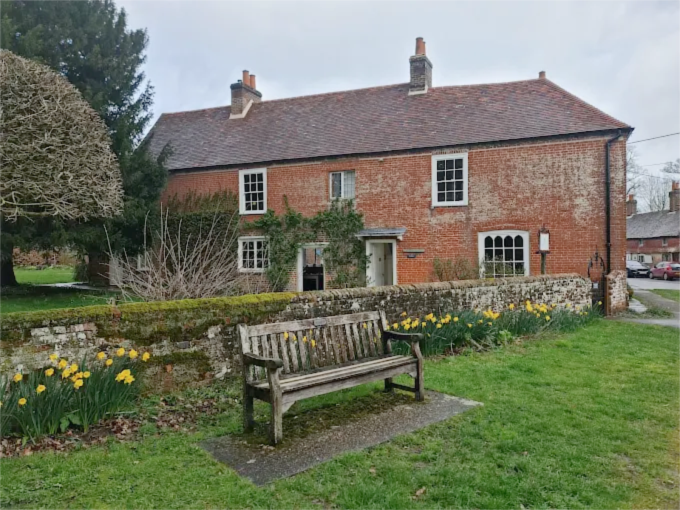
Chawton Cottage on the left, when Jane Austen truly lived from July 1809 until May 1817 when she moved to Winchester to seek medical treatments after a period of ill health. Here she revised all her six novels and wrote Pride and Prejudice. On the background of this image we can see Chawton House, 
the residence of Mr. Edward Austen Knight and his family.


A young Frances Catherine Austen Knight, lovingly called in family Fanny, 
nearly another sister to Jane and Cassandra.


St. Nicholas Parrish at Chawton.


  And so, the Altons and Stokes are joined by the Austens, who, from the moment they appear, will occupy a prominent position within the plot. Especially Jane, who, considered an adults—she had already turned thirty-three—but still young, esteemed as a sensible, shrewd, and ingenious woman, becomes a counselor and point of reference for the successful resolution of the problems to which the inexperience and impulsiveness, typical of adolescence, often lead the younger characters. Known for her resourcefulness as a rising female writer, she becomes the pillar, the guide, not to mention the fulcrum of the small community in which the novel is set. And it is precisely these rare qualities that will see her "cloak" herself in charm in the eyes of all the young scions and gentlemen, especially those of Count Richard Stokes. . .

 “The dinner was excellent, the meat perfectly cooked, and the conversation brilliant. Richard felt at ease, even though old Mrs Austen never took her eyes off him, and he rarely had the opportunity to linger on Miss Jane. She, the object of his admiration, often surprised him with her witty remarks, and Richard never tired of admiring her gift for always speaking her mind. She made him laugh heartily when, speaking of Nancy Neel, who recently got engaged, she said that she was a lovely young lady with the admirable ability to fill every silence with irrelevant details, a talent not everyone can boast. [. . .]
‘Miss Jane, it's a rare pleasure to listen to you . . . I could do it for hours. You have a gift for capturing the essence of people.’
‘If I were you, I wouldn't insist further; my sister has no qualms about always speaking her mind,’ Cassandra interjected.
‘But that's her best quality,’ Richard exclaimed vehemently. Jane stared at him, and for a moment her eyes seemed to darken. The smile had not left her face, but her eyes seemed to flash with anger. Or disappointment.
‘Don't provoke her, Mr. Richard, or she'll give you a description of every person she's ever known since we came to Chawton.’ [...] (p. 181)

  At this point, without any doubt you're wondering what secret Miss Austen becomes the custodian of, as the novel's title suggests. . .


“The carriage jolted over the cobblestones of the road to Chawton. The sky seemed almost too vast to be real, while a pale ray of moonlight illuminated the vehicle inside. Jane Austen sat upright, her hands elegantly resting on her knees, her gaze fixed on the little window. Beside her, Richard Stokes looked restless. [. . .] Jane, always alert to the nuances of the human soul, sensed Richard's nervousness, but chose not to say anything. The night had already been charged with emotion.
‘Miss Austen,’ Richard said suddenly, his voice lower than usual.
Jane turned slightly toward him, raising an eyebrow.
‘Yes, Mr Stokes?’
He hesitated, as if the words he was about to utter weighed on him. Then, in a rush, he leaned toward her.
‘I can't help thinking . . . how extraordinary you are.’
Jane inclined her head, but her lips curved into a wry smile.
‘Extraordinary, Mr Stokes? That's a curious adjective for a woman of my age and position. Don't you think it's rather out of place?’
Richard didn't laugh; on the contrary, his gaze deepened.
‘It isn't at all. I've never met a woman like you. Your mind, your spirit, your way of seeing the world . . . They're irresistible.’
Jane's prepared quip died on her lips. [. . .] She cleared her throat, trying to regain her control.
‘Mr Stokes,’ she began, in the light tone she often used to mask her emotions.’I hope the moon hasn't confused your thoughts. It's said to have an effect on romantics.’
‘It's not the moon. It's you.’
Before Jane could answer or raise a new barrier of irony, he leaned forward and kissed her.” (p. 197)

  Almost as if she were one of the heroines of the novels she loved to write, Jane found herself discovering that she was in love. . . Jane Austen, a master of self-control, betrayed herself by responding to the kiss, with her hands which found young Stokes' chest for a fleeting touch; then, after feeling a struggle of conflicting emotions within her that dominated her for a few moments, she regained her composure to quickly 'put' the mask of self-control.

"[. . .] ‘Richard, what happened . . . must never happen again.’
‘But . . .’
‘Never again’ she interrupted him with a sweetness laced with firmness. ‘You are young, full of life. I am a woman the world has already relegated to the margins. A spinster with more stories to tell than prospects.’
‘But you feel something, too,’ Richard retorted, his voice cracking.
Jane smiled sadly.
‘Yes, there is something, but that doesn't make it any less impossible.’
The carriage pulled up in front of Chawton Cottage. Jane grabbed her cloak and stepped out quickly, pausing only for a moment at the threshold to turn to Richard. [. . .] She paused behind the door, her hands shaking as she tightened the clasp of her cloak. [. . .] She leaned her back against the cold wood and took a deep breath, trying to calm the swirl of emotions.
Her eyes filled with tears, not of sadness, but of a happiness so sudden and intense that it confused her. How could I have let myself go? she asked herself, putting a hand to her chest, where her heart was still beating furiously. [. . .] She sat down in a chair, drawing her cloak closer. The tears began to fall; it wasn't regret, nor even despair. It was the weight of a moment she would remember forever.” (p. 198)

  Here is Jane Austen's secret revealed: she was experiencing love, true love, the love she had written and was writing about so much, firsthand as never before, but she felt she could not abandon herself to it. It was too late now. For his part, Richard, deeply in love with her, will decide to run away to leave behind a past that was difficult to forget: he could not have the woman he admired and loved so much. The only thing he could do was to try to forget her. But he had to stop seeing her.


  Unaware of Richard's intentions and of the fact that for him there was no one else in the world worthy of being loved, the next day Jane tormented herself with the thought that, given his age, he could have created a life of his own and a family, perhaps with one of the young women from the village of St. Nicholas who were courting him, and, why not, with Cecilia herself, the image with which this novel began:

"Jane sought refuge in the back garden, where the cool shade of the great beech tree offered shelter from the sun. [. . .] I am horrible, she told herself, but at least I have the virtue of knowing it. . . which makes me slightly less horrible, or at least more consciously horrible, which is something. And as if that weren't enough, I allow myself the luxury of envy, a feeling as petty as it is useless. Jane sighed and let her gaze wander among the quivering oars of the beech tree. In another life, perhaps, she might have been like Cecilia Ravencourt: young, admired, without time having yet had way to lay its cruel hand on her." (p. 208)

   Only her age, in fact, kept her from abandoning herself to love, because this time she truly believed in love. . .


Miss Austen's Regrets, film directed by Jeremy Lovering, 2007.


   Knowing of Jane's pain and its cause, Cassandra decided to take her away from Chawton to London, where she could find comfort with their brother, Henry. The night before, Richard had also managed to leave his parents' house, much to their disappointment: he wanted to be away from everyone he knew for at least a year. He too had chosen London as the destination of his escape, and it is there, one autumn morning, that they will meet again quite by chance. But once again, Jane will succeed in making sense prevail over sensibility, and it will be even more difficult than it was that evening in Chawton. Finally, I enjoyed reading the appendix, which reunites the novel's main characters five years later. Just as Pirandello did in his Sei personaggi in cerca d’autore, Giovanna Zucca gives them a living voice; they all speak in the first person, addressing the reader directly.


HENRY KILLING'S HOUSE, KENT, 1815
RICHARD STOKES

"[. . .] ‘Five years... five years spent fleeing from a pain that has never ceased to follow me like a silent shadow. I have seen her, Miss Austen, Miss Jane, acclaimed in the most illustrious salons, courted by ladies and gentlemen who lose themselves in her words. But she... she hasn't changed. The same clear gaze, the same calm that confuses and enchants.
I have watched her hidden in the crowd, like a thief of emotions who dares not reclaim what once could have been his. And I love her. I love her more than I am willing to admit even to myself. [. . .] I loved her then, I love her now. And I fear, with the same despair, that I shall love her forever.’ [. . .]" (p. 296)


CHAWTON, 1815
JANE AUSTEN

"[. . .] ‘There are loves that are lived and loves that are kept, silent, like an unsent letter. My love needed no promises, nor days shared. A glance was enough, a few words exchanged with the care of those who know that each syllable weighs more than a farewell.
It was not a love of those that burn and consume.
It was, rather, a discreet flame, hidden beneath the ashes, that never asked to be fed in order to continue living. There were no grand gestures, no declarations stolen from time. Only the bittersweet knowledge of having been seen, perhaps even loved, by someone capable of reading between the lines of my reserve. It left me with no regrets, but a gentle melancholy. It remained there, where unfulfilled loves find refuge: in my most intimate thoughts, in the pages I write, in the characters I create. Perhaps I never needed to experience it fully, because in every word I put to paper, it still exists.’ [. . .]" (p. 298)
 

Miss Austen's Regrets, film directed by Jeremy Lovering, 2007.


  What else is there left for me to say after having written so much and given you so much to read, but in a post that, believe me, deserved to be even much longer?
That the book truly satisfied me and that I was sorry to have finished it.
I'm even more sorry that my English-speaking friends can't read it, because I know them all to be Jane Austen's lovers.

If you've read this up to here, I'm immensely grateful to you: 
it means that, despite its lenght, 
you found this article light and engaging.
See you soon, my dearest Friends ❤


Dany


Il segreto di Miss Austen


IMMAGINE DI COPERTINA - IL SEGRETO DI MISS AUSTEN.


«Jane, persa nella sua fantasia, continuava a osservare il giardino, rincorrendo trame e storie dove una fanciulla compie la sua parabola senza che nessuno intorno a lei sia in grado di intuirne la portata. 
 "L'altra sera parlava di voler andare a Bath. . . Scriverò di una ragazzina a Bath, Cassie. Una ragazzina che saluta i suoi genitori e che quando torna è un'eroina in grado di decidere da sé per la propria vita. . ."
 Cassandra si sedette al suo tavolo da lavoro e con il ricamo tra le mani osservava quella sua sorella amatissima che creava i suoi personaggi e li dipingeva come il più talentuoso ritrattista non avrebbe saputo fare». 

(Il segreto di Miss Austen, G. Zucca, Fazi Editore, Roma, 2025)


 Dopo anni mi sono ritrovata a farmi tentare dalla lettura di un romanzo storico: un grande dispiacere da dover superare e che sembra assorbire ogni mio pensiero non mi consente letture impegnative, ma solo di divagazione. Ovviamente non si tratta di un romanzo qualsiasi o scelto per caso: è ambientato in Inghilterra, nella fascinosa epoca dell'eleganza, ossia quella Regency, e Jane Austen, nella finzione romanzesca, pagina dopo pagina, si configura come la vera protagonista. Giovanna Zucca, profonda conoscitrice dell'opera della Austen, lo scorso autunno, in occasione della ricorrenza dei 250 anni dalla nascita dell'autrice di Orgoglio e Pregiudizio, si è cimentata in questo romanzo, scritto in perfetto stile austeniano: qui la nostra Jane, muovendosi in un mondo fatto di intrighi e pettegolezzi, balli, villeggiature e matrimoni combinati, diviene perno della narrazione. Attraverso schermaglie, equivoci e dialoghi vivaci che compongono una trama avvincente, fatta d'ironia, d'intelligenza, e di situazioni sentimentali intricate, ci ritroviamo a diventare parte integrante del narrato.


IMMAGINE 2 A SX - Una lady del periodo Regency.

  Il XIX secolo è da poco iniziato - siamo nel 1809 - e ci troviamo in Inghilterra. A onor del vero è essenziale puntualizzare che la narrazione si svolge nelle incantevoli campagne dell'Hampshire che, con un linguaggio fatto del loro fascino particolare, per non dire unico, parlano di storia e di storie che datano millenni. Qui, nel pittoresco villaggio di St. Nicholas, giunge, inattesa, una giovane fanciulla, Cecilia Ravencourt, recata da Londra dalla sua madrina, la vedova Mrs. Eleonor White: stimata residente del luogo, questa, sapendola orfana dei genitori ed affidata alla tutela legale del fratello, la vuole allontanare dalla cognata, della perfidia della quale è vittima. La giovane, di rara bellezza ed affabilità, diventa protagonista della prima parte della narrazione, in quanto attira su di sé tutte le attenzioni degli abitanti: quelle dei giovani, che se ne contendono le simpatie ed il favore, quelle delle più attempate malelingue, che sfornano maldicenze per vocazione, traendone incomparabile diletto. Dapprincipio le vicende che vengono narrate nel romanzo vedono focalizzate due famiglie aristocratiche di St. Nicholas: gli Altons, (il vedovo Mr. Alton e i suoi tre figli, Luisa, Philip e Virginia) ed i conti di Ashcombe (il conte Paul Stokes, sua moglie la contessa Clara, ed i loro figli Richard, George ed Olimpia). Ovviamente vi sono altri personaggi che, con ruoli più o meno pregnanti, fanno loro da cornice. Dopo i primi passaggi, la novità rappresentata dall'arrivo di Cecilia viene messa in ombra da un altro evento, ossia la venuta di un personaggio molto importante: Mr. Edward Austen Knight. Proprietario della tenuta di Chawton House a Chawton, il villaggio limitrofo, questi annuncia agli amici - Ashtons e Stokes - l'imminente arrivo e trasferimento della madre, delle sue sorelle Cassandra e Jane, e di un'amica di famiglia che vive con loro, Martha Lloyd. Con loro Mr. Edward avrebbe portato i suoi stretti famigliari, tra cui la figlia Fanny, nipote prediletta di Jane, che allora aveva sedici anni.

 
IMMAGINE 3 - Chawton Cottage, sulla sinistra, dove Jane Austen visse realmente da luglio 1809 a Maggio 1817 quando si spostò a Winchester per sottoporsi a cure dopo un periodo di malattia. Qui ella rivedette tutte e sei i suoi romanzi e scrisse Pride and Prejudice - Orgogòio e pregiudizio. Sullo sfondo di questa immagine si può vedere Chawton House, residenza di Mr Edward Austen Knight e della sua famiglia.

IMMAGINE 4 - Una giovane Frances Catherine Austen Knight, chiamata amorevolmente in famiglia Fanny, quasi un'altra sorella per Jane e Cassandra.

IMMAGINE 5 - La parrocchia di St. Nicholas a Chawton.

  Ed ecco, quindi, che agli Altons e agli Stokes si uniscono gli Austens, che, rispetto a tutti gli altri interpreti, avranno, da quando fanno la loro comparsa, una posizione prioritaria nel contesto della trama. Soprattutto Jane, che, considerata persona adulta (aveva già compiuto allora trentatré anni), ma ancora giovane, stimata come donna assennata, sagace e ingegnosa, diventa consigliera e punto di riferimento per la felice risoluzione dei problemi a cui l'imperizia e l'impulsività, propri dell'età adolescenziale, conducono spesso i più giovani interpreti. Nota per la sua intraprendenza quale scrittrice di sesso femminile in via di affermazione, diventa il pilastro, la guida, per non dire il punto fermo della piccola comunità in cui il romanzo è ambientato. E saranno proprio queste sue rare qualità a vederla "ammantarsi" di fascino agli occhi di tutti i giovani rampolli e gentlemen, soprattutto a quelli del conte Richard Stokes. . . 


IMMAGINE 6 A DX - Una lady del periodo Regency.


«La cena fu ottima, la carne cotta al punto giusto e la conversazione brillante. Richard si sentiva a sua agio, nonostante la vecchia Austen non gli levasse gli occhi di dosso, e ben poche volte ebbe la possibilità di indugiare con lo sguardo verso Miss Jane. Lei, la protagonista della sua ammirazione, lo sorprese spesso con le sue osservazioni argute, e Richard non si stancava di ammirarne la dote di dire sempre ciò che pensava. Lo fece ridere di gusto quando, a proposito di Nancy Neel, recentemente fidanzata, disse che era un'adorabile signorina dotata dell'ammirevole capacità di riempire ogni silenzio con dettagli irrilevanti, un talento che non tutti possono vantare. [. . .] 
"Miss Jane, è un piacere raro stare ad ascoltarvi . . . lo farei per ore. Avete la dote di catturare l'essenza delle persone".
"Fossi in voi non insisterei oltre, mia sorella non si fa scrupolo di dire sempre ciò che pensa", s'intromise Cassandra.
"Ma è proprio questa la sua qualità migliore", esclamò Richard con veemenza. Jane lo fissò e per un istante parve che i suoi occhi si oscurassero. Il sorriso non aveva abbandonato il viso, ma gli occhi parvero attraversati da un bagliore di rabbia. O delusione. 
"Non provocatela, Mr. Richard, o vi farà la descrizione di ogni persona che ha conosciuto da quando siamo giunte a Chawton". [. . .]» (p. 181)

 A questo punto vi chiederete di sicuro di quale segreto Miss Austen diventi depositaria, così come cita il titolo del romanzo. . . 


IMMAGINE 7 - Carrozza di notte.

«La carrozza sobbalzava sui ciottoli della strada per Chawton. Il cielo sembrava quasi troppo vasto per essere reale, mentre un pallido raggio di luna illuminava l'interno del veicolo. Jane Austen sedeva dritta, con le mani elegantemente appoggiate sulle ginocchia, lo sguardo rivolto verso il finestrino. Accanto a lei, Richard Stokes sembrava inquieto. [. . .] Jane, sempre attenta alle sfumature dell'animo umano, percepiva il nervosismo di Richard, ma scelse di non dire nulla. La notte era stata già carica di emozioni. 
"Miss Austen", disse improvvisamente Richard con una voce più bassa del solito.
Jane si voltò appena verso di lui, alzando un sopracciglio.
"Sì, Mr Stokes?".
Lui esitò come se le parole che stava per pronunciare gli pesassero. Poi, in un impeto. si chinò verso di lei.
"Non posso fare a meno di pensare . . . quanto voi siate straordinaria".
Jane inclinò la testa, ma le sue labbra si piegarono in un sorriso ironico.
"Straordinaria, Mr Stokes? E' un aggettivo curioso per una donna della mia età e condizione. Non credete che sia piuttosto fuori luogo?"
Richard non rise, al contrario il suo sguardo si fece più intenso. 
"Non lo è affatto. Non ho mai incontrato una donna come voi. La vostra mente, il vostro spirito, il vostro modo di vedere il mondo. . . Sono irresistibili".
La battuta che Jane aveva già pronta morì sulle sue labbra. [. . .] Si schiarì la gola cercando di ritrovare il controllo. 
"Mr. Stokes", iniziò, con il tono leggero che usava spesso per mascherare le emozioni. "Spero che la luna non abbia confuso i vostri pensieri. Si dice che abbia un certo effetto sugli animi romantici".
"Non è la luna. Siete voi".
Prima che Jane potesse rispondere o sollevare una nuova barriera d'ironia, lui si sporse in avanti e la baciò». (p. 197)


Quasi come fosse una delle eroine protagoniste dei romanzi che amava scrivere, Jane si ritrovò a scoprire di essere innamorata. . . Jane Austen, maestra nella padronanza di sé, si tradì rispondendo al bacio con le mani che trovarono il petto del giovane Stokes per un fugace contatto; poi, dopo aver avvertito dentro di sé una lotta di emozioni contrastanti che la dominarono per alcuni istanti, si ricompose per recuperare velocemente la maschera dell'autocontrollo.

«[. . .] "Richard, quello che è successo. . . non deve accadere mai più".
"Ma. . . ".
"Mai più", lo interruppe con una dolcezza intrisa di fermezza. "Voi siete giovane, pieno di vita. Io sono una donna che il mondo ha già relegato ai margini. Una zitella con più storie da raccontare che prospettiva".
"Ma anche voi sentite qualcosa", ribatté Richard con la voce spezzata.
Jane sorrise tristemente. 
"Sì, c'è qualcosa, ma ciò non lo rende meno impossibile". 
La carrozza si fermò davanti il cottage di Chawton. Jane afferrò il mantello e scese rapidamente, fermandosi solo un'istante sulla soglia per voltarsi verso Richard. [. . .] Si fermò dietro la porta, le mani tremanti mentre stringeva il fermaglio del mantello. [. . .] Appoggiò la schiena contro il legno freddo, ed inspirò profondamente, cercando di calmare quel turbinio di emozioni.
Gli occhi le si riempirono di lacrime, non di tristezza, ma di una felicità così improvvisa e intensa che la confuse. Come ho potuto lasciarmi andare?, si chiese portandosi una mano al petto, là dove il cuore batteva ancora furioso. [. . .] Si sedette su una sedia stringendosi nel mantello. Le lacrime iniziarono a scendere, non era pentimento e neppure disperazione. Era il peso di un momento che avrebbe ricordato per sempre». (p. 198)

 Ecco svelato il segreto di Jane Austen: l'amore, quello vero, quello di cui tanto aveva scritto e stava scrivendo, lo stava provando in prima persona come non era mai accaduto prima, ma sentiva di non potervisi abbandonare. Era troppo tardi, ormai. Ragion per cui Richard, profondamente innamorato di lei, deciderà di fuggire per lasciarsi alle spalle un passato difficile da dimenticare: non poteva avere la donna che tanto ammirava ed amava. L'unica cosa che poteva fare era cercare di dimenticarla. Ma doveva smettere di vederla.


IMMAGINE 8 - Lady Regency che contempla una nobile residenza di campagna: potrebbe essere Jane Austen che si perde con lo sguardo a fissare Stokes House. . .


 All'oscuro delle intenzioni di Richard e del fatto che per lui non esisteva nessun'altra al mondo degna di essere amata, il giorno seguente Jane si tormentava pensando che, data la sua età, questi avrebbe potuto crearsi una vita tutta sua ed una famiglia, magari con una delle giovani del paese di St. Nicholas che lo corteggiavano, e, perché no, proprio con Cecilia, con l'immagine della quale questo romanzo è cominciato:

 «Jane cercò rifugio nel giardino sul retro, là dove l'ombra fresca del grande faggio offriva riparo dal sole. [. . . ] Sono orribile, si diceva, ma almeno ho il pregio di saperlo. . . il che mi rende leggermente meno orribile, o almeno più consapevolmente orribile, che è già qualcosa. E come se non bastasse, mi concedo il lusso dell'invidia, un sentimento tanto meschino quanto inutile. Jane sospirò e lasciò che lo sguardo si perdesse tra i remi tremolanti del faggio. In un'altra vita, forse, avrebbe potuto essere come Cecilia Ravencourt: giovane, ammirata, senza che il tempo avesse ancora avuto il tempo di posare la sua mano crudele su di lei». (p. 208)

 Solo la sua età, infatti, la tratteneva dall'abbandonarsi all'amore, perché questa volta nell'amore ci credeva davvero. . .


IMMAGINE 9 - Tratta da Miss Austen's Regrets, film diretto da Jeremy Lovering, 2007.


  A conoscenza del dolore della sua Jane e del motivo che ne era la causa, Cassandra decise di condurla via da Chawton, a Londra, dove avrebbe potuto trovare conforto presso il loro fratello Henry. La sera prima anche Richard era riuscito a lasciare la casa dei genitori, con loro grande disappunto: voleva stare lontano da tutti quelli che conosceva per almeno un anno. Anche lui aveva scelto Londra come meta della sua "fuga" e proprio a Londra, un mattino d'autunno, del tutto casualmente si ritroveranno. ma ancora una volta Jane riuscirà a far valere la ragionevolezza sul sentimento, e sarà ancora più difficile di quanto lo era stato quella sera a Chawton. Molto gradevole è stata, infine la lettura dell'appendice che ritrova  i personaggi principali del romanzo cinque anni dopo e proprio come fece, a suo tempo, Pirandello con i suoi Sei personaggi in cerca d'autore, ad essi Giovanna Zucca dà viva voce, parlano tutti in prima persona rivolgendosi direttamente al lettore.


DIMORA DI HENRY KILLING, KENT, 1815
RICHARD STOKES 

 «[. . .] "Cinque anni. . .  cinque anni spesi a fuggire da un dolore che non ha mai smesso di seguirmi come un'ombra silenziosa. L'ho vista, Miss Austen, Miss Jane, acclamata nei salotti più illustri, corteggiata da dame e gentiluomini che si perdono nelle sue parole. Ma lei. . . lei non è cambiata. Lo stesso sguardo limpido, la stessa calma che confonde e incanta. 
L'ho osservata nascosto tra la folla, come un ladro di emozioni che non osa reclamare ciò che un tempo avrebbe potuto essere suo. E l'amo. L'amo più di quanto sia disposto ad ammettere persino a me stesso. [. . .] L'ho amata allora, la amo adesso. E temo, con la stessa disperazione, che la amerò per sempre." [. . .]» (p. 296)


CHAWTON, 1815
JANE AUSTEN

  «[. . .] "Ci sono amori che si vivono e amori che si portano, silenziosi, come una lettera mai spedita. Il mio amore non ha avuto bisogno di promesse, né di giorni condivisi. E' bastato uno sguardo, qualche parola scambiata con la cura di chi sa che ogni sillaba pesa più di un addio. 
Non è stato un amore di quelli che bruciano e consumano.
E' stato, piuttosto, una fiamma discreta, nascosta sotto la cenere, che non ha mai chiesto di essere alimentata per continuare a vivere. Non ci sono stati gesti grandiosi, né dichiarazioni rubate al tempo. Solo la consapevolezza dolceamara di essere stata vista, forse persino amata, da qualcuno capace di leggere tra le righe della mia riservatezza. Non mi ha lasciato rimpianti, ma una malinconia gentile. E' rimasto lì, dove gli amori non vissuti trovano rifugio: nei pensieri più intimi, nelle pagine che scrivo, nei personaggi che creo. Forse non ho mai avuto bisogno di viverlo per intero, perché in ogni parola che metto su carta lui esiste ancora." [. . .]» (p. 298)


IMMAGINE 10 - Tratta da Miss Austen's Regrets, film diretto da Jeremy Lovering, 2007.


 Cos'altro mi resta da dire dopo aver scritto molto ed avervi offerto tanto da leggere, ma in un post che, credetemi, avrebbe meritato di essere ben più lungo? 
Che il libro mi ha davvero appagata e che mi è spiaciuto averlo ultimato. 
Ed ancor più mi spiace che le amiche di madre lingua inglese non possano leggerlo, perché le so tutte amanti di Jane Austen.


Se siete giunti a leggere fin qui, ve ne sono immensamente grata:
significa che la lettura vi è risultata lieve ed avvincente.
A presto, miei carissimi Amici ❤

Dany


LINKING TO:


domenica 13 luglio 2025

This is Jane Austen's Year


 " Look into your own heart 
because who looks outside, dreams, 
but who looks inside awakes."

Jane Austen


It sounds so unbelievable to me, since her writings and novels are still so alive and current, but they've been passing 250 years from Jane Austen's birth.


The Georgian style Heckfield Place near Chawton, Hampshire.


And I've chosen just the image of this amazing manor to introduce today's topic because it will be the heart of all the celebrations that will be held in England, starting from the first days of July, although Jane was born in December. Six months to remeber this incredible woman and writer who was, and still is, an example to novelists of all the eras following hers. I suppose that her uniqueness is first of all due to her quite rare skill in depicting an era, the Regency one, as for etiquette, womanhood, education, culture. Her novels look like paintings able to make us feel like as if we would be side by side with her and part of the age she lived and wrote in. And it was needed much ability for doing it since Regency, also known ast the era of the elegance, was governed by so many rules, both in private life and in public, that we today cannot even imagine!
Her "paintings" go alongside with the plot, and end together with it. I compared her ability to depict her era to that of a painter, but it could also be compared to that of a stitcher, who completes her tapestry without missing a single stitch. 


After all, Jane Austen is a pre-romantic writer and she absorbs some of the themes of this literary period: the palpitations of love, the ethics of personal relationships and the morality of the society of the time. Women and their role in British society, relationships between men and women, feelings are the themes she loved most. There is no shortage of weddings, hugs, sighs and heartbeats, long dances and chats with knights and noble gentlemen, even if it must be said that she rarely lets herself go to aggressive scenes or passionate tones. This, after all, is foreign to the world in which the virtuous Jane lived! The language of her works is always clean and flowing, elegant, but sometimes also witty and sarcastic, always in an impeccable form that testifies to her culture and her passion for reading.
But let's talk about this gorgeous building, Heckfield Place, which was born as an aristocratic mansion.


It was built between 1763 and 1766 for Jane Hawley (1744–1815) who was the elder daughter of Revd. John Baker of Ilton, Somerset (1713–1757). She began the construction of the five-bay core of Heckfield Place manor house after the death of her husband, William Hawley of West Green House, Mattingley around August 1763. Jane had been orphaned (1757) and married (still a minor, in 1760), and become a mother (1761) and then a widow (1763) all in around six years, and she was still not yet twenty years old.
She borrowed against the funds left in trust for her infant son Henry, and used some of the money to build herself a new house and amass a small estate. The choice of the site for Heckfield Place seems to have been influenced by the proximity of her uncle and guardian, William Baker (1716–1800) and aunt Sarah with whom lived Jane's younger sister Catherine, at a house called The Grove on Heckfield Heath. The site was also high, pleasant, and healthy, and afforded magnificent views to the north-east towards Windsor. The architect of the house is unknown. It was brick-built, three-storey (with a stone staircase), of five bays, with five rooms on the ground floor. To make the most of the views down a small valley, the garden front faced east, and the main entrance was on the west front. Late 18th-century maps suggest three outbuildings to the north and north-west. These included a double coach-house, and good stabling for ten horses. Advertisements for the letting of West Green, in July 1766 suggest that Heckfield Place was completed by this date.
In 1768 Jane married for a second time. Her husband was Revd. Mountague Rush (1731–1785), younger son of Sir John Rush of Streatley, a former High Sheriff of Berkshire. Jane had another nine children, of which only one did not survive. Rush was, from 1774, the rector of the neighbouring parish of Elvetham. 
Just the following year our Jane would have been born. 
Rush died in February 1785, an event which caused the sale of Heckfield Place. Contemporary sale notices confirm that the Heckfield Place estate, by that date, stretched to about 120 acres.
John Lefevre (1721/2-1790) of a successful Huguenot family of textile dyers, gin distillers and bankers established around East London, bought Heckfield Place in February 1786. He and his wife Helena had an only daughter, also Helena, who in 1789 was married to Charles Shaw (1759–1823). John Lefevre died the very following year and Shaw, as a condition of marriage and inheritance, added the name 'Lefevre' to his own. After the death of John Lefevre's widow in 1816, the Shaw Lefevres enlarged the Rush house by the addition of identical wings to the north and south. Servants' quarters, walled gardens, an ice house, stables and coach houses were also built, and the upper lake created. By 1790, Shaw Lefevre had also acquired the present-day Home Farm acreage. Through land exchanges with neighbours (particularly Pitt and afterwards, the Dukes of Wellington), by purchase and through enclosure, Shaw Lefevre and his son greatly enlarged the estate, particularly to the south, until it extended to 2,388 acres.
In that period our Jane had already begun writing her very first tales and short novels collected in the Juvenilia, which will be later collected in three volumes, while still living at Steventon. At the end of the year 1800 Reverend Austen left Steventon for Bath together with his family, but at his death, occured in 1805,Jane, Cassandra and their mother found themselves in a misery condiction. It was on July 7, 1809 that Jane, along with her mother and sister Cassandra, and their friend Martha Lloyd, moved into Chawton Cottage, which was offered to them by her brother Edward, who owned the Chawton estate, not far from Heckfield Place.


It was within these walls that Jane found the inspiration for writing the novels that made her immortal: Sense and Sensibility, Pride and Prejudice, Mansfield Park, Emma, ​​Northanger Abbey, and Persuasion. She also began writing Lady Susan, Sanditon and The Watsons here, but these works remained unfinished. Jane died in Winchester in 1817 before completing them.
But let's come back to Heckfield Place and go on with its history which, this year, will echo that of the only writer beloved throughout the world.

The Shaw Lefevres had four sons, but it was the eldest, Charles (1794-1888), later Viscount Eversley, who, together with his wife Emma, undertook two further phases of work to the manor house: by 1840 square bay windows had been added to the east and west fronts, and outside, a formal Italianate balustraded terrace had been wrapped around the east and south fronts; by the 1850s, the whole of the south-east corner of the house had been thrown out to create a fine library. Probably at the same time, French windows were inserted into the south front, giving direct access to the garden from the drawing room. Sicilian marble columns and fireplaces were added in the public rooms, the cast-iron firebacks displaying the quartered arms of Shaw Lefevre and Whitbread.
At the north end of the terrace, a conservatory was added, perpendicular to the house. Inserted into the terrace on the east side were steps giving access to the Pinetum and shrubberies, begun in the mid-1850s. A second lake was excavated below the first, with a waterfall, island and boat house.
Its garden was opened to the public, and in 1882 drew 2,000 visitors in five days. The Journal of Horticulture and Cottage Gardener that year described it as 'a model garden both in design and execution. Surpassed by none and equalled by few.'
Little by little, passing through the hands of other owners, Heckfield Place became the splendid building that we can still admire today, when, with its 67 acres of land that remain surrounding it, it is used for public and private meetings and ceremonies.


SOURCES:


So today too our time has come to an end, alas!
In the hope to have given you some carefree moments as a gift,
I'm wishing you a wonder-filled new week
See you soon  ❤


Oh, I forgot to say that if you're interested in Jane Austen's world, maybe you like reading these posts  ~ My little old world ~ published during the previous years (just click on the image to open the page of the article):


By the way of Jane Austen 


Jane Austen's Loves


"Godmersham Park" by Gill Hornby, 
a delightful jump back in time to Jane Austen's world 


AT HOME WITH JANE AUSTEN by Kim Wilson


Silhouettes, the Ancient Art of the Shadows


What Jane Austen ate - 
Typical dishes for Regency meals.

Charles E.Brock, 
illustrator of Jane Austen's most popular novels


Jane Austen's poor sight and death due to arsenic poisoning?


"Longbourn" by Jo Baker, the Downstairs World of 
"Pride and Prejudice"


Regency desserts recipes for your tea with Jane Austen.


Dany


Questo è l'anno in cui si festeggia Jane Austen


 "guarda nel profondo del tuo cuore
perché chi guarda fuori sogna,
ma chi si guarda dentro si desta."


Jane Austen


Mi sembra talmente incredibile, visto che i suoi scritti e i suoi romanzi sono ancora così vivi e attuali, ma sono trascorsi ben 250 anni dalla nascita di Jane Austen.


IMMAGINE DI COPERTINA - Heckfield Place, l'edificio in stile georgiano situato in prossimità di Chawton nell' Hampshire.


E ho scelto proprio l'immagine di questa splendida dimora per introdurre l'argomento di oggi perché essa sarà il cuore di tutte le celebrazioni che si terranno in Inghilterra, a partire dai primi giorni di luglio, sebbene Jane sia nata a dicembre. Sei mesi per ricordare questa donna e scrittrice incredibile che è stata, ed è tuttora, un esempio per i romanzieri di tutte le epoche successive alla sua. Suppongo che la sua unicità sia dovuta innanzitutto alla sua rara capacità di rappresentare un'epoca, quella Regency, in termini di etichetta, femminilità, educazione e cultura. I suoi romanzi sembrano dipinti capaci di farci sentire come se fossimo al suo fianco, ovvero parte dell'epoca in cui visse e scrisse. E ci voleva molta abilità per riuscirci, dato che l'epoca Regency, altresì detta epoca dell'eleganza, era governata da così tante regole cui adeguarsi, sia nella vita privata che in quella pubblica, che oggi non possiamo neppure immaginare!
Ho paragonato la sua capacità di rappresentare la sua epoca a quella di un pittore, poiché ogni suo "dipinto" accompagna la trama e si conclude insieme ad essa, ma potrebbe anche essere paragonabile a quella di una ricamatrice, che completa il suo arazzo senza perdere un solo punto. 


IMMAGINE 2 - Ritratto di Jane Austen.


Dopotutto Jane Austen è una scrittrice pre-romantica e di questo periodo letterario assorbe parte delle tematiche: le palpitazioni amorose, l’etica dei rapporti personali e la moralità della società dell’epoca. La donna e il suo ruolo nella società britannica, i rapporti tra uomo e donna, i sentimenti sono i temi a lei più cari. Non mancano matrimoni, abbracci, sospiri e batticuori, lunghi balli e chiacchierate con cavalieri e nobili gentiluomini, anche se va detto che raramente l’autrice si lascia andare a scene aggressive o toni passionali. Questo, d'altronde, è estraneo al mondo in cui vive la virtuosa Jane! Il linguaggio delle sue opere è sempre pulito e scorrevole, elegante, ma talora anche arguto e sarcastico, sempre in una forma impeccabile che testimonia la sua cultura e la sua passione per la lettura.
Ma parliamo di questo splendido edificio, Heckfield Place, che nacque come dimora aristocratica.


IMMAGINE 3 - Heckfield Place come è oggi.


Fu costruito tra il 1763 e il 1766 per Jane Hawley (1744-1815), figlia maggiore del Reverendo John Baker di Ilton, Somerset (1713-1757). Ella iniziò la costruzione del nucleo centrale a cinque campate della casa padronale di Heckfield Place dopo la morte del marito, William Hawley di West Green House, Mattingley, intorno all'agosto del 1763. Jane era rimasta orfana (1757), si era sposata (ancora minorenne, nel 1760), era diventata madre (1761) e poi vedova (1763), il tutto nell'arco di circa sei anni, e non aveva ancora compiuto vent'anni. Prese in prestito i fondi fiduciari intestati al figlio neonato Henry e usò parte del denaro per costruirsi una nuova casa e mettere insieme una piccola proprietà. La scelta del luogo in cui edificare Heckfield Place sembra essere stata influenzata dalla vicinanza dello zio e tutore, William Baker (1716-1800), e della zia Sarah, con cui viveva la sorella minore di Jane, Catherine, in una casa chiamata The Grove a Heckfield Heath. Il sito era anche elevato, piacevole e salubre e offriva magnifiche viste a nord-est verso Windsor. L'architetto cui fu commissionato il progetto è sconosciuto. Heckfield Place fu fatta edificare in mattoni, su tre piani (con una scala in pietra), con cinque campate e con cinque stanze al piano terra. Per sfruttare al meglio la vista su una piccola valle, il fronte del giardino era rivolto a est e l'ingresso principale era sul fronte ovest. Le mappe della fine del XVIII secolo indicano tre annessi a nord e a nord-ovest che includevano una rimessa doppia per carrozze e una buona scuderia capace di alloggiare dieci cavalli. Gli annunci di locazione forniti dal West Green del luglio 1766 ci suggeriscono che Heckfield Place fosse stata completata entro quella data.
Nel 1768 Jane si risposò. Suo marito divenne il Reverendo Mountague Rush (1731–1785), figlio minore di Sir John Rush di Streatley, ex Alto Sceriffo del Berkshire. Jane ebbe altri nove figli, di cui solo uno non sopravvisse. Rush fu, dal 1774, rettore della vicina parrocchia di Elvetham e si spense nel febbraio del 1785, evento che determinò la vendita di Heckfield Place. 
Frattanto la nostra Jane era nata a Steventon il 16 dicembre del 1775.
Gli avvisi di vendita dell'epoca confermano che la tenuta di Heckfield Place, a quella data, si estendeva per circa 48,5 ettari. John Lefevre (1721/2-1790), membro di una prospera famiglia ugonotta di tintori tessili, distillatori di gin e banchieri stabilitisi nell'East London, acquistò Heckfield Place nel febbraio del 1786. Lui e sua moglie Helena ebbero un'unica figlia, anche lei di nome Helena, che nel 1789 sposò Charles Shaw (1759-1823). John Lefevre morì l'anno successivo e Shaw, come condizione per il matrimonio e l'eredità, aggiunse il cognome "Lefevre" al proprio. Dopo la morte della vedova di John Lefevre nel 1816, gli Shaw Lefevre ampliarono velocemente la costruzione con l'aggiunta di ali identiche a nord e a sud. Furono edificati anche alloggi per la servitù, giardini recintati, una ghiacciaia, scuderie e rimesse per le carrozze, e fu creato il lago superiore. Nel 1790, Shaw Lefevre aveva acquisito anche l'attuale terreno di Home Farm. Tramite scambi di terreni con i vicini (in particolare Pitt e, in seguito, i duchi di Wellington) e grazie ad acquisti e recinzioni, Shaw Lefevre e suo figlio ampliarono notevolmente la tenuta, in particolare a sud, fino a raggiungere poco meno di 950 ettari.
In quel periodo la nostra Jane aveva già iniziato a scrivere i suoi primi racconti, che verranno successivamente raccolti nei tre volumi degli Juvenilia, mentre viveva ancora a Steventon. Alla fine del 1800 il reverendo Austen lasciò Steventon per Bath con la sua famiglia, ma alla sua morte, avvenuta nel 1805, Jane, Cassandra e la loro madre si ritrovarono in una condizione di miseria. Il 7 luglio 1809 Jane, insieme alla madre, alla sorella Cassandra e alla loro amica Martha Lloyd, si trasferì a Chawton Cottage, offerto loro dal fratello Edward, proprietario della tenuta di Chawton, non lontano da Heckfield Place.


IMMAGINE 4 - Chawton Cottage.


Fu tra queste mura che Jane trovò l'ispirazione per scrivere quei romanzi che la resero immortale: Ragione e Sentimento, Orgoglio e Pregiudizio, Mansfield Park, Emma, L'Abbazia di Northanger e Persuasione. Iniziò a scrivere qui anche Lady Susan, Sanditon e I Watson, ma questi lavori rimarranno incompiuti. Jane si spegnerà a Winchester nel 1817 prima di portarli a termine.
Ma riprendiamo a parlare di Heckfield Place e della sua storia che quest'anno riecheggerà quella dell'unica scrittrice amata in tutto il mondo.
Gli Shaw Lefevre ebbero quattro figli, ma fu il maggiore, Charles (1794-1888), in seguito Visconte Eversley (1794-1888), che, insieme alla moglie Emma, ​​intraprese due ulteriori fasi di lavori alla casa padronale: entro il 1840 furono aggiunte finestre a bovindo quadrate alle facciate est e ovest, e all'esterno, una terrazza formale con balaustra in stile italiano fu avvolta attorno alle facciate est e sud; entro il 1850, l'intero angolo sud-est della casa fu demolito per creare una bella biblioteca. Probabilmente nello stesso periodo, furono inserite porte-finestre nella facciata sud, che consentivano l'accesso diretto al giardino dal salotto. Colonne e caminetti in marmo siciliano furono aggiunti nelle sale pubbliche, con le piastre in ghisa che mostravano gli stemmi in quarti degli Shaw Lefevre e Whitbread.
All'estremità nord della terrazza, fu aggiunta una serra, perpendicolare alla casa. Sul lato est, nella terrazza, furono inseriti dei gradini che davano accesso al Pinetum e ai cespugli, la cui costruzione iniziò a metà degli anni '50 dell'Ottocento. Un secondo lago fu scavato sotto il primo, con una cascata, un'isola e una rimessa per le barche.
Il suo parco fu aperto al pubblico e nel 1882 attirò 2.000 visitatori in cinque giorni. Quell'anno, il Journal of Horticulture and Cottage Gardener lo descrisse come "un parco modello sia nella progettazione che nell'esecuzione. Nessuno lo superava e pochi lo eguagliavano".
Poco per volta, passando per mano di altri proprietari, Heckfield Place divenne la splendida costruzione che possiamo ammirare ancora oggi, quando, con i suoi 27 ettari di terreno che sono rimasti a circondarla, viene utilizzata per meetings e cerimonie pubbliche e private.


FONTI:


E così anche oggi il nostro tempo è giunto al termine, ahimè!
Nella speranza di averVi donato momenti di spensieratezza,
Vi auguro una settimana colma di meraviglie
A presto ❤

Dany


LINKING WITH: