Visualizzazione post con etichetta Little Women. Mostra tutti i post

domenica 28 settembre 2025

"AN APPLE A DAY KEEPS THE DOCTOR AWAY" ~ A curious Victorian interest in Apples


We may think it to be a modern phrasing, but it dates back to the end of the 19th century, with early print examples found as early as 1887.


Along with the curiosity for inventions and everything "technological", the Victorian age was also a time marked by a great interest for plants of all kinds. Botanists were interested in studying and documenting the different types and varieties of pretty much anything that lived outdoors: just think about the stunning gardens which surrounded country mansions we've largely dealed with. But also walled kitchen gardens and orchards were much cared for. Flowers, trees and fruits were the centre of attention and amongst fruits apples got a particular amount of consideration. Identifying and cultivating were both focused on. The number would grow more and more.
Grafting, the technique of forging branches of two different fruits or vegetables together with the intent on creating new produce with qualities of both was a widely popular practice. Being a robust fruit grown on thick branches the apple was a natural candidate. Eventually thousands of varieties were created and/or identified, especially in England, though only a small fraction of those are still in production today. This craze resulted in a huge increase in production as well. According to Crumbs on the Table, around 3,000 new orchards were planted each year during the 1880s and 90s. 
And since fall is sweeping the country, and apples, although today are available all year round, once were a typical fall fruit, I thought ~ My little old world ~ readers may like to celebrate it with a bit of Victorian flavour. But before suggesting you a few recipes I found out in my Victorian cookbooks, let's go on talking about this particular and curious Victorian interest.
Trying to make a research with the meaning of learning something more about the cultivars specifically breeded in the Victorian age, I literally lost myself, alas! since the list is so long you cannot even image. 


Arthur John Elsley, Picking Apples.


Thus I thought to mention just some of them starting from those good to eat nice and fresh just picked. Amongst the most popular varieties obtained during the Victorian age there were: Carswell's Orange, Cellini, Beauty of Bath, Charles Ross, Chaxhill Red, Chorister Boy, Houblon, Miller's Seedling, Sitchamton Russet, Christmas Pearmain, Claygate Pearmain, Yellow Ingestrie, Cornish Gilliflower, Cowan's Seedling, John Standish, Mabbott's Pearmain, Cowarne Quoining, Cox's Orange Pippin, Laxton's Superb, September Beauty, Pomona, Nanny, Downton Pippin, Duchesse's Favourite, Summer Golden Pippin, Duke of Devonshire, Golden Knob, Lord Burghley, Saint Edmund's Pippin, Forge, Dymock Red, Miss Baron, Miss Phillimore, Morris's Russet, Stoke Edith Pippin, Rivers' Early Peach, Egremont Russet, May Queen, Rivers' Nonsuch, King Georg V, King's Acre Pippin, Lady Sudely, Dungay, Federal Pearmain, Glory of the West, Armorel, Brownlee's Russet, also known as Brownlee's graue Reinette, introduced in 1848, is green with red flush and covered with russet, Gipsy King, Winter Quarrenden, Saint Martins, Rosemary Russet, Worcester Pearmain, Gladstone, Frogmore Prolific, Golden Nonpareil, a wintry apple, Golden Harvey, one of the richest and most excellent dessert apple, but also Sturmer Pippin and Falstaff were considered good for dessert, that means eaten at the end of the lunch. 


Frederick Morgan, Apples Picking.


Amongst the Victorian apples good both for eating at once and for cooking there were: Baxter's Pearmain, introduced in 1821, Wadhurst Pippin, a fall apple introduced in 1850 just like the Small's Admirable; Golden Spire, Lady Henniker, Roundway Magnum Bonum, introduced in 1864; Gascoyne's Scarlet, introduced in 1871; Histon Favourite, introduced in 1883; Atalanta, introduced in 1893; Early Victoria, introduced in 1899 the same year of Paroquet; and Sansapareil, Rival, Lord Kitchener, introduced in 1900.
Besides there were those breeded just to be good for cooking, baking and making pies, such as Bushey Grove, Byfleet Seedling, Byford Wonder, Wickham's Pearmain, Carlisle Codlin, Chelmsford Wonder, Wanstall, Tyler's Kernel, Crimson Queening, Curl Tai, Dean's Codlin, a wintry apple, Thomas Rivers, Longstart, Dewdney's Seedling, a late Summer apple, Doctor Hogg, Royal Late, Lord Suffield, Monarch, Domino, Annie Elizabeth,  Emneth Early, Evagil, Goosebery Pippin, Grantonian, Golden Monday, Pott's Seedling, Scarlet Tiffing, Yorkshire Greening, High Canons, Hormead Pearmain, Striped Beefing, Peasgood Nonsuch, Golden Noble, Sir William Gibbon's, Schoolmaster, King Harr, Lane's Prince Albert, the tree of which crumbles for Christmas, Royal Jubilee, Sandringham, Pott's Seedling, Tom Putt, Smart's Prince Arthur, Sleeping Beauty, New Hawthornden, Nelson Codlin, Lord Derby, Lucombe's Seedling, Grenadier, Fillbasket.


Frederick Morgan, The Apple Pickers.


And eventually there were also the cultivars studied especially for making cider, such as Hagloe Crab, Knotted Kernel, Ellis Bitter, Red Jersey (a.k.a. Loral Drain), Ponsford, Kingston Black, Strawberry Norman, Paignton Marigold, Brown Snout, Golden Spire, Harry Masters Jersey, Stead's Kernel, Pennard Bitter, Cherry Norman, Yarlington Mill, Egremont Russet, resembling a pear in shape, White Jersey, White Norman, Taylor's Sweet (a.k.a. Taylor's), Eggleton Styre, Red Norman, Chisel Jersey, Crimson King, also known as John Toucher's or the Bewley Down Pippin, is a traditional cider apple cultivar originating in Somerset, such as the Dabinett and the Dove.
Not to mention the varieties of apples grown in England since the 16th- 17th century which also went on being raised in the Victorian age.
Just beacuse apples were such a popular snack during the 19th century, special devices were produced to allow people to easily enjoy them nice and fresh, but they were also a common after-dinner treat served both as part of baked desserts and on their own. When served on their own the use of special fruit forks and knives would haave been  necessary, allowing one to easily hold the apple in place while cutting it into bite-sized pieces. A Victorian etiquette book of 1880 advised, ‘In eating pears or apples, they would be peeled and cut into halves and quarters with a fruit knife and fork.”


Above you can see a Victorian mother of pearl handled pocket fruit knife and fork, each with its own little leather carrying case.
But when the apples were so many to peel, maybe for an apple pie in the kitchen of a large mansion where large Victorian wealthy families lived, it was a fairly hard work to do! And of course, the apple peeler and corer was invented! This clever device was invented in the 1860s. The Apple Museum says that the first patent was issued to E.L. Pratt in 1863, but the very first to be known and spread was the brainchild of a David H. Goodall, an inventory of many Victorian age appliances to be used in the kitchen. By 1866 they were making quite the splash and undoubtedly making things much easier for chefs all over the world.


An August 1866 advertisement on the American Agriculturist introduces his readers to a new machine called the "Lightning Apple Parer" on page 287.


Goodell's Lightning Apple Parer was a huge success. According to an article about David H. Goodell in the June 1883 volume of The Granite Monthly he had sold 7,200 dozen machines by 1868. However, including push-off mechanisms to make removal of an apple from the fork easier became popular during the 1870's. Goodell made several attempts to include a push-off spring on the Lightning Style Parers, but none of these attempts was a resounding success. Eventually it was added and if you want to see how The Lightning Apple Parer works, click HERE for the video. I suggest you to watch it,  this "contraption" is truly great!
It goes without saying that along with the increase in demand for apples, came a larger market for them and “Apple ladies” appeared on busy thoroughfares: some of them came directly from the near countryside


An "Apple lady" dressed as a peasant, 1898, William John Chatles Pitcher design (V&A Museum).


and some lived in the town, went to buy their apples in the nearest farms and kept their pantries well-stocked.


An Apple lady dressed for strolling through the town, 1890 (V&A Museum).


Well, I think this article has become longer than I thought when I start writing, thus to suggest you the apples recipes I'm waiting for you with the next one.
But let me end by quoting a special fall period during which apples were picked: it is etched in my memory since I was a little girl and I'm sure you all do know it too. It's drawn from Little Women: 
"There were a great many holidays at Plumfield, and one of the most delightful was the yearly apple–picking. For then the Marches, Laurences, Brookes and Bhaers turned out in full force and made a day of it. [...] The old orchard wore its holiday attire. Goldenrod and asters fringed the mossy walls. Grasshoppers skipped briskly in the sere grass, and crickets chirped like fairy pipers at a feast. Squirrels were busy with their small harvesting. Birds twittered their adieux from the alders in the lane, and every tree stood ready to send down its shower of red or yellow apples at the first shake. Everybody was there. Everybody laughed and sang, climbed up and tumbled down. Everybody declared that there never had been such a perfect day or such a jolly set to enjoy it, and everyone gave themselves up to the simple pleasures of the hour as freely as if there were no such things as care or sorrow in the world." (LITTLE WOMEN part 2, CHAPTER 47: HARVEST TIME, p. 611.).
Just Louisa May Alcott was able to describe a simple image depicting an idillyc and romantic picture with every single word!


May your day be filled with joy and smiles, 
Dearest Friends and Readers.
See you soon ❤


Dany


"UNA MELA AL GIORNO TOGLIE IL MEDICO DI TORNO"
~ Un particolare interesse nutrito per le mele in epoca vittoriana

Potremmo pensare che si tratti di un modo di dire moderno, ma risale alla fine del XIX secolo, con primi esempi a stampa risalenti addirittura al 1887.


IMMAGINE DI COPERTINA - Stampa vittoriana di una cultivar di mela del periodo.


Accanto alla curiosità per le invenzioni e per tutto ciò che era "tecnologico", l'età vittoriana fu anche un periodo caratterizzato da un grande interesse per le piante di ogni tipo. I botanici di dedicarono a studiare e documentare le diverse tipologie e varietà di praticamente tutto ciò che viveva all'aperto: basti pensare agli splendidi giardini che circondavano le residenze aristocratiche di campagna di cui abbiamo più volte ampiamente parlato. Ma anche gli orti e i frutteti erano molto curati. Fiori, alberi e frutti erano al centro dell'attenzione e, tra i frutti, le mele ricevettero una particolare considerazione. L'identificazione delle varie cultivar e la coltivazione di nuove erano entrambe attività su cui si concentrava l'attenzione, sicché il loro numero delle varietà sarebbe cresciuto sempre di più.
L'innesto, ossia la tecnica di forgiare rami di due frutti o ortaggi diversi con l'intento di creare nuovi prodotti con le qualità di entrambi, divenne una pratica molto diffusa. Essendo un frutto robusto coltivato su rami spessi, la mela era una candidata naturale. Alla fine furono create e/o identificate migliaia di varietà, soprattutto in Inghilterra, sebbene solo una piccola parte di queste sia ancora in produzione oggi. Questa mania portò anche a un enorme aumento della produzione. Secondo Crumbs on the Table, tra il 1880 e il 1890 vennero piantati circa 3.000 nuovi frutteti ogni anno.
E poiché l'autunno sta dilagando nella campagna e le mele, sebbene oggi siano disponibili tutto l'anno, un tempo erano un frutto tipicamente autunnale, ho pensato che ai lettori di ~ My little old world ~ sarebbe piaciuto celebrarlo con un tocco di sapore vittoriano. Ma prima di suggerirvi alcune ricette che ho trovato nei miei libri di cucina vittoriani, continuiamo a parlare di questo particolare e curioso interesse vittoriano.
Cercando di fare una ricerca con l'intento di saperne di più sulle cultivar specificamente coltivate in epoca vittoriana, mi sono letteralmente persa, ahimè! dato che la lista è così lunga che non potete nemmeno immaginare.


IMMAGINE 2 - Arthur John Elsley, Picking Apples.


Ho pensato quindi di citarne solo alcune, partendo da quelle considerate buone da mangiare belle fresche appena raccolte. Tra le varietà più popolari ottenute durante l'epoca vittoriana c'erano: Carswell's Orange, Cellini, Beauty of Bath, Charles Ross, Chaxhill Red, Chorister Boy, Houblon, Miller's Seedling, Sitchamton Russet, Christmas Pearmain, Claygate Pearmain, Yellow Ingestrie, Cornish Gilliflower, Cowan's Seedling, John Standish, Mabbott's Pearmain, Cowarne Quoining, Cox's Orange Pippin, Laxton's Superb, September Beauty, Pomona, Nanny, Downton Pippin, Duchesse's Favourite, Summer Golden Pippin, Duke of Devonshire, Golden Knob, Lord Burghley, Saint Edmund's Pippin, Forge, Dymock Red, Miss Baron, Miss Phillimore, Morris's Russet, Stoke Edith Pippin, Rivers' Early Peach, Egremont Russet, May Queen, Rivers' Nonsuch, King Georg V, King's Acre Pippin, Lady Sudely, Dungay, Federal Pearmain, Glory of the West, Armorel, Brownlee's Russet, nota anche come Brownlee's graue Reinette, introdotta nel 1848, dal colore verde con sfumature rosse e ricoperta di ruggine, Gipsy King, Winter Quarrenden, Saint Martins, Rosemary Russet, Worcester Pearmain, Gladstone, Frogmore Prolific, Golden Nonpareil, una mela invernale, Golden Harvey, una delle mele da dessert più ricche ed eccellenti, ma anche Sturmer Pippin e Falstaff erano considerate adatte per essere consumate a fine pasto.


IMMAGINE 3 - Frederick Morgan, Apples Picking.


Tra le mele vittoriane adatte sia al consumo diretto che alla cottura c'erano: la Baxter's Pearmain, introdotta nel 1821, la Wadhurst Pippin, una mela autunnale introdotta nel 1850 proprio come la Small's Admirable; la Golden Spire, la Lady Henniker, la Roundway Magnum Bonum, introdotte nel 1864; la Gascoyne's Scarlet, introdotta nel 1871; la Histon Favourite, introdotta nel 1883; l'Atalanta, introdotta nel 1893; la Early Victoria, introdotta nel 1899, lo stesso anno della Paroquet; e le Sansapareil, Rival, Lord Kitchener, introdotte nel 1900.
Inoltre, vi erano varietà selezionate solo per essere adatte per essere cucinate, in pentola o al forno, e dalla polpa dalla consistenza ideale per la preparazione di torte, come Bushey Grove, Byfleet Seedling, Byford Wonder, Wickham's Pearmain, Carlisle Codlin, Chelmsford Wonder, Wanstall, Tyler's Kernel, Crimson Queening, Curl Tai, Dean's Codlin, una mela invernale, Thomas Rivers, Longstart, Dewdney's Seedling, una mela di fine estate, Doctor Hogg, Royal Late, Lord Suffield, Monarch, Domino, Annie Elizabeth, Emneth Early, Evagil, Goosebery Pippin, Grantonian, Golden Monday, Pott's Seedling, Scarlet Tiffing, Yorkshire Greening, High Canons, Hormead Pearmain, Striped Beefing, Peasgood Nonsuch, Golden Noble, Sir William Gibbon's, Schoolmaster, King Harr, Prince Albert di Lane, il cui albero si spoglia per Natale, Royal Jubilee, Sandringham, Pott's Seedling, Tom Putt, Prince Arthur di Smart, Sleeping Beauty, New Hawthornden, Nelson Codlin, Lord Derby, Lucombe's Seedling, Grenadier, Fillbasket.


IMMAGINE 4 - Frederick Morgan, The Apple Pickers.


Ed infine vi erano anche le cultivar studiate appositamente per la produzione di sidro, come Hagloe Crab, Knotted Kernel, Ellis Bitter, Red Jersey (nota anche come Loral Drain), Ponsford, Kingston Black, Strawberry Norman, Paignton Marigold, Brown Snout, Golden Spire, Harry Masters Jersey, Stead's Kernel, Pennard Bitter, Cherry Norman, Yarlington Mill, Egremont Russet, dalla forma simile a una pera, White Jersey, White Norman, Taylor's Sweet (nota anche come Taylor's), Eggleton Styre, Red Norman, Chisel Jersey, Crimson King, nota anche come John Toucher's, Bewley Down Pippin, una cultivar tradizionale di mele da sidro originaria del Somerset, come la Dabinett e la Dove.
Per non parlare delle varietà di mele che crescevano in Inghilterra dal XVI al XVII secolo e che continuarono ad essere coltivate anche in epoca vittoriana. Proprio perché le mele erano uno spuntino così popolare durante il XIX secolo, vennero prodotti appositi dispositivi per permetterne il consumo per gustarle con facilità e godere della loro freschezza. Ma erano anche un comune spuntino dopo cena, servite sia come parte di dolci da forno che da sole. Quando servite da sole, era necessario l'uso di speciali forchette e coltelli da frutta, che permettevano di tenere facilmente ferma la mela mentre la si tagliava a pezzetti. Un manuale di galateo vittoriano del 1880 consigliava: "Quando si mangiano pere o mele, queste vanno sbucciate e tagliate a metà e in quarti con un coltello e una forchetta da frutta".


IMMAGINE 5


Qui sopra potete vedere un coltellino da frutta e una forchetta tascabili risalenti all'epoca vittoriana con impugnatura in madreperla, ognuno con la propria piccola custodia in pelle.
Ma quando le mele da sbucciare erano tante, magari per una torta da prepararsi nella cucina di una grande villa dove vivevano numerose famiglie vittoriane benestanti, il tempo richiesto poteva essere molto! E come potevano i vittoriani a non pensare di inventare lo sbucciatore-levatorsoli! Questo ingegnoso dispositivo fu brevettato negli anni '60 dell'Ottocento. L'Apple Museum afferma che il primo brevetto fu rilasciato a E.L. Pratt nel 1863, ma il primo a essere conosciuto e diffuso fu il progetto di un certo David H. Goodall, inventore di molti attrezzi da cucina di epoca vittoriana. Nel 1866 fece scalpore e senza dubbio rese molto più facile il lavoro a chef di tutto il mondo: si chiamava Lightning Apple Parer.


IMMAGINE 6 - Un annuncio pubblicitario dell'agosto 1866 tratto dalla rivista American Agriculturist presenta ai suoi lettori, a p. 287, una nuova apparecchiatura chiamata "Lightning Apple Parer".


Il Lightning Apple Parer di Goodell fu un enorme successo. Secondo un articolo pubblicato nel numero di giugno 1883 di The Granite Monthly, entro il 1868 David H. Goodell aveva venduto 7.200 dozzine dei suoi nuovi attrezzi. Tuttavia, l'introduzione di meccanismi di estrazione a spinta per facilitare la rimozione di una mela dalla forchetta divenne popolare solo durante gli anni '70 dell'Ottocento. Goodell tentò più volte di includere una molla di estrazione sul suo Lightning Apple Parer, ma nessuno di questi tentativi ebbe un successo clamoroso. Alla fine fu aggiunta e, se volete vedere come funziona il Lightning Apple Parer, cliccate QUI per il video. Vi consiglio di guardarlo, questo marchingegno è davvero sorprendente ed entusiasmante!
Inutile dire che, con l'aumento della domanda di mele si aprì un mercato più ampio per il loro commercio e le "signore delle mele" apparvero sulle strade trafficate: alcune di loro provenivano direttamente dalle campagne circostanti 


IMMAGINE 7 -  Una "signora delle mele" con i suoi abiti da contadina, 1898, William John Chatles Pitcher design (V&A Museum).


mentre altre vivevano in città, andavano a comprare le mele nelle fattorie più vicine e tenevano le loro dispense ben rifornite.


IMMAGINE 8 - Una "signora delle mele" vestita da città, 1890 (V&A Museum).


Beh, credo che questo post sia diventato più lungo di quanto pensassi quando ho iniziato a scriverlo, ragion per cui per proporvi le ricette a base di mele vi do appuntamento al prossimo.
Ma lasciate che concluda citando un periodo autunnale speciale in cui si raccoglievano le mele: è impresso nella mia mente fin da quando ero bambina e sono sicura che lo conoscete anche voi. È tratto da Piccole Donne :
"C'erano moltissime feste a Plumfield, e una delle più deliziose era la raccolta annuale delle mele. Perché allora i March, i Laurence, i Brooke e i Bhaer si riversavano in massa e ne facevano una giornata. [...] Il vecchio frutteto indossava i suoi abiti festivi. Solidago e aster orlavano i muri muschiosi. Le cavallette saltellavano vivaci nell'erba secca e i grilli frinivano come pifferai fatati a un banchetto. Gli scoiattoli erano impegnati con il loro piccolo raccolto. Gli uccelli cinguettavano i loro saluti dagli ontani nel vialetto, e ogni albero era pronto a far cadere la sua pioggia di mele rosse o gialle al primo scossone. Tutti erano lì. Tutti ridevano e cantavano, si arrampicavano e si tuffavano. Tutti dichiaravano che non c'era mai stata una giornata così perfetta o un gruppo così allegro per godersela, e tutti si abbandonavano ai semplici piaceri del momento con la stessa libertà, come se al mondo non esistessero preoccupazioni o dispiaceri."(LITTLE WOMEN part 2, CHAPTER 47: HARVEST TIME, p. 611.).
Solo Louisa May Alcott poteva riuscire a descrivere un'immagine semplice trasformandola in un dipinto idilliaco e romantico con ogni singola parola!


Possa la vostra giornata essere colma di gioia e di sorrisi, 
Carissimi Amici e Lettori,
A presto ❤


Dany


LINKING WITH:


domenica 5 marzo 2023

Amos Bronson Alcott, Abigail May and Orchard House, Little Women's 'nest'

Surely, dear father, some good angel or elf dropped a talisman in your cradle that gave you force to walk thro life in quiet sunshine while others groped in the dark...

~ Louisa May Alcott to her father

November 28, 1855


In 1857, Amos Bronson Alcott purchased 12 acres of land with a manor house that had been on the property since the 1660s for $945. He then moved a small tenant farmhouse and joined it to the rear of the larger house, making many improvements over the course of the next year, as he detailed in his journals.  The grounds also contained an orchard of 40 apple trees which greatly appealed to Mr. Alcott, who considered apples the most perfect food. It is not surprising, then, that he should name his home "Orchard House".

After moving more than twenty times in nearly thirty years, the Alcotts had finally found their anchoring place at Orchard House, where they lived until 1877. A. Bronson Alcott was born on November 29, 1799. The son of a flax farmer in Wolcott, Connecticut, he taught himself to read by forming letters in charcoal on a wooden floor. Through sheer willpower and dedication to the ideal, he educated himself and guided his genius to expression as a progressive educator and leader of the Transcendentalists.
"Transcendentalism" was a term coined for a movement of New England writers and thinkers in the 1830s. They believed that people are born good, that they possess a power called intuition, and that they can come closer to God through nature.  Amos Bronson Alcott was unique in the way he embodied and lived out his Transcendentalist ideas. As a young man, he worked as a handyman and gardener. When Orchard House became his home, he was married to Abigail May for 27 years. Abigail, or Abba as she was called, had a passionate temperament, a fine mind, and a generous heart. She keenly felt the injustices of the world and worked energetically for various causes, especially those that helped the poor or furthered the causes of abolition, women’s rights, and temperance, that's why she inspired the charachter of Marmee in Little Women.  Abba met Amos Bronson Alcott in Brooklyn, Connecticut at the home of her brother, Samuel Joseph May, the first Unitarian minister in the state. Throughout their long courtship, Mr. Alcott, "a shy lover," communicated his sentiments to Miss May by letting her read passages he wrote about her in his journal. Bronson and Abba were married in King’s Chapel in Boston on May 23, 1830.
Abba’s love for her visionary husband was a mainstay in calm and storm.  Although frequently frustrated by his inability to support his family, Mrs. Alcott believed in her husband and his ideals -- even when it seemed that the rest of the world did not. She wrote in her journal that she could never live without him: 

"I think I can as easily learn to live without breath."

Their marriage had four daughters: Anna, Louisa, Lizzie and May. 


In the very first years of their life together, the couple moved several times due to failed attempts, for financial reasons, to open experimental schools based on their own educational system, tested directly with their own families. In fact, Alcott believed that education should be a pleasant experience and thus included physical education, dance, art, music and the drafting of a daily diary among the subjects of study of the daughters.
As an educator, he believed that all knowledge and moral guidance springs from inner sources and it is the teacher’s role to help these unfold in a beneficial way.  His daughter Louisa, one of his most faithful pupils, wrote:

"My father taught in the wise way which unfolds what lies in the child’s nature, as a flower blooms, rather than crammed it ... with more than it could digest."

Mr. Alcott taught in Connecticut, Pennsylvania, and Boston.  He introduced art, music, nature study, and physical education to his classes at a time when these subjects were not commonly taught.  Many parents did not understand Alcott’s innovative methods and withdrew their children from his schools.  
Mr. Alcott believed that the key to social reform and spiritual growth lay in the home, and specifically within family life. Essential values instilled in his children from an early age were self-reliance and the ideals of duty, self-sacrifice, compassion, and charity. Self-expression was also highly valued and cultivated through the keeping of journals on the part of all family members. Journals were even shared on many occasions to foster an openness of thought and feeling.
From 1859 through 1864, Mr. Alcott served as Superintendent of Schools in Concord. In later years, he conducted lecture tours in the Midwest where his enthusiastic presentations on educational reform and Transcendentalism brought much recognition to himself and fellow friends and Concordians, Ralph Waldo Emerson and Henry David Thoreau.
In 1879, primarily through the support of his Midwest admirers, his lifelong dream for a school of philosophy in Concord was fulfilled. One of the first summer schools for adults, The Concord School of Philosophy continued for nine summers.  It closed in July of 1888 with a memorial service to Mr. Alcott, who had passed away on 4 March of that year.

But let's come back to Orchard House!
The house is most noted for being where Louisa May Alcott wrote and set her beloved classic, Little Women, in 1868 at a "shelf desk" her father built especially for her.
Fortunately, there have been no major structural changes to the house since the Alcotts' time, with ongoing preservation efforts adhering to the highest standards of authenticity.  Since approximately 80% of the furnishings on display were owned by the Alcotts, the rooms look very much as they did when the family lived here, causing many modern-day visitors to comment that
"A visit to Orchard House is like a walk through Little Women!" 


Beth's piano inside Orchard House


A.Bronson Alcott sitting in his study at Orchard House


Abba sitting on an armchair in his husband's study at Orchard House


And here's the study as you can see it today by visiting Orchard House


And so, let's have this lovely walk through Little Women! 
I suggest you a visit inside this so charming house having a look at some rooms as they were set for the last film about Louisa May Alcott most famus novel dating back to 2019.
Every shot is by Wilson Webb ©2019 CTMG.


THE ATTIC


THE KITCHEN


A VIEW OF THE DINING ROOM


THE PARLOR DECORATED FOR CHRISTMAS 
(FOR SURE YOU DO REMEBER THAT THE NOVEL BEGINS ON A RATHER BLEAK CHRISTMAS MORNING OF A YEAR BETWEEN 1863 AND 1866, THE LATTER PART OF THE CIVIL WAR.) AND FINALLY ORCHARD HOUSE SEEN BY OUTSIDE, WITH ITS CHIMNEY SMOKING, AS IT WOULD BE IN A WINTRY COLD DAY AS IT IS TODAY!


With these so wonderful images suggesting that there's still life over there, it sounds as if we had a jump back in time, doesn't it?


In the sincere hope you've enjoyed this all, 
I'm sending my dearest hug to you, 
lovely Readers and Friends of mine!

See you soon ❤


Amos Bronson Alcott, Abigail May e Orchard House, il 'nido' di Piccole donne


Per certo, mio caro Padre, qualche angelo buono o qualche elfo ha lasciato cadere nella tua culla un talismano che ti ha dato la forza di camminare nella calma della luce del sole, mentre altri brancolavano nel buio... 

~ Louisa May Alcott a suo padre

28 novembre 1855


Immagine 1 - DISEGNO DI ORCHARD HOUSE


Nel 1857, Amos Bronson Alcott acquistò 12 acri di terreno con una casa padronale in legno, che faceva parte della proprietà dal 1660, per $ 945. Quindi unì al retro della casa una piccola appendice, sempre in legno, ed apportò molti miglioramenti nel corso dell'anno successivo, come descrisse dettagliatamente nei suoi diari. Il terreno conteneva anche un frutteto che contava 40 alberi di mele che conquistò Mr. Alcott, poiché egli considerava le mele il cibo perfetto in assoluto. Non sorprende, quindi, che abbia chiamato la sua casa "Orchard House"- La casa del frutteto.
Dopo aver cambiato dimore per più di venti volte in quasi trent'anni, gli Alcott avevano finalmente trovato il loro posto di ancoraggio a Orchard House, dove vissero fino al 1877. Amos Bronson Alcott era nato il 29 novembre 1799. Figlio di un coltivatore di lino di Wolcott, Connecticut, imparò da solo a leggere e a scrivere utilizzando un carboncino ed un pavimento di legno. Attraverso la pura forza di volontà e la dedizione agli ideali, si è formato e ha guidato il suo genio ad esprimere la sua vocazione: quella di educatore progressista e leader dei Trascendentalisti.
"Trascendentalismo" era un termine coniato da un movimento di scrittori e pensatori del New England negli anni '30 del XIX° secolo. Costoro credevano che le persone nascessero buone, che possedessero un potere chiamato intuizione e che potessero avvicinarsi a Dio attraverso la Natura. Amos Bronson Alcott fu l'unico ad aver fatto propri anche nella sua vita i principi  trascendentalisti. Da giovane aveva lavorato come tuttofare e giardiniere. Quando Orchard House divenne la sua casa, era sposato con Abigail May da 27 anni. Abigail, o Abba come veniva chiamata, aveva un temperamento appassionato, una mente fine e un cuore generoso. Avvertiva profondamente le ingiustizie del mondo e lavorò energicamente per sostenere varie cause, specialmente quelle volte ad aiutare i poveri o che promuovevano l'abolizione della schiavitù, quelle che patrocinavano i diritti delle donne e valutavano la temperanza, ecco perché ha ispirato il personaggio di Marmee in Piccole donne. Abba incontrò Amos Bronson Alcott a Brooklyn, nel Connecticut, a casa di suo fratello, Samuel Joseph May, che fu il primo ministro unitario dello stato. Durante il loro lungo corteggiamento, Mr. Alcott, "un amante timido",  comunicava i suoi sentimenti a Miss May lasciandole leggere i passaggi che scriveva su di lei nel suo diario. Bronson e Abba si sposarono nella King's Chapel di Boston il 23 maggio 1830.
L'amore di Abba per il marito visionario era un pilastro nella calma e nella tempesta. Sebbene spesso frustrata dalla sua incapacità di mantenere la sua famiglia, Mrs. Alcott credeva in suo marito e nei suoi ideali, anche quando sembrava che il resto del mondo non lo facesse. Su legge nel suo diario che non avrebbe mai potuto vivere senza di lui:

"Penso di poter più facilmente imparare a vivere senza fiato."

Dal loro matrimonio nacquero quattro figlie: Anna, Louisa, Lizzie e May.


Immagine 2 - FOTO PICCOLE DONNE


Nei primissimi anni di convivenza, i coniugi si spostarono più volte a causa dei falliti tentativi, per motivi economici, di aprire scuole sperimentali basate sul proprio sistema educativo, sperimentato direttamente con le proprie famiglie. Alcott, infatti, riteneva che l'educazione dovesse essere un'esperienza piacevole e quindi includeva l'educazione fisica, la danza, l'arte, la musica e la stesura di un diario quotidiano tra le materie di studio delle figlie.
Come educatore, credeva che tutta la conoscenza e la guida morale provenissero da fonti interiori e che fosse compito dell'insegnante aiutarle a svilupparsi in modo benefico. Sua figlia Louisa, una delle sue allieve più fedeli, scriveva:

"Mio padre insegnava in modo saggio a dispiegare ciò che giace nella Natura del bambino, come un fiore che sboccia, piuttosto che riempirlo ... con più di quanto potesse digerire."

Mr. Alcott insegnò in Connecticut, in Pennsylvania e a Boston. Introdusse lo studio dell'arte, della musica, della natura e l'educazione fisica nelle sue classi in un momento in cui queste materie non erano comunemente insegnate. Molti genitori non capirono i metodi innovativi di Alcott e ritirarono i propri figli dalle sue scuole. 
Mr. Alcott credeva che la chiave per la riforma sociale e la crescita spirituale risiedesse nella casa, e in particolare nella vita familiare. I valori essenziali instillati nei suoi figli fin dalla tenera età erano l'autosufficienza e gli ideali di dovere, sacrificio di sé, compassione e carità. Anche l'espressione di sé era molto apprezzata e coltivata attraverso  il tenere diari da parte di tutti i membri della famiglia. I diari sono stati persino condivisi in molte occasioni per favorire un'apertura di pensiero e sentimento.
Dal 1859 al 1864, Mr. Alcott fu sovrintendente delle scuole a Concord. Negli anni successivi, ha condotto conferenze nel Midwest, dove le sue entusiastiche presentazioni sulla riforma dell'istruzione e sul Trascendentalismo hanno portato molto riconoscimento a sé stesso e ai suoi amici e concordiani, Ralph Waldo Emerson e Henry David Thoreau.
Nel 1879, principalmente grazie al sostegno dei suoi ammiratori del Midwest, il suo sogno di una vita per una scuola di filosofia a Concord fu realizzato. Una delle prime scuole estive per adulti, la Concord School of Philosophy è sopravvissuta per nove estati. Si chiuse nel luglio del 1888 con un servizio funebre a Mr. Alcott, che era morto il 4 marzo di quell'anno.

Ma torniamo a Orchard House!
La casa è nota soprattutto per essere stata il luogo in cui Louisa May Alcott ha scritto e ambientato il suo amato classico, Piccole donne, nel 1868 su di una scrittoio che suo padre costruì appositamente per lei.
Fortunatamente, non ci sono stati grandi cambiamenti strutturali alla casa dai tempi degli Alcott, grazie a continui sforzi di conservazione che aderiscono ai più alti standard di autenticità. Poiché circa l'80% degli arredi ancora oggi in mostra erano di proprietà degli Alcott, le stanze sembrano molto simili a quando la famiglia viveva qui, il che inducendo molti visitatori moderni a commentare che
"Una visita a Orchard House è come una passeggiata tra le pagine di Piccole donne!"


Immagine 3 - Il piano di Beth a Orchard House

Immagine 4 - A.Bronson Alcott seduto nel suo studio a Orchard House

Immagine 5 - Abba seduta su di una poltrona nello studio di suo marito a Orchard House

Immagine 6 - Ed ecco lo studio come lo potete vedere ancora oggi visitando Orchard House


Ebbene, concediamoci allora questa passeggiata tra le pagine di Piccole donne!
Vi propongo una visita all'interno di questa casa così affascinante dando concentrandoci su alcune stanze così come furono preparate per girare l'ultimo film sul romanzo più famoso di Louisa May Alcott nel 2019.
Ogni fotografia è stata scattata da Wilson Webb ©2019 CTMG.


Immagine 7 - IL SOTTOTETTO

Immagine 8 - LA CUCINA

Immagine 9 - VEDUTA DELLA SALA DA PRANZO

Immagine 10 - IL SALOTTO DECORATO PER NATALE (RICORDERETE SICURAMENTE CHE IL ROMANZO INIZIA IN UNA MATTINA DI NATALE PIUTTOSTO SQUALLIDA DI UN ANNO COMPRESO TRA IL 1863 E IL 1866, CHE CORRISPONDE ALL'ULTIMA PARTE DELLA GUERRA DI SECESSIONE) 

Immagine 11 - E INFINE ORCHARD HOUSE VISTA DALL' ESTERNO, CON IL CAMINO FUMANTE, COME SAREBBE IN UNA FREDDA GIORNATA INVERNALE COME OGGI!


Con queste meravigliose immagini che suggeriscono che ancora ci sia vita in quei luoghi, sembra di aver compiuto un salto indietro nel tempo, che ne dite?


Sperando vivamente che tutto ciò vi sia stato gradito, 
Vi invio il mio più caloroso abbraccio,
Miei Cari Lettori ed Amici!

A presto ❤


LINKING TO:


domenica 26 dicembre 2021

Louisa May Alcott's Christmas Legacy


"Now, I believe every one has had a Christmas present and a good time. Nobody has been forgotten, not even the cat," said Mrs. Ward to her daughter, as she looked at Pobbylinda, purring on the rug, with a new ribbon round her neck and the remains of a chicken bone between her paws.
It was very late, for the Christmas-tree was stripped, the little folks abed, the baskets and bundles left at poor neighbors' doors, and everything ready for the happy day which would begin as the clock struck twelve. They were resting after their labors, while the yule log burned down...

Louisa May Alcott, Rosa's Tale, Source: Aunt Jo's Scrap-Bag, Volume 5, 1879


Today I want to deal with a special topic.
I want to tell you about an authoress that we all know and have learned to love over the years through the numerous readings she left us as a legacy: Louisa May Alcott.
Her voice, like that of Charles Dickens, whom she loved and admired so much, knows no fashions, the barriers of time do not stop it and continues to resonate inexorably and to create the atmosphere of these days full of magic and profound meanings, since the passion she had for the Holiday Season really knew no bounds.
In fact, Christmas inspired her many stories, fairy tales and novels.
And it is certainly not a coincidence that her famous novel Little Women, the one that consecrated her to success, starts right from a Christmas morning, a particular Christmas, not only because it was without any gift, but because it will be loaded with truer and authentic principles that the heart of a good Christian makes its own and observes without making any effort: the love for other people, the charity, the renunciation for those who suffer, the warmth of the family are the values ​​that most gratify our soul, especially during the Christmas period, which they give it meaning and depth more than a gift to be discarded that perhaps excites us, but the prestige of which is exhausted in something purely material.

But in reality this is not what I intended to tell to you today, or rather, it was not my intention to deal with it in this way ... I want to tell you about how Louisa May Alcott contributed to making of Christmas the real Christmas we still celebrate today.
Can you imagine a Santa Claus preparing gifts for children without the help of his faithful, hardworking and tireless goblins or elves, if you prefer, who, with a red or green hood, also take care of his reindeer?
The Scandinavian tradition teaches us to distinguish the Ljosalfar (Seelie court), the light elves, who are the good ones who defended the houses from evil spirits, from the Svartalfar (Unseelie court), or dark elves, who are mischievous sprites.
They are fairy beings, especially the light ones are very good and beautiful, they are generally as tall as a three year old child, and have the ability to transform themselves.
But how was it possible that from the mythology of northern Europe these little creatures became part of the world of Santa Claus in the United States during the Victorian era?
Well, it was our inexhaustible writer who first mentioned the elves in literature, which she called the 'Santa Little Helpers'.
During the Summer of 1855 our Louisa May Alcott finished a collection of Christmas stories entitled Christmas Elves.
We read in her correspondence:

Finished fairy book in September. [...] October.– [...] May illustrated my book, and tales called "Christmas Elves." Better than "Flower Fables." Now I must try to sell it.
[Innocent Louisa, to think that a Christmas book could be sold in October.–L. M. A.] 1

This book never saw the light, her publisher didn't agree to sell the aforementioned collection of short stories even in the following December. A few months later May became seriously ill and died. Louisa reacted to the pain of the loss of her beloved sister by taking care of her niece, Louisa May Nieriker, known as Lulu, to whom she dedicated new books of Christmas fairy tales.
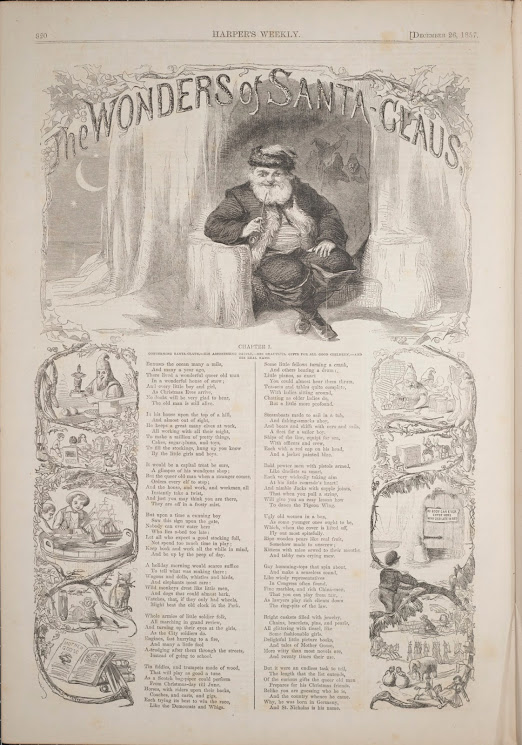
The original manuscript, which thus lost its importance, has been lost, but some extracts have been saved in other works of the writer, such as in the poem The Wonders of Santa Claus, published in the magazine HARPER'S WEEKLY in the issue of 26 December 1857, in which was narrated the fervent activity of the helping elves busy in Santa's workshop. 


1857 - Harpers weekly : a journal of civilization, [Shenandoah.Iowa: Living History.Inc.] - https://library.si.edu/image-gallery/99827-


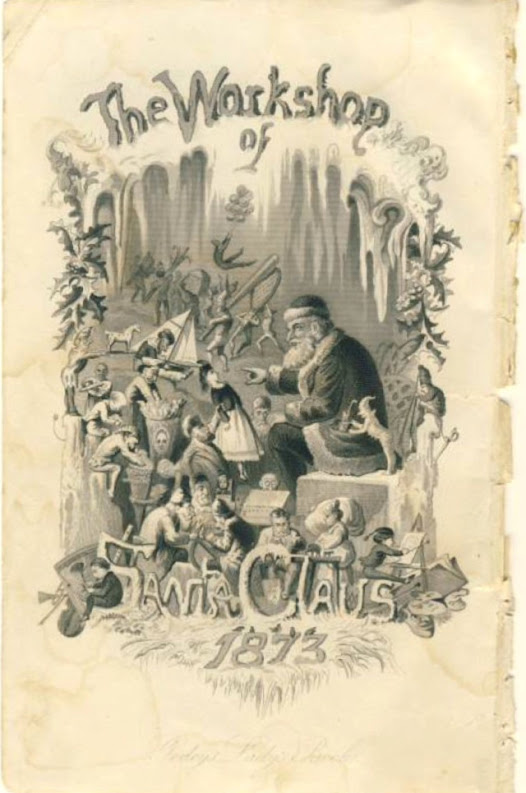
The image of the elves was later popularized by The Godey's Lady's Book, the famous American women's magazine published from 1830 to 1878. The cover illustration of the Christmas issue of 1873 showed Santa Claus surrounded by toys and elves and in the caption that the 'accompanied it read:

"In this way takes place the preparation of toys to be distributed to the little ones in the period before Christmas"


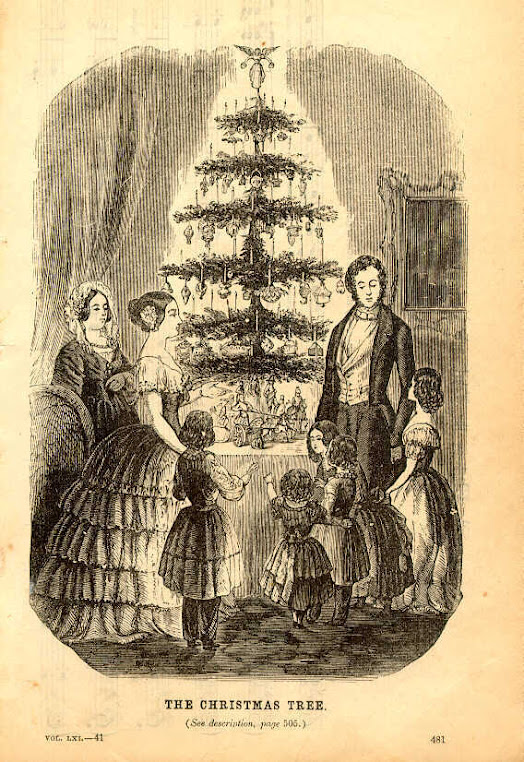
The Godey's Lady's Book magazine played an important role in influencing the Christmas traditions that were developing in the United States during the Victorian period: for example, it was the cover of the 1850 Christmas issue that presented, for the first time, the Christmas tree as we still decorate it today.


And therefore, to conclude, it was thanks to the pen of our Louisa May Alcott and her fervent imagination that we owe the passage of the figure of the elf, belonging for centuries to the Scandinavian mythology, to that of the willing elf who helps Santa Claus to pack his toys: we are therefore also indebted for this too to this authoress who loved Christmas to the point of reinventing its myths and stories in an imagination very personal and filled with phantasy, which still continues to speak to us today.


May this Holiday Season go on filling your home with Joy, 
your heart with Love, and your life with laughter.

See you soon ❤


L'eredità natalizia di Louisa May Alcott


- IMMAGINE 1 - Fotografia d'introduzione con un ritratto giovanile di Louisa May Alcott


"Orbene, credo che tutti abbiano ricevuto un dono per Natale e si siano divertiti. Nessuno è stato dimenticato, nemmeno il gatto", disse la signora Ward a sua figlia, mentre guardava Pobbylinda, che, facendo le fusa sul tappeto, con un nuovo nastro intorno al collo, teneva ciò che rimaneva di un osso di pollo tra le zampe.
Era molto tardi, perché l'albero di Natale era stato spogliato, i piccoli erano a letto, i cesti ed i fagotti erano stati lasciati alle porte dei vicini più poveri e tutto era pronto per il felice giorno che sarebbe iniziato quando l'orologio avrebbe suonato le dodici. Tutti stavano riposando dopo le loro fatiche, mentre il ceppo di Natale continuava ad ardere...

Louisa May Alcott, Rosa's Tale, da: Aunt Jo's Scrap-Bag, Volume 5, 1879


Quest'oggi desidero trattare di un argomento speciale.
Voglio parlarvi di un'autrice che tutti noi conosciamo ed abbiamo imparato ad amare nel corso degli anni attraverso le numerose letture che ci ha lasciato in eredità: Louisa May Alcott.
La sua voce, come quella di Charles Dickens, che tanto amava ed ammirava, non conosce mode, non la fermano le barriere del tempo e continua a risuonare inesorabile e a fare l'atmosfera di questi giorni ricchi di magia e di profondi significati, poiché la passione che ella nutriva per le festività natalizie non conosceva davvero limiti. 
Il Natale le ispirò infatti numerose storie, fiabe e racconti.
E non è di certo un caso che il suo celeberrimo romanzo Piccole Donne, quello che la consacrò al successo, prenda avvio proprio da una mattina di Natale, un Natale particolare, non solo perché senza doni, ma perché si caricherà di princìpi più veri ed autentici che il cuore di un buon cristiano fa propri ed osserva senza compiere alcuno sforzo: l'amore per il prossimo, la carità, la rinuncia per chi soffre, il calore della famiglia sono i valori che più gratificano, specialmente nel periodo natalizio, che gli conferiscono senso e spessore più di un dono da scartare che magari entusiasma, ma il cui prestigio si esaurisce in qualcosa di meramente materiale.

Ma in realtà non è di questo che intendevo parlarvi oggi, o meglio, non era mia intenzione trattarne in questo modo... ci tengo qui a dirvi di come Louisa May Alcott contribuì a fare del Natale che ancora oggi festeggiamo il vero Natale.
Riuscite ad immaginare un Babbo Natale che prepara i doni senza l'aiuto dei suoi fedeli, operosi ed instancabili folletti od elfi, se preferite, che, con il cappuccio rosso o verde si prendono inoltre cura delle sue renne?
La tradizione scandinava ci insegna a distinguere i Ljosalfar (Seelie court in inglese), gli elfi chiari, che sono quelli buoni che difendevano le case dagli spiriti malvagi, dagli Svartalfar (Unseelie court in inglese), ovvero elfi scuri, che sono spiritelli dispettosi.
Essi sono esseri fatati, in modo particolare quelli chiari sono molto buoni e belli, sono alti generalmente come una bimbo di tre anni, e hanno la capacità di trasformarsi.
Ma come è stato possibile che dalla mitologia del nord Europa queste piccole creature entrassero a far parte del mondo di Babbo Natale negli Stati Uniti durante l'epoca vittoriana?
Ebbene, fu proprio la nostra inesauribile scrittrice la prima a nominare in letteratura gli elfi, che definì i 'Santa Little Helpers', gli Aiutanti di Babbo Natale.
Durante l’estate del 1855 la Alcott terminò una raccolta di racconti natalizi intitolata Christmas Elves, Gli Elfi di Natale.
Leggiamo nel suo epistolario:

Finito il libro di fate a Settembre. [...] Ottobre. [...] May ha fatto le illustrazioni del mio libro di racconti intitolato Christmas Elves. È migliore di Flowers Fable. Ora devo cercare di venderlo. [Quanto sei ingenua Louisa a pensare che un libro natalizio possa essere venduto ad  ottobre.–L. M. A.]1

Questo libro non vide mai la luce, il suo editore non accettò di vendere la suddetta raccolta di racconti neppure nel dicembre successivo. Alcuni mesi dopo May si ammalò gravemente e morì. Alcott reagì al dolore per la perdita della sorella occupandosi della nipote, Louisa May Nieriker, detta Lulù cui dedicò nuovi libri di favole natalizie.
Il manoscritto originale, che perse, così, di importanza, è andato perduto, ma se ne sono salvati taluni estratti in altre opere della scrittrice, come nel poema The Wonders of Santa Claus, pubblicato sulla rivista HARPER'S WEEKLY nel numero del 26 dicembre 1857, in cui veniva narrata la fervente attività degli elfi aiutanti affaccendati nel laboratorio di Babbo Natale.


- IMMAGINE 2 - 1857 - Harpers weekly : a journal of civilization, [Shenandoah.Iowa: Living History.Inc.] - https://library.si.edu/image-gallery/99827-


L’immagine degli elfi fu in seguito resa popolare da The Godey’s Lady’s Book, la celeberrima rivista femminile americana pubblicata dal 1830 al 1878. L’illustrazione di copertina del numero natalizio del 1873 mostrava Babbo Natale circondato da giocattoli ed elfi e nella didascalia che l'accompagnava si leggeva:

“In questo modo, ha luogo la preparazione dei giocattoli da distribuire ai piccoli nel periodo che precede il Natale”


- IMMGINE 3 - Copertina del numero natalizio del 1873 di The Godey’s Lady’s Book


La rivista The Godey’s Lady’s Book giocò un ruolo importante nell’influenzare le tradizioni natalizie che si stavano sviluppando negli Stati Uniti durante il periodo vittoriano: per esempio, fu la copertina del numero di Natale del 1850 a presentare, per la prima volta, l'albero di Natale come siamo usi decorarlo ancora oggi.


- IMMAGINE 4 - Copertina del numero natalizio del 1850 di The Godey’s Lady’s Book


E quindi, per concludere, fu grazie alla penna della nostra Louisa May Alcott e alla sua fervida immaginazione che si deve il passaggio della figura del folletto, appartenente da secoli alla mitologia scandinava, a quella dell'elfo volenteroso che aiuta Babbo Natale a confezionare i giocattoli: siamo perciò debitori anche di ciò verso quest'autrice che amò il Natale a tal punto da reinventarne i miti e le storie in un immaginario personalissimo e pieno di fantasia, che ancora oggi continua a parlarci.


Possano queste Feste procedere a colmate le vostre case di Gioia, 
il vostro cuore di Amore, e la vostra vita di risate.

A presto ❤


LINKING WITH: