Visualizzazione post con etichetta miti e leggende. Mostra tutti i post

mercoledì 19 luglio 2023

The Legend of the White Lady of the Castel of Duino

Today I want to tell you a legend which takes us back in time to the Middle Ages, that of 

The White Lady of the Castle of Duino


This castle stands nearby the ruins of a Roman stronghold dedicated to the God Sun on a rocky outcrop overlooking the sea and offering to the visitor a breathtaking wiev on the Gulf of Trieste, in the North-East of Italy, in the municipality of Duino-Aurisina.
It was made build by the Walsees in the XV th century and belongs for centuries to the Princes von Thurn und Taxis (today it is possible to visit it almost entirely).
Thus rather than a single castle, we should we should talk about two fortresses: the old one, an impregnable fortress of Roman origin which stood on the promontory adjacent to the one where the most recent building is located.


The Castle of Duino, in very remote times, was inhabited for many years by a knight and his loving wife, a beautiful woman, named the White Lady, of noble sentiments and great moral strength, a woman willing to accept everything for love of her husband.
Theirs, according to many, was not a happy marriage. The knight, the great Lord of the Castle, was nothing but an evil, violent and bloodthirsty man, whose favorite pastime was to hurt his poor bride with cruel and contemptuous words. But, you know, love is able to compromise our common sense, to show only and exclusively what we most desire and even one's heart tends to justify and accept reprehensible words and actions. The girl bore every missed gesture, every word imbued with hatred with an immeasurable calm and grace; and the more she endured, the more the man tended to make matters worse by always devising new ways to hurt her. She also wanted to give him a son to show him how great her love for him was, but he persisted in his perverse wickedness.
One evening, returning from a battle, perhaps after drinking a few too many wineskins of wine, the knight decided to put an end to this situation which did nothing but annoy him: he whispered a few kind words to his bride, he drew he nearby the Roman fortress and eventually, with the complicity of the darkness, he threw her into the sea.


Stupefied, confused, with a few seconds to live, as she plummeted towards the sea, the beautiful White Lady rolled her eyes as if crying for help and began to utter a cry of despair, and this help arrived, before she even stopped screaming.
According to the legend, a moment before touching the mirror of the sea, the divinities of the sky took pity on the beautiful martyr and the woman turned into a stone: in her pain she had remained petrified.
It is all that remains today of this sad story, a rock at the foot of the cliff below the ruins of Duino that really looks like a lady wrapped up in her soft clothes, as if they were moved by the wind, a rather strange stone, which can be still admired at the edge of the sea.
There are also rumors of people who have seen a candelabrum wandering around the Castle of Duino in the night when nobody is there. It remains the desire of a mother to look for her child's cradle to be able to reassure him that for better or for worse "everything is fine". Desire that is born in the dark and dies at the dawn. It remains the legend of the beautiful White Lady who lived in the Castle of Duino so many years ago.


In the hope you've enjoyed this curious post based on a story still shrouded in mystery, 
I embrace you all warmly, 
dear Friends and Readers!
See you soon  ❤


Dany


Oggi vi voglio raccontare una leggenda che ci riporta indietro nel tempo fino al Medio Evo, quella de


La Dama Bianca del Castello di Duino


IMMAGINE DI FRONTESPIZIO


Questo castello si erge nelle vicinanze di alcune vestigia di una fortezza romana dedicata la Re Sole su di uno strapiombo roccioso che si affaccia sul mare offrendo al visitatore una veduta mozzafiato sul Golfo di Trieste, nel comune di Duino-Aurisina.
Fu fatto costruire dalla famiglia dei Walsee nel XV ° secolo ed appartiene da secoli ai principi di Thurn und Taxis (oggi è persino possibile visitarlo quasi per intero).
Perciò, piuttosto che di un singolo castello sarebbe più appropriato parlare di due fortezze: la più vecchia, un' inespugnabile fortezza di origine romana che domina il promontorio adiacente quello in cui l'altra, la costruzione più recente, è stata edificata.

IMMAGINE 2 - 
Da sx: le rovine della fortezza romana ed il Castello di Duino di proprietà dei Thurn und Taxis

In tempi molto remoti il Castello di Duino fu abitato per diversi anni da un cavaliere e dalla sua adorabile sposa, una donna bellissima di nobili sentimenti e di grande forza morale chiamata la Dama Bianca, una donna disposta ad accettare qualsiasi cosa per amore di suo marito. Il cavaliere, il grandioso Signore del Castello, non era altro che un uomo malvagio, violento e sanguinario il cui passatempo preferito era ferire la propria consorte con parole crudeli ed offensive. Ma si sa, l'amore è capace di compromettere il nostro buon senso, di farci vedere solamente ciò che più desideriamo e persino il cuore tende a giustificare e ad accettare parole e gesti riprovevoli. La giovane accettava ogni gesto mancato, ogni parola intrisa di odio con una calma ed una grazia incommensurabile; e più resisteva, più l'uomo si ostinava a trovare modi per ferirla ulteriormente.
Ella volle anche donargli un figlio per mostrargli quanto grande fosse il suo amore per lui, ma egli persistette nella sua perversa malvagità.
Una sera, di ritorno da una battaglia, forse dopo aver bevuto qualche otre di vino di troppo il cavaliere decise di porre fine a questa situazione che non faceva che infastidirlo: sussurrò alcune dolci parole alla sua sposa, la condusse in prossimità della roccaforte romana e, con la complicità dell'oscurità, finì con il lanciarla nel mare.


IMMAGINE 3 - 
La Dama Bianca che precipita in mare


Stupefatta, confusa, con ancora pochi frangenti da vivere, mentre precipitava vero lo specchio del mare, al giovane Dama Bianca mosse i suoi occhi gettando un grido disperato come se invocasse aiuto e questo aiuto arrivò prima ancora che ella smettesse di gridare.
Secondo la leggenda, un attimo prima di toccare le acque del mare, le divinità del cielo provarono pietà per la povera martire e la donna si trasformò in una pietra: è rimasta pietrificata nel suo dolore.
Questo è tutto ciò che rimane di questa triste storia, una roccia ai piedi della scogliera sotto le rovine di Duino che davvero sembra una dama avvolta in soffici abiti che sembrano muoversi al vento, una pietra dalla forma alquanto strana che può essere ammirata ancora oggi a bordo del mare.
Circolano voci di persone che hanno visto un candelabro vagare per le stanze del Castello di Duino nella notte, quando non vi è nessuno. Rimane il desiderio di una madre che cerca la culla della propria creatura per rassicurarla, per dirle che "va tutto bene". Desiderio che nasce con il buio e che si dilegua all'alba. Rimane la leggenda della Dama Bianca che visse nel Castello di Duino tanti, tanti anni fa. 


IMMAGINE 4 - 
La roccia in cui si sarebbe tramutata la Dama Bianca mentre cadeva rovinosamente in mare situata sotto le rovine della roccaforte romana. 
La potete vedere già dalla prima immagine, sempre presa dal mare


Nella speranza che abbiate gradito questo post curioso 
basato su di un racconto che rimane avvolto dal mistero, 
Vi abbraccio calorosamente, 
cari Amici e Lettori !
A presto ❤


Dany


LINKING WITH:


domenica 26 dicembre 2021

Louisa May Alcott's Christmas Legacy


"Now, I believe every one has had a Christmas present and a good time. Nobody has been forgotten, not even the cat," said Mrs. Ward to her daughter, as she looked at Pobbylinda, purring on the rug, with a new ribbon round her neck and the remains of a chicken bone between her paws.
It was very late, for the Christmas-tree was stripped, the little folks abed, the baskets and bundles left at poor neighbors' doors, and everything ready for the happy day which would begin as the clock struck twelve. They were resting after their labors, while the yule log burned down...

Louisa May Alcott, Rosa's Tale, Source: Aunt Jo's Scrap-Bag, Volume 5, 1879


Today I want to deal with a special topic.
I want to tell you about an authoress that we all know and have learned to love over the years through the numerous readings she left us as a legacy: Louisa May Alcott.
Her voice, like that of Charles Dickens, whom she loved and admired so much, knows no fashions, the barriers of time do not stop it and continues to resonate inexorably and to create the atmosphere of these days full of magic and profound meanings, since the passion she had for the Holiday Season really knew no bounds.
In fact, Christmas inspired her many stories, fairy tales and novels.
And it is certainly not a coincidence that her famous novel Little Women, the one that consecrated her to success, starts right from a Christmas morning, a particular Christmas, not only because it was without any gift, but because it will be loaded with truer and authentic principles that the heart of a good Christian makes its own and observes without making any effort: the love for other people, the charity, the renunciation for those who suffer, the warmth of the family are the values ​​that most gratify our soul, especially during the Christmas period, which they give it meaning and depth more than a gift to be discarded that perhaps excites us, but the prestige of which is exhausted in something purely material.

But in reality this is not what I intended to tell to you today, or rather, it was not my intention to deal with it in this way ... I want to tell you about how Louisa May Alcott contributed to making of Christmas the real Christmas we still celebrate today.
Can you imagine a Santa Claus preparing gifts for children without the help of his faithful, hardworking and tireless goblins or elves, if you prefer, who, with a red or green hood, also take care of his reindeer?
The Scandinavian tradition teaches us to distinguish the Ljosalfar (Seelie court), the light elves, who are the good ones who defended the houses from evil spirits, from the Svartalfar (Unseelie court), or dark elves, who are mischievous sprites.
They are fairy beings, especially the light ones are very good and beautiful, they are generally as tall as a three year old child, and have the ability to transform themselves.
But how was it possible that from the mythology of northern Europe these little creatures became part of the world of Santa Claus in the United States during the Victorian era?
Well, it was our inexhaustible writer who first mentioned the elves in literature, which she called the 'Santa Little Helpers'.
During the Summer of 1855 our Louisa May Alcott finished a collection of Christmas stories entitled Christmas Elves.
We read in her correspondence:

Finished fairy book in September. [...] October.– [...] May illustrated my book, and tales called "Christmas Elves." Better than "Flower Fables." Now I must try to sell it.
[Innocent Louisa, to think that a Christmas book could be sold in October.–L. M. A.] 1

This book never saw the light, her publisher didn't agree to sell the aforementioned collection of short stories even in the following December. A few months later May became seriously ill and died. Louisa reacted to the pain of the loss of her beloved sister by taking care of her niece, Louisa May Nieriker, known as Lulu, to whom she dedicated new books of Christmas fairy tales.
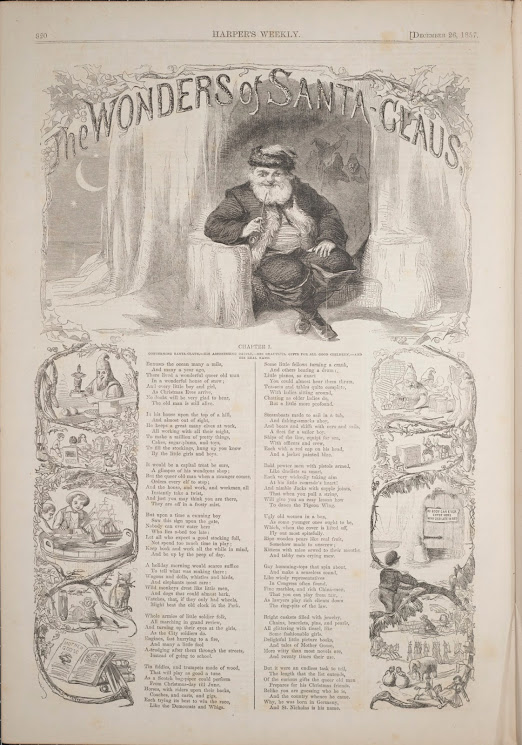
The original manuscript, which thus lost its importance, has been lost, but some extracts have been saved in other works of the writer, such as in the poem The Wonders of Santa Claus, published in the magazine HARPER'S WEEKLY in the issue of 26 December 1857, in which was narrated the fervent activity of the helping elves busy in Santa's workshop. 


1857 - Harpers weekly : a journal of civilization, [Shenandoah.Iowa: Living History.Inc.] - https://library.si.edu/image-gallery/99827-


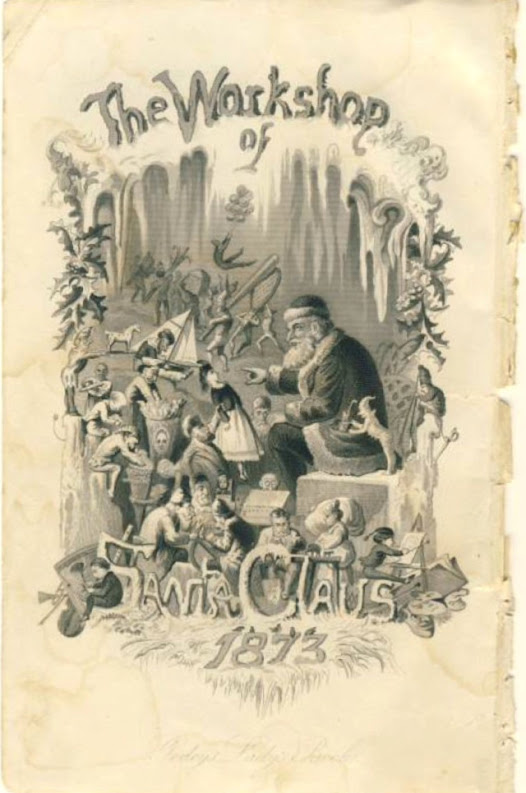
The image of the elves was later popularized by The Godey's Lady's Book, the famous American women's magazine published from 1830 to 1878. The cover illustration of the Christmas issue of 1873 showed Santa Claus surrounded by toys and elves and in the caption that the 'accompanied it read:

"In this way takes place the preparation of toys to be distributed to the little ones in the period before Christmas"


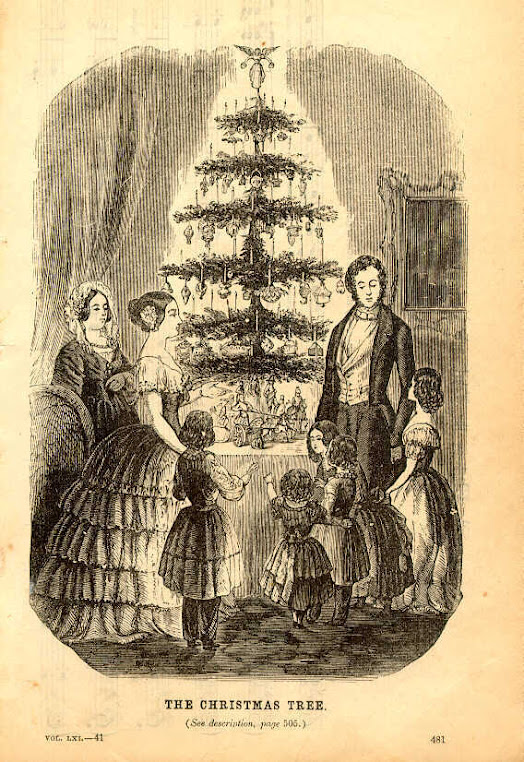
The Godey's Lady's Book magazine played an important role in influencing the Christmas traditions that were developing in the United States during the Victorian period: for example, it was the cover of the 1850 Christmas issue that presented, for the first time, the Christmas tree as we still decorate it today.


And therefore, to conclude, it was thanks to the pen of our Louisa May Alcott and her fervent imagination that we owe the passage of the figure of the elf, belonging for centuries to the Scandinavian mythology, to that of the willing elf who helps Santa Claus to pack his toys: we are therefore also indebted for this too to this authoress who loved Christmas to the point of reinventing its myths and stories in an imagination very personal and filled with phantasy, which still continues to speak to us today.


May this Holiday Season go on filling your home with Joy, 
your heart with Love, and your life with laughter.

See you soon ❤


L'eredità natalizia di Louisa May Alcott


- IMMAGINE 1 - Fotografia d'introduzione con un ritratto giovanile di Louisa May Alcott


"Orbene, credo che tutti abbiano ricevuto un dono per Natale e si siano divertiti. Nessuno è stato dimenticato, nemmeno il gatto", disse la signora Ward a sua figlia, mentre guardava Pobbylinda, che, facendo le fusa sul tappeto, con un nuovo nastro intorno al collo, teneva ciò che rimaneva di un osso di pollo tra le zampe.
Era molto tardi, perché l'albero di Natale era stato spogliato, i piccoli erano a letto, i cesti ed i fagotti erano stati lasciati alle porte dei vicini più poveri e tutto era pronto per il felice giorno che sarebbe iniziato quando l'orologio avrebbe suonato le dodici. Tutti stavano riposando dopo le loro fatiche, mentre il ceppo di Natale continuava ad ardere...

Louisa May Alcott, Rosa's Tale, da: Aunt Jo's Scrap-Bag, Volume 5, 1879


Quest'oggi desidero trattare di un argomento speciale.
Voglio parlarvi di un'autrice che tutti noi conosciamo ed abbiamo imparato ad amare nel corso degli anni attraverso le numerose letture che ci ha lasciato in eredità: Louisa May Alcott.
La sua voce, come quella di Charles Dickens, che tanto amava ed ammirava, non conosce mode, non la fermano le barriere del tempo e continua a risuonare inesorabile e a fare l'atmosfera di questi giorni ricchi di magia e di profondi significati, poiché la passione che ella nutriva per le festività natalizie non conosceva davvero limiti. 
Il Natale le ispirò infatti numerose storie, fiabe e racconti.
E non è di certo un caso che il suo celeberrimo romanzo Piccole Donne, quello che la consacrò al successo, prenda avvio proprio da una mattina di Natale, un Natale particolare, non solo perché senza doni, ma perché si caricherà di princìpi più veri ed autentici che il cuore di un buon cristiano fa propri ed osserva senza compiere alcuno sforzo: l'amore per il prossimo, la carità, la rinuncia per chi soffre, il calore della famiglia sono i valori che più gratificano, specialmente nel periodo natalizio, che gli conferiscono senso e spessore più di un dono da scartare che magari entusiasma, ma il cui prestigio si esaurisce in qualcosa di meramente materiale.

Ma in realtà non è di questo che intendevo parlarvi oggi, o meglio, non era mia intenzione trattarne in questo modo... ci tengo qui a dirvi di come Louisa May Alcott contribuì a fare del Natale che ancora oggi festeggiamo il vero Natale.
Riuscite ad immaginare un Babbo Natale che prepara i doni senza l'aiuto dei suoi fedeli, operosi ed instancabili folletti od elfi, se preferite, che, con il cappuccio rosso o verde si prendono inoltre cura delle sue renne?
La tradizione scandinava ci insegna a distinguere i Ljosalfar (Seelie court in inglese), gli elfi chiari, che sono quelli buoni che difendevano le case dagli spiriti malvagi, dagli Svartalfar (Unseelie court in inglese), ovvero elfi scuri, che sono spiritelli dispettosi.
Essi sono esseri fatati, in modo particolare quelli chiari sono molto buoni e belli, sono alti generalmente come una bimbo di tre anni, e hanno la capacità di trasformarsi.
Ma come è stato possibile che dalla mitologia del nord Europa queste piccole creature entrassero a far parte del mondo di Babbo Natale negli Stati Uniti durante l'epoca vittoriana?
Ebbene, fu proprio la nostra inesauribile scrittrice la prima a nominare in letteratura gli elfi, che definì i 'Santa Little Helpers', gli Aiutanti di Babbo Natale.
Durante l’estate del 1855 la Alcott terminò una raccolta di racconti natalizi intitolata Christmas Elves, Gli Elfi di Natale.
Leggiamo nel suo epistolario:

Finito il libro di fate a Settembre. [...] Ottobre. [...] May ha fatto le illustrazioni del mio libro di racconti intitolato Christmas Elves. È migliore di Flowers Fable. Ora devo cercare di venderlo. [Quanto sei ingenua Louisa a pensare che un libro natalizio possa essere venduto ad  ottobre.–L. M. A.]1

Questo libro non vide mai la luce, il suo editore non accettò di vendere la suddetta raccolta di racconti neppure nel dicembre successivo. Alcuni mesi dopo May si ammalò gravemente e morì. Alcott reagì al dolore per la perdita della sorella occupandosi della nipote, Louisa May Nieriker, detta Lulù cui dedicò nuovi libri di favole natalizie.
Il manoscritto originale, che perse, così, di importanza, è andato perduto, ma se ne sono salvati taluni estratti in altre opere della scrittrice, come nel poema The Wonders of Santa Claus, pubblicato sulla rivista HARPER'S WEEKLY nel numero del 26 dicembre 1857, in cui veniva narrata la fervente attività degli elfi aiutanti affaccendati nel laboratorio di Babbo Natale.


- IMMAGINE 2 - 1857 - Harpers weekly : a journal of civilization, [Shenandoah.Iowa: Living History.Inc.] - https://library.si.edu/image-gallery/99827-


L’immagine degli elfi fu in seguito resa popolare da The Godey’s Lady’s Book, la celeberrima rivista femminile americana pubblicata dal 1830 al 1878. L’illustrazione di copertina del numero natalizio del 1873 mostrava Babbo Natale circondato da giocattoli ed elfi e nella didascalia che l'accompagnava si leggeva:

“In questo modo, ha luogo la preparazione dei giocattoli da distribuire ai piccoli nel periodo che precede il Natale”


- IMMGINE 3 - Copertina del numero natalizio del 1873 di The Godey’s Lady’s Book


La rivista The Godey’s Lady’s Book giocò un ruolo importante nell’influenzare le tradizioni natalizie che si stavano sviluppando negli Stati Uniti durante il periodo vittoriano: per esempio, fu la copertina del numero di Natale del 1850 a presentare, per la prima volta, l'albero di Natale come siamo usi decorarlo ancora oggi.


- IMMAGINE 4 - Copertina del numero natalizio del 1850 di The Godey’s Lady’s Book


E quindi, per concludere, fu grazie alla penna della nostra Louisa May Alcott e alla sua fervida immaginazione che si deve il passaggio della figura del folletto, appartenente da secoli alla mitologia scandinava, a quella dell'elfo volenteroso che aiuta Babbo Natale a confezionare i giocattoli: siamo perciò debitori anche di ciò verso quest'autrice che amò il Natale a tal punto da reinventarne i miti e le storie in un immaginario personalissimo e pieno di fantasia, che ancora oggi continua a parlarci.


Possano queste Feste procedere a colmate le vostre case di Gioia, 
il vostro cuore di Amore, e la vostra vita di risate.

A presto ❤


LINKING WITH:


sabato 5 dicembre 2015

Jack Frost, a story for the Season


 Jack Frost è un personaggio elfico risalente alla mitologia norrena, ovvero norreno-vichinga, conosciuto anche come "Jokul Frosti", che in Inghilterra e negli Stati Uniti d'America è visto come la rappresentazione allegorica dell'inverno; noto anche con il nome di Padre Inverno egli è ritenuto responsabile del tempo gelido e di tutte le sue caratteristiche, a partire dalla caduta delle foglie dagli alberi in autunno che ne preannuncia la venuta.


Ladies' Home Journal, "Jack Frost" (1926) by Oliver Herford


Egli prepara le condizioni atmosferiche favorevoli per l'arrivo di Santa Claus, di cui è amico ed alleato poiché a lui si deve il fatto che non lo si riesca mai a vedere, è portatore del vento gelido, della brina, autore dei ricami, spesso a forma di foglia di felce, che, con il suo argenteo pennello, dipinge sull'esterno dei vetri delle nostre finestre nelle notti più fredde dell'anno; ci fa raggelare il naso, le mani e le estremità durante le nostre passeggiate all'aperto in questo periodo che gli appartiene, poiché dai primi giorni di dicembre all'inizio della primavera - quando, prima di lasciarci, ci saluta creando piccoli specchi d'acqua nelle pozzanghere grazie ai quali possiamo vedere riflessa la nostra immagine - si 'diverte' spargendo fiocchi di neve e gelo saltellando tra boschi, prati e case ai cui tetti spesso appende artistiche stalattiti di ghiaccio. 

Parente del Dio Gelo, Jack Frost è spesso allegro e ama donare al mondo le sue arti invernali, è un personaggio amichevole, ma se provocato può giungere anche a congelare o ricoprire di neve le sue 'vittime'; un'altra attività attribuitagli dalla letteratura è quella di congelare le ombre separandole dai corpi che le proiettano e dando loro una propria autonomia.
Noto anche in Russia, dove il freddo regna sovrano per la maggior parte dell'anno, con il nome di Padre Gelo, rappresentato come un vecchio completamente bianco, lo si vede protagonista di remote favole e leggende.
Qui di seguito mi piace segnalarvi alcune filastrocche, tra le più note e le più antiche, di origine anglosassone, corredate da immagini risalenti agli inizi del secolo scorso.


Jacky Gelo, Jacky Gelo,
È arrivato nella notte;
Ha lasciato i prati che ha attraversato,
Tutti coperti di un bianco luccicante.
Dipinto con il suo pennello d'argento
Ha ogni vetro delle finestre.
Baciato ha le foglie e le ha fatte arrossire,
Arrossire ed arrossire ancora.

Jacky Gelo, Jacky Gelo,
Si è infiltrato intorno alla casa,
Scaltro come una volpe d'argento,
O piuttosto come un topo.
La nostra piccola Jenny è arrivata,
Tutta rossa come una rosa;
E Jacky Gelo è saltato su,
Per pizzicare anche il suo piccolo naso.


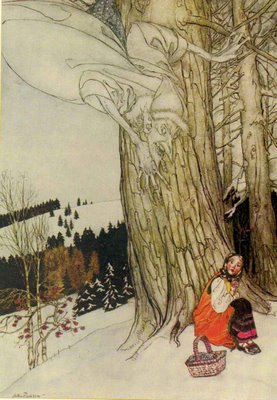
Jack Frost by Arthur Rackham (1867 - 1939)


Jacky Frost, Jacky Frost,
Came in the night;
Left the meadows that he crossed,
All gleaming white.
Painted with his silver brush
Every window-pane.
Kissed the leaves and made them blush,
Blush and blush again.

Jacky Frost, Jacky Frost,
Crept around the house,
Sly as a silver fox,
Still as a mouse.
Out our little Jenny came,
Blushing like a rose;
Up jumped Jacky Frost,
And pinched her little nose.


Jack Frost
by Laura E.Richards (1850 - 1943)


❆ ❅ ❆ ❅ ❆ ❅ ❆ ❅ ❆ ❅ ❆ ❅ ❆ ❅ ❆


Attenzione! Attenzione!
Jack Frost è arrivato!
E dopo aver lavorato le nostre mani e i nostri piedi;
E tutta la notte,
Il piccolo spiritello giocoso
Sta lavorando dove nessuno lo sa.

Salirà su ogni albero,
Lui è talmente agile,
E da lì la sua polvere argentea spargerà.
Su per i vetri delle finestre striscerà
E mentre stiamo dormendo
Che immagini meravigliose farà.

Passando tra l'erba
Che allegramente attraverserà,
Per mutare tutto il suo verde in bianco.
A casa se ne andrà
E riderà oh, oh oh!
Quanto mi sono divertito questa notte.


Rara rappresentazione di Padre Gelo che non riesce a fare a meno di guardare, incantato, una principessa russa


Look out! Look out!
Jack Frost is about!
He's after our fingers and toes;
And all through the night,
The gay little sprite
Is working where nobody knows.

He'll climb each tree,
So nimble is he,
His silvery powder he'll shake.
To windows he'll creep
And while we're asleep
Such wonderful pictures he'll make.

Across the grass
He'll merrily pass,
And change all its greenness to white.
Then home he will go
And laugh ho, ho ho!
What fun I have had in the night.


Jack Frost
by C.E. Pike ( ? )


❆ ❅ ❆ ❅ ❆ ❅ ❆ ❅ ❆ ❅ ❆ ❅ ❆ ❅ ❆


Una delizioso ruscello correva giocando
Con il piccolo Jack Frost in un freddo giorno d'inverno.
Si fermò a riposare ai piedi di una collina
Facendo un laghetto tutto tranquillo e cheto.
"Aha!" disse Jack Frost: "Non è bello ora?"
E subito tramutò l'acqua in ghiaccio.


Riproduzione di una cartolina dei primi del novecento


A pretty brook was running at play
With little Jack Frost on a cold winter's day.
It stopped to rest at the foot of a hill
Making a pond all quiet and still.
"Aha!" said Jack Frost, "Now isn't that nice?"
And quickly he turned the water to ice.


Jack Frost
by Author Unknown


❆ ❅ ❆ ❅ ❆ ❅ ❆ ❅ ❆ ❅ ❆ ❅ ❆ ❅ ❆


Il gelo sembrava ancora fermo e lontano, nella notte chiara,
Quando sussurrò: "Ora non mi mostrerò;
Quindi, attraverso la valle, e sulle alture,
In silenzio prendo la mia strada.

Non voglio andare avanti veloce come un treno impetuoso,
Il vento e la neve, la grandine e la pioggia,
Che fanno un tale trambusto e il gran rumore invano,
Ma sarò occupato come loro! "

Così volò per la montagna, e impolverò la sua vetta;
Accese gli alberi, ed i loro rami egli abbigliò
Con diamanti e perle; e sul seno
Fremente del lago diffuse

Una cotta di maglia, agganciandone il margine, 
 Qua e là, nei suoi punti più bassi,
Poiché non debba temere di essere scalfita, 
Qualora una roccia sollevasse il suo capo.

Andò alla finestra di coloro che dormivano,
E sopra ogni vetro, come una creatura fatata, avanzò furtivamente;
Ovunque respirò, ovunque si fermò,
Con la luce della mattina apparvero

Le cose più belle; c'erano fiori e alberi;
C'erano stormi di uccelli e sciami di api;
C'erano città con templi e torri; e questo
Tutto disegnato in riflessi argentei!

Ma fece anche una cosa che non fu così leale -
Curiosò nella credenza, e trovò
Che nulla era stato preparato per lui-
"Ora, giusto per farglielo notare,

Mordo questo cesto di frutta ", disse,
"Questa costosa brocca, la spezzo in tre;
E il bicchiere d'acqua che hanno lasciato per me
Farò 'schioccare' per dire loro che sto bevendo! "


Rappresentazione del secolo scorso di Padre Gelo


The Frost looked forth one still, clear night,
And whispered, "Now I shall be out of sight;
So, through the valley, and over the height,
In silence I'll take my way.

I will not go on like that blustering train,
The wind and the snow, the hail and the rain,
That make such a bustle and noise in vain,
But I'll be as busy as they!"

So he flew to the mountain, and powdered its crest;
He lit on the trees, and their boughs he drest
With diamonds and pearls; and over the breast
Of the quivering lake he spread

A coat of mail, that it need not fear
The downward point of many a spear
That he hung on its margin, far and near,
Where a rock could rear its head.

He went to the windows of those who slept,
And over each pane, like a fairy, crept;
Wherever he breathed, wherever he stepped,
By the light of the morn were seen

Most beautiful things; there were flowers and trees;
There were bevies of birds and swarms of bees;
There were cities with temples and towers; and these
All pictured in silvery sheen!

But he did one thing that was hardly fair-
He peeped in the cupboard, and finding there
That all had forgotten for him to prepare-
"Now, just to set them a-thinking,

I'll bite this basket of fruit," said he,
"This costly pitcher I'll burst in three;
And the glass of water they've left for me
Shall ‘tchick' to tell them I'm drinking!"


Jack Frost
by Hannah F. Gould (1788 - 1865)


Qui da noi Jack Frost è già arrivato ed ha cominciato a sollazzarsi spargendo un po' di brina, soprattutto le notti scorse ... mi chiedo se anche voi avete visto tracce della sua venuta ... 

Vi abbraccio tutti con tanto affetto nella speranza che giunga presto, se ancora non è arrivato, e che giunga in tempo per la discesa di Santa Claus ...

A presto, miei cari ♥


Fonti bibliografiche:

Mark Vincent Brine, THE CAROL and the True Folk Legend of Jack Frost, Brinemark & Bienemann Publishing, 2011;


Laura E. Richards, Tirra Lirra: Rhymes Old and New,  Nabu press, 2011.


Jack Frost is an elfish character dating back to the Norse, or Norse-Viking mythology, also known as "Jokul Frosti", whom in England and in the United States is seen as the allegorical representation of Winter: also known as Father Winter he is held responsible for the freezing weather and all its features, since the falling of the leaves from the trees in Autumn ( Fall ) that heralds his coming.


- picture 1 - Ladies' Home Journal, "Jack Frost" (1926) by Oliver Herford


He prepares the favorable weather conditions for the arrival of Santa Claus, of whom is a friend and an ally, since he is responsible for the fact that we never can see him, is carrier of the cold wind, frost, author of the embroidery, often shaped fern leaf, which, with its silvery brush, he paints outside of the glass of our windows during the coldest nights of the year; he makes us freeze our nose, our hands and our feet during our outdoor walk during this time that belong to him, since the first days of December to the beginning of Spring - when, before leaving us, he greets us creating tiny mirrors inside water puddles through which we can see our reflection - he has fun scattering snowflakes and frost hopping through woods, meadows and houses at the roofs of which he often hangs artistic icicles.

Relative of God Frost, Jack Frost is often cheerful and loves to give the world his wintry arts,  has a friendly character, but when provoked can also come to freeze or cover with snow his 'victims'; another activity  ascribed to him by the literature is to freeze the shadows separating them from the bodies that project them and giving them their own autonomy.
Also known in Russia, where the cold reigns as a sovereign for most of the year, with the name of Father Frost, represented as an old white man, he's protagonist in several remote fables and legends.
Here I like to tell you some nursery rhymes, the most famous and the oldest ones, of Anglo-Saxon origin, along with images belonging to the beginning of the last century.


( As for the nursery rhymes, I thought it to be nicer to you to read them in your own language under Jack Frost's pictures I've chosen, so you should scroll up the page until the images I've posted.)


Here, Jack Frost has already arrived and has began to amuse himself spreading a bit of hoar, especially during last nights ... I wonder if you've already seen traces of his coming ...

I embrace you all with much love in the hope that he'll come soon, if he hasn't arrived yet, and that he comes in time for the descent of Santa Claus ...

See you soon, my dears ♥


Bibliographic sources:

Mark Vincent Brine, THE CAROL and the True Folk Legend of Jack Frost, Brinemark & Bienemann Publishing, 2011;

Laura E. Richards, Tirra Lirra: Rhymes Old and New,  Nabu press, 2011.


I'm sharing with JES' link-up party


with Stephanie's one


 and with: