domenica 14 maggio 2023

Ludwig Messel and Nymans Manor House and Gardens


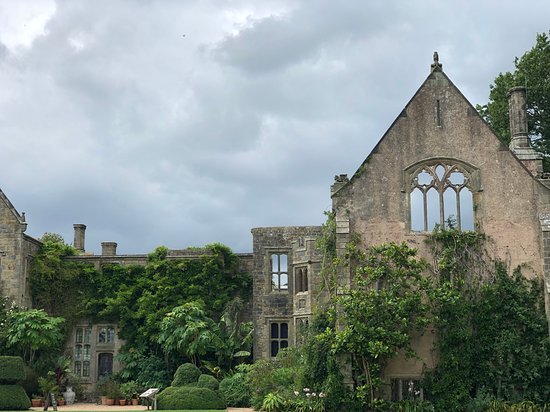
Nymans House and Gardens, situated in Mid-Sussex, belong to the National Trust which preserves ancient mansions, castles and estates that have belonged to rich and powerful people of hundreds of years ago. Nymans appears to be a medieval manor house with an extensive Gothic part so old to has fallen into decay.
In fact, having a look back in time, Nymans seems to have been truly a medieval estate named  after an otherwise forgotten family called NYNWEMAN in the early XIVth century. The property went through various hands, the Gatland family building a house on the site of the present one sometime in the XVIth or XVIIth century, before that it all ended up in the XIXth century with one George Harrington, who rebuilt the house and enlarged the estate. But our story begins in 1890 when the entire 600-acre plot was purchased by a wealthy German stockbroker, Ludwig Ernest Wilhelm Leonard Messel, originally from Darmstadt. 
Ludwig was the son of Simon Messel and Emilie Lindheim and he was born on 9 January 1847. In 1816, his grandfather, Aron, had founded a banking house in Darmstadt, which was then part of the Grand Duchy of Hesse. Young Ludwig came to Britain in 1868 with his brother Rudolf, allegedly with gold coins sewn into their shirts with which to ease their early days in the Country. Some say the Messels left their Country to avoid persecution, for they were a Jewish family. Although people who professed the Jewish religion weren't seen with great favour in German-speaking Countries since the age of the first Crusade (1096), this seems to make little sense then – Hesse was no more or less anti-Semitic than anywhere else in north-west Europe at the time, including the UK. Perhaps, like the Rothschilds, the Messels hoped to establish an international family business. Perhaps they were simply seeking their fortunes, and looking for opportunities, as people have done before and since. And, anyway, according to one account, Rudolf went back to Hesse to serve as a stretcher-bearer in the Franco-Prussian War of 1870-71. Ludwig didn’t come back, but maybe didn't even intended to stay. The thing is that in 1871 he married Annie Cussans  


in the London disctrict of Lambeth and in 1873 founded the stockbroking firm of L. Messel & Company. 
And bought Nymans in 1890. According to the National Trust he did it “to integrate himself into English society”. It’s a curious expression, given he’d lived here for 20 years, married an Englishwoman, established a successful business and had a family, all before he acquired his grand domain. Maybe he purchased Nymans simply because he wanted a big estate, loved gardening, and had amassed enough of a fortune to indulge himself. Maybe, like his wealthy Victorian contemporaries, he felt he needed a suitable country mansion in which to entertain, as it was usual then. Maybe, despite apparently being a British subject by this time, his German-Jewish background was unacceptable to some and having a nice property helped overcome some social prejudice. 
Ludwig had a great interest in trees and plants and began the development of Nymans’ tree planting and collection of shrubs and flowers. He developed the walled garden, the heather garden and the pergola walk. An original Regency mansion was part of Nymans then and he wanted to turn it into a place for family life and for his guests.
Anne and Ludwig had six children and it was the eldest son of theirs, Leonard, who inherited the property in 1916. He was an even more enthusiastic plantsman than his father, and added greatly to the Nymans collections. And it was he who built a new house in the Tudor and Gothic style. 


So the house which appears to be medieval and which we see today is little over 100 years old. In October 1947 a disastrous fire swept through most of the property creating the burnt out shell we see today at the southern end.
The house was only partially re-built after the fire and became probably, even more fascinating with its appearance of ruin, and earned so much as for charm and antiquity.
What we can see today of the most part the historic mansion is simply a Gothic fairy tale, acting as a romantic background for the gardens and surrounding woodland.
Nymans' became one of the homes of Anne Messel, Leonard’s daughter, who married Ronald Armstrong Jones. Their son, Anthony, married Queen Elisabeth II’s sister, Princess Margaret, in 1960, who became Lord Snowdon in 1961. For many years they lived in the Nymans' estate. Leonard gave Nymans to The National Trust in 1954 but the house continued to be lived in by the family.
Anne’s second husband was the Earl of Rosse and Anne lived with her husband mainly in Ireland in Birr Castle, but she often came to live at Nymans. Anne was one of the founders of The Victorian Society which aimed to preserve the (then unfashionable) art and architecture of the Victorian period.
Anne was also a keen gardener and took a hand in Nymans’ continuing development.


With her husband she added rhododendrons, camellias, hydrangeas, hypericums, agapanthus, hardy fuschias and more roses. In 1979, following the death of her husband she returned permanently to Nymans to spend her final years here. She was Director of the Garden until 1987. She died at Nymans in July 1992 aged 90.
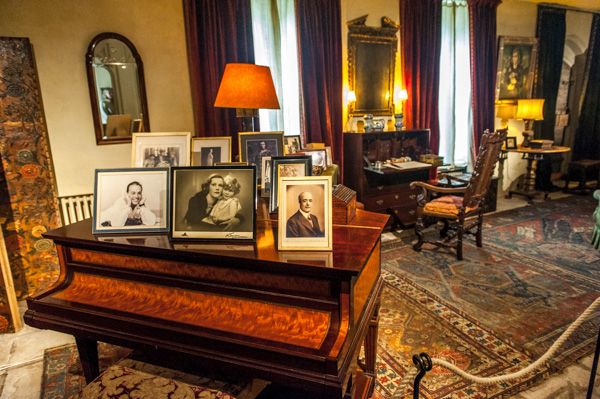
In addition to the extensive gardens, which are listed in Historic England's Register of Parks and Gardens, when the house re-opens it is the one Anne lived in that visitors can see.
Here you are some shots of the interiors taken from the web:




I sincerely hope you've enjoyed this so wonderful stroll trhough History, Beauty and Elegance!


With heartfelt gratitude, 
I'm sending You all my best.
See you soon ❤


Ludwig Messel e la Tenuta di Nymans 


IMMAGINE DI COPERTINA, IMMAGINE 2 - 3 - 4 - Rovine della dimora di Nymans


Il complesso di Nymans, situato nel Mid-Sussex, appartiene al National Trust che conserva antiche dimore, castelli e tenute appartenute a persone facoltose e potenti centinaia di anni fa. A giudicare dal suo aspetto Nymans appare come un maniero medievale con un'ampia parte gotica talmente antica da essere caduta in rovina.
In realtà, guardando indietro nel tempo, Nymans sembra essere stata davvero una tenuta medievale che prese il nome da una famiglia altrimenti dimenticata chiamata Nynweman all'inizio del XIV secolo. La proprietà passò attraverso varie mani, la famiglia Gatland costruì una casa sul sito dell'attuale nel XVI o XVII secolo, prima che tutto finisse nel XIX secolo con un certo George Harrington, che ricostruì la casa e ampliò la proprietà. Ma la nostra storia inizia nel 1890 quando l'intero appezzamento di 600 acri fu acquistato da un ricco agente di cambio tedesco, Ludwig Ernest Wilhelm Leonard Messel, originario di Darmstadt.
Ludwig era figlio di Simon Messel ed Emilie Lindheim ed era nato il 9 gennaio 1847. Nel 1816 suo nonno Aron aveva fondato una banca a Darmstadt, che allora faceva parte del Granducato d'Assia. Il giovane Ludwig arrivò in Gran Bretagna nel 1868 con suo fratello Rudolf, presumibilmente con monete d'oro cucite all'interno delle loro camicie con cui 'alleviare' i loro primi giorni nel Paese. Alcuni dicono che i Messel lasciarono il loro Paese per evitare la persecuzione, perché appartenevano ad una famiglia ebrea. Sebbene le persone che professavano la religione ebraica non fossero viste di buon occhio nei paesi di lingua tedesca già dall'epoca della prima crociata (1096), tutto ciò sembra avere poco senso, vista l'epoca di cui stiamo parlando: l'Assia non era né più né meno antisemita di quanto fosse qualsiasi altra parte dell'Europa nordoccidentale all'epoca, Regno Unito compreso. Forse, come i Rothschild, i Messel speravano di fondare un'azienda familiare internazionale. Forse stavano semplicemente cercando fortuna e opportunità, come tanta gente fece prima e dopo. E, comunque, secondo un resoconto, Rudolf tornò in Assia per servire come barelliere nella guerra franco-prussiana del 1870-71. Ludwig non fece ritorno, ma forse non aveva neppure intenzione di restare. Il fatto è che nel 1871 sposò Annie Cussans 


IMMAGINE 5 - Anne Cussans e Ludwig Messels


nel quartiere londinese di Lambeth e nel 1873 fondò la società di intermediazione in borsa di L. Messel & Company.
Ed acquistò Nymans nel 1890. Secondo il National Trust lo fece “per integrarsi nella società inglese”. È un'espressione curiosa, dato che aveva vissuto in Inghilterra per 20 anni, sposato una donna inglese, avviato un'attività di successo e aveva una famiglia, tutto prima di acquisire il suo grande dominio. Forse lo fece semplicemente perché desiderava una grande tenuta, amava il giardinaggio e aveva accumulato abbastanza fortuna da sbizzarrirsi. Forse, come i suoi ricchi contemporanei vittoriani, avvertiva il bisogno di una residenza di campagna adatto in cui intrattenere amici secondo la moda del tempo. Forse, nonostante fosse apparentemente un suddito britannico a quel tempo, il suo background ebraico-tedesco era inaccettabile per alcuni e avere una bella proprietà poteva essergli di aiuto a superare alcuni pregiudizi sociali.
Ludwig aveva un grande interesse per alberi e piante e iniziò lo sviluppo della piantagione di alberi a Nymans e la raccolta di arbusti e fiori. Sviluppo il walled-garden, l'heather garden ed il pergola walk. A quel tempo di Nymans faceva parte una villa Regency originale ed egli voleva trasformarla in un luogo per la vita familiare ed i ricevimenti.
Anne e Ludwig ebbero sei figli e fu il primogenito, Leonard, ad ereditare la proprietà nel 1916. Egli era un giardiniere ancora più entusiasta del padre e aggiunse molto alle collezioni di Nymans. Ed è stato lui a costruire una nuova casa in stile Tudor e gotico.


IMMAGINE 6 - 7 - 8 - Vedute dall'esterno della parte restaurata dell'edificio che continuò ad essere abitata 


Quindi l'edificio che sembra medievale e che vediamo oggi vanta poco più di 100 anni. Nell'ottobre del 1947 un disastroso incendio divampò nella maggior parte della proprietà creando quel 'guscio bruciato' che vediamo oggi all'estremità meridionale della residenza. Essa è stata ricostruita solo in parte ed è diventata, probabilmente, ancor più affascinante con il suo aspetto da rudere che tanto le ha conferito in quanto a fascino ed antichità. Quello che possiamo vedere oggi della maggior parte della dimora storica è semplicemente una fiaba gotica, che fa da sfondo romantico ai giardini e ai boschi circostanti.
Nymans divenne una delle case di Anne Messel, la figlia di Leonard, che sposò Ronald Armstrong Jones. Il loro figlio, Anthony, sposò la sorella della regina Elisabetta II, la principessa Margaret, nel 1960, e divenne Lord Snowdon nel 1961. Per molti anni vissero nella tenuta di Nymans.
Leonard cedette Nymans al National Trust nel 1954, ma la casa continuò ad essere abitata dalla famiglia.
Il secondo marito di Anne fu il conte di Rosse. Anne visse con suo marito principalmente in Irlanda a Birr Castle, ma spesso si trasferiva a Nymans. Ella fu una delle fondatrici di The Victorian Society che mirava a preservare l'arte e l'architettura (allora fuori moda) del periodo vittoriano.
Anne era anche un'appassionata giardiniera e ha contribuito al continuo sviluppo di Nymans.


IMMAGINE  9 - 10 - 11 - La loggia, la piccionaia e le rovine viste dai giardini
 

Con il marito aggiunse alla collezione del parco rododendri, camelie, ortensie, iperici, agapanthus, fucsie resistenti e rose. Nel 1979, dopo la morte del marito, tornò definitivamente a Nymans per trascorrevi i suoi ultimi anni. Fu Direttrice del Giardino fino al 1987. Si spense a Nymans nel luglio 1992 all'età di 90 anni.
Oltre agli ampi giardini, che sono annoverati tra quelli dell'Historic England's Register of Parks and Gardens (Registro Storico dei Parchi e dei Giardini Inglesi), quando la casa riapre è quella in cui Anne visse che i visitatori possono vedere.
Eccovi alcune immagini degli interni prese dal web:


IMMAGINE 12 - 13 - 14 - 15 - 16 - 17 - 18 - 19


Spero sinceramente che abbiate gradito questa meravigliosa 'passeggiata' compiuta attraverso la Storia, la Bellezza e l'Eleganza!


Con sentita gratitudine,
Vi invio ogni bene.
A presto ❤


Dany


LINKING WITH:


Angie from God's Growing Garden has featured this pot of mine today, May 23, 2023!
I thank you from the bottom of my heart, Dearie •♥•


domenica 7 maggio 2023

Eliza Acton, the poetess who invented the modern way to write cooking recipes


To give birth to Eliza Acton on April 17, 1799 was the English county of East Sussex and more precisely the small town of Battle. She came from a wealthy family and was the eldest of the five children of Elizabeth Mercer and John Acton who made his fortune from his brewery.
Discovering herself as a young poet, she published a first collection of poems in 1826, POEMS, at the Longmans publisher in London. And she returned to him a few years later to present him a new collection of verses with a love background, but this time the publisher refused its publication: poetry was not much in demand by the public in those years, especially if it was written by a woman. He proposed her to come back to him to publish a cookbook, but Eliza felt so humiliated that she fled in a hurry out of his office, throwing herself on the side of the road without even looking where she was stepping: the mud that had piled up made dirty her new boots, bought just for that occasion, and the hem of the most beautiful dress she had, specially chosen for that important moment.
When she was back at her house she found her siblings ready to celebrate her, certain that this would be the second book that the publisher would publish for her, but they were wrong. Eliza shut herself up in her room, threw herself on her bed and wept on her pillow; she was interrupted by the arrival of her father who, in a hurry, had to pack: his financial actions had collapsed, all the capital of the Actons had vanished! Not only that, he should have been reported missing since he had obtained some of them on loan. For his family from that moment he would have been as dead, he would no longer give them any news. Since then his wife would have become a widow, her children orphaned by his father. And for all of them a very different life was expected from the one lived up to then in the comforts that their father's wealth and huge earnings had guaranteed them. They had to roll up their sleeves and start working if they were to get food.
Eliza, the most enterprising of all, took with her the dearest things she had and, determined to rebuild her life, grabbed her mother by the arm: with a cart on which they had loaded the few pieces of furniture they could carry, without thinking too much, they begun their travel.
They stopped in Tonbridge, Kent, where, with the only maid they had kept by their side, they set up a hostel, Bordyke House.


Here Eliza began to think of devoting herself to cooking, even though, in all her life lived up to then, she had never even crossed the walls of the rooms below the stairs, where the cooks worked. And in fact the mere thought scandalized her mother, who did not see such an idea so favorably, but Eliza enthusiastically welcomed this new challenge of her destiny and, to document herself, she decided to get all the books of cookery that she managed to find. Thus she discovered that they all had a bad characteristic that united them, namely vagueness: in each recipe the ingredients were named during the execution and the quantities were not indicated, sometimes even the temperatures and cooking times were missing. Perhaps it was the case to take seriously the proposal that Longmans had made her and write a book of recipes with the due precision: the ingredients had to be listed before the execution and in the necessary quantity, in order to give the cook the possibility of prepare them before proceeding with the preparation; and also the difficulties that could have been encountered had to be scrupulously written, in short, cooking hadn't to be an adventure!


In her kitchen Eliza therefore began to try the recipes of the dishes that most inspired her by dosing different ingredients and adjusting the quantities from time to time until she obtained the taste she wanted. She then carefully wrote down the recipe and prepared it for the guests staying at her hostel. And every time it was a success. Eliza had discovered that, in addition to being a poet who continued to publish poems from time to time in the local newspapers, she was also an excellent cook.
It was 1845 when the publisher Longmans published Modern Cookery for Private Families by Eliza Acton (the full title was: Modern Cookery, In All Its Branches: Reduced to a System of Easy Practice, for the Use of Private Families. In a Series of Practical Receipts, Which Have Been Strictly Tested, And are Given with the Most Minute exactness).
This book,


which, at the time, presented itself as a modern and exhaustive recipe book, saw no less than thirteen reprints in the first eight years after its first release.
What at first seemed like a blow to fate became Eliza's fortune, who went down in history not as a poet, as she would have initially desired, but as the forerunner of cookery book writers. By 1861 it was only the publication of Mrs. Isabella Beeton's tome that pushed it into the background. The reason is because her Book of Household Management was not just a cookbook, the recipes of which were, however, written as Eliza had taught they had to be; it was configured as a guide for the housewife in the wider sense and it was this that consequently became the most sought-after text by the housewives of the time.


A little after the publication of her Modern Cookery, Eliza moved to Hampstead, London, where she began working on another book, The English Bread Book, which will be published in 1857. It deals with the history of baking, contains recipes and is not lacking in expressing drastic opinions on the practices used at the time. This second book of hers was much less successful than the previous one and the only reprint dates back to 1990.
In addition to the merit of having given a decidedly more appropriate drafting of the text of the recipes, we ought to Eliza the first documented use of the word 'spaghetti' in the English language.
Always in poor health, Eliza Acton died in February 1859 before reaching the age of 60.
But every time we find ourselves leafing through a recipe book, it becomes clear to us that her intuition became a teaching that still today cannot be ignored.

FINALLY ALLOW ME A SUGGESTION:

If You are interested in the topic, I suggest You a reading:
MISS ELIZA'S ENGLISH KITCHEN - A NOVEL OF VICTORIAN KITCHEN AND FRIENDSHIP by Annabel Abbs (William Morrow & Co, 2021). What I propose to you is not a history book, indeed, it's not just a history book; it is a historical novel that draws inspiration from Eliza Acton's life which it remains very adherent to while adding phantasy details and a proper dose of good sentiments that make it a very pleasant book to read. Among its pages I also found a delightful fresco of the historical period in which it is set: England in the early Victorian period, full of contradictions, especially economic ones, in which a large part of people still lived in deep poverty, above all in the villages and in the countryside.  


With utmost gratitude for following me up to here, 
I'm sending all my best to you all
See you soon ❤


Eliza Acton, la poetessa che inventò il modo moderno di scrivere le ricette di cucina

IMMAGINE DI COPERTINA CHE RITRAE MISS ELIZA ACTON DA ANZIANA.

A dare i natali ad Eliza Acton il 17 aprile 1799 fu la contea inglese dell'East Sussex e più precisamente il piccolo paese di Battle. Ella proveniva da una famiglia facoltosa ed era la maggiore dei cinque figli di Elizabeth Mercer e John Acton che fece fortuna grazie alla sua fabbrica di birra.
Scopertasi giovane poetessa, pubblicò una prima raccolta di poesie nel 1826, POEMS, presso l'editore Longmans di Londra. E da lui tornò alcuni anni dopo per presentargli una nuova raccolta di brani in versi a sfondo amoroso, ma l'editore questa volta ne rifiutò la pubblicazione: la poesia in quel momento non era molto richiesta dal pubblico, soprattutto se a scriverla era una donna. Le propose di tornare da lui per pubblicare un libro di cucina, ma Eliza si sentì talmente umiliata che fuggì in tutta fretta fuori dal suo ufficio gettandosi a bordo della strada senza neppure guardare dove metteva i piedi: il fango che vi si era ammonticchiato le sporcò gli stivaletti nuovi, acquistati per l'occasione, ed il bordo dell'abito più bello che aveva, scelto appositamente per quel momento importante.
Tornata a casa trovò i fratelli già pronti a festeggiarla, certi che questo sarebbe stato il secondo libro che l'editore avrebbe pubblicato per lei, ma si sbagliavano. Eliza si chiuse in camera sua, si gettò sul suo letto e pianse sul suo guanciale; la interruppe l'arrivo del padre che, frettoloso, dovette fare i bagagli: le sue azioni erano crollate, tutto il capitale degli Actons era svanito! Non solo, egli si sarebbe dovuto dare per disperso visto che alcune azioni le aveva ottenute in prestito. Per la sua famiglia da quel momento sarebbe stato come morto, non avrebbe più dato loro nessuna notizia. Sua moglie da allora sarebbe diventata vedova, i suoi figli orfani del padre. E per tutti loro si prospettava una vita ben diversa da quella vissuta fino ad allora negli agi che gli averi e gli ingenti guadagni del padre avevano loro garantito. Dovevano rimboccarsi le maniche e iniziare a lavorare se volevano procurarsi di che mangiare.
Eliza, la più intraprendente di tutti, prese con sé le cose più care che aveva e, decisa a ricostruirsi una vita, afferrò sotto braccio la mamma: con un carro su cui avevano caricato i pochi mobili che potevano trasportare senza pensarci troppo su si misero in viaggio.
Si fermarono a Tonbridge, in Kent, dove, con la sola domestica che avevano mantenuto loro accanto, diedero vita ad un ostello, Bordyke House.


IMMAGINE 2 - Bordyke House


Qui Eliza cominciò a pensare di dedicarsi alla cucina, anche se, in tutta la sua vita fino ad allora vissuta, mai aveva varcato neppure i muri dei locali sotto le scale, dove lavoravano i cuochi. Ed infatti il solo pensiero scandalizzò la mamma, che non vedeva con favore questa sua idea, ma Eliza accolse con entusiasmo questa nuova sfida del destino e, per documentarsi, decise di procurarsi tutti i libri di cucina che riuscì a trovare in commercio. Scoprì così che tutti avevano una pessima caratteristica che li accomunava, ovvero la vaghezza: in ogni ricetta gli ingredienti erano nominati nel corso dell'esecuzione e non ne erano indicate le quantità, talvolta mancavano persino le temperature ed i tempi di cottura. Forse era il caso di prendere seriamente in esame la proposta che le aveva fatto Longmans e scrivere un libro di ricette con la dovuta precisione: gli ingredienti dovevano essere elencati prima dell'esecuzione e nella quantità necessaria, in modo da dare la possibilità alla cuoca di prepararseli prima di procedere con la preparazione; e poi bisognava essere scrupolosi nell'indicare anche le difficoltà in cui ci si sarebbe potuti imbattere, insomma cucinare non doveva essere un'avventura!


IMMAGINE 3 - La cucina di Miss Eliza
 

Nella sua cucina Eliza cominciò, quindi, a provare le ricette dei piatti che più la ispiravano dosando ingredienti diversi ed aggiustando, di volta in volta, le quantità fino ad ottenere il gusto che desiderava. Annotava allora con cura la ricetta e la preparava per gli ospiti che alloggiavano all'ostello. Ed ogni volta era un successo. Eliza si era scoperta, oltre che una poetessa che continuava a pubblicare, di quando in quando, poemetti sui giornali locali, anche un'ottima cuoca.
Era il 1845 quando l'editore Longmans pubblicò Modern Cookery for Private Families di Eliza Acton (il titolo completo era: Modern Cookery, In All Its Branches: Reduced to a System of Easy Practice, for the Use of Private Families. In a Series of Practical Receipts, Which Have Been Strictly Tested, And are Given with the Most Minute exactness che possiamo tradurre in italiano come La cucina moderna, in tutte le sue branche: ridotta ad un sistema di facile esecuzione, ad uso delle famiglie private. In una serie di ricette pratiche, che sono state rigorosamente testate e vengono presentate in accordo con la più minuziosa esattezza).
Questo libro,


IMMAGINE 4 - Modern Cookery for Private Families di Eliza Acton nella sua prima edizione


che allora si presentava come un ricettario moderno ed esaustivo, vide ben tredici ristampe nei primi otto anni dalla sua prima uscita.
Quello che a tutta prima sembrò uno smacco del destino, divenne la fortuna di Eliza, che passò alla storia non già come poetessa, come avrebbe in un primo tempo desiderato, ma come l'antesignana delle scrittrici di libri di culinaria. Con il 1861 fu solamente la pubblicazione del tomo di  Mrs. Isabella Beeton a metterlo in secondo piano. Questo perché il suo Book of Household Management non era solamente un ricettario, le cui ricette erano, comunque, scritte come Eliza aveva insegnato a fare; esso si configurava come una guida per la casalinga in senso lato e fu questo a divenire, di conseguenza, il testo più ricercato dalle massaie del tempo.


IMMAGINE 5 - Targa affissa all'abitazione di Eliza Acton che era accanto al Bordyke House


Poco dopo la pubblicazione del suo Modern Cookery, Eliza si trasferì a Hampstead, Londra, dove cominciò a lavorare ad un altro libro, The English Bread Book, che verrà pubblicato nel 1857. Esso tratta della storia della panificazione, contiene ricette e non manca di esprimere drastiche opinioni sulle pratiche utilizzate all'epoca. Questo suo secondo libro ebbe molto meno successo del precedente e l'unica ristampa data 1990.
Oltre il merito di aver dato una stesura decisamente più appropriata la testo delle ricette, va riconosciuto ad Eliza il primo utilizzo documentato della parola 'spaghetti' nella lingua inglese.
Da sempre di salute cagionevole, Eliza Acton si spense nel febbraio del 1859 prima di raggiungere i 60 anni.
Ma ogni volta che ci troviamo a sfogliare un ricettario, ci appare chiaro che la sua intuizione divenne un insegnamento da cui tutt'oggi non si può prescindere.

PERMETTETEMI INFINE UN CONSIGLIO: 

Se l'argomento è di Vostro interesse vi suggerisco una lettura: 
LA CUCINA INGLESE DI MISS ELIZA di Annabel Abbs (Giulio Einaudi editore, 2022). Quello che vi propongo non è un libro di storia, ovvero non è solamente un libro di storia; si tratta di un romanzo storico che dalla vita di Eliza Acton trae spunto e a cui rimane molto aderente pur aggiungendo elementi d'invenzione e la giusta dose di buoni sentimenti che lo rendono di piacevolissima lettura. Tra le sue pagine ho trovato, inoltre, un delizioso affresco del periodo storico in cui è ambientato: l'Inghilterra del primo periodo vittoriano, ricca di contraddizioni, soprattutto economiche, in cui ancora tanta parte aveva la povertà, soprattutto nei paesi e nelle campagne.


Con la massima gratitudine per avermi seguita fino a qui,
invio a tutti Voi ogni bene
A presto ❤


Dany


LINKING WITH:


lunedì 1 maggio 2023

What did Spring-time whisper?


WHAT did Spring-time whisper?
O ye rivulets,
Waking from your trance so sad,


Pleased to welcome fisher-lad
With his little nets,
Speed, for summer's in the air,


Prattle, for the breeze is warm,
Chatter by the otter's lair,
Bubble past the ivied farm;


Wake the primrose on the banks,
Bid the violet ope her eyes,
Hurry in a flood of thanks


Underneath serener skies!
What a revel's coming soon—
Fairies trooping o'er the leas,
Making magic by the moon,


Crowned with wood anemones!
What a haunted heart the thrush
Nurses in the blackthorn bush,


Full of splendid songs to sing,
Cheery welcomes of the Spring—
Spring has come!

NORMAN ROWLAND GALE (1862-1942), 
Spring, Collected Poems, 1914


Dearest Friends and Readers,
may your days be filled with touches of Beauty, 
and may you enjoy sprinkles of Joy 
throughout this wonderful period of the year, 
that is full Spring.
See you soon ❤

P.S.: All the shots were taken inside Tenuta Geremia


COSA ha sussurrato la primavera?


1 - IMMAGINE DI COPERTINA - Piccolo cespo di anemoni di bosco


COSA ha sussurrato la primavera?
O voi fiumicelli,
Svegliatevi dal vostro triste torpore,


IMMAGINE 2 - Ansa del fiume che fa stagno 


Date lieti il benvenuto 
al giovane pescatore, 
che reca le sue piccole reti,
Presto, perché l'estate è nell'aria,


IMMAGINE 3 - Rivo


Mormorate, perché la brezza è tiepida,
Chiacchierate presso la tana della lontra,
Borbottate oltre la fattoria avvolta dall’edera;


IMMAGINE 4 - Cespuglio di primule


Svegliate la primula sulle sponde,
Ordinate alla viola di aprire gli occhi,
Affrettatevi in una marea di ringraziamenti


IMMAGINE 5 - Collage di viole


Sotto cieli più sereni!
Che festa si sta approssimando—
Fate si adunano sulle praterie,
A far magie al chiaror della luna,


IMMAGINE 6 - Anemoni di bosco che stanno per fiorire


Con il capo incoronato da anemoni di bosco!
Che cuore ammaliato ha il tordo,
Che cova nel cespuglio del prugnolo,


IMMAGINE 7 - Tordo nascosto tra un cespuglio di Ligustro e dell'Edera selvatica


Prodigo di splendide canzoni da cantare,
Gioiosi omaggi di benvenuto alla primavera—
La primavera è arrivata!

NORMAN ROWLAND GALE (1862-1942), 
Spring, Collected Poems, 1914


Carissimi Amici e Lettori,
possano i vostri giorni essere colmati da 'pizzichi' di Bellezza, 
e possiate godere di 'spruzzi' di Gioia 
per tutto questo incantevole periodo dell'anno, 
che è la primavera avanzata.
A presto ❤

P.S.: tutte le fotografie sono state scattate all'interno di Tenuta Geremia


Dany


LINKING WITH: