giovedì 5 gennaio 2023

The Twelfth Night Cake


"Upon the table was an immense dish, and in the dish was the biggest Twelfth-Cake that the eyes of childhood had ever beheld. It was a positive monster, and whitened sugar of the most approved kind encrusted it all over."

From Little Grub, E. H. Knatchbull-Hugesson, 1874

(In the cover image you can see a group of sugar cavalry officers parade round the Prince of Wales Feathers on top of a Regency period Twelfth Cake)


Twelfth Night, on the 5th day of January, is on the last day of Christmastide and was once the party highlight of the twelve-day long festival. In fact, Twelfth Night used to be the big day where gifts would be exchanged, and folk would make much merriment, very aware of the austere months ahead of them. 
The focal part of the Twelfth Night side-table was the elaborately-decorated Twelfth Cake. This cake is part of an ancient tradition which dates back to medieval times and was particularly popular during the early Tudor period. It was a large fruit cake made and eaten to celebrate the Twelfth Night or Epiphany - the day on which the Magi are believed to have visited Jesus - which was a much bigger feast-day than Christmas at the time (as we well know, Christmas did not gain its popularity until the XIXth century when, thanks to the Victorian age, all of this, including the cake, has moved to Christmas Day). At one time, a large party was held on the night of 5 January at which a slice of this cake would be handed to guests as they arrived. 


Ally Sloper's Twelfth Night, from the comic, Ally Sloper's Half Holiday, c1888 

A dried bean (and sometimes also a dried pea) would be baked into the cake; whoever found the dried bean and pea became King and Queen of Twelfth Night. At the XIXth century, it was possible to buy a set of cards to accompany the cake: each card had a character on it, and once the king and queen had been found, the remaining guests would pick one of the cards from out of a hat and play their chosen character for the duration of the party. During Victorian times, in big households, the cake was often elaborately iced using special wooden moulds or confectioner's boards (one cake apparently had a working water canon on it!). As the tradition of Twelfth Night died out and the Christmas feast became more popular, the Twelfth Cake was adapted and became what we now know as Christmas cake.

Useless to say that some Twelfth Cakes were extremely expensive, and every baker or confectioner in the land worth their salt would produce a breath-taking, awe-inspiring shop window filled with cakes of differing sizes, all covered in wonderful sugar-work. There was huge competition between confectioners to produce the best displays; and no wonder, selling any number of these bespoke cakes meant some real money had been made that winter! 
At court there was always a Twelfth Cake at these festivities. The Illustrated London News of 1849 did a big ‘spread’ on Queen Victoria’s cake with a party on top, describing it in minute detail:


The Illustrated London News, 13 January 1849, p. 21
Scanned image, bibliographical information, and text by Philip V. Allingham

We give a representation of the Twelfth Cake prepared for her Majesty, which graced the Royal table at Windsor Castle on Saturday last (Twelfth Night).
This superb Cake was designed and carried out by her Majesty's confectioner, Mr. Mawditt. The Cake was of regal dimensions, being about 30 inches in diameter, and tall in proportion: round the side the decorations consisted of strips of gilded paper, bowing outwards near the top, issuing from an elegant gold bordering. The figures, of which there were sixteen, on the top of the Cake, represented a party of beaux and belles of the last century enjoying a repast al fresco, under some trees; whilst others, and some children, were dancing to minstrel strains.
The repast, spread on the ground, with its full complemens [sic] of comestibles, decanters, and wine-glasses (the latter, by the way, not sugar glasses, but real brittle ware), was admirably modelled, as were also the figures, servants being represented handing refreshments to some of the gentlemen and ladies, whilst some of the companions of the latter were dancing. The violinist and harpist seemed to be thoroughly impressed with the importance of their functions, and their characteristic attitudes were cleverly given. As a specimen of fancy workmanship, the ornaments to the cake do credit to the skill of Mr. Mawditt, the Royal confiseur.”

We must remember that Queen Victoria wanted on Her table a Twelfth Cake all Her life long, although the Christmas Cake was gaining its importance and tradition more and more.
The Twelfth Night Cake began life – like many traditional cakes did – as a yeast-leavened bread, enriched with dried fruit and ale. Over time, the cakes were enriched further with brandy or rum and sugar, giving it a close texture. Eventually, chemical raising agents were used to give the batter a lift.
The most ancient recipe I managed to find dates back to 1604 and it's one of those collected in Elinor Fettiplace's Receipt Book: Elizabethan Country House Cooking
(HERE you can find and buy the last edition of this cookbook, still printed in 2011):

Take a peck of flower, and fower pound of currance, one ounce of Cinamon, half an ounce of ginger, two nutmegs, of cloves and mace* two peniworth, of butter one pound, mingle your spice and flower & fruit together, but as much barme [the yeasty froth from the top of fermenting beer barrels] as will make it light, then take good Ale, & put your butter in it, saving a little, which you must put in the milk, & let the milk boyle with the butter, then make a posset**with it, & temper the Cakes with the posset drink, & curd & all together, & put some sugar in & so bake it.

* Mace or macis is the flower of the nutmeg, a spice itself.
**A posset was originally a popular British hot drink made of milk curdled with wine or ale, often spiced, which was often used as a remedy.

As every far old recipe it's quite hard to follow, given there are no quantities of the ingredients, experienced cooks made everything by eye. 
I've found this recipe on an old recipe book of mine dating back to the Victorian Age which I'm going to tell you about in another post during the following months, and I have made it in this way: the result is assured!
Here are the ingredients and the execution:

175 g softened butter

175 g caster or brown sugar

1 tbs black treacle

3 eggs

175 g plain flour

¼ tsp each ground cinnamon, nutmeg and mace

400 g mixed dried fruit (currants, raisins, sultanas, quartered prunes)

75 g candied peel

50 g slivered almonds

60 ml brandy, rum, strong ale (or milk)

1 dried butter bean (optional)

royal icing

Line and grease an 8-inch cake tin and preheat your oven to 160°C.

Cream the butter, treacle and sugar until pale and fluffy and beat in the eggs one by one before gently stirring in the flour and spices. Once incorporated, mix in the fruits, peel and nuts and stir in the booze (or milk). Pour into the cake tin, pop in the king/queen bean, level off the top and bake for an hour. Cool in the tin. Decorate the cake with the royal icing,  being as elaborate as you like. You may use your piping-bag and your phantasy, and add figurines of marzipan, if you want.
I was forced, for reasons of time, to not to decorate it, and here's the result, but with the royal icing it's another thing, of course!


Royal icing is ‘royal’ because it was the British Royal Family that used in for their wedding cakes, and naturally if the Royals did it, then cooks managed to copy it. Icing had been around since the eighteenth century; before that, there wasn’t the technology to refine the sugar appropriately. The first icing was similar to royal icing, it was spread over the top of the cake but then the cake was returned to the oven to set hard. The final result was a nice flat, shiny surface like that of a frozen lake, hence we call the stuff icing.


Elizabeth Raffald mentions it in The Experienced English Housekeeper  (1769) where ther's the first written recording of the word. Royal icing is the most popular icing because it can be piped and coloured easily. Plus it is easy to make , which a bonus. Here’s how: take

2 medium egg whites

2 tsp lemon juice

500g icing sugar, sieved

Whisk the egg whites until frothy but not yet stiff and then stir in the lemon juice. Add icing sugar to the egg white bit by bit, mixing as you go – an electric beater comes in very handy here, but you can use a wooden spoon if your forearms are up to the job. The icing can be used straight away.
Spread the mixture all over the cake using a palette knife to smooth it out. Dipping the knife in very hot water is a good way of getting the icing very smooth. You can reserve some of the icing for piping of course and when decorated, leave it for two or three days to set hard.


All I have to do is to wish everyone a happy Epiphany and... 
I hope you too will try to honor the tradition with this dessert 
(I made it a little early to try it and show you the result)!
See you soon 


La Torta della Dodicesima Notte, il dolce dell'Epifania

"Sul tavolo c'era un piatto immenso, e nel piatto c'era la Torta della Dodicesima Notte più grande che gli occhi dell'infanzia avessero mai visto. Era qualcosa di mostruoso, ma buono, e lo zucchero bianco del tipo più gradito lo avvolgeva dappertutto."

Da Little Grub, E. H. Knatchbull-Hugesson, 1874

IMMAGINE 1 - (Nell'immagine di copertina potete vedere un gruppo di ufficiali di cavalleria di zucchero sfilare intorno alle piume del Principe di Galles in cima a una Torta della Dodicesima Notte risalente al periodo Regency)


La Dodicesima Notte, ovvero quella del 5 di gennaio, è l'ultimo giorno del periodo natalizio e una volta rappresentava l'apice delle festività natalizie che si protraevano, appunto, per 12 giorni, dal 24 di dicembre al 5 gennaio. In effetti, la Dodicesima Notte era il grande giorno in cui i doni venivano scambiati e la gente si divertiva molto, ben consapevole dei mesi austeri che li avrebbero attesi.
La parte centrale del tavolo della Dodicesima Notte era la torta riccamente decorata. Questa torta fa parte di un'antica tradizione che risale al medioevo ed era particolarmente apprezzata durante il primo periodo Tudor. Si trattava di una grande torta di frutta preparata e mangiata per celebrare la dodicesima notte o Epifania - giorno in cui si ritiene che i Magi abbiano fatto visita a Gesù - che all'epoca era una festa molto più importante del Natale (come ben sappiamo, il Natale non ha guadagnato la sua popolarità fino al XIX secolo quando, grazie all'età vittoriana, tutto questo, compresa la tradizione del dolce, è stato spostato al 25 dicembre). Un tempo la notte del 5 gennaio si teneva una grande festa in cui veniva consegnata una fetta di questo dolce agli ospiti al loro arrivo.


IMMAGINE 2 - Ally Sloper's Twelfth Night, dal fumetto, Ally Sloper's Half Holiday, c1888 


Un fagiolo secco (talvolta poteva trattarsi anche di un pisello secco) veniva cotto nella torta; chi trovava il fagiolo secco o il pisello diventava il re o la regina della Dodicesima Notte. Nell'Ottocento era possibile acquistare un mazzo di carte per accompagnare la torta: ogni carta aveva un personaggio sopra, e una volta trovati il re o la regina, i restanti ospiti sceglievano una delle carte da una cappello e interpretava il personaggio scelto per tutta la durata della festa. Durante l'epoca vittoriana, nelle grandi famiglie, la torta veniva spesso glassata in modo elaborato utilizzando speciali stampi di legno o tavole da pasticcere. Man mano che la tradizione della Dodicesima Notte si estinse e la festa di Natale divenne più popolare, la Torta della Dodicesima Notte fu adattata e divenne quello che oggi conosciamo come il Dolce di Natale.

Inutile dire che alcune Torte della Dodicesima Notte erano estremamente costose e ogni fornaio o pasticcere del paese degno di questo nome avrebbe fatto il possibile per esibire una vetrina mozzafiato e maestosa piena di torte di dimensioni diverse, tutte ricoperte di una meravigliosa glassa di zucchero. Vi era un tempo un'enorme concorrenza tra pasticceri per produrre la migliore esposizione; e non c'è da stupirsi se la vendita di un numero qualsiasi di queste torte su misura significava che quell'inverno erano stati guadagnati soldi veri!
A corte c'era sempre una Torta della Dodicesima Notte durante queste feste. L'Illustrated London News del 1849 fece una grande "divulgazione" sulla torta della regina Vittoria che recava come decorazione l'esibizione di una festa, descrivendola nei minimi dettagli:


IMMAGINE 3 - The Illustrated London News, 13 gennaio 1849, p. 21
Scansione dell'immagine, informazioni bibliografiche e testo di Philip V. Allingham


“Diamo una rappresentazione della Torta della Dodicesima Notte preparata per Sua Maestà, che ha abbellito la tavola Reale al Castello di Windsor sabato scorso (Dodicesima Notte).
Questa superba torta è stata progettata e realizzata dal pasticcere di Sua Maestà, il signor Mawditt. La Torta era di dimensioni regali, essendo di circa 30 pollici di diametro, e alta in proporzione: ai lati le decorazioni erano costituite da strisce di carta dorata, incurvate verso l'esterno in prossimità della sommità, che uscivano da un'elegante bordatura d'oro. Le figure, che erano sedici, sulla sommità della Torta, rappresentavano una comitiva di beaux and belles del secolo scorso che si godevano un pasto all'aperto, sotto alcuni alberi; mentre altri, tra cui alcuni bambini, ballavano al ritmo della musica suonata da menestrelli.
Il pasto, steso per terra, completamente fatto con commestibili, caraffe e bicchieri da vino (questi ultimi, tra l'altro, non di zucchero, ma in vetro), era mirabilmente modellato, come lo erano anche le figure, essendo rappresentati servitori che porgevano le vivande ad alcuni dei signori e delle dame, mentre alcuni dei compagni di queste ultime danzavano. Il violinista e l'arpista sembravano essere profondamente impressionati dall'importanza delle loro funzioni e i loro atteggiamenti caratteristici erano abilmente espressi. In quanto esemplare di raffinata fattura, gli ornamenti della Torta rendono merito all'abilità del signor Mawditt, il pasticcere reale.

Ricordiamo che la regina Vittoria ha voluto per tutta la vita sulla sua tavola una Torta della Dodicesima Notte, anche se il Dolce di Natale stava acquisendo importanza e tradizione sempre più.
La Torta della Dodicesima Notte nasce – come molti dolci tradizionali – come un pane lievitato, arricchito con frutta secca e birra. Nel tempo si è arricchita ulteriormente con brandy o rum e zucchero, che le hanno conferito una consistenza compatta. Infine sono stati usati agenti lievitanti per dare una spinta definitiva alla pastella e renderla più soffice.
La ricetta più antica che sono riuscita a trovare risale al 1604 ed è una di quelle raccolte nel Receipt Book di Elinor Fettiplace: Elizabethan Country House Cooking
(QUI potete trovare e acquistare l'ultima edizione di questo ricettario, ancora stampato nel 2011):

Prendete un pizzico di fiori e una libbra di frutti di ribes, un'oncia di cannella, mezza oncia di zenzero, due noci moscate, di chiodi di garofano e di macis* due prese, di burro una libbra, mescolate insieme il composto di spezie, fiori e frutta, finché fa la schiuma [la stessa schiuma che appare nella parte superiore dei barili di birra ed è costituita dal lievito in fermentazione]; non appena la schiuma la renderà leggera, prendete della buona birra, e metteteci dentro il vostro burro, tenendone da parte un po' da mettere nel latte, e lasciate che il latte mantechi con il burro, poi fate un posset** con esso, stemperate la mistura con il liquore che avete preparato, mettete quindi la cagliata, mescolate tutto insieme, aggiungete un po' di zucchero e cuocetelo.

* Mace o macis è il fiore della noce moscata, una spezia essa stessa.
** Il posset era originariamente una popolare bevanda calda britannica a base di latte cagliato con vino o birra, spesso speziata, che veniva spesso usata come rimedio.

Come ogni ricetta antica è abbastanza difficile da seguire, dato che non ci sono quantità degli ingredienti, i cuochi esperti facevano tutto a occhio.
Ho trovato questa ricetta su un mio vecchio ricettario dell'epoca vittoriana di cui vi parlerò in seguito e l'ho realizzata in questo modo: il risultato è assicurato!
Eccovi gli ingredienti e l'esecuzione:

175 g di burro ammorbidito

175 g di zucchero semolato o di canna

1 cucchiaio di melassa nera

3 uova

175 g di farina 

¼ di cucchiaino di cannella in polvere, noce moscata e macis

400 g di frutta secca mista (ribes, uva passa, uva sultanina, prugne secche in quarti)

75 g scorza di agrumi candita

50 g di mandorle a lamelle

60 ml di brandy, rum, birra forte (o latte)

1 fagiolo essiccato (facoltativo)

glassa reale (per decorare)

Foderare e imburrare una tortiera da 8 pollici e preriscaldare il forno a 160°C.

Sbattere il burro, la melassa e lo zucchero fino a ottenere un composto chiaro e spumoso e sbattere le uova una alla volta prima di incorporare delicatamente la farina e le spezie. Una volta incorporati, mescolare la frutta, la buccia e le noci e aggiungere l'alcol (o il latte). Versare nella tortiera, inserire i fagioli per re/regine, livellare la parte superiore e cuocere per un'ora. Raffreddare nella teglia. Decorare la torta con la glassa reale elaborandola a piacere. Potete usare la tasca da pasticcere e la vostra fantasia, e aggiungere figurine di marzapane, se volete.
Il dolce che ho fatto io sono stata costretta, per motivi di tempo, a non decorarlo, ed ecco il risultato, ma con la glassa reale è un'altra cosa, ovviamente!


IMMAGINE 4 - Una fetta della mia TORTA DELLA DODICESIMA NOTTE


La glassa reale è detta "reale" perché era la famiglia reale britannica che la usava per le torte nuziali e, naturalmente, se lo facevano i reali, col tempo, i pasticceri hanno cercato di copiarla. La glassa esisteva dal diciottesimo secolo; prima di allora, non c'era la tecnologia per raffinare lo zucchero in modo appropriato. La prima glassa era simile alla glassa reale, veniva spalmata sulla parte superiore della torta ma poi la torta veniva rimessa in forno a solidificare. Il risultato finale era una bella superficie piatta e lucida proprio come quella di un lago ghiacciato, da qui il nome 'glassa'. 


IMMAGINE 5 - Elizabeth Raffald


Elizabeth Raffald la menziona nel The Experienced English Housekeeper (1769) dove si trova la prima registrazione scritta della parola. La glassa reale è la glassa più popolare perché può essere colorata facilmente. Inoltre è facile da realizzare. 
Ecco come: prendete

2 albumi d'uovo medio

2 cucchiaini di succo di limone

500 g di zucchero a velo setacciato

Sbattete gli albumi fino a renderli spumosi ma non ancora fermi e quindi incorporate il succo di limone. Aggiungete lo zucchero a velo all'albume a poco a poco, mescolando mentre procedete. La glassa può essere utilizzata subito.
Stendete il composto su tutta la torta aiutandovi con una spatola per lisciarlo. Immergere il coltello in acqua molto calda è un buon modo per ottenere una glassa molto liscia. Una volta decorata, lasciarla riposare per due o tre giorni.


Non mi rimane che augurare a tutti buona Epifania e... 
spero che proviate ad onorare la tradizione con questo dolce anche voi 
(io l'ho fatto un po' in anticipo per provarlo e mostrarvi il risultato)!
A presto 


LINKING TO:


This post is amongst those Laurie featured on her blog today, January 15, 2023! Thank you Sweet Lady, it means so much to me!


Also Angie at God's Growing Garden featured this post on January 17, 2023!
I'm as pleased as punch, thank you Dear Lady, God bless!


venerdì 30 dicembre 2022

The Holiday Season Atmosphere in Blume-Siebert's paintings


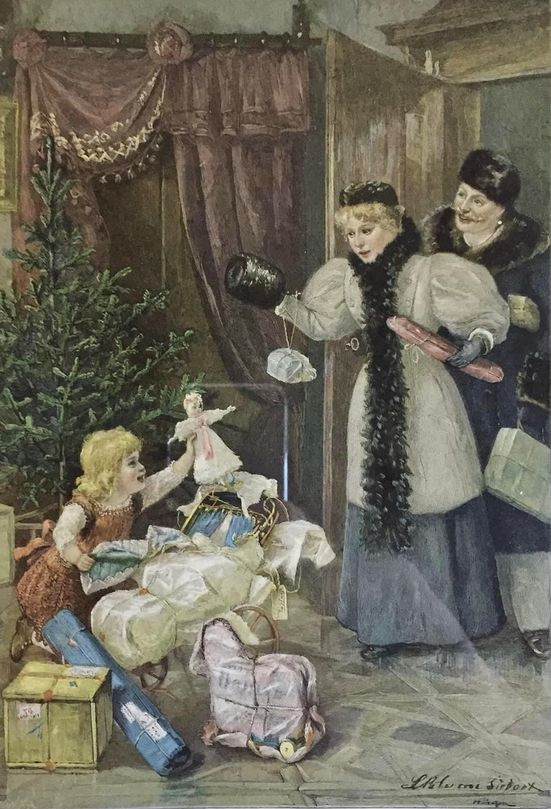
Weihnachten- Nach dem Schenken, 1888


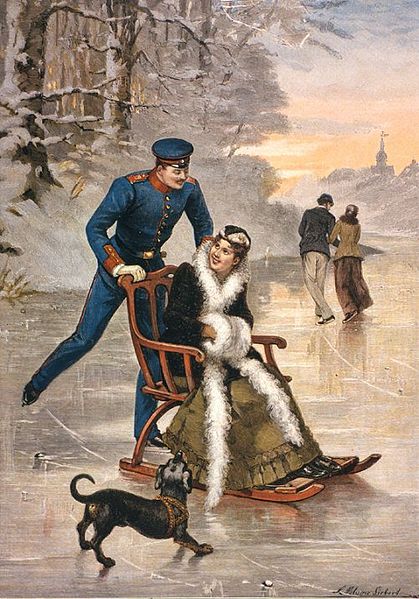
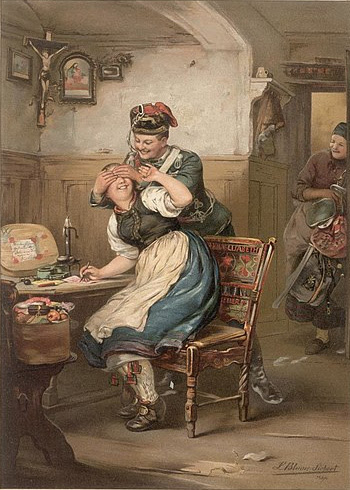
Ludwig Blume-Siebert was a famous German illustrator and painter of intimate family scenes in which children and pets were often present.
Born in Arolsen - today Bad Arolsen - a small town in northern Hesse, on 23 September 1853, he was noticed, still a youth, by the painter Wilhelm von Kaulbach who recognized his talent to the point of wanting him, at the age of 17, as a pupil at the Nuremberg School of Applied Arts, run by his son-in-law. Blume-Siebert perfected himself at the Düsseldorf Academy of Art and then at the Munich Academy of Fine Arts, where he learned to paint the idyllic and folkloric scenes of country life that brought him success, appearing above all in the illustrated magazine Die Gartenlaube at the end of the XIXth century.
All those that I want to show you here are taken from it, I want to make you aware of the joy that, in their simplicity, they manage to convey.

And with these lovely images I wish to all My Little Old World's 
far dear friends and loyal readers 
a Serene New Year filled with joy, satisfied hopes, 
dreams come true, health and Love.
With all my heart 


Die Weihnachtsurlaub (1894)


Die Weihnachtspostkutsche (1893)


Kalte Hände, (?)


Bitte! Bitte! (1889)


Unerwartete Bescherung (1887)


Der Weihnachtsmarkt (?)


Verfrühte Weihnachtsüberraschung (?)


Weihnachten im Forsthaus (1891)


Ein Herzensgeschenk (1888) 


Ludwig Blume-Siebert fu un celebre illustratore e pittore tedesco di scene d’intimità famigliare in cui spesso erano presenti bambini e animali da compagnia.
Nato ad Arolsen - oggi Bad Arolsen - un piccolo centro dell’Assia settentrionale, il 23 settembre 1853, fu notato, ancora giovinetto, dal pittore Wilhelm von Kaulbach che ne riconobbe il talento al punto da volerlo a frequentare, all’età di 17 anni, la Scuola di Arti Applicate di Norimberga, gestita da suo genero. Blume-Siebert si perfezionò all’Accademia d’Arte di Düsseldorf e quindi all’Accademia di Belle Arti di Monaco, dove imparò a dipingere le scene di vita di campagna idilliache e folkloristiche che gli diedero il successo, apparendo soprattutto sulla rivista illustrata Die Gartenlaube, sul finire del secolo XIX°.
Da essa sono tratte tutte quelle che desidero mostrarvi oggi, per rendervi edotti della gioia che, nella loro semplicità, riescono a trasmettere.

E con queste graziose immagini auguro 
a tutti i carissimi amici ed affezionati lettori di My Little Old World 
un Sereno Anno Nuovo 
prodigo di gioia, di speranze appagate, di sogni realizzati, di salute, di Amore.
Con tutto il cuore 


LINKING WITH:


sabato 24 dicembre 2022

Holly, symbol of Christmas, in legends, myths, history


"In December, in the misty forests,

only the holly adorned itself for the rebirth

from the sun to the palest equinox.

Standing in its greener and more solid mantle,

taking shape against the sad crowd of jagged trees,

rich in its vermilion pendants,

awaits, wizard king of the great woods, 

to lift up the Christmas star."


Pierre Lieutaghi (1939) French writer and ethnobotanist.


CELTIC MYTHOLOGY

King Holly and King Oak

The fight between King Holly and King Oak, twin brothers, symbolizes the confrontation between the cold season (Winter time) and the hot season (Summer time). In fact, the Celts divided the year into two periods, i.e. two seasons, a bright one and a dark one, thus marking the wheel of time. The two brothers competed to determine who will have the right to reign the longest. This conflict took place at the time of Yule (the pre-Christian feast of the western Winter solstice, which some would attribute to a sort of proto-Christmas among some Germanic peoples), when King Oak cut off King Holly's head and took his place on the throne until the middle of the year. King Holly, the dark twin, ruled from Litha to Yule. He represented abstention from work and rest. The holly tree is evergreen and its bright red berries shine when everything else is fruitless, symbolizing that King Holly is the keeper of life during his brother's repose. On the Winter solstice, wreaths of holly commemorated the defeat of  King Holly, interpreted by some as the forerunner of Santa Claus.

The Celts believed that its branches constituted an excellent hiding place for the fairies, the elves and the spirits of the wood who found refuge there during the cold season. 
 And that often the fairies who lived there would enter the houses during the Winter months to take a break from the cold and harsh conditions. It goes without saying that holly was a sacred plant for them. The druids, ancient priests of the Celtic peoples, particularly venerated this tree which featured prominently among the seven sacred trees of their grove. It was the tree of Taranis, god of lightning, the eighth tree of the Druidic alphabet. They cut its thorny branches to make sticks of life because they believed they could draw on the energy of the holly to increase their own.According to Gallic beliefs (the Gauls were part of the Celtic population that inhabited continental Europe at the time of the Romans) injuring the holly tree, so magical and so long -living - it can live up to 180 years - would have caused serious problems to nearby villages.
To cut the life sticks correctly it was therefore necessary to follow a ritual for which it was essential to prick oneself because a drop of blood was essential. The red berries embodied feminine energy, while the mistletoe berries symbolized the masculine seed. United in the Winter solstice ritual these two plants became "mythical relatives" and played the fundamental role of ensuring a renewed life in Spring.
Holly was planted near houses to protect them from evil spells, negative intrusions and evil spirits. Holly was perceived as a sign of good luck: that's why the infants were wet in an infusion of it; its branches were hanging over the door and windows, so that only kind people could enter the houses. What fascinated the druids was that holly was both a poisonous (berry) and medicinal (leaves) plant. In fact holly berries are poisonous to humans but a good winter food source for birds. The leaves of the holly tree were used to treat colds and fevers largely associated with the winter months. As a flower remedy holly is said to rid people of jealousy and hatred and open the heart to love.
In Gaelic folklore (Gaelic people consisted of a Celtic ethnolinguistic group that landed in Ireland and occupied, in later times, Scotland as well), Holly was the lord of the woods during the months when the light was failing and was the rival of Oak for favors to the lady of the woods, Birch, who switched her allegiance from Oak to Holly every year in Midsummer, then back at the Winter solstice.


NORDIC MYTHOLOGY

God Heimdall

The Holly was dedicated to the bright and protective god Heimdall, the watchful caretaker of the Rainbow Bridge that connected the world of humans to that of the gods. Heimdall watched over the sacred ceremonial space. Since he guaranteed the connection between these two worlds, his presence was enough to breathe the sacred and, during the funeral celebrations, ensured the passage of the soul by the world of humans to the world of the deceased. The Germanic and Scandinavian peoples placed decks or holly bushes in the sacred spaces. These bushes represented the presence of Heimdall and invoked his protection. Installing garlands of holly at the gates and sacred spaces therefore was equivalent to symbolically put the god Heimdall to the custodian of these spaces. He protected the human world - symbolized by the house - from the outside world that in Winter was transformed into a dark, hostile and terrifying world, a playing land for the forces of evil.


ROMANS MYTHOLOGY

The Saturnalia


Roberto Bompiani, (1821-1908), I Saturnalia


They were the holly twigs that the Romans used during the Saturnalia which celebrated the god Saturn. These festivities coincided with the end of agricultural activities close to the Winter solstice, and were held between 17 and 24 December.
During these great popular celebrations, social barriers disappeared, meals were organized, gifts were exchanged, little statues were offered to children. Often the Romans offered each other garlands of holly and it was also customary to decorate houses, altars, statues of Saturn with branches of this plant, to adorn themselves or thank loved ones with floral arrangements of greenery and flowers with a message. The Latin writer Pliny the Elder, already in 100 BC, advised to plant it in home gardens: he leaves us written that the prickly leaves of the holly kept demons away.


AMERICAN NATIVES TRADITIONS

Like ancient Europeans, some Native Americans in eastern North America also believed that the prickly leaves of the holly ward off evil spirits, witches, and lightning from the sky. It is for this reason that they planted holly near their homes.
They had also discovered a method of drying the berries which retained all their luster and plumpness. They were used to decorate clothing and hair with holly as well as to use it as a trade currency with other tribes where it did not grow naturally.
The sprigs of holly painted on objects or embroidered on clothes were auspicious. For Native American warriors, the whole plant had a symbolic strength: the rigidity of its wood represented their resistance, the thorns their ferocity and the persistent color of the leaves their courage in the face of the enemy.
In the XVIth century some missionaries discover in central South America that the Guarani (a group of Amerindian populations from the Amazon regions of Brazil, Argentina, Bolivia, Uruguay and Paraguay), are known to have been the first to have cultivated holly (Ilex paraguariensis).


THE ADVENT OF CHRISTIANITY

Holly comes from Holy

According to the Gospel of St. Mark, King Herod tried to massacre male children under the age of two, to be sure of eliminating the one whom the prophetic texts announced as the Messiah king of the Jews. Mary, Joseph and the child were forced to leave the city of Bethlehem in Galilee to flee to Egypt. To feed them and quench their thirst, the palm bent down offering them its fruits, a spring sprang from its roots to quench their thirst.
When Herod's soldiers approached perilously, a holly bush rose up and, with a miraculous impulse, rushed in and enveloped the Holy Family in a wall of thorny leaves, thus hiding and saving them. Mary blesses it and since then, according to the tradition, it has kept its leaves green.
After proclaiming mistletoe as decidedly pagan, holly certainly had a popular place since it  became associated with Christmas, because when the pagan rites were replaced with the Christian ones, many of the symbols of the previous I believe were maintained, overlapping these new meanings. In fact they placed Christmas on December 25 making the new festivity coincide with the previous ancient tradition. Among the symbols maintained there's our holly too, which has simply taken on a different symbolic connotation.
Medieval Christians associated the holly wood with Christ's cross, the thorns of its leaves with the crown of thorns in the Passion, and even the color of its fruits with the blood shed during the crucifixion. In some legends, holly fruits were white before Christ's blood turned them red.
In Middle Ages Europe, the holly was a symbol of happiness. The maidens drew an omen by silently counting the thorns of the holly leaves collected at night. The counting of the quills accompanied by the nursery rhyme "girl, woman, widow, nun", repeated in series, designated their presumed destiny. Also during the Middle Ages, due to its protective reputation, the holly often appeared on coats of arms in heraldry. 
Nowadays we cannot fail to underline how well this plant can represent the spirit of the holidays, giving joy and warding off misfortunes. This is why we have found it, for hundreds of years, always present in advent calendars and good luck cards.
And every Winter it is present in every house of ours, since there's no Christmas without holly berries and leaves.


And now, Dearest friends of mine, 
let me se send you many blessings on your Christmas, 
may it be filled with coziness, Joy, lights, Warmth, and Love.
Merry Christmas to you all!


Frederick Morgan, (1847-1927) Christmas 


L'agrifoglio, simbolo del Natale, nelle leggende, nei miti, nella storia


"A dicembre, nelle foreste nebbiose,
solo l'agrifoglio si adornava per la rinascita
dal sole al più pallido equinozio.
Fermo nel suo manto più verde e solido,
che si staglia contro la folla triste degli alberi frastagliati,
ricco dei suoi pendenti vermigli,
attende, mago re dei grandi boschi, di alzare la stella di Natale." 


Pierre Lieutaghi (1939) scrittore ed etnobotanico francese.


Mitologia celtica

Re Agrifoglio e Re Quercia

La lotta tra il Re Agrifoglio e il Re Quercia, fratelli gemelli, simboleggia il confronto tra la stagione fredda (il periodo invernale) e la stagione calda (il periodo estivo). I Celti dividevano, infatti, l'anno in due periodi, ovvero due stagioni, una stagione luminosa e una stagione buia, segnando così la ruota del tempo. I due fratelli competevano per determinare chi avrà il diritto di regnare più a lungo. Questo conflitto avveniva al tempo di Yule (festa precristiana del solstizio d'inverno occidentale, che alcuni attribuirebbero a una sorta di proto-Natale presso alcuni popoli germanici), quando Re Quercia taglia la testa a Re Agrifoglio e prende il suo posto sul trono fino a metà anno. Re Agrifoglio, il gemello oscuro, governa da Litha a Yule. Rappresenta l'astensione dal lavoro e il riposo. Il suo albero è sempreverde e le sue bacche rosso vivo brillano quando tutto il resto è infruttuoso, a simboleggiare che Re Agrifoglio è il custode della vita durante il riposo di suo fratello. Al solstizio d'inverno, le ghirlande di agrifoglio commemoravano la sconfitta del Re Agrifoglio, interpretato da taluni come il precursore di Babbo Natale. 
I Celti credevano che i suoi rami costituissero un ottimo nascondiglio per le fate, gli elfi e gli spiriti del bosco che vi trovavano rifugio durante la stagione fredda. E che spesso le fate che vivevano entrassero nelle case durante i mesi invernali per prendersi una pausa dal freddo e dalle condizioni difficili. Inutile dire che per loro l'agrifoglio era una pianta sacra.
I druidi, antichi sacerdoti dei popoli celtici, veneravano particolarmente questo albero che figurava in primo piano tra i sette alberi sacri del loro boschetto. Era l'albero di Taranis, dio del fulmine, l'ottavo albero dell'alfabeto druidico. Essi ne tagliavano i rami spinosi per farne bastoncini di vita poiché credevano di attingere all'energia dell'agrifoglio per aumentare la propria.
Secondo le credenze galliche (i Galli erano parte della popolazione celtica che abitava l'Europa continentale all'epoca dei romani) ferire l'albero dell'agrifoglio, così magico e così longevo - può raggiungere i 180 anni di vita - avrebbe causato seri problemi ai villaggi vicini.
Per tagliare correttamente i bastoncini di vita era necessario seguire, quindi, un rituale per il quale era fondamentale pungersi, perché una goccia di sangue era essenziale. Le bacche rosse incarnavano l'energia femminile, mentre le bacche di vischio simboleggiavano il seme maschile. Unite nel rito del solstizio d'inverno queste due piante divennero "parenti mitiche" e svolsero il ruolo fondamentale di garantire una vita rinnovata in primavera.
L'agrifoglio veniva piantato vicino alle case per proteggerle da incantesimi malvagi, intrusioni negative e spiriti maligni.
Ciò che affascinava i druidi era che l'agrifoglio fosse sia una pianta  velenosa (bacche) che medicamentosa (foglie).
Nel folklore gaelico (il popolo gaelico era costituito da un gruppo etnolinguistico celtico che sbarcò in Irlanda e occupò, in epoche successive, anche la Scozia), Agrifoglio era il signore dei boschi durante i mesi in cui la luce veniva a mancare ed era il rivale di Quercia quanto a favori alla signora dei boschi, Betulla, che cambiava la sua fedeltà da Quercia ad Agrifoglio ogni anno a mezza estate, e poi, di nuovo, al solstizio d'inverno.


MITOLOGIA NORDICA

Dio Heimdall

L'Agrifoglio era dedicato al dio luminoso e protettivo Heimdall, il vigile custode del Ponte dell'Arcobaleno che collegava il mondo degli umani a quello degli dei. Heimdall vegliava sul sacro spazio cerimoniale. Poiché garantiva il collegamento tra questi due mondi, bastava la sua presenza per respirare il sacro e, durante le celebrazioni funebri, assicurava il passaggio dell'anima dal mondo degli umani al mondo dei defunti. I popoli germanici e scandinavi collocavano mazzi o cespugli di agrifoglio negli spazi sacri. Questi cespugli rappresentavano la presenza di Heimdall e invocavano la sua protezione. Porre ghirlande di agrifoglio alle porte e negli spazi sacri equivaleva, quindi, a chiamare simbolicamente il dio Heimdall quale custode di questi spazi. Proteggeva il mondo umano - simboleggiato dalla casa - dal mondo esterno che in inverno si trasformava in un mondo oscuro, ostile e terrificante, terreno di gioco delle forze del male.


MITOLOGIA ROMANA

I Saturnalia

Dipinto di Roberto Bompiani, (1821-1908) dal titolo I Saturnalia

Erano i rametti di agrifoglio che i Romani usavano durante i Saturnalia volti a celebrare il dio Saturno. Questi festeggiamenti coincidevano con la fine delle attività agricole a ridosso del solstizio d'inverno, e si svolgevano tra il 17 e il 24 dicembre.
Durante queste grandi feste popolari sparivano le barriere sociali, si organizzavano pasti, si scambiavano doni, si offrivano statuine ai bambini. Spesso i romani si offrivano reciprocamente ghirlande di agrifoglio ed era anche consuetudine addobbare case, altari, statue di Saturno con rami di questa pianta, adornarsi o ringraziare i propri cari con composizioni floreali di verde e fiori con un messaggio. Lo scrittore latino Plinio il Vecchio, già nel 100 a.C., consigliava di piantarlo nei giardini domestici: ci lascia scritto che le foglie spinose dell'agrifoglio tengono lontani i demoni.


TRADIZIONI DEI NATIVI AMERICANI

Come gli antichi europei, anche alcuni nativi americani del Nord America orientale credevano che le foglie spinose dell'agrifoglio allontanassero gli spiriti maligni, le streghe e i fulmini dal cielo. È per questo motivo che piantavano l'agrifoglio vicino alle loro dimore.
Avevano anche scoperto un metodo per essiccare le bacche che conservavano tutta la loro lucentezza e carnosità. Erano soliti decorare vestiti e capelli con agrifoglio ed usarlo come valuta commerciale con altre tribù dove non cresceva naturalmente.
I rametti di agrifoglio dipinti sugli oggetti o ricamati sugli abiti erano di buon auspicio. Per i guerrieri nativi americani l'intera pianta aveva una forza simbolica: la rigidità del suo legno rappresentava la loro resistenza, le spine la loro ferocia e il colore persistente delle foglie il loro coraggio di fronte al nemico.
Nel XVI secolo alcuni missionari scoprirono nell'America centro-meridionale che i Guarani (un gruppo di popolazioni amerindie delle regioni amazzoniche di Brasile, Argentina, Bolivia, Uruguay e Paraguay), sarebbero stati i primi ad aver coltivato l'agrifoglio (Ilex paraguariensis).


L'AVVENTO DEL CRISTIANESIMO

Holly (che in inglese traduce agrifoglio) viene da Holy

Secondo il Vangelo di San Marco re Erode cercò di massacrare i bambini maschi di età inferiore ai due anni per essere sicuro di eliminare colui che i testi profetici annunciavano come il Messia re dei Giudei. Maria, Giuseppe e il bambino furono costretti a lasciare la città di Betlemme in Galilea per fuggire in Egitto. Per nutrirli e dissetarli, la palma si chinò offrendo loro i suoi frutti e dalle sue radici scaturì una sorgente per dissetarli.
Quando i soldati di Erode si avvicinarono pericolosamente, un cespuglio di agrifoglio si alzò e, con un impulso miracoloso, avvolse la Sacra Famiglia in un muro di foglie spinose, nascondendola e salvandola. Maria lo benedisse e da allora, secondo la tradizione, mantiene verdi le sue foglie.
Dopo aver proclamato il vischio come decisamente pagano, l'agrifoglio ebbe sicuramente un posto popolare poiché venne associato al Natale, perché quando i riti pagani furono sostituiti da quelli cristiani, molti dei simboli del precedente credo furono mantenuti, sovrapponendosi a questi nuovi significati. Infatti il cristianesimo collocò il Natale al 25 dicembre facendo coincidere la nuova festività con la precedente antica tradizione. Tra i simboli mantenuti c'è anche il nostro agrifoglio, che ha semplicemente assunto una connotazione simbolica diversa.
I cristiani medievali associavano il legno di agrifoglio alla croce di Cristo, le spine delle sue foglie alla corona di spine della Passione e persino il colore dei suoi frutti al sangue versato durante la crocifissione. In alcune leggende i frutti di agrifoglio erano bianchi prima che il sangue di Cristo li facesse diventare rossi.
Nell'Europa del Medioevo, l'agrifoglio era un simbolo di felicità. Le fanciulle vi leggevano un presagio contando silenziosamente le spine delle foglie di agrifoglio raccolte di notte. Il conteggio degli aculei accompagnato dalla filastrocca "fanciulla, donna, vedova, suora", ripetuta in serie, ne designava il presunto destino. Durante il Medioevo l'agrifoglio mantenne la sua fama protettiva, tanto da comparire spesso sugli stemmi araldici.
Al giorno d'oggi non si può non sottolineare come questa pianta possa ben rappresentare lo spirito delle feste, donando allegria e scongiurando le disgrazie. Per questo lo troviamo, da centinaia di anni, sempre presente nei calendari dell'avvento e nelle carte portafortuna.
E ogni inverno è presente in ogni nostra casa, perché non c'è Natale senza bacche e foglie di agrifoglio.


E ora, miei carissimi amici, 
permettetemi di inviarvi i miei più cari auguri per il vostro Natale,
possa Esso essere colmo di intimità, di gioia, di luci, di calore e di amore.
Buon Natale a tutti voi!

Frederick Morgan, (1847-1927) Christmas