sabato 25 gennaio 2014

Silhouettes, the ancient art of the shadow.


'Amongst my reminescences of personal belongings and the 

charm of old portraiture, none has given me greater pleasure 

than the silhouette by bygone days. The souvenir, sometimes

cut by gifted amateurs, was exchanged amongst friends

in my early days as the photograph is to-day.'


Ancient silhouette by the American silhouettist William Bache, widely famous from the period of 1760 to 1860


'Pensando alle rimembranze personali più care ed al fascino della 

vecchia ritrattistica, nulla mi ha dato più piacere delle silhouette 

dei tempi passati. Il ricordo, talvolta ritagliato da dilettanti 

talentuosi, era al tempo della mia infanzia oggetto di scambio tra 

amici come la fotografia lo è oggi '.


La storia ci insegna che fu l'antico popolo degli Etruschi il primo a subire il fascino delle ombre e a giocare con esse creando le caratteristiche immagini di profilo che ancora oggi possiamo ammirare dipinte su vasi ed anfore che si sono conservate, e potremmo dire che proprio questa forma di pittura sia la prima espressione artistica delle varie antiche civiltà del bacino del Mediterraneo, da quella Egizia, a quella Fenicia, a quella Greca, etc; intorno al I secolo d.C. Plinio il Vecchio narra la storia di una giovane ragazza corinzia del V secolo, Dibutade, che inventò questo tipo di disegno quando tracciò la sagoma o silhouette del suo amante, proiettata sulla parete da una candela, perché egli stava per partire ed ella voleva conservare un ricordo dell'amato con cui consolarsi durante la sua assenza.


Dibutade in un dipinto del pittore Neo-Classico Joseph-Benoît Suvée (1743 – 1807)


La storia di Dibutade è curiosa e merita attenzione non solo perché descrive lo stesso metodo a lume di candela utilizzato nel XIX° secolo per dipingere le silhouette, ma anche perché l'artista è una donna, una dilettante, e nel suo intento è guidata dal produrre un ricordo dell'amato, tutte circostanze, queste, che erano spesso determinanti la creazione del ritratto di profili. 


Durante il 1700, l'interesse scientifico ed enciclopedico promosso dall'Illuminismo francese, condusse a studi approfonditi sull'anatomia e sulla fisiognomica, alla redazione di veri e propri trattati sull'argomento ( primo fra tutti quello di Johann Caspar Lavater (1741-1801) Von der physiognomik del 1775 da cui è tratta questa stampa a sinistra) e all'invenzione persino di una macchina detta Limomachianecessaria a tenere perfettamente immobile il viso di chi era in posa per la creazione del profilo.

Perciò l'attenzione per i tratti caratteristici del viso fece sì che l' art de l'ombre conoscesse un nuovo impulso a diffondersi, anche se va detto che esulano completamente l'ambito scientifico i motivi che condussero questa forma d'arte al successo che ebbe durante l'epoca Regency e più tardi in quella Vittoriana ( pensate che durante l'epoca di Jane Austen divenne persino un gioco di società per le giovani donne).


Tre erano i metodi con cui poter ricavare le sagome o i ritratti di profili da conservare inserendoli in cornice:

- la pittura di un contorno scuro pieno su di una superficie di colore chiaro che fosse carta, cartone, gesso, avorio, ecc. fu in assoluto il primo metodo utilizzato in Francia per realizzare silhouette ed è legato al nome di Francis Torond  (1743 - 1812) che intorno al 1770 dipinse ad inchiostro per primo sagome scure con una precisione nei dettagli a dir poco inverosimile ...


Conversation


 Playing Cards


Lady with a Birdcage


Mr. and Mrs. Smith of  Hailsham and Aunt Everard, c. 1777


per giungere a William Wellings (1778 -1796) che rifiniva e perfezionava le sagome dipinte con tocchi in acquerello per aggiungere alle immagini tridimensionalità e profondità


Naval's Officers


Introduction of Edward to the Knights*


acquerelli che erano, in taluni casi, composti di pagliuzze bronzate, come si nota in questi dipinti realizzati per mezzo della Royal Victoria Gallery's technique (1840's);


- un secondo metodo consisteva nell'utilizzare le forbici per tagliare un profilo da un foglio di carta nera o comunque di colore scuro per poi applicarlo su di uno sfondo, generalmente dipinto, di colore chiaro


American Victorian Silhouette


ma vi era anche chi ritagliava le sagome speculari per poi applicarle sotto il vetro;


Un raro esempio di 'reverse cut-out on glass' silhouette del XIX° secolo che ritrae una famiglia che suona strumenti musicali


- ed infine un terzo metodo era quello di ricavare con il ritaglio l'immagine del profilo nel centro di un foglio, che fosse chiaro o scuro e sovrapporre quest'ultimo ad un altro di tinta contrastante. Questa tecnica è nota come "hollow-cut". ( taglio del vuoto o taglio concavo )


Qui le silhouette sono in negativo


Ma perchè se inizialmente era definita art de l'ombre questa tecnica ritrattistica muterà nome?
Da dove proviene il nome 'Silhouette' ?

La spiegazione è legata al nome di Etienne de Silhouette (1709-1767), Ministro francese delle finanze nominato dal Re Sole, Luigi XIV, ma ci chiediamo in che modo, poichè diverse sono le ipotesi: quella più comune è che, a causa di quanto breve è il tempo necessario per portare a termine il ritratto di un profilo, si alluda in tono sarcastico alla brevità del suo mandato - eletto nel corso dell'anno 1759 da Luigi XIV, prese di mira le classi più agiate, introdusse un'imposta fondiaria che gravava sui nobili francesi e ridusse loro il reddito, tassando inoltre tutti i segni esteriori di ricchezza; ovviamente trovò una forte opposizione da parte dell'ancien régime, della nobiltà e della chiesa che prima di allora da ogni forma di gravame erano esenti e fu così che dopo solo otto mesi fu costretto a ritirarsi dal suo incarico -; un'altra spiegazione la troviamo nella passione con cui, anche se da dilettante, questi si dedicava con successo ed orgoglio proprio all'art de l'ombre tanto che la collezione che possedeva al suo castello divenne presto piuttosto nota; vi è infine una terza spiegazione, più bizzarra, ma forse più verosimile: in Francia il nome di Silhouette era diventato sinonimo di 'a buon mercato', si chiamava 'gilet à la Silhouette' il gilet da uomo senza tasche e perciò da poco non solo perché costava meno la sua realizzazione ( meno stoffa e perciò meno lavoro ), ma anche perchè il fatto che non avesse tasche suggeriva immediatamente che chi lo vestiva non possedesse denaro da mettervi dentro, ( e qui l'allusione sarebbe allora alle politiche fallimentari di Silhouette ). Come le abitudini 'à la Silhouette', quindi, anche i ritratti silhouette erano ben più economici poichè eseguiti in minor tempo rispetto a quelli tradizionali e perciò il nome rimase nel tempo.


Emily Bronte e Charlotte Bronte nelle Silhouettes di Elizabeth Baverstock


Infatti la diffusione di questa tecnica ritrattistica, soprattutto seguendo la seconda e la terza metodologia, che più si divulgarono durante il 1800, ebbe motivazioni precipuamente economiche divenendo una forma popolare di ritrarre volti e figure poichè coloro che non potevano permettersi di spendere il denaro necessario per farsi ritrarre su tela con acquerelli, pastelli o colori ad olio, potevano contare su di una seduta di pochi minuti e di poca spesa; dalla Francia perciò velocemente si diffusero Silhouettist in Inghilterra e successivamente dall'Inghilterra all'America; tra di essi figurano nomi di spicco che meritano di essere ricordati il primo dei quali, sia per importanza che per cronologia, è senza alcun dubbio Auguste Amant Constant Fidèle Edouart (1789-1861), detto più semplicemente Augustin Edouart, ritrattista francese di nascita, che acquistò fama soprattutto lavorando in Inghilterra, in Scozia e negli Stati Uniti nel corso del XIX° secolo specializzandosi in ritratti di silhouette; nato a Dunkerque lasciò la Francia nel 1814 e si trasferì a Londra dove a partire dal 1825 divenne famoso per la creazione di importanti silhouette, tra cui quella di Fanny Brawne, amata da John Keats


quella dell'Imperatore dei Francesi, Napoleone Bonaparte


 quella dell'autrice Sarah Josepha Buell Hale


quelle di Sir Walter Scott ad Abbotsford


ed altre che, anche se non legate a nomi di personaggi celebri, sono prestigiose per la tecnica che le contraddistingue


The Magic Lantern


Woman in the Garden


Portrait of Sarah Wistar Pennock and her Daughter, Isabella Liddon Pennock


Autoritratto, 1828


Ma fu all'Inghilterra che si legarono i nomi più celebri: molto spesso i Silhouettist sceglievano quartieri altolocati di grandi città, centri balneari o termali (quali Bath, per esempio), luoghi frequentati da molte persone in quanto riuscendo a portare a termine i loro ritratti in una manciata di minuti, magari per un solo penny a silhouette, si garantivano comunque una vita dignitosa contando sulla quantità di richieste.

Numerosi furono coloro che durante il XIX° secolo operarono a Brighton, per esempio, da John Gapp of the Chain Pier, così nominato perchè lavorava alla Third Tower nel centro del Chain Pier


ad Edgard Adolphe, come Edouart nato in Francia (1808 - 1890)


a George Cutter Atkinson ( ? - ? )


Ma ci pensate che al tempo vi erano artisti, tra cui si distinse Jane Read ( ? - ? ), capaci di dipingere silhouette a rovescio sul vetro, il vetro concavo da cornice ...


Saranno stati anche artisti dei poveri, così come furono definiti al tempo, ma che arte era la loro, quale talento possedevano ...


Conversation avec une lettre, c.1850


A tale proposito mi piace ricordare William Morris (1834 - 1896) che proprio in quegli anni scriveva:


Il più grande nemico dell'arte è il lusso.


- La bellezza della vita, 1880


A presto amici miei cari, vi abbraccio con affetto, vi ringrazio e vi aspetto per nuovi ...
' viaggi ' tra le meraviglie che appartengono al nostro tempo passato 


Bibliografia:

Johann Kaspar Lavater, Von Der Physiognomik, Antigonos Verlag, 2012

Emily Neville Jackson, THE HISTORY OF SILHOUETTES, The Connoisseur Publisher, London, 1861 (https://archive.org/details/historyofsilhoue00jackuoft )

Shades and Shadow-Pictures: The Materials and Techniques of American Portrait Silhouettes, The American Institute for Conservation (http://cool.conservation-us.org/coolaic/sg/bpg/annual/v18/bp18-07.html )


Citazioni e Note:

1 - Emily Neville Jackson, THE HISTORY OF SILHOUETTES, The Connoisseur Publisher, London, 1861, prefazione

* Durante l'epoca Regency non era infrequente che famiglie con prole numerosa dessero in adozione almeno uno dei propri figli a parenti facoltosi; così accadde per Edward Austen, fratello di Jane, che venne adottato dalla famiglia Knight.


'Amongst my reminescences of personal belongings and the 

charm of old portraiture, none has given me greater pleasure 

than the silhouette by bygone days. The souvenir, sometimes

cut by gifted amateurs, was exchanged amongst friends

in my early days as the photograph is to-day.'


- picture 1 - 


History teaches us that it was the ancient Etruscans people the first to undergo the charm of the shadows and play with them creating the characteristic profile image that we can still admire painted on the vases and the amphorae that are preserved, and we could say that this form of painting is the first artistic expression of the various ancient civilizations of the Mediterranean area, from the Egyptian one, to the Phoenician, to the Greek one, etc.; around the first century AD Pliny the Elder tells the story of a young Corinthian girl from the Vth century, Dibutade, who invented this type of design when she traced the outline or silhouette of her lover, projected on the wall by a candle, because he was about to leave and she wanted to keep a remembrance from her lover with which to console herself during his absence.


- picture 2 - Dibutade in a Neo-Classical painting by Joseph-Benoît Suvée (1743 - 1807) 


The story of Dibutade is curious and deserves attention not only because it describes the same method, by candlelight, used in the XIXth century to paint the silhouette, but also because the artist is a woman, an amateur, and to her goal is guided by producing a memory of her beloved, all circumstances, these, which often determined the creation of the portrait of profiles.


- picture 3 on the left - During the 1700s, the scientific and encyclopedic interest promoted by the French Illuminism, conducted to extensive studies on the anatomy and physiognomy, to the preparation of real treatises on the subject (first of all that of Johann Caspar Lavater
(1741-1801 ) Von der Physiognomik in 1775 from which is taken this print on the left) and even the invention of a machine called Limomachia, necessary to keep motionless the face of who was posing for the creation of the profile.


- picture 4 on the right - Therefore, the attention to the characteristic features of the face meant that the 'art de l'ombre' knew a new impulse to spread, although it must be said that are completely outside the domain of science the reasons that led this form of art to the succes it had was during the Regency and, later, the Victorian era (just think that during the Jane Austen's era it even became a parlor game for young women).


There were three methods by which to obtain the silhouettes or portraits of profiles to be stored by placing in the frame: 

- the painting of a dark full outline of an area of pale color that could be of paper, cardboard, plaster, ivory, etc.. it was the very first method ever used in France to make silhouette and is linked to the name of Francis Torond (1743 - 1812) who in the 1770s painted in ink the first dark shapes with a precision and so fine detail so to say almost unbelievable ...


- picture 5 - Conversation

- picture 6 -
 Playing Cards

- picture 7 - 
Lady with a Birdcage

- picture 8 -
Mr. and Mrs. Smith of Hailsham and Aunt Everard, c. 1777


till arriving to William Wellings (1778 -1796) who improved and perfected his silhouettes with the addition of touches in watercolor to add to his paintings the three-dimensional component and the depth


- picture 9 - Naval's Officers

- picture 10 - 
Introduction of Edward to the Knights*


watercolors that were, in some cases, made of bronzed particles, as you can see in these paintings made with the Royal Victoria Gallery's technique (1840's);
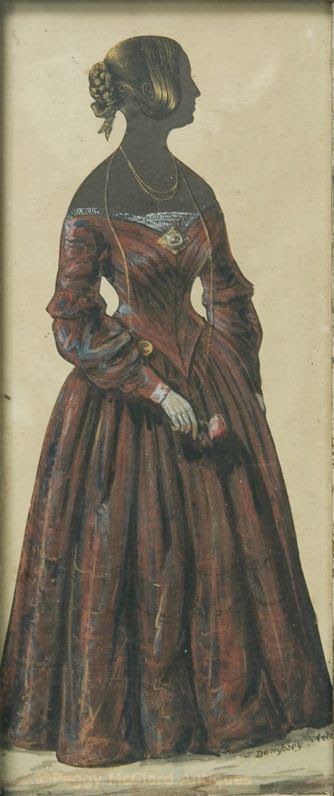

- picture 11

- picture 12


- a second method was to use scissors to cut a profile from a sheet of black paper or of another dark color and then apply it on a light-colored background, usually painted, 


- picture 13 - American Victorian Silhouette


but there were those who also cut out the shapes in mirror image and applied them under the glass;


- picture 14 - A rare example of 'reverse cut-out on glass' silhouette of the XIXth century that depicts a family playing musical instruments
http://boxhouse-antiques.com/english-regency-period-silhouette-picture.html


- and, finally, a third method was that to obtain with the clipping the profile image in the center of a sheet, it could be dark or light, and overlay the latter to another of contrasting color. This technique is known as "hollow-cut"


- picture 15 - Here the silhouette are negative


But why if this portraiture technique was initially defined 'art de l'ombre' will change its name ?
Where does the name 'Silhouette' come from ?

The explanation is linked to the name of Etienne de Silhouette (1709-1767), French Minister of Finance appointed by the Sun King, Louis XIV, but it is to be seen in which way, because there are different hypothesis: the most common is that, due to how short is the time required to complete the portrait of a profile, it alludes sarcastically to the brevity of his term - elected in the year 1759 by Louis XIV, took aim at the better-off classes, introduced a 'property tax' that weighed on the French nobles and reduced their income by taxing, furthermore, all the outward signs of wealth; obviously he found a strong opposition from the 'ancien regime', the nobility and the church which before then from were exempt from any form of appeal and so it was that after only eight months he was forced to retire from his post -; another explanation is found in the passion with which, although as an amateur, he devoted himself with success and pride in the 'art de l'ombre' so that the collection he had in his castle became soon quite well known; and there is finally a third explanation, most bizarre, but perhaps more likely: in France the name of Silhouette had become synonymous of ' cheaply ', a 'gilet à la Silhouette' was a man gilet without pockets and therefore cheap not only because it was cheaper its realization ( less fabric and therefore less work ), but also because the fact that if it had no pockets immediately suggested that those who wore it didn't have any money to put in ( and hence the allusion would then be to the failed policies of Silhouette). As the habits ' à la Silhouette ', therefore, the portraits of silhouette were well cheapest as performed in less time compared to the traditional ones, and that's why the name remained in time.


- picture 16 - Emily Bronte and Charlotte Bronte in Silhouettes by Elizabeth Baverstock


In fact, the spread of this technique portraiture, especially following the second and third method, which were more popularized during the 1800s, was primarily owned to economic reasons and became a popular form of portraying faces and figures as those who could not afford to spend the money necessary to be portrayed on canvas with watercolors, pastels or oil paints, could count on a few minutes of sitting and on a few money of outlay; from France therefore the Silhouettist quickly spread to England and then from England to America; among them there are prominent names that deserve to be remembered, the first of which, both in importance and in history, is without any doubt Auguste Amant Constant Fidele Edouart (1789-1861): known simply as Augustin Edouart, he was a French-born portrait painter who gained fame mainly working in England, Scotland and in the United States during the XIXth century, specialized in portraits of silhouette; born in Dunkerque he left France in 1814 and moved to London, where since 1825 became famous for the creation of important silhouettes, among which that of Fanny Brawne , loved by John Keats 


- picture 17


that of the Emperor of the French, Napoleon Bonaparte


- picture 18


that of the author Sarah Josepha Buell Hale


- picture 19


those of Sir Walter Scott at Abbotsford


- picture 20


and others which, although not related to famous personalities' names, are prestigious for the technique that distinguishes them


- picture 21 - The Magic Lantern

- picture 22 - Woman in the Garden

- picture 23 - Portrait of Sarah Wistar Pennock and her Daughter, Isabella Liddon Pennock

- picture 24 - Selfportrait, 1828


But it was to England that were tied the most celebrated names: the Silhouettist very often chose high-ranking districts of large cities, seaside resorts or spas towns (such as Bath, for example), places frequented by many people for, as being able to carry out their portraits in a matter of minutes, even for a single penny a silhouette, they could however guarantee themselves a decent life relying on the volume of the requests.

Many were those who during the XIXth century worked in Brighton, such as John Gapp of the Chain Pier, so named because he worked at the Third Tower in the center of the Chain Pier


- picture 25


to Edgard Adolphe, as Edouart born in France (1808 - 1890)


- picture 26

- picture 27


to George Atkinson Cutter (? -?).


- picture 28


But do you think that at the time there were artists, among which Jane Read (? -?) distingued, able to paint silhouette upside down on the glass, the concave frame glass  ... ?


- picture 29

- picture 30

- picture 31


They will also have been artists of the poor, as they were called at the time, but that was their art, what a talent they had ...


- picture 32 - Conversation avec une lettre, c.1850


By the way I like to remember William Morris (1834 - 1896) who wrote just in those years:


The greatest enemy of art is the luxury.


- The beauty of life, 1880


Thank you so much my dearest friends, I embrace you with much love and  .. see you soon for new 'travels' amongst the wonders belonging to our past time 


Bibliography:

Johann Kaspar Lavater, Von Der Physiognomik, Antigonos Verlag, 2012

Emily Neville Jackson, THE HISTORY OF SILHOUETTES, The Connoisseur Publisher, London, 1861 (https://archive.org/details/historyofsilhoue00jackuoft )

Shades and Shadow-Pictures: The Materials and Techniques of American Portrait Silhouettes, The American Institute for Conservation (http://cool.conservation-us.org/coolaic/sg/bpg/annual/v18/bp18-07.html )


Quotations and Notes:

1 - Emily Neville Jackson, THE HISTORY OF SILHOUETTES, The Connoisseur Publisher, London, 1861, foreword

* During the Regency period wasn't uncommon for families with numerous offspring to give up for adoption at least one of their children to wealthy relatives, so it happened to Edward Austen, Jane's brother, who was adopted by the Knight family.


Composite image by 4 silhouettes by Augustin Edouart (1789 - 1861), from left to right:
- John Henry Alexander; Mr Weekes; John Francis Theodon; John Lloyd , 1832
- Mrs Robert Beveridge; Anne Beveridge; Andrew Beveridge; Hugh Beveridge; Robert Beveridge, 1832
- Jane Anderson; Esther Ainslie; Helena Anderson; Mrs Arkley; Charles Atherton, circa 1830
- Sarah Siddons; Tyrone Power; Tyrone Power, 1832


LINKING WITH:


lunedì 20 gennaio 2014

Gli amori di Jane Austen.


Chiunque abbia scritto o pensi che Jane Austen non ebbe mai ad innamorarsi si trova in grande errore.


Ritratto di Jane realizzato da Cassandra nel 1804


Ho sempre faticato ad accettare la figura di questa giovane scrittrice, questa singolare creatura che ormai appartiene all'immaginario collettivo, al tempo riconosciuta sì capace e produttiva, connotata da virtù e cultura, ma ritenuta vittima di un'esistenza statica e banale, inerte, poco significativa ...
"E se dietro ai personaggi indimenticabili di Darcy, Willoughby ed Edward Ferrars si fosse celato un uomo reale, di cui nessuno è mai stato a conoscenza perché Jane ha custodito quel segreto solo nel suo cuore o magari lo ha consegnato alle lettere che sono scomparse ?" mi chiedevo ed ora posso finalmente dirvi che furono almeno quattro, forse cinque, insomma numerosi i giovani che segnarono la vita sentimentale di Jane Austen.

" .. despite what most people believe, she had a succession of admirers, a number of chances to marry, and several disastrous romantic disappointments."  / Contraraiamente a quanto la maggior parte delle persone credono, ella ebbe una grande quantità di ammiratori, proposte di matrimonio e numerose delusioni romantiche conclusesi in modo disastroso." 1


L'immagine di questa giovane donna che tutti hanno sempre cercato prendesse corpo nella nostra mente come quella di una asettica e domestica zitella mi è sempre sembrata molto poco verosimile, come può chi, con toni così profondi e realistici, riesce a narrare della passione di Darcy per Elzabeth facendocene rivivere i palpiti, non averne avuto una qualche esperienza, non esser mai stata nemmeno corteggiata, come può educare all'amore e ai sentimenti colei che non conosce e non ha mai provato le emozioni e gli stati d'animo che l'amore suscita nell'intimo, non aver mai partecipato a quell'intenso gioco di sguardi muti e ciechi a qualsivoglia appello della ragione, 
non avere mai provata la meravigliosa ed ancestrale sintonia di anima e corpo che unisce due persone quando sono innamorate ? 


Si chiamava Tom il primo che fece palpitare il cuore della nostra Jane, Thomas Langlois  Lefroyuno studente in legge proveniente dall'Irlanda nipote del marito della cara amica Anne che poi di Jane era a sua volta nipote in quanto figlia di uno dei suoi fratelli (Jane-Anna-Elizabeth [Austen] Lefroy (1793-1872) era figlia di James, il fratello maggiore di Jane Austen, e di Anne Mathew, la sua prima moglie; nel 1814 aveva sposato Benjamin Lefroy); Jane aveva vent'anni quando lo conobbe e trascorse insieme con lui alcune settimane durante il periodo tra Natale e Capodanno.
Egli era di bell'aspetto e di temperamento piuttosto posato, calmo e molto buono, probabilmente quanto di più adatto per il carattere così vitale ed ironico di Jane; dopo il primo loro ballo Jane scrisse scherzosamente a Cassandra dicendo che non vi era "nulla di più dissoluto ed emozionante che ballare e sedersi insieme !".
Tom apparteneva ad buona famiglia che però non era facoltosa, il padre era un ex ufficiale dell'esercito, ma doveva mantenere undici figli ed egli era il maggiore con cinque sorelle davanti a sè per cui sentiva gravare sulle proprie spalle la responsabilità circa il futuro di tutti i suoi cari che da lui si aspettavano il meglio, perciò, anche se

l'affetto tra lui e Jane era reciproco Anne e suo marito cercarono di smorzare questa relazione già sul nascere inviando quanto prima Tom a casa: egli non poteva infatti far altro che sposare una donna danarosa e Jane non lo era, Jane non poteva dare alla sua famiglia la sicurezza per il futuro che lui doveva cercare in una moglie.

E di questo la nostra Jane si era presto avveduta; scriverà  infatti a Cassandra che allora Tom stava vivendo il nascere della loro simpatia con tensione di conseguenza alla sua famiglia, quel genere di problemi che però lui, quando ella si recò a trovarlo, riuscì a nascondere; quando lui inoltre contraccambiò la visita, seguendo quella che era una consuetudine diffusa all'epoca,
http://sweetlydreamingofthepast.blogspot.it/2013/10/a-regency-tale-daily-life-and.htmlcosì scriverà alla sorella: 

Steventon: Saturday (January 9)
[...] Dopo aver scritto quanto sopra, abbiamo ricevuto la visita di Mr. Tom Lefroy e suo cugino George. Quest'ultimo è davvero molto ben educato ora; come del resto il primo, ma ha un difetto, che spero il tempo rimuoverà del tutto - è che il suo cappotto da mattina è davvero troppo troppo. Lui è un grande ammiratore di Tom Jones, e indossa quindi gli abiti dello stesso colore, suppongo, di quando fu ferito. 2

Purtoppo Tom non era Darcy, ahimè, anche se con ogni probabilità ispirò in lei questo personaggio di Pride and Prejudice, Tom non era erede di grandi ricchezze e anche se dimostrava di adorare Jane ella, non possedendo il denaro sufficiente per soddisfare le aspettative della sua famiglia, fu presto da lui separata e nella lettera inviata a Cassandra solamente una settimana più tardi si legge:

Steventon: Thursday (January 16) Friday.
[...] -- Alfine è giunto il giorno in cui amoreggerò per l'ultima volta con Tom Lefroy, e quando riceverai questa mia sarà già tutto finito. Le mie lacrime scorrono mentre scrivo all'idea di questa malinconia. Wm. Chute ci ha fatto visita ieri. Mi chiedo cosa lo ha spinto ad essere così civile. Sembra che Tom stia per sposarsi con una ragazza di Lichfield. John Lyford e sua sorella porteranno Edward a casa oggi, cenerà con noi e poi andremo tutti insieme a Ashe. 3

Qualche anno più tardi Tom prenderà moglie, farà carriera divenendo Lord Chief of Justice d'Irlanda ovvero capo della Magistratura, avrà sette figli e solamente dopo la morte di Jane confesserà ad un parente il suo vero, grande, antico amore per lei.

Nel 1797 a Bath Jane conoscerà Sydney Smith, un prelato che si era espresso favorevolmente circa i suoi romanzi e per il quale ella proverà una certa simpatia, ma non fu nulla di così importante, almeno non tanto quanto il trasporto vissuto per Tom Lefroy :

"Ho sentito più di una volta Sydney Smith (16) soffermarsi in modo significativo sulle qualità dei romanzi di Miss Austen. Mi disse che per lui sarebbe stata una gioia darle il piacere di leggere le lodi a lei tributate sulla «Edinburgh Review». «Fanny Price» era uno dei suoi personaggi prediletti." 4


Nell'estate del 1798 Jane si trovava in vacanza con la famiglia Lefroy nello Hampshire dove ebbe l'occasione di conoscere il Dr.Samuel Blackall, studente di Teologia all' Emmanuel College di Cambridge; egli aveva serie intenzioni, tanto serie da voler procedere cautamente in questa sua amicizia, ma fu proprio questa sua eccessiva 'prudenza', questo suo temporeggiare che fu da Jane interpretato come una mancanza d'interesse nei suoi confronti: in una lettera indirizzata a Cassandra del Novembre di quello stesso anno si legge:


Saturday, November 17, 1798.
[ ... ] Lei ( la signora Lefroy , N.d.A. ) mi ha mostrato una lettera che aveva ricevuto dal suo amico un paio di settimane fa ( in risposta ad uno scritto da lei raccomandare una nipote della signora Russell al suo preavviso di Cambridge) , verso la fine della quale vi era una frase di questo tenore: "Sono molto dispiaciuto di sentire della malattia della signora Austen mi darebbe particolare piacere avere l'opportunità di migliorare la mia conoscenza di quella famiglia - con una speranza di crearmi un un interesse più vicino. Ma al momento non posso assecondarne ogni aspettativa." E' tutto piuttosto razionale, c'è meno amore e più senso in esso di quanto sia stato mostrato alcune volte in precedenza, e sono molto soddisfatta. Procederà tutto estremamente bene, e tutto scemerà in maniera molto ragionevole. Non sembra esserci rischio della sua venuta in Hampshire questo Natale, ed è quindi molto probabile che la nostra indifferenza sarà presto reciproca, ed il suo proposito, che sembrava scaturire dal sapere nulla di me in un primo momento, sarà ultriormente supportato dal non vedermi. 5

Trascorsero quattro anni prima che i due, casualmente, si rincontrassero a Totnes, nel Devon, e con ogni probabilità fu allora che Jane s'innamorò realmente di lui; ivi Jane si era reacata perchè il fratello esercitava la professione di medico insieme con un certo Dr.John Blackall, fratello del già noto Samuel, ma questa volta ad osteggiare tale relazione quasi con sicurezza sappiamo che intervenne Cassandra anche se ne ignoriamo il motivo e non a caso la corrispondenza che va dagli anni 1802 al 1804 non ci è pervenuta; sappiamo solamente che a quel tempo Jane era impegnata nella stesura del romanzo The Watson, la cui protagonista è una giovane donna che vive una storia d'amore resa difficile dalla sorella della quale dice "Do not trust her with any secrets of your own, take warning by me, do not trust her; she has her good qualities, but she has no faith, no honour, no scruples, if she can promote her own advantage" .. " Non fidari a svelarle i tuoi più intimi segreti, segui il mio avvertimento, non fidarti di lei; ha le sue buone qualità, ma è priva di fede, di onore, di scrupoli quando agisce pensando unicamente al proprio vantaggio" ... 6 tutto ciò ci fa pensare al suo vissuto ed ancor più ce ne convinciamo se leggiamo alcune righe del poemetto scritto da Jane nel 1807 dal titolo Miss Austen (Cassandra), che contiene queste righe sull'amore: 


"It is the cause of many woes/ It swells the eyes and reds the nose/ And very often changes those/ Who once were friends to bitter foes." - "E' la causa di molti mali / gonfia gli occhi e arrossa il naso / E molto spesso cambia coloro / che un tempo erano amici in acerrimi nemici ".7


Chissà che, segnata dal dolore per la perdita dell'amato Thomas Fowle che si era dichiarato prima di partire per Santo Domingo nel 1794 e che lì morirà di febbre gialla tre anni più tardi senza far ritorno, Cassandra, che da allora si considererà una vedova, non desiderasse o forse pretendesse inconsapevolmente un rapporto esclusivo con la sorella, come dovessero essere votate l'un all'altra, rimaste sole in casa senza fratelli da maritare e senza più genitori in vita da accudire ...

Frattanto, nel 1802, era accaduto un fatto piuttosto curioso e alquanto singolare: Jane e Cassandra, recatesi a Steventon, andarono in vista alla famiglia Biggs a Manydown il 25 Novembre; una settimana dopo, esattamente il 2 dicembre, Harris Bigg Wither chiese la mano di Jane ed ella accettò la proposta di matrimonio senza troppo rifletterci su, ma subito dopo si pentì con grandi crisi di pianto che la indussero, il mattino successivo, a comunicargli il suo rifiuto: ella ruppe così il brevissimo fidanzamento e lasciò con Cassandra Steventon per recarsi a Bath. Questo fu un episodio che segnò dolorosamente la vita della nostra Jane la quale riuscì, lavorando intensamente, a trasformare la sofferenza in ironia, quella che ritroviamo tra le pagine di Susan, il romanzo che ella, però, mai vedrà pubblicato.
Ma leggiamo le parole del Memoir di Caroline a tale proposito:


Suppongo che i vantaggi che poteva offrirle, la gratitudine per il suo amore, insieme con la sua lunga amicizia di famiglia, abbiano indotto la zia a decidere di sposarlo quando glielo avrebbe chiesto, ma che dopo aver accettato si scoprì infelice [ ... ] Harris Bigg-Wither, osservò, era 'd'aspetto molto semplice - impacciato e persino goffo nei modi - nulla, però, eccetto la sua statura poteva giocare a suo svantaggio - era un uomo bello grande e grosso  - ma era necessario indagare nel profondo per comprendere come una giovane signora non potesse non adorarlo' [...] ' fu in un impeto momentaneo di delusione personale che la zia Jane accettò la proposta di Mr Wither, e, quando tutto fu alfine risolto, e la negatività del tutto dissolta ne fu molto sollevata. Penso che la vicenda l'abbia tormentata non poco, ma sono certa che non nutrisse alcun affetto per lui '. Per essere tranquilla non avrebbe dovuto dire "Sì" quella sera, ma l'ho sempre ammirata per il coraggio che le è stato necessario a cancellare quel "Sì" la mattina dopo.8

Nel 1805 un altro sacerdote il Rev. Brook Edward Bridgesfratello più giovane della cognata di Jane Elizabeth Bridges, chiese la mano di Jane, ma ella, ancora una volta, rifiutò. Egli le stette accanto per tutto il 1805 riservandole grandi attenzioni e tre anni dopo, quando lo rivide insieme con sua madre, notò come il loro atteggiamento nei suoi confronti si fosse conservato inalterato:

Godmersham: Thursday (June 30).
Lady Bridges aveva un bellissimo aspetto, e sono certa le avrebbe fatto molto piacere, ci fosse stato abbastanza tempo, potersi soffremare a parlare con me; ma potè solamente essere gentile e amabile, parteciparmi del suo buonumore con i suoi sorrisi, e chiedere amichevolmente di noi. Anche suo figlio Edward aveva un bell'aspetto, ed anche i suoi modi non erano mutati.9


Immagine tratta dal film Miss Austen Regrets, scritto da Gwyneth Hughes e diretto da Jeremy Lovering del 2007 la cui trama si snoda proprio attorno a questa vicenda amorosa.


e pochi mesi dopo Jane scriverà ancora a Cassandra che si trovava a Godmersham :

Castle Square: Friday (October 7).
"Vorrei che potessi accettare l'invito di Lady Bridges, anche se io non ho potuto farlo con quello di sui figlio Edward, è una donna simpatica, e mi onora per il ricordo che di lei conservo" 10


Proseguendo la propria permanenza a Godmersham durante l'anno 1808, Cassandra inviò a Jane una lettera che conteneva la notizia che Edward Bridges si era fidanzato con Harriet, sua cognata


Castle Square: Sunday (November 21)
Le tue notizie su Edward Bridges mi giungono piuttosto inattese poichè non ho ricevuto lettere da Wrotham. Gli auguro con tutto il cuore di essere felice e spero che la sua scelta gli riservi ciò che da essa si attende e con lui la sua famiglia. Oserei dire che sarà sicuramente così. Il matrimonio è un grande passo avanti, e in una situazione simile Harriet ( la futura sposa N.d.A.) potrà essere così amabile come Eleanor ( Amica che già aveva sposato un Bridges N.d.A.)  Quanto al denaro che ne deriverà per lui, può stare tranquillo, già che non possono farne a meno. Quando lo rivedrai ti prego porgigli le nostre congratulazioni insieme con i migliori auguri. 11


' .. il matrimonio è un grande passo avanti' scriveva Jane convinta che rappresentasse il coronamento di un sogno d'amore, ma ora per un motivo, ora per un altro, concluderà giovanissima la propria vita avendo accanto solamente la sorella e nei suoi romanzi spingerà a questo traguardo le sue eroine, chissà, magari, cercando in forma di immedesimazione un qualche appagamento a questo desiderio che nasce già nella fantasia di una giovane donna.


   Miss Austen Regrets, film scritto da Gwyneth Hughes e diretto da Jeremy Lovering, 2007 


"... se pensi che possa esistere una qualche punizione per le illusioni del passato, eccola, non vi è nulla di più misero che essere vincolati ad una vita senza amore -- legati ad uno quando gli si preferisce un'altro; questa è una punizione immeritata." Jane to Fanny, 23 Hans Place: Wednesday (Nov. 30, 1814). 12

Beh, credevo di concludere qui questo mio scritto, ma guardate cosa ho trovato pochi giorni fa sul web, una  lista da poco tempo emersa degli ammiratori di Jane Austen:

Gennaio 1796
Mr Heartley
Rev. Charles Powlett (c.1765-1834)
John Lyford (1769-1799)
John Willing Warren (1771- c.1831), probabilmente un ammiratore, ma Jane lo rifiutò

Gennaio 1796 – almeno fino ad Agosto 1796 (probabilmente fino a Dicembre 1797)
Thomas Langlois Lefroy (1776-1869)

Natale 1797 - Novembre 1798
Rev. Samuel Blackall (1770-1842)

Gennaio 1799
Un innominato ufficiale della milizia di Cheshire (forse solo un ammiratore)

Estate 1801
Un altro sacerdote che morì poco tempo dopo

Novembre 1802
Harris Bigg-Wither (1781 –1833)

Estate 1805
Rev. Edward Bridges (1779-1825)

Data sconosciuta
Thomas Harding Newman (1779 - 1856) 13


... dobbiamo ammettere che la nostra Jane era davvero una rubacuori !

Concludo dicendovi che ho da poco ultimato la lettura di questo libro e per il piacere con cui l'ho letto mi sento di suggerirvelo, l'ho trovato davvero molto molto gradevole, tanto da invitarmi a compiere queste ricerche e a rendervi partecipi di quanto rinvenuto.


In esso l’autrice, partendo da recenti studi che additano il morbo di Addison come la patologia che probabilmente condusse alla morte la povera Jane Austen, patologia che interessa le ghiandole surrenali oggi curabile, quasi rammaricata sapendo che Addison avrebbe scoperto la malattia solo alcuni anni dopo descrivendola nel 1849 circa ed incuriosita dalla figura di questo grande scienziato che morì suicida all’apice del proprio successo, dà vita a questo incontro annullando lo spazio di tempo che storicamente separò questi due personaggi e li fa incontrare; non solo, nella finzione qui ordita Addison scopre il morbo alcuni anni prima del tempo, proprio su Jane Austen, con una storia che affonda le radici nella vita reale della scrittrice inglese e di lei, ricambiato, s'innamora. Un amore sincero, schietto, quasi ingenuo tra due persone non più giovanissime basato su di un profondo rispetto e sulla reciproca stima, una trama molto toccante.

"Pensami amata, adorata e finalmente protagonista di un amore vero, mia cara Cassie, non più comparsa dell'amore fittizio delle mie storie, ma unica artefice della mia storia d'amore, la mia ! Cassandra comprendi ? La mia storia d'amore vissuta nel modo più pieno e completo (pag. 254)

Giovanna Zucca, Una carrozza per Winchester, Fazi Editore, Settembre 2013.

A presto 


Bibliografia:

Caroline AustenMia zia Jane Austen. Ricordi, titolo originale dell'opera My Aunt Jane Austen. A Memoir by Caroline Austen, 1867, traduzione di Giuseppe Ierolli; 

James Austen-Leigh, A Memoir of Jane Austen including The Watsons and Lady Susan, Wordsworth Editions, 2007

James Edward Austen-Leigh, Ricordo di Jane Austen ( http://www.jausten.it/jamfjamesedward.html )

Jane Austen, Lady Susan, The Watsons, Letters of Jane Austen (Volume 11 & 12), Paper Bound, Literary Collections, 2009

Letters of Jane Austen -- Brabourne Edition 
http://www.pemberley.com/janeinfo/brablets.html )

John Halperin, Jane Austen's Lovers in Studies in English Literature, 1500-1900
Vol. 25, No. 4, Nineteenth Century, Rice University, 1985,

Giuseppe Ierolli, Jane Austen si racconta, Utelibri, Bergamo, 2012

Federica Marchetti, A proposito di Jane Austen. Orgoglio e pregiudizio compie 200 anni, Edizioni Il Foglio, Livorno, 2013

David Nokes, Jane Austen: A Life, University of California Press; 1998

Giovanna Zucca, Una carrozza per Winchester, Fazi Editore, Settembre 2013.


Citazioni:

1 - John Halperin, Jane Austen's Lovers in Studies in English Literature, 1500-1900
Vol. 25, No. 4, Nineteenth Century, Rice University, 1985, pp. 719-736 , pag. 719
http://www.jstor.org/discover/10.2307/450671?uid=3739256&uid=2&uid=4&sid=21103304556693

2, 3 - http://www.pemberley.com/janeinfo/brablet1.html

4 - James Edward Austen Leigh, Ricordo di Jane Austen, capitolo IX ,  http://www.jausten.it/jamfjamesedward09.html

5 - http://www.pemberley.com/janeinfo/brablet2.html

6 - James Austen-Leigh, A Memoir of Jane Austen including The Watsons and Lady Susan, Wordsworth Editions, 2007, pag. 155

7 - Jane Austen, Lady Susan, The Watsons, Letters of Jane Austen (Volume 11 & 12), Paper Bound, Literary Collections, 2009, pag. 369

8 - David Nokes, Jane Austen: A Life, University of California Press; 1998, pag. 258

9 - http://www.pemberley.com/janeinfo/brablet8.html

10 - http://www.pemberley.com/janeinfo/brablet9.html

11 - http://www.pemberley.com/janeinfo/brablet9.html#letter48

12 - http://www.pemberley.com/janeinfo/brablt15.html#letter81

13 - http://addictedtojaneausten.blogspot.it/2008/07/list-of-jane-austens-admirers.html


Jane Austen's lovers.


Anyone who has written or thinks that Jane Austen never fell in love is really mistaken.


- picture 1 - Portrait of Jane realized in 1804 by Cassandra


I have always found it difficult to accept the figure of this young writer, this unique creature that now belongs to the collective immaginary, at her time recognized yes capable and productive, characterized by virtues and culture, but considered as a victim of a static and meaningless, an inert existence ...
"And if behind the unforgettable characters of Darcy, Willoughby and Edward Ferrars was concealed a real man, of which none has ever been aware because Jane has kept that secret in her heart or maybe just handed it to the letters that are missing? "I wondered and now I can finally tell you that they were at least four, maybe five, in fact many young men who marked Jane Austen's sentimental life.

" .. despite what most people believe, she had a succession of admirers, a number of chances to marry, and several disastrous romantic disappointments." 1

The image of this young woman that everyone has always tried to make take shape in our minds like that of an aseptic and domestic spinster has always seemed very unlikely to me, how can who, in so deep and realistic tones, is able to narrate the passion of Darcy and Elzabeth making us relive the thrills, not having had any experience of it, never having even been courted, how can educate to love and feelings who doesn't know and has never experienced the emotions and moods that love awakens within, has never participated in the intense game of blind looks, blind and dumb to any appeal of reason,
never have experienced the wonderful and ancestral harmony of body and soul that joins two people in love ?

- picture 2 on the left -TOM LEFROY ) - Tom was the name of the first who made beat the heart of our Jane, Thomas Langlois Lefroy, a law student from Ireland nephew of Jane's dear friend Anna's husband, Anna who was Jane's niece in turn as the daughter of one of her brothers ( Anna- Elizabeth - Jane [ Austen ] Lefroy ( 1793-1872 ) was the daughter of James, the brother of Jane Austen, and Anne Mathew, his first wife, who in 1814 married Benjamin Lefroy ); Jane was twenty when met with him and spent with him a few weeks during the period between Christmas and the New Year.
He was good-looking and a rather staid, calm and of very good temperament, probably the most suitable for Jane's so vital and ironic character; after their first dance Jane wrote to Cassandra jokingly saying that there was  " nothing more dissolute and exciting than dancing and sitting down together. "

Tom belonged to a good family but wasn't wealthy, his father was a former army officer, but had to keep eleven children, and he was the eldest of five sisters in front of him so he felt on his shoulder the burden of the responsibility for the future of all his loved ones that from him were expecting the best, so even if the affection between him and Jane was mutual, Anne and her husband tried to dampen this relationship already in the bud as soon as possible by sending Tom back home : 


- picture 3 on the right - ( ANNE LEFROY ) - in fact, he couldn't do anything but marry a wealthy woman and that wasn't Jane, Jane couldn't give his family the security for the future that he had to look for in a wife.

And of this our Jane was early aware; actually she wrote to Cassandra that Tom was experiencing the birth of their sympathy with a little of stress accordingly to his family, that kind of problems that he, when she paid him a visit, anyway, managed to hide; when he also reciprocated the visit, as was usual  http://sweetlydreamingofthepast.blogspot.it/2013/10/a-regency-tale-daily-life-and.html) so she wrote to his sister:

Steventon: Saturday (January 9)
[...] After I had written the above, we received a visit from Mr. Tom Lefroy and his cousin George. The latter is really very well-behaved now; and as for the other, he has but one fault, which time will, I trust, entirely remove -- it is that his morning coat is a great deal too light. He is a very great admirer of Tom Jones, and therefore wears the same coloured clothes, I imagine, which he did when he was wounded. 2

Unfortunately Tom wasn't Darcy, alas, also if probably he inspired her this character in Pride and Prejudice, Tom wasn't the heir to a great wealth and even though he proved to adore Jane, her, not having money enough to satisfy his family's expectations, was soon separated from him and in his letter to Cassandra dated only a week later, we read:

Steventon: Thursday (January 16) Friday.
[...] -- At length the day is come on which I am to flirt my last with Tom Lefroy, and when you receive this it will be over. My tears flow as I write at the melancholy idea. Wm. Chute called here yesterday. I wonder what he means by being so civil. There is a report that Tom is going to be married to a Lichfield lass. John Lyford and his sister bring Edward home today, dine with us, and we shall all go together to Ashe.3

A few years later, Tom will marry and make a career as Lord Chief Justice of Ireland, will have seven children and only after Jane's death he'll confess to a relative of his true, big, ancient love for her.

In 1797 in Bath Jane knew Sydney Smith, a prelate who had spoken favorably about her novels, for which she'll feel some sympathy, but it was nothing so important, at least not as much as the transport lived for Tom Lefroy:

'I have heard Sydney Smith, more than once, dwell with eloquence on the merits of Miss Austen's novels. He told me he should have enjoyed giving her the pleasure of reading her praises in the "Edinburgh Review." "Fanny Price" was one of his prime favourites.' 4

- picture 4 on the left - Samuel Blackall - In the Summer of 1798 Jane was on holiday with the Lefroys in Hampshire, where she had the opportunity to meet Dr.Samuel Blackall, a student of theology at the 'Emmanuel College' in Cambridge; he had serious intentions, as serious as to want to proceed cautiously in this friendship, but it was precisely this excessive 'prudence', this play for time that was interpreted by Jane as a lack of interest in her: in a letter to Cassandra in November of that year we may reads:

Saturday, November 17, 1798.
[...] She ( Mrs Lefroy, N.d.A.) showed me a letter which she had received from her friend a few weeks ago (in answer to one written by her to recommend a nephew of Mrs. Russell to his notice at Cambridge), towards the end of which was a sentence to this effect: "I am very sorry to hear of Mrs. Austen's illness. It would give me particular pleasure to have an opportunity of improving my acquaintance with that family -- with a hope of creating to myself a nearer interest. But at present I cannot indulge any expectation of it." This is rational enough; there is less love and more sense in it than sometimes appeared before, and I am very well satisfied. It will all go on exceedingly well, and decline away in a very reasonable manner. There seems no likelihood of his coming into Hampshire this Christmas, and it is therefore most probable that our indifference will soon be mutual, unless his regard, which appeared to spring from knowing nothing of me at first, is best supported by never seeing me. 5

They spent four years before the two, coincidentally, will meet again in Totnes, Devon, and in all probability it was then that Jane really fell in love with him; there Jane had gone because her brother worked there as a doctor along with a certain Dr. John Blackall, brother of Samuel already known, but this time to oppose this relationship, almost with certainty, we know that Cassandra intervened even if we ignore the reason why and not by chance the correspondence between the years 1802 and 1804 hasn't survived, ( Cassandra will say that she burned some of Jane's letters to protect the names of those that were mentioned therein ! ) and we just know that at the time Jane was involved in the writing of the novel The Watson, whose protagonist is a young woman who lives a love story made ​​difficult by her sister about which she says "Do not trust her with any secrets of your own, take warning by me, do not trust her; she has her good qualities, but she has no faith, no honor, no scruples, if she can promote her own advantage " .. 6 everything reminds us of her experience, and even more we convince ourselves if we read a few lines from the poem written in 1807 entitled Miss Jane Austen ( Cassandra ), which contains these words about love:

- picture 5 on the right - ( CASSANDRA AUSTEN ) - "It is the cause of many woes/ It swells the eyes and reds the nose/ And very often changes those/ Who once were friends to bitter foes." 7

Goodness knows, maybe marked by deep pain for the loss of the beloved Thomas Fowle who had declared his love before leaving for Santo Domingo in 1794 and died there of yellow fever three years later without returning, Cassandra, who since then will consider herself a widow, perhaps expected, not willing it consciously, an exclusive relationship with her sister, she expected them to be rated one another, left alone at home with no brothers to marry anymore and without parents in life to care for ...

Meanwhile, in 1802, a rather curious fact happened, curious and quite unique: Jane and Cassandra, who had gone in Steventon, went to visit the Biggs family at Manydown on November 25; a week later, on December 2, Harris Bigg Wither asked for Jane's hand and she accepted the marriage proposal without thinking about it too much, but then repented with great crying spells that brought her, the very next morning, to inform him of her rejection: so she broke the engagement and left with Cassandra very fast Steventon to go to Bath.This was a painful episode that marked our Jane's life who managed, working hard, to transform this heartache into the irony, that irony we may read among the pages of Susan, the novel that she, however, will never see published.
But let's read the words from the Caroline's Memoir about this topic:

- picture 6 on the left - ( HARRIS BIGG WITHER ) - " I conjecture that the advantages he could offer, and her gratitude for his love, and her long friendship with his family, induced my aunt to decide that she would marry him when he should ask her, but that having accepted him she found she was miserable [ ...] Harris Bigg-Wither, she noted, was 'very plain in person - awkward ane even uncouth in manner - nothing but his size to reccomend him - he was a fine big man - but one need not look about for secret reasons to account for a young lady's not loving him' [...] 'it was in a momentary fit of self-delusion that Aunt Jane accepted Mr Wither's proposal, and then when it was all settled eventually, and the negative decisively given, she was much relieved. I think the affair vexed her a good deal, but I am sure she had no attachment to him.' 'To be sure, she should not have said 'Yes' overnight; but I have always respected her for her courage in cancelling that 'Yes' the next morning". 8

In 1805, another priest, the Rev. Brook Edward Bridges, younger brother of Jane's sister in law Elizabeth Bridges, asked for Jane's hand, but she refused again. He remained beside her throughout 1805 reserving her large attentions and three years later, when she met him with his mother, she noticed how their attitudes, both his and hers, had been kept unchanged:

Godmersham: Thursday (June 30).
Lady Bridges looked very well, and would have been very agreeable, I am sure, had there been time enough for her to talk to me; but as it was, she could only be kind and amiable, give one good-humoured smiles, and make friendly inquiries. Her son Edward was also looking very well, and with manners as unaltered as hers.9

- picture 7 - from the film Miss Austen Regrets


and a few months later Jane will write to Cassandra who was in Godmersham:
Castle Square: Friday (October 7).
"I wish you may be able to accept Lady Bridges's invitation, though I could not her son Edward's; she is a nice Woman, & honours me by her remembrance" 10


Continuing her stay at Godmersham during the year 1808 Cassandra sent Jane a letter containing the new that Edward Bridges was engaged to Harriet, his sister in law

Castle Square: Sunday (November 21)
Your news of Edward Bridges was quite news, for I have had no letter from Wrotham. I wish him happy with all my heart, and hope his choice may turn out according to his own expectations, and beyond those of his family; and I dare say it will. Marriage is a great improver, and in a similar situation Harriet may be as amiable as Eleanor. As to money, that will come, you may be sure, because they cannot do without it. When you see him again, pray give him our congratulations and best wishes. 11

'.. marriage is a great improver ' Jane wrote convinced that it represented the culmination of a dream of love, but now for some reason, now for one another, she'll end her short life having beside her just her sister and in her novels she'll push her heroines to this aim, who knows, maybe searching for some form of identification, the fulfillment of this desire that born already in a young woman's imagination.


- picture 8 - from the film Miss Austen Regrets


  "... if you think you want punishment for past illusions, there it is, and nothing can be compared to the misery of being bound without love -- bound to one, and preferring another; that is a punishment which you do not deserve." - Jane to Fanny, 23 Hans Place: Wednesday (Nov. 30, 1814).12


Jane wrote convinced that it represented the culmination of a dream of love, but now for some reason, now for one another, she'll end her short life having beside her just her sister and in her novels she'll push her heroines to this aim, who knows, maybe searching for some form of identification fulfillment of this desire that born already in a young woman's imagination.

Well, I thought to conclude my writing here, but look at what I found a few days ago on the web, a list of Jane Austen's admirers recently emerged:

January 1796
Mr Heartley
Rev. Charles Powlett (c.1765-1834)
John Lyford (1769-1799)
John Willing Warren (1771- c.1831), probably an admirer, but Jane rejected him

January 1796 – at least till August 1796 ( probably till December 1797 )
Thomas Langlois Lefroy (1776-1869)

Christmas 1797 - November 1798
Rev. Samuel Blackall (1770-1842)

January 1799
An untold military Ceshire officer (maybe just an admirer)

Summer 1801
Another clergyman who will dye a little later

November 1802
Harris Bigg-Wither (1781 –1833)

Summer 1805
Rev. Edward Bridges (1779-1825)

Unknown date
Thomas Harding Newman (1779 - 1856) 13


... we must admit that our Jane was really a seducing woman !

I conclude by telling you that I've recently finished reading this book and for the pleasure with which I read it I would suggest it to you, I found it really very very nice, so as to invite me to perform this research and to share with you what I've found.

- cover on the left -  In it the authoress, starting from recent studies that point to Addison's disease as the sickness that probably led the poor Jane Austen to death, disease that affects the adrenal glands completely curable today, almost regretted knowing that Addison's disease would have been discovered only a few years after for describing it in 1849, and quite intrigued by the figure of this great scientist who committed suicide at the height of his success, she gives life to this meeting by canceling the space of time that has historically separated these two characters and brings them together, not only, in this fiction Addison discovers this illness several years before in time, right on Jane Austen, with a history rooted in the real life of the English writer and she, reciprocated, falls in love with him. A love sincere, frank, almost naive between two no more very young people based on a deep respect and mutual esteem, a very touching storyline.

" Think of me loved, adored and finally starring in a real love, my dear Cassie, no more appearance of my fictional love stories, but the only builder of my love story, mine ! Cassandra do you understand ? My love story lived in the most full and complete way." (p. 254)

Giovanna Zucca, Una carrozza per Winchester, Fazi Editore, Settembre 2013.


See you soon 


Bibliography:

Caroline AustenMia zia Jane Austen. Ricordi, titolo originale dell'opera My Aunt Jane Austen. A Memoir by Caroline Austen, 1867, traduzione di Giuseppe Ierolli; 

James Austen-Leigh, A Memoir of Jane Austen including The Watsons and Lady Susan, Wordsworth Editions, 2007

James Edward Austen-Leigh, Ricordo di Jane Austen ( http://www.jausten.it/jamfjamesedward.html )

Jane Austen, Lady Susan, The Watsons, Letters of Jane Austen (Volume 11 & 12), Paper Bound, Literary Collections, 2009

Letters of Jane Austen -- Brabourne Edition 
http://www.pemberley.com/janeinfo/brablets.html )

John Halperin, Jane Austen's Lovers in Studies in English Literature, 1500-1900
Vol. 25, No. 4, Nineteenth Century, Rice University, 1985,

Giuseppe Ierolli, Jane Austen si racconta, Utelibri, Bergamo, 2012

Federica Marchetti, A proposito di Jane Austen. Orgoglio e pregiudizio compie 200 anni, Edizioni Il Foglio, Livorno, 2013

David Nokes, Jane Austen: A Life, University of California Press; 1998

Giovanna Zucca, Una carrozza per Winchester, Fazi Editore, Settembre 2013.


Quotations:

1 - John Halperin, Jane Austen's Lovers in Studies in English Literature, 1500-1900
Vol. 25, No. 4, Nineteenth Century, Rice University, 1985, pp. 719-736 , p. 719
http://www.jstor.org/discover/10.2307/450671?uid=3739256&uid=2&uid=4&sid=21103304556693

2, 3 - http://www.pemberley.com/janeinfo/brablet1.html

4 - James Edward Austen Leigh, Ricordo di Jane Austen, capitolo IX ,  http://www.jausten.it/jamfjamesedward09.html

5 - http://www.pemberley.com/janeinfo/brablet2.html

6 - James Austen-Leigh, A Memoir of Jane Austen including The Watsons and Lady Susan, Wordsworth Editions, 2007, p. 155

7 - Jane Austen, Lady Susan, The Watsons, Letters of Jane Austen (Volume 11 & 12), Paper Bound, Literary Collections, 2009, p. 369

8 - David Nokes, Jane Austen: A Life, University of California Press; 1998, p. 258

9 - http://www.pemberley.com/janeinfo/brablet8.html

10 - http://www.pemberley.com/janeinfo/brablet9.html

11 - http://www.pemberley.com/janeinfo/brablet9.html#letter48

12 - http://www.pemberley.com/janeinfo/brablt15.html#letter81

13 - http://addictedtojaneausten.blogspot.it/2008/07/list-of-jane-austens-admirers.html