Visualizzazione post con etichetta ancient style garden. Mostra tutti i post

sabato 24 maggio 2025

♚ NOBLE MANSIONS AND CROWNS ♚ Villa Île-de-France on the French Riviera and Baroness Béatrice de Rothschild


With this post we find ourselves once again talking about the famous House of the Barons von Rothschild, the Austrian-born bankers who played a major role in promoting and keeping secret the extramarital affair of Archduke Rudolf of Austria with Princess "K"- Olga, illegitimate daughter of Tsar Alexander II and his lover, Princess Alexandra Sergejevna Dolkorukaja. I'm sure you do r remember that this love was at the center of the plot of first book I published, THE AMERICAN SON OF RUDOLPH OF HABSBURG: they were the parents of James Longstreet Cleveland, born and raised in America where the poor Russian princess took refuge after learning of the tragedy of Mayerling in which her beloved had lost his life in such a catastrophic way. The splendid villa you see in the cover image and in the one immediately below that recalls the great residences of the Italian Renaissance, dominates the Cap Ferrat peninsula in Saint-Jean-Cap-Ferrat on the French Riviera and was commissioned, in fact, by Baroness Béatrice de Rothschild at the beginning of the 20th century. At that time, the French Riviera was gaining notoriety among the high society all over Europe, and was qualifying itself as an elite holiday destination.


It was September 14, 1864 when, at the Hôtel Talleyrand in Paris, a former U.S. consulate, Charlotte Béatrice de Rothschild was born, the youngest daughter of Baron Alphonse James de Rothschild (1827-1905), a great collector of antiquities and an important donor to French museums, and Leonora von Rothschild (1837-1911) of the Rothschilds branch known as the "London" branch. She grew up between the most luxurious estate of the 19th century, that of Ferrières-en-Brie in Seine-et-Marne, where she would maintain apartments throughout her life, and the family hotel in Paris on rue Saint-Florentin, surrounded by artistic masterpieces.

On June 5, 1883, at the age of 19, she was given in marriage to the Ukrainian millionaire Maurice Ephrussi, a friend of her parents, who was then 34, fifteen years older than her. He came from a Jewish family from Odessa whose fortune was tied to grain exports and banking transactions: he was the agent that Baron Alphonse favored, to the point that he promoted him as a representative of the French Rothschilds in the Caucasus, then very rich in oil. And it was Maurice Ephrussi who first proposed to Alphonse de Rothschild the trade of Russian oil through his railway network. The Rothschilds were the official bankers of the Tsar and the Ephrussis were the Rothschilds' agents with him. And so we add another little piece to the plot of THE AMERICAN SON OF RUDOLF OF HABSBURG: if the Rothschilds were on friendly terms not only with the Habsburgs, but also with the Romanovs, that is, with Tsar Alexander II, it is easy to understand why both Princess Olga and Archduke Rudolf turned to them as guarantors of the secrecy of their relationship: they both trusted them. But let's go back to Béatrice and Maurice and our story today. Both passionate about architecture, nature and art, they enjoyed living in sumptuous residences and collecting rare and precious art objects. It was above all Béatrice's taste for 18th-century French art and exoticism that placed her in the lineage of the great collectors of the time: she carried out research and had the works transported by train to Beaulieu-sur-Mer, which she chose directly on the station platform. 
Made sterile by genital tuberculosis, the although young baroness was unable to give her husband a child, but her marriage was unhappy especially because of Maurice's addiction to gambling: he was a great gambler and in 1904 his debts had reached more than 12 million gold francs. Worried about the future, the Rothschild family decided to take him to court. The separation was inevitable and came in 1904 after 21 years of marriage. However, Béatrice, for reasons of discretion - divorce was frowned upon at the time - would still keep the surname Ephrussi. Orphaned by her father in 1905, she shared with her younger brother Édouard (Béatrice had an older sister and brother who had died much earlier) a fortune estimated at 700,000,000 euros today. It was then that she bought 7 hectares in Cap-Ferrat to build the villa of her dreams, disputing this plot of land with King Leopold II of Belgium, who wanted to expand his adjacent property. They were necessary more than five years of titanic works to create this sumptuous residence given the place was not very suitable for building a villa or creating a park: making a rocky promontory covered with trees and lashed by gusts of wind habitable was certainly a difficult task. But the baroness had the land dynamited and had enormous quantities of earth brought in to level it and make it fertile. When she moved into the villa, she filled it with antique furniture, paintings by famous old masters, sculptures, art objects, and assembled a vast collection of rare porcelain. Upon her death in 1934, the Baroness donated the property and its collections to the Académie des beaux-arts division of the Institut de France and it is now open to the public as a museum. As for the gardens, at that time they were not yet completely laid out. The first to be brought to life was the French-style one, for the design of which she created a real mobile and living decoration: her collaborators hid themselves in green cardboard pyramids representing cypresses or manipulated long strips of silver, grey or green fabric to see where it was best to place water games, paths and flowerbeds. It was in the year of Béatrice's death that the landscape architect Louis Marchand took charge of designing the themed gardens: thus were born the Spanish garden, the Florentine garden, the Japanese garden, the Mexican garden, etc. As many as nine dream gardens were created to fascinate visitors. He also filled the ponds and restored the French gardens. The result was a truly suggestive park so much so that it is classified by the French Ministry of Culture as one of the most remarkable parks in France.


The Temple of Love dominating the French Garden


The Florentine Garden


The Japanese Garden


The Provencal Garden


The Lapidary Garden


The Rose Garden


The Exotic Garden


Detail from the Spanish Garden


And with one last image taken from the terraces that draw the gaze onto the inlets of the Mediterranean gulf that opens between Monaco and Nice, and its crystalline waters, I'm ending  this quite long post of mine.


In the sincere hope of having made You spend some time daydreaming together with me,
I send You a hug filled with the scents of our Riviera
See you soon ❤


Dany


NOTE:
THE IMAGES WHICH ARE NOT SIGNED BELONGS TO THE WEBSITE VILLA & JARDINS EPHRUSSI DE ROTHSCHILD. 


♚ DIMORE NOBILIARI E CORONE ♚ 
Villa Île-de-France sulla Costa Azzurra 
e la baronessa Béatrice de Rothschild


IMMAGINE DI COPERTINA - Collage che accosta la Villa Île-de-France ad un ritratto della Baronessa Béatrice de Rothschild inserito in una cornice in argento.


Con questo post ci troviamo ancora una volta a parlare della famosa Casata dei baroni von Rothschild, i banchieri di origine austriaca che tanta parte ebbero nel promuovere e tenere celata la relazione extraconiugale dell’arciduca Rodolfo d’Austria con la Principessa "K"- Olga, figlia illegittima dello zar Alessandro II e della sua amante, la principessa Alexandra Sergejevna Dolkorukaja. Ricorderete che proprio questo amore fu al centro del mio primo libro, IL FIGLIO AMERICANO DI RODOLFO D’ASBURGO poiché furono loro i genitori di James Longstreet Cleveland, nato e cresciuto in America dove la povera principessa russa si era rifugiata dopo aver appreso della tragedia di Mayerling in cui il suo amato aveva perso la vita in modo talmente catastroficoLa splendida villa che vedete nell’immagine di copertina e in quella immediatamente qui sotto che ricorda le grandi residenze del Rinascimento italiano, domina la penisola di Cap Ferrat a Saint-Jean-Cap-Ferrat sulla Riviera Francese e fu voluta, per l’appunto, dalla baronessa Béatrice de Rothschild agli inizi del Novecento. Allora la Costa Azzurra stava conquistando notorietà presso l’alta società dell’intera Europa, e si stava qualificando come un luogo di villeggiatura elitario. Era il 14 settembre del 1864 quando, all'Hôtel Talleyrand di Parigi, ex consolato degli Stati Uniti, venne alla luce Charlotte Béatrice de Rothschild, figlia minore del barone Alphonse James de Rothschild (1827-1905), grande collezionista di antichità e importante donatore dei musei francesi, e di Leonora von Rothschild (1837-1911) appartenente al ramo Rothschild detto "di Londra". Ella crebbe tra la tenuta più lussuosa del XIX secolo, quella di Ferrières-en-Brie a Seine-et-Marne, dove manterrà degli appartamenti per tutta la vita, e l'hotel parigino di famiglia in rue Saint-Florentin, circondata da capolavori artistici. 


IMMAGINE 2 - Villa Île-de-France conosciuta anche come
 Villa Rothschild a Saint-Jean de Cap-Ferrat.


Era il 14 settembre del 1864 quando, all'Hôtel Talleyrand di Parigi, ex consolato degli Stati Uniti, venne alla luce Charlotte Béatrice de Rothschild, figlia minore del barone Alphonse James de Rothschild (1827-1905), grande collezionista di antichità e importante donatore dei musei francesi, e di Leonora von Rothschild (1837-1911) appartenente al ramo Rothschild detto "di Londra". Ella crebbe tra la tenuta più lussuosa del XIX secolo, quella di Ferrières-en-Brie a Seine-et-Marne, dove manterrà degli appartamenti per tutta la vita, e l'hotel parigino di famiglia in rue Saint-Florentin, circondata da capolavori artistici. 


IMMAGINE 3 A SINISTRA - Béatrice immortalata all'età del suo matrimonio


Il 6 giugno 1883, all'età di 19 anni, fu data in sposa al miliardario di origine ucraina Maurice Ephrussi, amico dei suoi genitori, che allora aveva 34 anni, quindici più di lei. Questi proveniva da una famiglia ebrea di Odessa la cui fortuna era legata all'esportazione di grano e alle transazioni bancarie: era l’agente che il barone Alphonse prediligeva, al punto che lo promosse come rappresentante dei Rothschild francesi nel Caucaso, allora molto ricco di petrolio. E fu proprio Maurice Ephrussi il primo a proporre ad Alphonse de Rothschild il commercio del petrolio russo per tramite della sua rete ferroviaria. I Rothschild erano i banchieri ufficiali dello zar e gli Ephrussi erano gli agenti dei Rothschild presso di lui. Ed aggiungiamo così un altro piccolo tassello alla trama de IL FIGLIO AMERICANO DI RODOLFO D'ASBURGOse i Rothschild erano in rapporti di confidenza non solo con gli Asburgo, ma anche con i Romanov, ovvero con lo zar Alessandro II, ben si comprende perché sia la principessa Olga che l'arciduca Rodolfo abbiano scelto proprio a loro come garanti della segretezza della loro relazione: entrambi nutrivano fiducia nei loro confronti. Ma torniamo a Béatrice e a Maurice e alla nostra storia di oggi. Entrambi appassionati di architettura, natura e arte, si dilettavano a vivere in residenze sontuose e a collezionare rari e preziosi oggetti d'arte. Fu soprattutto il gusto che Béatrice nutriva per l'arte francese del XVIII secolo e l'esotismo a collocarla nella stirpe dei grandi collezionisti dell'epoca: effettuava ricerche e faceva trasportare in treno le opere a Beaulieu-sur-Mer, che sceglieva direttamente sul binario della stazione. 


IMMAGINE 4 A DESTRA - Béatrice e Maurice, ancora uniti, 
fotografati all'interno della loro proprietà


Resa sterile da una tubercolosi genitale, la seppur giovane baronessa non fu in grado di dare un figlio al marito, ma il suo matrimonio fu infelice soprattutto per la dipendenza di Maurice dal gioco d’azzardo: egli era un gran giocatore e nel 1904 i suoi debiti avevano raggiunto più di 12 milioni di franchi oro. Preoccupata per il futuro, la famiglia Rothschild decise di condurlo in tribunale. La separazione fu inevitabile e giunse nel 1904 dopo 21 anni di matrimonio. Ciononostante Béatrice, per motivi di discrezione – il divorzio era mal visto a quei tempi – manterrà comunque il cognome Ephrussi. Rimasta orfana del padre nel 1905 divise con il fratello minore Édouard (Béatrice aveva una sorella ed un fratello maggiori che erano deceduti molto prima) una fortuna stimata in 700.000.000 di euro odierni. Fu allora che acquistò 7 ettari a Cap-Ferrat per costruire la villa dei suoi sogni contendendo questo appezzamento di terreno al re Leopoldo II del Belgio, che voleva espandere la sua proprietà adiacente. Per realizzare questa sontuosa residenza furono necessari più di cinque anni di lavoro titanico, dato che il luogo non era molto adatto alla costruzione di una villa o alla creazione di un parco: rendere abitabile un promontorio roccioso ricoperto di alberi e sferzato da raffiche di vento era certamente un'impresa ardua. Ma la baronessa fece dinamitare il terreno e portare enormi quantità di terra per livellarlo e renderlo fertile. Quando si trasferì nella villa, la riempì di mobili antichi, dipinti di famosi maestri del passato, sculture, oggetti d'arte e radunò una vasta collezione di porcellane rare. Alla sua morte, nel 1934, la baronessa donò la proprietà e le sue collezioni all'Académie des beaux-arts, sezione dell'Institut de France, che ora è aperta al pubblico come museo. Quanto ai giardini, a quel tempo non erano ancora completamente sistemati. Il primo a essere portato in vita fu quello alla francese, per la cui progettazione creò una vera e propria decorazione mobile e vivente: i suoi collaboratori si nascondevano in piramidi di cartone verde raffiguranti cipressi o manipolavano lunghe strisce di tessuto argentato, grigio o verde per individuare i punti migliori in cui collocare giochi d'acqua, sentieri e aiuole. Fu nell'anno della morte di Béatrice che l'architetto paesaggista Louis Marchand si occupò di progettare i giardini tematici: nacquero così il giardino spagnolo, quello fiorentino, quello giapponese, quello messicano, ecc. Ben nove giardini da sogno furono creati per affascinare i visitatori. Inoltre riempì gli stagni e restaurò i giardini alla francese. Come risultato venne a crearsi un parco talmente suggestivo da essere classificato dal Ministero della Cultura Francese come uno dei parchi più notevoli di Francia.


IMMAGINE 5 - Il Tempio di Amore che domina il Giardino alla Francese

IMMAGINE 6 - Il Giardino Fiorentino

IMMAGINE 7 - Il Giardino Giapponese 

IMMAGINE 8 - Il Giardino Provenzale

IMMAGINE 9 - Il Giardino Lapidario

IMMAGINE 10 - Il Roseto

IMMAGINE 11 - Il Giardino Esotico

IMMAGINE 12 - Dettaglio dal Giardino Spagnolo


E con un'ultima immagine scattata dai terrazzamenti che richiamano lo sguardo sulle insenature del golfo del Mediterraneo che si apre tra Monaco e Nizza, e sulle sua acque cristalline, concludo questo mio lungo post.


IMMAGINE 13


Nella sincera speranza di avervi fatto trascorrere un po' di tempo a sognare ad occhi aperti insieme a me,
vi mando un abbraccio colmo dei profumi della nostra Riviera.
A presto ❤


Dany


NOTA:
LE IMMAGINI CHE NON RECANO FIRMA SONO DI PROPRIETA' DEL SITO WEB VILLA & JARDINS EPHRUSSI DE ROTHSCHILD. 


LINKING WITH: 


lunedì 10 luglio 2023

"O, Gather Me the Rose"


O, gather me the rose, the rose,

While yet in flower we find it,

For summer smiles, but summer goes,

And winter waits behind it.


For with the dream foregone, foregone,

The deed foreborn forever,

The worm Regret will canker on,

And time will turn him never.


So were it well to love, my love,

And cheat of any laughter

The fate beneath us, and above,

The dark before and after.


The myrtle and the rose, the rose,

The sunshine and the swallow,

The dream that comes, the wish that goes

The memories that follow!


Willian Ernest Henley (1849 - 1903)


In the hope you've enjoyed this stroll amongst ancient and English roses which, with their scents, colors and shades, have blessed our home last June, 
I'm  leaving you with my biggest hug, 
Dearest Friends and Readers!
See you soon 


Dany


Oh, Raccoglimi la Rosa


IMMAGINE DI FRONTESPIZIO: 
Little White PetFloribunda Rose,1897, Peter Henderson (USA)


Oh, raccoglimi la rosa, la rosa,

Mentre ancora in fiore la troviamo,

Perché l'estate sorride, ma l'estate va,

E l'inverno è dietro di lei che aspetta.


IMMAGINI 2-3-4-5-6: 
Geoff Hamilton, English Rose, 1997, David Austin (ENGLAND)


Perché con il sogno non realizzato, non compiuto,

E l'azione persa per sempre,

Il seme del rimpianto continuerà a deteriorarlo,

E il tempo non lo trasformerà mai più.


IMMAGINI 7-8-9-10-11:
 Alba PlenaBanksiae Rose, 1807, William Kerr (ENGLAND)


Sarebbe così bello amarti, amore mio, 

E ingannare ad ogni risata

Il destino al di sotto di noi, e sopra,

Il buio prima e dopo.


IMMAGINI 12-13-14-15-16-17-18: 
Sweet Juliet, English Rose, David Austin, 1989 (ENGLAND) e Hybrid Tea Rose, Étoile de Holland, 1879, Antoni Verschuren (NETHERLANDS)


Il mirto e la rosa, la rosa,

Il sole e la rondine,

Il sogno che viene, la speranza che se ne va

I ricordi che seguono!


Willian Ernest Henley (1849 - 1903)


IMMAGINI 19-20-21-22-23:
Marie-Jeanne, Polyantha Rose, 1913, Eugène Turbat & Compagnie (FRANCE)


Nella speranza che vi sia stata gradita questa passeggiata tra rose antiche ed inglesi che, con il loro profumo, i loro colori e le loro sfumature, 
hanno avvolto la nostra casa, lo scorso giugno, 
Vi lascio con il mio più grande abbraccio
Carissimi Lettori ed Amici!
A presto 


Dany


LINKING WITH:


This post was featured by Angie @ God's Growing Garden 
and earned the very first place of three!
I'm so honored by this, I have no words which to thank you with, Lovely Lady  


Cecilia @ My Thrift Store Addiction has featured this post presenting it with such touching words:
"Roses have a special place in my heart--despite their delicate appearance, they grace my garden with their beautiful blooms even during record breaking summer heat! In O, Gather Me the Rose, Dany of My Little Old World honors these lovely flowers with poetry and a breathtaking virtual garden stroll that had me longing for the ability to smell her beautiful photographs!"

I'm feeling speechless and moved, thank you Sweet Lady 


domenica 14 maggio 2023

Ludwig Messel and Nymans Manor House and Gardens


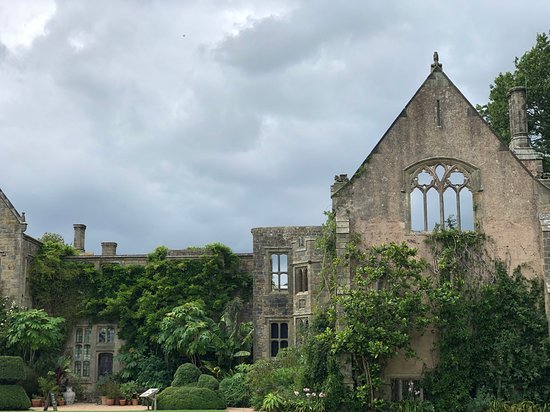
Nymans House and Gardens, situated in Mid-Sussex, belong to the National Trust which preserves ancient mansions, castles and estates that have belonged to rich and powerful people of hundreds of years ago. Nymans appears to be a medieval manor house with an extensive Gothic part so old to has fallen into decay.
In fact, having a look back in time, Nymans seems to have been truly a medieval estate named  after an otherwise forgotten family called NYNWEMAN in the early XIVth century. The property went through various hands, the Gatland family building a house on the site of the present one sometime in the XVIth or XVIIth century, before that it all ended up in the XIXth century with one George Harrington, who rebuilt the house and enlarged the estate. But our story begins in 1890 when the entire 600-acre plot was purchased by a wealthy German stockbroker, Ludwig Ernest Wilhelm Leonard Messel, originally from Darmstadt. 
Ludwig was the son of Simon Messel and Emilie Lindheim and he was born on 9 January 1847. In 1816, his grandfather, Aron, had founded a banking house in Darmstadt, which was then part of the Grand Duchy of Hesse. Young Ludwig came to Britain in 1868 with his brother Rudolf, allegedly with gold coins sewn into their shirts with which to ease their early days in the Country. Some say the Messels left their Country to avoid persecution, for they were a Jewish family. Although people who professed the Jewish religion weren't seen with great favour in German-speaking Countries since the age of the first Crusade (1096), this seems to make little sense then – Hesse was no more or less anti-Semitic than anywhere else in north-west Europe at the time, including the UK. Perhaps, like the Rothschilds, the Messels hoped to establish an international family business. Perhaps they were simply seeking their fortunes, and looking for opportunities, as people have done before and since. And, anyway, according to one account, Rudolf went back to Hesse to serve as a stretcher-bearer in the Franco-Prussian War of 1870-71. Ludwig didn’t come back, but maybe didn't even intended to stay. The thing is that in 1871 he married Annie Cussans  


in the London disctrict of Lambeth and in 1873 founded the stockbroking firm of L. Messel & Company. 
And bought Nymans in 1890. According to the National Trust he did it “to integrate himself into English society”. It’s a curious expression, given he’d lived here for 20 years, married an Englishwoman, established a successful business and had a family, all before he acquired his grand domain. Maybe he purchased Nymans simply because he wanted a big estate, loved gardening, and had amassed enough of a fortune to indulge himself. Maybe, like his wealthy Victorian contemporaries, he felt he needed a suitable country mansion in which to entertain, as it was usual then. Maybe, despite apparently being a British subject by this time, his German-Jewish background was unacceptable to some and having a nice property helped overcome some social prejudice. 
Ludwig had a great interest in trees and plants and began the development of Nymans’ tree planting and collection of shrubs and flowers. He developed the walled garden, the heather garden and the pergola walk. An original Regency mansion was part of Nymans then and he wanted to turn it into a place for family life and for his guests.
Anne and Ludwig had six children and it was the eldest son of theirs, Leonard, who inherited the property in 1916. He was an even more enthusiastic plantsman than his father, and added greatly to the Nymans collections. And it was he who built a new house in the Tudor and Gothic style. 


So the house which appears to be medieval and which we see today is little over 100 years old. In October 1947 a disastrous fire swept through most of the property creating the burnt out shell we see today at the southern end.
The house was only partially re-built after the fire and became probably, even more fascinating with its appearance of ruin, and earned so much as for charm and antiquity.
What we can see today of the most part the historic mansion is simply a Gothic fairy tale, acting as a romantic background for the gardens and surrounding woodland.
Nymans' became one of the homes of Anne Messel, Leonard’s daughter, who married Ronald Armstrong Jones. Their son, Anthony, married Queen Elisabeth II’s sister, Princess Margaret, in 1960, who became Lord Snowdon in 1961. For many years they lived in the Nymans' estate. Leonard gave Nymans to The National Trust in 1954 but the house continued to be lived in by the family.
Anne’s second husband was the Earl of Rosse and Anne lived with her husband mainly in Ireland in Birr Castle, but she often came to live at Nymans. Anne was one of the founders of The Victorian Society which aimed to preserve the (then unfashionable) art and architecture of the Victorian period.
Anne was also a keen gardener and took a hand in Nymans’ continuing development.


With her husband she added rhododendrons, camellias, hydrangeas, hypericums, agapanthus, hardy fuschias and more roses. In 1979, following the death of her husband she returned permanently to Nymans to spend her final years here. She was Director of the Garden until 1987. She died at Nymans in July 1992 aged 90.
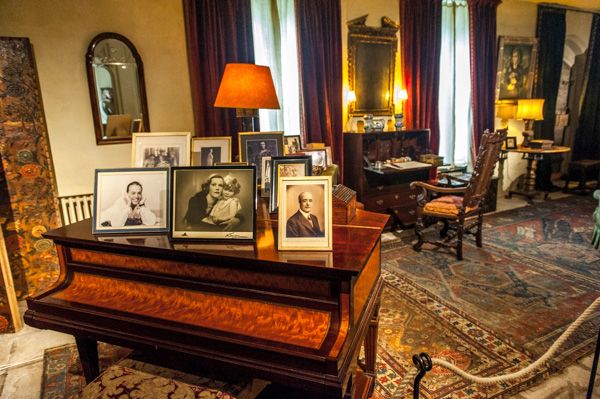
In addition to the extensive gardens, which are listed in Historic England's Register of Parks and Gardens, when the house re-opens it is the one Anne lived in that visitors can see.
Here you are some shots of the interiors taken from the web:


I sincerely hope you've enjoyed this so wonderful stroll trhough History, Beauty and Elegance!


With heartfelt gratitude, 
I'm sending You all my best.
See you soon 


Ludwig Messel e la Tenuta di Nymans 


IMMAGINE DI COPERTINA, IMMAGINE 2 - 3 - 4 - Rovine della dimora di Nymans


Il complesso di Nymans, situato nel Mid-Sussex, appartiene al National Trust che conserva antiche dimore, castelli e tenute appartenute a persone facoltose e potenti centinaia di anni fa. A giudicare dal suo aspetto Nymans appare come un maniero medievale con un'ampia parte gotica talmente antica da essere caduta in rovina.
In realtà, guardando indietro nel tempo, Nymans sembra essere stata davvero una tenuta medievale che prese il nome da una famiglia altrimenti dimenticata chiamata Nynweman all'inizio del XIV secolo. La proprietà passò attraverso varie mani, la famiglia Gatland costruì una casa sul sito dell'attuale nel XVI o XVII secolo, prima che tutto finisse nel XIX secolo con un certo George Harrington, che ricostruì la casa e ampliò la proprietà. Ma la nostra storia inizia nel 1890 quando l'intero appezzamento di 600 acri fu acquistato da un ricco agente di cambio tedesco, Ludwig Ernest Wilhelm Leonard Messel, originario di Darmstadt.
Ludwig era figlio di Simon Messel ed Emilie Lindheim ed era nato il 9 gennaio 1847. Nel 1816 suo nonno Aron aveva fondato una banca a Darmstadt, che allora faceva parte del Granducato d'Assia. Il giovane Ludwig arrivò in Gran Bretagna nel 1868 con suo fratello Rudolf, presumibilmente con monete d'oro cucite all'interno delle loro camicie con cui 'alleviare' i loro primi giorni nel Paese. Alcuni dicono che i Messel lasciarono il loro Paese per evitare la persecuzione, perché appartenevano ad una famiglia ebrea. Sebbene le persone che professavano la religione ebraica non fossero viste di buon occhio nei paesi di lingua tedesca già dall'epoca della prima crociata (1096), tutto ciò sembra avere poco senso, vista l'epoca di cui stiamo parlando: l'Assia non era né più né meno antisemita di quanto fosse qualsiasi altra parte dell'Europa nordoccidentale all'epoca, Regno Unito compreso. Forse, come i Rothschild, i Messel speravano di fondare un'azienda familiare internazionale. Forse stavano semplicemente cercando fortuna e opportunità, come tanta gente fece prima e dopo. E, comunque, secondo un resoconto, Rudolf tornò in Assia per servire come barelliere nella guerra franco-prussiana del 1870-71. Ludwig non fece ritorno, ma forse non aveva neppure intenzione di restare. Il fatto è che nel 1871 sposò Annie Cussans 


IMMAGINE 5 - Anne Cussans e Ludwig Messels


nel quartiere londinese di Lambeth e nel 1873 fondò la società di intermediazione in borsa di L. Messel & Company.
Ed acquistò Nymans nel 1890. Secondo il National Trust lo fece “per integrarsi nella società inglese”. È un'espressione curiosa, dato che aveva vissuto in Inghilterra per 20 anni, sposato una donna inglese, avviato un'attività di successo e aveva una famiglia, tutto prima di acquisire il suo grande dominio. Forse lo fece semplicemente perché desiderava una grande tenuta, amava il giardinaggio e aveva accumulato abbastanza fortuna da sbizzarrirsi. Forse, come i suoi ricchi contemporanei vittoriani, avvertiva il bisogno di una residenza di campagna adatto in cui intrattenere amici secondo la moda del tempo. Forse, nonostante fosse apparentemente un suddito britannico a quel tempo, il suo background ebraico-tedesco era inaccettabile per alcuni e avere una bella proprietà poteva essergli di aiuto a superare alcuni pregiudizi sociali.
Ludwig aveva un grande interesse per alberi e piante e iniziò lo sviluppo della piantagione di alberi a Nymans e la raccolta di arbusti e fiori. Sviluppo il walled-garden, l'heather garden ed il pergola walk. A quel tempo di Nymans faceva parte una villa Regency originale ed egli voleva trasformarla in un luogo per la vita familiare ed i ricevimenti.
Anne e Ludwig ebbero sei figli e fu il primogenito, Leonard, ad ereditare la proprietà nel 1916. Egli era un giardiniere ancora più entusiasta del padre e aggiunse molto alle collezioni di Nymans. Ed è stato lui a costruire una nuova casa in stile Tudor e gotico.


IMMAGINE 6 - 7 - 8 - Vedute dall'esterno della parte restaurata dell'edificio che continuò ad essere abitata 


Quindi l'edificio che sembra medievale e che vediamo oggi vanta poco più di 100 anni. Nell'ottobre del 1947 un disastroso incendio divampò nella maggior parte della proprietà creando quel 'guscio bruciato' che vediamo oggi all'estremità meridionale della residenza. Essa è stata ricostruita solo in parte ed è diventata, probabilmente, ancor più affascinante con il suo aspetto da rudere che tanto le ha conferito in quanto a fascino ed antichità. Quello che possiamo vedere oggi della maggior parte della dimora storica è semplicemente una fiaba gotica, che fa da sfondo romantico ai giardini e ai boschi circostanti.
Nymans divenne una delle case di Anne Messel, la figlia di Leonard, che sposò Ronald Armstrong Jones. Il loro figlio, Anthony, sposò la sorella della regina Elisabetta II, la principessa Margaret, nel 1960, e divenne Lord Snowdon nel 1961. Per molti anni vissero nella tenuta di Nymans.
Leonard cedette Nymans al National Trust nel 1954, ma la casa continuò ad essere abitata dalla famiglia.
Il secondo marito di Anne fu il conte di Rosse. Anne visse con suo marito principalmente in Irlanda a Birr Castle, ma spesso si trasferiva a Nymans. Ella fu una delle fondatrici di The Victorian Society che mirava a preservare l'arte e l'architettura (allora fuori moda) del periodo vittoriano.
Anne era anche un'appassionata giardiniera e ha contribuito al continuo sviluppo di Nymans.


IMMAGINE  9 - 10 - 11 - La loggia, la piccionaia e le rovine viste dai giardini
 

Con il marito aggiunse alla collezione del parco rododendri, camelie, ortensie, iperici, agapanthus, fucsie resistenti e rose. Nel 1979, dopo la morte del marito, tornò definitivamente a Nymans per trascorrevi i suoi ultimi anni. Fu Direttrice del Giardino fino al 1987. Si spense a Nymans nel luglio 1992 all'età di 90 anni.
Oltre agli ampi giardini, che sono annoverati tra quelli dell'Historic England's Register of Parks and Gardens (Registro Storico dei Parchi e dei Giardini Inglesi), quando la casa riapre è quella in cui Anne visse che i visitatori possono vedere.
Eccovi alcune immagini degli interni prese dal web:


IMMAGINE 12 - 13 - 14 - 15 - 16 - 17 - 18 - 19


Spero sinceramente che abbiate gradito questa meravigliosa 'passeggiata' compiuta attraverso la Storia, la Bellezza e l'Eleganza!


Con sentita gratitudine,
Vi invio ogni bene.
A presto 


Dany


LINKING WITH:


Angie from God's Growing Garden has featured this pot of mine today, May 23, 2023!
I thank you from the bottom of my heart, Dearie •♥•